Home Blog Page 736

M moneyX Partners with Visa to Expand Digital Payment Services in Laos

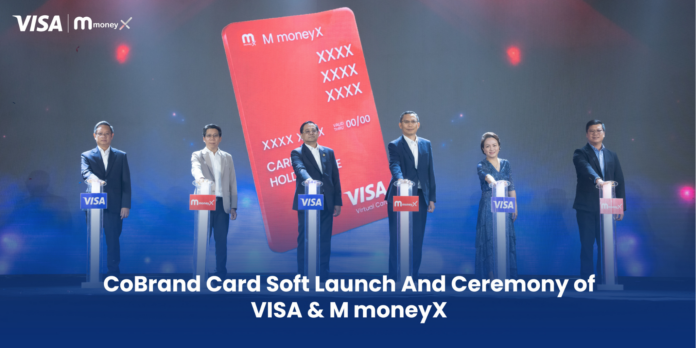
M moneyX Partners with Visa to Soft Launch Co-brand Card and Explore Visa Pay for Digital Payments in Laos and Internationally. (Photo by M moneyX)

Lao Mobile Money Sole Co., Ltd. (M moneyX) has partnered with Visa to introduce a co-branded prepaid card and explore the integration of Visa Pay into its application, marking a step in the development of digital payments in Laos.

The initiative, supported by Joint Development Bank as the partner, aims to expand access to digital financial services and support the country’s transition toward a cashless economy.

The M moneyX Visa prepaid card allows users to create and use a digital card directly within the app without the need for a physical card. The solution is designed for both domestic and international transactions.

As part of the collaboration, the company is also exploring the integration of Visa Pay, which would enable features such as QR code payments, tap to pay, and online payments within the platform.

The partnership shows ongoing efforts to improve payment convenience and accessibility, while supporting the development of a more modern and secure digital financial ecosystem in Laos.

ASEAN Travel Influencers Check In at Beibu Gulf! This Cultural-Tourism Exchange Is a Hit — “Not-So-Distant Destinations” Are on Fire

NANNING, CHINA – Media OutReach Newswire – 3 April 2026 – Recently, the “Romantic Coast, Beautiful Southern Border” promotion — a new-media cultural and tourism campaign inviting ASEAN travel influencers to check in across Guangxi’s Beibu Gulf — was held in six cities: Nanning, Beihai, Qinzhou, Fangchenggang, Yulin and Chongzuo. The event invited travel influencers from Malaysia, Singapore, Thailand, Vietnam, the Philippines and Indonesia, and formed a media delegation with representatives from China News Service, China Culture Daily, Guangxi Daily and others. Working along two routes, they took in the Beibu Gulf (Guangxi) Golden Tourism Belt in depth, using their lenses to capture the beauty of mountains and sea and their pens to tell stories of the southern border, so that the unique charm of Guangxi’s Beibu Gulf could ride the wave of the internet and go viral across ASEAN social circles.

Six days, six cities, two routes — the itinerary was full and surprises kept coming. Among the flower seas of Qingxiu Mountain, breezes carrying the scent of blossoms brushed their faces; beside the China-Vietnam border river, they shared coffee across the water and sampled borderland atmosphere; on Weizhou Island by volcanic rock, they waited for a tangerine-red sunset over the sea, a panorama that left influencers calling it “breathtaking”; beneath Zhenwu Pavilion, the nail-free, bolt-free pure-wood construction amazed everyone; at the Jing ethnic museum, the plaintive notes of the single-stringed lute lingered in the ear; in the swell of Sanniang Bay, playful white dolphins suddenly appeared… These vivid, restorative experiences were captured on camera and in writing by the influencers, transformed into short videos and illustrated guides, crossing oceans to precisely strike the hearts of ASEAN netizens and make viewers yearn for the destination even through their screens.

Why the Beibu Gulf? This cultural–tourism exchange was bound to happen.

The Beibu Gulf (Guangxi) is already China’s foremost “traffic window” for exchanges with ASEAN. Geographic proximity and shared cultural roots make it the most familiar first stop for ASEAN visitors entering China. Nanning is a gateway and frontline of China-ASEAN openness and cooperation, known as the “China Green City” and “a place beloved by folk singers,” and holding honors such as the UN-Habitat Award, National Civilized City, National Ecological Garden City, National Sanitary City, National Forest City, and China Excellent Tourist City. As the permanent host city of the China-ASEAN Expo, every autumn political leaders, businesspeople and tourists from ASEAN converge here—so the city already carries an innate warmth for ASEAN guests. Fangchenggang lies just a river away from Mong Cai, Vietnam; border residents routinely cross over to visit, and Cantonese, Zhuang and Vietnamese blend seamlessly through the streets. Detian Waterfall in Chongzuo spans China and Vietnam—China on the left bank, Vietnam on the right—where the roar of the falls brings the two countries’ stories together in a single striking scene. Beihai was one of the earliest departure ports on the ancient Maritime Silk Road and still welcomes cruises and travelers from Southeast Asia; on Silver Beach you can often hear familiar Thai and Malay languages. Container ships from Qinzhou Port shuttle frequently between the Beibu Gulf and ASEAN ports. Although Yulin is inland, its trade in traditional Chinese medicine links it to ASEAN markets—medicinal materials distributed from Yulin reach Vietnam, Thailand, Malaysia and beyond each year, forming an “invisible tie” with ASEAN.

This geographic closeness creates a natural cultural affinity. As the influencers observed, ASEAN visitors can immediately find familiar “home tastes” upon arriving in the Beibu Gulf—Vietnamese drip coffee, Thai spices, Malaysian Musang King durian and other ASEAN foods are everywhere, prompting comments like “it feels just like home.” At the same time, the majestic beat of Zhuang bronze drums, the intangible-heritage charm of the Jing one-stringed lute, the resplendent singing of Yong opera, and the craftmanship of Zhenwu Pavilion introduce them to a different facet of Chinese culture. That blend of “familiar surprises and friendly strangeness” is Guangxi Beibu Gulf’s most compelling cultural-tourism asset—it is not a faraway, unattainable place but a heartwarming destination ASEAN visitors can “come to on a whim,” and a treasure trove where many find they “don’t want to leave.”

For these reasons, the campaign deliberately targeted ASEAN travel influencers as “seeders.” This was not a one-way promotional push but a two-way content co-creation. Influencers used their native languages and the forms their followers trust to share authentic experiences in Guangxi. That natural trust and empathy cut far deeper than blunt advertising. As one accompanying journalist remarked, “When they post it, ASEAN audiences just can’t stop watching.” The influencers understand exactly what their followers want to see and how to bring a city to life in the most relatable way.

With policy incentives and innovative communication, the gateway to culture and tourism in the Beibu Gulf is opening wider and wider!

To stand out in the cultural tourism scene, it’s not enough to have stunning attractions—thoughtful service matters just as much. The implementation of inbound travel facilitation policies such as “China’s 240-hour visa-free transit” and “instant tax refunds upon departure purchase” has made travel to the Beibu Gulf much easier for ASEAN visitors. With simpler visa procedures and more cost-effective spending, spontaneous cross-border trips have become effortlessly achievable here.

At the same time, innovative promotional strategies combining “offline immersive experiences + online viral dissemination” have been adopted. Influential ASEAN travel creators, each with their own following, have become ambassadors for the Beibu Gulf. Through their lenses, they capture its coastal and mountain scenery, historical heritage, cuisine, and local customs—not as cold descriptions, but as vivid, heartfelt, and relatable moments. This people-centered, emotion-driven approach to storytelling allows the romance and charm of the Beibu Gulf to ripple across ASEAN digital networks, continuously expanding its reach.

Although the event has concluded, the cultural tourism promotion of the Beibu Gulf is only just beginning. The creators return home with rich materials—editing dynamic short videos, writing practical travel guides, and sharing their experiences with followers. In the past, Guangxi’s Beibu Gulf may have been just a vague geographical concept for ASEAN tourists. Now, through the creators’ perspectives, it has become a “distant yet reachable destination”—a place filled with familiar everyday warmth, surprising intangible cultural heritage, breathtaking coastal and mountain views, the gentle charm of local streets and alleys, a profound history spanning millennia, and the vibrant pulse of China–Vietnam cultural integration.

As the impact of the campaign continues to grow, the story of the Beibu Gulf in Guangxi is being seen by more and more people—and its charm awaits even more visitors to discover it for themselves.

Hashtag: #BeibuGulf

The issuer is solely responsible for the content of this announcement.

Viettel Marks 20 Years of Global Expansion, Overseas Revenue Up 25%

HANOI, Vietnam, April 3, 2026 /PRNewswire/ — Viettel Group marked the 20th anniversary of its international business operations, highlighting two decades of expansion that have positioned the Vietnamese company among the world’s multi-market telecom operators.

Viettel began its international journey in 2006 with its first overseas investment in Cambodia. Over the past two decades, the Group has expanded its presence to 16 countries, including operational markets and representative offices.

Nowadays, Viettel operates telecommunications networks in 10 international markets, holding the No.1 market position in seven countries. The company’s overseas operations generate more than USD 3 billion in annual revenue and have maintained average growth of around 20% for several consecutive years.

Financial results released earlier this year also reflect the strong momentum of Viettel’s global business. According to audited financial statements from Viettel Global, international operations recorded net revenue of VND 44.27 trillion (approximately USD 1.74 billion) in 2025, representing 25% year-on-year growth and the highest level since Viettel began investing abroad.

Profitability also improved significantly. Net profit after tax reached VND 11.25 trillion (around USD 442 million), up 57% compared with the previous year, while profit attributable to the parent company rose 65% to over VND 9.3 trillion (approximately USD 365 million).

The strong performance has improved the efficiency of Viettel’s international investments. By the end of 2025, the capital recovery ratio reached 92%, while the market capitalization of Viettel Global stands at approximately USD 10 billion. Overseas operations have also become a stable source of capital inflow to Vietnam, contributing USD 350–400 million in repatriated cash annually in recent years.

At the anniversary ceremony held on March 28, Viettel Global was awarded the prestigious Hero of Labour, one of Vietnam’s highest state honors for organizations with outstanding achievements in innovation and productivity.

Speaking at the ceremony, General Phan Van Giang, Member of the Politburo and Minister of National Defence, on behalf of the Communist Party of Vietnam and the State said Viettel’s international expansion demonstrates the company’s pioneering spirit and its ability to master advanced technologies while transforming from a domestic telecom operator into a global technology enterprise. He added that Viettel’s overseas presence also contributes to strengthening cooperation and friendship between Vietnam and its international partners.

According to Lieutenant General Tao Duc Thang, Member of the Party Central Committee and Chairman and CEO of Viettel Group, Viettel aims to continue expanding telecommunications services while developing new areas such as digital technology, high-tech industry, e-commerce and logistics. The Group targets minimum annual growth of 20% in its global operations.

After two decades abroad, Viettel is transitioning from a model focused primarily on overseas investment to a broader global business strategy known internally as “Go Global 2.0.” The strategy aims to bring the capabilities of a Vietnamese high-tech industrial and technology group to international markets, contributing to the growing global presence of Vietnam’s technology sector.

Viettel Marks 20 Years of Global Expansion, Overseas Revenue Up 25%

HANOI, Vietnam, April 3, 2026 /PRNewswire/ — Viettel Group marked the 20th anniversary of its international business operations, highlighting two decades of expansion that have positioned the Vietnamese company among the world’s multi-market telecom operators.

Viettel began its international journey in 2006 with its first overseas investment in Cambodia. Over the past two decades, the Group has expanded its presence to 16 countries, including operational markets and representative offices.

Nowadays, Viettel operates telecommunications networks in 10 international markets, holding the No.1 market position in seven countries. The company’s overseas operations generate more than USD 3 billion in annual revenue and have maintained average growth of around 20% for several consecutive years.

Financial results released earlier this year also reflect the strong momentum of Viettel’s global business. According to audited financial statements from Viettel Global, international operations recorded net revenue of VND 44.27 trillion (approximately USD 1.74 billion) in 2025, representing 25% year-on-year growth and the highest level since Viettel began investing abroad.

Profitability also improved significantly. Net profit after tax reached VND 11.25 trillion (around USD 442 million), up 57% compared with the previous year, while profit attributable to the parent company rose 65% to over VND 9.3 trillion (approximately USD 365 million).

The strong performance has improved the efficiency of Viettel’s international investments. By the end of 2025, the capital recovery ratio reached 92%, while the market capitalization of Viettel Global stands at approximately USD 10 billion. Overseas operations have also become a stable source of capital inflow to Vietnam, contributing USD 350–400 million in repatriated cash annually in recent years.

At the anniversary ceremony held on March 28, Viettel Global was awarded the prestigious Hero of Labour, one of Vietnam’s highest state honors for organizations with outstanding achievements in innovation and productivity.

Speaking at the ceremony, General Phan Van Giang, Member of the Politburo and Minister of National Defence, on behalf of the Communist Party of Vietnam and the State said Viettel’s international expansion demonstrates the company’s pioneering spirit and its ability to master advanced technologies while transforming from a domestic telecom operator into a global technology enterprise. He added that Viettel’s overseas presence also contributes to strengthening cooperation and friendship between Vietnam and its international partners.

According to Lieutenant General Tao Duc Thang, Member of the Party Central Committee and Chairman and CEO of Viettel Group, Viettel aims to continue expanding telecommunications services while developing new areas such as digital technology, high-tech industry, e-commerce and logistics. The Group targets minimum annual growth of 20% in its global operations.

After two decades abroad, Viettel is transitioning from a model focused primarily on overseas investment to a broader global business strategy known internally as “Go Global 2.0.” The strategy aims to bring the capabilities of a Vietnamese high-tech industrial and technology group to international markets, contributing to the growing global presence of Vietnam’s technology sector.

Wild Elephant Raids Isan Restaurant Multiple Times in Thailand

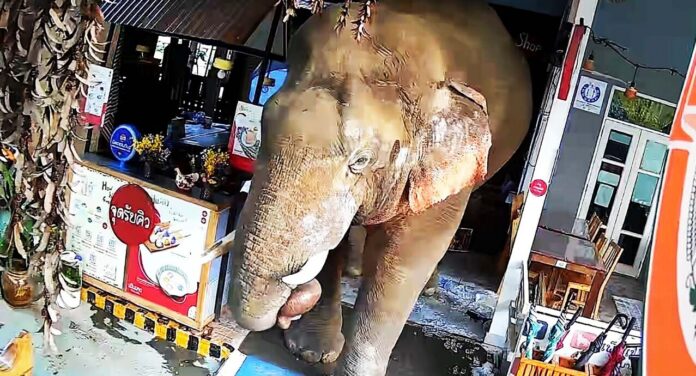
Wild elephant leaving after raided the Isan restaurant near Khao Yai National Park in Thailand. (Photo by Khaosod)

A wild elephant in Thailand has repeatedly raided a popular Isan restaurant near Khao Yai National Park, with three incidents reported within less than a month.

The elephant, known as Plai Biang Lek, most recently entered PenLaos restaurant in Nakhon Ratchasima on 3 April, searching for food and causing damage. Thai media reported it was the third time the same elephant targeted the location.

The first incident occurred on 11 March, when the elephant entered the restaurant, damaged outdoor furniture, and destroyed a fruit display. Staff said the smell of fresh food likely attracted it.

Two days later, on 13 March, the elephant appeared again at a nearby morning market. It entered a papaya salad stall, broke glass displays, dented counters, and scattered food while trying to eat.

The repeated visits highlight growing concerns in areas close to the forest, where businesses are more exposed to wildlife, especially during the dry season when food in natural habitats becomes scarce.

Conservation groups said more wild elephants are leaving protected areas in search of food and water, increasing risks for both people and the animals. 

They recommend improving food and water sources within forests and reducing attractants in nearby communities.

Authorities are closely monitoring the situation as similar incidents continue around Khao Yai National Park.

Xinhua Silk Road: Savor a cup of Fenjiu to cheer for reunion

BEIJING, April 3, 2026 /PRNewswire/ — In China, traditional festivals such as the Spring Festival and Mid-Autumn Festival are days to celebrate reunion.

While Chinese people return home for family gatherings during such holidays, some overseas Chinese and foreigners in China find it captivating to savor a cup of baijiu to experience the oriental essence.

Among their diverse choices, Fenjiu, a light-flavor Chinese baijiu, was one of the optimal choices that conquered the taste buds of many and gained more popularity abroad this February.

In Canada, a spring temple fair for overseas Chinese from north China’s Shanxi Province where Fenjiu Group, the producer of Fenjiu, is situated, was thronged by visitors eager to taste Qinghua Fenjiu, Rose Fenjiu and other Fenjiu products with refreshing aroma, refined flavors and smooth texture.

In Australia, a celebration of the Year of the Horse in Chinatown of Melbourne presented the Fenjiu special Panama edition and 30-year-old Qinghua Fenjiu with upscale black and gold packaging to overseas Chinese there and captured their hearts.

Elsewhere in the Chinese food restaurants in Paris of France and streets of Madrid in Spain, Fenjiu products are always spotted on tables of overseas Chinese during the holidays.

In Greece and the UAE, similar venues or events akin to the above-mentioned ones welcomed more foreigners to experience the traditional Chinese holiday while enjoying a cup of the distinguished Chinese baijiu.

In Chinese cities, an increasing number of foreigners had opted in February for a China travel to feel the warmth and charm of the Spring Festival when celebrating the festival in China is evolving into a new global fashion.

Already collected in Kremlin Museum in Moscow, Qinghua Fenjiu, a premium Fenjiu product, is showing how foreign friends have understood the oriental brewing wisdom and cultural inclusiveness.

Original link: https://en.imsilkroad.com/p/350006.html


Xinhua Silk Road: Savor a cup of Fenjiu to cheer for reunion

BEIJING, April 3, 2026 /PRNewswire/ — In China, traditional festivals such as the Spring Festival and Mid-Autumn Festival are days to celebrate reunion.

While Chinese people return home for family gatherings during such holidays, some overseas Chinese and foreigners in China find it captivating to savor a cup of baijiu to experience the oriental essence.

Among their diverse choices, Fenjiu, a light-flavor Chinese baijiu, was one of the optimal choices that conquered the taste buds of many and gained more popularity abroad this February.

In Canada, a spring temple fair for overseas Chinese from north China’s Shanxi Province where Fenjiu Group, the producer of Fenjiu, is situated, was thronged by visitors eager to taste Qinghua Fenjiu, Rose Fenjiu and other Fenjiu products with refreshing aroma, refined flavors and smooth texture.

In Australia, a celebration of the Year of the Horse in Chinatown of Melbourne presented the Fenjiu special Panama edition and 30-year-old Qinghua Fenjiu with upscale black and gold packaging to overseas Chinese there and captured their hearts.

Elsewhere in the Chinese food restaurants in Paris of France and streets of Madrid in Spain, Fenjiu products are always spotted on tables of overseas Chinese during the holidays.

In Greece and the UAE, similar venues or events akin to the above-mentioned ones welcomed more foreigners to experience the traditional Chinese holiday while enjoying a cup of the distinguished Chinese baijiu.

In Chinese cities, an increasing number of foreigners had opted in February for a China travel to feel the warmth and charm of the Spring Festival when celebrating the festival in China is evolving into a new global fashion.

Already collected in Kremlin Museum in Moscow, Qinghua Fenjiu, a premium Fenjiu product, is showing how foreign friends have understood the oriental brewing wisdom and cultural inclusiveness.

Original link: https://en.imsilkroad.com/p/350006.html


Xinhua Silk Road: A splendid taste bud journey in Fenjiu Museum

BEIJING, April 3, 2026 /PRNewswire/ — In 1915 when a jar of Fenjiu produced by the then Yiquanyong Distillery, a Shanxi-located distillery, was opened at a booth of the Panama-Pacific International Exposition, its refreshing aroma spread over the exhibition venue and brought the light-flavor Chinese baijiu to the world.

The fine liquor made from sorghum, also the predecessor of today’s Fenjiu, embodied the profound oriental brewing wisdom of baijiu, helping Fenjiu win the grand prize of the expo held in San Francisco of the United States over a century ago.

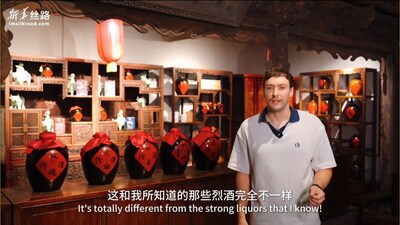
Around 110 years later, Fenjiu Museum, a site housing all the honors and historical items relative to Fenjiu’s brewing, welcomed an American friend Ian, who exclaimed that the Chinese liquor boasts a mellow taste.

After savoring the original pulp Fenjiu with an alcohol content of 69 percent and Baiyu Fenjiu, Ian fell in love with the Chinese liquor now embracing the world with its unique aroma, taste and openness.

Currently, Fenjiu products, a cultural bond between Chinese baijiu lovers at home and abroad, have been exported to more than 70 countries and regions around the world.

Original link: https://en.imsilkroad.com/p/350005.html