Home Blog Page 978

Supreme Courts of Singapore and Cambodia Sign Memorandum of Understanding for Judicial Cooperation

SINGAPORE, Feb. 19, 2026 /PRNewswire/ — On 10 February 2026, the Supreme Court of the Republic of Singapore and the Supreme Court of the Kingdom of Cambodia signed a Memorandum of Understanding (MOU) to promote bilateral judicial cooperation.

On 10 February 2026, The Honourable the Chief Justice Sundaresh Menon made a courtesy call on the President of the Supreme Court of the Kingdom of Cambodia, The Honourable Chief Justice Chiv Keng.

The signing of the MOU marks a significant milestone, constituting the inaugural bilateral judicial cooperation agreement by the two judiciaries. The MOU facilitates a deeper exchange of judicial expertise and paves the way for in-depth discussions on matters of common interests. These include electronic filing of court documents and case management systems, and related issues concerning resourcing, supporting and building capacity in the use of such systems.

The signing of the MOU took place after an official call by The Honourable the Chief Justice Sundaresh Menon on the President of the Supreme Court of the Kingdom of Cambodia, The Honourable Chief Justice Chiv Keng.

Chief Justice Menon led a delegation including Justice Aidan Xu, Judge in-charge of Transformation and Innovation, and Ms Juthika Ramanathan, Chief Executive (Office of Chief Justice) on a two-day visit to the Supreme Court of Cambodia.

Visit News and speeches (judiciary.gov.sg) for more details.

New Report Reveals 51.4% of U.S. Residential Builders Are Operating Unprofitably

HOUSTON, Feb. 19, 2026 /PRNewswire/ — More than half of U.S. residential building companies are operating unprofitably once accounting accuracy is applied, according to the 2026 State of Residential Construction Industry (SORCI) Report released by the Association of Professional Builders (APB). While only 17.1% of U.S. builders reported making a loss, deeper financial analysis found that 51.4% were effectively unprofitable.

Now in its sixth year, the SORCI Report analyses financial and operational data from residential builders across the United States as part of a broader dataset of 8,462 participants collected since 2020. Data for this edition was collected in late 2025.

Key findings from the 2026 SORCI Report:

  • 51.4% of U.S. residential builders were operating unprofitably once accounting accuracy was applied, compared with 17.1% who self-reported operating at a loss.
  • Only 12% of builders correctly understand all four critical financial metrics: Work In Progress (WIP) adjustments, markup versus margin, fixed expense ratios, and net profit margins.
  • 79.2% of builders who stated they knew how to calculate WIP adjustments were unable to correctly explain how WIP is calculated.
  • The report identifies widespread accounting inaccuracies that result in profitability being overstated on financial statements.

The findings show a significant gap between reported profitability and financial reality within the U.S. residential construction sector. The report notes that without accurate financial reporting, builders may make decisions based on incomplete data.

“The data shows a clear difference between reported profitability and financial reality for many building companies,” said Russ Stephens, Co-Founder of the Association of Professional Builders. “When core financial metrics are not fully understood or applied correctly, profitability can be overstated without builders realizing it.”

The report highlights the Work In Progress Accounting Adjustment (WIPAA) as a key area of misunderstanding. While 60% of builders claimed they knew how to calculate WIP adjustments, testing revealed that nearly 80% of that group were unable to correctly explain the calculation. Inaccurate WIP reporting can cause building companies to appear profitable on paper while masking underlying financial exposure.

This research also identifies a distinct cohort of building companies that demonstrate strong financial visibility, disciplined systems, and accurate reporting practices. These businesses consistently perform at higher levels across key financial metrics and demonstrate greater financial stability over time compared to those operating without clear financial controls.

About the 2026 SORCI Report

The State of Residential Construction Industry (SORCI) Report is an annual benchmarking study produced by the Association of Professional Builders. The 2026 edition draws on six years of research into the residential construction industry, with 8,462 total participants since 2020 across the United States, Australia, Canada, and New Zealand.

About the Association of Professional Builders

The Association of Professional Builders works exclusively with owners and directors of residential building companies that focus on new homes and large remodeling projects. APB’s mission is to improve the construction industry for both builders and consumers by helping building companies become systemized and profitable.

GLM-5 Launch Signals a New Era in AI: When Models Become Engineers


SINGAPORE – Media OutReach Newswire – 19 February 2026 – GLM-5, newly released as open source, signals a broader shift in artificial intelligence. Large language models are moving beyond generating code snippets or interface prototypes toward building complete systems and carrying out complex, end-to-end tasks. The change marks a transition from so-called “vibe coding” to what researchers increasingly describe as agentic engineering.

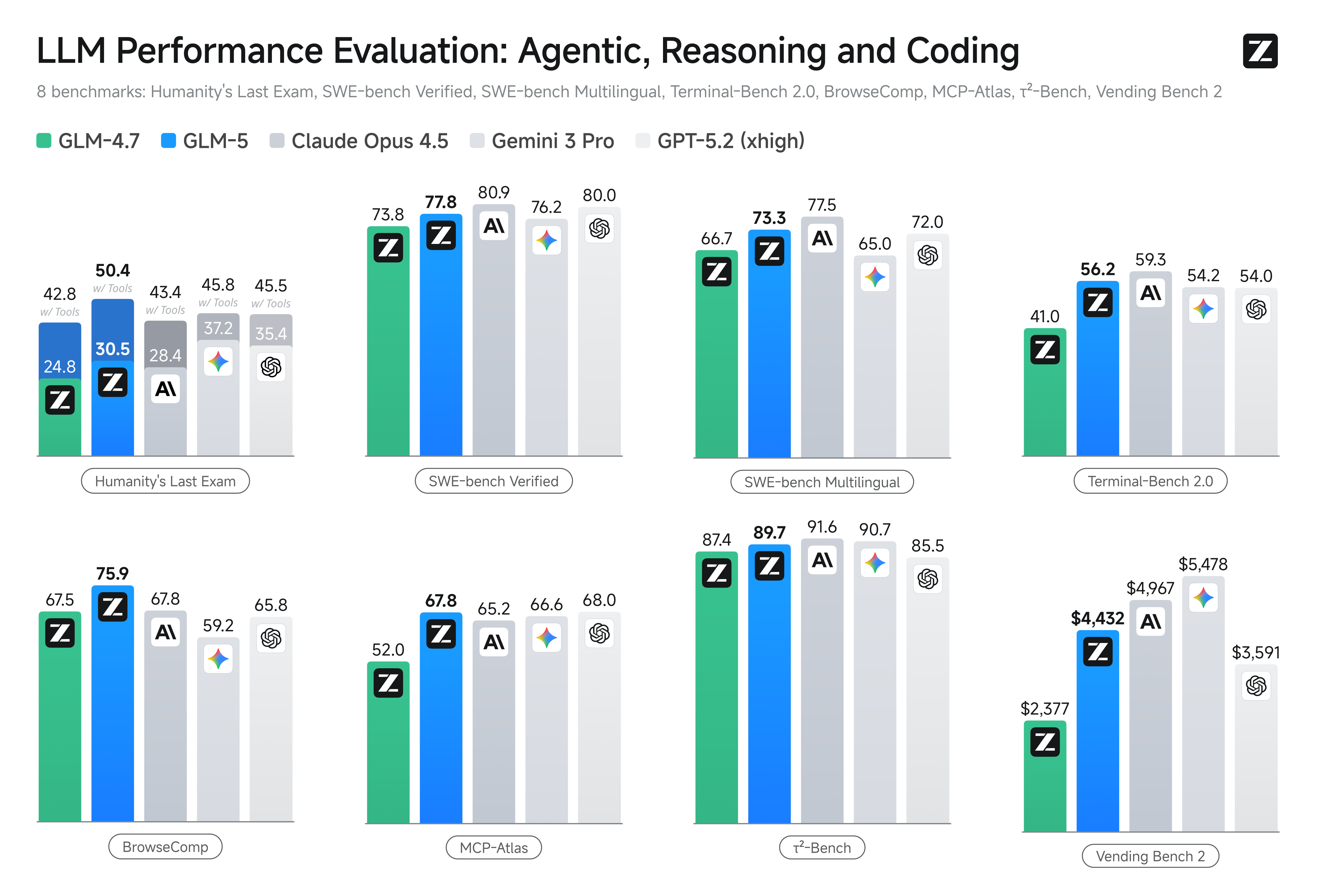
LLM Performance Evaluation: Agentic, Reasoning and Coding

Built for this new phase, GLM-5 ranks among the strongest open-source models for coding and autonomous task execution. In practical programming settings, its performance approaches that of Claude Opus 4.5, particularly in complex system design and long-horizon tasks requiring sustained planning and execution.

The model rests on a new architecture aimed at scaling both capability and efficiency. Its parameter count has expanded from 355bn to 744bn, with active parameters rising from 32bn to 40bn, while pre-training data has grown to 28.5trn tokens. These increases are paired with advances in training methods. A framework called Slime enables asynchronous reinforcement learning at a larger scale, allowing the model to learn continuously from extended interactions and improve post-training efficiency. GLM-5 also introduces DeepSeek Sparse Attention, which maintains long-context performance while cutting deployment costs and improving token efficiency.

Benchmarks suggest strong gains. On SWE-bench-Verified and Terminal Bench 2.0, GLM-5 scores 77.8 and 56.2, respectively, the highest reported results for open-source models, surpassing Gemini 3 Pro in several software-engineering tasks. On Vending Bench 2, which simulates running a vending-machine business over a year, it finishes with a balance of $4,432, leading other open-source models in operational and economic management.

These results highlight the qualities required for agentic engineering: maintaining goals across long horizons, managing resources, and coordinating multi-step processes. As models increasingly assume these capabilities, the frontier of AI appears to be shifting from writing code to delivering functioning systems.

Chat & Official API Access

Z.ai Chat: https://chat.z.ai
GLM Coding Plan: https://z.ai/subscribe?utm_source=pr&utm_medium=press&utm_campaign=launch

Open-Source Repositories

GitHub: https://github.com/zai-org/GLM-5
Hugging Face: https://huggingface.co/zai-org/GLM-5

Blog
GLM-5 Technical Blog: https://z.ai/blog/glm-5
Hashtag: #ZAI

The issuer is solely responsible for the content of this announcement.

Mastercard unveils Inclusion Hub and innovative inclusivity measures co-designed with autistic Australians

Available now, businesses can sign up to Mastercard’s Inclusion Hub which features 25 practical measures for venues to adapt, including Sensory Notes, which was piloted at this year’s Australian Open and continues to be activated with Melbourne’s The Mulberry Group

SYDNEY, Feb. 19, 2026 /PRNewswire/ — One in 40 Australians are autistici, yet many everyday spaces aren’t designed with their needs in mind. Sensory overload, unpredictable environments, and lack of clarity can make routine activities inaccessible, limiting where autistic Australians and their caregivers feel comfortable participating in community.

That’s why, Mastercard has launched Inclusion Matters, an initiative designed to rally businesses to create calmer more welcoming spaces for autistic people and sensory differences. At its centre is the Inclusion Hub which features 25 measures that venues could adopt to create more inclusive environments for various needs. Available now, businesses can register, explore practical changes from quiet hours to staff training, and build their own action plans with guidance to embed these practices into daily operations.

Mastercard co-designed the Inclusion Hub with Autism CRC, Australia’s independent national source of evidence for best practice. Autism CRC works directly with autistic people, families, and professionals to develop practical tools and improve equity and opportunity to support across every stage of life.

Piloting dining innovation  

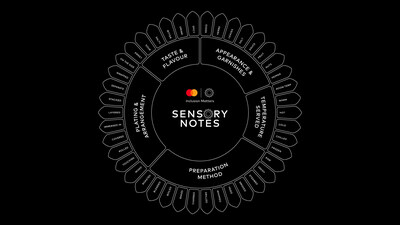
As part of the initiative’s launch, Mastercard is piloting Sensory Notes, a new kind of restaurant menu designed to describe dishes in sensory detail, giving autistic people and those with sensory sensitivities more confidence when dining. 

Unlike traditional menus that simply list a dish and its ingredients, Sensory Notes unpack the appearance, preparation, arrangement, and taste – useful details that can help autistic people and those with sensory differences understand more about the components of a dish. The framework also outlines tiered ways hospitality venues can integrate and operationalise Sensory Notes based on their size and offering.

Sensory Notes was piloted at this year’s Australian Open Wonder Pies and Peach Melbourne venues, and continues to be piloted at The Mulberry Group’s Hazel Melbourne.

Kerry Tavrou, Head of Inclusion & Diversity at Tennis Australia, said: “We’re committed to making the Australian Open the benchmark of sporting inclusivity. By featuring Sensory Notes on our Accessible page, introducing QR signage at Wonder Pies and Peach Melbourne, and promoting them within the BallPark sensory room, we gave neurodiverse fans the tools they need to feel informed and supported throughout their AO experience.” 

To ensure Sensory Notes feels integrated into the dining experience, an icon has been created to sit alongside existing dietary symbols like Gluten Free, Vegan, and Pescatarian, providing a subtle signal that additional information about that dish is available.

Guided by its mission to create a digital economy where everyone can participate, Mastercard identified dining as a meaningful opportunity to drive practical change. Inclusion Matters has been developed to demonstrate the empathy and understanding essential to building welcoming environments for all.

Julie Nestor, Executive Vice President, Marketing and Communications, Asia Pacific, Mastercard said: “As a global leader in digital-first innovation and inclusion by design, Mastercard set out to introduce practices that go beyond what’s already available. Through the Inclusion Matters initiative, we’re making it easier for businesses to build environments where everyone feels considered and welcome. We look forward to refining the hub with ongoing feedback, because a world designed for everyone is priceless.”

Crafting Sensory Notes 

Working alongside leading chefs and autistic Australians, Mastercard defined how this could work operationally and create meaningful impact. Based on this work, Mastercard created a tool to help businesses craft their very-own Sensory Notes, which is available to restaurants as part of the Inclusion Hub.

MasterChef Australia judge and leading culinary chef, Jean-Christophe Novelli contributed to the framework’s development: “Through my experiences dining out with my son Valentino, I’ve come to understand just how complex and overwhelming restaurant experiences can be for autistic individuals and their caregivers. Dining should be a moment of joy, comfort, and connection, yet uncertainty around food often creates unnecessary barriers. Sensory Notes offers clarity and confidence so everyone can enjoy what should be a simple pleasure of sharing a meal together.”

Dr Olivia Gatfield, Autism CRC’s Research and Community Engagement Manager, said: “Our role is to listen to and learn from the autistic community, working together through research and co-design. We have focused on what truly matters to them and hope these new innovations are beneficial and can continue to be refined with community feedback.”

As the initiative scales, participating businesses will be made discoverable through a consumer directory, making it easier for families to find welcoming venues in their area.

Australian businesses are invited to explore the Hub here.

The 25 practical measures included in the Inclusion Hub: 

1. Sensory environment 

  • Adjust visual and lighting environment
  • Adjust sound and noise
  • Reduce smells
  • Adjust temperature
  • Respecting touch, time and space
  • Implement quiet hours
  • Offer sensory-friendly sessions
  • Create low sensory zones

2. Information and communication 

  • Provide accessibility information online
  • Provide clear signage
  • Provide accessible menu information
  • Include sensory notes in your menu
  • Improve store navigation
  • Communicate appointment information
  • Provide event information

3. Predictability, choice and control 

  • Manage timing, changes and wait times
  • Enable pre-visit communication
  • Provide seating options and flexibility
  • Offer alternative service options
  • Provide alternative checkout options
  • Support customer service preferences

4. Staff training and culture 

  • Deliver autism inclusion training
  • Train staff to recognise support identification tools
  • Improve hiring practices
  • Support your autistic staff

About Mastercard  

Mastercard powers economies and empowers people in 200+ countries and territories worldwide. Together with our customers, we’re building a resilient economy where everyone can prosper. We support a wide range of digital payments choices, making transactions secure, simple, smart and accessible. Our technology and innovation, partnerships and networks combine to deliver a unique set of products and services that help people, businesses and governments realise their greatest potential. 

www.mastercard.com 

[i] ASPECT, At least 1 in 40 Australians are… – Autism Spectrum Australia (Aspect)

Asian Development Bank Beefs Up Lao Livestock with USD 42.9 Million Project

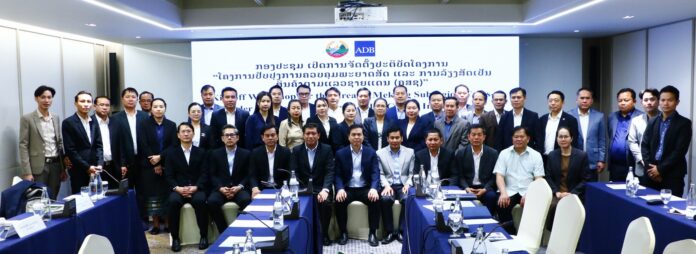
Laos livestock development project launch meeting supported by Asian Development Bank funding
Laos livestock development project launch meeting led by Ministry of Forests and Environment and supported by Asian Development Bank funding. (Photo by Ministry of Agriculture and Forestry)

Lao authorities have launched a new livestock development project backed by USD 42.9 million in funding from the Asian Development Bank (ADB).

The financing package includes a mix of concessional loans and grant assistance, with USD 30 million provided as a low-interest loan. 

According to project officials, the program has three main goals. First, it aims to improve animal health and productivity by reducing the risk of livestock diseases and antimicrobial resistance. This is expected to strengthen food security and improve food safety in rural areas.

Second, the project will promote formal livestock trade and strengthen regional cooperation within the Greater Mekong Subregion (GMS), while encouraging environmentally friendly production practices. 

Third, it seeks to improve livestock governance by strengthening management systems and expanding digital information services.

The project will run from 2025 to 2032, focusing on provinces that share borders with neighbouring countries, including Phongsaly, Oudomxay, Luang Namtha, Xayabouly, Xiengkhouang, and Savannakhet, and will also aim to strengthen cross-border disease prevention and livestock trade management.

During the launch meeting, participants discussed implementation plans, coordination with development partners and provincial authorities, and financial management systems to support transparent delivery.

Authorities said the initiative is expected to raise rural incomes, reduce poverty, and improve the competitiveness of Laos’ livestock sector in regional markets.

Varaha Launches Varaha Industrial Partners Program (VIPP) to Scale Industrial Biochar Carbon Removal in Côte d’Ivoire

GURUGRAM, India, Feb. 19, 2026 /PRNewswire/ — Varaha is launching the Varaha Industrial Partners Program (VIPP), a global initiative that enables biomass processing facilities with access to sustainable biomass feedstocks to generate high-integrity carbon removal credits using Varaha’s digital MRV and commercialization platforms. As the first VIPP launch partnership, Varaha will work with Revata Carbon and Valency International to develop an industrial biochar carbon removal project in Côte d’Ivoire.

Under construction biochar facility in Côte d’Ivoire

Côte d’Ivoire is a major hub in the global cashew economy. As the cashew industry continues to grow, processing byproducts like cashew shells has become an environmental challenge. These residues have few viable or high-value end uses and instead are a persistent waste management and disposal challenge, with much of the material ultimately being burned. The VIPP Côte d’Ivoire project will convert cashew shells into high-quality biochar through controlled gasification. The resulting biochar will be directed to eligible end uses as a soil amendment, supporting long-term carbon storage and improving soil fertility for farmers.

Through VIPP, Varaha will lead measurement, reporting, and verification (MRV) and manage carbon credit commercialization, including structuring and executing sales to corporate and institutional buyers, with credits issued in partnership with Puro.earth under its biochar methodology. Revata Carbon will lead in-country origination and development, building the feedstock ecosystem, coordinating local stakeholders, and operating the conversion of cashew shells and other residues into high-quality biochar via controlled gasification. Valency International, a British International Investment (BII)-backed global agribusiness and major cashew processor, will supply feedstock and provide supply chain expertise to scale the project as part of its effort to decarbonise agricultural value chains and drive sustainable development and employment through targeted investment in West Africa.

Madhur Jain, CEO of Varaha, said: “We’re excited to welcome Valency International and Revata Carbon as VIPP launch partners. Valency and Revata’s on-the-ground development leadership, combined with industrial delivery and Varaha’s rigorous MRV and commercialization, creates a strong foundation to scale durable carbon removal in West Africa and beyond.”

Vaibav Jain, Founder and CEO at Revata Carbon, said: “Revata Carbon is glad to be joining forces with Valency International and Varaha (VIPP) to help deliver high quality carbon credits with our biochar assets and agri-waste management expertise. It is an important opportunity for us to showcase Africa’s capabilities in being a responsible geography for biochar projects. This partnership signifies a big step in achieving our goal of helping integrate agricultural waste as an asset while supporting local communities and industries.”

Sumit Jain, Group CEO at Valency International, said: “Our partnership with Revata Carbon reflects Valency’s intent to actively decarbonise our value chains, starting with cashew, where we have large processing operations and generate significant by-products. Working with Revata allows us to convert these residues into a scalable, climate-positive solution embedded directly within our operations. We are also pleased to work with Varaha as our carbon credit marketing partner, bringing robust MRV and market access to the project. Together, this collaboration demonstrates how industrial agribusiness platforms can move from ambition to execution in delivering durable carbon removal.”

Industrial operators interested in joining VIPP are invited to contact Varaha at: vipp@varahaag.com.

About Varaha

Varaha is Asia’s largest developer of carbon dioxide removal (CDR) projects, with a mission of scaling smallholder farmer-led climate solutions to remove carbon from the atmosphere and strengthen rural livelihoods. Specializing in regenerative agriculture, agroforestry, biochar, and enhanced rock weathering projects across South Asia, Varaha has pioneered a technology- and science-driven approach to carbon project development since its founding in 2022. Varaha is headquartered in Gurgaon, India, and operates over 20 carbon projects across India, Nepal, Bangladesh, Bhutan, and the Ivory Coast.


Yiwu in the Year of the Horse: Understanding the Chinese Expression of a “Global Community”

YIWU, China, Feb. 19, 2026 /PRNewswire/ — A news report from Yiwu Media Convergence Center: 

When Jackie Chan and Lionel Richie joined hands on the 2026 Spring Festival Gala stage to sing “We are the World”, the melody crossed mountains and seas, landing in the vibrant land of Yiwu. The eight-minute presentation at the Yiwu sub-venue not only became a highlight of the Year of the Horse Gala but also brought the image of “World’s Yiwu” into the global spotlight.


Behind the Global Attention Lies Solid Development Foundation

Data shows that in 2025, Yiwu’s total import and export volume exceeded 836.5 billion yuan, with cross-border e-commerce imports surpassing 100 million orders. Over 30,000 foreign businessmen are active in Yiwu daily, with more than 11,000 registered foreign-invested business entities. The number of “Yiwu” China-Europe Railway Express trips continues to rise. The Global Digital Trade Centre was officially inaugurated, and the transaction volume of digital trade platforms reached new heights, continuously improving the efficiency of “buying globally, selling globally”.

The World’s Market Hub: “Finding Dreams in Yiwu”

“Why did you come to Yiwu?” When posing this question to international friends in Yiwu, the most common answer received is “to find my dream in Yiwu”.

Ali, a young man from Dubai, has been rooted in Yiwu for over a decade. Starting from a small stall, he now owns his own foreign trade company and supply factories. Ammar, a Yemeni national, came to China at 18. After earning his doctorate, he moved to Yiwu to work as a doctor, responsible for international clinic services and explaining the details of medical insurance policies to expatriates in multiple languages. His social media feed is filled with news about Yiwu, making him a “spokesperson” for the city.

The Beauty of Cultural Integration: From “Learn About Me” to “I Understand You”

In Yiwu, many foreign friends can work and live smoothly even without speaking Chinese. Meanwhile, Yiwu market vendors, mostly women, have formed “language corners”, regularly learning English, Arabic, and other languages, with many becoming proficient in five or six languages.

In Jinningshan Community which is known as the “UN Community”, nearly 1,400 expatriate residents from 74 countries and regions live harmoniously. Every Wednesday evening, members of the “Foreign Night Patrol” volunteer service team conduct fire safety inspections in fluent Chinese and English. The community also has a mediation team of over 30 “International Mediators” who have successfully resolved more than 330 various disputes.

Broadness of the Open Pattern: “Paying Attention to Yiwu Means Paying Attention to the Future”

Why is Yiwu attracting increasing overseas attention? Alex, a Finnish businessman who has lived in Yiwu for over ten years, answers: “Yiwu represents the future. You might have thought it only sold small commodities before, but now its own brands are going global.”

Here, small commodities harbor vast global business opportunities. Today’s Yiwu is writing, in its unique way, a new expression of how Chinese cities connect with the world.

Vietnam Airlines Unveils Major Fleet Expansion with Up to US$ 8.1 Billion Order for 50 Boeing 737-8 Aircraft


HANOI, VIETNAM – Media OutReach Newswire – 19 February 2026 – Vietnam Airlines, the National Flag Carrier of Vietnam, signed an agreement to purchase 50 Boeing 737-8 narrow-body aircraft in Washington, D.C. (USA), in the presence of General Secretary of the Central Committee of the Communist Party of Vietnam To Lam and Vietnamese officials as part of his visit to the United States to attend the Board of Peace.

Vietnam Airlines Unveils

On the sidelines of the signing ceremony, the airline’s leadership also met with Boeing to discuss a subsequent plan to invest in 30 wide-body aircraft in the coming period, with an estimated total value of over USD 12 billion, in support of its international network development strategy.

This landmark agreement represents a cornerstone of Vietnam Airlines’ long-term fleet modernization strategy. The airline is scheduled to take delivery of the aircraft between 2030 and 2032, with the expansion expected to increase its total fleet to approximately 151 aircraft by 2030. The US$8.1 Billion (at 2025 catalog pricing) investment prioritizes the development of the narrow-body fleet to enhance network frequency, operational flexibility and cost efficiency, while strengthening competitiveness in the next phase of growth.

The Boeing 737-8 aircraft will primarily operate on domestic and regional Asian routes, supporting rising passenger demand and strengthening regional connectivity. Over the next five years, Vietnam Airlines targets sustained double-digit average annual growth across key operating indicators, in line with the robust expansion of Vietnam’s aviation market.

Dang Ngoc Hoa, Chairman of the Board of Directors of Vietnam Airlines, said: “Vietnam Airlines is taking a comprehensive and forward-looking approach to strengthening its capabilities, spanning fleet modernization, financial resilience and the development of high quality talent, to support our long term growth ambitions. The investment in 50 Boeing 737-8 aircraft marks a significant step in building a modern, fuel efficient fleet while enhancing operational performance and elevating service standards to meet international benchmarks. This agreement also deepens the long standing strategic partnership between Vietnam Airlines and Boeing, creating a strong foundation for our ambition to become a five star international airline by 2030.”

Stephanie Pope, President and CEO of Boeing Commercial Airplanes, said: “We are proud to build on our partnership with Vietnam Airlines and support them as they pair the 737 MAX with the 787 Dreamliner to further scale regional networks and strengthen connectivity across Asia. The 737‑8’s capabilities, economics and passenger experience make it an ideal airplane to support Vietnam Airlines’ growth plans.”

Boeing 737-8 is the fastest-selling airplane in Boeing’s history, recognized for its advanced design, operational reliability, and sustainability performance. With seating for up to 200 passengers and a range of up to 6,570 kilometers, the aircraft offers strong flexibility across short- and medium-haul networks.

Powered by CFM International LEAP-1B engines and incorporating an optimized aerodynamic design and advanced technology winglets, the 737 reduces fuel use and emissions by 20 percent compared to the airplanes it replaces. On average, each aircraft is expected to save up to 8 million pounds of CO₂ emissions annually, supporting the airline’s network expansion while lowering operating costs.

The Boeing Sky Interior further enhances the passenger experience, featuring larger pivoting bins, advanced LED lighting, larger windows, and a spacious cabin architecture that delivers a modern and comfortable flying experience.

Beyond fleet expansion, this investment underscores Vietnam Airlines’ long-term commitment to sustainable development, emissions reduction, and service excellence. With the addition of the 737-8, the airline is strengthening its operational capabilities and adherence to international safety and service standards.

To secure diversified funding sources, Vietnam Airlines in 2025 engaged in discussions with domestic banks and dominant U.S. financial institutions, including EXIM Bank and Citi, to arrange financing for strategic projects such as fleet investment.

Building on strengthened financial foundations and improving operational performance, Vietnam Airlines continues to expand its global footprint, including the recent launch of a record 14 new international routes. The introduction of the Boeing 737-8 will further enhance the airline’s capacity to capture growth in the Asia Pacific aviation market, expand connectivity and elevate service quality, as it advances toward its goal of becoming a five-star airline by 2030.
Hashtag: #VietnamAirlines #Boeing7378 #FleetExpansion #AviationIndustry #AirlineGrowth

www.vietnamairlines.com

The issuer is solely responsible for the content of this announcement.