

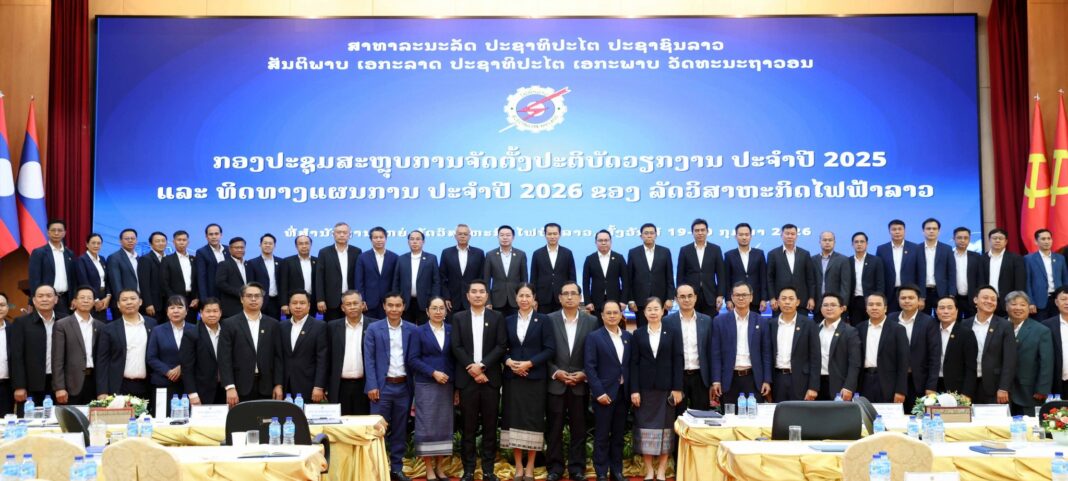
Electricité du Laos (EDL) will accelerate the Nam Ngum 3 hydropower project and push forward 12 large-scale solar farms as it works to secure stable electricity supply between 2025 and 2027.
At its annual review meeting on 20 February, Director General Akhomdeth Vongsay told senior officials that rising demand requires urgent action. Minister of Industry and Trade Malaithong Kommasith chaired the session, which reviewed last year’s performance and outlined priorities for 2026.
Future Plans
EDL plans to complete the Nam Ngum 3 hydropower project by 2027. The state utility will also fast-track 12 solar power projects across the country, with a combined installed capacity of 830 megawatts. These projects aim to strengthen domestic supply as consumption continues to climb.
Beyond building new power plants, EDL will upgrade transmission and distribution systems nationwide. The company will improve the 115 kV transmission network and modernize transformers, particularly in high-demand areas such as Vientiane Capital.
Officials want to reduce voltage drops and prevent widespread outages, especially during the upcoming summer season when electricity use typically surges.
Past Review
In 2025, EDL traded 19,298 gigawatt-hours (GWh) of electricity, including imports and domestic production, up 3 percent from 2024. Domestic sales and exports reached 17,828 GWh, an increase of 2.4 percent year-on-year. The country now operates 107 power generation sources with a combined installed capacity of 4,962 megawatts.
At the same time, EDL continues internal reforms. The utility will restructure its organization, adjust electricity tariffs to better reflect actual supply costs while protecting low-income households, renegotiate generation pricing, and restructure outstanding debt with financial institutions.
The company also plans to expand smart meter systems and digital management tools to improve efficiency and revenue collection.
For 2026, EDL identified five major focus areas and 26 priority actions. Officials say reliable electricity remains essential to economic growth, industrial expansion, and public stability as demand increases nationwide.
