

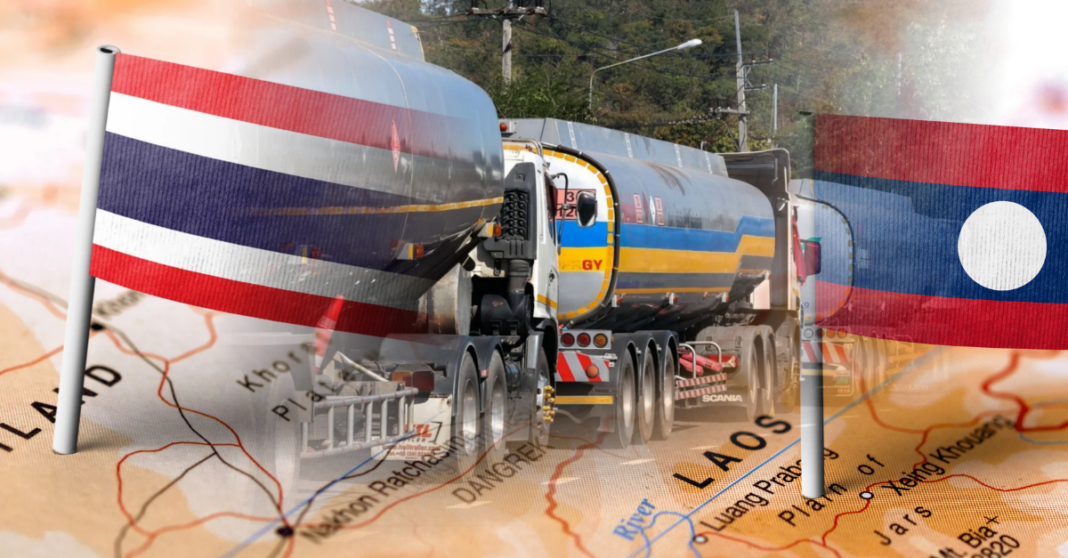
Thailand has ordered the temporary suspension of fuel exports following Iran’s closure of the Strait of Hormuz, a move that poses a direct threat to Laos’ fuel supply given its heavy reliance on Thai energy imports.
Thailand’s Minister of Energy, Auttapol Rerkpiboon, announced the emergency measure on 1 March, citing escalating conflict in the Middle East as the catalyst.
Alongside the export suspension, he ordered the establishment of an emergency energy monitoring centre and directed all relevant agencies to assess the impact and prepare contingency plans covering both fuel reserves and prices.
The decision is expected to carry serious implications for Laos.
Thailand is Laos’s largest import partner, with Laos importing over USD 4.4 billion worth of goods from Thailand in 2025, accounting for 45.71 percent of total imports, according to the Ministry of Industry and Commerce. Diesel fuel alone represents over USD 1 billion, or roughly one quarter of all imports from Thailand, making it the single largest import item.
Central to Thailand’s decision is the closure of the Strait of Hormuz, the only sea passage from the Persian Gulf to the open ocean, which carries roughly one-fifth of global daily oil supplies.
The closure follows a sharp escalation in Middle East conflict after US and Israeli forces launched strikes on Tehran on 1 March, killing Iran’s Supreme Leader Ayatollah Ali Khamenei.
Iran retaliated with ballistic missiles and drone attacks targeting US assets and allies across the region.
The strikes have forced major oil shippers to suspend or reroute tanker traffic, driving global oil prices sharply higher.
Despite the growing threat to energy security, the Lao government has yet to issue any official statement or response measures.
