

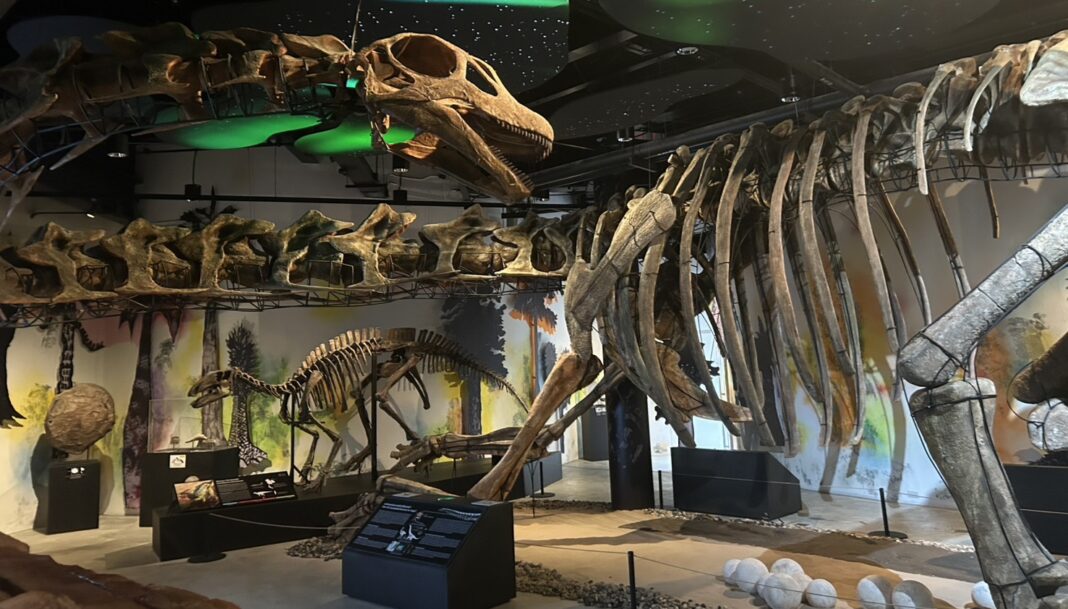
British and Thai scientists have identified a new species of giant dinosaur from fossil remains discovered in Thailand, with researchers calling it the largest dinosaur ever found in Southeast Asia.
Researchers from University College London worked alongside Thai scientists to identify the dinosaur, named Nagatitan chaiyaphumensis, from fossils unearthed in Chaiyaphum province in northeastern Thailand. Global news publication Reuters first reported the discovery.
The name combines “Naga,” the mythical serpent from Southeast Asian folklore, and “Titan,” the giant gods of Greek mythology. The species name refers to Chaiyaphum province, where the fossils were originally discovered.
The dinosaur belonged to the sauropod family, a group of massive plant-eating dinosaurs known for their long necks and enormous size. Scientists said the species shares similarities with several sauropods previously discovered in Southeast Asia, including Tangvayosaurus from Laos, highlighting ancient dinosaur links across the region.
Researchers believe the dinosaur lived during the Early Cretaceous period around 100 to 120 million years ago.
Fossil analysis showed the dinosaur likely reached around 27 meters in length, placing it among the largest dinosaurs ever identified in the region.
A local resident first spotted part of the dinosaur’s hip bone protruding from the ground in 2016. Researchers from University College London later excavated additional fossil remains, including a 178-centimeter upper arm bone, vertebrae, ribs, and pelvic bones.
Scientists said several unique skeletal features confirmed the dinosaur as a completely new genus. The discovery also gives researchers new insight into the diversity of giant dinosaurs that once lived across Southeast Asia.
Researchers published the findings in the journal Scientific Reports and described Nagatitan as potentially the “last titan” discovered in Thailand because of the age of the surrounding rock formations.
