

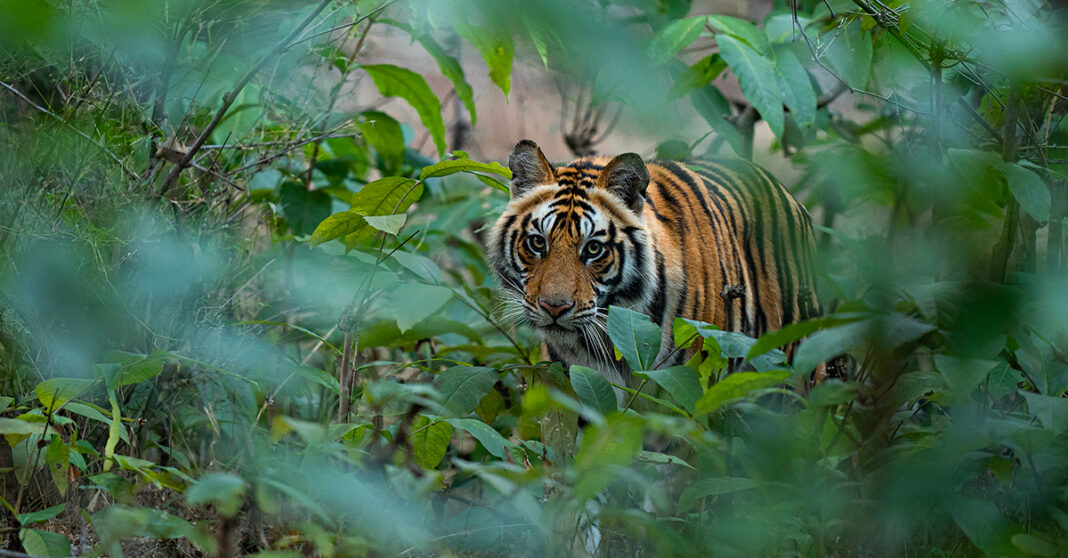
Laos approved a 10-year tiger action on 22 May, coinciding with the 2026 International Day for Biological Diversity, setting a national roadmap to restore the conditions needed for wild tigers to return to the country.
The National Tiger Recovery Action Plan (NTRAP), which covers through 2035, comes more than a decade after the last confirmed wild tiger sighting in Laos, recorded in 2013 at Nam Et-Phou Louey National Protected Area in the country’s north.
Linkham Douangsavanh, Minister of Agriculture and Environment, signed the action plan in March, with the Department of Forestry (DOF) leading its implementation alongside conservation organizations including World Wildlife Fund Laos (WWF-Laos).
Somvang Phimmavong, Director General of DOF, said the plan reflected Laos’ renewed commitment as a tiger range country to restoring connected tiger landscapes in alignment with the Global Tiger Recovery Programme. He added that the government was setting a clear national direction for tiger recovery and strengthening coordinated action across priority landscapes.
The plan identifies four priority landscapes.
Nam Poui National Protected Area in Xayabouly Province, bordering Thailand, holds Priority 1 status as the most feasible site for tigers dispersing naturally from Thai source populations. Three Priority 2 landscapes, Nam Et-Phou Louey across Luang Prabang, Houaphanh, and Xieng Khouang provinces; Nakai-Nam Theun National Park in Bolikhamxay and Khammouane; and Xe Pian National Park in Champasak and Attapeu in the south, require longer-term habitat and prey restoration before they can support tigers again.
Dr. Akchousanh Rasphone, Conservation Director of WWF-Laos, said the return of wild tigers would signal that broader conservation conditions were being restored, noting that tigers would only return when sufficient space, prey, and healthy ecosystems existed to support them.
She added that coordinated action and long-term commitment would be essential to restoring tiger landscapes and strengthening forest governance and regional cooperation, and confirmed that WWF-Laos remained committed to supporting the national effort.
