

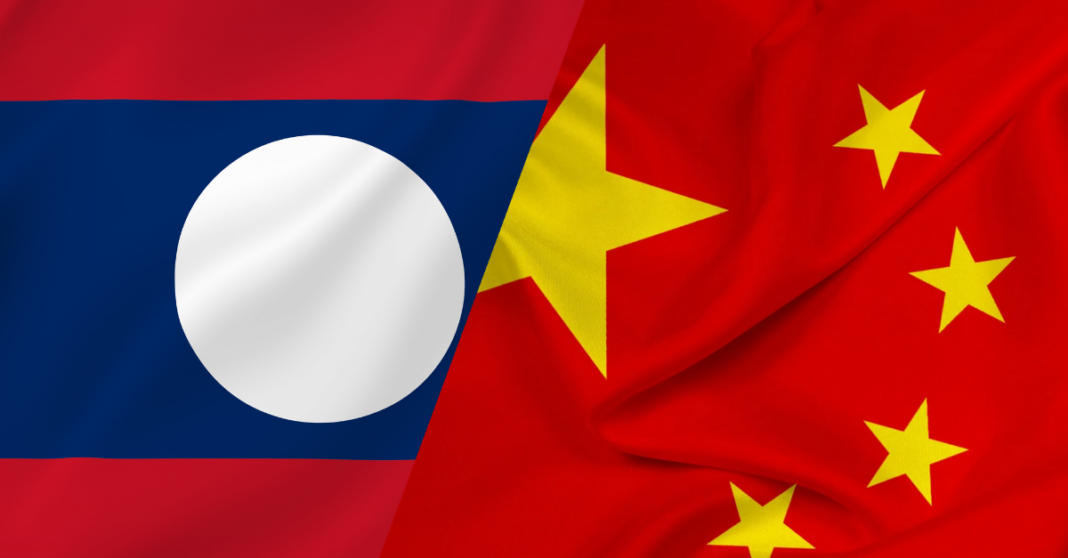
Laos and China have agreed on four strategic pillars to boost bilateral trade and investment, with projections suggesting the figure could reach up to USD 20 billion by 2030.
The agreement came after Malaythong Kommasith, Minister of Industry and Commerce, led a delegation to Suzhou, Jiangsu Province, on 21 May for a bilateral meeting with Wang Wentao, Chinese Minister of Commerce, the first official meeting between the two ministers to discuss directions for strengthening economic and trade cooperation.
Among the agreements, both sides committed to expediting the review and upgrade of the 1998 Laos-China Trade Agreement, targeting market access, e-commerce, trade facilitation, and payment settlement mechanisms.
On energy, both sides agreed to increase fuel supplies from China to Laos following a fuel crisis in March triggered by the Middle East crisis, which disrupted global supply chains. They also agreed to promote new energy sources and electric vehicles, a sector where China holds global expertise.
On agriculture, they agreed to develop the NPK compound fertilizer industry, a plant nutrient blend of Nitrogen, Phosphorus, and Potassium, by leveraging Laos’ potash reserves and importing phosphorus and nitrogen compounds from China to establish local production facilities, aiming to secure agricultural productivity and food security.
On mining, both sides agreed to focus on mineral extraction and processing to create value-added products, generate employment, and train Lao technical personnel.
Beyond the four pillars, both sides agreed to explore future cooperation in production and supply chains, green minerals, and international obligations.
Bilateral trade has already doubled, rising from USD 4.34 billion in 2021 to USD 8.80 billion in 2025.
Laos exports mixed gold, potash, paper, iron ore, rubber, cassava flour, and fruits to China, while importing machinery, chemical products, vehicles, steel, electrical appliances, and fertilizers.
The meeting comes as the Lao President is currently in China for an official state visit at the invitation of President Xi Jinping, traveling to Zhejiang Province from 2 to 6 June for high-level talks aimed at deepening bilateral ties between the two nations.
