

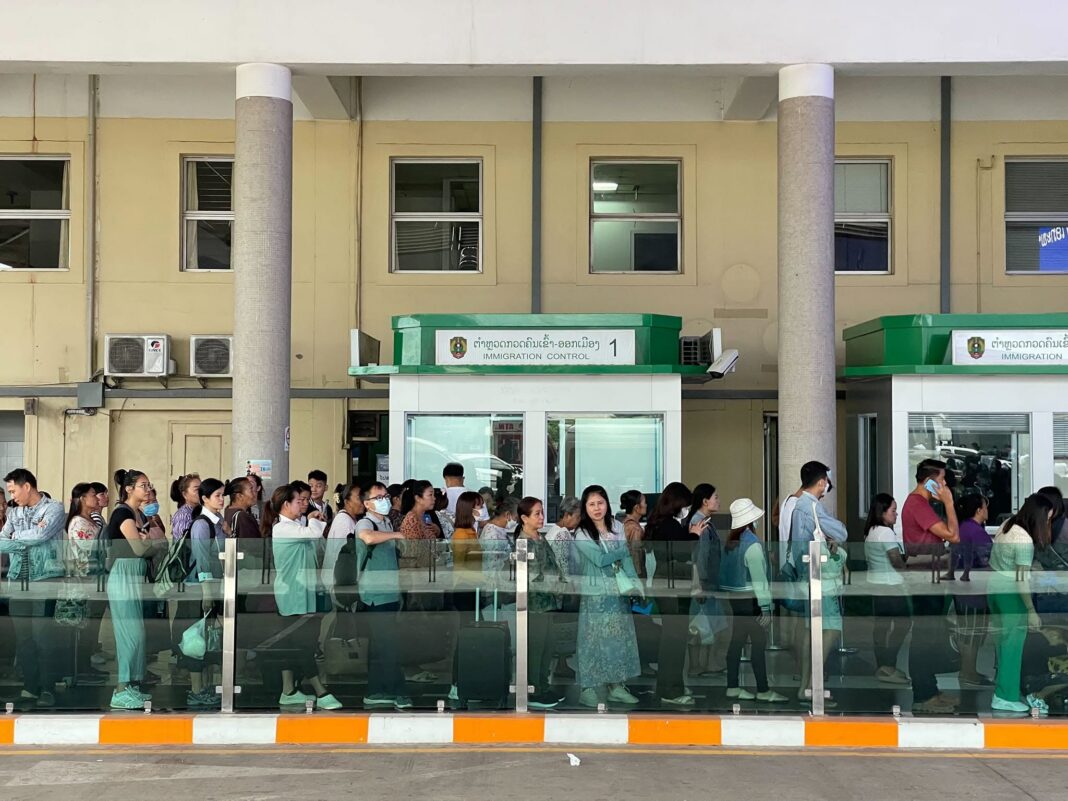
Thailand has cut its visa-free tourist stay from 60 days back to 30 days, ending an expanded temporary scheme that had been in place since July 2024.
The change took effect on 15 September and applies to travelers from dozens of countries, though Lao passport holders face a distinct set of rules, since Laos operates under its own bilateral visa exemption agreement with Thailand.
What changed on 15 September
Thailand’s old 60-day exemption covered 93 countries and territories, Laos included. That scheme has now been scrapped.
In its place, Thailand re-introduced the 30-day tourist exemption scheme. Thailand also added a 15-day exemption category for Seychelles and Mauritius, and trimmed the list of countries eligible for Visa on Arrival. Other visa categories are unaffected.
Separately, under the new rules, travelers from 60 countries and territories, among them Australia, Germany, India, Japan, South Africa, the United Kingdom and the United States, are limited to two visa-exempt land-border entries per calendar year.
This measure aimed at stopping “visa runs,” in which travelers leave Thailand right before their stay expires and immediately re-enter for another free 30 days.
Bilateral Agreement
Laos was never part of the general tourist exemption framework the way most other countries are. Lao citizens have long traveled to Thailand under a separate bilateral visa exemption agreement between the two governments, one that has always granted 30 days visa-free.
Lao travelers had been enjoying 60 days only because Laos was also included on the old, broader 93-country list under the expanded 2024 scheme, which offered the longer stay on top of the existing bilateral arrangement.
Now that the expanded scheme has been scrapped, Lao citizens fall back on the bilateral agreement alone, 30 days, the same as before July 2024. The same applies to travelers from China, Hong Kong, Macao, Mongolia, Kazakhstan, Russia, Timor-Leste and Vietnam, who also hold bilateral arrangements with Thailand and are unaffected by the new land-border entry cap facing the 60 countries on the general list.
Because that two-entry limit is a rule specific to the new 60-country scheme, and Lao citizens fall outside that scheme entirely, it does not appear to apply to them.
Diplomatic channels suggest the cap is intended to target foreign tourists doing visa runs, and will not apply to Lao nationals or to foreign nationals residing in Laos.
Foreign nationals residing in Laos may also be asked to present a work permit, stay permit or diplomatic identity card issued by Laos when entering Thailand, according to the same diplomatic-channel information, though the Laotian Times was not able to independently confirm these details with local officials.
Confusion at the Border
Still, the rule as written and how it’s being enforced don’t yet appear to be fully in sync. The Laotian Times checked with Lao and Thai immigration officials at the Vientiane-Nong Khai border crossing on 16 September. Officials confirmed the return to a 30-day visa-free stay, but could not specify how the new two-entry limit applies to travelers crossing from Laos, or which categories of entry it covers.
Thai authorities said the review was based on national security, tourism and economic interests, reciprocity, and a desire to reduce overlapping visa exemption arrangements. The government also cited concerns about misuse of visa-free stays and a need to simplify Thailand’s visa system.
