

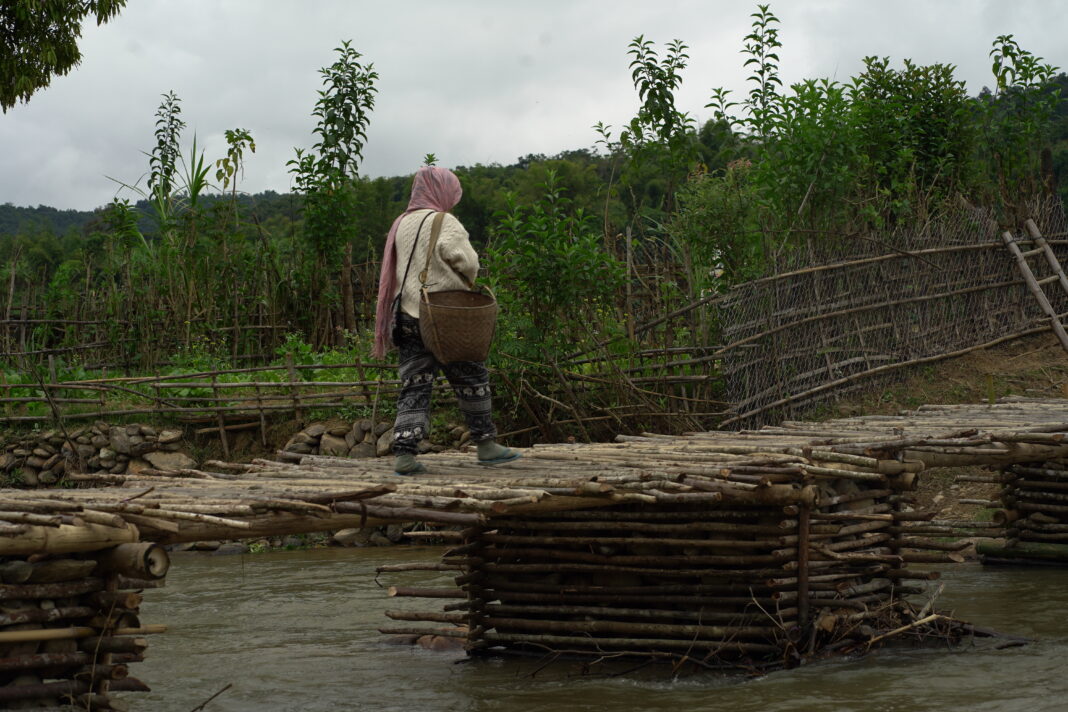
Residents of Meuangvaen village in Houaphanh Province say they have stopped using water from the Nam Vaen River and are avoiding fish caught there after a reservoir breach at a nearby rare earth mining site in early November.
Provincial authorities attributed the breach to heavy rain, which caused soil to collapse down a steep mountainside into a reservoir operated by Laos-China Rare Mineral Development Company North 2, state media reported. The collapse occurred at about 2 AM on 2 November, sending more than 1,000 cubic meters of muddy water into the Duangdom Stream and Nam Vaen River. It also damaged water supply pipes and eroded the reservoir’s embankment.
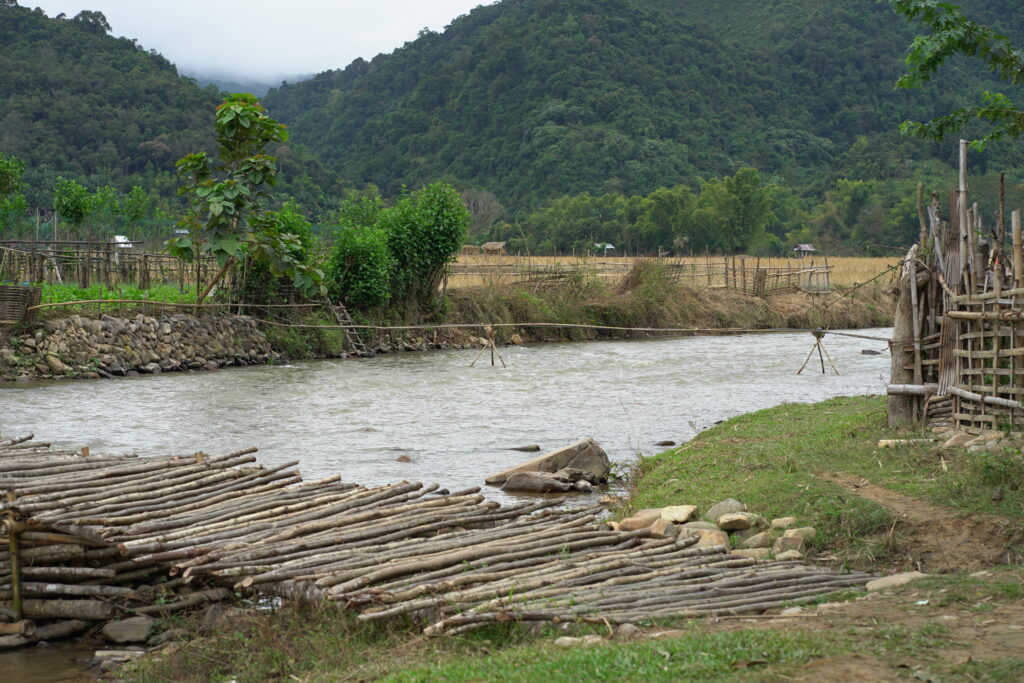
The Meuangvaen village chief showed us reports of more than 150 fish deaths over four days, from 1 to 4 November. We did not see dead fish during our visit. Residents in nearby communities along the rivers have also stopped using the water and are avoiding fish caught there.
Residents of Meuangvaen, Nakao, and Nakhoun villages installed and paid for pipes to bring water from a smaller stream north of the village. The system has increased the supply, but residents say it is still insufficient for household needs, farming, and livestock.
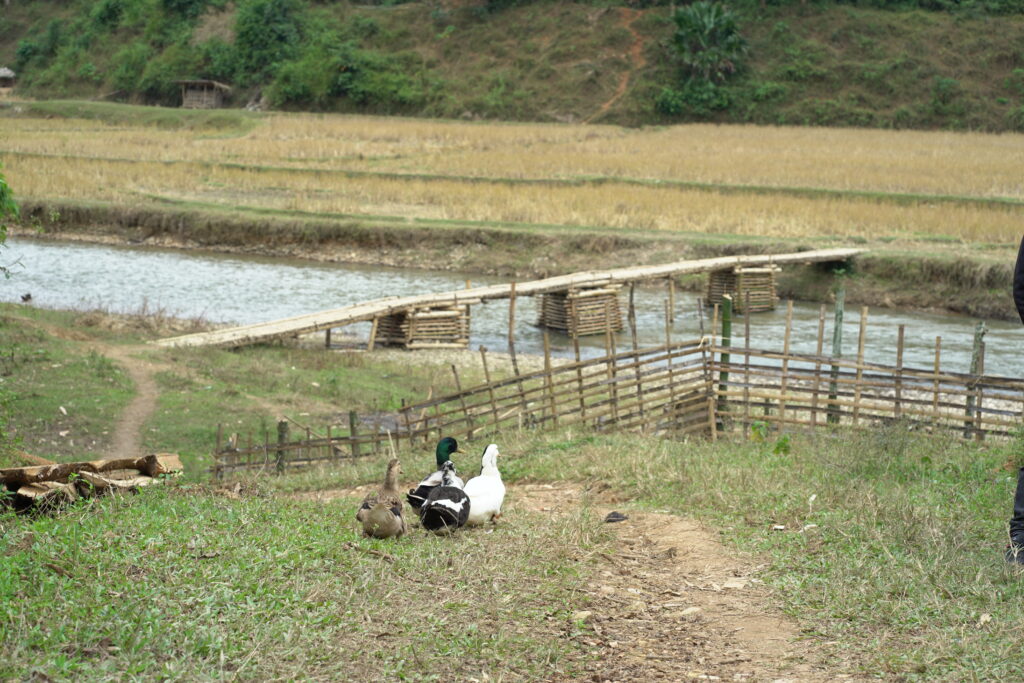
In Nakao, a few kilometers north of Meuangvaen, a video of a dead duck on the riverbank circulated widely on social media in mid-November. Residents said the duck had died after drinking from the Nam Vaen. They said several other ducks had also died and fish were continuing to die in the river as of 21 November.
Officials inspected the mining site in Thabpheung village, Xamneua district, on 4 November. Preliminary measurements found highly turbid water in the Duangdom Stream, 900 meters from the site, and slightly turbid water in the Phaboud Stream, 1,500 meters away. The inspection team said it had received no reports of dead aquatic animals and that the incident had not caused severe damage to the aquatic ecosystem.
Village authorities ordered residents of Meuangvaen, Nakao, and Nakhoun to stop using river water on 3 November. Provincial authorities suspended mining operations on 13 November. The notice set no timeline for further inspections, an environmental assessment, or resolving compensation claims. The company had not provided any compensation so far for this year’s incident, the villagers said.
As of 27 November, authorities had not released the water test results. Residents of the three villages said they remained afraid to use the river water.
Earlier Pollution Complaints
A rare earth project in Houaphanh launched in 2022, with a 5-square-kilometer mining and processing site and a separate 45-square-kilometer exploration area across Houameuang and Xamneua districts.
In early 2024, residents reported pollution in the Taboun and Man streams and alleged that a mining company had discharged chemicals into nearby waterways. A group of villagers later said a leak had affected 36 villages, killing fish and livestock and causing skin rashes.
Authorities ordered a temporary suspension of mining in March, but villagers alleged that operations continued despite the order.
Concerns resurfaced in October the same year, when Houaphanh National Assembly member Soyphet Thongsombath told the Assembly that some mining projects were harming the environment and residents’ daily lives. She called for authorities to review exploration projects and stop approving new ones. Less than a month later, two ponds at the Thabpheung mining site breached.
