

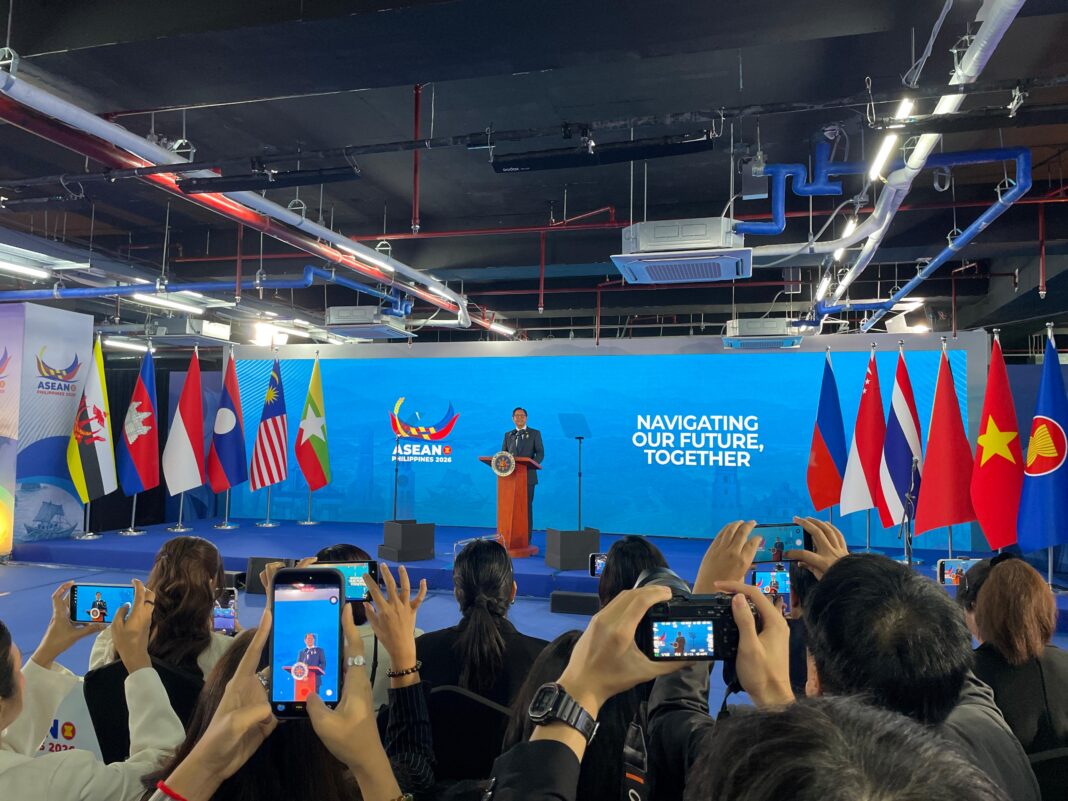
Leaders of the Association of Southeast Asian Nations (ASEAN) are discussing a regional fuel reserve system following recent oil supply disruptions linked to the Middle East conflict.
The bloc is also accelerating plans for a connected regional power grid to strengthen long-term energy security across Southeast Asia.
Speaking after the 48th ASEAN Summit in Cebu, Philippine President Ferdinand Marcos Jr. said member states agreed on the need for emergency fuel reserves that could be shared during future crises, similar to ASEAN’s existing rice reserve mechanism.
The proposed system remains under discussion, including where fuel reserves would be stored and how member states would access emergency supplies during shortages.
Marcos said ASEAN countries are already securing additional fuel supplies through bilateral agreements with suppliers in Latin America and other regions. However, he stressed that the long-term solution lies in reducing dependence on fossil fuels and accelerating the transition toward alternative energy sources.
“Long term solution is moving away from fossil fuel and use alternative renewable sources like hydropower, solar power, even nuclear power,” he said.
Leaders also renewed calls to accelerate implementation of the ASEAN Power Grid, a long-standing regional plan to connect electricity networks across Southeast Asia and enable cross-border electricity trading.
“We have discussed connecting our power grids. Laos is already producing electricity that they export to their neighbors,” Marcos said.
ASEAN Power Grid
First proposed in 1999, the ASEAN Power Grid aims to strengthen energy security, improve regional connectivity, and support the integration of renewable energy sources across ASEAN’s nearly 700 million people.
The recent discussions place Laos in an increasingly strategic position within ASEAN’s future energy plans.
Hydropower currently accounts for around 83 percent of Laos’ primary energy supply, and the country already exports electricity to Thailand, Vietnam, and others through regional trading arrangements.
One of the most significant projects is the Laos–Thailand–Malaysia–Singapore Power Integration Project, ASEAN’s first multilateral cross-border electricity trading system. It transmits up to 200 MW of Lao hydropower to Singapore through Thailand and Malaysia.
The project currently exports up to 100 megawatts of electricity to Singapore, with a second phase signed earlier this year expected to double capacity.
ASEAN leaders are also pushing for the expedited ratification of the ASEAN Framework Agreement on Petroleum Security, which would allow member states to support one another during fuel shortages.
The renewed focus on regional energy cooperation follows recent fuel shortages across parts of Southeast Asia, where reduced fuel imports and rising global oil prices disrupted transport, businesses, and daily life earlier this year.
While no official timeline has been announced for the regional fuel reserve system, Marcos said ASEAN leaders were determined to avoid delays.
“I’m very optimistic. We will not be wasting time with a bureaucratic monster,” he said.
