

Residents across Laos will now need government approval before installing electric vehicle (EV) charging equipment at home, under new regulations aimed at improving safety.
A notice issued by the Ministry of Public Works and Transport on 17 July requires homeowners and businesses to obtain technical approval from the Ministry of Industry and Commerce before installing home charging systems.
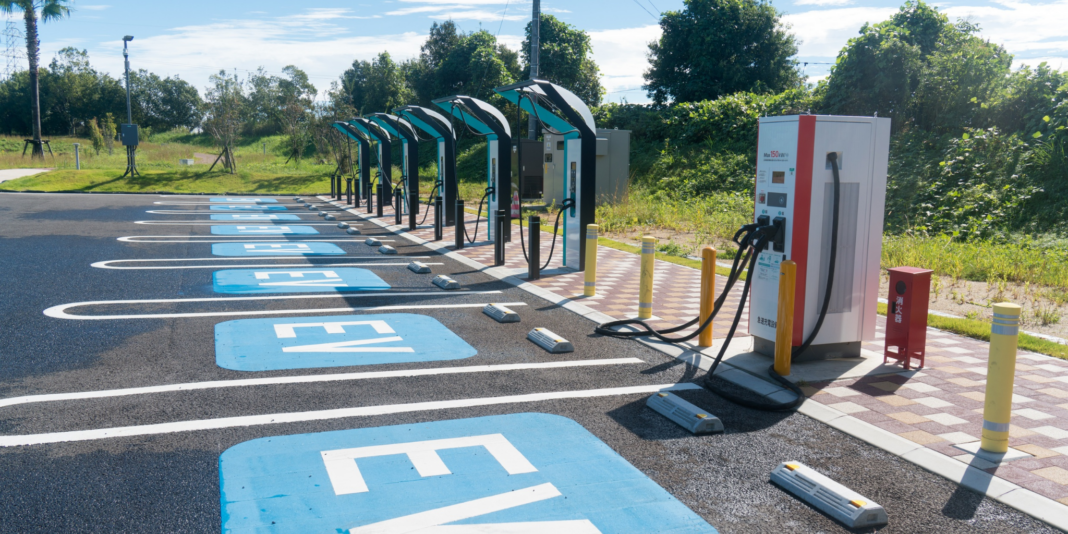
The same notice also introduces stricter rules for public charging stations. Anyone planning to build a new charging station must first obtain construction approval, while operators of existing stations built without prior approval must register with provincial authorities so officials can inspect the sites and determine whether they meet the required standards.
The measures are intended to improve safety, ensure charging stations comply with urban planning regulations, and bring existing and future charging infrastructure under a single regulatory system.
Under the new rules, charging stations may only be built in approved locations, including shopping centers, hotels, office buildings, transport hubs, airports, railway stations, petrol stations, and large residential developments.
Before construction can begin, developers must submit site plans, technical designs, traffic and drainage plans, environmental approvals, fire safety certification, and confirmation from Electricité du Laos (EDL) that the electricity supply is suitable for the project.
Provincial Public Works and Transport departments have also been instructed to inspect charging stations already operating across the country and determine whether they comply with the new requirements.
Next Phase of Laos’ EV Push
The regulations mark the next phase of Laos’ electric vehicle strategy, as the government shifts its focus from encouraging EV adoption to regulating the infrastructure needed to support it.
In May, Laos suspended imports of most fossil fuel-powered vehicles until the end of 2026 while introducing price controls on electric vehicles to help keep them affordable. Officials said the policy aims to reduce the country’s dependence on imported fuel and accelerate the transition to cleaner transport.
The government has also been expanding the infrastructure behind that transition. In April, it signed agreements with 27 public and private sector partners to develop EV charging stations, battery-swapping facilities, digital charging management systems, and financing for businesses investing in electric transport.
Electric public transport has also continued to expand. Earlier this year, Vientiane extended its electric Bus Rapid Transit (BRT) network with a new route along Setthathirath Road after relaunching the service following safety improvements. Authorities also plan to extend the network to Wattay International Airport and the Laos-China Railway station.
