

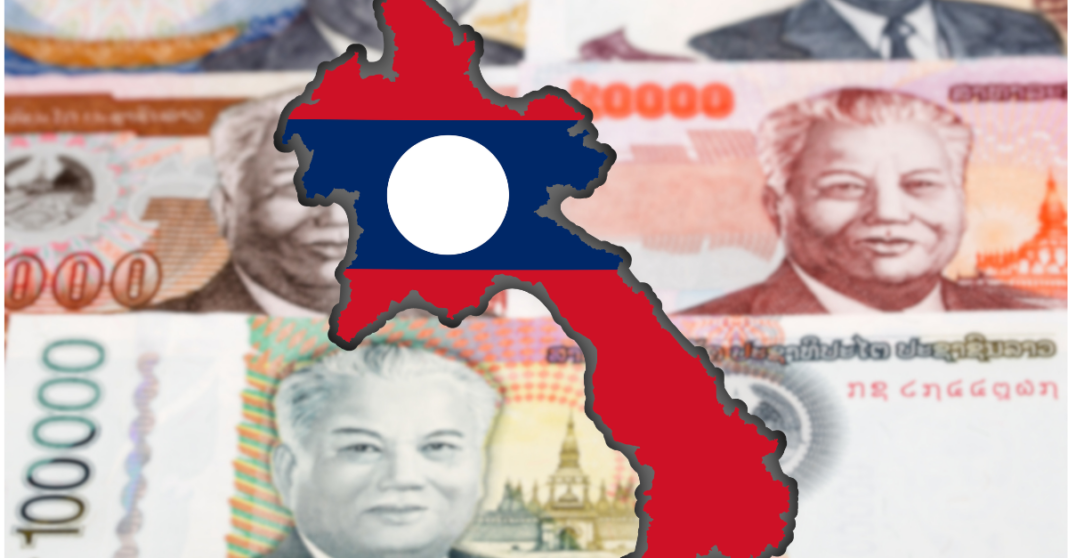
Laos has tightened controls on foreign borrowing as the government seeks to limit debt risks and reduce pressure on foreign-currency reserves and the Lao kip.
Under a new Bank of Laos decision issued in August, individuals and companies must obtain central bank approval before taking certain loans, guarantees, trade credits and other forms of financing from foreign lenders.
The central bank can reject a loan if the borrower does not have enough foreign-currency income to repay it or if the borrowing could put pressure on the monetary system or exchange rate.
Companies that earn mainly in foreign currency can borrow up to 75 percent of their registered capital, while companies that earn mainly in kip face a 50 percent limit.
Borrowers seeking to exceed those limits must submit a plan to manage foreign-exchange risks. Loans must also be issued and repaid in the same currency, reducing the risk that exchange-rate changes will increase repayment costs.
The rules impose additional scrutiny on large borrowers. Companies with n outstanding balance combined with a new drawdown reaches USD 100 million or more must submit financial statements audited by an internationally recognized firm.
Commercial banks must verify approval documents, monitor foreign loans and repayments, and report relevant transactions to the central bank. Unauthorized foreign borrowing or guarantees can result in fines, including a penalty equivalent to 10 percent of the loan agreement.
The government aims to reduce public debt to below 70 percent of GDP, strengthen foreign-currency reserves and ensure that foreign borrowing matches borrowers’ ability to earn foreign currency and repay their debts.
Debt Pressure
The new rules come as Laos continues efforts to reduce its high debt burden and strengthen domestic sources of financing.
The Asian Development Bank estimated in May that Laos had limited fiscal space and public debt of about 85 percent of GDP. The bank has said Laos will need stronger domestic revenue collection, debt management and private investment as it prepares to graduate from Least Developed Country status.
The International Monetary Fund has also said Laos’ economy is stabilizing, with lower inflation, easing pressure on the kip and improved macroeconomic management. However, it continues to flag high debt, limited foreign-currency reserves and weaknesses in the financial sector as key risks.
The IMF projects that public debt could fall to 75.7 percent of GDP in 2026 and decline further to 57.4 percent by 2030 if current economic policies continue.
Part of Wider Economic Reforms
The tighter borrowing rules are part of broader efforts to stabilize Laos’ economy and strengthen its financial system.
The economy grew 5 percent in the first half of 2026, according to Ministry of Finance figures, although growth slowed from 5.5 percent in the first quarter to 4.6 percent in the second.
Inflation fell to 7.4 percent in June before rising slightly to 7.6 percent in July. In August, the Bank of Laos cut its seven-day base interest rate from 8 percent to 7 percent as it adjusted monetary policy.
The government has also continued to pursue reforms aimed at strengthening economic management.
In August, the Cabinet approved 12 draft laws and proposals covering areas including public procurement, health insurance, social security, cybersecurity and mineral development.
Together, the measures reflect Laos’ broader effort to manage debt and foreign-currency risks while maintaining economic growth and financial stability.
