

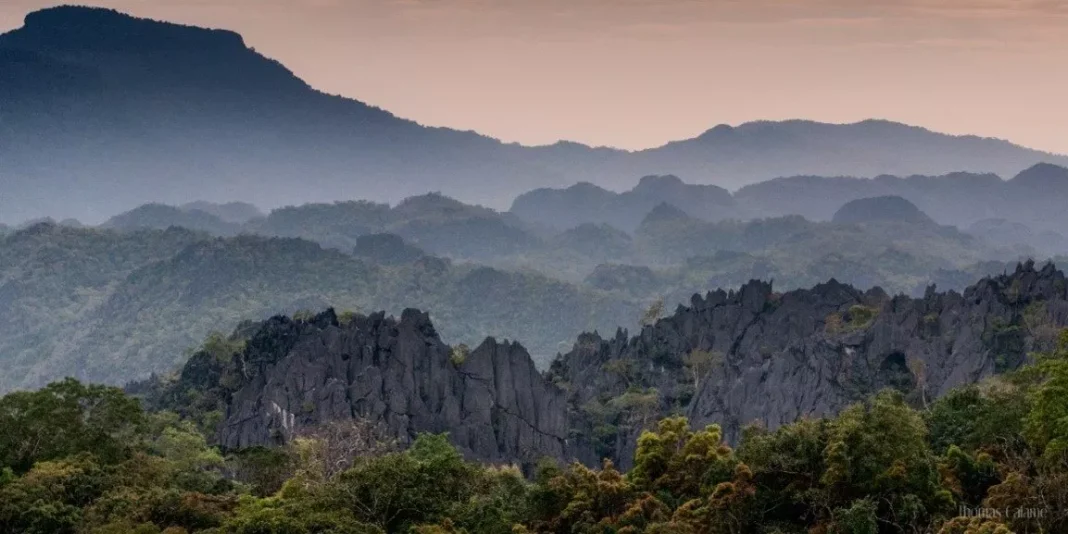
Khammouane is preparing a UNESCO bid for the Hinboun Geopark, hoping the international designation will help raise the province’s profile as a tourism destination.
Provincial officials and international experts met on 29 September to finalize conservation plans and prepare the geological and cultural documentation required for the application.
The proposed site includes limestone karst mountains, river cave networks, dense forests, and prehistoric archaeological sites, including the recently opened Hidden Hands Cave.
Hidden Hands Cave
One focus of the province’s UNESCO bid is Tham Pha Mue, also known as Hidden Hands Cave, located near the geopark’s entrance.
Researchers have documented more than 285 prehistoric rock-art images inside the cavern, including hand stencils, human figures, and animal symbols painted in various pigments.
The site provides concrete evidence of ancient human settlement, significantly elevating the region’s archaeological value on the international stage.
Authorities officially opened the cave to the public in June, positioning it as an important heritage destination designed to draw visitors into the broader geopark while maintaining strict, long-term conservation protocols.
Broader Tourism Push
The UNESCO initiative aligns with Khammouane’s latest aggressive push to commercialize its natural assets through private investment.
On 23 September, the province signed a USD 1.2 million, 50-year concession agreement with a private developer to transform Khounnamphone into a structured nature tourism site, dividing the area into distinct commercial and conservation zones.
The province also began construction of a new LAK 2.5 billion (USD 111,207) clock tower in Thakhek on 24 September, intended to create a new landmark for visitors.
The focus on structured tourism follows a massive surge in provincial arrivals. Khammouane recorded more than 852,000 visitors in 2024, exceeding its government target by 70 percent, according to the Ministry of Information, Culture and Tourism.
