

Laos will suspend access to South Korea’s seasonal work program for 3 years if the nationwide overstay rate reaches 70 percent, under new rules introduced as the country expands overseas job opportunities.
A provincial overstay rate above 20 percent will trigger a one-year suspension of visa issuance for Bolikhamxay Province, according to the Ministry of Labour and Social Welfare. If the nationwide rate reaches 50 percent, all provinces will face a one-year visa freeze. A rate of 70 percent will result in a three-year nationwide ban.
Workers who complete their contracts and return as required will receive priority for future seasonal placements.
More Provinces Join the Program
The rules accompany new agreements expanding seasonal employment opportunities in South Korea.
On 21 October, the Ministry of Labour and Social Welfare renewed a two-year agreement with Naju City. Recruitment will expand beyond Vientiane Capital and Xayaboury to 29 districts across five provinces: Vientiane, Xayaboury, Savannakhet, Champasak, and Bolikhamxay.
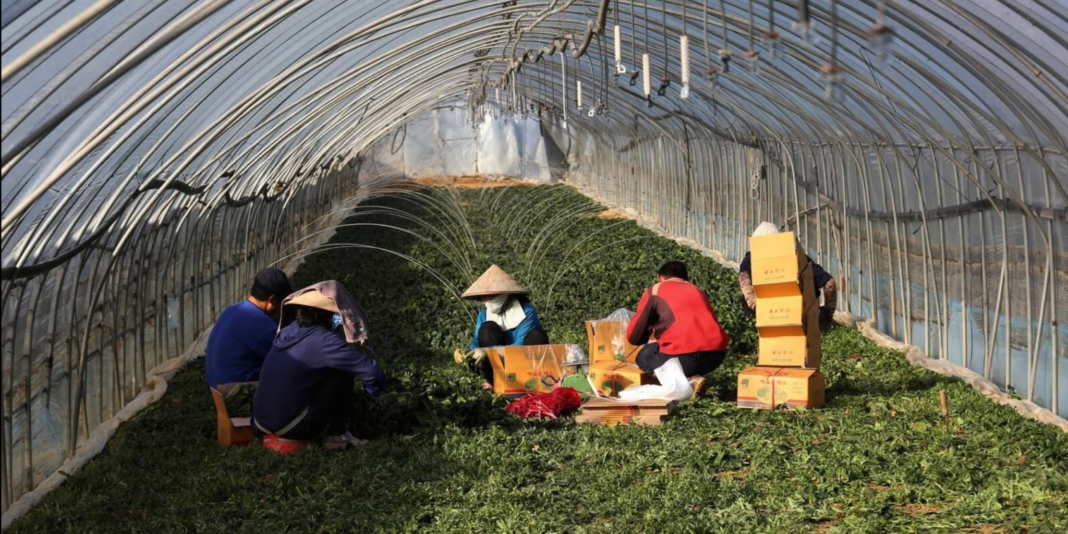
Two days later, ministry officials signed another two-year agreement with Jangheung County, offering five- to eight-month placements in agriculture and fisheries. Applicants must have at least one year of farming experience.
The program has sent more than 33,000 Lao seasonal workers to 95 South Korean municipalities since 2022, according to the ministry. Laos aims to send more than 17,000 workers to South Korea in 2026.
Recruitment and Worker Protections
To protect applicants from high recruitment fees, Laos’s Employment Department will manage recruitment directly, barring private brokers and third-party agencies from intervening.
Under the Naju agreement, workers must generally be between 25 and 45 years old. Returning workers with good records are exempt from the age limit. Employers must also provide heat-relief equipment, including cooling jackets and portable fans, during periods of extreme summer heat.
Earlier this month, Lao officials held similar discussions with representatives from Seongju County, seeking higher age limits, more places for married couples, and stronger protections against extreme heat.
Overseas Work Remains a Major Draw
Higher wages continue to attract Lao workers abroad. Seasonal farm workers in South Korea can earn around USD 1,600 to USD 2,000 a month, well above typical wages at home.
Ministry data show that 93 percent of registered job seekers in the first nine months of 2026 sought employment overseas. More than 708,000 Lao citizens have moved abroad for work since 2016, while the 2025 census counted 313,766 Lao citizens living overseas. These figures measure different aspects of migration and are not directly comparable.
Migrant workers also provide a significant source of income for Laos, sending an estimated USD 500.7 million home in the first seven months of 2026 alone.
