Home Blog Page 164

Knitup unlocks a new era of creator commerce with single-piece premium knit production


HONG KONG SAR – Media OutReach Newswire – 25 August 2026 – Knitup, a design-to-manufacturing platform, is introducing a flexible production model tailored to the rapidly expanding global creator economy. As online creators move beyond basic print-on-demand merch, Knitup bridges the gap by offering custom, high-end knitwear with low barriers to entry.

Over 45% of online creators are diversifying revenue through direct product launches, but the creator apparel industry is still stuck in cheap screen-printed blanks that dilute premium IP. Top creators want to build fashion-grade consumer brands, but traditional fashion manufacturers requires high MOQs, long lead times, and technical literacy. High-end creators face a trade-off: basic promotional blanks or massive inventory risk on fashionable products. Knitup solves this by enabling creators with no technical know-how to go from idea to premium products with no minimum requirement. With the advantage of full creative freedom, zero inventory liability, and rapid replenishment cycles, creators can target the premium segment with offerings of BCI Cotton and sustainable merino wool sweaters and beanies, or even step into the luxury tier segment with cashmere cardigan, dresses and blankets.

“We created Knitup to empower the next generation of creators by making the capabilities of a fashion design house accessible,” said Dorothy Pun, Founder of Knitup. “Creators and designers are enabled to make better products with minimal capital outlay. Brands and the planet are saved the burden of inventories. The world sees more creativity and innovation.”

Knitup addresses bottlenecks around mass customization for any knitted products by automatically turning digital design into knitting data that goes straight to knitting machines. What usually takes hours can now take minutes.

Since launching its online design platform in 2022, Knitup has grown to serve over 1,000 brands, ranging from emerging labels to established global names. Key capabilities include:

  • No Minimums: Produce exactly what the market demands, precisely when it wants it, helping eliminate excess inventory.
  • Design Expression: Bring visuals to life, from detailed custom jacquards to classic solid stitches and crisp embroidery.
  • Creation Process, Edited: Styles are visualized using high fidelity virtual samples. No waste even if users over-design and kill many styles. All costed instantly. Guilt-free and simple. Also a perfect tool to get consumers’ feedback on social media.
  • Sustainable Yarns: Access to environmental friendly materials that deliver both quality and great hand-feel.
  • Agile Manufacturing: A frictionless three-week production lead time that allows brands to restock rapidly, introduce new styles at speed, or launch limited capsule collections in weeks.

From bold statement graphics to quiet luxury, Knitup makes conscious fashion accessible without sacrificing speed, quality, or creative expression.
Hashtag: #Knitup #CreatorCommerce #PremiumKnitwear

The issuer is solely responsible for the content of this announcement.

About Knitup

is a new kind of design-to-manufacturing platform that caters to everyone, from visionary artists and makers to small businesses and even large global corporations.

We bridge the gap between creativity and commerciality by enabling easy access to a complex knitwear supply chain. Our deep heritage in manufacturing, combined with cutting-edge technology and extensive know-how, unlocks a world of possibility for a creator, brand, or business.

Ultimately, we believe in the power of self-expression. By providing the tools and resources for anyone to bring to life high-quality and sustainable products, we enable creativity to flourish everywhere. From fostering vibrant communities built on shared stories and collaboration, to established corporations venturing out into new avenues.

Londian Wason Leads Global Advanced Copper Foil Sector, Dual Growth Engines Anchor Long-Term Value

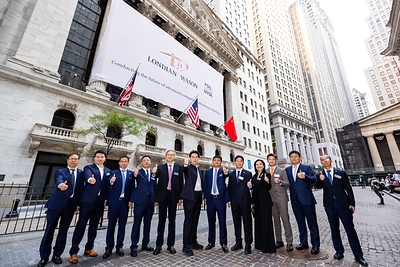
NEW YORK, Aug. 25, 2026 /PRNewswire/ — Londian Wason New Energy Technology Group (NYSE: FOIL), a global manufacturer of electrodeposited copper foil for electric vehicle batteries and printed circuit boards, completed its initial public offering on the New York Stock Exchange on August 12, 2026. With an operating history spanning more than two decades, the company’s strategic value is being redefined as the global computing race shifts from chip performance to upstream critical materials.

Investors signaled strong confidence in the industry leader on its trading debut. Londian Wason’s shares opened higher and surged to an intraday peak of $28.49 before closing at $24.50. The stock posted an 11.36% gain on its first day of trading.

Londian Wason Leads Global Advanced Copper Foil Sector, Dual Growth Engines Anchor Long-Term Value

As mainland Chinese manufacturers shift production toward high-end HVLP and ultra-thin foils, Londian Wason is positioned at the intersection of two structural growth drivers: global clean-energy electrification and AI computing infrastructure expansion. Markets frequently label the company strictly as a “battery materials supplier”. This label understates Londian Wason’s core strength in precision manufacturing of advanced copper-based materials, covering both ultra-thin lithium-ion battery foils and low-roughness PCB foils. Such manufacturing capability has taken on heightened strategic value in the AI era. Goldman Sachs projects demand for HVLP copper foil to expand at a 97% compound annual growth rate, with AI-server-driven demand jumping more than sixfold between 2025 and 2028. Londian Wason’s proprietary HVLP foil achieves a surface roughness below 0.6μm, while its RTF foil registers under 1.5μm, supplying 5G communications, AI servers, and high-speed data centers. Meanwhile, rising global EV adoption and energy‑storage deployments continue to anchor baseline demand for lithium‑battery copper foil. Benefiting from dual growth curves—a stable base in electrification alongside high-margin upside from AI infrastructure—Londian Wason has expanded its top-line revenue and bottom-line profits, driving a valuation re-rating from a traditional materials supplier toward a core technology hardware supply chain play.

Londian Wason enters this upcycle with a strong financial profile. In 2025, the company topped global lithium‑ion battery copper‑foil sales at 111,985 metric tons. For the first quarter ended March 31, 2026, revenue rose 113.71% year-over-year to RMB 4.07 billion, while net profit reached RMB 134.5 million. While the broader copper foil sector has rebounded from its downturn, Londian Wason outperforms regional peers on both scale and profitability. South Korea’s Lotte Energy Materials posted Q1 2026 revenue of KRW 159.8 billion (up 1.2% YoY) and remained in an operating loss. Solus Advanced Materials recorded Q1 revenue of KRW 192.6 billion (up 22.2% YoY) but also stayed unprofitable. In Japan, Mitsui Mining & Smelting generated JPY 21.0 billion in Q1 copper foil sales—up 37.1% YoY on AI-driven PCB demand—though group-wide growth remained limited. Londian Wason’s market leading position and global operational footprint allow it to maximize capacity utilization and benefit materially from the cyclical industry recovery.

Behind these financial results lies a high barrier to entry rooted in precision manufacturing. Electrolytic copper foil production involves dozens of chemical and physical processes, including additive formulations, solution purification, current density control, and surface modification. Over years of high-volume production, Londian Wason has accumulated proprietary process parameters and formulas which cannot be easily replicated through capital expenditure alone. These strengths secure its long‑term advantages in production yield and product consistency.

Meanwhile, Londian Wason has built a top-tier global client ecosystem with key partners including LG Energy Solution, Panasonic Industrial Devices, and Samsung SDI. Londian Wason has partnered with LG for over a decade, earning its “S-Class Supplier” designation in 2024. It also maintains a 12-year supply relationship with Panasonic, a core partner in NVIDIA’s high-performance computing supply chain. Deep integration within global computing and new-energy networks made an NYSE listing a natural strategic step, granting direct access to international capital and multinational clients. What supports this global expansion is a sector-leading annual design capacity of 180,500 metric tons as of year-end 2025 across seven domestic production bases, capable of supplying a full spectrum of battery and PCB foils. For Londian Wason, the NYSE listing is more than a financing milestone. It marks a key step toward deeper overseas local‑capacity build‑outs and strengthens its global‑competitive position across both international capital and industrial landscapes.

Sensors Data to Host Exclusive AI Growth Forum in Hong Kong — Exploring the Rise of the AI Growth Team

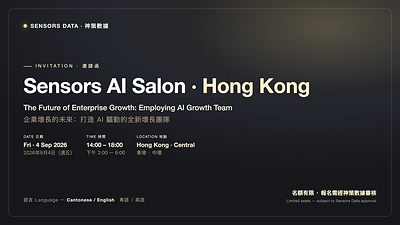
HONG KONG, Aug. 25, 2026 /PRNewswire/ — Sensors AI Salon • Hong Kong will take place on Friday, 4 September 2026, 14:00 – 18:00 in Central, Hong Kong. Under the theme “The Future of Enterprise Growth: Employing AI Growth Team,” the event convenes senior decision-makers from Aviation, Banking & Finance, Hospitality, Premium retail, Property Development and Utilities  to move beyond AI hype and into proven, operational frameworks for enterprise growth.

Closed-door forum on 4 September brings together senior leaders from Hong Kong enterprises and mainland China's leading AI and data companies to turn AI into measurable enterprise growth
Closed-door forum on 4 September brings together senior leaders from Hong Kong enterprises and mainland China’s leading AI and data companies to turn AI into measurable enterprise growth

The challenge is no longer whether to adopt AI, but how to operationalize it across the full growth funnel. This closed-door forum brings together senior leaders from Hong Kong’s leading enterprises and mainland China’s top AI and data companies to share practical experience, discuss real challenges, and explore the next generation of AI Growth Teams.

Why Attend — Three Reasons

  • Actionable Framework. Walk away with a practical Data-to-Growth methodology you can apply directly to your own organization.
  • Exclusive Insights. Two keynote sessions will showcase real AI growth team implementations and live product demonstrations.
  • Peer Networking. Connect with dozens of senior leaders across Aviation, Banking & Finance, Hospitality, Premium retail, Property Development and Utilities in an intimate, invitation-only setting.

Event Highlights

The forum features two keynote presentations and three panel discussions. Welf Sang, Founder & CEO of Sensors Data, will present “From Data Driven to AI Growth Team”. He will share his insights on the limits of data-driven approaches — that data is an amplifier, not the business itself — and introduce Sensors Data’s strategic direction for the AI era: shifting from “purchasing growth software” to “hiring an AI Growth Team.”

You Chenjun, AGA Product Lead at Sensors Data, will present AGA — a hirable AI Growth Analyst and a specialized version of AGW (AI Growth Worker) for data analysis. Working as a digital employee within enterprise messaging workflows, AGA proactively monitors and alerts, pulls cross-system data, assigns tasks to team members, and naturally turns growth expertise into shared organizational capability through real-world usage.

The forum also brings together senior executives and industry leaders across various sectors to join three panel discussions, exploring data assetization and AI transformation under financial compliance, operational transformation and omnichannel AI execution, and AI-driven operations and customer engagement — collectively examining practical pathways and real-world challenges in enterprise growth in the AI era.

Agenda at a Glance

The afternoon agenda runs from 14:00 to 18:00 and blends keynotes, panel discussions, and open networking. Sessions are conducted in Cantonese, English and Mandarin:

  • 14:00 – 14:25 Registration & Networking
  • 14:25 – 14:30 Opening Remarks
  • 14:30 – 15:00 Keynote 1: From Data Driven to AI Growth Team — Welf Sang (桑文锋), Founder & CEO of Sensors Data
  • 15:00 – 15:45 Panel 1 (Cantonese): Data Assetization & AI Transformation: New Growth Strategies for Financial Services under Compliance Boundaries
  • 15:45 – 16:00 Refreshment Break
  • 16:00 – 16:20 Keynote 2: AGW — AI Growth Worker Available for Hire — You Chenjun (游臣隽), AGA Product Lead at Sensors Data
  • 16:20 – 17:05 Panel 2 (Cantonese): The Next Era of Enterprise Growth: Operational Transformation & Omnichannel AI Execution
  • 17:05 – 17:10 Refreshment Break
  • 17:10 – 17:40 Panel 3 (English): The Next Era of Enterprise Growth: AI in Operation and Customer Engagement
  • 17:40 – 18:00 Networking & Closing

Note: This agenda is subject to change.

Registration: Seats are limited and all registrations require final approval by Sensors Data. Submitting a registration does not guarantee attendance. Approved applicants will receive confirmation.

Register: https://docs.google.com/forms/d/e/1FAIpQLScktQw9VaAgktTxb6oa1DJMAiqQ8RiVC7CbR4rh7yZhSorCHQ/viewform?pli=1 • Contact:  ryanchan@sensorsdata.com 

About Sensors Data

Sensors Data is a leading enterprise-grade AI data growth service provider in China. Centered on its Sensors AI product suite, the company helps enterprises transition from “purchasing growth software” to “hiring an AI Growth Team” through products including AGW (AI Growth Worker), turning data into measurable business growth. Headquartered in Beijing, China, Sensors Data serves enterprise clients across Asia.

KuMining Broadens Access to Proof-of-Work Infrastructure with KAS Cloud Mining

PROVIDENCIALES, Turks and Caicos Islands, Aug. 25, 2026 /PRNewswire/ — As Proof-of-Work mining becomes increasingly dependent on specialized hardware, energy resources and professional operations, direct participation remains out of reach for many individual users. KuMining, the cloud mining platform powered by global cryptocurrency exchange KuCoin, today announced the launch of KAS Cloud Mining, further expanding its multi-asset mining ecosystem and providing eligible users with a simpler way to access professional KAS mining infrastructure.


KAS is the native asset of Kaspa, a Proof-of-Work blockDAG network. As new KAS enters circulation through mining, access to hashrate allows users to participate in the network’s block production and security process, offering an alternative to purchasing the asset directly on the secondary market.

With KAS mining now primarily reliant on specialized ASIC hardware, users would otherwise need to purchase and transport equipment, secure suitable power and hosting, configure mining pools, and manage ongoing maintenance. KuMining brings these operational requirements together in a streamlined cloud mining experience, creating an accessible path between buying KAS and operating a physical mining setup.

Eligible users can select contracts ranging from 7 to 360 days and receive variable daily KAS mining output based on their purchased hashrate and applicable product rules. The pool-based model provides a more continuous and observable experience than probability-based solo mining, while removing the need to own or operate mining equipment.

KAS Cloud Mining also adopts KuMining’s “mine first, pay electricity later” model. Users pay the applicable hashrate fee upfront, while electricity charges are settled over time. This reduces initial cash requirements and provides greater cash-flow flexibility, without implying lower total mining costs.

“Mining should be accessible to anyone who wants to participate, not limited to those with the resources to purchase and operate specialized equipment,” said Jolie Du, Chief Operating Officer of KuMining. “By introducing KAS Cloud Mining, we are giving more users a simpler path into professional Proof-of-Work mining while taking another step in the expansion of KuMining’s multi-asset ecosystem. Our goal is to connect professional infrastructure with everyday users through a transparent and integrated experience.”

Integrated with KuCoin, KuMining enables users to receive and manage mining output without navigating separate mining pools, wallets and exchanges. The launch further extends KuMining’s Trade → Earn → Mine journey and reinforces its role as an accessible gateway to professional mining infrastructure.

KAS Cloud Mining is now available to eligible users here.

About KuMining

KuMining is a leading cloud mining platform developed by KuCoin, one of the world’s top cryptocurrency exchanges. Dedicated to democratizing mining, KuMining offers secure, efficient hashrate services to users globally, backed by cutting-edge infrastructure and seamless integration with KuCoin’s ecosystem.

Follow KuMining on X | Telegram

CLO Virtual Fashion Resolves Major US Patent Infringement Case, Secures Settlement Against Style3D

NEW YORK, Aug. 25, 2026 /PRNewswire/ — CLO Virtual Fashion (“CLO”), the leading innovator in 3D garment design technologies, secured an agreement that concludes its U.S. patent infringement lawsuit against Zhejiang Lingdi Digital Technology Co., Ltd. (also known as Linctex), the company behind Style3D. The legal action, initiated in 2023, alleged that Linctex engaged in willful and unauthorized use of CLO’s patented technology. The lawsuit sought damages and injunctive relief to halt infringement of three of CLO’s patents in the U.S. As part of the resolution, Linctex has admitted that the accused Style3D Studio software infringes upon CLO’s asserted patents (U.S. Patent Nos. 10,733,773, 11,410,355 and 11,222,448). In addition, Linctex has also admitted that CLO’s asserted patents are valid and enforceable. Other terms of the settlement remain confidential.

CLO Virtual Fashion Resolves Major US Patent Infringement Case, Secures Settlement Against Style3D

For over 15 years, CLO has earned the trust of many industries – including fashion design, garment production, automotive, home goods, filmmaking, VFX and gaming among others – through a relentless commitment to research and development and a culture of innovation. To protect the company’s ideas and inventions, CLO maintains a substantial portfolio of patents and intellectual property across the globe, including in the United States, Europe, South Korea, and China. CLO remains unwavering in its commitment to the protection of its proprietary technology and intellectual property.

“CLO has spent years and invested substantial resources and energy into developing groundbreaking solutions that have revolutionized numerous industries,” said Simon Kim, CEO of CLO Virtual Fashion. “The protection of intellectual property is not just about our business; it’s about maintaining the value of great ideas and fostering an environment of fair competition and innovation that benefits everyone. In this age of digitization, it is vital to safeguard the work of creators and inventors to ensure the healthy and sustainable growth of industry. This outcome demonstrates our commitment to that principle and to our user community.”

Renowned for its user-centric development, CLO has empowered many industries to embrace 3D design. In 2024, the Company’s commitment to research and innovation was recognized when Co-Founder Jaden Oh was presented with an Academy Award for contributions to filmmaking through the development of CLO’s Marvelous Designer software. CLO is steadfast in continuously improving and innovating its products and services for its users and clients.

Youth voices drive Asia‑Pacific green‑energy ties at Shenzhen gathering

SHENZHEN, China, Aug. 25, 2026 /PRNewswire/ — Youth leaders from 13 Asia‑Pacific countries and regions took center stage in Shenzhen, South China’s Guangdong province, on Aug 21, as over 60 experts, scholars, young delegates and journalists gathered for the “Asia‑Pacific Youth Gathering: Building a Shared Future Through Energy” event. Co‑hosted by the China International Publishing Center, CSG Shenzhen Power Supply Bureau and CSG Digital Media Technology, the event was supported by partners including the Shenzhen Youth Federation and the APEC Sustainable Energy Center.


Youth voices drive Asia Pacific green energy ties at Shenzhen gathering

During the event, youth representatives visited the 110 kV Chunhui Substation — the country’s first zero-carbon smart educational substation — and the HQB Museum, gaining on-site insights into Shenzhen’s green energy layout and industrial transformation.

The event also featured story-sharing sessions and roundtable discussions, focusing on green and low-carbon transition, regional connectivity, and the coordinated development of electricity and computing power to tap into youth wisdom for the Asia‑Pacific’s common development.

Chhoeun Raksmey, director of the Department of Portable Water Policies at the Ministry of Industry, Science, Technology, and Innovation of Cambodia, said during a story-sharing session that the green and low-carbon transition requires coordinated efforts from governments, private enterprises, research institutions and communities.

Wirun Phichaiwongphakdee, director of the Thailand-China Research Center of the Belt and Road Initiative, cited grassroots success stories: a Thai woman achieving financial independence with help from the Chinese Consulate General in Khon Kaen to run a hair salon, and Thai agricultural experts partnering with villagers in Du’an, Guangxi, to solve pomelo‑growing challenges. “This is what cooperation means to me — sharing our best experiences to jointly solve developmental problems,” he said.

Macao’s Alex Choi, co-founder and executive director of MTEL Telecommunications, underscored the importance of digital infrastructure and youth innovation in industrial upgrading. Fan Siran from CSG Shenzhen Power Supply Bureau briefed on the Guangdong-Hong Kong-Macao Greater Bay Area’s green power outlook, in which nearly 60 percent of electricity will come from green sources by 2030.

Discussions also covered cross‑border energy links, with the China-Laos 500 kV interconnection project cited as a win-win practice that increases two-way power-exchange capacity from 50,000 kilowatts to 1.5 million kW and delivers 3 billion kWh of clean power annually.

Yang Bo from CSG Lancang-Mekong International noted that grid connectivity is only the first step — enabling electricity to flow freely in the market is the key. He added that continued efforts to advance regional cross-border grid connectivity will enable the efficient allocation of clean power across the region.

On computing-electricity synergy, Wang Hai, assistant professor at Nanyang Technological University, Singapore, called for a shift from one-way supply to two-way synergy between electricity and computing. Zhang Qian from CSG Shenzhen Power Supply Bureau, who has 12 years of overseas experience, proposed capitalizing on the Greater Bay Area’s advantages in technology, application scenarios and talent to build an AI-plus-energy innovation hub for the Asia-Pacific region.

OP-ED: How Laos Can Capture More From Regional Trade

How Laos Can Capture More From Regional Trade By: Mehmet Enes Beşer

OP-ED by Mehmet Enes Beşer

On 22 June, Laos and Cambodia opened a new agricultural transit route at Thanaleng Dry Port, allowing Cambodian durian, mangoes, rice and other agricultural products to cross Laos by road before continuing to China on the Laos-China Railway.

The new route reportedly cuts the journey for perishable goods from almost 20 days to about one week. It is a practical example of how Laos is using its growing rail and road connections to link producers in neighbouring countries with larger regional markets.

As more goods move through the country, there is scope to build a wider network of logistics, storage, processing and other services around the railway, allowing Lao businesses to take part in and benefit from growing regional trade.

The Laos-China Railway provides an important foundation for this expansion. But connectivity alone does not automatically create new businesses or higher-value economic activity. Farmers and small businesses also need reliable access to roads, storage facilities, customs services, financing and markets.

A World Bank assessment of the railway’s potential found that the connection could significantly increase Lao incomes over the long term, provided the country also improves border procedures, feeder roads, cargo handling and competition in multimodal logistics.

These supporting services are particularly important for agricultural trade. A farmer may have access to a fast railway connection, but still struggle to use it if produce cannot reach a collection point efficiently, requires refrigerated storage or faces delays during inspection.

Building Around Existing Connections

Laos has already made progress in developing the infrastructure needed to support the railway.

Thanaleng Dry Port now combines customs clearance, warehousing, container handling and transfers between standard-gauge and metre-gauge railways. Its operator reports that around 2,000 vehicles enter or leave the facility each day.

The facility is also working to improve cargo consolidation, an important part of making cross-border transport more efficient. Import-heavy traffic can leave trucks returning without cargo, while stronger Lao exports could help create more balanced flows in both directions.

The railway’s freight network has expanded rapidly since operations began in late 2021. By June 2026, it had carried more than 80 million tonnes of freight, while the number of goods transported had grown from just over 10 commodity categories at launch to more than 3,800.

Cold-chain logistics have also created new opportunities. Refrigerated trains connecting China, Laos and Thailand have transported fresh produce to Chinese markets in as little as three days. China imported more than 185,000 tonnes of fruit through the railway in the first half of 2026, up 73.1 percent from the same period a year earlier.

These developments suggest that Laos is already becoming an increasingly important transport link in regional supply chains. The next step is to ensure that more Lao producers and businesses can participate in those supply chains.

That could include expanding shared packhouses and cold-storage facilities, improving product testing and certification, strengthening digital customs systems and helping smaller businesses consolidate shipments.

The goal would not necessarily be to build large new facilities everywhere. Smaller, commercially viable services located around existing railway and logistics hubs could help businesses access the infrastructure that is already in place.

Supporting Lao Businesses

The challenge is particularly relevant for Laos’ small businesses.

The World Bank’s 2025 economic monitor found that improved road and railway connectivity was supporting transport services and exports, while domestic demand remained constrained. Its 2026 assessment of the private sector also highlighted limited access to finance, skills shortages and delays in border clearance among the challenges facing businesses.

For smaller agricultural producers, these constraints can make it difficult to take full advantage of new transport connections.

Better access to aggregation, packaging, testing, financing and logistics services could help more Lao businesses meet the requirements of regional markets. Over time, that could allow the railway to support not only the movement of goods through Laos, but also more processing and value-added activity within the country.

This does not mean Laos needs to replace its existing partners or build a separate system around the railway. Rather, the opportunity lies in making existing infrastructure work more effectively with local businesses and producers.

Where International Partners Can Help

International partners could play a role in this next stage by supporting technical training, agricultural processing, logistics services and equipment.

Türkiye is one potential partner. Its export-oriented machinery sector and experience in agricultural equipment could complement Laos’ existing cooperation with China and other countries. The Turkish Cooperation and Coordination Agency, or TİKA, has also worked in Laos on agriculture and capacity-building.

Rather than focusing on a single large project, cooperation could begin with smaller pilot projects around existing railway nodes. These could connect agricultural producers with shared processing or cold-storage facilities, while providing training for Lao technicians and businesses.

Any such projects would need to be based on local demand and commercial feasibility, with maintenance, training and financing considered from the beginning.

Türkiye’s recent status as an ASEAN Dialogue Partner also gives it an opportunity to develop practical cooperation with Southeast Asian countries. In Laos, that could mean contributing to areas where its technical and commercial expertise complements existing development efforts.

The broader opportunity, however, extends well beyond any single international partner.

The Laos-China Railway has already given the country a new connection to regional markets. As trade continues to grow, the challenge, and opportunity, is to build the businesses, services and skills that can grow alongside it.


Editor’s Note: This article was contributed by Mehmet Enes Beşer. Views and information presented are those of the author.

Mehmet Enes Beşer is a researcher focusing on ASEAN, and a graduate of Sociology in Boğaziçi University. His work examines Türkiye’s relations with Southeast Asian countries, particularly in the fields of economic development, industrial cooperation, and foreign policy.

Green GSM Philippines launches premium taxi, a 7-seat high-end electric taxi service


METRO MANILA, PHILIPPINES – Media OutReach Newswire – 25 August 2026 – Green GSM, an all-electric ride-hailing platform, today officially launched Premium Taxi, an upscale seven-seat taxi service in the Philippines. With an all-electric fleet of sophisticated and spacious VinFast Limo Green vehicles, the service is designed to deliver a comfortable and convenient travel experience, setting a new standard for the high-end electric taxi segment in the market.

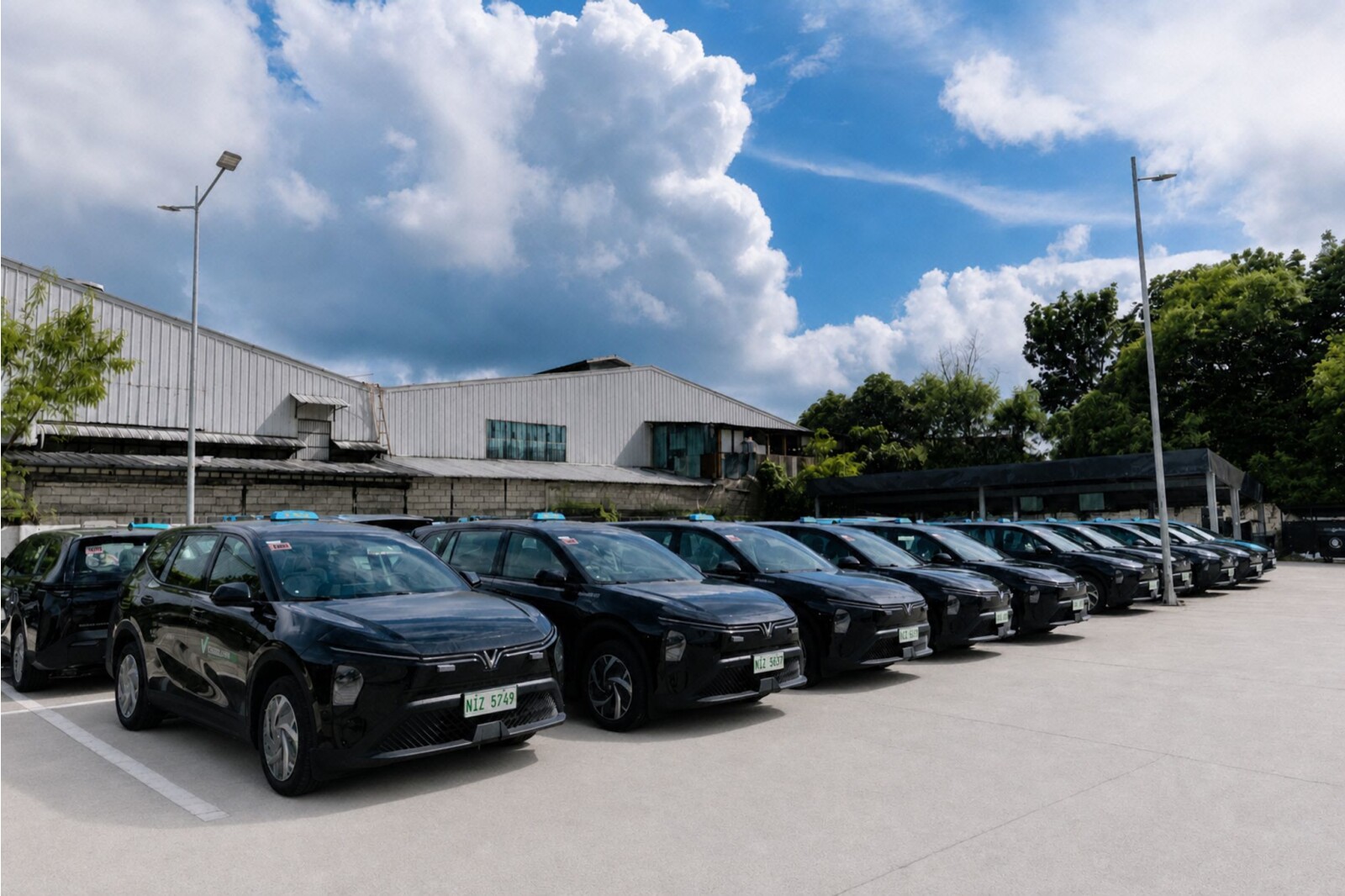
Green GSM launches its Premium Taxi service in the Philippines.

As Green GSM’s second service tier in the Philippines after Green GSM Car, Premium Taxi offers a new mobility option for groups of up to six passengers, families, business travellers, passengers carrying multiple pieces of luggage, and customers seeking a smooth ride in a pleasant and relaxing environment.

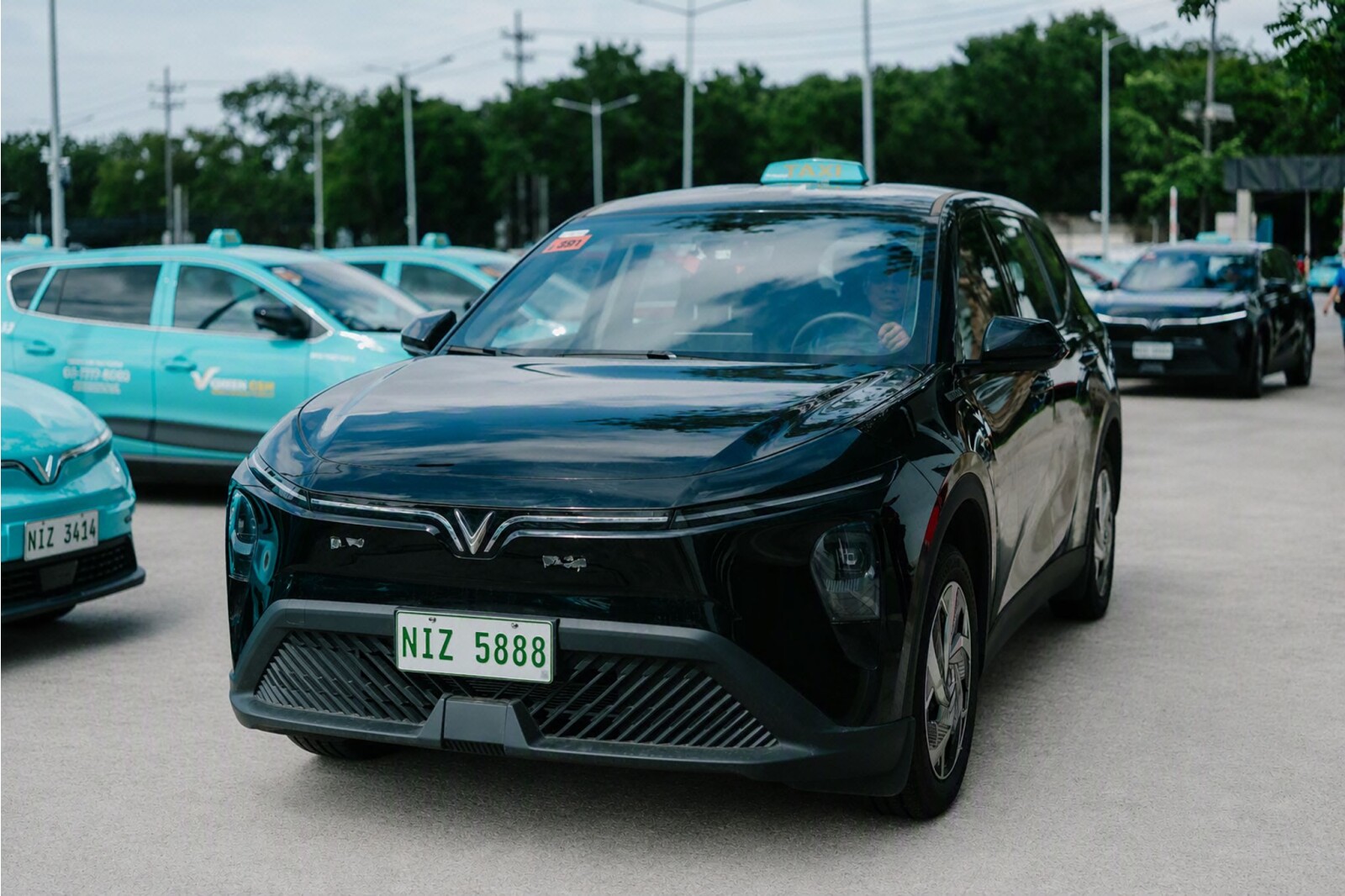
The entire Limo Green fleet is finished in black to reflect its high-end positioning, making it easily recognisable and distinguishable from the existing Green GSM Car service, which features a cyan color scheme. Alongside its modern exterior design and spacious seven-seat configuration with three rows, each Limo Green is equipped with amenities including automatic air conditioning, dedicated air vents for the two rear rows, and an air filtration system that helps keep the cabin pleasant and fresh.

Green GSM's Premium Taxi fleet exclusively uses VinFast Limo Green.
Green GSM’s Premium Taxi fleet exclusively uses VinFast Limo Green.

Alongside the three signature benefits of electric vehicle-zero emissions, no fuel odour and no engine noise-Green GSM’s Premium Taxi also delivers a five-star service experience through carefully-selected drivers who have received high ratings for service quality. Fares are transparently displayed through in-vehicle meters and on the Green GSM app, allowing customers to conveniently track their fares and trip information.

During its initial phase, Premium Taxi will operate in Makati, Taguig, Mandaluyong and Pasig City, serving travel needs across key business districts, commercial centres, hotels and transport hubs in Metro Manila. Customers can book through the Green GSM app, hail an available vehicle on the street, or contact the customer service hotline at 02-7777-8080.

VinFast Limo Green offers a spacious seven-seat configuration and a modern exterior design.

Ms. Le Thi Thu Trang, CEO of Green GSM Philippines, said: “Premium Taxi is not simply about providing more space. It is designed for journeys where comfort and attention to detail matter, from family trips and airport transfers to business engagements and special occasions. By combining the spacious interior of the VinFast Limo Green with professional drivers and Green GSM’s five-star service standards, we aim to give Filipino customers a high-end mobility option that is thoughtfully-delivered from the moment they book until the journey ends.”

With Premium Taxi, Green GSM expands its all-electric mobility portfolio in the Philippines to better meet customers’ diverse needs. Going forward, Green GSM will continue to enhance service quality while consistently upholding its “5 Green Promises”, with standards of professionalism, transparency and attentive customer care, thereby contributing to greener urban transportation.

Hashtag: #GreenSM

The issuer is solely responsible for the content of this announcement.

GREEN GSM IN THE PHILIPPINES

As of March 31, 2026, Green GSM had completed nearly five million trips and more than 32.6 million kilometres in all-electric vehicles in the Philippines. These journeys are estimated to have contributed to reducing approximately 6,263 tonnes of CO₂ emissions, equivalent to the amount absorbed by nearly 289,000 trees in one year, demonstrating the cumulative value of everyday green mobility choices.