Home Blog Page 380

While Exports Flow, Low-income Families Bear the Heat of an Uneven Grid

An elderly security guard holding an umbrella to shield himself from the heat at Patuxay Park 2 (Photo by Thongsavanh Souvannasane)

Additional reporting by Simmavanh Vayouphack


When temperatures climbed above 40°C across many parts of Laos this summer, Lao Friends Hospital for Children on the outskirts of Luang Prabang began losing electricity several times a week, with each outage lasting a few hours.

The blackouts left doctors, nurses and patients struggling through stifling heat. They also disrupted hospital operations that depend on constant power.

The outages came at the worst possible time. As temperatures soared, thick smoke from slash-and-burn farming spread across northern Laos and drifted in from neighboring Thailand and Myanmar, pushing air pollution to dangerous levels and sending more children to the hospital with breathing problems.

“We have seen many infants under one year old with bronchiolitis, an inflammation of the small airways,” said Dr. Annkham Thammaseng, who runs the pediatric ward. “Heat and PM2.5 pollution can aggravate the condition. By the time they reach the doctor, their symptoms are often severe.”

Many of those young patients need oxygen support. But oxygen concentrators rely on electricity.

“When power outages occur, medical staff have to manually switch to oxygen tanks,” she said. “This is especially challenging when it happens at night.”

Rising fuel prices and inflation have added another burden, increasing the cost of running diesel generators, the hospital’s last backup when the grid fails.

The scene reflects a paradox in Laos, nearly all households are connected to electricity, yet power remains unreliable when people need it most.
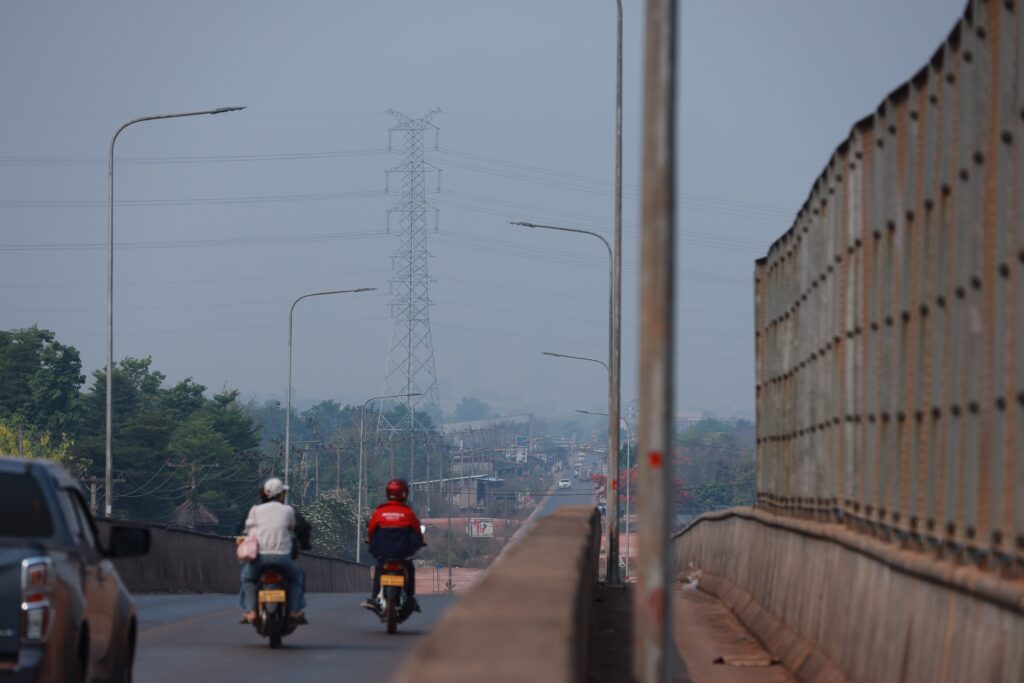
Haze covers Laos’ capital, Vientiane, during the hot month of April 2026. The seasonal smoke is part of the Mekong region’s recurring transboundary haze, which returns each dry season and is driven by multiple causes, including agricultural burning. (Photo by Thongsavanh Souvannasane)

For two decades, Laos has built one of its economic pillars around electricity exports, promoting itself as the “Battery of Southeast Asia.” Hydropower dominates the energy system, supplying most of the country’s electricity, while dams along the Mekong River and its tributaries send power to neighboring Thailand, Vietnam, Cambodia, China and Myanmar.

Yet many Lao families still face blackouts during the hottest months of the year, limiting their ability to cope with intensifying heat. Luang Prabang and other parts of the country have recorded temperatures of 43°C since 2023.

Structural Challenges

Laos had 12.4 gigawatts of hydropower capacity in 2025, accounting for 73 percent of its electricity mix and 71.5 percent of annual electricity generation, according to GlobalData’s recent Laos Power Outlook, cited by the International Water Power & Dam Construction report. The remainder comes from coal, solar and wind power.

Power outages and unstable electricity supply in Laos often become most severe during the hot season, when rising temperatures drive higher demand for cooling and place added strain on the grid.

The causes are multiple, but they point to structural problems in the energy sector that require reform, stronger grid management and greater diversification of power sources.

During the wet season, high river levels allow hydropower dams to generate surplus electricity, much of which state utility Electricité du Laos (EDL) exports to Thailand and other neighboring countries. In the dry season, however, river flows decline just as domestic demand rises with extreme heat and greater cooling needs.

This seasonal imbalance has forced Laos to import electricity, often from Thailand, at higher prices to stabilize supply. In 2023, a drought year, those imports cost an estimated USD 240 million, according to a report by the Lowy Institute.

The deeper challenge lies not only in seasonal shortages, but in the structure of the power system itself. Analysts say Laos invested heavily in new hydropower generation, much of it backed by foreign loans, without matching investment in transmission networks, distribution systems and realistic domestic demand growth.

The World Bank estimated that Laos had a domestic power surplus of 8,100 GWh in 2021, projected to rise to 16,900 GWh by 2025. This is enough to supply 10.1 million people based on 2023 consumption rates, well exceeding the current national population. 

In practice, this means significant generating capacity remains underused while households and businesses still face outages caused by weak grid infrastructure.

At the same time, EDL has faced mounting financial pressure from debt linked to years of expansion. Despite these challenges, Laos continues to pursue new energy projects, including solar and wind, while seeking to maintain its role as a regional power exporter.

Late last year, EDL announced reforms aimed at improving the utility’s finances and grid performance, including installing new transformers, expanding solar generation and restructuring debt repayments. The company said it cut operating costs by 21 percent and increased revenue by 12.8 percent in 2025 compared with the previous year.

While officials focus on reforms and new infrastructure, households are finding their own ways to cope with rising heat.

Cooling for Some, Not for All

In Vientiane, Odien Mall, one of the capital’s main electronics retailers, has grown busier as heatwaves have become more frequent in recent years.

“We cannot say that air conditioning is unnecessary anymore,” said Poulida Phalasayotha, the mall’s general manager. “It is very uncomfortable to live without it.”

She said demand for air conditioners has risen by around 30 percent over the past three years as temperatures continue to break records.

Outside the capital, however, the cooling boom is uneven.

Kaysone*, an air-conditioning technician who installs units in hotels, offices and wealthier homes, does not own one himself. At the family house where he lives on the outskirts of Vientiane, electricity is too unstable.

Modern inverter air conditioners need steady power to run efficiently. Frequent outages force them to restart repeatedly, increasing electricity use and shortening the lifespan of the machines. For lower-income families, that can turn cooling into an unaffordable luxury.
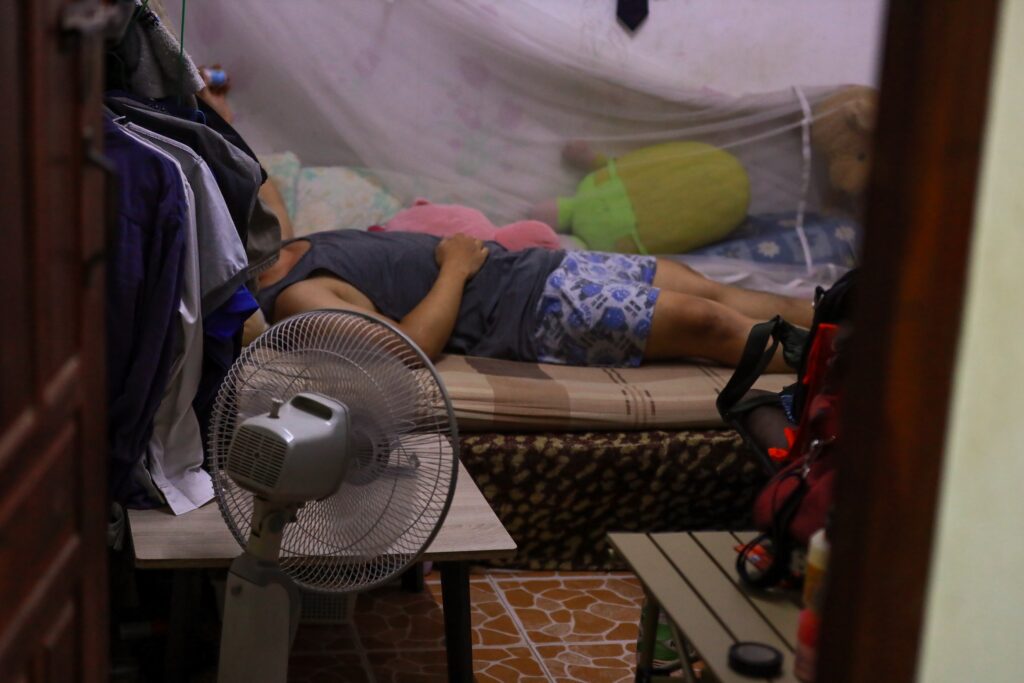
A resident of Viengchaleun village in Xaysettha district, Laos’ Vientiane Capital, rests in his small apartment with only a fan to cool himself. Access to air conditioning remains uneven across the country due to affordability and unstable power supply. (Photo by Thongsavanh Souvannasane)

Air conditioners are no longer only for comfort. During haze season, many families also use them to filter indoor air. Like Luang Prabang, Vientiane often experiences smoke pollution, and families without cooling or air-filtering devices can face even greater exposure to poor air quality.

At Mahosot Hospital, the country’s main referral center for lung and respiratory disease, patients often arrive in severe condition, particularly during periods of heavy haze. Doctors say cleaner indoor air and cooling can help vulnerable people, but many households cannot afford such protection.

Some improvements to the grid are underway. In 2026, major transmission projects moved forward to strengthen domestic connectivity while supporting electricity exports to China. 

These include the 230-kV Thavieng–Mahaxay transmission line managed by a joint venture of EDL and China Southern Power Grid Company that broke ground in January. The China-Laos 500-kV cross-border power line commenced operations on 30 April.

But while residents wait for a stronger and more reliable grid, they must continue coping with a strained power system amid increasingly dangerous heat and choking smoke. 


*Names are changed for the safety of interviewees.

This story was produced in collaboration with Mekong Eye and supported by Internews’ Earth Journalism Network.

Radisson Hotel Group leads with Verified Net Zero hotels and highlights Think People, Community, and Planet actions in its 2025 Responsible Business Report

Radisson Hotel Group’s 2025 Responsible Business Report demonstrates how the Group is turning its Net Zero transformation into real, measurable progress across its hotels and operations, and cares for people and communities.

BRUSSELS, May 4, 2026 /PRNewswire/ — In a rapidly evolving operating environment shaped by shifting guest expectations, climate risk, and increasing regulatory requirements, sustainability continues to guide the Group’s strategic direction. Radisson Hotel Group remains committed to supporting careers and communities, as well as achieving Net Zero by 2050. The Group focuses on strengthening the long-term competitiveness of its hotels and owners through sustainability and contributes to the transition toward a low-carbon hospitality sector.

RHG Responsible Business Report

The report highlights how this strategy is being embedded across the business through a structured five-year plan and operational priorities focused on energy efficiency, electrification, renewable energy, and responsible resource use.

A key milestone in 2025 was the launch of the Group’s first Verified Net Zero hotels, establishing a scalable model for reducing emissions across both existing and new properties. These projects demonstrate that meaningful decarbonization can be achieved within operational hotel environments.

The report also provides a transparent view of performance across Radisson Hotel Group’s Think People, Think Community, and Think Planet pillars, translating strategic priorities into measurable outcomes across its global portfolio. This ensures that sustainability remains embedded in decision-making, building trust with guests, owners, partners, and team members, while supporting long-term value creation.

Highlights from the report include:

Think People

People are at the heart of Radisson Hotel Group’s success, with a strong focus on investment in talent development, well-being, and inclusive career growth across its global team of more than 75,000 team members in over 100 countries. The Radisson People Foundation, launched in 2024 to support team members in times of need, assisted more than 250 team members globally. Additional progress includes:

  • 84% team member engagement score, outperforming the industry average by 18%
  • 31% of women in leadership positions, supporting greater gender balance
  • 206 hotels certified by Safehotels, strengthening safety and security for guests and teams

Radisson Hotel Group continues to invest in learning and growth, with its Radisson Academy delivering more than 8.5 million learning hours and 40% of job openings filled internally, reflecting a clear commitment to career progression.

Think Community

The Group continues to create shared value in the wider value chain and communities it is part of through local initiatives and global programs. Its partnership with Just a Drop has helped provide clean water, sanitation, and hygiene access to more than 34,000 people. Further impact in 2025 includes:

  • €890,000 in cash and in-kind donationsglobally
  • 79,000 volunteer hours contributed by hotel and corporate teams
  • EcoVadis Silver Medal, with 76% of global suppliers assessed, reinforcing responsible sourcing practices

These initiatives support community access to essential resources and bolster the Group’s commitment to ethical and inclusive business practices.

Think Planet

Radisson Hotel Group is transitioning to Net Zero by 2050, focusing on the adoption of sustainable building standards, renewable energy, and resource-efficient hotel operations. The new Verified Net Zero program provides a practical, scalable model for reducing emissions across the hotel portfolio. Key milestones include:

  • 23% reduction in emissions intensity per square meter versus the 2019 baseline
  • 6% reduction in total Scope 1 and 2 emissions versus 2019 (24%), while the portfolio grew by 20%
  • 78 hotels operating on 100% renewable electricity, with aims to continue expansion of renewable energy sourcing

In 2025, the Group opened its first Verified Net Zero Hotels in Manchester City Centre and Oslo City Centre, demonstrating how existing and new hotels can operate with significantly reduced carbon emissions across scopes 1, 2, and 3, and still maintain high guest experience and operational standards.

The 2025 report marks an important step forward in transparency and accountability. It is the Group’s first Responsible Business Report aligned with the European Union’s Voluntary Sustainability Reporting Standard for SMEs (VSME) reporting framework, based on a double materiality approach that identifies and manages key environmental, social, and governance impacts, risks, and opportunities.

To explore how Radisson Hotel Group is making a meaningful impact every day, download the full report here.

ABOUT RADISSON HOTEL GROUP

Radisson Hotel Group is a rapidly expanding international hotel group, operating in EMEA and APAC with more than 1,600 hotels in operation and under development in +100 countries. The Group’s overarching brand promise is Every Moment Matters with a signature Yes I Can! service ethos.

The Radisson brand portfolio includes Radisson Collection, art’otel, Radisson Blu, Radisson, Radisson RED, Radisson Individuals, Park Plaza, Park Inn by Radisson, Country Inn & Suites by Radisson, and Prize by Radisson — brought together under one commercial umbrella brand, Radisson Hotels.

Radisson Rewards is Radisson Hotel Group’s loyalty program, which delivers an elevated experience that makes Every Moment Matter, counting more than 27 million members. As the most streamlined program in the sector, members enjoy exceptional advantages and can access their benefits from day one across a wide range of hotels in Europe, Middle East, Africa, and Asia Pacific.

Radisson Meetings provides tailored solutions for any event or meeting, including hybrid solutions, placing guests and their needs at the heart of its offer. Radisson Meetings is built around three strong service commitments: Personal, Professional, and Memorable, while delivering on the brilliant basics and being uniquely Carbon Compensated.

At Radisson Hotel Group, we care for people, communities, and planet and aim to be Net Zero by 2050 based on the approved Science Based Targets. With unique solutions such as carbon-compensated Radisson Meetings, we make sustainable hotel stays easy. To facilitate sustainable travel choices, all our hotels are becoming verified on Hotel Sustainability Basics.

The health and safety of guests and team members remain a top priority for Radisson Hotel Group. All properties across the Group’s portfolio are subject to health and safety requirements, ensuring we always care for our guests and team members.

For more information, visit our corporate website. Or connect with Radisson Hotels on:

LinkedIn | TikTok | Instagram | Facebook | YouTube | WhatsApp | X


Share buybacks in Ericsson during the period April 27 – May 1, 2026

STOCKHOLM, May 4, 2026 /PRNewswire/ — During the period April 27 – May 1, 2026, Telefonaktiebolaget LM Ericsson (publ) (“Ericsson“) (LEI code 549300W9JLPW15XIFM52) repurchased own Class B shares (ISIN: SE0000108656) as follows:

Date

Aggregated daily volume (number of shares)

Weighted average share price per day (SEK)

Total daily transaction value (SEK)

2026-04-27

1,000,000.00

105.14

105,142,500.00

2026-04-28

1,200,000.00

103.95

124,738,920.00

2026-04-29

1,000,000.00

106.31

106,311,900.00

2026-04-30

511,316

108.23

55,341,366.89

2026-05-01

Total

3,711,316

105.50

391,534,686.89

The share repurchases are a part of the share buyback program of up to SEK 15,000,000,000 which Ericsson announced on April 16, 2026, and which runs between April 23, 2026, and March 31, 2027, at the latest. The Board of Directors intends to propose to the 2027 Annual General Meeting that the repurchased shares, other than those used to fulfil Ericsson’s obligations under its share-related incentive programs, are cancelled.

The share buyback program is executed in accordance with the Regulation (EU) No 596/2014 of the European Parliament and of the Council on market abuse (MAR) and the Commission Delegated Regulation (EU) 2016/1052 of 8 March 2016 supplementing MAR (the Safe Harbour Regulation).

All acquisitions have been carried out on Nasdaq Stockholm by Goldman Sachs Bank Europe SE on behalf of Ericsson. A full breakdown of the transactions is attached to this announcement.

Following the repurchases above, Ericsson’s holding of treasury stock amounts to 44,113,592 Class B shares. There are in total 3,371,351,735 shares in Ericsson, 261,755,983 shares of Class A and 3,109,595,752 shares of Class B.

NOTES TO EDITORS:

FOLLOW US:

Subscribe to Ericsson press releases
Subscribe to Ericsson blog posts
https://x.com/ericsson
https://www.facebook.com/ericsson
https://www.linkedin.com/company/ericsson

MORE INFORMATION AT:
Ericsson Newsroom
media.relations@ericsson.com  (+46 10 719 69 92)
investor.relations@ericsson.com  (+46 10 719 00 00)

FOR FURTHER INFORMATION, PLEASE CONTACT:

Contact person

Investors
Daniel Morris, Vice President, Head of Investor Relations
Phone: +44 7386 657217
E-mail: investor.relations@ericsson.com

Lena Häggblom, Director, Investor Relations
Phone: +46 72 593 27 78
E-mail: lena.haggblom@ericsson.com

Alan Ganson, Director, Investor Relations
Phone: +46 70 267 27 30
E-mail: alan.ganson@ericsson.com

Media
Ralf Bagner, Head of Media Relations
Phone: +46761284789
E-mail: ralf.bagner@ericsson.com 

Media Relations
Phone: +46 10 719 69 92
E-mail: media.relations@ericsson.com

ABOUT ERICSSON:

Ericsson’s high-performing, programmable networks provide connectivity for billions of people every day. For 150 years, we’ve been pioneers in creating technology for communication. We offer mobile communication and connectivity solutions for service providers and enterprises. Together with our customers and partners, we make the digital world of tomorrow a reality. www.ericsson.com

This information was brought to you by Cision http://news.cision.com

https://news.cision.com/ericsson/r/share-buybacks-in-ericsson-during-the-period-april-27—may-1–2026,c4343624

The following files are available for download:

https://mb.cision.com/Main/15448/4343624/4072514.pdf

Share buybacks in Ericsson during the period April 27 May 1 2026

https://mb.cision.com/Public/15448/4343624/aea483c56bd0a29b.xlsx

Daily Ericsson Share Buyback Report


Rhenus Strengthens its Road Freight Offerings in APAC to Meet High Demand in the Region

  • Building upon its expertise in Europe, Rhenus is expanding its road freight solutions in Asia Pacific
  • The strategic move will see dedicated expertise and resources to better support the region’s demand for fast and reliable freight transportation options

SINGAPORE – Media OutReach Newswire – 4 May 2026 – With demand for road freight services across Asia Pacific rising, leading global logistics provider Rhenus Group has announced plans to further expand its road freight operations in the region. As part of its broader regional growth strategy, the company is strengthening cross-border trucking across Southeast Asia and key corridors between Greater China and Southeast Asia. Building on this, it is continuously integrating road with air and ocean freight, while scaling local distribution, sourcing and leveraging existing free trade zone warehousing capabilities.

As part of this expansion, Rhenus is investing in local capabilities to support individual market needs including the recent establishment of its Bukit Kayu Hitam Border Office in Malaysia, with full customs capabilities to support smoother cross-border movements.

Prem Anand Anandaverl, Regional Director of Cross Border Trucking Asia, Rhenus Logistics notes, “Our goal is to provide a seamless connectivity to the global network by reinforcing a comprehensive road freight service and continue to help businesses to move their goods across Asia efficiently and compliantly. Road Freight is playing an increasingly important role in building a resilient supply chain especially in this region.”

Asia Pacific to see high demand for road freight services

The global freight trucking market size [1] is projected to be valued at US$2.74 Tn in 2025 and is set to reach US$3.70 Tn by 2032, growing at a CAGR (Compound Annual Growth Rate) of 3.9%. Asia Pacific remains a key growth driver, supported by expanding industrial output, a large consumer base, and rapidly developing logistics infrastructure enabling both domestic and cross-border trade.

Achieving Sustainable Growth through Road Freight: Consistency, Scalability and Increasing Customer Value

With more than 150 owned and partner road freight locations in Europe, Rhenus currently operates in over 15 countries through a well-established network. The expansion of road freight services in Asia Pacific will enable the company to further integrate its’ end-to-end supply chain solutions, combining road freight solutions with air and ocean services to deliver more flexible and customized logistics solutions globally.

Ongoing investments in multilingual local teams, dedicated border infrastructure, and best practice transport management systems will support seamless cross-border operations, stronger customs and regulatory expertise across markets.

Leveraging its rail connections between Greater China and Europe, alongside a robust multimodal network spanning sea, land, and rail, the company aims to provide customers with greater flexibility and scalability in response to evolving supply chain demands. The company is also working with partners to improve CO₂ tracking and explore alternative fuel options, supporting more sustainable road freight operations.


[1] Based on analysis by Persistence Market Research

Hashtag: #Rhenus

The issuer is solely responsible for the content of this announcement.

About Rhenus

The Rhenus Group is one of the leading logistics specialists with global business operations and annual turnover amounting to EUR 8.2 billion. 39,000 employees work at 1,300 business sites in more than 70 countries and develop innovative solutions along the complete supply chain. Whether providing transport, warehousing, customs clearance or value-added services, the family-owned business pools its operations in various business units where the needs of customers are the major focus at all times.

Coway Listed in the 2026 S&P Sustainability Yearbook and Dow Jones Best-in-Class Asia Pacific Index

  • Coway has been ranked in the top 15% of the Household Durables industry for the second consecutive year by S&P’s comprehensive assessment
  • 2026 also marks the 13th consecutive year of Coway’s inclusion in the Dow Jones Best-in-Class Asia Pacific Index

SEOUL, South Korea, May 4, 2026 /PRNewswire/ — Coway Co., Ltd., the “Best Life Solution Company,” has today announced that it has been selected as a member of the 2026 S&P Sustainability Yearbook and included in the Dow Jones Best-in-Class (DJ BIC) Asia Pacific Index.

The Sustainability Yearbook is published annually by S&P Global, one of the world’s leading providers of benchmarks for global capital, based on its Corporate Sustainability Assessment (CSA). Established in 1999, this in-depth evaluation comprehensively appraises how companies are performing financially and across their Environmental, Social and Governance (ESG) practices.

This year, more than 9,200 companies across 59 industries were assessed by S&P Global, with only 848 companies subsequently selected to be a part of the Sustainability Yearbook. Coway has been recognized in the Yearbook for the second year running, ranking in the top 15% of companies in the Household Durables industry.

Furthermore, for the thirteenth consecutive year, Coway was included in the DJ BIC Asia Pacific Index among a selection of the top 20% of around 600 companies in the region. Notably, the company received improved evaluations across several ESG categories this year, including energy and waste management, biodiversity conservation, occupational health and safety and data protection.

Since establishing its ESG Committee in 2021, Coway has continually been advancing its ESG management strategy and practices. This commitment has seen Coway implement a company-wide framework based on three key pillars: establishing a carbon-neutral management system, promoting sustainable growth and strengthening transparent and sustainable governance.

Examples of Coway’s ESG initiatives include:

  • Environmental: Advancing a circular economy through its “closed-loop” resource circulation system, all while supporting environmental protection through sustainability initiatives.
  • Social: Fostering mutual growth through partner support programs and collaborative initiatives.
  • Governance: Enhancing shareholder return policies while reinforcing the independence and transparency of the company’s corporate governance.

A Coway official said, “Through the ongoing, globally-benchmarked management strategies and initiatives of our ESG Committee, Coway remains committed to achieving both sustainable growth and responsible social change. We will continue to work to strengthen our global competitiveness across our environmental, social and governance practices.”

About Coway Co., Ltd.

Established in Korea in 1989, Coway, the “Best Life Solution Company,” is a leading home environment appliances company making people’s lives healthy and comfortable with innovative home appliances such as water purifiers, air purifiers, bidets, and mattresses. BEREX, the company’s sleep & wellness brand, aims to improve the quality of life through cutting-edge mattresses and massage chairs. Since being founded, Coway has become a leader in the home environment appliances industry, with intensive research, engineering, development, and customer service. The company has proven dedication to innovation with award-winning products, home health expertise, unrivaled market share, customer satisfaction, and brand recognition. Coway continues to innovate by diversifying product lines and accelerating overseas business in Malaysia, the USA, Thailand, China, Indonesia, Vietnam, and Europe, based on the business success in Korea. In 2025, the company launched Coway Life Solution, a premium elder care platform offering personalized care solutions tailored to different life stages. For more information, please visit http://www.coway.com/ or http://newsroom.coway.com.

Weixin Brand Protection Report Marks a Decade of Partnership, Trust, and Progress in IP Protection

Defending 700+ global brands across 30+ industries & 20+ regions

Scalable, Userdriven and AIpowered Enforcement
Transforms IP defense from Reactive Takedowns to Sustained Proactive Prevention.

LONDON, May 4, 2026 /PRNewswire/ — Tencent today released its 2025 Weixin Brand Protection Report, marking a decade of progress in intellectual property (IP) protection on Weixin. The report shows how Weixin’s Brand Protection Platform (BPP), through close collaboration with brands, community participation, and AI-driven detection, has helped shift enforcement from reactive takedowns to sustained proactive prevention.

Key Highlights in 2025

Metric

Results

Livestream rooms proactively shut down

5.7× more

Enforcement value recovered

$430 million+

Brands on the BPP

700+ across 30+ industries & 20+ regions

New publishing partners on the BPP

14

Suspicious product listings blocked

232,000

Suspicious store applications removed

14,000

Infringing listings taken down

728,000+

Infringing stores penalized

9,000+

A Decade of Global Partnership, Trust, and Progress

For ten years, Weixin has supported brand integrity and advanced IP protection by embedding enforcement directly within its platform to rapidly detect and stop infringement, particularly in fast-growing areas like short-form video and livestream commerce.

“Weixin has built a truly collaborative IPprotection ecosystem that unites authorities, brands, and users to deliver the next generation of enforcement,” said Danny Marti, Head of Global Public Policy at Tencent. “By leveraging AI, realtime user reports, advanced analytics, and close partnership with brands and regulators, we’re creating a trusted environment that lets global brands confidently engage with consumers.”

Weixin’s approach connects online detection with offline enforcement, translating digital intelligence into real-world action against counterfeiters. In 2025, the BPP helped authorities pursue 37 cases involving more than 300 suspects and totaling over $430 million in value.

Since 2021 the BPP has grown by more than 50 %. Today it hosts more than 700 brands across 30+ industries and 20+ countries and regions. In the past year, the BPP welcomed 62 new members including several from newly added categories, most notably publishing, which saw the addition of 14 publishers since October 2025.

Additionally, the Weixin IP Protection Alliance was launched in 2025 to co‑develop tools, share intelligence, and deepen brand partnerships. This ecosystem approach, combining technology, users, and brand collaboration, positions Weixin as a model for protecting IP while enabling growth in global and digital markets.

At PUMA, protecting intellectual property is an important component of maintaining brand integrity and supporting sustainable growth,” said Wei Zhang, Senior Counsel, Brand Protection at PUMA. “Tools such as the BPP contribute to enforcement efforts across digital channels and, in practice, support broader brand protection strategies spanning both online and offline environments.”

User Mobilization at Scale

A key driver of this system is the role users continue to play in helping identify suspected infringement. More than 95% of takedown notices and reports against suspicious personal accounts came from users. Over 99% of reports on suspicious group-chat activity were submitted by users, and more than 96% of infringing accounts were discovered by users.

AI Powers Proactive Prevention

In December 2025, Weixin introduced “Mini-WA,” an AI-powered assistant that delivers real-time support and actionable insights to help brands navigate the platform and improve IP governance. As digital ecosystems grow more complex, Mini-WA empowers brands with intuitive, consistent and proactive guidance, enhancing usability and early detection of potential risks.

With the rise of digital commerce and short‑form content, the BPP demonstrates a proven model for integrated IP protection and significant progress to empower brands, safeguard consumers, and foster trust online and offline.

To view the full Weixin Brand Protection Platform Report, please visit: https://static.www.tencent.com/attachments/reports/Tencent-BPP-Report-2025.pdf

For media inquiries, contact:

gc@tencent.com

Antimatter Launches as the World’s First Vertically Integrated Neocloud for AI Inference, Plans to Establish Global Headquarters in Hong Kong

Combining over 1GW of secured power capacity across distributed micro-power sites in the US, Europe and GCC, Antimatter will deploy a global network of 1,000 distributed micro data centers to serve the growing AI inference market  — 5 times faster and 50% cheaper than hyperscalers

HONG KONG, May 4, 2026 /PRNewswire/ — Antimatter, a new category of neocloud purpose-built for the distributed AI economy, today announced its launch through the strategic combination of three companies: Datafactory (US-based energy and power infrastructure), Policloud (modular micro data center network), and Hivenet (distributed cloud provider).

The combined entity creates the industry’s first fully integrated AI infrastructure platform spanning energy sourcing, physical hardware, and cloud software — designed to serve the explosive global demand for AI inference at a fraction of hyperscale cost and dramatically faster time to market.

Antimatter plans to establish its global headquarters in Hong Kong, and is deploying capital at an unprecedented pace to build out the first global neocloud network optimized for AI inference. The company is securing €300 million to fund the deployment of its first 100 Policloud units in 2026, representing 40,000 GPUs and over 3.6 exaFLOPS of active compute capacity.

By the end of 2030, the planned network of 1,000 Policlouds will provide more than 400,000 GPUs and over 36 exaFLOPS of distributed AI inference capacity — the equivalent of five traditional hyperscale data centers, deployed across dozens of countries with 50% lower capital spending and significantly faster time to market.

Antimatter is led by David Gurlé, the serial high-tech entrepreneur who founded Microsoft’s Real-Time Communications business (today’s Microsoft Teams), led Skype’s enterprise division and its sale to Microsoft, and founded Symphony Communication Services.

“In the age of AI, intelligence is not the bottleneck — energy is,” said David Gurlé, Cofounder, Executive Chairman, and CEO of Antimatter. “The infrastructure built for the first era of cloud and AI was designed around centralized scale. But the inference era requires a different model: more distributed, faster to deploy, and sovereign by design. That is the infrastructure Antimatter is building.”

Why AI Inference is Breaking the Cloud Model

The first wave of AI was about training massive models in centralized data centers. But the next phase — inference — is about running those models billions of times per day, across applications like copilots, agents, and real-time decision systems.

That shift changes everything. Inference requires infrastructure that is closer to users, faster to deploy, more energy-efficient, and geographically distributed. Traditional hyperscalers were not built for this. Their model relies on massive, centralized campuses that can take years to build and require enormous upfront capital.

Antimatter’s answer: bring the data center to the energy, not the energy to the data center.

The global data center capacity market is projected to grow from 55GW in 2023 to 220GW by 2030 — a 22% CAGR — yet grid connection queues and infrastructure delays are emerging as the primary bottleneck. In Europe alone, more than 12 TWh of renewable electricity were curtailed in 2023, representing over €4.2 billion in lost value. At the same time, more than 1,000GW of additional renewable capacity remains stuck in permitting and grid-connection queues across Europe and the GCC.

A Full-Stack Neocloud Built for the AI Inference Era

Antimatter is uniquely positioned as the only neocloud that controls the complete value chain:

Energy-first model
More than 1GW of secured power capacity, including over 160MW already operational across Texas and Oregon, USA. Antimatter deploys Policloud units directly at or near existing power assets — including wind, solar, hydro, or biogas sites — converting stranded generation into productive AI infrastructure in a matter of months, rather than waiting years for new transmission capacity.

Decentralized infrastructure layer
A fleet of modular, containerized micro data centers, each housing up to 400 GPUs and deployable in as little as five months, compared with 24+ months for traditional hyperscale builds. Antimatter currently operates 17 units across 8 sites and has a commercial pipeline of more than 500 additional units.

Distributed software layer
A proprietary distributed computing and storage platform providing the orchestration intelligence that connects distributed hardware into a single, sovereign cloud fabric with global default Tier 3 capability — supporting billions of inference requests each day, with sub-10ms latency for edge workloads and full data sovereignty for regulated industries.

Key Competitive Advantages

Metric

Antimatter

Traditional Hyperscale

Capex per fully loaded MW

~US$7M

~US$35M

Deployment timeline

5 months

24+ months

Customer pricing

~50% below hyperscalers

Market rate

Edge latency

Sub-10ms

Variable

Carbon reduction

~70% lower;

zero water cooling

Standard

Data sovereignty

Sovereign-by-design;

local jurisdiction

Bolt-on solutions

Strong Commercial Traction

Antimatter enters the market as a cash-flow positive entity with demonstrated commercial momentum:

  • US$20 million in current annual revenue
  • US$4 million in EBIT
  • 4,500 GPUs deployed with demand for 10,000+
  • 100 Policlouds being deployed in 2026, representing 40,000+ GPUs
  • 1,000 Policlouds planned by end of 2030, representing 400,000+ GPUs
  • Diversified customer base: Energy sector (35%), Public sector (30%), Agriculture (15%), Corporates (20%)

The company is targeting $250M+ in revenue within the next 18 months and $2.5B+ by the end of 2030.

Investor Perspectives

“AI infrastructure is now a strategic asset class, and the winners will be those who can combine hard assets with software at scale. Antimatter’s vertically integrated model — from megawatts to APIs — is exactly the kind of infrastructure we believe can define the next decade of digital growth.”

 Alex Manson, CEO of SC Ventures, Standard Chartered Bank

“France and Europe need sovereign, energy-efficient infrastructure to compete in AI. What convinced us about Antimatter is not just the technology, but the ability to deploy micro data centers in months, on existing power assets, while meeting the most demanding regulatory constraints.”

 Stéphanie Hospital, Founder and CEO of OneRagtime

“From Dubai, we see first-hand how emerging markets are skipping legacy infrastructure and going straight to AI-native architectures. Antimatter’s model — distributed, capital-efficient and deeply integrated with energy — is built for exactly these markets, and for the next generation of AI companies we back.”

 Noor Sweid, Founder and Managing Partner, Global Ventures

“At Inria, we work every day at the frontier of AI and high-performance computing. Antimatter’s approach is compelling because it reconciles cutting-edge AI workloads with more frugal, sustainable infrastructure — distributed, software-defined, and close to available energy. It is a strong illustration of the deeptech industrial story we want to see emerge in Europe.”

 Bruno Sportisse, Chairman and CEO of Inria


About Antimatter
Antimatter is the distributed neocloud for AI inference. By vertically integrating energy, modular infrastructure, and orchestration software, Antimatter deploys enterprise-grade AI compute infrastructure faster, cheaper, and more sustainably than traditional hyperscale providers. Headquartered in Cannes, France, with major operations in the United States, Antimatter serves enterprises, governments, and AI companies worldwide.

www.antimatter.com

About the Founder
David Gurlé is a French entrepreneur, engineer, and Chevalier of the Légion d’Honneur. He has founded seven companies, including Symphony Communication Services ($1.4B valuation), and held senior leadership roles at Microsoft (where he founded the Real-Time Communications business), Thomson Reuters, and Skype (VP & General Manager, Enterprise). He holds an MSc in Computer Science and Telecommunications from EFREI Paris.

Media Enquiries:
Strategic Financial Relations Limited

Angelus Lau

Tel: (852) 2864 4805

Email: angelus.lau@sprg.com.hk

Corinne Ho

Tel: (852) 2114 4911

Email: corinne.ho@sprg.com.hk

Angela Shen

Tel: (852) 2864 4870

Email: angela.shen@sprg.com.hk

Ariane Forgues

Email: aforgues@mantu.com


Olympus Signs Global Distribution Agreement with EndoRobotics, Adds Robot-Assisted Technologies to EndoTherapy Portfolio

Partnership Aimed at Expanding Patient Access to Advanced EndoTherapeutic Procedures

TOKYO, May 4, 2026 /PRNewswire/ — Olympus Corporation (Olympus), a global MedTech company committed to advancing endoscopy-enabled care, today announced it has signed an exclusive global distribution agreement with EndoRobotics Co., Ltd. Under this agreement, robot-assisted technologies manufactured by EndoRobotics will be distributed globally by Olympus exclusively as part of its EndoTherapy portfolio. 

This collaboration will help drive broader adoption of advanced endoscopic procedures —such as endoscopic submucosal dissection (ESD) — helping clinicians deliver organ-sparing, minimally invasive care with precision and confidence.

Olympus aims to expand patient access to endoscopic procedures for treatment of early-stage cancers and precancerous lesions of the GI tract. By removing diseased tissue without resecting the organ, physicians performing ESD may allow for less procedural risk, fewer post-treatment complications and shorter patient recovery.1,2 EndoRobotics technologies can enhance precision, control and efficiency in complex procedures such as ESD. These technologies play an increasingly important role in supporting consistent outcomes, particularly as the global incidence of GI cancers continues to rise.3 

The agreement reflects Olympus’ approach to advancing endoluminal robotics, bringing new technologies that support complex endoscopic therapy to global markets today, while continuing to invest in longer-term platform innovations designed to further transform endoscopy-enabled care.

“We are pleased to have the opportunity to work with EndoRobotics to advance therapeutic capabilities in GI patient care,” said Mike Callaghan, General Manager, EndoTherapy at Olympus. “This collaboration supports our strategy to broaden adoption of advanced treatment options such as ESD. By offering robot-assisted technologies, we aim to help clinicians perform these complex therapeutic procedures with greater confidence and efficiency, while maintaining a strong focus on patient safety and optimizing outcomes.”

“For years, EndoRobotics has focused on developing next-generation robotic solutions for therapeutic endoscopy. Today, we are stepping into a much bigger mission,” said Byung Gon Kim, co-CEO, and Daehie Hong, co-CEO of EndoRobotics, Co., LTD. “Our goal is to help more patients around the world receive treatment faster, recover sooner, and return to their families in better health. To achieve this, we are proud to partner with Olympus Corporation, a leading endoscopy company. Together, we aim to transform the global therapeutic endoscopy market.”

Leveraging Olympus’ global commercial infrastructure and EndoRobotics’ development capabilities, the companies will bring these new endotherapeutic solutions to global markets, beginning with the U.S., in an effort to help advance the safe and effective practice of third-space endoscopy using robot-assisted technologies.

Additional details regarding availability and regional product launches will be shared in accordance with regulatory requirements and local market considerations.

About Olympus
At Olympus, we are committed to Our Purpose of making people’s lives healthier, safer and more fulfilling. As a global medical technology company, we partner with healthcare professionals to provide innovative solutions and services for early detection, diagnosis and minimally invasive treatment, aiming to improve patient outcomes by elevating the standard of care in targeted disease states.

For more than 100 years, Olympus has pursued a goal of contributing to society by producing products designed with the purpose of delivering optimal outcomes for its customers around the world. For more information, visit the Olympus website and follow the Olympus LinkedIn account.

About EndoRobotics
ENDOROBOTICS is a technology-driven company dedicated to advancing minimally invasive treatments for gastrointestinal diseases through the development of next-generation endoscopic intervention robotics. Navigating the complex and flexible structure of the human digestive system presents significant technical challenges; ENDOROBOTICS addresses these challenges through expertise built on years of research. By leveraging  these robotic technologies, ENDOROBOTICS aims to improve procedural precision, minimize patient burden, and pioneer the future of minimally invasive gastrointestinal care.

All trademarks, logos and brand names are the property of their respective owners.

1 Safi, M.H., Hui, Z., Xiaoyong, W. et al. Endoscopic submucosal dissection: a safe alternative to surgical intervention for young patients under 45 years of age with early gastric cancer. ESD vs. surgery in young EGC patients. BMC Cancer 25, 1895 (2025). https://doi.org/10.1186/s12885-025-15293-4
2
Qian M, Sheng Y, Wu M, Wang S, Zhang K. Comparison between Endoscopic Submucosal Dissection and Surgery in Patients with Early Gastric Cancer. Cancers. 2022; 14(15):3603. https://doi.org/10.3390/cancers14153603
3
Singh A. Global burden of five major types of gastrointestinal cancer. Prz Gastroenterol. 2024;19(3):236-254. doi: 10.5114/pg.2024.141834.

Logo – https://laotiantimes.com/wp-content/uploads/2026/05/olympus_logo.jpg