Home Blog Page 6211

Drug-resistant Malaria Found in Laos

Drug-resistant Malaria Found in Laos

A new study has found that Malaria parasites resistant to essential drugs have spread to Laos and other parts of Southeast Asia.

A group of researchers from the U.K. and Thailand analyzed samples from malaria patients across Southeast Asia and found that such parasites have moved from Cambodia to Thailand, Vietnam and Laos, according to a study published in The Lancet Infectious Diseases journal.

In particular, the parasites are resistant to a combination of two drugs, namely artemisinin and piperaquine, which was introduced in Cambodia in 2008, the BBC reported on July 23.

The researchers found that the first cases of the parasite mutating and developing resistance to both drugs in 2013.

The BBC quoted another study published in the same journal as saying that half of the patients were not being cured with standard therapy.

It added, however, there are alternative drugs that can be used instead, such as using different drugs alongside artemisinin or using a combination of three drugs to overcome resistance.

The broadcaster also noted that the findings will not effect much change in regard to people’s day-to-day life in the Greater Mekong Subregion.

“Tackling malaria is about more than just picking the right treatment after infection. All the efforts around controlling the mosquitoes that spread the disease will not change,” the BBC said.

Laos has made significant progress in eliminating malaria and achieved a steady decline in malaria cases over the past decade.

The number of malaria cases in Laos has dropped by 90 percent in recent years, down from a peak of 50,000 cases during an outbreak in 2014 to 9,000 cases in 2018, according to The U.S. Agency for International Development (USAID), which has been one of key players to support Laos’s efforts to eliminate malaria.

The U.S. has contributed more than $1.9 million to support the Lao government in its fight against malaria, providing and distributing mosquito nets, diagnostic tests, and anti-malarial treatments to the Lao people.

As the latest contribution, USAID provided a total of 174,000 additional mosquito nets to Laos, according to a statement by USAID on July 17.

“These mosquito nets will be distributed to families in rural areas of the southern province of Champasack, where the number of malaria cases remains high,” USAID said.

In 2017, there were an estimated 219 million cases of malaria in 87 countries, according to the World Health Organization (WHO).

The disease kills about 435,000 people every year – most of them are children under the age of five.
Laos to Tighten Regulations on Gas Stations

Laos to Tighten Regulations on Gas Stations

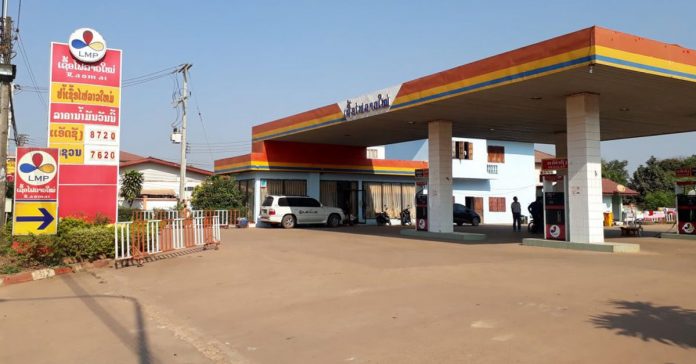
Laos will tighten regulations on the location of fuel depots and gas stations in residential areas to ensure the safety of residents.

According to a newly amended ministerial decision, fuel depots must be located one kilometer from residential areas, schools, hospitals, protected areas, temples, and rivers.

As for gas stations, they should be located 100 meters from residential areas, key government buildings, temples, and television and radio stations.

In addition, gas stations must be equipped with a fire-fighting system, according to the new rule. This means that water must be ready for use in the event of a fire.

Petrol stations also must employ at least one person who has been certified as having completed a course in fire control.

Apart from that, the distance between two gas stations should be 5 kilometers on highways under the new rule, which is expected to encourage business operators to open new gas stations in areas where none already exist.

The move is designed to prevent accidents and ensure that such facilities do not cause harm to these compounds or people who live nearby, according to a report in the Vientiane Times.

The new regulations come amid the rising popularity of gas stations across Laos. The country has witnessed an increase in the imports and consumption of petroleum products over the past few years, in line with a rise in vehicle ownership.

For instance, imports of gasoline increased from 187,755 kilograms in 2010 to 234,199 kilograms in 2015, according to Lao PDR Energy Statistics 2018 by the Economic Research Institute for ASEAN and East Asia.

During the same period, the consumption of gasoline also jumped from 187,755 kilograms 223,318 kilograms.

At the same time, some people have expressed concern over the possible impact of fires or other accidents at gas stations amid lax regulation.

Ock Pop Tok: Showcasing Lao Handicrafts to the World

Ock Pop Tok: Showcasing Lao Handicrafts to the World

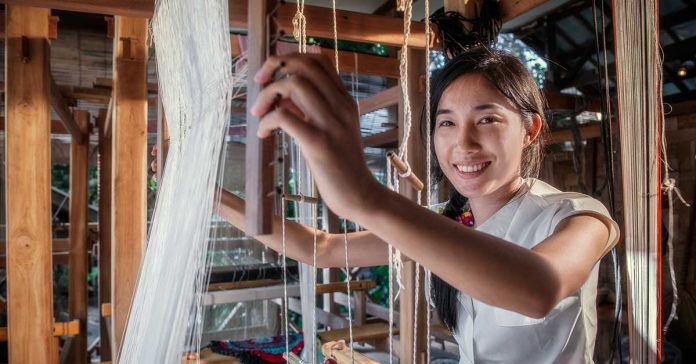
In a country where weaving is usually considered a house chore and mostly done by women, Ock Pop Tok is striving to transform this perception.

Ock Pop Tok, which means “East meets West” in the Lao language, believes it can contribute to the local retail industry in Laos, and support financial independence among women across the country through the fair trade of Lao traditional handicrafts.

The company, established by two women from the UK and Laos who first met in 2000, started with only five staff. Since then, it has grown significantly and enough to receive products from some 500 artisans. All of the 500 craftspeople who create the products for Ock Pop Talk are Laotian women, and all are the direct beneficiaries of the company’s Village Weaver Project, launched in 2006.

The project is designed to provide better economic opportunities to rural areas by passing on Ock Pop Tok’s experience. In other words, the project is to help handicraft makers in rural areas of Laos produce, sell, and earn more.

Currently, the project is underway in 13 regions of Laos.

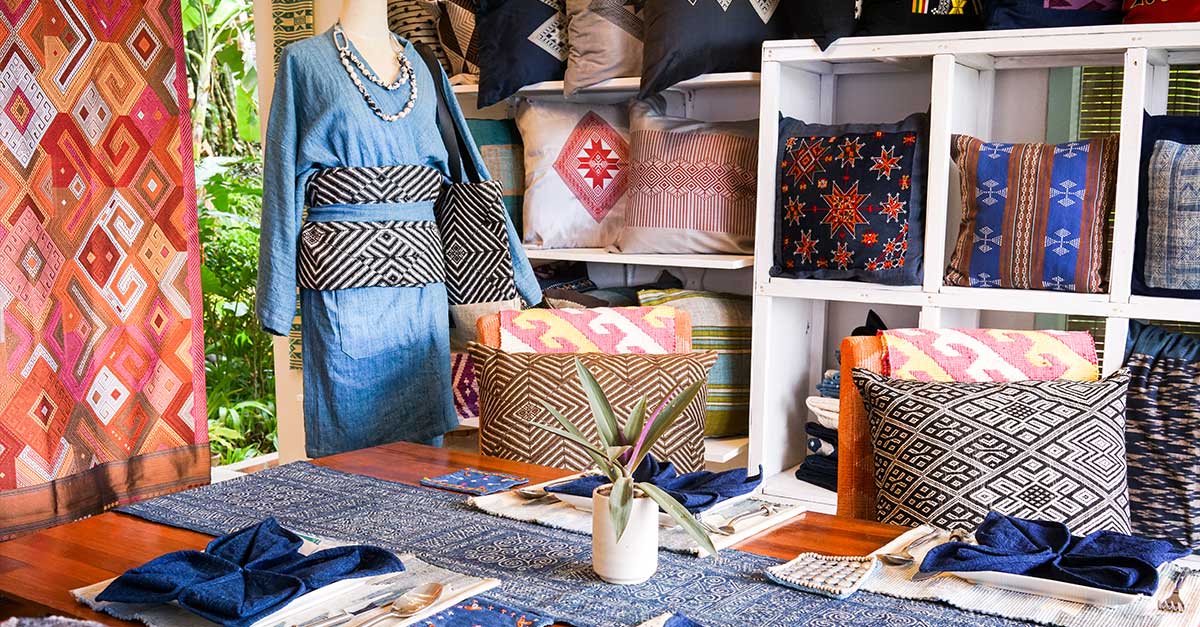
Crafts at Ock Pop Tok

The project is meaningful because it is the only source of income for most women who engage in textile crafts in rural villages. Helping these women means that their families are better off and that it can effectively reduce poverty in such areas where there are no significant economic activities. The project also preserves the unique textile production techniques handed down from generation to generation, from region to village.

Ock Pop Talk not only operates stores that sell handicrafts but also provides a space for visitors to see and experience crafts so that it can spread the cultural and artistic value of Laotian textile crafts.

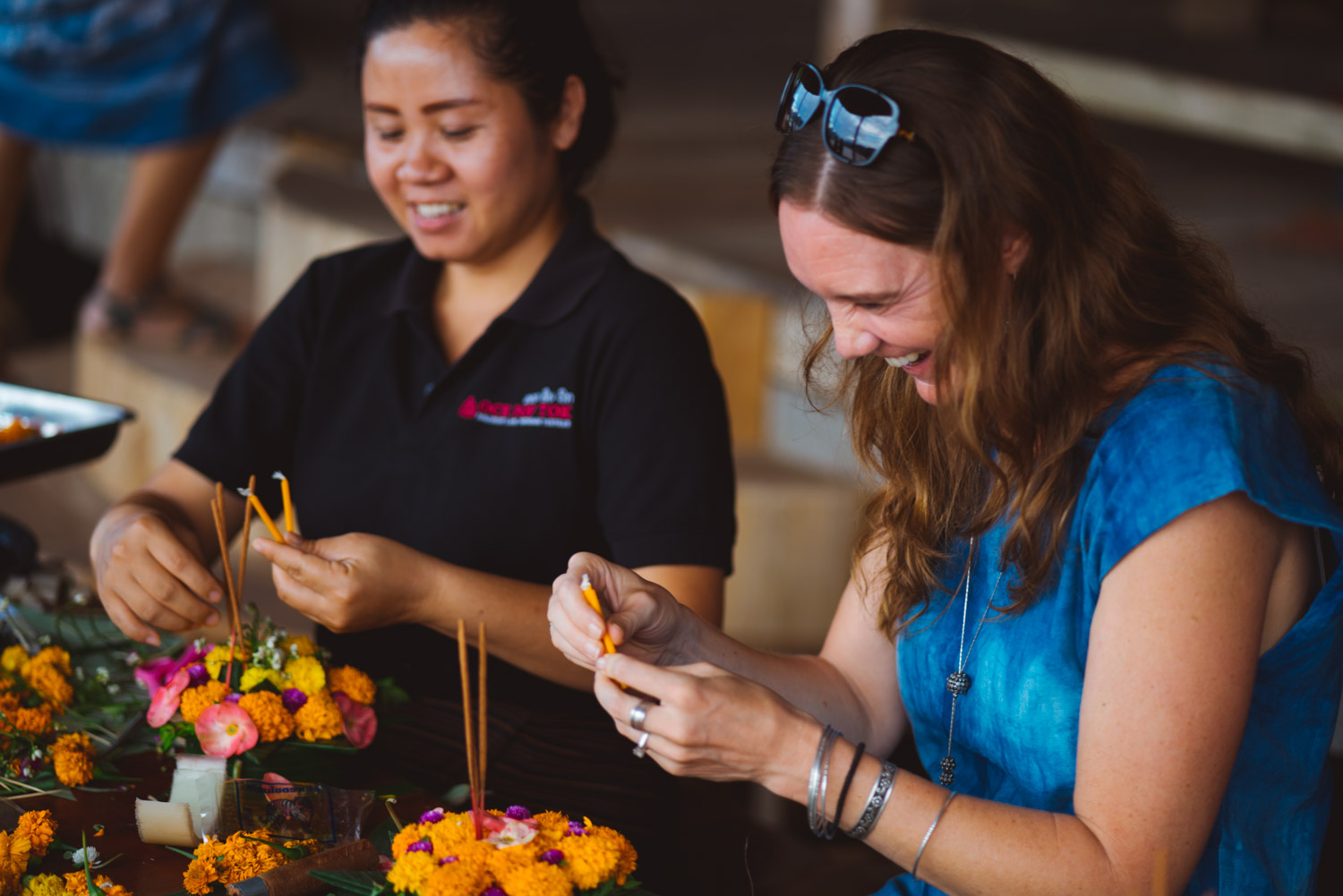
Tourists learning crafts at Ock Pop Tok

It operates the Living Crafts Centre, which is located in Luang Prabang, a popular tourist destination for travelers. Not only can people purchase products there, but they can also learn the traditional weaving and natural dyeing of methods of Laos.

Promotion in Korea

Ock Pop Talk is also eager to promote Lao traditional handicrafts outside the country. It has actively participated in international events, including the Seoul International Handmade Fair 2019 (SIHF2019) held in May.

The exhibition brought together everything from handmade accessories to foods, including some 60 exhibitors from 16 countries, including Australia, Taiwan, Singapore, Thailand, and Laos, as well as about 300 craftspeople from South Korea itself.

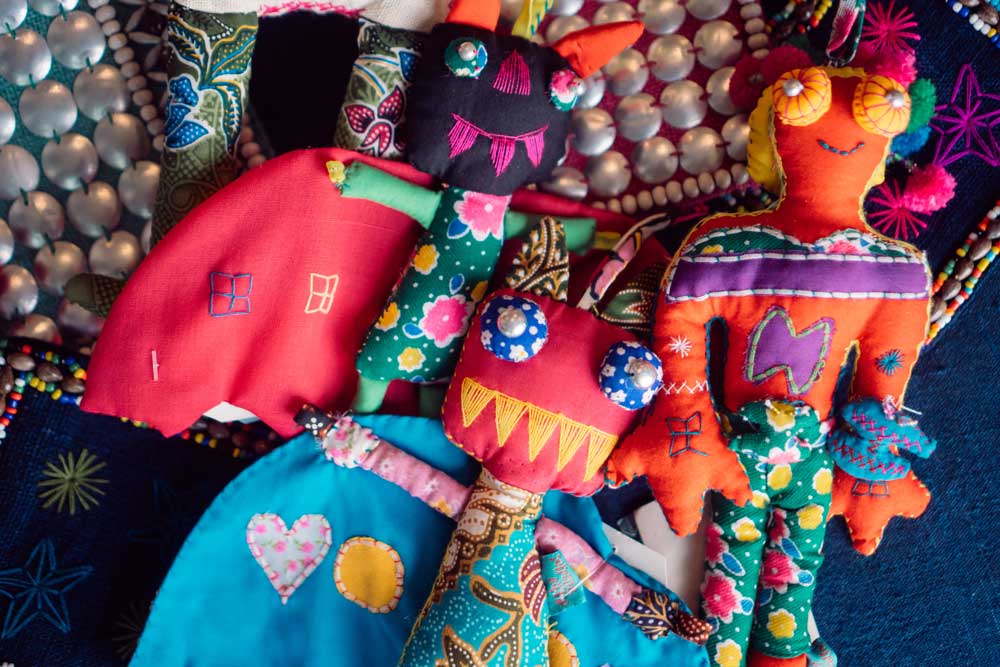
Akha Dolls at Ock Pop Tok

Laos, as a country, may have had a lower profile compared to other participants, but this did not stop Ock Pop Talk from fascinating visitors.

One visitor to the Seoul International Handmade Fair said a textile artifact of unique color and texture stood out, citing handicrafts from Ock Pop Tok, which were displayed at a booth set at the entrance of an international pavilion. “Even though Laos is another Asian country, it’s interesting because the products are quite exotic, and I’ve been wondering about the country and its culture for a long time,” he said. Story: Kim Jee-won Photos: Ock Pop Tock
Translated by: Taejun Kang

Laos Hopes to Diversify Destinations for Tourists

Laos Hopes to Diversify Destinations for Tourists

Laos has seen a dramatic increase in the number of South Korean tourists over the past few years after the reality TV show, “Youth Over Flowers,” featured  Korean actors visiting famous locations in Laos, particularly in Vang Vieng.

The number of visitors from South Korea to Laos grew in 2015 and 2016, finally beginning to plateau in 2017. The overall market share of South Korea rose to 4.4 percent in 2017, however, according to a report by Laos’s Ministry of Information, Culture and Tourism. The number jumped from 96,085 in 2014 to 170,571 in 2017.

South Korea’s tourism industry took advantage of this trend, launching a series of package tour programs targeting those who wanted to follow the same itinerary presented in the show.

As of this writing, it is still not difficult to find “TV show-themed” tourism programs in South Korea, luring customers with the same old itinerary they developed several years ago.

While Laos still attracts Korean tourists, especially in Vang Vieng, many of these do not make a second trip to Laos.

And this issue is notable among visitors from other countries as well.

According to the latest survey conducted by the tourism ministry, only 7.9 percent of respondents said it was their returning visit to Laos. In contrast, first-time visitors accounted for 75.2 percent.

The Lao government has invited 12 representatives from Malaysia, Singapore, Thailand, China, Japan and South Korea to Bolikhamxay and Khammouane provinces, in a bid to promote other parts of the country.

The familiarization trip to the two provinces is taking place between July 12 and 17 and is designed to publicize some of Laos’ tourist attractions and encourage the tour operators to include some of these locations in their package tours, according to the Vientiane Times on July 15.

The two provinces are considered lesser-known destinations for foreign tourists, compared with the Lao capital Vientiane or famous locations such as Vang Vieng.

Kettasone Sundar, Director of the Marketing Division of the ministry’s Tourism Marketing Promotion Department, told the media that the program would raise the profile of the country’s tourist attractions and the exciting destinations it can offer.

If the Lao government’s goal is realized, more foreign tourists will visit the beautiful natural scenery of Bolikhamxay or Khammouane Province.

Laos attracted more than 4.1 million foreign tourists last year, an 8.2 percent increase from the previous year. Tourism generated revenue of more than USD 755 million in 2018.

Meanwhile, it is expected that at least 4.5 million people will visit Laos this year, generating revenue of more than USD 700 million.

Photo: Champa Meuanglao

Laos Sees Drop in Foreign Direct Investment Inflow

Laos Sees Drop in Foreign Direct Investment Inflow

Foreign direct investment (FDI) inflow to Laos decreased in 2018 amid a drop in new investment from China, a recent report has shown.

FDI inflow to Laos last year stood at USD 1.3 billion, a 17 percent drop from the previous year, according to the World Investment Report 2019 by United Nations Conference on Trade and Development (UNCTAD).

Foreign Direct Investment, or FDI, refers to an investment made by a firm or individual in one country into business interests located in another country.

“The contraction was mostly due to a deceleration of new investment from China,” UNCTAD said in the report without citing figures.

In 2017, China was the largest foreign investor in Laos, with its investments accounting for 25.2% of the total FDI of the country.

Despite a minor setback, Laos has seen FDI inflow rising over the past few years.

FDI inflow to Laos has increased from USD 427 million in 2013 to USD 721 million in 2014 and USD 1.1 billion in 2015.

After experiencing a slight drop in 2016 to USD 997 million, the figure jumped to USD 1.5 billion in 2017.

Such growth comes amid the Lao government’s efforts for “active investment liberalization,” the report noted.

Last year, for instance, the country abolished the minimum registered capital requirements for certain foreign investors, according to the report.

It also promulgated a new investment promotion law, offering various incentives to attract investment in both promoted industries and hardship areas.

Laos is one of the regional players that have been using special economic zones (SEZs) as key policy instruments for the attraction of investment for industrial development.

“In Cambodia, the Lao People’s Democratic Republic and Thailand, most SEZs have been developed near border corridors with neighboring countries, to promote cross-border trade and investment,” UNCTAD said in the report.

UNCTAD also cited Laos as one of the examples countries that have created SEZs to promote tourism or tourism-related industries.

Such zones include the Savan-Seno SEZ, which was developed through a joint venture between Malaysian private companies and the Lao government in 2003.

“Despite its landlocked status, Laos is raising its FDI game as engagement with donors and investors grows,” Nick Freeman wrote in February in fDi Intelligence Magazine, a service from the Financial Times that provides an up-to-date review of global investment activity.

“Laos’s policymakers have largely pursued a reform agenda in order to keep the international donor community engaged,” Freeman added.

He explained some of the largest foreign investment projects in Laos had been enacted as “soft power” projections, intended to establish an economic foothold in the country, citing China’s Belt and Road Initiative.

Freeman also noted that the Laos government has sought ways of utilizing the power of the Mekong River and its tributaries as a source of foreign earnings, citing hydropower projects including the Nam Theun 2 hydropower project.

Photo: Lao-China Railway

WhatsApp the Most Popular Mobile App in Laos

WhatsApp the Most Popular Mobile App in Laos

WhatsApp is the most popular mobile application in Laos, according to a report by the Korea Trade-Investment Promotion Agency (Kotra).

“WhatsApp is the most popular mobile messengers for people across Laos, with features that allow them to communicate with each other easily when their phone numbers are stored on their cell phones.” Kotra wrote.

In second place is Facebook Messenger, a web-based messenger operated by Facebook.

The agency explained that Facebook is not only popular among individuals in Laos but also linked to Facebook pages operated by most companies and institutions in the country.

Facebook Messenger was followed by Garena Free Fire, a mobile first-person shooter game in which players fight against each other until only one player survives.

TikTok, a short-form mobile video sharing app was the next most popular app.

Line messenger took 7th place among popular mobile applications in the Laos.

According to Kotra’s survey, Lao people mainly use Line Messenger to communicate with Thai people and purchase products from Thailand.

Line Messenger is one of the most popular mobile messenger applications in Thailand, with more than 32 million users.

Among locally developed applications, the BCEL ONE mobile banking app developed by Banque Pour le Commerce Exterieur Lao Public (BCEL), Laos’ largest commercial bank, ranked 11th, and an app to type the Lao language ranked 28th.

Most used applications in Laos as of June 24:

1. WhatsApp
2. Facebook Messenger
3. Facebook
4. Garena Free Fire
5. Tiktok
6. Mobile Legends: Bang Bang
7. Line
8. YouTube
9. Ulike
10. iMovie
11. BCEL One
12. Adobe Lightroom

(Source: Kotra)

Laos Launches Online eVisa Service

Laos Launches Online eVisa Service

Lao has launched its long-awaited electronic tourist visa (eVisa) service, which will allow foreigners to apply for a visa online prior to arriving in the country.

The official website for the eVisa application process is https://laoevisa.gov.la

At this stage, the eVisa service will be available at two international ports, namely Wattay International Airport and Lao-Thai Friendship Bridge 1, using the official website mentioned above.

Currently, only tourist visas valid for 30 days are available on the website, and it will take up to three days to obtain it.

Applicants need to follow three steps to obtain the visa online:

Step 1: Provide the application details and upload the necessary documents.
Step 2: Review application and pay the fee online.
Step 3: Download the eVisa Approval Letter

When eVisa application is approved, the letter will be sent to the applicant’s email address that was informed at the time of registration.

According to the eVisa website, payments can be made with VISA, MasterCard, JCB and UnionPay.

Laos first announced its plan to introduce the eVisa system earlier this year with a hope to attract more tourists to the country.

The country set up a goal to have 4.5 million tourists this year. About 4.1 million people visited Laos last year, an 8.2% increase from the previous year.

Laos’ Plain of Jars Becomes UNESCO World Heritage Site

Laos’ Plain of Jars Becomes UNESCO World Heritage Site
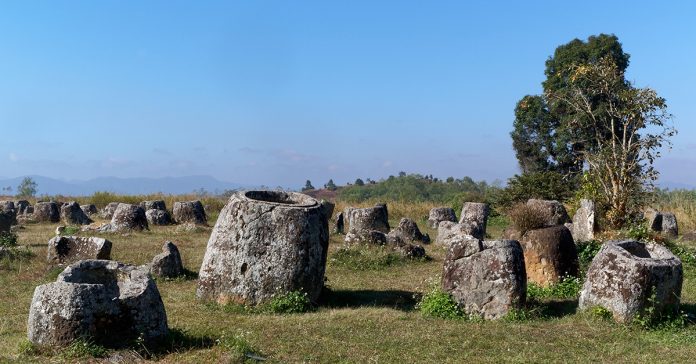
Laos’ Plain of Jars became a UNESCO World Heritage Site in 2020.

The Plain of Jars in Xiangkhouang Province, Laos, has been added to the list of World Heritage Sites by the United Nations Educational, Scientific and Cultural Organization (UNESCO).

The announcement was made at the 43rd Session of the World Heritage Committee held in Baku, Azerbaijan, on July 5.

The Plain of Jars, located on a plateau in northern Laos, is named for the more than 2,100 tubular-shaped megalithic stone jars that are believed to have been used for funerary practices in the Iron Age, according to UNESCO.

Human remains, burial goods, and ceramics discovered at the site dated by comparative material from Dong Son in Viet Nam, to the Early Iron Age from approximately 500 BCE to 800 CE.  The site has been shrouded in mystery for some time.

Laos has been working for 20 years to have the Plain of Jars listed as a World Heritage Site.

In 1998, the Lao government joined hands with UNESCO to initiate a multi-year phased program to safeguard and develop the site.

The program was designed to put mechanisms in place that ensure ongoing protection of the heritage resources linked to bringing socio-economic benefits for the local communities.

At that time, the Lao government expressed commitment to protect and develop the Plain of Jars and nominate the site for World Heritage inscription.

The inscription of the Plain of Jars means that the Plain of Jars is Laos’ third World Heritage Site. The old town of Luang Prabang in Luang Prabang province was inscribed in 1995, followed by Vat Phou and associated Ancient Settlements within the Champasak Cultural Landscape in 2001.

Apart from the Plain of Jars, UNESCO inscribed another six cultural sites in other countries on the World Heritage List.

They were the Dilmun Burial Mounds in Bahrain, Budj Bim Cultural Landscape in Australia, Archaeological Ruins of Liangzhu City in China, Jaipur City in Rajasthan, India, Ombilin Coal Mining Heritage of Sawahlunto in Indonesia, and the Mozu-Furuichi Kofun Group: Mounded Tombs of Ancient Japan in Japan.