Home Blog Page 6210

Lao Doctors Urged to Provide Correct Dengue Treatment

Doctors in Laos treating a patient with dengue fever.

Laos has advised health officials and medical staff to ensure that all dengue patients strictly follow the treatment plan provided by doctors.

“In 2019, Lao health officials are facing the highest number of dengue fever cases in recent years,” said Khampe Phongsavath, president of the Paediatrics Association of Laos, and a member of the dengue control and prevention team under Lao Ministry of Health, as quoted by Vientiane Times.

Khampe added that he wanted to give advice to people so that they were properly informed about ways to prevent the dengue virus.

Laos is currently facing an unusually high number of dengue cases across the country. As of August 3, a total of 20,388 people have been diagnosed with dengue fever nationwide, and 48 have died, according to a report by the Laos Ministry of Health.

Accordingly, the Lao government is stepping up efforts to contain the virus.

Each province in the country have set up special taskforces to engage the public in efforts to prevent and control the disease.

The health ministry is also encouraging people to make sure to remove all stagnant water, which plays a role in creating breeding sites for mosquitoes.

The ministry issued a nationwide dengue warning in early July amid increasing dengue fever cases.

Indonesia’s Largest Bank Mandiri Eyes Lao Market

Indonesia’s Largest Bank Mandiri Eyes Lao Market

Indonesia’s state-owned Mandiri Bank has announced its intention to enter Laos and Cambodia.

Rohan Nafas, Mandiri Bank corporate secretary, said the bank is now studying the best ways of penetrating the two new markets.

In particular, the bank is exploring which sectors would be the best to enter, such as banking or finance.

To that end, the bank has set up an investment fund to facilitate the process.

Mandiri Bank is the largest bank in Indonesia in terms of assets, loans and deposits. The bank had USD 83.6 billion in assets as of end-2018.

Laos has seen several foreign banks making a foray into the market over the past few years.

In November last year, Thailand’s Export-Import Bank opened its first representative office in Vientiane to assist the Lao government’s policy on trade and investment integration into the Mekong sub-region which covers Cambodia, Laos, Myanmar, Thailand and Vietnam.

Separately, The Joint Stock Commercial Bank for Foreign Trade of Vietnam, or Vietcombank, officially inaugurated its operation in Laos in October last year.

At that time, the bank said it will provide services for Vietnamese businesses investing in Laos, those already operating in the country, and others, to raise trade value between Vietnam and Laos.

Such moves by foreign players come amid Laos’s efforts to improve business standards for the banking sector.

The Lao banking sector is working to improve regulations and update preparations for implementing the Basel II principles, including learning about the International Financial Reporting Standards (IFRS 9).

Basel II is an international business standard that requires financial institutions to maintain enough cash reserves to cover risks incurred by operations. The accord prevents banks from hurting the economy by taking more risks than they can handle.

IFRS 9, meanwhile, addresses accounting for financial instruments. It contains three main topics: classification and measurement of financial instruments, impairment of financial assets, and hedge accounting.

The Lao Bankers’ Association and Deloitte Consulting Malaysia also held a meeting in March to review and update the revision of regulations in the local banking industry as part of strengthening capacity to implement the management of commercial banks based on the Basel principles by 2025.

At that time, Chairman of the Lao Bankers’ Association, Mr. Phoukhong Chanthachack, said improving the management and services of commercial banks in Laos to comply with international standards is entirely obligatory, as quoted by Vientiane Times.

He added that it would build confidence among investors and enable banks in Laos to approach bigger financial markets and expand services to integrate with global networks once they were recognized by the international community.

Laos and Indonesia established diplomatic relations in 1957. Indonesia maintains an embassy in Vientiane, while Laos has an embassy in Jakarta.  There are currently no direct flights between the two countries.

Alipay Payment Platform Set to Enter Laos

Alipay Payment Platform Set to Enter Laos

Chinese mobile payment platform Alipay is set to make a foray into Laos after Lao Development Bank (LDB) entered into an agreement with KIWI Company to roll out the service.

KIWI Group, a fintech operator in Southeast Asia, provides cashless payment solutions for its clients.

The service will allow users to make payments and transactions at stores and restaurants in Laos that are partnered with LDB.

The application also can be used to pay visa fees on arrival at the Boten International Checkpoint in Luang Namtha province, which borders Yunnan province in China, and at the 4th Friendship Bridge International Checkpoint in Bokeo province.

Those who want to use the service need to register in China, and LDB will provide facilities for transaction services only.

Alipay is a third-party mobile and online payment platform, established in Hangzhou, China in February 2004 by Alibaba Group. It is one of the most used mobile payment applications in China, with more than 1 billion users.

This came after Banque pour le Commerce Exterieur Lao Public (BCEL) joined hands in July with Chinese payment service provider UnionPay International (UPI) to roll out a new QR code payment service in Laos.

The move will enable UnionPay app users to make payments by scanning QR codes at local stores in the country. UnionPay currently operates one of the most popular mobile payment apps in China, with about 150 million users across 18 cities.

Such developments are a boon to Laos, which is currently pushing its tourism campaign, Visit Laos-China Year 2019, to attract more Chinese tourists.

More than 4.1 million visitors came to Laos in 2018, an 8.2 percent increase compared to 2017. Among them, over 800,000 tourists came from China, a rise of 26 percent, according to the Lao Ministry of Information, Culture, and Tourism.

First Freight Train Service Launched from Laos

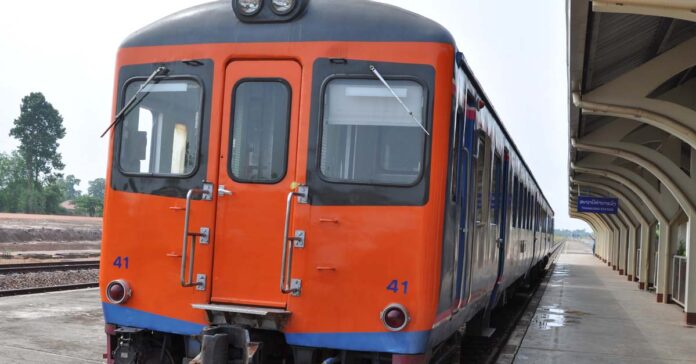
First freight train launched in Laos

The first freight train service to and from Laos was launched yesterday, with a shipment of Beerlao crossing the Thai-Lao Friendship Bridge.

Luang Prabang Villagers Hit by Flash Floods

Luang Prabang Villagers Hit by Flash Floods

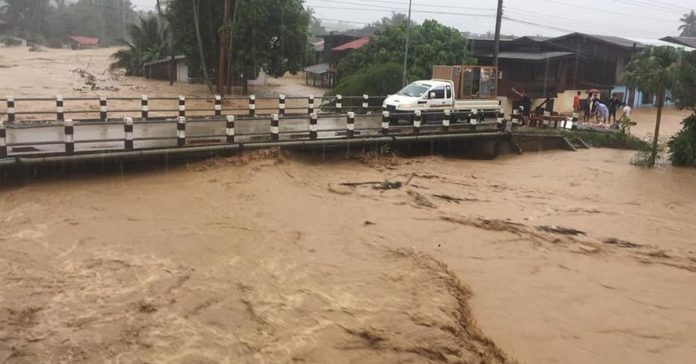
A number of villages in Nan District, Luang Prabang Province have been hit by severe flash floods after torrential rain on Monday evening.

A massive rainstorm has finally broken the severe drought that gripped the country for months, causing flash flooding in Luang Prabang.

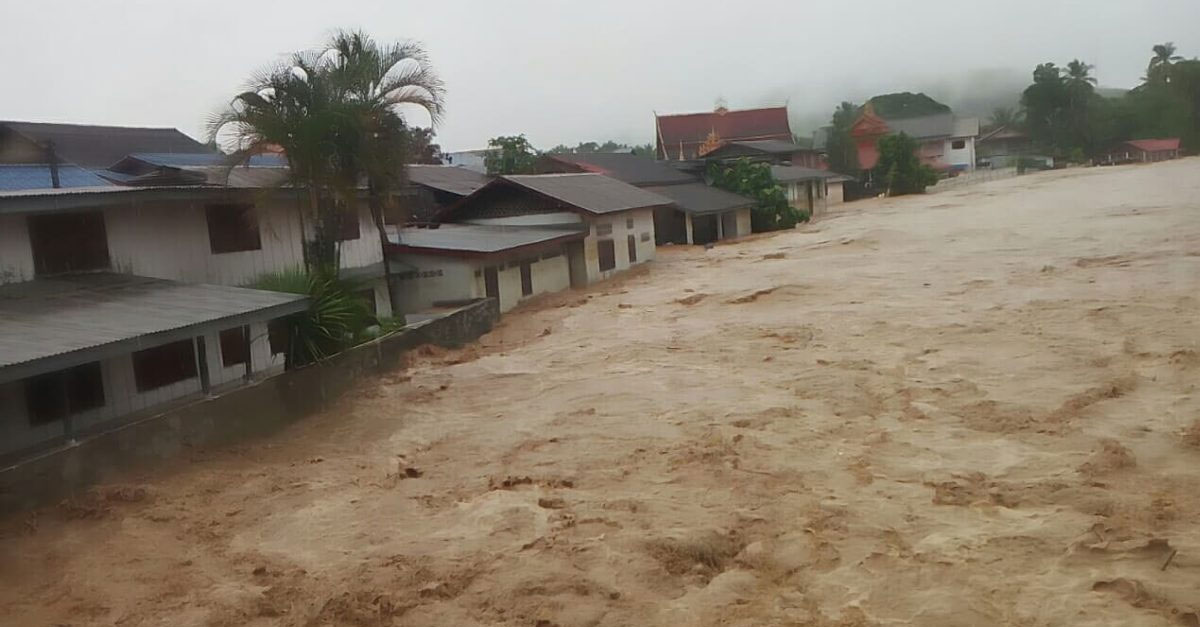
The Nan River burst its banks early Monday morning, overflowing into several nearby villages. Nearly 400 families have been affected by the floods, with local authorities providing assistance.

Villagers and their belongings are being moved by boat to higher ground, and so far there have been no reports of injury.

Flash floods nearly reach the rooftops in Nan District, Luang Prabang
Flood waters nearly reach the rooftops in Nan District, Luang Prabang

The floodwaters began to subside yesterday afternoon, and authorities are now undertaking an assessment of the damage caused to villagers’ homes and livelihoods.

The Meteorology and Hydrology Department, Ministry of Natural Resources and Environment, has issued a severe weather warning for many parts of the country, especially the northeast, central and southern regions as a tropical depression will pass over the country in the next few days.

Strong winds and heavy rains are expected, which could cause flash flooding and landslides.

Laos Saw More Chinese, Less Korean Tourists in Past Six Months

Laos Saw More Chinese, Less Korean Tourists in Past Six Months

The number of tourists visiting Laos has increased 5 percent in the past six months thanks to a rise in the number of Chinese visitors.

More than 2.2 million people visited Laos between January and June, according to Laos’s Tourism Development Department, Ministry of Information, Culture and Tourism.

The number of Chinese visitors jumped by 13 percent while that of Vietnamese visitors increased by 11 percent. The number of visitors from Thailand also rose by 1 percent.

Vientiane Times quoted an unnamed government official as saying that he believed visitor numbers were up because of the ongoing Visit Laos-China Year campaign.

However, the number of South Korean visitors plummeted by 20 percent while that of Japanese visitors sank by 13 percent.

The official told Vientiane Times that the decline in arrivals from some countries was due to circumstances beyond the authorities’ control.

“Some people stayed away because they were unsure of the quality of services here. And although Laos has many enticing tourism products there are several inconveniences, such as poor road access to tourist sites,” the official added.

Laos attracted more than 4.1 million foreign tourists last year, an 8.2 percent increase from the previous year. Tourism generated revenue of more than USD 755 million in 2018.

Meanwhile, it is expected that at least 4.5 million people will visit Laos this year, generating revenue of more than USD 700 million.

More Chinese tourist expected

Officials believe that, out of 4.5 million expected tourists, 1 million would come from China.

To achieve such a goal, Laos is currently intensifying its efforts to improve services and create more facilities for visitors.

Vang Vieng, one of the most famous tourist destinations in Laos, for instance, has improved the quality of services and made changes to the price of food, accommodation, and the fees charged at tourist attractions.

In Luang Prabang, meanwhile, restaurants have added Chinese dishes to their menus and installed signs written in Chinese at popular tourist sites.

As for Luang Namtha Province, the authorities are encouraging officials to supply useful information to Chinese visitors.

There have also been some other positive developments that might boost the number of Chinese visitors to Laos.

Banque pour le Commerce Exterieur Lao Public (BCEL) has recently teamed up with Chinese payment service provider UnionPay International (UPI) to roll out new QR code payment services in Laos.

The move will enable UnionPay app users to make payments by scanning QR codes at local stores in the country.

UnionPay currently operates one of the most popular mobile payment apps in China, and this means BCEL’s collaboration with UPI would help Laos’s local businesses to reach out to more Chinese visitors, who make up one of the largest sources of tourists.

Separately, Thailand is currently preparing to launch the country’s first bullet train that will run between Bangkok and Beijing, China, with Laos as one of the intermediate stations.

In particular, the first route, a Thai-Sino project linking Bangkok, Nong Khai, Laos and a Chinese city Mohan in the far Northeast, is currently under construction and is scheduled to be completed by 2023.

Where are the Koreans?

Laos has been one of the most popular destinations for South Korean tourists thanks to the reality TV show, “Youth Over Flowers,” which aired in 2014.

The number of visitors from South Korea to Laos grew in 2015 and 2016, finally beginning to plateau in 2017. The overall market share of South Korea rose to 4.4 percent in 2017, however, according to a report by Laos’s Ministry of Information, Culture and Tourism. The number jumped from 96,085 in 2014 to 170,571 in 2017.

However, local tourism experts have repeatedly suggested that such a number is decreasing, but there had been no official number released by the Lao government until now.

Confirmation from the tourism ministry that the number of South Korean visitors plummeted by 20 percent in the first six months is therefore highly significant.

One Vientiane-based tourism expert cited a lack of promotional efforts as one of the reasons to contribute to the drop in such number.

“The TV show that led to the surge came out five years ago. Out of sight, out of mind. No one made any more major Korean TV shows or films, to my knowledge,” the expert told The Laotian Times.

As he pointed out, several South Korean broadcasters released similar shows to repeat the success of “Youth Over Flowers,” but none of them was able to attract similar viewer numbers.

The expert also noted that not enough has been done to promote and encourage people to return to Laos.

According to the latest survey conducted by the tourism ministry, only 7.9 percent of respondents said it was their returning visit to Laos. In contrast, first-time visitors accounted for 75.2 percent.

Time for a Diversification?

The Lao government invited 12 representatives from Malaysia, Singapore, Thailand, China, Japan and South Korea to Bolikhamxay and Khammouane provinces, in a bid to promote other parts of the country.

The familiarization trip to the two provinces took place between July 12 and 17 and was designed to publicize some of Laos’ tourist attractions and encourage the tour operators to include some of these locations in their package tours.

It marked the Lao government’s latest effort to promote lesser-known tourist sites to foreigners, and this work is expected to continue in the coming years.

Story: Taejun Kang
Photo: Prae P.

Six Problems the Lao Government is Trying To Solve by August

Six Problems the Lao Government is Trying To Solve by August

The Lao government held its two-day monthly meeting in Vientiane Capital from July 23-24 to discuss resolutions to six major problems faced by the country, including dengue fever, African swine fever, and drought.

Laos has begun to face mounting problems in the second half of the year, including a dangerous outbreak of dengue fever, devastating drought, invasive pests, weak currency, and unregulated social media commentary.

The government met to discuss these problems at its monthly meeting, chaired by Prime Minister Thongloun Sisoulith, who called upon every sector of government to instill measures to address these and other issues.

He requested that members of the government take swift action and report on their outcomes to the Prime Minister’s Office by August 15.

Dengue Fever

Laos Issues Dengue Fever Warning

The number of cases of dengue fever continues to climb among the Lao population, with more than 14,000 cases recorded across the country, resulting in 33 deaths.

According to the Lao National Center for Laboratory and Epidemiology, the two strains of dengue hitting the country are dengue virus serotypes DEN-2 and DEN-4. Vientiane has seen mostly DEN-2, while southern provinces have had cases of other types. Dengue serotype 2 (DEN-2) can cause hemorrhagic fever, giving rise to a high mortality rate.

A nationwide dengue warning was issued in early July amid increasing dengue fever cases across the country, and experts have been sent from Vientiane to discuss the control of the disease, along with health workers in the south.

The authorities are urging citizens to keep surroundings clean while focusing on destroying mosquitoes and their breeding sites.

African Swine Fever

China and Thailand Ban Pig Imports from Laos

The first cases of African swine fever (ASF) were reported in Laos last month, with seven outbreaks across villages in Salavanh Province leading to the deaths of 973 animals.

The disease was then detected in Savannakhet, and Vientiane Capital, with Luang Namtha on high alert.

Thailand, China and Vietnam were quick to ban pork imports from Laos following the outbreaks in the country.

African swine flu is not known to transmit across species, meaning the disease is fatal to pigs but does not harm human beings.

Devastating Drought

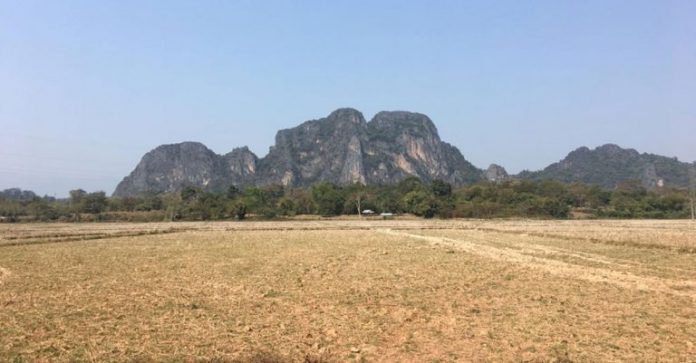
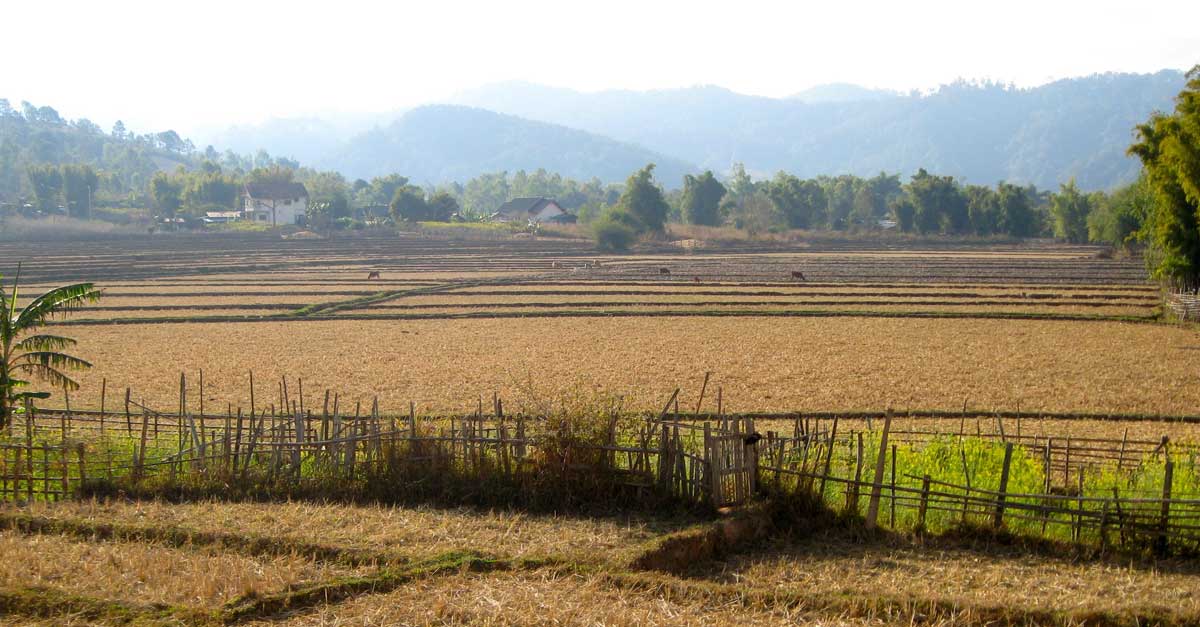
Laos drought dries up rice paddies

Laos, among other Southeast Asian nations, is experiencing an unprecedented and devastating drought. Low rainfall and high temperatures are affecting not only the country’s food security but also farmers’ livelihoods.

The lack of rain has delayed rice production in the country’s 800,000 hectares of wet-season rice fields, with transplantation only 40 percent completed,

The drought comes alongside record low water levels of the Mekong River, which flows through Laos.

The Mekong River Commission (MRC), based in Laos, cited deficient rainfall over the Mekong basin as among key factors that have contributed to the current state.

An El Niño climate cycle in the Pacific Ocean is a major factor contributing to global weather conditions, and the World Meteorological Organization (WMO) predicts ocean temperatures to remain close to current levels through the June-August period, easing only around September-November.

Fall Armyworm Infestation

Fall Armyworm affects crops in Laos

Xayaboury Province has been hit with a plague of fall armyworm (Spodoptera frugiperda), destroying sweetcorn and other crops.

The caterpillars have destroyed 30 percent of 35,000 hectares of maize crops, according to the Director of the Xayaboury Agriculture and Forestry Department, Mr Somvang Keovilaysack.

As a result, a 30 percent shortfall in supplies to domestic and overseas markets is expected this year.

This is the first time farmers have been affected by the insects, with the infestation beginning in Paklai district and quickly spreading to all eleven districts in the province where sweetcorn is grown.

The Lao government is now putting measures in place to control the situation and will make attempts to prevent future infestations.

Fall armyworm affected crops in Thailand and Cambodia this year, where it was never a problem before, and has also spread across 15 provinces in China, affecting about 90,000 hectares of grain production.

The UN Food and Agriculture Organization (FAO) convened a three-day meeting of international experts in Bangkok in March to discuss the armyworm plague, inviting officials from affected nations to brainstorm ways to limit the global devastation.

Weak Currency

Lao Kip

A fluctuating exchange rate and the drop in the value of the kip, alongside the depletion of foreign currency reserves, has caused price hikes among many household products and services, impeding economic growth and driving up the cost of living.

At the government’s monthly meeting, the departments responsible were told to boost productivity and increase exports, provide more support to the business sector, and try to boost tourism in hopes of stimulating economic growth.

Social Media Regulation

Regulation of social media in Laos

The government has grown concerned about unregistered news websites posting misinformation on social media, and has requested all purported news agencies register their websites or Facebook pages.

Comments made by the public on such websites have taken aim at shortcomings in state administration, giving rise to discussions among the cabinet about the need for further regulation of information posted online.

By Francis Savankham

Xayaburi Dam Denies Responsibility for Dry Mekong River

Xayaburi Dam Denies Responsibility for Dry Mekong River

The construction company behind the Xayaburi dam in northern Laos has dismissed allegations that the dam is one of the reasons for the sharp drop in water levels in the downstream stretches of the Mekong River.

CK Power Company, the construction company behind the Xayaburi Dam, said that the company raised the water level in the reservoir for technical purposes only once in October last year.

The company’s comment came after Thailand blamed the dam for causing low water levels in the Mekong, accusing the dam of storing water for test runs.

Some test runs on the Xayaburi dam did commence on July 15 and were planned to continue until July 29, to prepare for the official start of operations in October, according to Thailand’s Office of the National Water Resources (ONWR).

“The trial would severely impact the drought-hit provinces in the northeastern region, whose tributaries rely on water from the Mekong River,” ONWR said.

The office added that Thai water level gauges below the dam found that water levels had dropped by almost 1.8 meters, which is the lowest in 28 years, since the dam began to store water on July 9.

Accordingly, Thailand has asked the Lao government to suspend the test run of the Xayaburi dam.

Many industry observers believe, however, that the allegations lack credibility, citing the fact that the Xayaburi dam is a run-of-river type installation.

A run-of-river type dam is designed to produce power with a limited amount of water storage, or no water storage at all.

Each day the same amount of water that flows into the reservoir is released from the reservoir to produce power.

This is different from a storage type dam that collects water in the reservoir during the wet season and slowly releases over the dry season to produce power. The Nam Theun 2 and other Mekong dams in China fall into this category.

Meanwhile, Deputy Managing Director of CK Power Company, Anuparb Wonglakorn, criticized the Jinghong dam in China’s southern Yunnan province, for releasing less water downstream, causing the water level in the Mekong to drop.

Dr. Anoulak Kittikhoun, Chief Strategy and Partnership Officer at the Mekong River Commission,  is among those who share a similar view.

During his interview with Lao Nationa Television on July 25, he said storage by the Jinghong Dam in China is one of the main reasons why the water level is so low at present

“The dam has announced it will be releasing less water due to maintenance over ten days, from 5 to 19 July. After this, it will revert to its normal release schedule,” said Dr Anoulak.

He informed reporters that the main reason for the low level of the Mekong River is simply a lack of rainfall.