Home Blog Page 6225

The Bolaven Plateau: a Coffee Lover’s Paradise

Pakse is often the starting point for journeys south, because there is easy access to rental cars and organized tours. Pakse is a melting pot of tourists with several cafes and restaurants, while local tour operators in Pakse can arrange trips to the Bolaven Plateau or other attractions in the South.

We decided to stay one night near Paksong, before being picked up by our tour guide the next day to drive into the unknown reaches of the Plateau. In the morning, we were picked up by our guide, Mr. Khamsone Souvannakhily of Mystic Mountain Coffee.

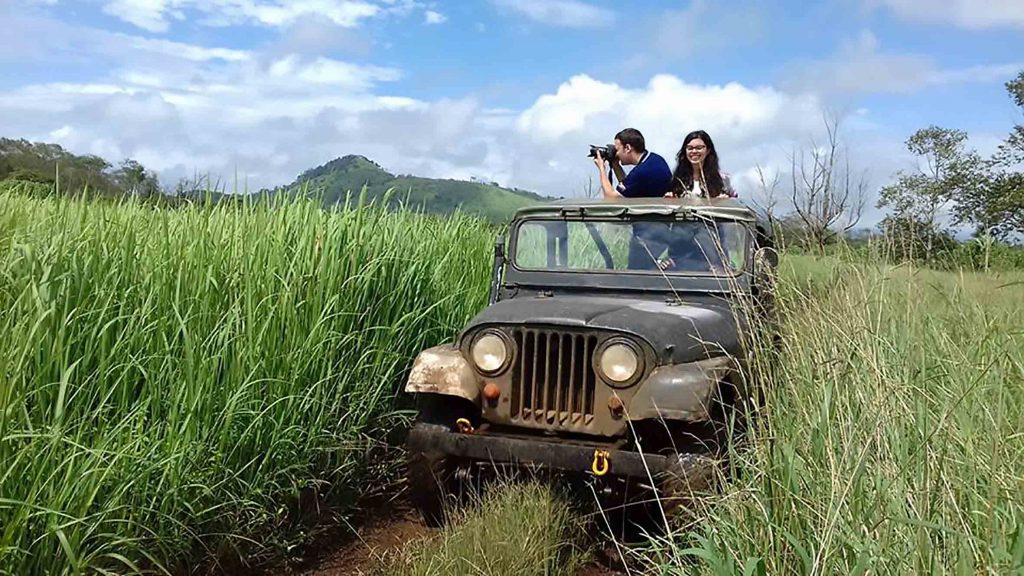
Khamsone arrived in a 1945-era army Jeep, a vehicle which adds a sense of adventure to the experience of the tour. Khamsone’s enthusiasm is infectious, fuelled by his passion for his advocacy and knowledge about the region, and coffee (of course), and the uniqueness of the Bolaven Plateau; his tour gave us great insights on the history of the Plateau and the start of coffee production 100 years ago.

Born and raised in the Bolaven Plateau, Khamsone’s family has been working with coffee for more than forty years. His plantation is located at the heart of the Plateau, a two-hour and a half drive away, due to the poor road condition. It was an exciting ride while being greeted by smiles from children playing by the riverside. From a distance, the beautiful traditional Lao house stands in the middle of rows and rows of coffee plants and recently planted avocado trees all situated on a small hill. There is a large garden outside, with a coop for chickens and a pond for catfish. His house is immaculately kept, and the guest room provides much-needed comfort after the journey.
Meals are included in the tour and guests are treated to huge servings of scrumptious Lao food prepared by Khamsone’s wife. During dinner Khamsone regaled us with stories about the secret American base on the Plateau during the Vietnam War, and that farmers are still in danger from unexploded ordnance (UXO) that has yet to be cleared.

Khamsone started his career doing odd jobs and aided his education by learning and practicing English as a bellboy at a hotel. Little by little he was able to purchase land and fulfil his dream of having a coffee plantation. His plantation is now 16 hectares in size due to hard work and perseverance; but like any success story, it started with a failure. He is a farmer by heart; and after purchasing his farm, he started making profit for himself and his community by growing and selling coffee. Then, in January 2014, half of his coffee field was destroyed by frost. Afraid of telling his wife what happened, he was urgently thinking of other ways to earn money. This was the starting point of Mystic Mountain Coffee Tours. 4 years later, supported by his good grasp of the English language, he’s at the top of his game.
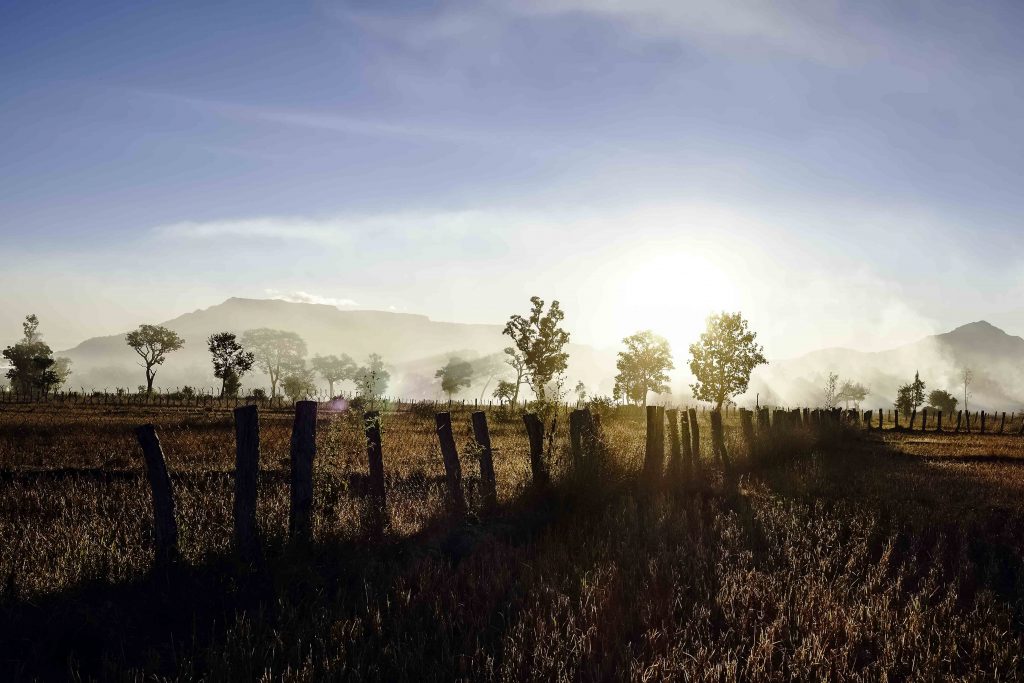
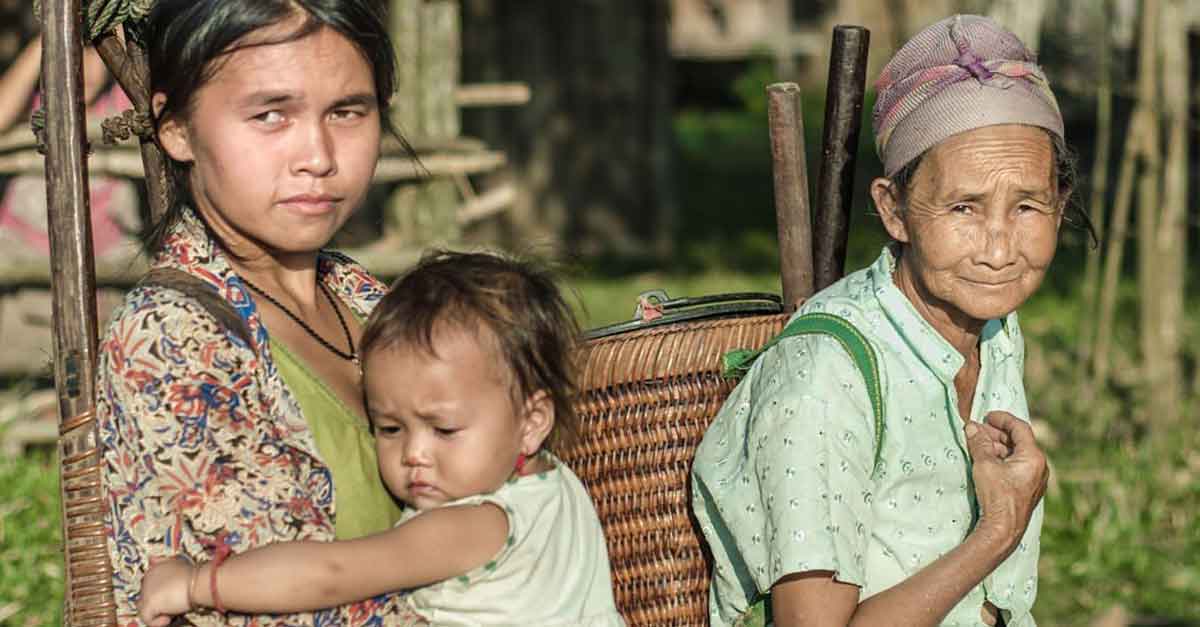
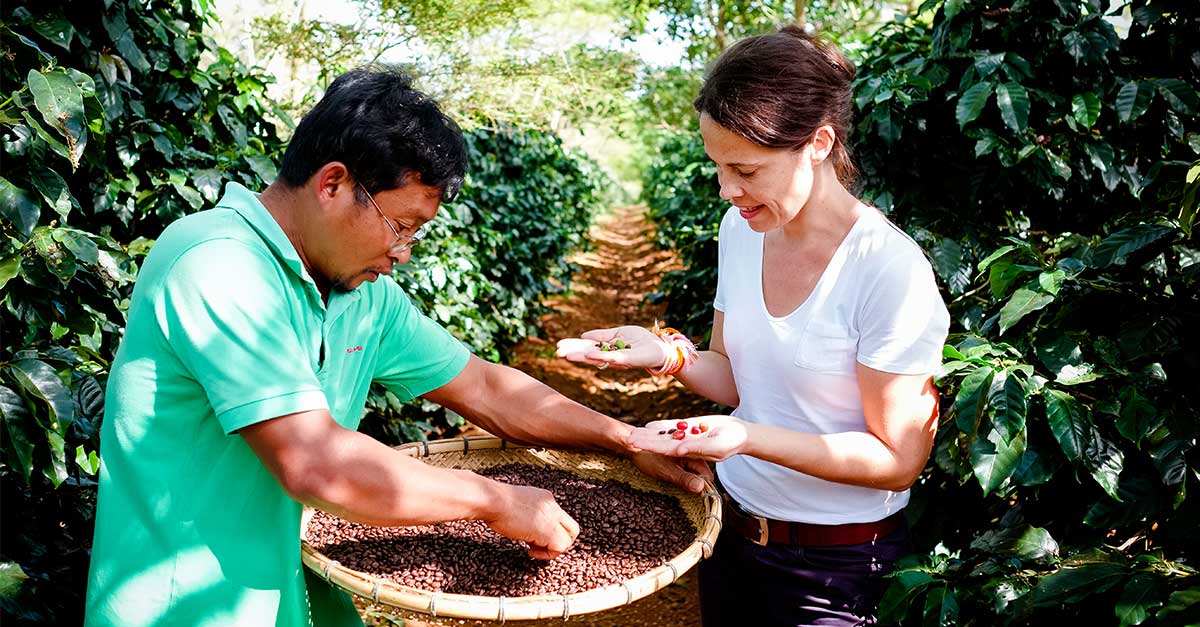
After a contented sleep, we woke to the sound of roosters, while a hearty breakfast awaited. We toured the nearby village, and Khamsone made his rounds to his workers’ houses. The women of the village do the sorting of the coffee beans. While the job might seem monotonous, it gives women the opportunity of working while taking care of the household. Through Khamsone, women are provided with a steady flow of additional income for their families. Additionally, if there are more guests joining the tour, then he will hire additional guides and jeeps.

It was quite overwhelming to witness how much work goes into a cup of coffee, with most families in the villages of the Bolaven Plateau supporting themselves through the coffee industry. Seeing how the people of Khamsone’s village wake up before sunrise to plough the fields and pick the fruit, and how the women dry and sort the beans, it is a good reminder of the importance of knowing how ethically sourced your coffee is.

Mystic Mountain Coffee Tours offers a deep understanding of the coffee process; from cherry to cup. The tours have expanded over the years to include trekking, jeep tours, coffee production lessons and cooking classes for guests.

Tad Hang Waterfall


Getting there:

Mystic Mountain Homestay is located several hours outside of Pakse.

Lao Airlines flies there daily from Luang Prabang and Vientiane,

and four times per week from Bangkok. http://mysticmountain.coffee


Originally Published in: Champa Meuanglao

Text by BENJAMIN BARUTZKI

Photo by SWISS CONTACT & MYSTIC MOUNTAIN COFFEE
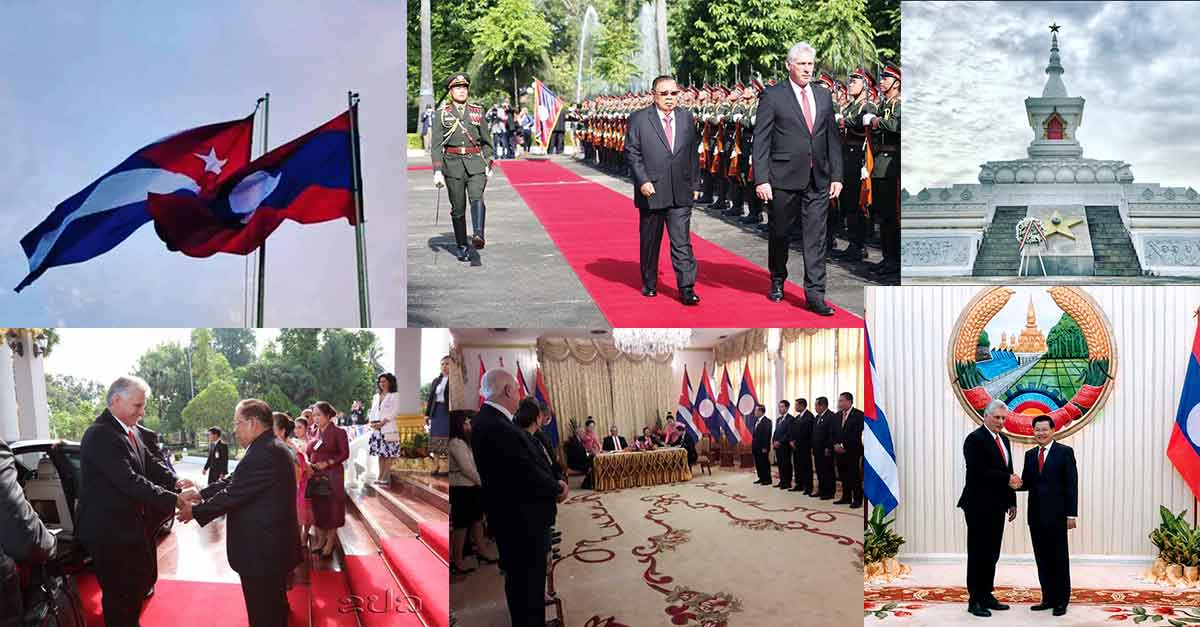
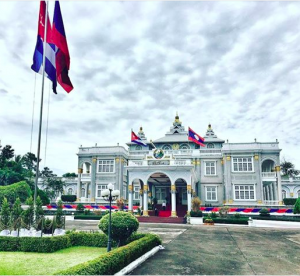
Cuba’s President Diaz-Canel Takes East Asia Solidarity Tour to Laos

Cuba's president Diaz-Carnel in Laos

Geographically distant but with a shared solidarity born of shared experiences of struggles for independence against colonial and imperial domination and sharing similar Marxist-Leninist institutions of state governance, the nations, peoples and ruling parties of Laos and Cuba have long-shared affiliations and affections from afar.

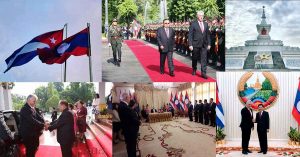
The friendship was celebrated in close quarters over the weekend as new agreements and traditional ties between the two parties, states and peoples of Laos and Cuba were affirmed as the country’s President Miguel Diaz-Canel made a visit to the Lao People’s Democratic Republic on Saturday and Sunday.

“The name Cuba, for us, means friend in another sea,” Press Agency Prensa Latina reported the Lao President Bounnhang Vorachit as saying.

After talks, the two leaders witnessed the signing of a cooperation agreement on sports as well as a Memorandum of Understanding on cooperation between the Lao and Cuban central banks.

President of Cuba’s Council of State and Council of Ministers, Diaz-Canel is the third to hold the post since the country’s revolution led by its longtime party and state leader Fidel Castro, and is understood to be a front-runner to succeed Raúl Castro as First Secretary of the Communist Party of Cuba, the most important position, at the party congress in 2021.
Diaz-Canel reportedly reaffirmed Cuba’s intention to continue to cooperate and extend further assistance to Laos in fields such as human resource development, sports, and health, with the two sides exchanged views on regional and international issues of common interest.

Talks were held with Prime Minister Thongloun Sisoulith and President of the Lao National Assembly, Ms Pany Yathotou.

The presidential visit is part of a tour that also sees official visits to Russia, the Democratic People’s Republic of Korea, China and Vietnam.

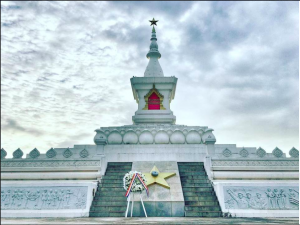
Cuba's President Laid Wreath at the Tomb of the Unknown Soldier, Vientiane, Laos.
Wreath laid at the Tomb of the Unknown Soldier, Vientiane, Laos.
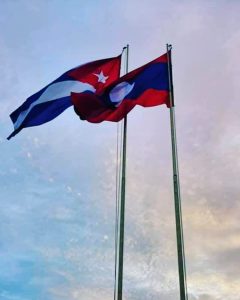
Flags of Laos and Cuba fly over That Luang Esplanade
Flags of Laos and Cuba fly over That Luang Esplanade, Vientiane, Laos
Cuba's president Diaz-Carnel in Laos
Cuba’s president Diaz-Carnel in Laos

Helpless No More: Hope For Survivors A Precious Commodity via Prosthetics

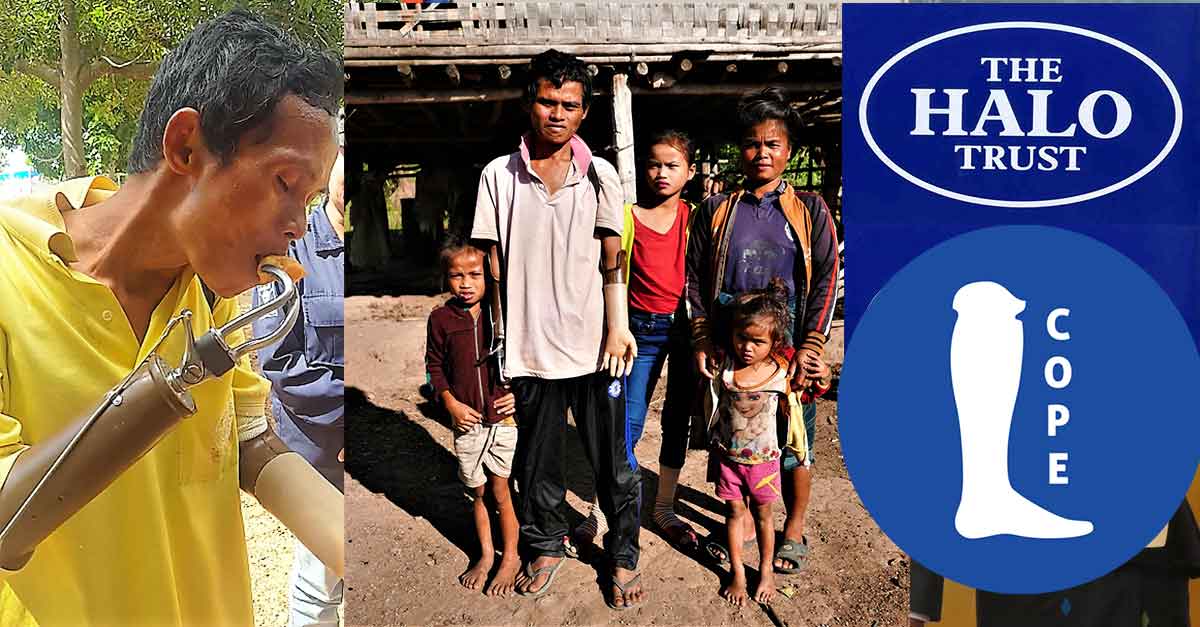
Not Helpless: UXO survivor Mr Ing
“It means so much to me that I am now able to be independent and carry out basic daily activities.” - Mr ing, 46

It means so much to me that I am now able to be independent and carry out basic daily activities. It relieves the burden on my family and I do not feel helpless anymore“. – Mr Ing, 46 years.

It’s a tale that remains all too familiar in rural Laos; the life-changing impact of accidents involving unexploded ordnance (UXO) thanks to unexploded munitions from a war with many names now decades over.

Folks like Mr Ing, 46, whose accident 2 years ago took away the livelihood necessary to support his wife and four children aged 2-15 years.

From being family breadwinner to being seen by himself as a burden, his injuries have changed his life forever.

Getting more of his life back is critical to the physical and mental wellbeing of people like Mr Ing and his family, who has gone from feeling helpless about his predicament to having greater hope for the future.

Assisting people like Mr Ing to rebuild their lives are among the critical efforts organisations like COPE Laos with the able assistance of the Halo Trust.

Mr Ing agreed to share his story via COPE and Halo to raise awareness of the critical issue of survivor support services via prosthetics and rehabilitation in Laos
. Halo writes;

UXO explosion leaves farming father with double amputation, vision impairment

Mr Ing is married with 4 children with ages ranging between 2-15 years.

The UXO-related accident happened two years ago when he was out cutting grass in his fields to prepare his land for cultivation.

He does not remember anything after the explosion but he spent two weeks at the Savannakhet Hospital recuperating from the amputation of both his arms. He was also blinded in his right eye.

Some of his medical expenses at the hospital were covered by an NGO but no other assistance was provided to him after the accident.

His wife became the sole breadwinner for the family with his 15-year old son dropping out of school to help her, whilst his 10-year old daughter also stopped schooling to take care of him.

Ing is unable to carry out even the most basic activities such as eating and dressing by himself.

He has to be fed at every meal.

His family went from one that did not suffer any food shortage to harvesting only 10 bags of rice a year (enough food to feed the family for only 2 months).

The family sold their s hectare piece of land this year to buy food and medication.

To sustain themselves, they forage in the forest and harvest bamboo shoots.

Ing met staff from HALO Trust, who work to clear UXO in Savannakhet province who helped him to access prosthetic rehabilitation services for free, including reimbursement for travels, accommodation and food allowance at Savannakhet Provincial Rehabilitation Centre with COPE’s support.

HALO Trust brought Ing to the Rehabilitation Centre where he was assessed and measured for prosthetic arms.

The rehabilitation team gave him a hook for his right hand that would enable him to grasp thing, whilst the model left hand would act as a support.

Within minutes of leaving the Centre, Ing was eating with his new prosthetic devices, and regaining his sense of dignity and independence for the first time in 2 years.

A team from HALO Trust visited Ing a month later at his home. He is now able to feed and dress himself. He is able to perform his daily tasks without much help.

In time, he hopes to be able to use his prosthetic devices to help his wife with farming activities.

To learn more about HALO Trust’s work in Lao PDR, please visit their website at www.halotrust.org/where-we-work/south-asia/laos.

“Here at COPE, you provide assistance to those who have suffered because of UXO while shining a spotlight on the work that still has to be done.” – US President Barack Obama, September 2016

PM Thongloun Pushes Laos-made at China International lmport Expo in Shanghai

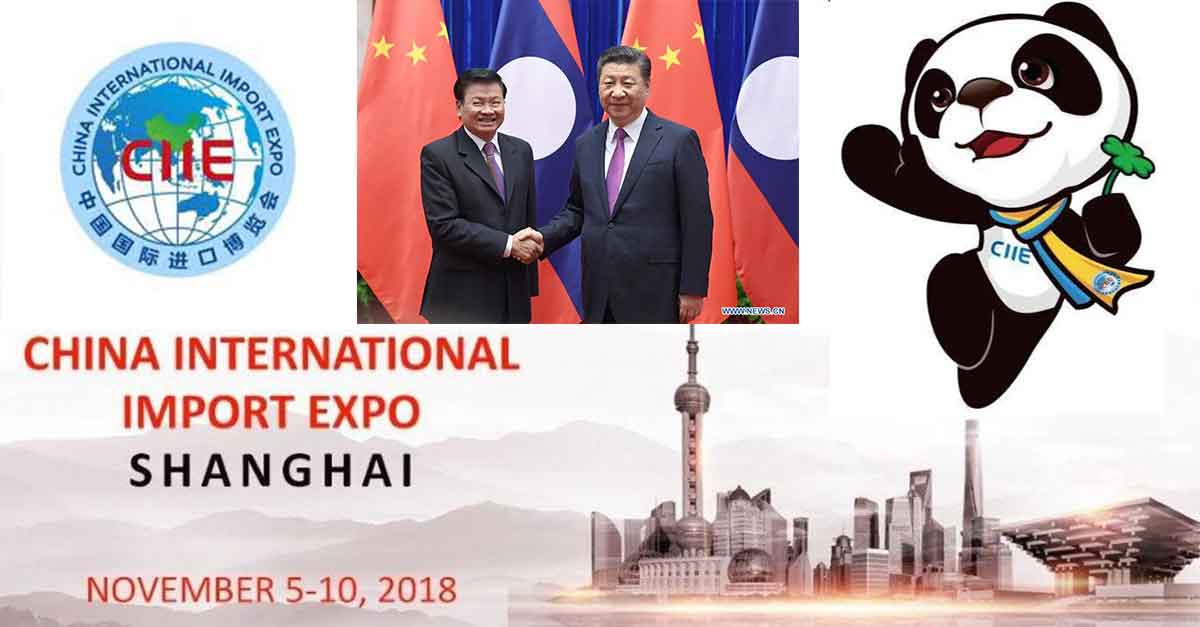
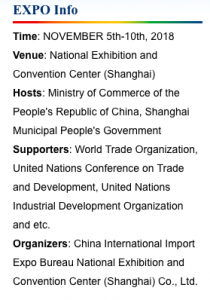
China International Import Expo

Laos’ Prime Minister Thongloun Sisoulith was in China’s major economic city Shanghai pushing the Made-in-Laos message as the country’s policymakers and entrepreneurs seek to leverage increased connectivity to the massive consumer market on its doorstep at the China International Import Expo.

The move comes as Chinese President Xi Jinping said Monday that China’s initiative to expand imports as part of its economic transition was “not makeshift, but long-term consideration of embracing the world and future while promoting common development”.

The import expo features two exhibitions, the first focusing on the Belt and Road countries’ trade and investment opportunities, in sectors including goods and services, tourism and nations’ featured products.

The second shines a light on consumer electronics, auto, clothing, food, medical equipment, service outsourcing and education.

Hongqiao International Trade Forum was also set to be held during the expo with state leaders, ministers, heads of international organizations, business representatives and academia.

China International Import Expo

Import Expo Chance for China to Push Economic Opportunity, Vision at Home, Abroad Amid US Uncertainties 

Many countries had seen economic growth via exports to China in the past five years, president of the Chinese Academy of International Trade and Economic Cooperation at the Ministry of Commerce Zhang Jianping told a news conference for the CIIE on Friday.

“China has a large-sized middle class and will become the world’s biggest consumer market in a few years. If we increase imports from other countries, it will help many nations involved in the Belt and Road Initiative share in China’s rapid growth.”

Nations’ Leaders meet ahead of Expo
Prime Minister Thongloun met Chinese President Xi Jinping the previous day ahead of the first China International Import Expo (CIIE) opening Monday in Shanghai, China.org.cn reported.

Welcoming PM Thongloun, Xi described the China-Laos relationship as “at its best in history”, saying the two countries should carry out closer strategic communication and enhance exchanges on political party and state governance experiences.

In his meeting with the Chinese president, Thongloun said major projects such as the China-Laos railway are being steadily carried out. Laos had gained practical benefits from the joint efforts in developing the Belt and Road Initiative, Thongloun said, expressing thanks for the support and assistance provided by the Chinese side.

Promoting the optimizing and upgrading of practical cooperation and advance the construction of the China-Laos economic corridor was also pushed by the Chinese President, who heralded efforts to ensure the smooth progress in the building of the China-Laos railway, strengthened cooperation in fields regarding people’s livelihoods and disaster relief and called for a well-organized China-Laos Year of Tourism next year as well as initiatives under the Lancang-Mekong cooperation framework.


“Space data offers instant clues to cause of deadly Laos dam disaster”: Stanford Professor

Space data provides clues in Saddle Dam Collapse hypothesis.
Richard Meehan, who began his engineering career designing and building dams nearby in Thailand and who has taught courses for many years at Stanford's School of Earth Sciences and also at Blume Earthquake Engineering Center, has been investigating the dam's failure from Bangkok using new space technologies.

Space data gleaned from satellites has been used to create a hypothesis on the cause of the collapse of the saddle dam D at the Xe Pian Xe Namnoy project in Attepeu province.

Bangkok-based professor Richard Meehan from Stanford University in the United States’ has been investigating the dam’s failure from Bangkok using new space technologies, according to a report published via the Blume Earthquake Engineering Center website on October 26.

According to the center, Meehan began his engineering career designing and building dams in Thailand and teaches at Stanford’s School of Earth Sciences.

The failure hypothesis goes as follows: on the first filling of the reservoir, a wave of groundwater from the main reservoir pushed southwest eventually filling the dry basin behind the saddle dam with 20 m of water,” Professor Meehan wrote.

“The progress of the underground wave can be tracked by rising springs visible on cloud-piercing satellite images from the Sentinel 1 satellite.

“Rising water pressures, still within the normal operating specifications for the project but unprecedented in geological time, enlarged underground free-draining conduits within the naturally fragile basalt ridge line that supported the new saddle dam.

“With a rising water level and loss of support, the brittle earth fill dam began to sink into the void and crack extensively.

“The rising reservoir then cascaded over or through the fragmented crest, washing away the remnants of the dam and fifteen meters of erodible foundation and spilling, late at night, half a billion cubic meters of water and debris.

“This muddy flood plunged over the precipice of a downstream touristic waterfall onto small villages hundreds of meters below with tragic consequences.”

His report found that “satellite ground elevation data and imagery, when combined with readily available archival information from mineral explorations, along with experience on dam projects in similar terrain in nearby Northeast Thailand and in other comparable areas of tropical soils, show that this extended western arm of the reservoir was built on a sinkhole a dry basin that probably never, even over millennia, had retained any of the heavy (1-4 meters) summer rainfall that drenched the plateau, famous for coffee growing and waterfalls.”

“The new and immediately available global satellite data allow for a synthesis of failure explanations into a hypothesis that is both specific to the project but also carries broader implications for this type of development.”

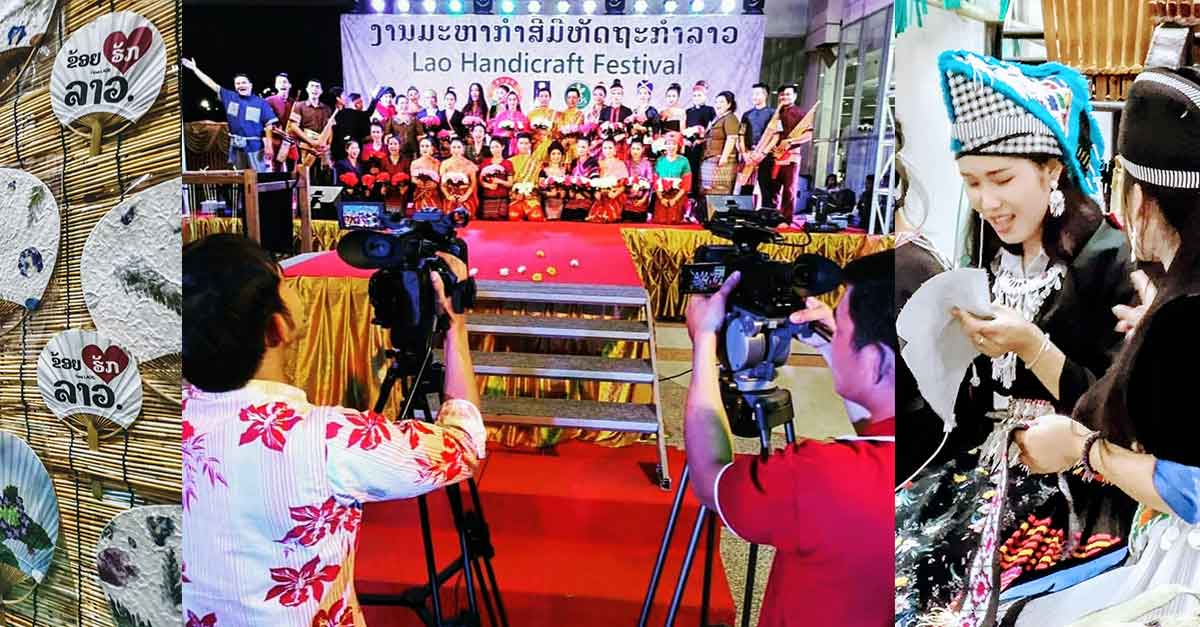
Authentic, Natural, Timeless: Lao Gifts, Souvenirs at Handicraft Festival ’18

Lao Handicraft Festival 2018
Get your Gift Shopping Taken Care of At One Place With The Lao Handicraft Festival, until Sunday November 4 2018.

There is no doubt that Laos is a place with a multitude of natural and cultural wonders, experiences and delights and traditional handicraft wares to share with the nation and world.

Whether decorative or for daily use, the handmade items made by individuals, families and communities in this country can make great souvenirs or gifts for folk near and far.

Yet in our busy lives, it’s sometimes hard to get access to them all in the same place when you need them.

Fortunately, the Lao Handicraft Festival 2018 is here once again to solve all your Laos-related seasonal shopping dilemmas.

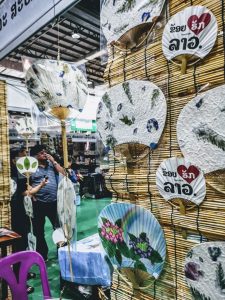
Awaiting inside are traditional and modern fashion, clothing and textiles and accessories in all kinds of natural materials to furniture, decor, tea, coffee and more.

Descending on the capital from provinces across the country are artisans bringing not only their skills but also their commitment to keeping multiethnic Lao traditions alive in old, new and increasingly entrepreneurial ways.

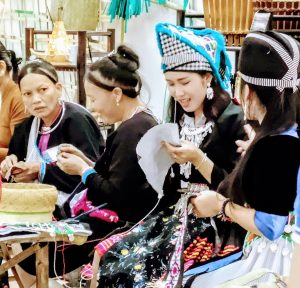
Laos has 49 officially recognized ethnic groups, each with its own unique take on craft styles and traditions, particularly noticeable through distinctive traditional clothing.

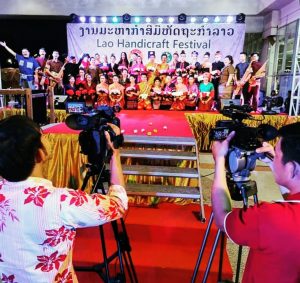
In addition to shopping, visitors to the festival can also enjoy fashion shows, craft demonstrations, workshops and product design competitions.

According to Tourism Laos, the festival is a platform for artisans to display and demonstrate craftsmanship that has been passed down from one generation to the next.

As well as selling their work, artists who exhibit their work at the festival enjoy the opportunity to share and celebrate their cultural heritage with visitors.

Ethnic patterns, motifs and techniques have a timeless appeal.

While international fashion may take inspiration from tribal designs and motifs, Lao handicraft are the authentic reflections of hundreds (if not thousands) of years of culture, artistry and skill.

Each year, over 200 artists from around the country travel to Vientiane to participate in the festival and sell an extensive variety of products including textiles, jewellery, non-timber and recycled products, pottery and many other cultural items.

Beautiful handmade pieces are on sale to suit all budgets, from inexpensive souvenirs to exquisite high-end collectables.

Food & beverage products such as coffee, tea, oils, juices, liquors & spices produced in Lao are also a key feature of the event.

So make your way down to Lao-ITECC exhibition hall today to take it all in, and don’t forget to spend generously; your hard-earned kip goes a long way in the hands of the hardworking folk of these communities, allowing them to access the products and services that allow them to continue making the most of the opportunities afforded them and keep fine traditions alive for the next generation and beyond.
What: *Lao Handicraft Festival 2018*
Date: October 27th to November 4th, 2018
Time: 11:00-18:00 
Venue: Lao-ITECC (Vientiane Capital), Khampengmueang Rd (T4).

Lao Handicraft Festival 2018
Lao handicraft Festival 2018
Lao Handicraft Festival 2018

Lao Handicraft Festival 2018
Lao Handicraft Festival 2018 (images via Laos Briefly)


Beer Drinkers Post-Halloween Hangover Risk Reduced as Prices Rise in Laos

Beer price on rise
Lao Brewery Company, producer of Beerlao, announces price rises from October 29 to cover input costs, inflationary pressures.

Beer drinkers beware this Halloween!

Lao Brewery Company announced wholesale price increases to retailers of its flagship beverage Beerlao on Monday, October 29.

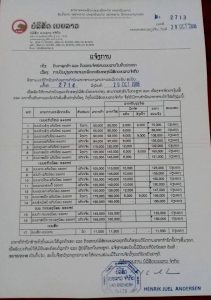
Suppliers and retailers were notified of the price increases for the popular beverage being implemented to offset higher production and distribution costs, according to the company’s public statement to its retail customers and distributors.

Lao Brewing Company announces price rises.
BeerLao price increases announced from October 29, 2018.

The noticed informed suppliers:

As inflation and production costs continue to rise, Beerlao has issued a new wholesale price, which limits the price of beer.

All customers and agents must comply strictly with the prices set to ensure that there is no impact on customers and consumers in the market.

Inflation pressures as currency, fuel oil price pressures bite manufacturers, distributors, consumers of products (including beer)

As usual, price rises in popular commodities can leave a bitter taste.

The impact is usually felt most by those folks persevering on the lower end of the socio-economic spectrum, while those consumers at the more prosperous demographics with a taste for the ever-popular brew should hardly be discouraged.

Price rises may be unlikely to deter many committed drinkers in either camp.

Regardless, those who enjoy the famed beverage can expect to pay more, particularly if retailers pass on the rises in the form of pricier (and less regulated) individual bottle or draft beer sales at the counter.

Price rises announced included:

Crates of Beerlao 640ml up from 90,000 kip to 93,000 kip per unit. Retail sale price of 108,000 kip.

Boxes of Beerlao 640ml up from 94,000 Kip to 97,000 Kip. Retail sale price of 103,000 Kip.

Boxes of Beerlao 330 ml bottles from 105,000 Kip to 115,000 Kip. Retail sale price of 125,000 Kip.

Boxes of Dark Lager Beerlao 330 ml bottles from 135,000 kip to 145,000 kip. Retail sale price of 155,000 kip.

Crates of Lane Xang Beer 640 ml up from 55,000 kip to 60,000 kip. Retail sale price of 75,000 kip.

Draft Beerlao rises from 11,000 kip per litre to 11,500 kip per litre. (Retail price not specified.)


Beer price on rise
Lao Brewery Company, the producer of Beerlao, announces price rises from October 29 to cover input costs, inflationary pressures.

Inequality, Disasters Risks to Development as Progress Pushed in Laos: UNDP

Tackling inequalities essential to Laos' Least Developed Country graduation.
Tackling inequalities essential to Laos' Least Developed Country graduation says UNDP.

Inequality, disaster risk key factors to overcome in Laos’ aspiration to shed Least Developed Country status by the revised target of 2024, says UNDP.


“Graduation from LDC status can happen by improving the education levels among our people who are healthy, live in a sustainable manner and have the creativity that fuels the innovation process and inclusive economic growth”.

– Dr Kikeo Chanthaboury, Deputy Minister of Planning and Investment.

“The risk that unpredictable occurrences like natural disasters impact existing development gains is high. This pertains even to a high growth rate economy like Lao PDR” 

– UNDP Deputy Resident Representative, Mr Balasubramaniam Murali.

Drivers of fancy sports cars in the latest fashion accessories rolling smoothly into the gated garages of elaborately-domed domiciles.
Thatched roofed bamboo shacks dwellers face long walks to everywhere on foot in flip-flops or perhaps a ride on the back of a tractor.
With a lot more in between, Laos’ certainly displays a wide range when it comes to material wealth.

While the gap in terms of goods is too not hard to spot in Laos, economic inequality also plays out critically in access to services including health and education.

The cumulative impact of inequality affects the opportunities available for the less prosperous in Laos.

Inequality is a key factor to overcome in Laos’ aspiration to shed its Least Developed Country Status by the revised target of 2024.

The country’s capacity to graduate from this status depends on the results of the efforts are being made to tackle these issues.

Fortunately, it seems the country is moving in the right direction in terms of better access to essential services.

Providing the latest on its internationally supported efforts to help the government address inequality in Laos, the United Nations Development Programme (UNDP) has published a statement entitled:

As Lao PDR prepares for LDC Graduation, inequality has to be overcome: UNDP’s annual statistical update points out challenges and successes”.

Vientiane, 29 October 2018 – In light of UNDP’s latest statistical update on human development indices and indicators, launched recently, Lao PDR appears to be continuing on its path towards graduation from Least Developed Country status in 2024.

According to the update, Lao PDR’s Human Development Index (HDI) value which is calculated based on the life expectancy, level of education and income per capita of a country’s people, has increased by over 50 per cent since 1990.

In 2017, the country’s life expectancy reached 67 years, while the Gross National Income (GNI) per capita reported in 2018 is US$1996.

In order to graduate from Least Developed Country (LDC) status, Lao PDR needs to pass two of three thresholds.

The country’s GNI per capita and Human Assets Index (HAI) has reached the required eligibility value, whereas the target for the Economic Vulnerability Index (EVI) remains to be met. Lao PDR’s low resilience to shocks and instability remains a concern, particularly during a time, when various parts of the country are suffering from severe flooding.

According to UNDP’s statistics, inequality remains one of the major challenges in Lao PDR. When Lao PDR’s HDI value is adjusted for inequality, it decreases by over 26%.

The average decrease for other countries in the region is slightly over 15%. Vast inequalities are particularly alarming in a disaster situation, as people with low incomes and difficult access to services often struggle the most with recovery.

“The risk that unpredictable occurrences like natural disasters impact existing development gains is high,” UNDP Deputy Resident Representative, Mr Balasubramaniam Murali said.

“This pertains even to a high growth rate economy like Lao PDR.”

Deputy Minister of Planning and Investment Dr Kikeo Chanthaboury believes that the data concentrating on more than just economic scales is essential for sustainable and equitable development:

“UNDP’s human development data compilation and analysis helps us to forecast and plan a better future, especially when it comes to the quality of development,” Dr Kikeo said.

“If Lao PDR is to avoid the middle-income trap, among others, we have to find diversified avenues for growth, design strategies for continued economic transformation right from the start, and invest in transforming education and health systems in a way that will equip the labour force and whole population to continuously adapt.

“In particular, the graduation from LDC status can happen by improving the education levels among our people who are healthy, live in a sustainable manner and have the creativity that fuels the innovation process and inclusive economic growth”.

Currently, the inequality in education in Lao PDR is at 34%, which is close to the worldwide average for LDCs.

Lao PDR has, along with most of the developing world, taken major strides forward in almost all categories of human development over the past three decades.  

Remaining gaps in opportunities, achievements and empowerment are a key source of inequality in many developing countries.

Lao PDR’s process of moving towards LDC graduation will be strengthened even further when economic growth can be complemented by high-quality human development interventions.

– United Nations Development Programme in Lao PDR