Home Blog Page 6237

Hong Kong Baptist University-led research reveals hyocholic acids are promising agents for diabetes prediction and treatment

HONG KONG SAR – Media OutReach – 1 April 2021 – A series of studies led by researchers from Hong Kong Baptist University (HKBU) have revealed that hyocholic acid and its derivatives (collectively known as HCAs), a component of bile acids that facilitate fat digestion, are a promising risk indicator of type 2 diabetes. The strong efficacy of HCAs in regulating blood glucose levels and protecting against diabetes has also been uncovered. The findings open a window for the development of HCA-based predictive markers as well as anti-diabetic drugs.

Professor Jia Wei, Chair Professor of the School of Chinese Medicine at HKBU, has revealed that hyocholic acid and its derivatives are a promising risk indicator of type 2 diabetes.

The research results have been published in the international scientific journals Cell Metabolism and Nature Communications.

High concentration of HCAs protects pigs from diabetes

Inspired by the traditional Chinese medical book Compendium of Materia Medica, which recorded the use of pig bile to treat excessive thirst, a condition known today as diabetes, Professor Jia Wei, Chair Professor of the School of Chinese Medicine at HKBU, led research teams to conduct a series of studies on the role of HCAs in glucose homeostasis and diabetes prevention.

Diabetes is characterised by high blood glucose levels. Through a series of tests conducted on 55 humans, 32 mice and 12 pigs, Professor Jia’s team confirmed that fasting blood glucose levels in pigs are significantly lower than that of humans and mice. As HCAs constitute nearly 80% of bile acids in pigs, while the proportions in humans and mice are only about 2% and 3% respectively, a negative correlation between HCAs and blood glucose levels was observed.

The result indicates the potential role of HCAs in the maintenance of stable glucose levels. This may explain why pigs, unlike humans, seldom suffer from diabetes despite their low physical activity levels and consumption of a calorie-rich diet.

HCAs correlate with diabetes and metabolic health

To analyse the correlation between the levels of HCAs and the occurrence of diabetes in humans, data was collected from two large-scale cohort studies, namely the Shanghai Obesity Study and the Shanghai Diabetes Study. The researchers examined the serum bile acid profiles of 1,107 participants of the Shanghai Obesity Study, which was published in 2013. The participants were divided into three groups: healthy lean, healthy obese and obese with type 2 diabetes. It was discovered that the levels of serum HCAs were significantly lower in the healthy obese and obese with type 2 diabetes groups.

In another study, the serum bile acids of 132 participants of the Shanghai Diabetes Study were investigated. They were all healthy (at baseline) when they were enrolled in the study between 1998 and 2001. Ten years later, 86 of them had become metabolically unhealthy, while 46 remained healthy. Analysis showed that, compared with those who remained healthy ten years later, those who had become metabolically unhealthy had significantly lower baseline levels of serum HCAs, illustrating that levels of HCAs are a strong predictor of metabolic syndromes such as diabetes.

HCAs regulate blood glucose levels in animal models

Through a series of laboratory experiments, the researchers looked further into the mechanisms that underpin the key role that HCAs play in regulating blood glucose levels. In an animal model experiment, the researchers suppressed the synthesis of HCAs in the livers of a group of pigs by around 30%, and they found that their blood glucose levels increased by 30% when compared with the control group. HCAs were then given to the pigs, after which their blood glucose levels eased off.

Another experiment conducted by the researchers focused on the effect of HCAs on glucagon-like peptide-1 (GLP-1). GLP-1 is a hormone produced by L-cells, a type of enteroendocrine cell that enhances insulin secretion and decreases blood glucose. In a laboratory setting, different kinds of bile acids, including HCAs, were applied to L-cells, at varying levels of concentration. Results showed that at a high concentration of 50 micromolar, HCAs were the most effective at stimulating GLP-1 secretion when compared with other types of bile acids. The findings also revealed that HCAs regulate blood glucose levels by stimulating the secretion of GLP-1 and thus insulin production.

Potential for diabetes prediction and treatment

“The results of our studies provide evidence of how HCAs help to regulate blood glucose levels, and they have revealed the mechanism of how it is achieved at a cellular level. HCAs demonstrate promising potential, and they could be developed into an agent for the prediction and treatment of type 2 diabetes,” said Professor Jia.

“As gut microbiota can regulate the metabolism of HCAs, targeting the intestines instead of the pancreas could be a prospective novel strategy for treating diabetes. We will further investigate how to increase the secretion levels of HCAs in diabetic patients by regulating the intestinal bacteria,” he added.

Researchers from the Shanghai Jiao Tong University Affiliated Sixth People’s Hospital, Peking University, the Affiliated Drum Tower Hospital of Nanjing University Medical School, China Academy of Chinese Medical Sciences, China Agricultural University, Sichuan University and the University of Hawaii were also involved in the studies.

NCS to offer new big data and mobility intelligence services through integration of DataSpark

Integration expands NCS’ NEXT service offerings in end-to-end advanced analytics and big data to support its Asia-Pacific growth strategy


SINGAPORE – Media OutReach – 1 April 2021 – NCS will integrate DataSpark, a telco-centric data science and engineering subsidiary of Singtel Group, under its growing NCS NEXT organisation. This integration expands NCS’ capabilities in providing end-to-end advanced analytics and big data solutions with mobility intelligence services. NCS and DataSpark clients can better harness big data for digital transformation, augment their existing data platforms with geo-spatial data, and transform the data into mobility intelligence to draw deeper customer insights and drive business outcomes.

Ng Kuo Pin, Chief Executive Officer, NCS said, “We want to be a trusted digital transformation partner for governments and enterprises in the Asia Pacific region and are committed to helping our clients succeed by harnessing new technologies in big data, advanced analytics and artificial intelligence. Adding DataSpark’s geo-spatial and mobility intelligence services to our already robust end-to-end data capabilities opens up new possibilities for our clients, by enabling them to draw an incredibly detailed understanding of how people and their customers move, identifying unmet needs and growth opportunities.”

A key capability of DataSpark is using mobility data intelligence to help organisations make better-informed business strategy and plans by understanding how people move, where they go, and what they do. This is done by processing large amounts of anonymised mobile, Global Positioning System (GPS), public transport, road network, immigration, and census data. In 2020, DataSpark successfully gathered anonymised telco-sourced data on changes in unique daily worker volumes within Singapore and Australia’s Central Business Districts (CBD), which provided insights and solutions into the future of workers in CBD offices.

Shaowei Ying, Chief Operating Officer, DataSpark, said, “DataSpark’s presence in high-growth markets and unique capabilities in mobility data intelligence are a natural complement to NCS’ growth strategy in Asia Pacific. By joining the NCS family, we can expand our digital footprint to reach new clients in a variety of sectors such as healthcare, out-of-home media, retail, tourism, transport, urban planning, and more. With the synergy of NCS’ resources and NCS NEXT teams, we are excited to explore the growth opportunities this integration will bring and will continue to innovate to help our clients make informed business decisions with mobility data and actionable insights.”

With a presence in Australia (known as DSpark), Indonesia, Philippines, and Singapore, DataSpark offers a range of solutions ranging from artificial intelligence and machine learning, to bespoke telecommunication data tools.

DataSpark will continue to run independently under NCS NEXT to further accelerate and expand its product and service offerings.

About NCS

NCS is a member of the Singtel Group and the leading information, communications and technology (ICT) service provider with presence in the Asia Pacific region. NCS delivers end-to-end ICT solutions to help governments and enterprises realise business value through digital transformation and the innovative use of technology. NCS invests in NEXT capabilities of digital, cloud, and platform while continuously strengthening its core offerings of Applications, Infrastructure, Engineering, and Cyber services. NCS also believes in building a strong partner eco-system with leading technology players and research institutions to support open innovation and co-creation.

For more information, please visit www.ncs.com.sg.

Tanoto Foundation Contributed IDR157 Billion in Programs and Aid in 2020 to Improve Indonesia’s Human Capital Development Index: Annual Report

JAKARTA, INDONESIA – Media OutReach – 1 April 2021 – Tanoto Foundation, an independent family philanthropy organization founded by Sukanto Tanoto and Tinah Bingei Tanoto in 1981, contributed a total IDR157 Billion (US$11.1M) to support a diverse range of education and human capital development programs in 2020, an increase from 2019’s IDR155 billion (US$ 10.9M). This is detailed in the Tanoto Foundation Annual Report 2020, published today.

The increase reflected Tanoto Foundation’s concerns over the social impact of the COVID-19 pandemic on communities. The funds were allocated to finance a number of sustainable programs, in the following areas:

  • Early childhood development and education, including prevention of stunting;
  • Improving the quality of educators (teachers, teacher trainees, principals, school supervisors);
  • Development of future leaders (scholarship scheme);
  • COVID-19 aid.

Dr. J. Satrijo Tanudjojo, Global CEO, Tanoto Foundation, stated that the Foundation remains committed to achieving its programs’ impact goals, while helping the communities affected by the COVID-19 pandemic.

“We were encouraged by the generosity of the Tanoto family, who guided us as we maintained continuity in our programs to improve lives and quality of education for our beneficiaries, with a number of adjustments made due to the pandemic,” said Satrijo.

Combatting the COVID-19 pandemic

Tanoto Foundation collaborated with government and private sector organizations to support areas that required more attention and intervention. In the early stages, the efforts were focused on supporting medical workers in the frontline, while in the later stages the focus shifted to supporting the increase of COVID-19 testing capacity – the Foundation’s collaboration with Temasek Foundation International and GSI lab being one example. The total tally of the donation in COVID-19 assistance amounted to 1.3 million masks, 1 million pairs of gloves, 100,000 protective gowns, 3,020 goggles, 20,200 PCR test kits and 1 set of testing machines.

Collaboration on stunting prevention

Tanoto Foundation continued to actively support the Indonesian Government’s stunting reduction goals and improve learning standards in early childhood development and education, with key highlights as follows:

  • Strengthened partnerships with Early Childhood Education centres, trained 154 teachers, reaching 824 children;
  • Collaborated with the Bill & Melinda Gates Foundation; committed a total of US$2 million to the World Bank’s Multi Donor Trust Fund in support of training 72,636 human development cadres recruited by the Indonesian government;
  • Contributed a US$200,000 grant to UNICEF Indonesia to translate and adapt the measurement instruments for the Early Childhood Development Instrument (ECDI) and the Caregiver-Reported Early Development Index (CREDI) in Indonesia.


Basic Education: Supporting the shift in distance learning

The COVID-19 pandemic also disrupted basic education. The Government swiftly implemented distance learning to ensure the continuation of educational activities by leveraging technology and creative teaching methods. To support our beneficiaries in this process, Tanoto Foundation’s PINTAR Program surveyed over 450 partner primary and secondary schools across 21 districts.

The survey found only a third of schools in urban areas were distance-learning ready, while only one in 10 schools were distance-learning ready in rural and semi-urban areas. It also discovered the challenges that teachers and principals were facing in the shift to distance learning, represented in three major areas:

  • Infrastructure: Students and teachers had limited access to internet and adequate devices.
  • Teachers’ Competency: Teachers had difficulty using technology and digital media to assess the students’ understanding of study materials and track their progress.
  • System and people readiness:

a. Students struggled to embrace a different learning method.

b. Parents were unprepared to take a more active role in the learning process.

c. The Government needed time to adapt to the changes in the education sector

Following the survey, the PINTAR Program facilitators developed plans that focused on equipping educators with the necessary competencies and facilities to effectively use technology for distance learning. Efforts included the launch of an e-teacher training platform aimed at familiarizing teachers with learning management systems and simple collaboration tools. The program also combined online individual learning and exchange of best practices through the formation of teacher working groups. To achieve scale and sustainability, we rerouted expenditure on brick-and-mortar infrastructure to classroom and out of classroom technologies.

Developing future leaders in the higher learning segment

Amidst the pandemic, the recruitment process of the TELADAN scholarship recipients (scholars) class of 2021 was for the first time held entirely online. The processes included online registration, three-step preliminary selection (included gamified and written tests) to final round of selection (online leaderless group discussion, gamification, and online interviews) to ensure the quality of shortlisted scholars. The Foundation selected 172 TELADAN Scholars from a total 10,895 applicants.

Over the period 2004-2020, Tanoto Foundation has awarded 7,825 scholarships to students from various universities across Indonesia.

About Tanoto Foundation

Tanoto Foundation is an independent philanthropic organization founded by Sukanto Tanoto and Tinah Bingei Tanoto based on the belief that every person should have the opportunity to realize his or her full potential. Tanoto Foundation programs stem from the belief that quality education accelerates equal opportunity. We harness the transformative strength of education to realize people’s full potential and improve lives. Tanoto Foundation focuses on making an impact in three areas: improving learning environments, future leaders development, as well as medical research and sciences.

Maruhan Japan Bank Lao Officially Launches VIP Banking Service

Maruhan Japan Bank

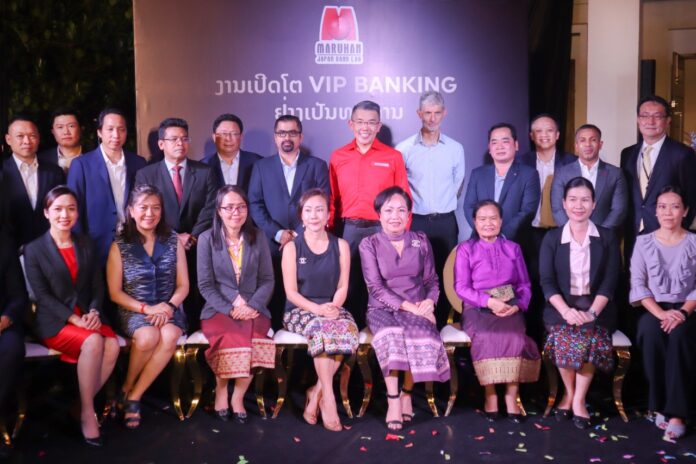
On March 30th, Maruhan Japan Bank Lao officially unveiled their VIP Banking service in the presence of government officials, diplomats, business partners, and VIP guests at their head office.


Mr Anthony Chin, CEO of Maruhan Japan Bank Lao, presented their VIP Banking services, which are based on the following:

  1. Understanding the customers and fulfilling their needs
  2. Personalized service
  3. Lifestyle and building a unique eco-system & experience for VIP customers

Aiming to deliver a holistic banking experience to its customers, Mr Chin mentioned: “We dedicate a lot of time and resources in understanding the market, customers and their needs. We focus to contribute in the well-being of the community”

Later on into the event, the CEO gave a tour of the new VIP Banking Lounge to the guests introducing their unique services and features such as access to a dedicated relationship manager, financial solutions, exclusive privileges, attractive term deposit interest rates, and more.

Access to Maruhan Japan Bank Lao’s partners such as Mercedes Benz Auto Lao, Jaguar Land Rover, Crowne Plaza, Landmark Hotel, Prudential, Naked Espresso, and more is one of the many benefits you will receive when becoming a VIP Banking customer.

Maruhan Japan Bank Lao commits to its mission and value proposition of becoming the #BankforAll

Maruhan Japan Bank Lao is the leading bank in SME, digital and innovation in LAO PDR, bringing all of its global expertise, resources and innovation to better serve its customers.

If you would like more information, please contact Maruhan Japan Bank Lao on their hotline: 021 411 777 or visit their website: https://www.maruhanjapanbanklao.com

Follow Maruhan Japan Bank Lao on Facebook: https://www.facebook.com/MaruhanJapanBankLao

Lao-American Announces Candidacy for Arkansas Governorship

Lao-American Businesswoman Supha Xayprasith-Mays to Run for Governorship of Arkansas
Lao-American Businesswoman Supha Xayprasith-Mays has announced her candidacy for Governorship of Arkansas.

Lao-American businesswoman and civic activist Supha Xayprasith-Mays is to run for governor in her state of Arkansas, United States, after declaring her candidacy on Friday.

Rain and Stormy Weather to Hit Some Parts of Laos this Week

Rain and stormy weather are forecast for some parts of Laos this week, particularly the northern and central provinces.

Rain and stormy weather are forecast for some parts of Laos this week, particularly the northern and central provinces.

Laos Receives New Shipment of Covid-19 Vaccines from China

PM Phankham Viphavanh receives Covid-19 vaccines from China
Chinese Ambassador to Laos Jiang Zaidong presents Covid-19 vaccines to PM Phankham Viphavanh.

Laos has received a new shipment of vaccines from China and has already vaccinated over 40,000 people against Covid-19.

Laos Launches Online Registration for Covid-19 Vaccinations

Laos vaccinates over 40,000 people
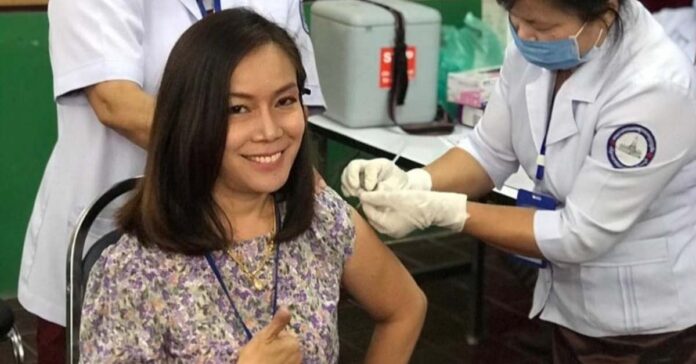
A cheerful patient braves the vaccination needle in Laos.

Laos has launched an online registration program for Covid-19 vaccinations aimed at priority groups.