


A man was killed when his motorcycle, traveling at high speed, crashed into a wall over the weekend in Vientiane Capital.
Taiwan kicks off events for Women’s History Month, starting at UN Commission on the Status of Women

TAIPEI, TAIWAN – Media OutReach – 15 March 2021 – Organized by Taiwan’s Foundation of Women’s Rights Promotion and Development (FWRPD) and the Mistry of Foreign Affairs, the ACCELERATING WOMEN’S ECONOMIC EMPOWERMENT webinar will be on March 18 at 8:30-10:00 am EST.
These topics and more will be answered at the event:
- The decisive factor of economic empowerment of women in achieving gender equality and sustainable development
- The pivotal role of women in achieving the ambitious promises of the UN’s Sustainable Development Goals (SDGs)
In observance Women’s History Month, the Foundation is coordinating a series of activities in March, including the dialogue on ACCELERATING WOMEN’S ECONOMIC EMPOWERMENT. The discussion will be led by Taiwan’s Minister without Portfolio Audrey Tang, State Secretary to Minister for Gender Equality of Sweden, Karin Strandås, and Taiwan’s Ambassador at Large Lin Ching-Yi.
Tang, Taiwan’s first transgender government minister, will talk about the country’s plan to achieve Goal 5 of the SDGs on gender equality through social innovation and economic empowerment. The charismatic minister will divulge how she works with the government to give citizens the space to be socially innovative.
Ambassador Lin will discuss accelerating equality through gendered public policy making. The former legislator will talk about how law reform can contribute to creating the conditions for gender equality.
Other speakers from around the world will share their experiences in advancing women’s economic rights and independence, investing in women’s empowerment, and supporting marginalized women to earn, save money, and improve their health and wellbeing.
The 65th session of UN CSW runs from March 15-26. Held as part of the non-government organization forum to the UN’s Commission on the Status of Women (NGO-CSW), there will be another 26 parallel sessions organized by Taiwanese NGOs. The active participation of Taiwan’s civil society organization in the NGO-CSW forum is an indication of the advances Taiwan has made toward gender equality in recent years.
Taiwan ranks first in Asia for gender equality, according to the Gender Equality Index, and has become the first Asian country to legalize same-sex marriage in 2019. This year, Taiwan took steps to expand the law to allow same-sex marriage between Taiwanese citizens and foreigners.
Due to COVID-19, NGO-CSW65 will largely be a virtual event. Despite the restrictions, the enthusiastic participation of Taiwan’s NGOs shows that Taiwan is ready to hit the road running in the post-pandemic race for gender equality.
Links
Accelerating Women’s Economic Empowerment virtual event
 https://www.youtube.com/watch?v=BsmdJBEHE08
Other events at NGO-CSW65 organized by Taiwan’s NGOs
https://www.youtube.com/user/FWRPD/featured
Power of Women, concept film
https://www.youtube.com/watch?v=lGZc3C5Dx_0

AXA rolls out new global brand campaign to inspire confidence and progress Hong Kong selected as the first in Asia to unveil the creatives

HONG KONG SAR – Media OutReach – 15 March 2021 – Embodying its “Know You Can” brand signature, AXA announces today the launch of its new global brand campaign, with Hong Kong being the first market in Asia to activate a series of promotion.

The campaign brings to life AXA’s new Purpose, “Act for human progress by protecting what matters”, evolving the meaning of the brand’s promise from empowering an individual’s self-belief towards being an enabler of progress through collective and connected confidence. In doing so, it seeks to make the brand a trusted, reliable beacon for its stakeholders.
The current global pandemic has had a massive impact on the physical and mental health of people around the world, including in Asia, posing unprecedented disruptions to daily life. The new brand campaign is built around a message of optimism: “When you feel confident you can go far. When you feel protected by AXA you can go further.” Know You Can.
The importance of confidence in enabling progress reflects a sentiment that strongly resonates with the current situation, encouraging people to look beyond the crisis and project themselves into the future. At the heart of the campaign is a short film focused on AXA’s commitment to supporting its customers, small-to-medium enterprises and the wider community, giving them the confidence to move forward. This will be accompanied by a series of vignettes that further illustrate AXA’s efforts across its health, property and protection, and life and savings business lines.
“This new brand campaign underscores AXA’s continuous commitment to being a true partner for our customers and helping them to achieve their goals. We hope to inspire people with this impactful campaign to embrace the future with confidence and build a better world together.” said Sally Wan, Chief Executive Officer of AXA Hong Kong and Macau.
Hong Kong is selected to be the first in Asia to roll out the global brand campaign across TV, digital and social media, and on outdoor billboards at strategic locations.
“We are proud and delighted to be the first Asian market to launch this powerful brand campaign. To further reinforce our brand promise ‘Know You Can’ among Hong Kong citizens and build up the impact of this meaningful brand campaign, we will also introduce a series of local inspiring true stories surrounding the themes of Climate Change, BetterMe and Health throughout this year.” said Andrea Wong, Chief Marketing and Customer Officer of AXA Hong Kong and Macau.
To see the campaign: www.axa.com.hk
ABOUT AXA HONG KONG AND MACAU
AXA Hong Kong and Macau is a member of the AXA Group, a leading global insurer with presence in 57 markets and serving 108 million customers worldwide. Our purpose is to act for human progress by protecting what matters.
As one of the most diversified insurers offering integrated solutions across Life, Health and General Insurance, our goal is to be the insurance and healthy living partner to the individuals, businesses and community we serve.
At the core of our service commitment is continuous product innovation and customer experience enrichment, which is achieved through actively listening to our customers and leveraging technology and digital transformation.
We embrace our responsibility to be a force for good to create shared value for our community. We are proud to be the first insurer in Hong Kong and Macau to address the important need of mental health through our holistic wellness platform “AXA BetterMe”, available via our mobile app Emma by AXA to not just our customers, but also the community at large. We will continue to foster social progress through our product offerings and community investment to support the sustainable development of our community.
THIS PRESS RELEASE IS AVAILABLE ON AXA’S WEBSITE: AXA.COM.HK
IMPORTANT LEGAL INFORMATION AND CAUTIONARY STATEMENTS CONCERNING FORWARD-LOOKING STATEMENTS
Certain statements contained herein may be forward-looking statements including, but not limited to, statements that are predictions of or indicate future events, trends, plans or objectives. Undue reliance should not be placed on such statements because, by their nature, they are subject to known and unknown risks and uncertainties and can be affected by other factors that could cause AXA’s actual results to differ materially from those expressed or implied in the forward-looking statements. Please refer to Part 4 – “Risk factors and risk management” of AXA’s Universal Registration Document for the year ended December 31, 2019, for a description of certain important factors, risks and uncertainties that may affect AXA’s business, and/or results of operations. AXA undertakes no obligation to publicly update or revise any of these forward-looking statements, whether to reflect new information, future events or circumstances or otherwise, except as part of applicable regulatory or legal obligations.

A WORLD FIRST! Les Vins d’Alsace are launching Millésimes Alsace DigiTasting®
The 1st virtual trade show with real-life tastings organised exclusively by cross-industry experts
In a fast-changing world where we constantly have to reinvent ourselves, Alsace is taking up a position right at the interface of ingenuity and popularity as it launches Millésimes Alsace DigiTasting®, an audacious Alsace Wine Show, ahead of the curve and entirely dedicated to professionals.
From June 7-9, 2021
HONG KONG SAR – Media OutReach – 15 March 2021 – Cancelled in 2020 given the current public health situation, Millésimes Alsace, the must-attend biannual trade fair organised by the Vins d’Alsace, will indeed take place in 2021. Driven by the dynamism of the Alsatian vineyard, it will adopt an entirely new format this year. Entirely conceived and created by the Conseil Interprofessionnel des Vins d’Alsace (Interprofessional Wine Board of Alsace), the show becomes Millésimes Alsace DigiTasting® to combine the physical and digital worlds.
First ‘phygital’ show entirely developed and organised by a wine area, Millésimes Alsace DigiTasting® is a new way of exploring the full potential of Alsace wines. Combining real-life tastings and virtual meet-ups, this show, devised on an international scale by local winemakers, is a first both for the French and global wine industry. And with 100 exhibitors presenting 4 wines each, there are 400 wines listed!
Millésimes Alsace DigiTasting®: the new show design
Sharing ideas, meeting colleagues, and tasting wine: these are the priceless experiences that bring professionals together as they stroll down the aisles of wine trade shows. Conscious of the need to take their destiny into their own hands, Alsace winemakers combined current health and market requirements to create a new format integrating virtual meetings and real-life tastings: Millésimes Alsace DigiTasting®.
So, what is the USP of this event? Prior to the show, visitors will be offered tasting cases that they will be able to taste with the winemaker during virtual meetings.
These boxes will contain some of the 4 still wines that each of the 100 exhibitors has selected. Each box will be made up of 4 mini glass bottles (3 cl mini-bottles) from the same producer, giving its taster a good idea of the winery’s expertise and personality.
Consistent with the care provided to PDO quality wines, and in line with Alsace wines’ specifications, the wines are bottled in their region of origin in a small glass shaped like a traditional Rhine flute. A unique technological process guarantees the wines’ integrity: bottled in an inert atmosphere, they retain their most subtle qualities and aromas. By staying as close as possible to the original product, this process respects Alsace wines’ very essence.

With all the characteristics of a real trade show, designed for professionals to talk about wine
To meet our professionals’ expectations and ensure that the products take centre stage, Millésimes Alsace DigiTasting® has been organised accordingly.
By registering on the dedicated platform www.millesimes-alsace.com, visitors can discover all the wineries and access the wines’ technical sheets. A filter system allows visitors to select the wines that best match their criteria from among the 100 wineries and 400 wines listed. There are wine-related filters (colour, sweetness level, vintage, grape variety, appellation…) and winery-specific (distribution circuit, environmental practice, country of export, importer search).
Going to a trade show is also about seeing what comes along and being open to beautiful surprises and unexpected discoveries. This is why, after selecting the wineries for which they wish to receive a sample case, participants will also receive ‘discovery’ samples added by Millésimes Alsace DigiTasting® to their order. It is an opportunity to make beautiful discoveries – be surprised!
When ordering the samples, each visitor can choose between 2 options to suit their needs and receive them free of charge at the address of their choice:
– 5 boxes = 4 selected boxes + 1 ‘discovery’ box (i.e. 5 wineries, 20 wines)
– 10 boxes = 8 selected boxes + 2 ‘discovery’ boxes (i.e. 10 wineries, 40 wines)
This free service will allow participants to receive the small flutes they have ordered anywhere in the world prior to the show while stocks last.
And what would a trade show dedicated to discovering new wines be without a tasting to complement the discussion? Just like at a real exhibition, winemakers will be able to share their know-how with the visitors, discuss grape varieties and Alsatian terroirs while tasting the wines together. Naturally, visitors will be able to chat virtually with any of the producers, even if they did not order a tasting box.
Last but not least, Millésimes Alsace DigiTasting® is also a real large-scale trade show with conferences, workshops, and themed events about wine, terroirs, the economy, and consumer trends. Visitors will also be able to share their experiences thanks to integrated networking features on the platform and social media.
A responsible trade show ‘made in Alsace’
Millésimes Alsace DigiTasting® is a responsible initiative launched by the Conseil Interprofessionnel des Vins d’Alsace. The choice of glass for the mini-flutes, which can be recycled ad infinitum, is in line with its optimised waste recovery strategy.
Millésimes Alsace DigiTasting® is a unique initiative, and it is also the 1st virtual exhibition to be devised, created, and entirely organised by a vineyard firmly grounded in its region. From the show’s layout, the cases’ design, their shipment, printing, assembly, bottling, to the whole creative and digital design processes, everything will be carried out by local craftsmen and service providers within a radius of fewer than 75 km.
‘Alsace has changed dramatically.
Check the latest updates as it’s changing faster than ever! It’s a whole vineyard, continually reinventing itself, collectively and ambitiously. It’s a major fundamental shift that’s taking place across industries: in the technique, sector management, marketing, and sales dynamics, etc., and the most recent example of this is the innovative DigiTasting® initiative. Having been the first vineyard to put together a major response to the current situation right from the first lockdown, Alsace is once again the first to innovate in the strategic field of trade shows! We remain a small vineyard globally, but we are ambitious and determined to achieve our goals. Alsace has a strong history and is resolutely turned towards the future!’
Didier PETTERMANN, Chairman
CIVA — Conseil Interprofessionnel des Vins d’Alsace
‘The current context should not be an excuse, but rather a sign. Alsace’s capacity for innovation continues to grow, and we are part of the action. With this initiative, we wanted to combine century-old know-how with cutting-edge technologies. It’s fascinating! Digital technology is not an end in itself: its primary purpose is to bring people together and make the virtual and physical worlds work together. Wine is not a product like any other. It is both intangible because of the emotions it evokes and very real thanks to its terroirs and the men and women who produce it. Millésimes Alsace DigiTasting® aims to generate synergy between the real and the virtual worlds and create a relevant and successful exhibition designed to provide a quality experience for visitors and exhibitors alike.’
Philippe BOUVET, Marketing Director
CIVA — Conseil Interprofessionnel des Vins d’Alsace
How to attend Millésimes Alsace DigiTasting®?
#1 Register free of charge at www.millesimes-alsace.com (for professionals only).
#2 Receive your registration details and personal codes.
#3 Explore all the 100 exhibitors and select the wineries whose wines you would like to taste.
#4 Order your sample boxes (while stocks last):
Option 1 | 5 boxes, including 1 ‘discovery box’ (5 wineries) and 20 samples.
Option 2 | 10 boxes, including 2 ‘discovery boxes’ (i.e., 10 wineries) and 40 samples.
#5 Receive your boxes free of charge at the address of your choice and taste them during the show.
#6 On the day: attend the show at www.millesimes-alsace.com from June 7–9, 2021, taste the samples with their producer, meet virtually any other producer, and attend a rich programme packed with activities.
#7 You can access the platform for 1 year and attend new conferences, tastings, in-depth discussions, get in touch with other producers, etc.
Website launch www.millesimes-alsace.com on
March 29, 2021
Tasting boxes orders from March 29 to May 2, 2021
A second press release will outline the event schedule
Facebook :  https://www.facebook.com/vinsalsacedigitasting
Instagram :  https://www.instagram.com/vinsalsacedigitasting
LinkedIn :  https://www.linkedin.com/showcase/vinsalsacedigitasting
#MillesimesAlsaceDigiTasting #Digitasting #DrinkAlsace #VinsAlsace

Lao Authorities Trial Covid-19 Insurance and Health Tracking Devices
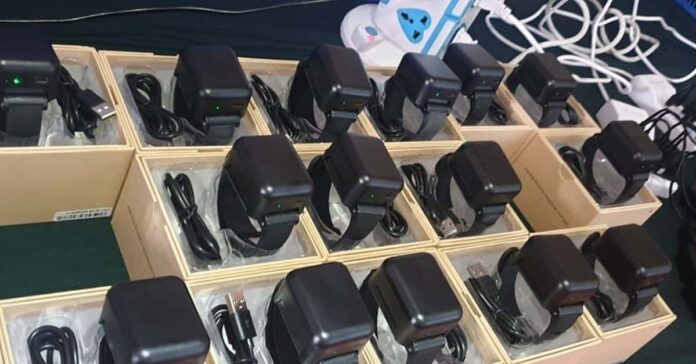
Authorities have begun trialing Covid-19 insurance and health tracking devices for foreign citizens entering Laos.
A.S. Watson Group Announces its Social Purpose and 2030 Sustainability Vision

- Reduce greenhouse gas emissions by 40% and electricity intensity by 30% before 2030
- Restore 10,000 perfect smiles by providing free surgeries to kids with cleft lips and palates by 2030
HONG KONG SAR – Media OutReach – 15 March 2021 – A.S. Watson Group and its 13 global retail and manufacturing brands today announce the launch of their refreshed Social Purpose along with 2030 Sustainability Vision.

Malina Ngai, Group COO of A.S. Watson Group & CEO of A.S. Watson (Asia & Europe), says, “As the world’s largest international health and beauty retailer, we have a strong sense of responsibility to create a better world through our global operations. Our social purpose “to put a smile on our customers’ faces” is a core value to our business and deeply rooted in our heritage, from giving free medicines to the needy in the early days, to protecting people’s health against COVID19 by producing medical masks and supporting vaccination programmes.”
She adds, “We serve over 5.9 billion customers every year around the world and we are thankful to have a powerful community to do good together, to help build a better and more sustainable world.”
A.S. Watson Group has been a purpose-driven company with social purpose enshrined in every action over the past 180 years. The spirit of giving goes back to A.S. Watson’s first dispensary which provided free medicine to the needy and is something that lives on in the business today. Last year, the Group gave a helping hand to the vulnerable and offered over HKD60m assistance to 1 million underprivileged people around the world, as well as converted their manufacturing facility in Hong Kong to produce masks and helped the NHS COVID-19 vaccination programme in the UK by offering vaccinations in Superdrug pharmacies. With a wide array of sustainability and community needs across 27 markets, its brands embrace their own social purpose launch plans to address the local needs to put a smile on our customers’ faces.
A Better World with A.S. Watson 2030 Sustainability Vision
A.S. Watson Group also announces its 2030 Sustainability Vision, with clear visions for the decade to come on social and environmental sustainability.
- Energy: Achieve electricity intensity reduction by 30% against 2015 baseline by 2030
- Greenhouse Gas: Reduce GHG emissions (scopes 1 and 2) by 40% from 2015 baseline by 2030
- Plastic: Eliminating unnecessary packaging by 2030, avoiding over-packaging and phase out PVC, 20% recycled plastic content in plastic packaging by 2025
- Community: Through A.S. Watson’s Give a Smile Campaign, we target to restore 10,000 perfect smiles by providing life-changing free surgeries to kids with cleft lips and palates by 2030
180 Years, 180 Caring Actions
A.S. Watson believes a simple smile can have big impact so the Group launched the Smile Community to celebrate its 180th anniversary, not only to promote mental wellness but also bring positivity to people around them. We are pleased to announce that the Smile Community has achieved its target to reach a 1.8 million smile index by 20 March 2021, to coincide with the United Nations’ International Day of Happiness.
Furthermore, the Group has pledged to organise 180 caring actions around the world to help give the anniversary celebrations a greater depth of meaning. A.S. Watson believes that every little smile and action will add up to a big and positive impact on people around us and community at large.
Malina adds, “At A.S. Watson, we believe the world is better when people are smiling. Our planet is reaching its limits and millions of people’s lives are impacted by extreme climate and serious pollution. The A.S. Watson 2030 Sustainability Vision is a promise we pledge to our planet and community to make the world a better place to live. People’s mental health has been inevitably stressed by the pandemic and by putting a smile on the face of everyone we touch, we are grateful to have all of our people working together to aim at a higher purpose for the long term.”
About A.S. Watson Group
Established in Hong Kong in 1841, A.S. Watson Group is the world’s largest international health and beauty retailer operating over 16,000 stores under 12 retail brands in 27 markets, with over 140,000 employees worldwide. For the fiscal year 2019, A.S. Watson Group recorded revenue of US$21.8 billion. Every year, we are serving over 5.9 billion shoppers via our O+O platforms, providing tech-enabled retail experience to customers offline and online.
A.S. Watson Group is also a member of the world-renowned multinational conglomerate CK Hutchison Holdings Limited, which has four core businesses ‐ ports and related services, retail, infrastructure and telecommunications in over 50 countries. Please visit www.aswatson.com

Taiwan, Japan to Jointly Promote Hakka Beauty in Post-Pandemic Era
TAIPEI, TAIWAN – Media OutReach – 15 March 2021 – Taiwan and Japan have long enjoyed close relations historically, culturally, and economically. Of Taiwan’s early Hakka emigrants, many had opted for Japan and taken root there, with the largest concentrations in Tokyo and Osaka. In April 2018, YANG, CHANG-ZHEN, incumbent minister of the Hakka Affairs Council (HAC), led a delegation to attend gatherings of Hakka communities in the two cities. Also on the itinerary was a call on HATA Toshiyuki, then vice governor of Fukushima Prefecture, to show solicitude for the people of Fukushima afflicted by the earthquake and tsunami of March 11, 2011. The visitors also extended an invitation for their hosts to seek consolation by taking trips to Hakka townships along Provincial Highway 3 in Taiwan.
The invitation was soon met with a group of junior high school students from Minamisoma, Fukushima Prefecture coming to Provincial Highway 3 in December of the same year. In the course of four days, these young Japanese visitors had a close encounter with Hakka culture across Taoyuan, Hsinchu, and Miaoli, whose hospitality and delicacies left them an indelible impression.
At the HAC’s invitation, renowned Japanese illustrator Amigos Koike came to Taiwan and served as a resident artist in several Hakka townships along Provincial Highway 3 during August-September 2019. His two-month stay led to a good number of sketches of Hakka scenery, delicacies, and sensibilities.
The HAC is now in the process of putting together the Japanese illustrator’s wonderfully conceived works that will be supplemented by texts fitting for his Hakka experience. Due to be published at the end of this year, it will be available in both Taiwan and Japan and hit the shelves of brick-and-mortar as well as online bookstores.
Through its upcoming compilation of Amigos Koike’s works—one that is set to derive from the perspective of a Japanese artist—the HAC expects to interest a greater number of Japanese about getting to know Hakka culture better themselves. Hopefully in the post-pandemic era they can begin travelling to Taiwan and visiting the Hakka townships along Provincial Highway 3.

Taiwan to Publish Japanese Artist’s Sketches of Hakka Impressions
Amigos Koike’s Works to Add to Taiwan-Japan Ties
TAIPEI, TAIWAN – Media OutReach – 15 March 2021 – To further bolster the friendship between Taiwan and Japan, the Hakka Affairs Council (HAC) invited Amigos Koike, a renowned Japanese illustrator, to serve as a resident artist in seven Hakka townships along Provincial Highway 3 during August-September 2019. This unconventional marketing initiative was also intended to bring the beauty of Taiwan’s Hakka culture to the broader international community. For the Japanese illustrator, it proved an uncommon experience in which he developed a profound appreciation of Taiwan’s Hakka culture, people, and sensibilities. Over the course of his stay, he came up with some 280 sketch illustrations—depictions of the encounters, scenery, and food in those Hakka communities that left him a lasting impression.

A Hakka ancestral hall
The HAC is now in the process of putting together the Japanese illustrator’s wonderfully conceived works that exhibit a moving human touch. To be supplemented by texts fitting for his Hakka experience, this collection is due to be published between the end of 2021 and early next year. To be available in both Taiwan and Japan, it will hit the shelves of brick-and-mortar as well as online bookstores.
Prior to this publication, Amigos Koike is hosting an exhibition at Space Yui, an art gallery in Tokyo, March 8-17. In the highlight are his watercolor works on the scenery, flowers, and people of the Hakka communities he visited. The artist hopes to make Taiwan’s Hakka townships known to more people of his home country.
Through its upcoming compilation of Amigos Koike’s works—one that is set to derive from the perspective of a Japanese artist—the HAC expects to interest a greater number of Japanese about getting to know Hakka culture better themselves. Hopefully in the post-pandemic era they can begin travelling to Taiwan and visiting the Hakka townships along Provincial Highway 3. It promises to be an unforgettable experience with an abundance of hospitality and friendliness.

