

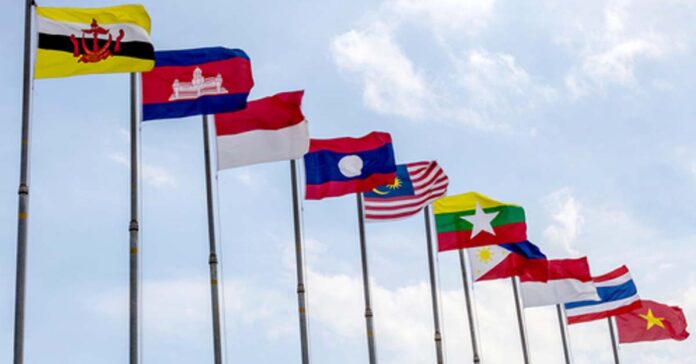
Foreign ministers from member countries of the Association of Southeast Asian Nations held an informal meeting by video conference yesterday to discuss regional stability.
Hot Weather Forecast for Central and Southern Laos

Hot weather is in store for central and southern Laos this week, according to the Department of Meteorology and Hydrology.
Road Accidents Continue to Spike at Weekends

Accidents continue to plague the roads across Laos over the weekends, with the expressway becoming a flashpoint for severe crashes.
TranSwap Officially Launches New Global R&D Centre at The University Of Edinburgh

SINGAPORE – Media OutReach – 2 March 2021 – TranSwap, a fintech company which empowers global business growth by simplifying global payments and collections, has officially launched a new global Research and Development (R&D) centre at the University of Edinburgh. Located at Bayes Centre, the R&D centre aims to drive technology and market-led innovation in cross-border financial solutions, enabling TranSwap to strengthen its capabilities in fintech and expertise in AI-driven payment solutions. This global R&D centre follows the launch of TranSwap’s new office in the UK.
Leveraging on the expertise of Bayes Centre, the School of Informatics and the Business School, the partnership between TranSwap and the University brings together world-leading data science and AI teams, industry experts, and innovation support professionals in the fields of computation, information and cognition. R&D and product innovation at Bayes Centre will focus on state-of-the-art methodologies in speech recognition, Natural Language Processing, 5G, blockchain, data analytics and machine learning — accelerating TranSwap’s capabilities to deliver a streamlined cross-border payment and collection experience. In addition, the partnership will help develop research talents and create new jobs at the Bayes Centre.
“Today’s cross-border payments industry is at the centre of fintech innovation which has shaped competitive dynamics globally. New business models resulting from emerging technologies, digital transformation of payment methods and development through tech-enabled innovation are continuously disrupting cross-border payments, by optimising and automating the transaction process. Partnering with the University of Edinburgh to transform our current digital cross-border payments platform, will allow us to tap into emerging technologies such as NLP and 5G to speed up cross-border payments, sharpen our competitive edge and maximise profitability through enhanced fraud detection system, sentiment and risk analysis. TranSwap aims to become a cross-border payments, collections and financial solutions provider that serves as a touchstone for financial innovation in major global financial centres. Such innovations can unlock opportunities to drive consistency and provide a seamless cross-border payment experience,” said Mr. Sanjay Rakshit, Head of Products and R&D of TranSwap.
Mr. Grant McKenzie, Director & UK Country Head of TranSwap, added, “TranSwap’s R&D partnership with the University underlines our commitment to drive innovation in the payments industry. The University’s research expertise, along with our design approach in our system architecture, platform development and interfaces, will help ensure a seamless user experience through our platform.”
For more information, please visit:
 https://www.dropbox.com/sh/skneucfgdx753xk/AABofbSPIJNW93TYUSNSU2WQa?dl=0

Blue Bridge Remains Free of Charge in Vang Vieng

Vang Vieng’s blue bridge, known as Khoua See Fa Tham Non, is offering free passage until 2022.
Molecular Health and FALCO biosystems team up to provide genetic analysis services using MH Guide/BRCA and MH Guide/Mendel

MH Guide/BRCA and MH Guide/Mendel will assist doctors and human geneticists in making decisions about gene variant pathogenicity.
HEIDELBERG, GERMANY – EQS Newswire – 2 March 2021 – Molecular Health GmbH announced today that it has entered into an agreement with Kyoto-based FALCO biosystems Ltd. under which FALCO biosystems will use the products MH Guide/BRCA and MH Guide/Mendel to evaluate inherited genetic variants of BRCA1/2 and other heritable cancer-associated genes.
Inherited genetic variants can predispose an individual to cancer. Hereditary Breast and Ovarian Cancer (HBOC) Syndrome, for example, is caused by pathogenic mutations in distinct genes such as BRCA1/2, MLH1, MSH6, PMS2, respectively. Therefore, testing BRCA1/2 genes and other heritable cancer-associated genes is becoming increasingly important: both to evaluate the affected patient’s individual risk of developing cancer1,2, and as a predictive biomarker and companion diagnostic test for certain drugs3. Whereas MH Guide/BRCA detects variants in HBOC-associated genes, MH Guide/Mendel can analyze large gene panels as well as whole-exome or whole-genome data, so that many different hereditary diseases can be identified at once.
“With this collaboration in place, Japanese patients will benefit from state-of-the-art genetic identification of inherited diseases like Hereditary Breast and Ovarian Cancer and many other diseases. This will allow sooner diagnosis and potentially earlier therapeutic intervention”, said Christian Meisel, MD, PhD, Chief Medical Officer at Molecular Health.
Under the terms of this collaboration, FALCO biosystems will perform the next-generation sequencing (NGS) process and variant identification using blood samples provided by the patient. Molecular Health will then analyze the variant data using MH Guide/BRCA or MH Guide/Mendel. To accurately distinguish benign from pathogenic variants, MH uses an in-house proprietary database called MH Dataome, which integrates the Japanese reference genome ToMMo 3.5KJPNv2 (MAF ≥ 1%) for improved variant filtering and classification. Molecular Health gratefully acknowledges the contribution of Tohoku Medical Megabank.
MH Guide/BRCA and MH Guide/Mendel are part of MH Guide, a registered in-vitro diagnostic (IVD) medical device in Europe.
2 National Comprehensive Cancer Network. NCCN Guidelines: Genetic/Familial High-Risk Assessment: Colorectal. https://nccn.org
3 Pilié, P.G., Tang, C., Mills, G.B. et al. State-of-the-art strategies for targeting the DNA damage response in cancer. Nat Rev Clin Oncol 16, 81–104 (2019). https://doi.org/10.1038/s41571-018-0114-z
About Molecular Health
Molecular Health is a Biotech-IT company dedicated to big-data capture, curation, integration, and analytics. Our mission is to enable precision medicine and generate novel, actionable insights on drug outcomes for stakeholders across the healthcare ecosystem. For more information, visit www.molecularhealth.com

Dorsett Hospitality International Appoints Michael Foster As General Manager of Dorsett Gold Coast

GOLD COAST, AUSTRALIA – Media OutReach – 2 March 2021 – Dorsett Hospitality International is pleased to announce that they have appointed Michael Foster as the General Manager for Dorsett Gold Coast — their debut hotel in Australia, and first beach-style resort worldwide, set to open in Q4 of 2021. Michael will be leading the direction for the hotel’s pre-opening, building a passionate and dedicated team who will bring the Dorsett Hotels’ Stay Vibrant experience to Australia for the first time.

Michael has over 15 years of hospitality and management experience, including pre-opening, overall hotel operations and sales and marketing. He was previously the General Manager of Holiday Inn Express Brisbane Central and has held several senior roles for other hotels brands such as InterContinental, Pan Pacific Hotels Group and Crowne Plaza.
Michael graduated from the University of Queensland with a Bachelor’s degree in International Hotel and Tourism Management and has substantial knowledge and experience with the Gold Coast market.
In addition to Dorsett Gold Coast, Dorsett Hotels also has 3 other hotels in development in Brisbane, Perth and Melbourne.
Dorsett Hotels & Resorts
Dorsett Hotels & Resorts goes beyond the typical four-star experience by providing an exclusive “Stay Vibrant” experience at non-exclusive prices so guests are delighted every time they stay. All 25 hotels are located in major cities across the world with Gold Coast, Perth, Melbourne and Brisbane already in development, and offer a real feel of the local neighbourhood. Catering to millennials, post-millennials, families, business professionals and more mature guests, the brand delivers a diverse range of guest experiences.
About Dorsett Hospitality International
Dorsett Hospitality International is one of Asia’s fastest-growing hotel groups. As a Hong Kong hospitality brand, we are proud to have an international footprint in 25 major cities worldwide with a total of 56 properties with our strategic partners Trans World Hotel, also operated under DHI, and AGORA Hospitality; including Dorsett Hospitality International’s 3 core brands: Dorsett Hotels & Resorts, d.Collection, and Silka, each with their own distinct identity and offerings to cater to diverse travel needs. Since the group’s establishment in Hong Kong in January 2007, we have grown by leaps and bounds with hotels across China, Malaysia, Singapore, Japan, Australia, the United Kingdom, and Continental Europe; more properties are planned in the development pipeline. For more information on Dorsett Hospitality International, visit: www.dorsett.com.

Greenliant Launches High Capacity 1TB microSD ArmourDrive(TM) Industrial Memory Cards
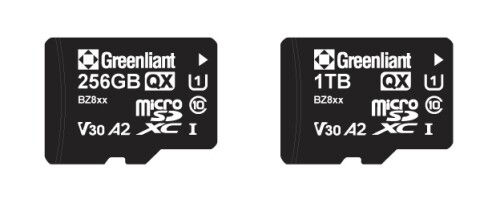
Offering Reliability, Portability and Durability at Wide Temperature Ranges
BEIJING, CHINA and SANTA CLARA, US – EQS Newswire – 1 March 2021 – Greenliant has expanded its ArmourDrive™ industrial memory card portfolio with the high reliability, high capacity microSD QX Series, available from 256GB to 1TB, and operating at wide temperatures (-25 to +85 degrees Celsius). See microSD ArmourDrive product information at http://bit.ly/SD-microSD.

High Capacity microSD ArmourDrive™ Industrial Memory Cards
Industrial microSD memory cards have become a popular storage medium for a broad range of applications, including dashcams and bodycams, data loggers, routers and switches, medical equipment and IIoT devices. Built with high quality, advanced 4-bit-per-cell (QLC) 3D NAND flash memory, microSD ArmourDrive QX Series products provide video, security, networking and industrial customers with cost effective, reliable and rugged removable data storage. UHS Speed Class 10 and SD Specification 6.10 compliant, microSD ArmourDrive QX Series cards reach up to 100/37 MB/s sequential read/write performance and are ideal for video recording at high definition resolution.
Benefits of 93 QX Series microSD ArmourDrive memory cards include:
- Wide Temperature: Operates between -25 and +85 degrees Celsius
- Large Capacity: 256 GB, 512 GB, 1 TB
- High Performance: Supports UHS I-104 ultra high bus speed mode
- Energy Efficient: Active power consumption less than 400 mA; standby mode less than 1 mA
- Rugged: Resistant to shock (1500G), vibration (20G) and water (IPX7 rating)
- Reliable: Achieves more than 2 million hours for Mean Time Between Failures (MTBF)
- SMART Support: Monitors remaining useful product life
Availability
Greenliant will start sampling microSD ArmourDrive QX Series industrial memory cards at the end of March and expects to start production shipments in April of this year. For more information about 93 QX Series products, contact a Greenliant channel partner, https://www.greenliant.com/sales.
About Greenliant
By leveraging more than 30 years of solid state storage design expertise, Greenliant is dedicated to developing durable, reliable and secure storage solutions for embedded systems and enterprise datacenters. The company is headquartered in Silicon Valley with product development centers in Santa Clara, Beijing, Shanghai, Xiamen and Hsinchu. https://www.greenliant.com
Greenliant, the Greenliant logo and ArmourDrive are trademarks of Greenliant. All other trademarks used herein are the property of their respective owners.

