Home Blog Page 6317

Railway Access Road Construction Begins for Tunnel Drilling Site

A Chinese contractor has recently begun surveying the construction area of an access road to the drilling site for the Laos-China Railway tunnel in Nga district, Oudomxay Province, said a member of the technical staff.

Deputy Head of the Oudomxay Provincial Public Works and Construction Department, Mr Sinouan Khamdy told a KPL News reporter last Friday that the railway will pass through the three districts of Namor, Xay and Nga (40 villages) with a total length of 126.6 km, representing one third of the total length of the rail line. Three main stations and six small stations are to be built in Oudomxay.

This project will be the biggest one ever to be implemented in the province, he said, adding that the majority of the railway construction activities in Oudomxay will be tunnels (40% of the total length of the rail line) and bridges.  The longest tunnel will be 9.3 km in length and will be drilled in Nga District.

The Oudomxay Coordinating Committee for the Management of the Lao-China Railway Construction Project is now conducting a public campaign in affected areas to increase the understand of local people and also to encourage their participation in making the construction project a success, Mr Sinouan said.

The Coordinating Office for the Laos-China Railway Construction Project and seven coordinating committees responsible for the project have also been set up, said Oudomxay Deputy Governor Mr Somchit Phanyasack.

The compensation allowance for families affected by the project in Oudomxay and Luang Namtha has yet to be determined.

The railway is expected to significantly boost transport, both at the provincial and national level.

The cargo transport cost by the Laos-China Railway will be about 100,000 kip per tonne, said Mr Somchit.

More than 5,000 Chinese workers are expected to work on the project.


Source: KPL

BCEL-KT: Trade Summary (Dec 9, 2016)

Trade Summary

Lao stock market was a little quiet on the last trading day of this week, even if the index was stable at 1,014.05 points. However, EDL-Gen, BCEL, LWPC, PTL and SVN closed at prices unchanged at 5,000 kip, 5,100 kip, 5,900 kip, 2,500 kip and 3,000 kip respectively. EDL-Gen played an important role in the market by generating the trading volume of just 4,700 shares, worth 23,500,000 kip.

Vientiane Library Visitors Decline in Numbers

Visitor numbers to the Vientiane Library have declined because a majority of people are obtaining information from other sources like the internet, officials claim.

Even though increasing numbers of students consistently visit the library each year between September and November, the overall number of visitors continues to decline.

Director of the Vientiane Library, Mr Keovilaisak Seansakda, says the Vientiane Library plays an important role in preserving and collecting both Lao and foreign materials about Laos, and therefore remains an important source of information for students and researchers alike.

He said from 2013 to 2016, the visitor numbers dramatically declined because more people are looking for information online.

The library had 42,000 visitors in 2014, 31,000 visitors in 2015, and only 13,000 in 2016. Some 80 percent of the visitors are students in Vientiane, he said.

He explained the library now has over 20,000 books and the library is currently running programmes to entice more visitors to come and utilise the facilities; the programmes include Lao Stories for Children and Lao History.

The library used to consistently receive a steady stream of new books, but in recent years the number of books has also declined. However, NGOs continue to be an important source of book donations.

We welcome any support from interested sponsors who would like to provide books relating to the ASEAN region, the social sciences or Laos, because we want to broaden people’s knowledge of the country and the regional bloc, he added.

Indicative of the crisis that currently afflicts the library, a student from a secondary school who attended the event, Ms Monta, said, I think the library lacks sufficient information on ASEAN nations and other important historical and sociological topics overall. Instead of coming here to conduct research, my friends and I agree we can find all of the information we require on the internet and from television.


Source: Vientiane Times

Construction Material Quality Control Centre Slated

Laos and China have agreed to cooperate in the construction sector, aiming to guarantee and improve of quality of construction materials in Laos.

An agreement to build the new laboratory and quality control centre for construction materials was signed recently in Vientiane between acting Director General of the Department of Standardisation and Metrology under the Ministry of Sciences and Technology, Mr Viengthong Vongthavilay and the President of Lao Chengjian Quality and Technology Services Co., Ltd, Mr Zhang Qiao Quan

The quality of construction is of paramount importance for the safety of the public and for the proper stewardship of the revenue expended for infrastructure construction and maintenance, officials said

The cooperation agreement ceremony was attended by Minister of Science and Technology, Prof. Dr Boviengkham Vongdara.

The new laboratory will open in 2017 monitoring construction materials coming into the country at the immigration and customs stations at borders in the north, central and southern parts of Laos.

Mr Viengthong said several years ago, the ministry had placed a priority on developing its human resources in the field of standards so they could conduct more quality inspections and present standards certificates to businesses nationwide that had met the required benchmarks.

Another goal is to seek cooperation with regional and international bodies for assistance with funding and personnel exchanges on standards to guarantee and improve the quality of all sectors because we lack good quality employees compared with neighbouring countries including China, Mr Viengthong said.

The centre will serve as a hub for resource development and facilitate cooperation between Lao and Chinese technicians in regards to laboratory services and field research, he added .

I think that the laboratory will play an important role in assurance quality in the construction materials sector, Mr Viengthong said.

The construction materials laboratory will have modern laboratory equipment and highly qualified staff, who can ensure consistently high product quality, he said.

The new laboratory will be able to monitor all construction materials imported from neighbouring countries, he stressed. This will include new products and applications as well as concrete formulas.

According to the ministry, standards certificates have now been presented to over 100 businesses in food and construction including table salt, cassava powder and other foods plus timber used in the construction sector and a Savannakhet cement manufacturer Oulayphanith Company Ltd which had complied with ISO 9001 certification.


Source: Vientiane Times

Laos, China Cooperate in Agricultural Science

Laos and China have agreed to cooperate in the areas of crop science, plant protection and animal science after reaching an agreement.

The two parties also agreed to work together in the fields of food quality and safety, and agricultural machinery.

The agreement was signed on Friday by Deputy Minister of Agriculture and Forestry Dr Phouangparisak Pravongviengkham and Secretary of the Leading Party Group Chinese Academy of Agricultural Sciences (CAAS) China, Prof. Chen Mengshan.

Under the agreement, the two parties will implement the agreed areas of cooperation by joint participation in research projects, establishment of a joint laboratory and arrangement of symposia, workshops, seminars, meetings and conferences of mutual interest.

The parties will cooperate to exchange scientists and experts, scientific-technical information and literature, while other forms of cooperation can be proposed and implemented by mutual written consent from both parties. Both delegations agreed to follow up with respective authorities to report the results of discussions and areas of collaboration in order to obtain support and approval for future cooperation.

They also agreed to have further discussions in detail and have a Memorandum of Understanding for each agreed area of cooperation.

Both delegations agreed the focal point to facilitate communication for cooperation between the ministry and CAAS China.

Cooperation between the ministry and CAAS China began in 2012 and the two parties worked together to use Trichogramma wasps to biologically control key pests in rice in areas of Xayaboury province. The parasitic wasps are tiny parasites that attack the eggs of over 200 species of moths and caterpillars.

The wasps seek out eggs, but do not feed on or harm vegetation. It is a particularly effective biological control agent because it kills its host before a plant can be damaged.

Tests conducted in Laos so far indicate that the tiny wasps are able to control pests that destroy rice.

Regarding agricultural machinery cooperation, the government of China last year supplied 80 machines and insecticide to local authorities but these have proved to be ineffective so far against the onslaught during grasshopper outbreaks in Luang Prabang province. Due to the outbreak, thousands of hectares of crops were sprayed and authorities in three districts plan to continue until they can drive out the grasshoppers.

The army of grasshoppers began to ravage crops in the region in February being first spotted in Viengkham district before quickly spreading to fields in Phonthong and Ngoy districts.

The signing ceremony was attended by Minister of Agriculture and Forestry Dr Lien Thikeo, representatives from CAAS China and other invited guests.


Source: Vientiane Times

Authorities Mark International Anti-Corruption Day

The State Inspection and Anti-Corruption Authority in cooperation with National University of Laos and the United Nations Office on Drugs and Crime marked the13th Anniversary of International Anti-Corruption Day last Friday.

The ceremony took place at the National University of Laos and was attended by Vice President of the Government Inspection Authority and the Anti-Corruption Organisation Mr Xaykham Ounmixay, Vice President of the State Inspection and Anti-Corruption Authority Mr Vilayvanh Boutdakham, Acting President of National University of Laos, Prof. Dr Somsy Gnophanxay, and representative of the United Nations Office on Drugs and Crime (UNODC) in Laos Mr Erlend Falch, along with officials, lecturers and students.

During the meeting participants listened to a review of anti-corruption operations of agencies over the past year and their work for the year ahead. Attendees were also given an explanation about the anti-corruption law.

According to a report presented at the 3rd Congress of the Inspection Committee of the Party Central Committee held in Vientiane recently, more than 4,807 billion kip has been lost to corruption over the past five years and 734 targets were found involved, a top anti-corruption body reported.

Vice Chairman of the Inspection Committee, Sinai Mienglavanh told the congress that more than 887 billion kip of the money lost to corruption has been recovered.

More than 303.1 million cubic metres of timber were found logged and sold illegally over the past five years, Mr Sinai told the participants as he delivered the report.

Over the same period, some 1,806 cadres of the Lao People’s Revolutionary Party have been disciplined as they violated the Party’s statutes and state laws in various cases. Of those, a total of 1,007 cadres were expelled from Party membership.

In addition, the committee has received 3,640 petitions including 2,719 petitions that have been resolved. Most of the petitions were related to land disputes, business disputes, and dissatisfaction over court verdicts.

Meanwhile, Mr Erlend Falch said the seminar aimed to bring together people from all walks of life in the fight against corruption, serving as a global call for action and raising awareness about the importance of countries ratifying the UN Convention against Corruption, which Lao PDR ratified in 2009.

Fighting corruption is a global concern because corruption is found in both rich and poor countries, and evidence shows that it hurts poor people disproportionately, he said.

Corruption is the single greatest obstacle to economic and social development around the word. Every year US$1 trillion is paid in bribes while an estimated US$2.6 trillion is stolen annually through corruption, a sum equivalent to more than five percent of the global GDP. In developing countries, according to the UNDP, funds lost to corruption are estimated at 10 times the amount of official development assistance he said.

But corruption does not just steal money from where it is needed the most, it leads to weak governance, which in turn can fuel organised criminal networks and promote crimes such as human trafficking, arms and migrant smuggling, counterfeiting and the trade in endangered species he noted.


Source: Vientiane Times

Ministry Reviews UNFPA Country Programme

The Ministry of Planning and Investment and the United Nations Fund for Population Activities (UNFPA) organised the final review of the 5th Country Programme and the first planning meeting for the 6th Country Programme for Laos.

The meeting highlighted key achievements in the areas of sexual and reproductive health, including the increased capacity of midwives and midwifery institutions, the expansion of family planning choices and other related commitments by the government.

The achievements have increased information and services on sexual and reproductive health for young people and increased the aggregation of data through surveys and research. Some of the research achievements from the programme include the Lao Social Indicator Survey, the Population and Housing Census 2015 and the National Study on Violence against Women.

The meeting took place in Vientiane on Friday with support from the UNFPA. Director General of the ministry’s International Cooperation Department, Ms Sisomboun Ounavong, and a representative of the UNFPA in Laos, Ms Ulrika Rehnstrom, chaired the meeting.

Ms Sisomboun said the UNFPA support has contributed significantly in the past five years to the country’s development in addition to assisting progress toward the Millennium Development Goals, in particular the reduction of maternal mortality. The Lao government will continue to work with the UNFPA in the next phase.

Ms Ulrika said this year marks the final year of the 5th Country Programme. It is fundamental to review the progress and map out the challenges to meet the set targets and goals for the 6th Country Programme.

“Furthermore we have seen increased attention toward adolescent girls, with upcoming initiatives that will continue to be based on evidence-based initiatives for adolescents and young people, which, with the right investments, would result in a real demographic progress,” Ms Ulrika said.

Programmes like the Midwifery Improvement Plan, which trained more than 100 midwives to support women to safely deliver babies, have contributed to the reduction in the maternal mortality ratio. In addition, improved financial management has been achieved through cost assessment studies.

“Next year, we will start the implementation of the UNFPA 6th Country Programme with a strong focus on adolescents and young people. Young people have played a significant role in Laos’ growth and they represent an increasingly important proportion of the labour force, both now and well into the future,” Ms Ulrika added.

The meeting also marks the start of the new cycle of cooperation- the 6th Country Programme 2017-2021. The UNFPA Laos’ new country programme will focus on marginalised populations, in particular rural and ethnic women, adolescents and young people. It aims to ensure that adolescent girls are empowered to delay their first pregnancy and are able to reach their full potential, thereby contributing to a sustainable future for Laos.

The UNFPA looks forward to collaborating with the Lao government and national partners for the coming 6th Country Programme to ensure that every pregnancy is wanted, the process of birth is safe, every young person’s potential is fulfilled and no one is left behind in the progression of the country’s development.


Source: Vientiane Times

Boten Border Officials Prepare for Traffic Issues

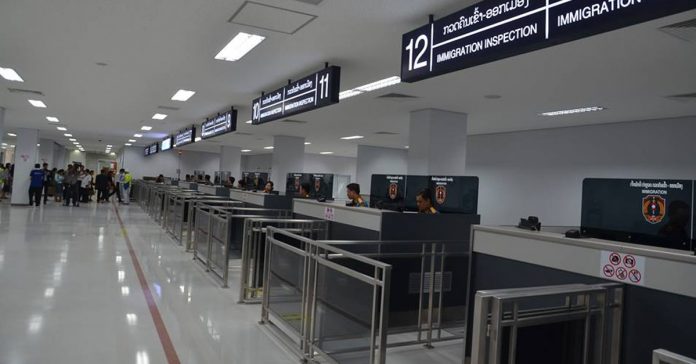
Luang Namtha province: — Officials at Boten international checkpoint in Luang Namtha province are working hard to introduce measures to minimise traffic chaos at the crossing between the two countries as the Laos-China railway project commences.

Head of the management committee for the Boten international checkpoint, Mr Phonsay Chanthasone, told the press on Thursday that about 400 cars and heavy trucks from Laos, China and other countries are crossing the Laos-China border daily.

However Chinese construction companies have informed border officials that they intend to bring between 500 or 1,000 vehicles across the border for the construction of Laos-China railway project.

“The Chinese trucks are very big and long and this will cause traffic congestion so the border will have to remain open longer,” Mr Phonsay said.

Chinese construction companies said their vehicles will cross the border in September this year but border officials have yet to see them so far, he added.

According to the Luang Namtha provincial Public Works and Transport Office, the construction of the railway project in the province has yet to actually commence because some landmine clearance activities are holding up the process.

Currently, Boten border checkpoint is closed at 8:00pm but when the 500 or 1,000 Chinese vehicles come to cross into Laos, the border officials plan to remain open until 10:00pm in a bid to reduce traffic congestion.

Mr Phonsay added that the construction of the Laos-China railway is good because it will reduce the number of vehicles being used for cross border goods transportation.

Right now, the roads in the country are quite small and their quality is not very high, he said.

The total value of goods imported and exported via the Boten international border was estimated at US$86 million for the 2015-2016 fiscal year.

Officials reported that there are 250,000 people including tourists and traders crossing the border in a year.

According to the Ministry of Planning and Investment, Laos has received Official Development Assistance from China and its citizens of about 1.3 billion yuan and this figure continues to increase each year.

China provided interest-free loans of about 1.3 billion yuan and about 8.6 billion yuan in low interest loans from 2005 to 2015 for the development of infrastructure, education and healthcare in Laos.

Laos recently approved the Vision 2030 which aims to raise its development status to that of a high middle-income country.

The 2025 Socio-economic Development Strategy has set out the conditions for achieving this status, with Gross Domestic Production (GDP) per capita targeted to double compared to the 2015 figure, to reach US$3,940 per capita.

The main indicator identified in the 8th National Socio-economic Development Plan for 2016-2020 is an average GDP growth rate of 7.5 percent, which must be achieved if Laos is to graduate from Least Developed Country status in 2020.


Source: Vientiane Times