Home Blog Page 6318

Banana Farms Ordered to Stop

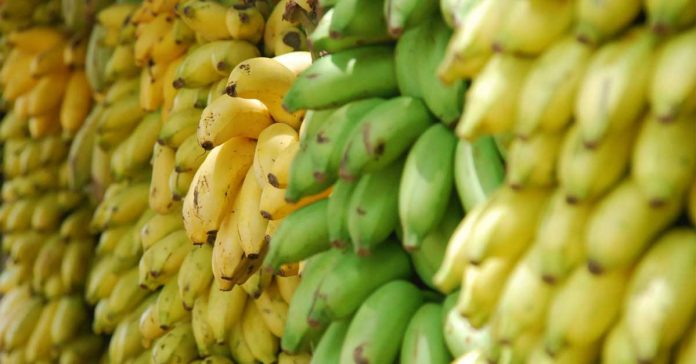
Oudomxay province: — Chinese farms in Laos’ provinces have been suspended due to their ongoing use of hazardous chemicals which are having negative impacts on people’s health and the environment.

The Prime Minister’s Office’s ordered the farms which are preparing to cultivate banana trees to cease their efforts while thousands of hectares of banana plantations which have already planted the trees will not be allowed to plant any more suckers after harvesting their crops.

Director of the Oudomxay provincial Planting and Investment Department, Mr Onkeo Ounralom, told the press on Friday that banana farms in the country’s provinces have been found to be using hazardous chemicals after checks by state and international agencies.

Mr Onkeo said it’s regrettable that the reports did not mention which provinces in the country used the chemicals, only stating that banana plantations in the north of the country were at fault.

“We will halt the banana plantations but we don’t want to lose these Chinese investors from the country; in Oudomxay we will plant other clean crops instead,” he said.

The northern provinces of Bokeo, Luang Prabang, Oudomxay and Phongsaly mainly grow bananas for export to China.

Mr Onkeo added that there are about 6,000 hactares of banana trees from 23 companies in Oudomxay.

It’s not only northern Laos which has Chinese banana farms, but also hundred of hectares in Vientiane province and the capital.

An official from the Ministry of Industry and Commerce, Mr Phoukham Louangsouphon, said that the Prime Minister’s Office has ordered a halt to all commercial banana plantations.

Oudomxay and Luang Namtha provinces are the major centres for banana plantations in the country, he said.

According to a National Assembly report in October, some provinces were using too many insecticides, pesticides and chemical fertilisers, but said this matter did not feature in reports submitted to the Assembly.

Some people became ill and some had allegedly died after spraying pesticides on farms, but the reports did not say where this had occurred.

There have been no bananas from Chinese farms in the provinces for sale in local markets as the farms send all their fruit straight to China. These bananas are packed in cardboard boxes for immediate export to China after they are harvested.


Source: Vientiane Times

PM Supports Chamber for Highest Business Role

Prime Minister Thongloun Sisoulith has expressed his full support for the Lao National Chamber of Commerce and Industry (NCCI) to serve as the highest body in the mobilisation of potential for the country’s development.

The PM offered his support in response to the proposal of the NCCI when speaking to business people at the seventh plenary meeting of the LNCCI held in Vientiane on Friday.

The LNCCI, with its new executive committee led by Mr Oudeth Souvannavong, decided to submit the proposal to the government.

“Let’s see the LNCCI be confident in receiving this title with pride. And please, the LNCCI must follow up with the required work to deserve this highest role,” PM Thongloun stated.

As the result of the meeting, the LNCCI has vowed to be an actor in attracting domestic and foreign investments to implement government development projects and promote legal business operations.

The LNCCI, provincial chambers, business associations, and business groups have promised to continue assisting the government in the oversight of the activities of business operators throughout the nation, as well as the collection of information on important businesses so as to participate in building national statistics as a reference for economic assessments and development in the country.

Mr Thongloun said he appreciated the work done by the LNCCI, especially the provision of information to the government, as well as its participation in the development of laws and regulations related to business management.

He also praised the business people, who he said became more creative in doing their jobs and providing assistance to residents engaged in commercial production.

Meanwhile Mr Thongloun stressed the importance of close cooperation between the government and the business sector, with strong coordination that aims at ensuring consultation on every challenge and difficulty faced.

“We, the government and the private sector have to paddle together on our only boat named the Lao PDR, and see it float along the midstream, not hitting high waves, rapids or underwater rocks, but reaching the desired destination,” he said.

The prime minister reminded the audience about the situation of socio-economic development in the last three months of the transition from the fiscal year 2015/16 to the new fiscal year as calendar year 2017, which he said has seen an increase in revenue from customs levies and is expected to be in surplus by the end of this month.

This was achieved from the use of several stricter measures in relation to the levies, Mr Thongloun said, referring to a report from the related sector, which he received in the morning.

The revenue from taxes will reach not lower 90 percent of the target plan, according to him, noting that this is because the sources for some taxation remained unclear.

Mr Thongloun also mentioned investors having more confidence in their business operation, pointing to the recent approval of the amendment of the Law on Investment Promotion by the National Assembly as a factor.

He stressed that business operators, including state enterprises, need to fulfil their obligations to the state. The PM pushed for business people to be frank in terms of opening for any feedback and assessment so they know what they need to improve.

“The good businessmen want someone to assess them so as to show them what they have to improve,” PM Thongloun said.

He told the businessmen that he and the ministers had paved the way for the National Assembly to assess them through secret vote, and that the vote will be made openly in the future.


Source: Vientiane Times

Your Next Hangout?

This place will definitely be my next hangout after the amazing food this evening. My mouth is still tingling from the explosion of flavours!

HangOut is a new and exciting restaurant serving mainly modern Lao food but also a range of international dishes. The restaurant is directly opposite the Lao Golden Hotel, Phonsinuan Village, Sisattanak, with plenty of parking.
I immediately received a warm welcome from Sack, the front of house captain and his team, both in Lao and English, and what I noticed immediately was the relaxed atmosphere and stylish surroundings. The restaurant was full of couples and groups of friends, all of whom had made an effort to dress. This is not the kind of place I would wear shorts and a t-shirt to. There was music being played in the background at the perfect level to allow people to talk to each other. Sack informed me that they will start playing live music over the next few weeks, I hope it’s not too loud!

The restaurant offers both indoor and outdoor seating. The indoor seating is very light and airy with huge windows allowing lots of light. The inside is very modern with concrete walls and stylish furniture. I was hoping the food matched the restaurant.

hangout-crew

A Lengthy Menu

When I was first given the menu I was confused, as there are 182 items on the menu! I did not know where to start. Even though the HangOut menu is in Lao and English and full of photos to show you what you are ordering, there are just too many items to go through when you are hungry. I asked Sack for a recommendation and he recommended the ‘Spicy Salad’, I also ordered four other Lao dishes and a couple of large beers.
As per most restaurants in Lao the dishes came out as they were available but the service was quick and efficient. The first dish to come out was the recommended spicy salad. Served on a modern plate there were three separate small towers of salad. All were slightly different salads, with different dressings, and topped with different seafood. One was shrimp, one was salmon, and one was squid, all served raw and finely chopped. Each salad tower was very different in terms of the herbs and spices running through it and all were very fresh and vibrant with a good chilli heat running through them. For some people this dish might contain too much chilli so just ask for less when ordering. My mouth is still tingling slightly in a good way.


HangOut Spicy Salad
Other favourites of mine on the evening were the duck breast salad, and the deep fried spicy and sour pork balls. The pork balls were a similar taste to pork laap, but made into bite sized balls, and deep fried. I could have eaten these all night!

My least favourite dish was the Black Sea Crab with yellow curry. The yellow curry was lovely in flavor and the vegetables within it were fresh, and crispy. I was however disappointed at the lack of crab. Some of the crab had been put into the dish but when you cook crab within a curry it falls apart too much. The dish was served with the legs and claws of the crab for me to take the shell off and eat but there is little crab within them for the work required to take the shell off. It would have been nice to have been given a finger bowl to rinse my fingers afterwards. I would order this dish again but with soft shell crab.

HangOut Crab
Throughout the evening ‘Souk’ and ‘Porn,’ two of the waitresses, kept the glasses full, and the table immaculate. Plates were removed as soon as they were finished with; ຕhe service was faultless all evening.

Come and HangOut Here Next time

I would certainly recommend HangOut if you are looking for somewhere that does modern Lao food that is not too expensive. The five dishes and two large beers cost 237,000LAK which did include an expensive crab dish. The amount ordered would have easily served 3 people. For what I ordered, considering the quality of produce, and the care taken in preparing the dishes, I thought it was good value for money. They also do a special lunch menu with single person dishes from 23,000LAK.

I look forward to trying more dishes on my next visit to the HangOut. See the HangOut Facebook page here.

Why the Mekong River Commission Matters

Despite its limitations, the body is key to ongoing efforts to save one of the world’s largest and longest rivers.

The Mekong River Commission (MRC) is gearing up for another test of its effectiveness following the announcement of Laos’ plans to construct the Pak Beng hydropower project, the third proposed dam on the Mekong mainstream.

Laos must undergo a six-month consultation process before proceeding with the hydropower project, as mandated by the 1995 Mekong Agreement. For the previous two mainstream dams, Xayaburi and Don Sahong, the consultation processes ended in disagreement. Though downstream countries called for further studies of the social and environmental impacts of each dam, Laos nevertheless moved forward unilaterally with construction.

Critics point to the failure of previous consultation processes as evidence that the MRC can never be an effective platform for Mekong river governance. However, the value of the MRC should not be based entirely upon the success of the consultation processes for large infrastructure projects. The organization produces important data and analysis and works to strengthen norms of basin-wide cooperation, both of which can help to encourage more sustainable approaches to Mekong river development.

The MRC-led consultation process for the Pak Beng dam will likely place the MRC under heightened scrutiny in the coming months. The onslaught of criticism has already begun, with the MRC being characterized as “weak,” “all but irrelevant,” and as having a reputation that is “hanging by a thread.” For decades, critics have pointed out that the MRC lacks legally-binding authority over its member states. The 1995 Mekong Agreement that created the MRC does not give downstream states veto power over upstream development projects and no legal mechanism exists to punish states that fail to follow through with the MRC’s principles or procedures. Further, China’s refusal to join the MRC as a full member undermines the power of the regional organization. In the past, China has sidelined the MRC while developing infrastructure on its portion of the river and investing in projects in the lower Mekong states.

The international media has tended to focus on the MRC’s dramatic cuts in staff and foreign funding over the last few years as evidence of a crisis hitting the MRC. However, many reports of these cutbacks fail to point out that since 2010, the MRC has been undergoing a program of dramatic reforms to transfer ownership of the MRC from foreign donors to Mekong countries themselves. One part of this plan is a new funding mechanism in which member countries gradually increase their contributions to the MRC with the goal of achieving financial independence by 2030. If successful, the transfer of ownership from foreign donors to member countries will help the MRC achieve greater public legitimacy in the region and greater buy-in from member country governments. However, it will also require that the organization be much smaller and take on fewer responsibilities.

As is widely recognized in discussions on other Southeast Asian regional organizations like ASEAN, Southeast Asian nations tend to adhere strongly to the principles of non-interference and consensus based decision-making. Therefore, an intergovernmental body like the MRC is unlikely to be given the capacity to make binding regulations on hydropower development any time soon. However, the MRC can use other tools to influence decision makers and enhance the public’s understanding of the issues surrounding the Mekong Basin.

The MRC does data collection, analysis, and reporting work that help to influence decision making on Mekong river management and development. This work covers a wide scope, but much of it tends to get lost in the shadow of the attention-grabbing debates over hydropower. In an effort to respond to the serious risks to the basin posed by climate change, the MRC has developed basin-wide climate change scenarios and worked to coordinate climate change adaptation strategies across the Lower Mekong basin.

The MRC has also conducted extensive research on Mekong fisheries, which has shaped understandings of just how valuable these fisheries are. This is important because national estimates of the revenues from this sector had been dramatically underestimated. Some of the MRC’s most important research has been on the cumulative impacts of the proposed dams on the Mekong mainstream (Strategic Environmental Assessment, 2010; Council Study, ongoing;  ISH0306, ongoing). Dam developers conducting the environmental impacts assessments for individual dams are not doing this type of comprehensive basin-wide analysis that takes into account the effects of cascades of dams.

In addition to its research and analysis work, the MRC also provides one of the few platforms for basin-wide dialogue on contentious issues surrounding Mekong river development. Even when this dialogue does not produce the optimal end-result, substantive benefits are delivered by these processes, which involve not only governments, but also a broader range of stakeholders. The MRC has struggled in the past to promote public participation in its activities. Multi-stakeholder engagement on issues of national importance is inherently controversial within the Mekong countries, where civil liberties are restricted to varying degrees. However, the MRC is making efforts to encourage more public participation in Mekong river governance.

The MRC is currently training its first cohort of RSAT facilitators. RSAT is a basin-wide hydropower sustainability assessment tool designed to help a wide range of stakeholders come together to discuss hydropower sustainability issues in a river basin context. With this tool and through other initiatives, the MRC could help to bridge the divide not only between Mekong governments but also between governments, their people, and the private sector. This is one aspect of the MRC that may set it apart from China’s new Lancang-Mekong Cooperation Mechanism (LMCM), which seems to focus primarily on economic cooperation between Mekong governments.

Much has changed since the signing of the Mekong Agreement in 1995. Climate change, increased private funding for dams, increased Chinese engagement in the Lower Mekong basin, and hydropower development on the Mekong mainstream have all made basin-wide Mekong river governance more important and more complex. All Mekong countries stand to benefit if the MRC has the capacity to continue to provide high-quality knowledge products and act as a platform for improved cooperation on sustainable management of the Mekong River. However, in order to do so, the MRC must work hard to restore its image both within the Mekong region and internationally.

Gabriella Neusner is an intern for the Stimson Center’s Southeast Asia program and a second year graduate student at American University’s School for International Service.

Source: The Diplomat

Thai Kasikornbank Eyes Regional Expansion; Plans 2nd Branch in Laos

Thailand’s Kasikornbank Pcl said on Tuesday it plans to open a second branch in Laos and upgrade the status of its local bank in China in 2017 as part of a regional expansion.

With assets of $68 billion, Thailand’s fourth-largest lender by assets is looking to open branches in Vietnam, Indonesia and Myanmar by 2018, the bank’s president, Kattiya Indaravijaya, told a news conference.

Loans and assets from foreign operations accounted for less than 5 percent of the bank’s current total loan portfolio, and the proportion is expected to gradually increase over the next few years, she added.

Like other major Thai banks, Kasikornbank is looking to expand its business in fast-growing economies in Southeast Asia to help offset a slowdown in the domestic market.

Kasikornbank is aiming at a loan growth of 4-6 percent in 2017 – assuming the Thai economy would grow 3.3 percent next year – and expected its non-performing loans to make up 3.3-3.4 percent of total loans, Kattiya said.

In the first nine months, the bank’s loans grew 5 percent, versus a target of 6-7 percent for the whole of 2016, she said.

Source: Reuters

China Is Transforming Southeast Asia Faster Than Ever

China’s investment is transforming its smaller Southeast Asian neighbors like never before while helping turn Cambodia, Laos and Myanmar into bigger destinations for its exports.

That’s driving some of the world’s fastest economic growth rates and providing Chinese companies with low-cost alternatives as they seek to move capacity out of the country. It’s also helping Asia’s largest economy and nations in its orbit adapt to what looks more and more like a new era of waning U.S. commitment to the region from a more inward-looking administration of President-elect Donald Trump.

“China’s definitely looking at these countries in general as an area where it can sell products and get good return for its investments,” said Edward Lee, an economist with Standard Chartered Plc in Singapore. “China itself is getting more expensive for its companies, and that’s reinforcing this trend.”

China is investing in everything from railroads to real estate in Cambodia, Laos and Myanmar — the frontier-market economies of the Association of Southeast Asian Nations.

China Minsheng Investment Group and LYP Group, headed by Senator Ly Yong Phat, signed a $1.5 billion deal last week to build a 2,000-hectare city near Cambodia’s capital, Phnom Penh, with a convention center, hotels, golf course, and amusement parks, the official Xinhua News Agency reported. The spending equals roughly one-tenth of the country’s $15.9 billion gross domestic product.

Belt, Road

In landlocked Laos, work started last year on the China-Laos railway, which will stretch 414 kilometers (257 miles) from the border to the capital, Vientiane. The project, part of Chinese President Xi Jinping’s One Belt, One Road initiative, will cost $5.4 billion, according to Xinhua. Xi met last week with Lao Prime Minister Thongloun Sisoulith in Beijing, where he pledged stronger ties.

Myanmar, which is liberalizing its economy and adopting market reforms after a transition to democracy, is forecast by the International Monetary Fund to expand 8.1 percent this year, the fastest in the world after Iraq. De-facto leader Aung San Suu Kyi has been quick to engage China since taking office this year, including visiting Xi in Beijing. China is its largest trading partner, accounting for about 40 percent of Myanmar’s total last year, and is building a special economic zone, power plant and deep-water seaport on the west coast.

For an explainer on China’s Silk Road, click here

Cambodia’s economy is projected to grow 7 percent this year, while Laos is set for 7.5 percent expansion. Myanmar’s currency, the kyat, was Asia’s top performer in the first five months of the year, but has weakened about 10 percent against the dollar since June as the U.S. currency strengthened

As Sino-Cambodian relations have flourished, so has trade, with two-way commerce climbing to $4.8 billion last year. That’s more than double from 2012, the year Cambodia warmed up to Beijing by opposing mention of China’s assertiveness in the South China Sea during a regional summit in Phnom Penh.

Most Chinese money flowing in to Cambodia, Laos, and Myanmar is lending on highly concessionary terms to finance construction projects run by Chinese firms, especially in Laos, said Derek Scissors, Washington-based chief economist at China Beige Book International, who specializes in studying the country’s foreign investment. Chinese construction and investment since 2005 equal about 15 percent of Lao GDP, which it couldn’t have financed from other nations, he said.

“The power sector is basically Chinese-built, bringing electricity to the majority of the population,” while China built several hydroelectric plants to increase electrification, Scissors said. “There were grand plans for Myanmar, but investment and construction actually realized is more conventional, in the energy and mining sectors.”

Garments, Shoes

Cambodia, Laos and Myanmar are becoming more incorporated with China’s supply chains, buying intermediate goods from its factories and selling consumer items such as garments and shoes that are often made by companies owned or funded by China. Its imports from the three Southeast Asian economies more than doubled in the past five years, IMF data show.

Such dependence on China isn’t without risks. Beijing accounts for the largest chunk of foreign investment in Cambodia and also about 43 percent of the country’s total debt stock, mostly in loans from Chinese development banks to Cambodia’s government, according to the IMF. Similarly, China’s railroad in Laos equals about half of its $10.5 billion 2015 GDP.

“This reliance on a narrow production and export base has many downsides,” the IMF said in a recent report. “A majority of Cambodian garment factories concentrate on cut-make-trim processes, which are at the bottom of value chain and also small part of the overall production. As a result, firms in Cambodia have limited leverage and autonomy.”

Cambodia has gained particular appeal for Chinese manufacturers seeking to relocate, which aligns with China’s strategy to export industrial capacity through initiatives such as One Belt, One Road. Cambodia’s $121 average monthly wage is just a fifth of China’s $613 average, according to the International Labour Organization in Geneva.

The biggest risk for frontier Asean economies is that Chinese inflows create “extractive” elites who entrench themselves in power, said Song Seng Wun, an economist at CIMB Private Banking in Singapore.

“These economies are getting a lot of money and opportunity from China,” he said. “If wealth is concentrated in the hands of a few, that may lead to problems and instability. The key here is developing a middle income group that Chinese companies will be targeting as a consumer.”

Source: Bloomberg Markets

Japan Tech Firms Start Lao PDR Data Center Project

Toyota Tsusho, Internet Initiative Japan, and Mitsubishi UFJ Morgan Stanley Securities announced the start of a joint demonstration project in the Lao PDR.

The firms said the project is aimed at evaluating the effectiveness of greenhouse gas emission reduction effect and energy efficiency using advanced container-type data center technology.

Lao PDR’s first government-operated eco data center was completed in Vientiane on November.

With integrated cloud infrastructure and security solutions, the new data center will serve as a cornerstone of Lao PDR’s IT foundation and contribute to the development of e-government applications for their people.

Additionally, the data center will be utilized for training future generations of IT engineers, industrial development and for a broad range of other initiatives. By operating the data center, the Lao PDR government also aims to strengthen its IT governance.

This data center is also expected to serve as a springboard for the maturation of the local IT industry, encouraging Japanese-related companies to expand their IT business in the country.

The highly energy efficient data center leverages IIJ’s IT/cooling all-in-one packaged design “co-IZmo/I.”

This design approach made it possible to complete the data center in just 7 months after construction began in May 2016 (about one-third the time typically required for conventional building-type data centers).

This project is conducted on the basis of the commission by the New Energy and Industrial Technology Development Organization (NEDO), as part of its Global Warming Mitigation Technology Promotion Project selected in July 2015.

The governments of Japan and Lao PDR have signed the bilateral document concerning the Joint Crediting Mechanism.

Source: Telecomasia.net

CARE Works with Laos to Eradicate Violence against Women, Children

CARE International has cooperated with the Lao government, Lao Women’s Union and line ministries to promote gender equality and combat violence against women and children in Laos.

“Today, we have fifteen projects being implemented across the country. Among which, three projects are focused on preventative measures against violence against women through raising public awareness about violence against women in rural and remote areas. They are supported by the European Union and the Australian government,” said Glenn Bon, Country Director, CARE International (Laos).

CARE previously worked with the United Nations making a guidebook to encourage men and women to take part in community-based campaigns combating violence against women and children.

CARE has also supported village, district and provincial campaigns for gender equality and women’s empowerment to strengthen the capability of Lao Women’s Union representatives by ensuring that they have a role on the projects and supported the government campaigns to visit villages and to provide moral and technical support for gender equality approaches.

Since 1993, CARE has provided a number of long-term development programmes in Laos. Its focus is on improving livelihoods, ensuring food security and community development in remote rural areas; preventing the spread of avian influenza and other emerging infectious diseases; and supporting vulnerable women and girls.


Source: KPL