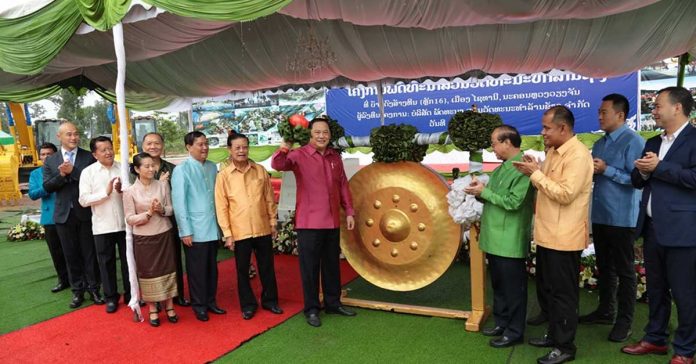
Construction of Lanxang Cultural Park kicked off on August 9 with a ground-breaking ceremony for the project.
It is expected to take about nine years to complete the USD 80 million-construction project, which is divided into three different phases.
Inside the park, which will cover about 88 hectares in Dongsang Hin Village, in Vientiane’s Xaythany district, there will be a play zone, an aquatic garden, a cultural park, a botanic garden, a zoo, a commercial and hotel zone, and a residential development area, among others.
In March this year, the Lao government chose a private investment firm, The Lanxang Cultural Park Development, to develop the park.
At that time, the president of the firm, Mr. Khonekham Inthavong, said the construction of the amusement and water park was slated for completion within two years, followed by the official launch of services, and then the rest of the project will continue.
Mr. Khonekham added that he expected the park, which will be designed to attract both domestic and international visitors, to become one of the top tourist attractions in Vientiane.
The firm is owned by Oceano Company which specializes in road construction, real estate development, and insurance and non-deposit taking finance institutions. The company also operates businesses in the fields of tourism and agriculture.
Oceano Company signed a memorandum of understanding with the Lao government in 2017 for a feasibility study to develop the park, while the company was established in Laos in 2012.
The World Bank has projected that economic growth in Laos is expected to recover 6.5 percent in 2019, from 6.3 percent in the previous year, mainly driven by strong investment inflows to large infrastructure projects, including the Lao-China railway.
However, the medium-term outlook of the economy is subject to downside risks amid domestic and global uncertainty such as trade tensions among major economies, the bank said in the Lao PDR Economic Monitor Reports for August.
Favorable short-to-medium term economic growth outlook
The short-to-medium-term growth outlook of the Lao economy is expected to remain “broadly favorable” supported by the construction of large infrastructure projects and operation of power projects, the bank said.
The bank cited the ongoing construction of the Lao-China railway, the Vientiane-Vangvieng expressway, and reconstruction and repair of infrastructure damaged by the 2018 floods as examples.
It also said the upcoming completion of several large power projects, including the Xayaburi Hydropower Project, could boost the county’s economy through exports of increased energy production.
The bank is, however, skeptical about the contribution of the mining sector, projecting that it is expected to gradually decline as the current investment matures without any new investment.
Fiscal consolidation
The government remains committed to fiscal consolidation to contain public debt in the medium term by tightening public spending and improving revenue administration, according to the bank.
This is expected to reduce the budget deficit to 4.3 percent of GDP in 2019 from 4.4 percent in 2018.
As a result, the public debt to GDP ratio is an estimated 58 percent of GDP in 2019, slightly up from 57.2 percent to GDP last year.
A low debt-to-GDP ratio indicates an economy that produces and sells goods and services sufficient to pay back debts without incurring further debt.
The bank said, however, the recently approved public debt management law and upcoming debt management strategy are expected to reduce public debt levels to below 56 percent of GDP in 2021, reducing the debt repayment burden over this period.
Medium-term outlook
As for the medium-term outlook, it remains broadly favorable but subject to downside risks from heightened uncertainty in the global and domestic environment, the bank noted.
The World Bank cited intensified and prolonged trade wars, heightened geopolitical uncertainty, and continued tightening of global financing conditions as external factors.
“Such factors could dampen growth prospects in Laos’s major trading partners, and spill over to the domestic economy through lower trade and investment and reduced prices for key export commodities,” it said.
Meanwhile, the bank cited natural disasters, slower progress in implementing planned measures on the revenue and expenditure fronts, a slowdown in momentum regarding business reforms and economic diversification as domestic factors.
In particular, the bank pointed out that slower progress on public financial management reforms could jeopardize the containment of the fiscal deficit and public debt.
Priorities to mitigate risks
The bank suggested that a priority is, therefore, to create fiscal space through improving tax policy and administration as well as build up reserve buffers to respond to shocks.
“The Lao government has undertaken important revenue and expenditure measures to support fiscal consolidation. However, revenue collection needs to be strengthened to ensure that necessary spending can be carried out while keeping the deficit under control,” the bank noted.
It also said improving the business environment could also contribute to greater macroeconomic stability, job creation and poverty reduction, especially through reversing the decline in the global ranking of the ease of doing business particularly for small and medium-sized enterprises.
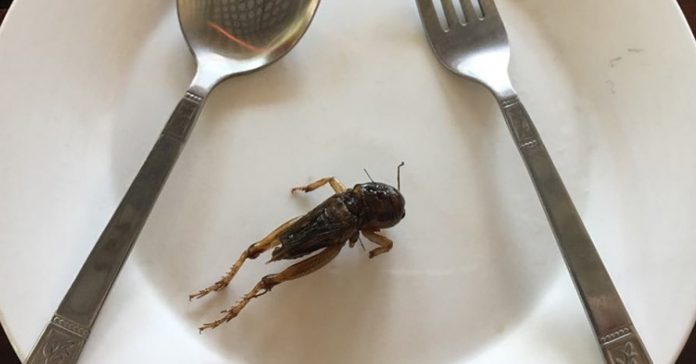
Edible insects first sparked international attention in 2013 when the Food and Agriculture Organization (FAO) published a report referring to them as one way to solve the global food shortage.
At that time, FAO noted that insects as food and feed emerge as an especially relevant issue in the twenty-first century due to the rising cost of animal protein, food and feed insecurity, environmental pressures, and population growth.
The organization added, thus, alternative solutions to conventional livestock and feed sources urgently need to be found, adding that the consumption of insects could play such a role.
The European Union (EU) was among the first to respond. It designated in 2015 insects as “novel foods.” Accordingly, authorized insects began to be distributed and sold throughout the EU.
Many businesses, including start-up companies, also began to up and run by recognizing the trend as a business opportunity.
According to BugBurger, a Swedish website that introduces a list of edible insects, there are 270 companies in the world that handle such insects as of end-July.
Meanwhile, market research firm Meticulous Research says the world edible insect market is expected to grow at an annual growth rate of 24.4 percent, reaching USD 7.96 billion by 2030, with North American countries showing the fastest growth.
Southeast Asia’s emergence as production base
Amid such a trend, there is an increasing number of companies that have decided to set up their production bases in Southeast Asia.
Cricket Lab, based in Thailand’s Chiang Mai, is one of them. The company produces about 16 tons of crickets every month on average, and most of them are exported to Europe, North America and Australia.
About 1 kg of crickets produced at the factory is sold at USD 18. It is up to USD 60 cheaper than those produced in Europe.
This is possible thanks to cheap labor and low management costs for factories, according to Nicolas Bery, Co-Founder & CEO at Cricket Lab.
The ideal temperature to breed edible insects is between 30 and 32 Celsius. Many production facilities in Europe must spend extra resources on maintaining such temperature, while it is not the issue in Southeast Asia.
The increasing number of players in the region resulted in the creation of the ASEAN Food and Feed Insects Association in 2016.
Among its founders are brands including Smile Bull Marketing and Bugsolutely in Thailand, as well as Malaysia’s Entofood, Vietnam’s Entobel and Eawag of Indonesia.
FAO noted that insect marketing is challenging to analyze in the country since the vast majority of Lao households collect and consume edible insects, but only a small proportion of the total insect supply is offered for sale, and unlike in neighboring Thailand, they are not generally traded by vendors.
FAO believes, however, there is a good reason to believe that promoting insect consumption can help not only combat malnutrition, alleviate food insecurity but also generate new sources of income in Laos as most people the country consume insects at least occasionally.
In particular, the organization focused on the profitability of farming such insects.
“Capital investment is approximately USD 760 for a breeding area of 60 square meters containing 61 concrete enclosures. Annual costs for food and other consumables at a typical cricket farm are approximately UDD 1,100 and revenues from the sale of the insects, and their eggs can reach USD 2,350 for a net income of USD 1,250 or roughly USD 21 per m2 per year,” FAO estimated.
“Taking into account the ease of setting up a cricket farm and low running costs, it is no wonder that cricket breeding has become popular in Laos. Moreover, there is potential for exporting excess supply from Vientiane. The conversion of excess crickets into food additives [insect flour or paste] could also be explored,” the organization added.
As of 2013, it was estimated that there are around 27 cricket farmers who can produce approximately 19,000 kg per year across Laos, mostly centered in Vientiane province, and many are mainly small scale with low investment, according to FAO.
International Support
In December 2010, FAO and the Faculty of Agriculture, National University of Lao PDR (NUoL) teamed up to establish the Edible Insect Demonstration Unit to develope edible insect farming
technologies appropriate for Lao conditions.
The unit’s main goal was to test and optimize low-cost production methods for edible insect farming in the country.
Meanwhile, Japanese NGO International Support and Partnership for Health is currently supporting residents in Pha Kon village near the city of Thakhek in breeding edible insects.
With an initial investment of USD 10 to set up a small “farm” to breed such insects, residents can generate about 1 kg of insects in five weeks time, which can be sold at the market at about USD 11.
Many residents in the village now use insect farming to financially support their livelihoods, although they were skeptical about it at first, according to the NGO.
Japanese cable manufacturer Bando Densen has opened a factory in Laos, joining a group of competitors that are stepping up their presence in Southeast Asia amid demand for electronic vehicles.
The company will gradually strengthen its local operations and with cheaper labor costs and existing distribution networks built by its affiliates in Laos. Exports from Laos to Japan are also being considered.
Bando Densen’s move comes amid growing demand in Southeast Asia for electric cables used for in-vehicle equipment, especially for electronic vehicles (EVs).
BANDO DENSEN LAO CO.,LTD in Savannakhet Province
Many ASEAN member nations are currently promoting EVs under government initiatives.
Laos held its first electronic vehicle summit earlier this year, where a memorandum of understanding was signed between state-run power company Elecricite du Laos and electronic vehicle proponent EV Lao.
Thailand, meanwhile, is pursuing “Thailand 4.0,” a policy to upgrade the nation’s industries, and next-generation automobiles such as EVs are one of the focuses.
A recent report by Bain & Company estimated that ASEAN’s annual new investment in passenger EVs will grow to USD 6 billion by 2030 and will require another USD 500 million in new charging infrastructure as service providers support electrification needs.
“The region lacks a supply of electric vehicles, attractive consumer economics, government incentives [in most countries] and charging infrastructure,” the report noted.
Accordingly, several Japanese electronic wire manufacturers have flocked to the region to take advantage of the trend.
Hitachi Metals is building its capacity to produce wire for electric parking brakes in Vietnam and Thailand, for example.
The company will expand production capacity at its existing plants and build new facilities during the first half of fiscal 2020.
Meanwhile, in Vietnam, Furukawa Electric will also invest about JPY 3.5 billion (USD 33.1 million) to quadruple its existing local plant’s capacity to produce aluminum wire for automobiles. A new building is expected to begin operation in September 2020.
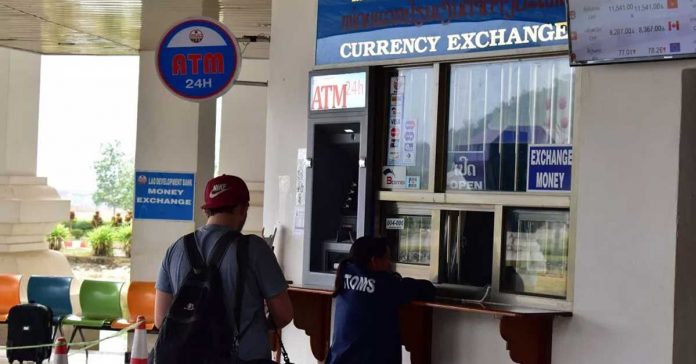
A senior Lao government official has warned that unregistered currency exchange services that violate currency regulations must be punished.
A number of foreign currency exchange services in Laos are openly flouting regulations, exacerbating the fluctuation of exchange rates, Vice President of Lao National Chamber of Commerce and Industry (LNCCI,) Ms Valy Vetsaphong said during a consultative meeting between public and private sector representatives on 6 August.
“Exchange units operated by banks are tightly controlled, but there is no effective measure to regulate money changers that are outside the system,” Ms Valy added, as quoted by Vientiane Times.
She said there is a greater possibility that the large amounts of money exchanged outside the system could cause fluctuation in the currency and exchange rate, noting that transactions through the banking system are one way of ensuring that banks can regulate such rates.
Laos is currently facing inflation and high consumer expenses amid the declining value of the kip against the US dollar and Thai baht.
The value of the kip against the US dollar fell by 0.9 percent and by 3.5 percent to the baht over four months from January, according to a report from the Minister of Planning and Investment, Dr Souphan Keomixay.
Most consumer goods in Laos are imported, so when the value of the kip drops against the major foreign currencies, product prices rise accordingly.
Meanwhile, Ms Valy also cited the widespread use of foreign currencies as a possible reason causing the weak value of kip.
The use of US dollars and Thai baht are still common across the country, particularly in Vientiane, despite efforts by the Bank of Laos to crack down on the practice.
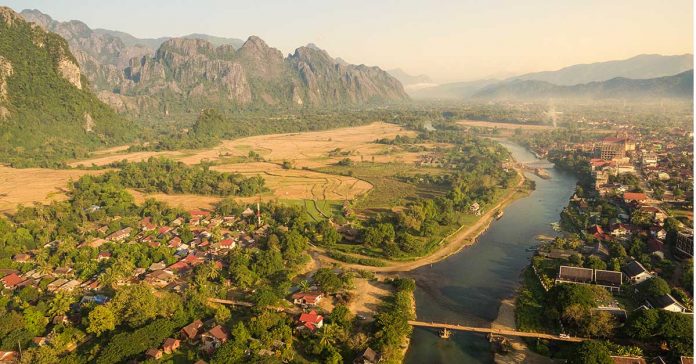
Prime Minister Thongloun Sisoulith and his retinue made a working visit to Vang Vieng last week to assess the district and offer advice on how to better develop the tourist town.
The PM met with Vang Vieng District Governor Khamphong Douangvilay, and visited a number of development projects in the district, including the construction site of the Lao-China Railway, which will include a passenger platform in Vang Vieng upon completion.
He noted that the cost of goods and services remains overly high in Vang Vieng, and the district faces problems with cleanliness and orderliness, noting that wastewater is still being dumped into rivers, according to an article in the Lao Post.
He spoke of the need to ensure projects are completed on time and in accordance with approved project plans. He also mentioned that infrastructure projects should be in harmony with nature, protecting the natural tourism attractions of Vang Vieng.
PM Thongloun observes the Lao-China Railway project (Photo: Lao Post)
Prime Minister Thongloun visited a number of tourist attractions, including Tham Nang Fa and Tham Nohn caves, noting that developers must make better efforts to protect both the environment and the safety of tourists.
The Prime Minister gave his opinion on the development of the district, stating that while Vang Vieng has seen some good development, there are many issues that require urgent attention. He said that development of the area has not been implemented according to urban planning, and that the district profoundly lacks a concrete and sustainable tourism plan.
Mr Thongloun said that in order to continue developing Vang Vieng as a tourism destination, its potential must be explored and utilized effectively for the benefit of the nation. He instructed relevant ministry officials to coordinate with Vientiane Province authorities in drafting a new sustainable development strategy for Vang Vieng. The strategy is to be used as a reference when authorizing any new projects or investments.
He instructed authorities to curb the inflated cost of goods and services in Vang Vieng, including food and accommodation pricing, and to promote cleanliness and the planting of organic produce for consumption. He also said that protection of the environment should be the number one priority in order to ensure Vang Vieng maintains its pristine natural scenery.
“Disposal of wastewater into rivers and littering must be stopped, while the construction of entertainment venues in conflict with the special conditions of Vang Vieng should be reconsidered,” said the PM.
The problems faced by the district in the past should be left in the past, and social problems should be dealt with swiftly to ensure tranquility in the tourist town. Tourism infrastructure must be strengthened, and capacity building must be implemented among tourism and hospitality industry staff to ensure quality services are provided, giving tourists a good travel experience.
Finally, the PM suggested authorities look toward neighboring countries that have benefited from tourism, and to learn from these countries in order to better develop the district of Vang Vieng.
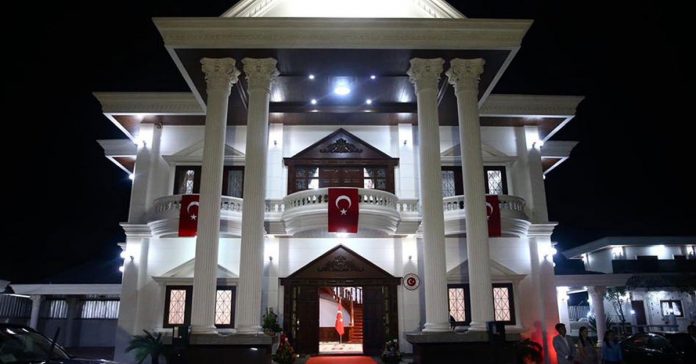
Turkey’s ambassador to Laos has indicated he is hopeful relations between Turkey and Laos can be further strengthened amid his country’s new Asia-focused foreign policy.
Speaking to Anadolu Agency on 11 August, Ahmet Idem Akay said the trade volume between the two countries increased from USD 6 million in 2017 to USD 15 million in 2018.
“It was a good start, and there is potential too,” Akay added.
He also said about 700-800 Turkish citizens are visiting Laos every year and around 50-100 Lao people are coming to Turkey.
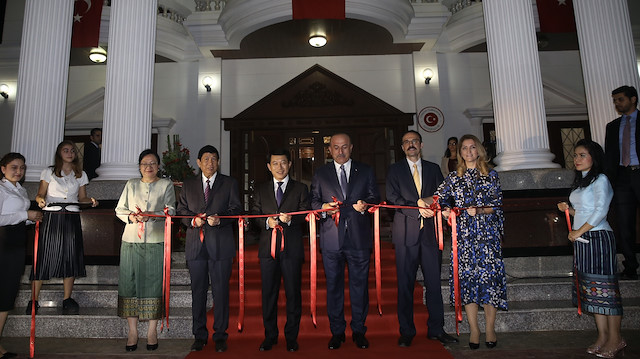
The increase in trade volume between the two countries demonstrates the importance of the establishment of the Embassy in Vientiane, which was opened in December 2017, he added.
Inauguration ceremony of the Turkish Embassy to Laos, November 2018
Turkey established diplomatic relations with Laos in 1958. According to Turkey’s Ministry of Foreign Affairs, 11 Lao citizens are registered to be resident in Turkey while 20 Turkish citizens reside in Laos.
Turkey’s move comes amid its efforts to push for the country’s new Asia-focused diplomacy dubbed “Asia Anew”.
The policy is aimed to improve ties with Asian countries in different regions that would include cooperation in education, the defense industry, investments, trade, technology, culture and political dialogue.
In particular, Turkey has been strengthening its ties with the ASEAN member nations.
The country applied to become a sectoral dialogue partner for ASEAN in 2015, and was later accepted in 2017.
The country currently has diplomatic representation in all member countries of ASEAN.
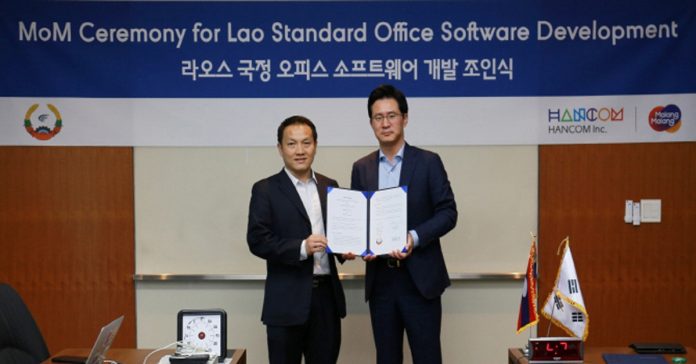
South Korean software developer Hancom has announced that it will support Laos to develop localized office software.
Currently, Microsoft’s MS Word and MS Office, as well as Google’s Google Docs suite of office software are widely used in Laos.
With a memorandum of understanding signed between Hancom and Laos’s Ministry of Post and Telecommunications on August 8, Hancom said it will not only support the Lao government to develop the software but also to realize its goal to become an “e-Government.”
E-Government refers to a government that uses technological communications devices, such as computers and the Internet, to provide public services to citizens and other persons in a country or region.
The South Korean firm did not provide further details about the proposed software will work.
The partnership comes amid the Lao government’s efforts to boost digital infrastructure across the country by 2030.
Its development plan for ICT (Information Communication Technology) 2016-2025 and vision plan for ICT 2030 are examples of the government’s recognition of its need to develop in the sector. In particular, projects to introduce e-Government have been carried out in three stages since 2013.
Hancom, which was established in 1990, has already created Hangul, a native word processing program for the Korean language.
The company also launched Hancom Office, a local software equivalent to MS Office. It consists of Hangul, Hancell (Spreadsheet), and Hanshow (Presentation program).
Hancom also operates a virtual office suite, Thinkfree.
The Thinkfree Office product family includes Thinkfree Online, which is the first MS-compatible web-based online office in the world, Thinkfree Mobile Office, which runs on mobile devices such as smartphones and tablets, and Thinkfree Server, which is a web-based office solution that integrates with on-premises and cloud-based servers.
Laos has also recently launched an electronic visa, or e-visa system, for foreign tourists to request an immigration visa online prior to arrival in the country.