Home Blog Page 6345

Akaryn to Expand With Three New Hotels in Thailand and Laos

The Akaryn Hotel Group has announced plans to launch three new hotels in Thailand and Laos.

The new properties include the Akyra Beach Club Phuket; Akyra Thonglor Bangkok, and The President by Akaryn in Laos.

Just 20 minutes from Phuket International Airport, the Akyra Beach Club Phuket will be situated on Natai beach. The resort will house 59 rooms and stand-alone villas, a beach spa, a fully-equipped gym and a choice of waterfront dining options. The hotel will open on 1 December.

Located in the city, the Akyra Thonglor Bangkok also launches in December 2016. Facilities will include a pool bar with city views, executive lounge, and a choice of meeting and function spaces.

Meanwhile, The President by Akaryn will be situated beside the Mekong River in Vientiane Laos. The resort will house 32 rooms and suites, all of which come with an individual butler.

Source: C&IT Magazine

How Social Media Has Enhanced the Lao Government’s Legitimacy

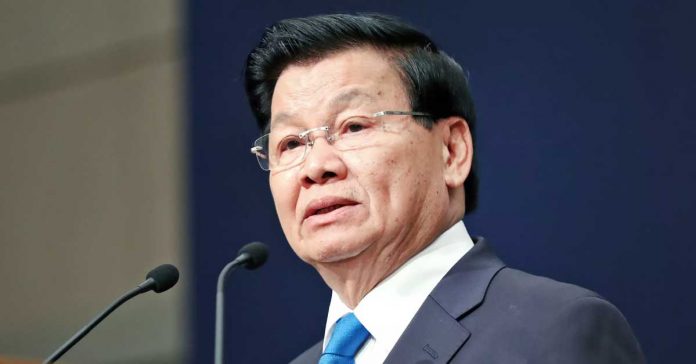
In April of 2016, after the 10th Party Congress had been concluded, it had become evident that Thongloun Sisoulith would become the next Prime Minister of Laos. Shortly after taking office, Prime Minister Sisoulith embarked on a most ambitious quest, as did his predecessors, to steer the small nation of 6.5 million towards the path of further economic development.

After successfully hosting the ASEAN Summits earlier this year (a feat praised by much of the international community), the Sisoulith-led Government with the guidance of President and Party Chief Bounyang Vorachit, promised the people among other things, the streamlining of government procedures, a tough stance against illegal logging, drugs and corruption, and increased revenue collection. As expected, newspapers, television, radio, magazines, and other media outlets scurried to get the news out about the new leadership’s sincere attempt to solve some of the longstanding social ills that had plagued the country.

Conventional state-owned and private media generated a fair bit of buzz in the country’s top officials, including many professional and competent ministers. Many people were convinced of the new government’s pledges, while others remained skeptical. This skepticism was testament to the fact that despite copious positive news coverage of the government’s activities, there has always been some disconnect between the people of Laos and its leaders – a rift between the ruler and the ruled that has been brought about by a mostly-positive media coverage of top leaders. This phenomenon has been the case since the local media has existed in Laos.

All this changed when the government decided to open a Facebook account.

Claiming to be an official government page, the Support Prime Minister Thongloun Sisoulith Facebook Page has over 65,000 followers, posts multiple times a day, averages over two-eight thousand likes per post, and earns several hundreds (sometimes even thousands of shares), with an estimated reach of about 500,000-1,000,000 individuals. For the small nation of Laos, this number is unprecedented, given the Internet penetration rate of only 13-14 percent, by some estimates.

What is more interesting is the number of popular online news websites and social media-based entities that are writing about the Prime Minister and depicting him in a most favorable light. People began to see pictures of him holding an umbrella by himself, wearing modest sneakers, braving poverty-stricken conditions, making intimate contact with the people, standing and smiling next to his wife, shaking hands and deliberating with world leaders, appearing next to students, and in a variety of attires (soldier uniform, graduation gown, religious outfit, ordinary clothing, national dress). And the people are loving it. They cannot get enough of it. Facebook posts were teeming with comments praising PM Sisoulith’s efforts, cheering him on as if he were a messiah that had been promised.

This foray into social media has spurred PM Sisoulith’s “approval ratings” and launched him to celebrity status. It is clear the Government is enjoying a very real political and moral legitimacy.

Of course, it should be noted that social media is a technological platform that enables leaders to achieve a sense of intimacy with the people of which conventional media platforms could never dream. It is precisely because it permits an open-ended conversation not only between the Lao people and its leaders but also amongst Lao people themselves. This type of expression has been seen as needed and appreciated in countries such as Laos where self-censorship is broadly practiced.

The brilliant, coordinated public relations campaign to depict a more human side of the Prime Minister not only generated a huge buzz around his policies and actions but also engendered an unprecedented level of intimacy with the people never before experienced. His portrayal as a holistic leader – tall and diplomatic yet down-to-earth – serves as a stark contrast to the typical public images bestowed upon the heads of previous government administrations. However, this is not to say that the people had not been supportive of previous governments. And it would be a mistake to claim that prior Lao leaders have not effected positive changes to the country.

But it is only during PM Sisoulith’s government that we see such a visible moral, public support as evidenced by the slews of positive online written feedback. Ultimately, social media allows for a civic participation and expression that the government should take into account.

Today, PM Sisoulith holds the title of the most followed Lao leader on social media. While other nations conduct polls and focus groups, the Lao Government’s legitimacy, it seems, can be seen by its number of ‘likes.’

Although there is fervent dispute over social media’s influence on the political forum’s integrity, it is now an undeniable influence that no government could ignore.


Written by: Laotian Times Guest Columnist

Photo courtesy of Support Prime Minister Thongloun Sisoulith FB Page

That Luang Marsh Developer to Build Theme Park

A Chinese developer plans to invest US$80 million to construct a water theme park next year at the That Luang Marsh Specific Economic Zone in Vientiane to attract domestic and foreign tourists.

The concept is to capture a slice of the increasing foreign visitor market to Laos while enticing domestic tourists and discourage them from travelling to neighbouring countries for their holidays, Chinese developer Mr. Wan Feng of Wan Feng Shanghai Real Estate Company told President of the National Assembly Pany Yathotou and government officials on a recent visit to the site.

The number of foreign visitors to Laos has increased from two million people in 2009 to almost 4.7 million people in 2015 and was expected to reach 5.1 million people this year, according to the Department of Tourism Development.

The developer also plans to build an international trade exhibition centre involving hotels, guesthouses, conference rooms, restaurants, entertainment venues and other facilities that will be able to host regional and international standard events.

Following their completion, the developer will cooperate with government organisations to organise a variety of trade fairs to draw visitors.

The development will feature promenades and dining and retail outlets featuring handicrafts and souvenirs.

Other construction will involve completing facilities for the condominium towers, improvements to roads and lighting around the lake, and the creation of green spaces.

Mr. Wan Feng commended the government and local authorities for the good cooperation the project has received over the last four years.

The developer has decided to increase its overall investment capital from US$1.6 billion to US$5 billion with millions of dollars having been spent on building infrastructure, facilities and condos at the zone.

The Chinese developer is encouraging other companies to operate businesses in the zone.

The That Luang Marsh SEZ began operating in 2012, on an area of 365 hectares. The government intended to promote the development of this project as a model for SEZ development in Laos, aiming to attract more foreign investment.

Wan Feng Shanghai Real Estate Company has said it expects to spend between 15 to 20 years working on the project.

When finished, the project will include a large residential area, public parks and green spaces, a lake, hospitals, education centre, restaurants, a sports complex and a commercial centre. There will also be five-star hotels, shopping centres and entertainment venues.

The developer’s original aim was to turn That Luang Marsh into a liveable town with an environmentally friendly atmosphere.


Source: Vientiane Times

Lao Judo Fighters Win Medals at International Events

The Lao judo team was able to collect two silver medals and one bronze medal at the Vietnamese International Judo Championships in Vietnam recently.

The silver medallist in the women’s 63kg category of the fighting event was Somsoudalath Venevankham while the other silver medal came from the men’s doubles kata event.

The bronze medallist Khonema Chanthakoumman collected her medal in the women’s under 78kg division.

The Lao judo team comprised four women’s judo fighters in the 52, 57, under 63 and under 78kg categories.

Joining them was one male judo artist who competed in the under 66kg division fighting event.

Competing in the kata or dancing events were male competitors, who managed to come home with a silver medal for their efforts.

Judo teams from more than 10 countries attended the Vietnamese International Judo Championships from October 29-30.

In July, top female judo fighter in the under 63kg category, Somsoudalath Venevankham, won a gold medal at the Thailand International Judo North Bangkok University Championships.

After returning from Vietnam, the Lao judo fighters will continue preparations at a training camp in Vientiane as they get set to compete at the Pre-SEA Games in Malaysia in February next year.

The Lao Judo Federation would also like to select the best men’s and women’s fighters in the different categories ahead of the Pre-SEA Games.

Between them, Lao men’s and women’s judo fighters in various weight categories picked up one gold and four bronze medals at the Thailand International Judo North Bangkok University Championships at the end of July.

In 2014, the Lao judo team won two silver medals at the Judo North Bangkok Championships.

At the 27th SEA Games in Myanmar in 2013, the Lao judo team won one gold and three bronze medals, while at the 2011 SEA Games in Indonesia they won one gold, two silver and one bronze medal.

At the 25th SEA Games in Vientiane back in 2009, the Lao team won two gold, five silver and four bronze medals.


Source: Vientiane Times

Laos to Face Indonesia in Division 3 Rugby International

The DAC Lao men’s national team will be ready to face Indonesia at the Asia Rugby Championship Division 3 East test match in Bangkok, Thailand on November 5.

The Lao Rugby Federation (LRF) held a press conference at the Lao Journalists’ Association office last Thursday to report on the team’s preparations before travelling to Thailand.

Previously called the Asian 5 Nations, the Asia Rugby Championship Division 3 East is a premiere rugby 15s competition. With China and Brunei recently pulling out of the competition, Laos will have one test match against Indonesia at the Queen Sirikit 60th Anniversary Stadium.

The Thai Rugby Union will also be fielding a Development Team (with Laos and Indonesia in a different division from the Thai team), and Laos had a warm up match against the Development Team on October 30 at Thammasat University Rangsit Campus in preparation for Saturday’s test match.

The most recent test match for the DAC Lao 15s men’s national team was in 2014 during the Asian 5 Nations Division 3 East competition. Hosted by the LRF at Chao Anouvong Stadium in Vientiane, the Asian 5 Nations competition featured the Chinese, Guam, Indonesian, and Lao national teams. In their second match, the Lao men narrowly lost to Indonesia 11-10.

After two years, the DAC Lao men’s national team looks forward to its rematch against Indonesia in this weekend’s Asia Rugby Championship.

Coached by Head Coach Reweti Montgomery and Assistant Coach Pisa Vongdeuanpheng, the side is made of players from the four senior men’s teams in Laos: the Wild Hogs, Young Stars, Tigers and Buffalos and will be excited to take to the field following the cancellation of the international 15s in 2015.

In preparation for the 15s national team season, these four club teams participated in the LRF’s Colours League Series, an 8-team domestic men’s and women’s senior competition held during September and October, which also gave Head Coach Montgomery the chance to observe the players’ level and skills.

Our team is strong in skill, fitness and character. We have come together well, and we now have some serious attacking power in our structure, he said.

Our goal is to come away with a win and I feel they have what it takes, he added.

LRF thanked long-time Platinum and Elite Sponsor DAC Management LLC for continuing to support the Lao national team and for making the Asia Rugby Championship tour possible.


Source: Vientiane Times

Feuang District Opens its Doors for Adventure

The hidden and untouched nature of Feuang district in Vientiane province will become more widely known, with the district moving to open its doors to adventure activities.

One man who loves the nature there, Mr. Vanna, is now seeking to develop his beloved hometown to become a land of adventure.

Mr. Vanna became a developer for Feung district’s tourism activities after gaining permission from district authorities to make the area more exciting for visitors.

Having previously worked in the tourism sector in Vangvieng, he has seen the potential district’s landscapes, rivers, and mountains when it comes to natural adventures.

Vanna is now developing adventure activities that focus on creating different activities, some of which tourists have never seen in Laos.

I am making bamboo rafts that tourists can paddle along the Nam Lik River, which brings them closer to nature, Vanna said while driving his minivan.

Of course, the district has a big river which also fuels a power plant, and many mountains which are suited to adventure activities.

Last year, Vanna served tourists for a pilot project of bamboo rafts to bring tourists in touch with nature.

Each bamboo raft weighs between 5-10 kilos, which tourists can paddle by themselves or be helped by a guide as they take in the beautiful surroundings.

Meanwhile tourists can also take power boats to explore the waterfalls through the Nam Lik basin.

There is still no road access so tourists must take a 50 minute boat ride on the Nam Lik reservoir before walking for a further 20 minutes to the waterfall.

When trekking to the waterfall, visitors will be reminded of the Lao proverb that the road to hell is easy but the path to heaven is difficult.

But once they arrive at the beauty of the waterfall, they will quickly forget their tiredness as they take in the crystal clear water and cool fresh air.

Visitors should remember that it is more than two hours to the waterfall and back so they should be careful to plan their trip.

Before you return, don’t miss talking to the fishermen who spend their life fishing from small floating houses along the Nam Lik basin. Easy going and relaxed, they will always welcome a chat.

With all of the adventure in Feung district, you can’t do everything in just one day; there is still the kayaking and famous tubing’ down the Nam Lik river over a distance of 10-15 km.

These activities will let you and your friends make time for sitting by the river and enjoying the spectacular scenery, fresh air and distant laughter.

If you dislike kayaking or tubing you can also hire a speed boat. The prices depend on where you want to go.

If you like swimming in the fresh, cool water in the early evening, you can ask for a guide to take you to the best swimming spots but be warned, the water can be very cool.

Watching the sun rise over the mountains is another photogenic moment. If you want to get a better view you should make your way down to the riverside, where you can relax to the tranquil sounds of the gurgling water.

The lifestyle of the people in this district is easy-going and you can see local residents enjoying a refreshing bath in the river or fishing in the early morning.

The weather at this time of year is perfect for a visit; warm enough for a quick dip in the river and cool enough for a relaxing evening.

Feuang district is still developing its tourism industry, so there are only a few guesthouses and bars to serve visiting tourists.

The district is appropriate for easy-going tourists who love the peaceful touch of nature and the locals’ lifestyles.

How to get to Feuang district

Feuang district is about 100 km from Vientiane along Road No 13 North, where you take a left turn at the junction at Hinheup. You can get there by bus or pickup truck.

If visitors need to book a guesthouse in advance, they should contact the Feuang district Information, Culture and Tourism Office.


Source: Vientiane Times

Laos Looks to Boost Tourism by Enticing Visitors to Linger Longer

The tourism sector holds the potential to promote economic growth and reduce poverty in Laos. But although the sector is growing, it faces serious constraints and seems to be small in comparison with the tourism industry in neighbouring countries.

New strategies are needed to improve tourism policy to make tourism an engine of economic growth, according to the Organisation for Economic Cooperation and Development (OECD).

It is important to attract more tourists from non-neighbouring countries and to increase spending on tourism, improve infrastructure, upgrade skills and human resources, introduce more public-private collaboration and ensure that environmental and cultural protections are in place.

The government of Laos has adopted a broad approach in promoting a range of types of tourism, according to the OECD report on the Economic Outlook for Southeast Asia, China and India 2016 that was delivered at the recent ASEAN-BIS meeting in Vientiane.

The first tourism master plan was to limit the number of international tourists to promote package tours for small groups of upper-market tourists. However, the National Tourism Strategy 2006-2020 took a broader approach, embracing mass-market tourism while focusing on cultural tourism and, in particular, ecotourism in rural and remote areas.

Ecotourism takes advantage of the country’s natural assets, including the Mekong River and numerous waterfalls, and the government takes a role in guiding the private sector to develop tourism with sustainable and long-term potential.

At the same time, the government continues to focus on community-based tourism as a tool to reduce poverty and promote economic growth. This broad approach is consistent with the Greater Mekong Sub region (GMS) tourism sector strategy endorsed by the GMS countries in 2006.

Through this strategy, member countries aim to promote the GMS as a single destination, ensure that tourism contributes to poverty reduction, minimise the adverse impacts of tourism, empower women and develop tourism products and services that distribute the benefits of tourism more widely.

Tourism has been growing significantly in Laos. The number of tourist arrivals increased steadily from 1994 to 2014, with an average growth rate of 18 percent, although the number dipped on two occasions in the early 2000s.

The main factors behind the decrease – from 737,208 in 2000 to 673,823 in 2001, and from 735,662 in 2002 to 636,361 in 2003 – were the terrorist attacks in the United States on September 11, 2001 and the SARS epidemic in Asia in the first quarter of 2003.

Tourism recovered in 2004 and has continued to grow. In 2014, the number of tourist arrivals reached 4.15 million, the OECD reported.

According to the Tourism Development Department, more than 4.6 million tourists visited Laos in 2015, generating revenue of over US$725 million. The department expects this figure to rise to over 5 million visitors generating more than US$800 million.

Of the 4.6 million people who visited in 2015, the number of arrivals from the four countries of Cambodia, Myanmar, Thailand and Vietnam reached over 3.4 million, which represented 73 percent of the total number of tourists.

The OECD noted that tourists were generating large amounts of revenue and employment. Indeed, one of the most important contributions of the tourism sector is the generation of foreign income.

From 1990 to 2014, annual tourist arrivals increased from 14,400 to 4.15 million. By 2014, tourism revenues had reached US$641 million, making the sector the second largest source of foreign exchange, after mineral exports.

Tourism has also led to the creation of many jobs and provides 17,000 full-time jobs and indirect employment for an additional 167,000 people.

It is also helping to drive the reduction in poverty, partly thanks to the government’s strategic promotion of smaller ecotourism and community tourism projects, which can have greater impacts on the poor. These areas of tourism have contributed significantly to poverty reduction.

The expansion of tourism has also fuelled investment, with the addition of new hotels, guesthouses, restaurants and entertainment establishments. The number of hotels increased from 491 in 2013 to 515 in 2014, while guesthouses and resorts increased from 1,868 in 2013 to 1,911 in 2014. The number of restaurants and entertainment establishments also increased significantly.

The Tourism Development Department reported that the number of hotels increased to 542 last year.

The OECD noted that despite the contribution of tourism to the economy and poverty reduction, the tourism sector faces various challenges, including how to attract more tourists from more countries and how to increase tourists’ expenditure per day.

The 18 percent average annual tourism growth rate from 1994 to 2014 is relatively low compared with neighbouring countries such as Thailand, Malaysia, Vietnam and Cambodia. Moreover, the share of tourist arrivals in Laos was about 4 percent of all tourist arrivals in ASEAN in 2013.

Tourism arrivals in Laos increased to 4.15 million in 2014, but most international tourists – a full 80percent – are visiting from ASEAN countries such as Thailand and Vietnam. Tourism is far less diversified in Laos, in terms of the visitors’ countries of origin, than in neighbouring countries such as Thailand and Myanmar. It is important to promote tourism development to attract more tourists from non-neighbouring countries.

Despite the increasing number of tourists, their expenditure per day is relatively small. Tourists from neighbouring countries generally visit on 1-2 day package tours or quickly transit the country. In 2009, tourists from non-neighbouring countries visited for about 6.5 days on average and spent about US$60 per day. These tourists are interested in nature- and culture-based activities.


Source: Vientiane Times

Wedding Fashion Show Promotes Lao Matrimonial Dress

A special wedding fashion show featuring a variety of Lao traditional costumes for grooms and their brides, as well as attire for wedding parties, was organised on Saturday at Vientiane Center, attracting a large number of interested spectators.

The event was described as colourful and meaningful because it was organised to present and promote Lao culture and traditions in relation to wedding ceremonies, showcasing traditional wedding attire for newly-weds as well as their family, friends and other attending guests.

Many fashion outlets which specialise in wedding fashion joined the event to showcase their best attire to interested members of the public.

The fashion show featured a variety of beautiful, colourful, and elegant traditional Lao silk costumes, including those worn by both women and men.

Before the fashion show started there was also a colourful demonstration of a groom’s procession and wedding ceremony which featured the main steps and rituals of a Lao wedding party.

The event was organised as part of the Laos Wedding Fair (lasting from October 29 to November 2) through cooperation between Phouvong Gold Store and Vientiane Center, aiming to promote Lao traditional costumes and their preservation.

The occasion was also timed to mark the celebration of the grand opening ceremony of the new Phouvong Gold Store within the Vientiane Center shopping complex.

The event was attended by Director of Vientiane Center, Mr. Sombath Siriphonevithaya, and Phouvong Gold Store director, Mr Phouvong Phamisith, the organising committee, officials, media personnel and members of the public.

The opening speech was delivered by Mr. Sombath, in which he expressed his impressions on holding the Laos Wedding Fair and fashion show and explained about the importance of the event and blessed the audience for this joyful occasion.

I am very happy to organise this important and meaningful event because it is a good way to promote Lao culture and preserve Lao textiles, especially wedding party costumes, which are very beautiful, charming, and identifiable. I hope you enjoy the fashion show and all the associated activities, he said.

Mr Phouvong said he was very pleased to organise the special fashion show because it meant that he could contribute to preserving the culture and traditions which Lao people have had since ancient times.

Lao people have very identifiable costumes which are different from other countries, especially our clothes made from silk; everyone enjoys dressing in them when attending social events, especially wedding parties.

So, we should preserve this tradition as well as possible. Seeing the importance of promoting and preserving our traditional costumes inspired us to hold this special event, Mr. Phouvong added.

Wedding parties are an important social event which Lao people have carried out from generation to generation.

Weddings are one among other traditions and social events, and also the most important moment of life for each new couple because it is the most special and meaningful time of their lives when they change their status from being single to married.

All relatives, friends, and colleagues are always invited to join wedding parties and they like to dress in Lao traditional costumes and the most popular ones are made from silk.

For the groom and his bride, they are always dressed in elegant full length suits and dresses fashioned from finely woven silk.


Source: Vientiane Times