Home Blog Page 6346

Boat Operators in Khong District Experience a Decline in Revenue

Boat operators in Nakasang village, Khong district, in the southern province of Champassak have experienced a decline in revenue due to the falling number of visiting tourists.

The head of the boat service association in Nakasang village, Mr. Bounseum Chanthalansy, told Vientiane Times that transportation and leisure trips are popular in the area, with both domestic and foreign visitors taking boats to cross the Mekong River for stays on Don Det and Don Khone islands.

The tourist operations also run ecotourism themed boat trips to experience island life, visit the popular Somphamit and Khonephapheng waterfalls and observe the endangered Irrawaddy dolphin.

Currently, the boating association has 132 small boats with the capacity to carry 3-8 people and 26 large boats that carry between 19-60 people. The services run from 7am to 5pm every day.

The boat service is an important source of revenue for both the boat operators and other tourist related businesses in Khong district, Mr Bounseum added.

But boat service operators have seen a decline in revenue due to the low number of visitors coming to the area. This year, the figure fell by 30 percent, compared to same period in the previous year, Mr Bounseum said.

Local authorities have made great efforts to improve infrastructure, in particular the construction of bridges and roads in an effort to attract more tourists. But the district’s move to encourage tourists with the promise of easy access may have come at a cost to the boat operators.

The heavy emphasis on investment in infrastructure has made it easier for tourists to visit local attractions without needing to hire a boat.

In recent years, a new bridge crossing the Mekong River to Khong Island has drawn more visitors to the area with their own vehicles.

Another bridge and road connecting the mainland to Don Sadam island was recently built, which provided a more convenient means for tourists to access the waterfalls and watch Irrawaddy dolphins in the Mekong.

Last year, more than 400,000 tourists visited the area. The visitors consisted mostly of Lao citizens, while the remainder came from Thailand, Vietnam, China, Cambodia and various European countries.

However, the downturn in tourists is projected to change for the better in the coming years. The official projection estimates that over 500,000 people will visit the area next year, which will contribute to the growth of the local economy.

But the effect of the recent changes in infrastructure will continue to remain a question for the boat operators who make a living by providing services for visitors.


Source: Vientiane Times

Saravan Cassava Purchases Cease due to New Tax

Some cassava buyers in Saravan have decided to halt purchases of the crop after the southern province introduced a new levy on shipments of the tuberous roots.

Local media reported yesterday that some companies have stopped buying cassava from growers in the provinces of Champassak and Saravan after the tax was imposed this year.

An anonymous provincial official in Champassak told Vientiane Times on Tuesday that tax officials were charging buyers 15 kip per kilogramme on cassava purchased in Saravan province.

“Tax officials have set up checkpoints where they ask for 15 kip a kilogramme from the cassava trucks on their way to processing factories,” he said.

According to local news outlets some businesses in Saravan’s Lau-ngam district have temporarily stopped buying cassava because many are charged even more than the set tax rate.

The businesses told local media they would restart buying cassava from farmers when Lau-ngam district authorities stopped collecting the tax.

Officials from the provincial Commerce and Industry Department and the provincial Agriculture and Forestry Department in Saravan acknowledged that there have been public complaints about this matter.

They told local media that the authorities had set up a committee to look into the issue.

One company is still buying cassava from farmers at 8,000 kip a kilogramme but only in limited quantities.

Last year, Champassak province officials suggested growers could deliver cassava to factories in Xekong and Attapeu provinces after a tapioca factory in Champassak limited its purchases.

AlterbativelyIn addition, they could sell to Thailand through the Vangtao-Songmek border crossing between Laos and Thailand. But many farmers were concerned about the high transportation fees they would be charged because of the long distance.

Some growers thought the Champassak factory would not buy their cassava because growers were delivering too much or they suspected the owner had financial problems.


Source: Vientiane Times

Ministry, Partners Seek Ways to Mitigate Climate Change Impacts on the Health Sector

Climate change took centre stage at a recent joint event organised by the Ministry of Health, WHO and UNDP to discuss about building a resilient health system that can effectively deal with climate shocks.

Deputy Minister of Health, Dr Phouthone Moungpak said yesterday that climate change poses a risk to our development goals. We need to work with other sectors to mitigate the impact of climate change on the health system and to develop effective response to natural disasters.

WHO Representative to the Lao PDR, Dr Juliet Fleischl, said climate change is reshaping public health and is one of the defining issues for the 21st century. Many of us living in Laos have experienced the impacts of climate variability, especially from flash floods and droughts. These extreme weather conditions bring health challenges with increased outbreaks in waterborne and vector borne diseases, she said.

At the global level, Development Goal (SDG 13) emphasises the need for all countries to take urgent action to combat climate change and its impacts. Laos has also signed the Paris Agreement on Climate Change which provides important leverage points for strengthening the work on health and the environment.

In Laos, a national climate change and health vulnerability assessment completed in 2011 concluded that waterborne diseases like dysentery and typhoid remain a significant source of morbidity and this health burden is expected to increase with climate change. Vector borne diseases, in particularly dengue cases, are also expected to increase.

The other potential impacts include injuries and possible death due to heatwaves, and other extreme weather events.

These weather conditions often result in agricultural losses, and the changing climate patterns will impact food security, which puts the most vulnerable rural populations at risk of undernutrition and malnutrition. Climate-sensitive health management and response plans are needed to support these communities living in vulnerable provinces, districts and villages.

Two areas for mitigation and adaption focused on increasing the resilience of public health infrastructure and water supply system to climate change, and improving public health services for climate change adaptation and coping with climate change induced impacts.

Recognising the limited awareness of health risks in relation to climate change among health workers, and insufficient data and monitoring of climate-sensitive health outcomes, WHO and UNDP are helping the government to develop the Global Environment Facility (GEF)project proposal that will focus on four main objectives.

The GEF project will advocate and raise awareness of climate change impacts on public health, strengthen partnerships among related sectors, and enhance scientific evidence collection and analysis to strengthen the health system in order to improve their resilience to climate shocks.

It will also cover gender mainstreaming, stakeholder involvement plan, monitoring and evaluation indicators, expected outputs and long term sustainability of the project. Health partners agree to mainstream resilience, adaptation and mitigation measures into health policies and plans.

UNDP Deputy Representative in Laos, Mr. Balasubramaniam Murali, repeated the need to strengthen the country’s resilience to climate change, saying The GEF project will support the country development goals and SDG 3, 5 and 13. UNDP will extend full support for the development and implementation of climate related strategies that are in line with the country’s priorities.

Long term solutions are required, including enhancing the capacity of national health systems and institutions to be able to respond effectively to climate change impacts on morbidity and mortality in vulnerable population groups.

Recognising climate change challenges is a start, but the long term goal is to build a resilient health system that is responsive to climate change.


Source: Vientiane Times

Laos, China Agree to Strengthen Border Security

Laos and China have reaffirmed their commitment to further strengthen cooperation in the maintenance of security along their shared border with the signing of a new agreement.

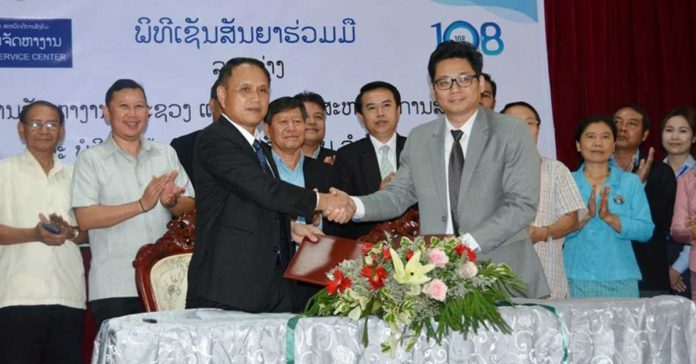
The agreement was signed by the Head of the National Boundary Committee Office of the Ministry of Foreign Affairs, Mr. Phaengsavanh Keopaseuth, and Deputy Director General of the Border and Ocean Affairs Department of the Ministry of Foreign Affairs of China, Mr. He Wei.

According to a statement from the Lao foreign ministry yesterday, the two parties signed the agreement during the 14th Laos-China Joint Border Inspection Committee meeting, held in China from October 25-29.

Under the new agreement, the two parties will share ideas, information and experiences concerning border control, and officials requested that the number of security guards deployed along their shared border be increased.

Regarding illegal trading and logging, the drug trade, human trafficking, transnational crime and other issues, the two parties also agreed to advise officials, districts and local authorities along their shared border to be extra vigilant.

The two parties also agreed to join forces to curb the sale and distribution of drugs and clamp down on other activities causing problems in the border area. They agreed to run a drug awareness campaign to educate people about the risks and dangers of using or dealing in drugs.

This will help to maintain peace and order among communities living in border areas. During the meeting, officials discussed tightening border security between the neighbouring countries, and also boosting ties and strengthening cooperation between the two countries to achieve greater security and peace along the Laos-China border.

The meeting sought to exchange ideas and review joint operations since the 13th meeting. Participants signed a memorandum on cooperation between local officials to allow them to handle any problems as they arise.

The meeting reiterated the high value placed by both nations on ensuring a border of peace, friendship and cooperation.

Although security along the border in many parts of the two countries has improved over the years, theft, illegal trade, drug trafficking and other anti-social activities still remain prevalent and those must be urgently addressed, officials in charge said.


Source: Vientiane Times

Project Aims to Provide Skills Training for Young People

The Decent Work Country Programme (DWCP) 2017-2021 plans to promote skills development for young people in remote areas of Laos with a focus on particular skills needed by the labour market.

Programme officials will conduct research on employees and employers to seek balance from both, after which they will provide skills training to match the needs of businesses.

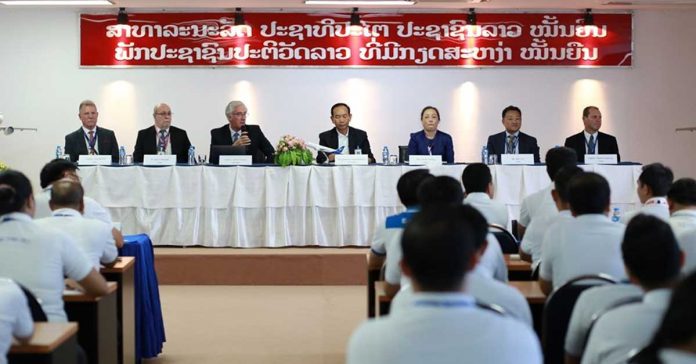
The Lao National Chamber of Commerce and Industry (LNCCI) and International Labour Organisation met to discuss the Decent Work Country Programme in Laos 2017-2021 yesterday in Vientiane.

The meeting gave employer groups and businesses the opportunity to comment on and create good relationships with employees, as well as upgrade business development.

The meeting presented the DWCP five year strategic plan to improve skills development in rural areas, promote gender mainstreaming, and support disabled people and vulnerable groups.

During the meeting, LNCCI Vice President Mr. Saman Aneka said Laos’ economic growth had attracted foreign investment in line with government policy. This meant many businesses were joining forces and boosting production to better compete in international markets.

Skills development, labour migration, education and human resource development are important and benefit the country. So businesses should pay more attention to developing local labour skills, in addition to investment, to create more employment to support incomes for Lao people so the nation can graduate from least developed status by 2020, he said.

Mr. Saman said LNCCI business members had provided social welfare for employees as required under Labour Law, while other non-member businesses had not, so the LNCCI needed to encourage them to become members.

The Decent Work Country Programme (DWCP) 2017-2021 plans to promote skills development for young people in remote areas of Laos with a focus on particular skills needed by the labour market.

Programme officials will conduct research on employees and employers to seek balance from both, after which they will provide skills training to match the needs of businesses.

The Lao National Chamber of Commerce and Industry (LNCCI) and International Labour Organisation met to discuss the Decent Work Country Programme in Laos 2017-2021 yesterday in Vientiane.

The meeting gave employer groups and businesses the opportunity to comment on and create good relationships with employees, as well as upgrade business development.

The meeting presented the DWCP five year strategic plan to improve skills development in rural areas, promote gender mainstreaming, and support disabled people and vulnerable groups.

During the meeting, LNCCI Vice President Mr. Saman Aneka said Laos’ economic growth had attracted foreign investment in line with government policy. This meant many businesses were joining forces and boosting production to better compete in international markets.

Skills development, labour migration, education and human resource development are important and benefit the country. So businesses should pay more attention to developing local labour skills, in addition to investment, to create more employment to support incomes for Lao people so the nation can graduate from least developed status by 2020, he said.

Mr. Saman said LNCCI business members had provided social welfare for employees as required under Labour Law, while other non-member businesses had not, so the LNCCI needed to encourage them to become members.


Source: Vientiane Times

Road Building Bogged Down in Xaysomboun

Upgrades to three main roads connecting to previously remote Xaysomboun province are mired in difficulties, mainly attributable to problems in sourcing state funds to complete them.

The main roads through large parts of the province are still unpaved which means they turn to mud whenever there has been a heavy shower.

Minister of Public Works and Transport Dr Bounchan Sinthavong explained the difficulties when answering questions put by National Assembly (NA) members concerning road upgrades during the ongoing debate session.

Work to upgrade a 120 km section of road is currently facing financial difficulties.

The road is the main link from the Thabok area in Thaphabath district of Borikhamxay province to Xaysomboun province.

From Thabok, this road also links with National Road No. 1D in Borikhamxay’s Viengthong district, over a length of 56 km.

This 120km long road needs to be sealed to provide a route from Xaysomboun province to Vientiane through Thabok and then link to Xieng Khuang province via National Road No. 1D, Dr Bounchan said.

Two other main routes will be surfaced with gravel but some sections of these roads passing through villages or over mountains will be sealed with asphalt.

The roads linking to Xaysomboun run from the provinces of Vientiane, Borikhamxay and Xieng Khuang. An NA member for Xaysomboun said there were other road links but most were tortuous.

Dr Bounchan said they planned to rebuild a 60km road between the Naphaeng area in Vientiane province and Xaysomboun province, and work was currently underway.

There are also other road links planned from Vientiane province to Xieng Khuang province via Xaysomboun province, for which a loan is being sought from the Chinese government.

Speaking at a national meeting on communications, transport, posts and construction in 1991, former President Kaysone Phomvihane said road building was key to ensuring economic development for both the Party and the state.

Today the Ministry of Public Works and Transport is prioritising the development of roads to link Laos with other countries in the region through the East-West and North-South Economic Corridors.

Road upgrades and new road construction in Vientiane and the provinces, especially roads leading to border crossings, roads linking provinces, and access roads to villages and new development areas, will help substantially in furthering rural development.


Source: Vientiane Times

National Assembly Pushes for Judiciary Improvement

The National Assembly (NA) has put forth a proposal for prosecutors and judges to be stricter in implementing their legal duties in an effort to build public confidence and trust in the government’s judicial bodies.

Attendance of third party intermediaries is included in the new instructions given to the court system in the belief this will increase the judicial system’s objectivity and fairness in judgment.

Chairwoman of the NA’s Committee on Justice, Dr Buakham Thipphavong, outlined the instructions while commenting on the proposal made by the Office of the Supreme Public Prosecutor (OSPP) and Supreme People’s Court.

In the report put forward during the session, the OSPP addressed some deficiencies in the system pertaining to judges’ and prosecutors’ obligation of observing the right to a fair trial.

The committee asked the OSPP and its branches at all levels to implement their obligations defined by the Law of the Public Prosecutor, enhancing ideological education, and ethical training, said Dr Buakham in a speech to the committee.

The NA committee called on the OSPP to enhance their coordinating mechanisms in order to avoid illegal interference and misunderstanding between concerned authorities.

The committee asked that the OSPP respect the law at all levels by following the proper procedures of collecting evidence, filing charges and building a criminal case to foster public confidence and trust in the system.

More than 37,000 court cases have passed through the system in the last five years, with 36,000 of them coming to a conclusion.

The NA committee praised the efforts and achievements made by the courts.

Meanwhile, the committee commented on the shortcomings of the Supreme People’s Court, such as misconduct of judges, which the committee head said minimised public confidence in the judicial system as a whole.

The committee called for court staff to be models in respecting and following the law by making decisions without bias and discrimination towards defendants.

The committee proposes that the Supreme People’s Court augments their overall respect for adherence to the laws of the judiciary by following the guidelines set forth in the proposal, Dr Buakham said.

Our plan marks a new phase in building public confidence, contributing to state and social management through law enforcement and ultimately moving towards a more prosperous and just society, she concluded.


Source: Vientiane Times

Luxembourg, Swiss Govts Lend Support to Tourism, Hospitality Sector

The Luxembourg and Swiss governments will provide funding totaling 15 million euros or over 133 billion kip for skills development in the tourism and hospitality sector.

A launching ceremony for the Skills for Tourism project took place in Vientiane on Tuesday, presided over by Deputy Minister of Education and Sports, Associate Prof. Dr Kongsy Sengmany; Chargé d’Affaires, Embassy of Luxembourg in the Lao PDR, Mr. Claude Jentgen; and Mekong Regional Director, Swiss Agency for Development and Cooperation (SDC), Mr.Tim Enderlin.

The purpose of this five-year project is the promotion of sustainable and inclusive growth in the tourism and hospitality sector, thereby contributing to poverty reduction.

Through the implementation of a range of initiatives, it is expected that graduates of improved and expanded tourism and hospitality skills development, particularly disadvantaged people, will find gainful employment in the tourism and hospitality sector.

The project, which is being implemented by the Luxembourg Development Cooperation Agency (LuxDev), builds on a previous successful Luxembourg Development Cooperation-funded project titled Strengthening of Human Resources in the Hospitality and Tourism Industry in the Lao PDR,’ which was implemented over the past seven years.

It was that project which led to the creation and operationalisation of the Lao National Institute of Tourism and Hospitality.

Speaking at the ceremony, Associate Prof. Dr Kongsy Sengmany said The Skills for Tourism project aligns very well with the 8th National Socio-Economic Development Plan and the Ministry of Education and Sports’ Technical and Vocational Education and Training (TVET) Development Plan 2016-2020.

The vision of TVET is labour force development linked to national and provincial socio-economic development in key sectors including tourism, as well as ASEAN and international integration.

The Skills for Tourism project will provide ongoing support for vocational education and skills development for the tourism sector. When fully operational, it will allow for as many as 1,000 to 2,000 beneficiaries per year to be trained and find employment in tourism and hospitality.

The inception phase of the project began in September 2016. It is focused on achieving a number of key goals related to improving the quality, as well as expanding the scale and variety of good quality skills development programmes in tourism and hospitality.

This includes placing more disadvantaged groups in training programmes through transparent and effective support measures; and supporting and enabling governance, institutional and regulatory frameworks.

The government of Luxembourg is delighted to continue its support for tourism and hospitality skills development in Laos, said Mr. Jentgen.

This project is further helping to bridge the gap between the large number of job-seekers in the Lao PDR, particularly those from disadvantaged backgrounds, and the enormous employment potential of the tourism and hospitality sector.

He emphasised that the project will also provide additional support to the Lao National Institute of Tourism and Hospitality.

With the Skills for Tourism project, SDC aims to ensure that tourism and hospitality skills development and employment opportunities are available to all sections of society in the Lao PDR, in particular the poor and vulnerable, such as young people, women and the rural population, said Mr. Enderlin.

The tourism sector in the Lao PDR has expanded rapidly, with international arrivals increasing from 14,400 in 1990 to over 4.6 million in 2015.


Source: Vientiane Times