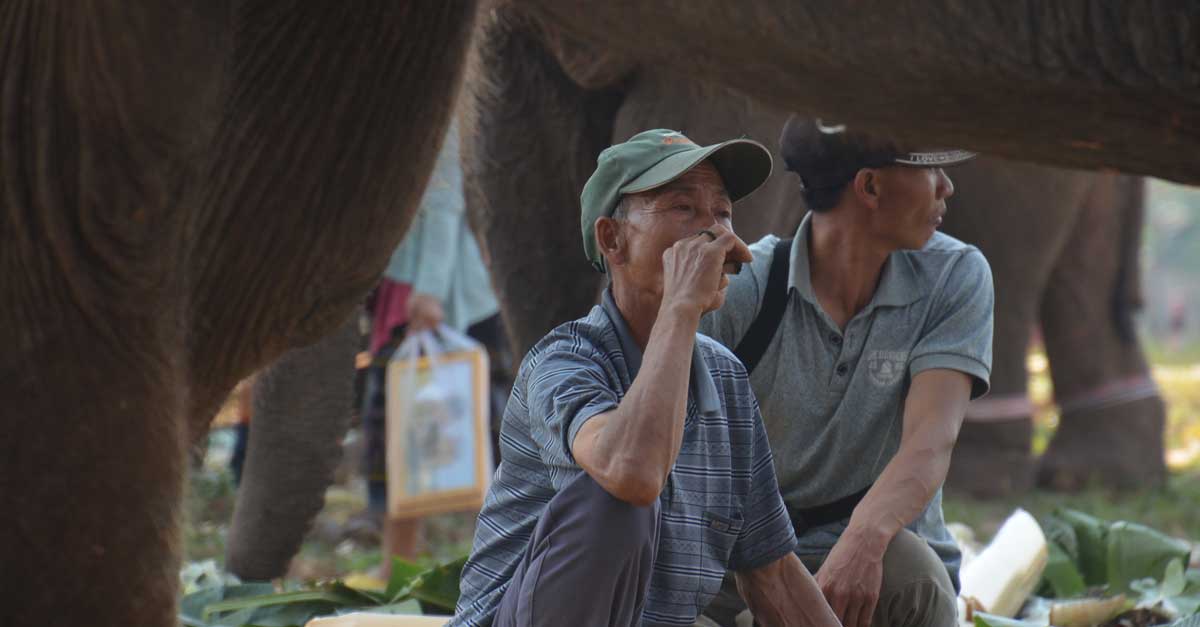
Like wildlife in biological hotspots worldwide, Laos’ wild and domesticated elephants alike are facing a time of rapid and significant change, amid increased man-made developments and a fast-changing natural and socio-economic environment, Laotian Times writes.
Lumberings & Longings: Trials, Tales As Domesticated Elephants, Handlers Adjust to A New Era in Laos
Christchurch Calamity: Laos’ PM Thongloun Offers Condolences to New Zealand, Condemns Terrorism

Prime Minister Thongloun Sisoulith on behalf of the government of Laos on Monday sent “a message of deepest sympathy” to the Prime Minister of New Zealand, Jacinda Ardern, over the mass shooting that took place in Christchurch on March 15.
Carried by Lao media outlets including state-run print media Vientiane Times and KPL Lao News Agency, the English version of the PM’s statement read:
“We are deeply shocked to learn about the mass shooting in the Masjid Al Noor and Linwood mosques in Christchurch on March 15, which caused tremendous loss of life and left many people wounded.”
“On behalf of the Lao government and people, I would like to express our deepest condolences and sympathy to Your Excellency, and the government and people of New Zealand, particularly the families of the victims of this tragic incident.”
“The Lao PDR strongly condemns this act of terrorism and stands with the international community in the fight against international terrorism in order to maintain peace and stability in the region and the world.”
“I am confident that under Your Excellency’s leadership, the government and people of New Zealand will be able to overcome this tragedy and restore life to normal.”
Climate Change: Taming the Waters in Laos’ Xayaboury Province

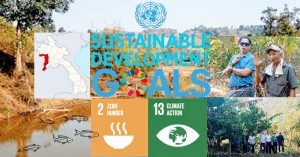
Helping farmers in their efforts to adjust to climate change in Laos’ Xayaboury Province alongside Lao government partners, The United Nations Development Programme (UNDP) was active back in 2015. Now, almost four years later, a return to one of the villages revealed how they have managed to cope with changing weather conditions.
The UNDP writes:
Vientiane – The Sustainable Development Goals, adopted by the global community in 2015, compels us at UNDP Lao PDR to take even more responsibility to ensure that our projects do not only offer a temporary sigh of relief to struggling communities in Lao PDR, but that they serve as an enduring foundation on which they can begin to build a more sustainable future for themselves.
That is why in February 2019, UNDP, along with members of the Green Climate Fund and representatives of the Ministry of Natural Resources and Environment and the Ministry of Agriculture and Forestry, took a trip to Nasom Village in Xayaboury Province to catch up with some old friends made during a project entitled “Improving the Resilience of the Agricultural Sector to Climate Change”, which was implemented between 2011-2015.
In the early 2000s, the farming population of Nasom had difficulties in adjusting to a phenomenon most of them had probably never even heard of: climate change. Although the small village nestled in a modest valley between the lush hillsides of northern Laos had occasionally suffered from floods, the usual predictability of seasons had become a thing of the past.
While the rainy seasons seemed to gradually get more intense, the dry seasons were getting hotter and drier, barely offering a shower for the rice fields of the village, which resulted in bad harvests. As rice was the primary ingredient of the rather stoic daily diet of the villagers, a bad harvest often marked a serious menace of malnutrition. Even if the farmers could feed themselves with stocks in case of a bad harvest, not being able to sell any surplus at the local market meant a significant dip in their yearly incomes.
Either too much or too little water for irrigating the paddy fields was the biggest challenge for the villagers. The project, implemented by UNDP, the Global Environment Facility (GEF) and Ministry of Agriculture and Forestry, wanted to devise a way in which they could manage and utilize the dramatically varying rates of rainfall as efficiently as possible.
The project laid out a plan to dig numerous reservoirs in the village in which the rain could be stored throughout the year. Irrigation canals were built through which the villagers could regulate the flow of the standing water to their paddy fields during different seasons.
The ponds were filled with fish to give villagers an additional source of protein. As fish like to indulge in the mosquito larvae that breed particularly in standing waters, they would also protect the villagers from the deathly threat of malaria.
When the project ended in 2014, the results were fantastic. Villagers no longer went hungry and they could once again plan their harvests despite the changing weather patterns. However, it is not uncommon in development work that such achievements slowly fade away as years pass by and the community’s lack of resources or expertise for maintenance take a toll them.
In this case, the concern proved unfounded. Even after four years, the ponds were filled with water, teeming with fish. Even the devastating floods of 2018 that ravaged each province of Lao PDR had not caused the reservoirs to overflow.
“After the project, we have lived much better. Because we have enough water to irrigate the rice fields, we are producing much more food than before”, says Mr. Khamsao, one of the beneficiaries of the project as he takes us around the reservoirs.
The successful project had created further waves in the village: Some villagers had dug their own reservoirs, carved their own irrigation canals and also filled them with fish. In the spirit of true Lao solidarity, the farmers who had originally benefited from the project had allowed others to direct water from the big reservoirs to newly constructed smaller. This water could then be used to irrigate other farm areas. As with the original project, the results had been excellent.
This kind of creative and cooperative spirit is exactly what is needed to achieve the ambitious goals outlined in the 2030 Agenda. Villagers of Nasom show that innovation not only occurs in Silicon Valley or world-class universities but is something that even deprived communities engage in, as long as they are given the opportunity to do so.

The Laotian Times reports on and supports efforts to address climate change and achieve the Sustainable Development Goals in Laos and beyond.
Triple Increase Air Alert: Vientiane, Provinces Among Latest To Bear Brunt of Regional Smog Crisis
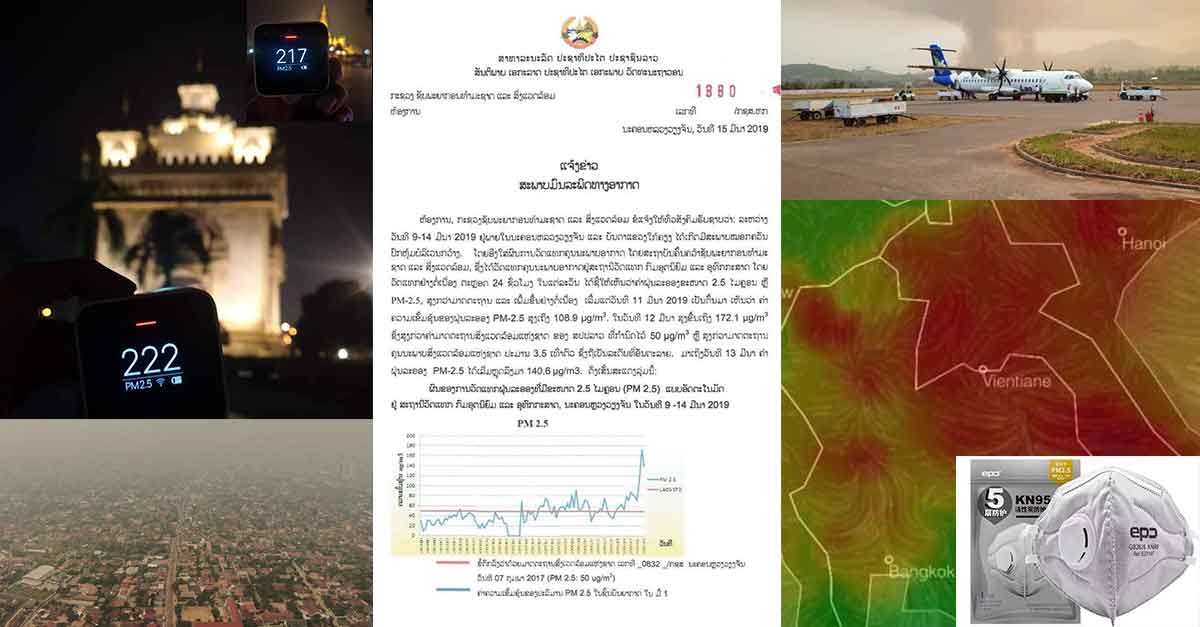
What’s been up with (and in) the air we breathe?Smoggy haze and deteriorating air quality has seen folks in Laos’ capital and beyond reaching for face masks, air filters and measuring equipment.

What they have found has been enlightening and disturbing. Air quality over much of Laos & Northern Thailand has taken a major dive with high levels of airborne particulate matter visible to the naked, eye-obscuring vision and respiration around the capital and beyond.
Multiple factors including local and transboundary emissions adding to high ambient levels propelled by air currents and atmospheric pressure are likely to be contributing to the ongoing malaise that knows no borders.
Local and transboundary sources of airborne particulate matter have been contributors, primarily forest fires in neighboring countries as well as in Laos for land clearing purposes.
#ทางของฝุ่น วิดีโอแสดงผลการพยากรณ์ฝุ่นละอองขนาดเล็กไม่เกิน 2.5 ไมครอน (PM2.5) ช่วงตั้งแต่วันที่ 10 – 12 มีนาคม 2562 (จุดสีดำคือจุดความร้อนหรือ Hotspots 48 ชั่วโมงที่ผ่านมา ที่คาดว่าเกิดจากการเผา ที่เซ็นเซอร์ MODIS จาก NASA ที่ตรวจจับได้) #ประเทศไทยไร้หมอกควัน #HazeFreeThailand #วช #NRCT #RCCESCMU
Posted by RCCES CMU on ວັນຈັນ ທີ 11 ມີນາ 2019
Forest fires in Vientiane’s Sangthong district, now largely extinguished, have only added to the issues.
Now, the relevant authorities from the Ministry of Natural Resources and Environment have issued a report on the situation.
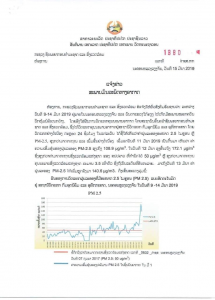
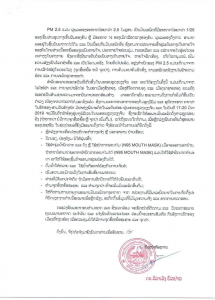
Dated Friday March 15, 2019, it reads:
“Ministry of Natural Resources and Environment announced that from 9-14 March, in Vientiane Capital and nearby provinces, reports of smog around these areas, based on the research from Institute of Natural resources and Environment who has been monitoring the density of PM 2.5 particles 24 hours per day.
The results showed that PM 2.5 particles had been much higher than the average and had been increasing rapidly through the 14th.
On 11 Mar, Total suspended particulate was 108.9 µg/m3; on 12 Mar, 172 µg/m3; On 13 Mar, 140.6 µg/m3
The average of particles in Laos that the government determined is 50 µg/m3.
The TSP now is higher than this standard by 3.5 times.
The tables show the results of monitoring PM 2.5 automatically at the meteorological station from 9-14 Mar
The tables show the results of monitoring PM 2.5 automatically at the meteorological station from 9-14 Mar
The causes of this situation are from the forest fires and deforestation for agricultural purposes at Sangthong, Sikottabong, Nasaythong Districts, and also the airborne matter from neighboring countries.
At present, the situation is improving because forest fires are being extinguished.
Based on the weather forecast that during 17-20, there will be rain in some areas in Vientiane Capital which will make the situation better (if people don’t burn garbage and there are no more forest fires).
“Particulate matter 2.5 (PM2.5), refers to tiny particles or droplets in the air that are less than 1/25 of human’s hair radius or 1/2 of the erythrocyte.
Particles in the PM2.5 size range are able to travel deeply into the respiratory tract, reaching the lungs where can lead to a respiratory syndrome, wheezing, allergy and can lead to cancer.
In General, PM 2.5 came from burning in open area (burning garbage or deforestation), from vehicles and transportation, factory emmissions and thermal energy production.
However, To prevent health concerns and minimize risks, the members of the public are suggested to:
1. Try not to do outdoor activity,
2. Close door and windows
3. Wear a wet mask or N95 mouth mask before going outside the house. If you don’t a have a special mask, you can wear a double mask instead.
4. Drink more water
5. If you experience respiratory issues, go to a hospital or seek professional medical advice immediately.
6. Don’t burn garbage and deforest as it leads to increased particles in the air.
7. Follow the news from registered units to avoid fake news.”

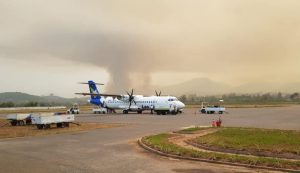
Smoke from Fires Visible At Oudomxay Airport (Lao Youth Radio)
Haze of Smog Hovers over Laos’ Capital, Citizens Concerned about Health Risks
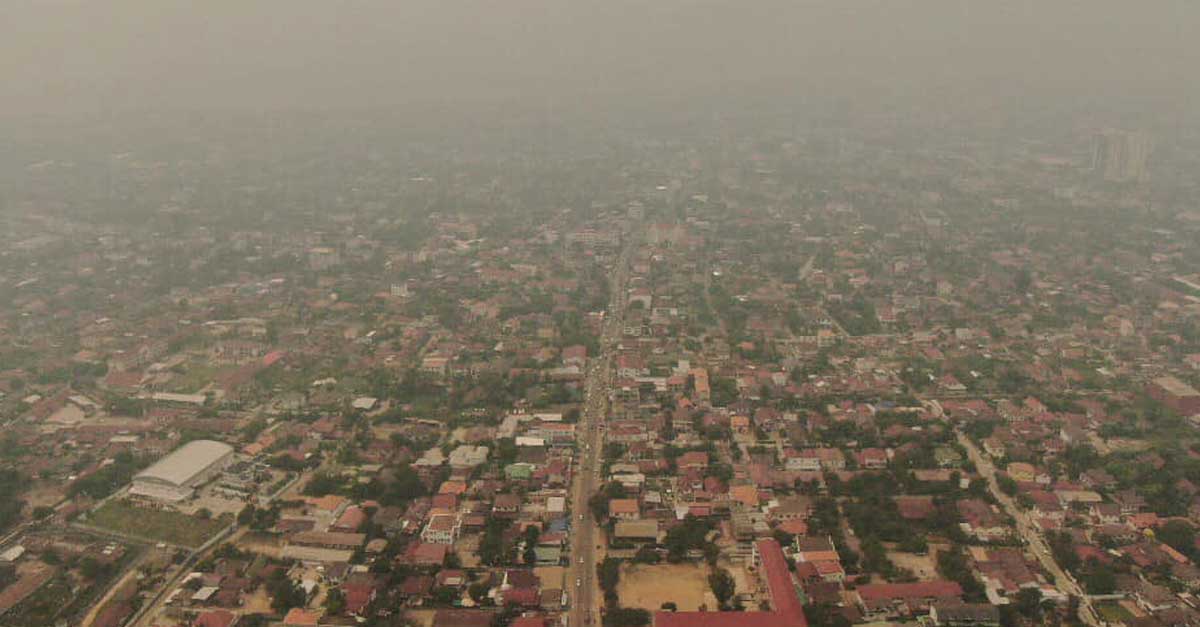
An unhealthy haze of smog has descended upon the capital city of Vientiane and air pollution has been noted in several other provinces around Laos.
Concerned local and international residents have been monitoring the situation, posting online their own amateur updates on the local levels of atmospheric particulate matter (PM) using measuring devices.
These measurements tell a similar tale. Air quality in the past few days appears to have reached dangerous levels for human health.
While the Lao government has not yet made any announcement regarding the smog, the Laotian Times office was able to contact the Pollution Management Department, Ministry of Natural Resources and Environment.
According to officials at the department, unhealthy levels of pollution have been detected. However, they state it is expected that within two or three days the situation will have improved.

The major source of the smog is said to be a forest fire in Sangthong District, Vientiane Capital, which has now been extinguished.
Lao citizens and foreign residents alike have voiced concerns about the smog, and social media has been flooded with information of varying reliability.
Many have taken to purchasing their own air quality reading devices, and many have looked to Thai websites for information on how best to deal with the problem at home.
It follows a famous case of dangerous smog that was reported in Bangkok this February, with schools closing and workplaces shut down due to particulate matter levels at PM2.5 (referring to particularly dangerous particulates measuring 2.5 micron in diameter or less).
Thailand’s Chiang Mai has also been hit with smog this month and was forced to ground flights, and was believed to be world’s most polluted city in terms of air quality for three days running.
This situation was monitored closely by people in Laos, who have raised questions as to why schools and workplaces have not been given any instructions by the authorities here.
Meanwhile, the possibility of rain over the next few days could provide some respite for the capital, if not the other provinces depending on where it falls.
Photo: Aleqs Log
Women’s Day, Sporting Week: Girls & Ladies’ Participation Lifts Levels, Spirits In Laos

International Women’s Day 2019 (and the associated national holiday, this year in long weekend form) has come and gone for another year, but the memories made participating in 2019’s festivities linger.
Safety First: Lao Airlines Flight to Shanghai Heads Back to Vientiane’s Wattay Airport For Brake Check

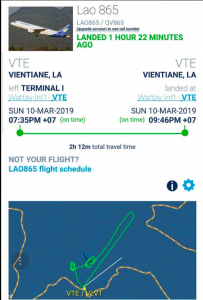
Mechanical investigations have followed after a brake system warning led to a Lao Airlines flight from the capital to China’s city of Shanghai returning to Vientiane’s Wattay International Airport Sunday.
The aircraft conducted loops above the Nam Ngum Reservoir to burn up fuel before attempting its landing at Vientiane’s Wattay Airport, which it did safely, Aviation site Aerolaos reported.
ລາຍງານເພີ່ມກ່ຽວກັບຖ້ຽວບິນຂັດຂ້ອງ: ທີ່ ສະໜາມບິນວັດໄຕ ນະຄອນຫຼວງວຽງຈັນ, ໃຫ້ຮູ້ວ່າໃນເວລາ 21:00 ຄໍ່າຄືນຂອງວັນທີ 10/3/2019…
Posted by AeroLaos on ວັນອາທິດ ທີ 10 ມີນາ 2019
While rescue units had been readied, the 129 passengers and crew of the Airbus A320-214 were returned to their departure point at Wattay safely, with plans being made to reschedule flights amid disruption to passengers business and recreational travel plans.
Act Green for Greener Mekong River As Efforts Rewarded via Social Media

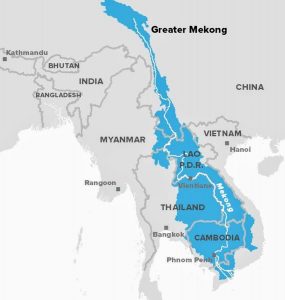
The Mekong River is a source of water for millions, the world’s most productive freshwater fishery, and a lifeline shared by people of five nations. What better reasons to “Act Green for a Greener Mekong”?
Now, our own green actions have a chance to be recognized and rewarded as the region celebrates Mekong Day on 4 April 2019.
To be eligible for a reward, first you’ll have to be a fan of the Mekong River Commission on Facebook.
After that, all you have to do is:
a) take a photo or/and video of your green action.
b) post on your Facebook in public mode with hashtags #GreenMekongDay and #MekongRiverCommission.
You can share with what are you doing to achieve green goals such as to reduce plastic bags, recycle waste and encourage others to be green and create as many posts on these topics as you’d like until March 29, 2019.

The MRC will select each week top 10 of Facebook posts with the most interactions (likes, shares, and comments) to select one Winner of the week who will receive a prize of US$50.
The top posts/photos/videos will be showcased at a ceremony for Mekong Day 2019 in Vientiane, Lao PDR.
Please spread the word to your friends. And let’s act for a greener Mekong!
#GreenMekongDay #MekongRiverCommission #MRC
Mekong (Lancang) River Basin