Home Blog Page 6351

Assembly Outlines Plans for Govt to Spur Growth, Revenue Collection

National Assembly (NA) members have called on the government to improve public services, cut lavish spending and plug revenue leaks in an attempt to boost growth and revenue collection.

Law makers attending the Assembly’s ongoing debate session are mulling the government’s proposal to revise the next four-year national socio-economic development plan (2017 – 2020), which seeks to lower economic growth forecasts.

The proposed plan would lower the annual economic growth target of at least 7.5 percent as outlined in the original five-year national socio-economic development plan (2016-2020) down to 7.2 percent for 2017-2020. The proposed revision came after growth in the 2015-16 fiscal year was recorded at 6.9 percent and revenue reached only 95 percent of the plan.

NA President Ms Pany Yathotou asked why the policies and measures formulated to realise the national socio-economic development plan had not been fully implemented to deliver good public services and boost investment and trade.

Have state administration mechanisms provided incentives for business operators and the people?, she asked.

Ms Pany said public services provided by state departments had been slow. She noted that in Vietnam it takes only three days for an investment licence to be approved, while in Laos it can take up to a year for some projects to be approved.

How can we compete with other countries in a time of economic integration?, she asked. Ms Pany called for members of parliament to share their views on how to remove barriers and streamline procedures to expedite processes to ease trade and investment.

NA members noted that the so-called one-stop service the government had introduced several years ago still consisted of many steps and remained time-consuming.

NA member for Saravan province, Mr. Savankhone Razmountry, called for the Ministry of Finance to expedite the formulation of regulations to manage expenditure and revenue collected from state services.

He also called for the inclusion of the plan to switch from analogue to digital broadcasting transmission by 2020 into the four-year development plan. He said lessons learnt by other countries showed that service charges for viewing television generated considerable revenue.

NA member for Phongsaly province, Mr. Kongchi Yangcheu, disagreed with the proposal to lower growth targets for the remaining four years given that the original five-year plan (2016-2020) had only been in effect for one year even though it had failed to meet the target.

He added that the new government had only been in office for six months and since it had been strengthening its administration, there was opportunity to maximise all potentials and pursue the 7.5 percent growth target.

He suggested that the government strictly enforce the rule of law to ensure that revenue was fully collected.

In previous years, we haven’t strictly enforced financial discipline. Many people found guilty [of fraud] weren’t prosecuted. This will become a severe cancer blocking us from attaining targets if left unaddressed, he said.

He praised the government for recently bringing to justice many of those involved in fraud.

Mr. Kongchi recommended cutting the ballooning spending on sports competitions and instead using the money to build infrastructure.

He also stressed the need to reduce the number of civil servants, saying that the ratio of 2.8 civil servants for every 100 citizens was high and forced Laos to carry a heavy burden with regard to salary payments. It has been reported that in most countries the average ratio is less than two public servants per 100 people.

NA member for Oudomxay province Mr. Bounlort Onphachanh asked the government to do more to collect all the land taxes owed, noting that the amount collected fell far short of the potential.

He said concrete incentives were needed to promote small and medium enterprises, adding that these businesses were critical to drive the country’s growth.

Given the current budget constraints, NA members agreed that the government should be more frugal.

NA member for Attapeu province, Mr. Leth Xayaphone, called on the government to curb lavish spending on vehicles used by high-ranking officials.

He also asked the government to carry out in-depth assessments of proposed development projects before approving them, noting that some were not particularly necessary but approval was granted anyway.


Source: Vientiane Times

Mekong Countries Discuss Measures to Boost Region’s Development

Leaders of the five Mekong countries discussed measures to promote cooperation and make the region more dynamic and competitive at the two summits that convened in Hanoi yesterday.

The capital is hosting both the 8th Cambodia-Laos-Myanmar-Vietnam Summit (CLMV 8) and the 7th Ayeyawady-Chao Phraya-Mekong Economic Cooperation Strategy Summit (ACMECS 7).

The CLMV 8, themed Seize Opportunities, Shape the Future, focuses on opportunities and challenges for economic development of the four participating countries, and measures to boost their cooperation in improving competitiveness and regional integration.The ACMECS 7, themed Towards a Dynamic and Prosperous Mekong Subregion, discusses stepping up cooperation among the ACMECS member countries – Cambodia, Laos, Myanmar, Thailand and Vietnam – to narrow development gaps in the Mekong sub-region and to ensure sustainable development.

Addressing the opening ceremony, Vietnamese Prime Minister Nguyen XuanPhuc said the CLMV and ACMECS have contributed to important achievements, such as promoting the socio-economic development of each country , helping with the establishment of the Asean Community and aiding peace and stability in the region.

Mekong countries have become a growth driver for Southeast Asia, and seen as one of fastest growing regions in the world, he said.

We are presented with excellent opportunities for the development of CLMV and ACMECS. At these summits, we will discuss a new landscape and together work out ways and means to build dynamic and competitive economies with sustainable and inclusive growth, Phucsaid.The PM noted that the government of Vietnam attached great importance to CLMV and ACMECS cooperation and is willing to work closely with member countries and development partners for peace, stability, sustainable development and prosperity of the region.

Leaders of other countries, including Cambodian PM SamdechTechoHunsen, Lao PM ThonglounSisoulith, Myanmar President HtinKyaw and Thai Deputy PM SomkidJatusripitak also talked about the importance of ACMECS and CLMV within the ASEAN. They believe that promoting the two co-operation mechanisms will improve connectivity in ASEAN and strengthen the ASEAN community, which will help fix the development gap in the region, cope with challenges the region faces, improve social welfare and the standard of living of the people.

United Nations (UN) Under General Secretary ShamshadAkhtar said the Mekong region has gained a certain position in the world because of its achievements in economic growth and social advancement. The CLMV is an indispensable part of the ASEAN and related mechanisms and the UN will continue helping the region to achieve the goal of sustainable development, she said. Vu Tien Loc, chairman of Vietnam Chamber of Commerce and Industry, said the governments of all member countries must speed up administrative reforms and mechanisms and human resources training to create favourable conditions for trade and investment.

Trans-national corporations and development partners should work closely with governments and invest more resources to improve capacity and connectivity of small- and medium-sized businesses, particularly those in the field of agriculture, so that they don’t lag behind in the development process, Loc said.

Proposing measures to boost co-operation between the Asian Development Bank (ADB) and CLMV and ACMECS, a bank representative said ADB will continue supporting CLMV countries in matters relating to infrastructure development, private investment, policy, mechanism, transport and trade. The bank will also co-operate with the CLMV and ACMECS to help in disease prevention and climate change adaptation, he said.

Leaders of the Mekong countries released a joint statement of the CLMV 8 and the Hanoi declaration of the ACMECS 7.


Source: Vientiane Times

Irrawaddy Dolphins Functionally Extinct in Laos

Irrawaddy dolphins at Koh Kon in the Mekong River. Photographed during dolphin population research conducted by WWF Cambodia's Mekong Dolphin Conservation Project in November 2007.

Bangkok — The population of critically endangered Mekong River Dolphins — also known as Irrawaddy Dolphins —  in the Cheuteal trans-boundary pool between southern Laos and northern Cambodia has shrunk by 50 per cent this year alone and the population is functionally extinct in Laos, according to WWF.

WWF survey teams from Laos and Cambodia conducted a dolphin abundance survey and confirmed the current number and breeding status of the dolphins in the transboundary pool. Down to just three individuals – from six just earlier this year – there is now little hope for a reversal of the situation, as the small population is no longer viable.

“Functional extinction” results when there are too few potential breeding pairs available to ensure the survival of the population.

The use of gill nets — especially unmanned gill nets — is thought to be one of the main reasons for the demise of the dolphins. Gill nets are vertical panels of netting set in a straight line across a river to catch fish. Being large aquatic mammals, Mekong River dolphins – as well as other endangered aquatic species– are often caught in gill nets, and drown as a consequence.

The use of gill nets in the Mekong River is prohibited in Cambodia – where there are an estimated 80 dolphins – but not in Laos. Only the actual deep pool off Hangsadam Village, where the dolphins are, is protected. Gill nets are, however, used directly outside of the pool where the dolphins often swim and risk being trapped.

WWF calls for an immediate ban on all gill nets for a two kilometers radius around the Cheuteal Pool and increased enforcement against violators. The size of banned nets would increaase to 4 km during the rainy season. WWF also calls for increased enforcement of gillnet bans in other Mekong River dolphin pools to protect the remaining dolphin populations.

“The alarming decline of Mekong Irrawaddy dolphins in Laos that we have witnessed this year is tragic.  At this stage, we fear that in a year or two, there may be no more dolphins in Laos,” said Teak Seng, WWF Conservation Director for the Greater Mekong.

“The loss of this iconic species for Laos is even more tragic given that it was entirely preventable through strict enforcement against gill net fishing,” Seng added.

The Irrawaddy dolphins in the Mekong River have long been a favorite attraction among travelers and tourists in southern Laos.  Their feared disappearance from Lao waters may cause a hard blow to eco-tourism in the area.

Irrawaddy dolphins can be found in some coastal areas in Asia but there are only three freshwater subpopulations, in the Ayeyarwady River in Myanmar, the Mahakam River in Indonesia, and the Mekong River in Cambodia and the Lao PDR.

Source: WWF

President Greets Austria on National Day

President Bounnhang Vorachit on Oct 25 sent a message of congratulations to Mr. Karlheinz Kopf, the Joint Acting President and President of the National Council of the Republic of Austria on the occasion of National Day of the republic.

The message read: “On the occasion of National Day of the Republic of Austria, on behalf of the Lao people and on my own behalf, I would like to convey to Your Excellency, and through You to the people of Austria, my heartfelt congratulations and best wishes.

I am convinced that the friendly relations and cooperation so happily existing between our two countries, both in bilateral and multilateral frameworks, will flourish and be further strengthened in the coming years for the benefits of our two people and for that of international peace and development cooperation.”


Source: KPL

Lao, Vietnamese Prime Ministers Hold Talks in Hanoi

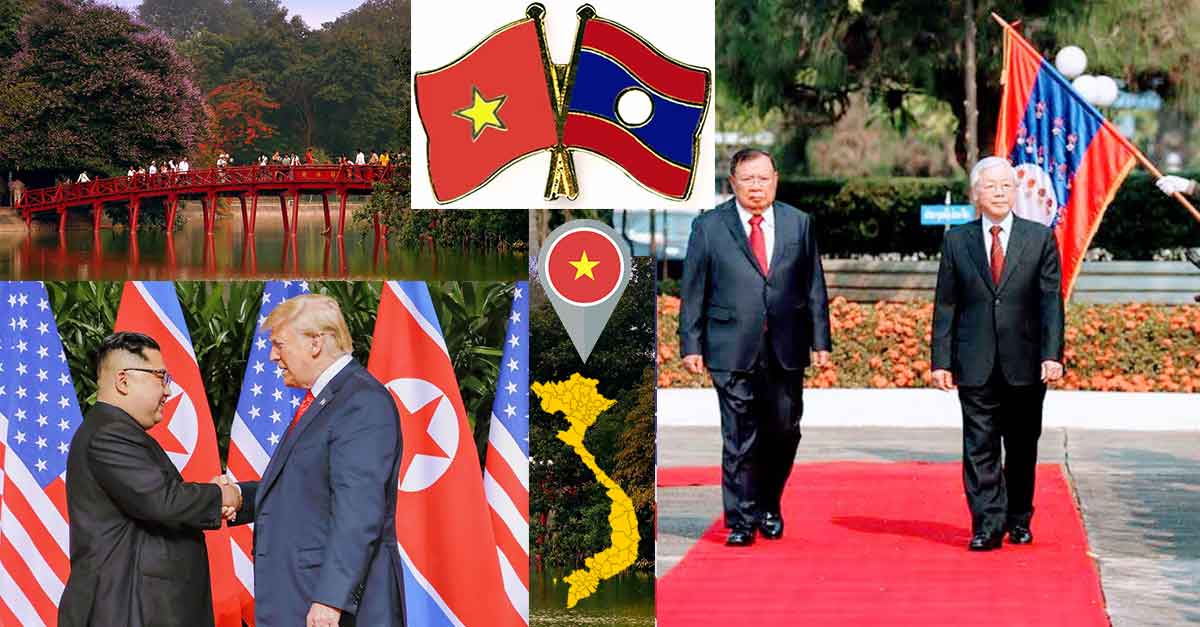
Prime Minister Nguyen Xuan Phuc had talks with his Lao counterpart Thongloun Sisoulith in Hanoi on October 25 and thanked him for the sympathy he extended for the victims of the damage caused by flooding in the central region of Vietnam.

The talks were held on the occasion of the Lao PM’s participation in the seventh Ayeyawady-Chao Phraya-Mekong Economic Cooperation Strategy (ACMECS 7) Summit, the eighth Cambodia-Laos-Myanmar-Vietnam Cooperation (CLMV 8) Summit, and the World Economic Forum on the Mekong Region (WEF-Mekong) in Hanoi.

PM Nguyen Xuan Phuc said the Lao PM’s presence contributed to the success of these events.

He congratulated Laos on its successful organisation of the 28th and 29th ASEAN Summits as the ASEAN Chair, expressing his belief that the Lao Government would fulfil its set tasks and the Resolution of the 10th Congress of the Lao People’s Revolutionary Party.

He also praised PM Thongloun Sisoulith’s recent dialogue with Vietnamese businesses and his pledge to create favourable conditions for Vietnamese investors in Laos.

The two government leaders agreed to task the two Ministries of Industry and Trade with devising solutions to boost bilateral trade and improving the Vietnam-Laos border trade agreement.

They also pledged to urge Vietnamese enterprises to carry out projects, particularly those on hydropower and mining, in Laos on schedule.

For his part, PM Thongloun Sisoulith extended condolences to the Party, State and people of Vietnam over the heavy damage inflicted by flooding in the central region.

He applauded Vietnam’s initiative to organise the WEF-Mekong and thanked Vietnam for its support of Laos in fulfilling its role as ASEAN Chair in 2016 and in successfully organising the ASEAN Summits last September.

PM Thongloun noted that Vietnam’s investment is on the rise in Laos and has considerably contributed to local socio-economic development, underling the fact that Vietnam currently ranks third among foreign investors in Laos.

Both leaders agreed that the two Governments would set up a committee for organising activities to mark the 55th anniversary of the founding of the countries’ diplomatic ties and the 40 years since the signing of the Laos – Vietnam Friendship and Cooperation Treaty.

They also agreed to set up a specific mechanism for their meetings and attend sessions of the Inter-governmental Committee on Cooperation so as to swiftly tackle problems in bilateral relations.


Source: KPL

Macroeconomics Lack Strong Foundation, Prime Minister says

Briefing the 2nd Ordinary Session of the National Assembly on Monday, Prime Minister Thongloun Sisoulith said that the national macroeconomic foundation was not strong enough and several risks have been identified, especially those related to the state budget and foreign exchange balancing budget.

PM Thongloun noted in his ten-page report on the implementation of the National Socio-Economic Development Plan, the State Budget Plan, and Currency Plan as well as targets for months to come that the financial and monetary tools necessary to ensure that the market-oriented management of cash flow are limited.  Meanwhile, the implementation of the financial and monetary policies is not as effective as required.

The state budget still lacks liquidity and faces a deficit with the collection of revenue failing to meet targets and the collection of revenue and budget spending still face problems of corruption, the management of the state budget spending is not being conducted in a thrifty and effective manner, the accumulative public debt remains huge in number and unresolved, and the violation of planning and monetary rules is yet to be decisively stopped.

Most state enterprises lack business liquidity and need diligent reforms. Private businesses seem to be apathetic due to lack of financial liquidity, and most banking institutes are filled with short-term deposits.  As a result, they cannot respond to the demands of national development and access to financial sources remains a challenge for small and medium enterprises.  The capital market is yet to be effective.

The report by the prime minister also suggests that the development of education in rural areas remains a challenge as inadequate school operating budgets have been identified as a problem along with a lack of libraries, laboratories and textbooks, poor teaching quality as well as challenges in the development of health services and labour skills.

PM Thongloun proposed that the National Assembly approve an adjusted socio-economic development plan designed to achieve an annual economic growth rate of 7-7.5 per cent for the next four years.

The proposed development plan urges annum economic growth to be 7 per cent for both 2017 and 2018, and 7.3 and 7.5 per cent for 2019 and 2020, respectively.

He said that the adjustment of the government’s plan aims to address a number of issues and was based on in depth and realistic analyses and discussions at the plan.

Source: KPL

China-Laos Railway to Become a Demonstration Project

China-Laos railway will be built to become a demonstration project in “Go Global” strategy, said Chinese companies participating in a symposium held in Vientiane on Monday.

At the symposium, Zhao Xiang, Director General of the Laos-China Railway Company provided relevant information on Lao taxation, project investment, visa processing, personnel issues, among others.

Meanwhile, Chairman of the Laos-China Railway Company Huang Difu put forward specific requirements for units involved in the construction of the multibillion dollar railway project.

Chen Shiping, Director General of China Railway International Group vowed to send skilled personnel, use advanced construction technology and management models in order to complete the project with high quality, making China-Laos railway a demonstration project in China’s “Go Global” strategy in railway sector and the “Belt and Road” initiative.

Meanwhile, signing ceremony of tender contracts for the second phase of the China-Laos railway project was held in Vientiane. The signing included 11 contracts on civil engineering, construction supervision and third-party testing.

The China-Laos railway has a total length of over 400 km, linking Mohan-Boten border gate in northern Laos and Vientiane Capital. Operating speed on the route is designed at 160 km per hour. Kicking off in late 2015, construction of the project is scheduled for five years with investment of about 37.4 billion Chinese yuan.


Source: KPL

Lao Economy Forecast To Grow 7 Per Cent For 2016/2017

The World Bank (WB) recently forecast that the Lao economy would grow at 7 per cent in 2016 and 2017, ranking second in Southeast Asia, behind Myanmar.

However, the growth is estimated at only 6.8 per cent in 2018, Vietnam News Agency (VNA) reports.

Senior economist Libo Libuapao from the National Economic Research Institute said the Lao government has revised down the growth rate to 7 -7.3 per cent from 7.5 per cent in 2016-2017 due to the world economic downturn.

Notably, the Chinese economic slowdown also hurt Lao exports to the country as well as reduced Chinese direct investment in Laos.

Earlier, Lao Deputy Prime Minister and Finance Minister Xomdi Duangdi affirmed that the Lao government has set the goal of achieving economic growth at least 7.5 per cent per year during the implementation of the national socio-economic development scheme for 2016-2020.

To that end, the agro-forestry sector must grow 3.2 per cent, industry up 9.3 per cent and services up 8.9 per cent annually, and the total capital inflow into Lao projects must reach US$27 billion during the period.

According to the WB, the Southeast Asian economy this year will expand 5.8 per cent from 2015 and 5.7 per cent in 2017 and 2018.


Source: BERNAMA