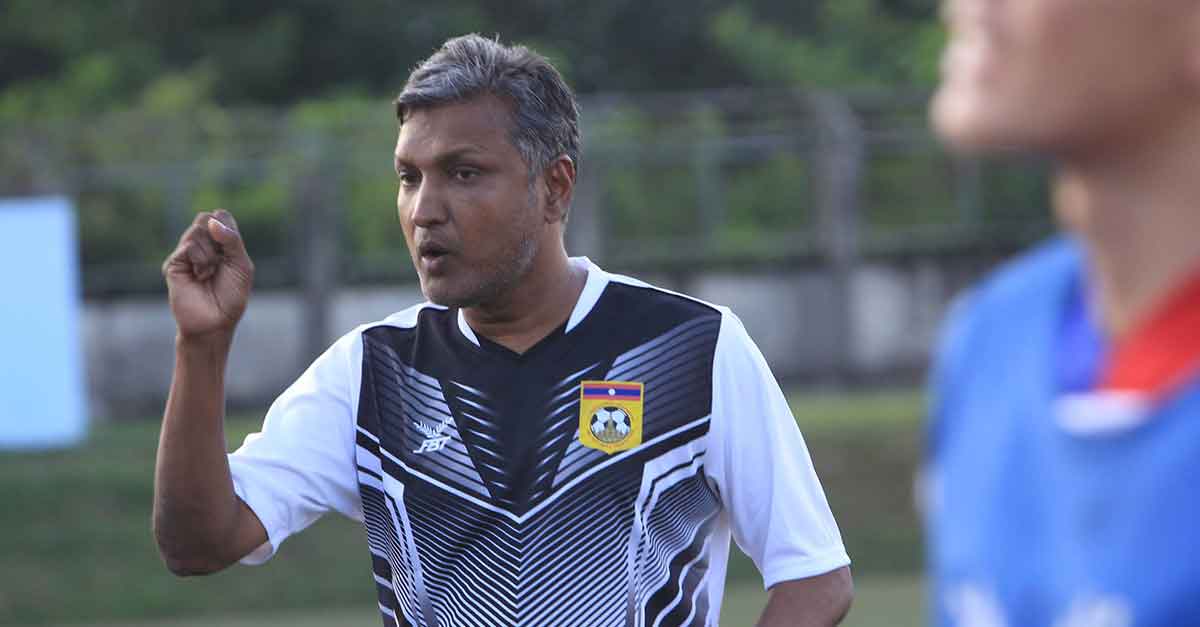
Famed for audacious feats on the field on behalf of his native Singapore as a striker in the late 1980’s and into the 1990s, the former player now coach V. Sundramoorthy is set to guide a Laos national men’s team on the rise ahead of the 2018 AFF Suzuki Cup.
Known for a penchant for scoring from bicycle kicks and backheels that left opponents guessing in his playing days, Laos fans would be forgiven for hoping a bit of the coach’s trademark flair rubs off on their national team.
The V. Sundramoorthy appointment comes as Laos prepares to square up against Mongolia in the Lao capital Vientiane on October 16 in a warm-up friendly before the AFC Suzuki Cup.
The 53-year-old coach has declared that Laos must take full advantage of being able to play two of their four home matches on home soil for the first time.
“I can’t speak for the players but for me it’s very exciting and I’m really looking forward to the challenge,” AFC Suzuki Cup official website reported V. Sundramoorthy as saying.
“To be honest I know we are in a tough group with Vietnam, Malaysia, Myanmar and Cambodia however I believe that in football anything is possible.
“What I can assure you is that each and every player will give their best and that the team will play collectively as a strong unit and by hosting the AFF Suzuki Cup it gives us a great opportunity for Laotians to showcase their talent to the public.
“We have many young and talented players here in Laos and the aim will be to use their individual strength to forge a collective strength as a team.
“For me, I want to send a clear message to our fans and that’s we need you to be the 12th player on the pitch by lending your strong support.”
“We are going to take things one game at a time and put up a good performance in every match we play and as I said it will also be great to have the support of the local crowd behind the players. If we do that I can promise you that we will be a tough opponent for any team.”
“Laos have now got a good coach with valuable international exposure on a three-year contract. This brings stability to the Laos national team and is a huge step forward,” Wong reportedly told FOX Sports Asia.
“Sundram knows the regional opponents well and he will groom the next generation of Laos youngsters to be ready for national team duty.”
Laos Vs Mongolia, October 16 18:30 in Vientiane, Laos coached by V. Sundramoorthy of Singapore.
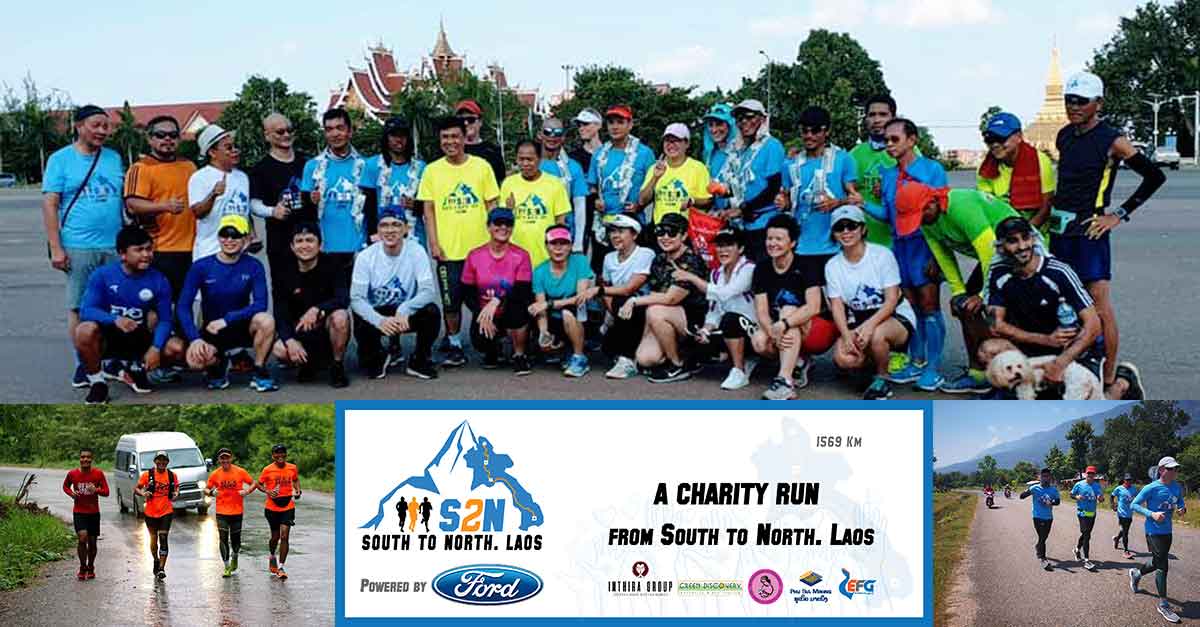
South 2 North Run for Attapeu Provincial Hospital, Luang Prabang Children's Hospital
A run from one end of Laos to the other arrived in the nation’s capital Vientiane Sunday afternoon for a good cause – improving health care at both ends of the country.
Locals on foot, bicycle and other forms of transportation could be seen joining the long distance runners on their journey past city landmarks like That Luang stupa, Patouxai Victory monument and down to the Mekong Riverside via live video footage shared by organisers on Facebook.
The event is being held to raise money for Attapeu Provincial Hospital and Luang Prabang Friend’s Hospital For Children.
According to the organisers, South to North charity run (Attapeu to Phongsaly) is the biggest feat ever to be pursued in Laos.
The group of dedicated and concerned runners is to take an exciting journey by running 1,569 km within 16 days starting 7th-26th October 2018.
• Purposes of this campaign/Beneficiaries:
To raise fund to support provincial hospital in Laos:
Attapeu Provincial Hospital and Luang Prabang Children Hospital
• When and Where?
Starting from the South, Attapeu province up to the North, Phonsaly Province of Laos – a Total running distance of 1,569 KM over the course of 16 days, starting from the 7th Oct – 26 Oct 2018.
• Who are the runners?
There four main runners: 1. Mr. Inthy Deuansavanh (Lao), 2. Mr. Carlo Bacalla (PHL), 3. Mr. Daniel Ose (GER), and 4. Mr. Carl Loyd Fernican (Ban Der) (PHL).
In addition to these four runners, there are also numbers relay-runners who will be joining the distance along the 1,569 KM route.
• How can people help?
There are 3 ways to support this campaign:
1. Become one of our sponsors (Please see the sponsorship packages)
2. Raise funds in your organization, group or association and donate to this charity
3. Donate individually via our Crowdrise Page ‘South to North Laos Charity Run’ https://www.crowdrise.com/…/campaign/south-to-north-laos-ch…
Or via bank transfer. Details below:
You can donate directly via the bank transfer:
• Transferring note “Donate to S2N”
• Please take a screen capture of your transfer slip and send along with your photo to our Admin’s Whatsapp +85620 99 862 688.
• We will post on S2N Facebook Fan Page to appreciate your kindness and also inspire others to donate for this good cause.
Bank name:
BCEL Bank Acc Name: Events for Good
Acc (Kip): 010-110-001-140-755-001
Acc (USD): 010-110-101-140-755-001
Read the opinion piece forInternational Day for Disaster Risk Reductionin full below…
———-
Risk-informed Development
Assessing damages, losses and needs following a disaster
is the first step towards preventing and reducing
the impact of future natural hazards
by UN in Lao PDR, World Bank in Laos, EU in Laos
“We mark the International Day for Disaster Risk Reduction and the ASEAN Disaster Management Day every year on 13 October.
In Lao PDR – in the aftermath of tropical storms Sontinh and Bebinca and floods across all provinces – this day gives us an opportunity to raise awareness on disaster risk reduction, while securing and sustaining the participation of all.
This year’s theme of “Reducing disasters’ economic losses” is more relevant than ever, and a key agenda item for Lao PDR.
One of the three criteria for the country’s graduation from Least Developed Country status by 2024 is the Economic Vulnerability Index, which measures resilience to shocks and instability. There are concrete opportunities for Lao PDR to achieve this target by making disaster risk reduction an integral part of its development trajectory.
We jointly support this ambitious goal by working in close partnership with national and international stakeholders, as well as local communities.
Building back better
After a disaster, the primary focus is on how to respond to the needs of the affected communities and recover quickly and effectively. Reconstruction needs to be aligned with the principles of building back better, not only to ensure that livelihoods can be restored quickly but also to reduce the risks of future disasters. Doing so ensures that people are better equipped and better prepared to withstand shocks.
Global evidence shows that when countries rebuild stronger, faster and more inclusively, they can reduce the magnitude of the impact of future disasters on people’s livelihoods. During disaster recovery and reconstruction, risk management can be integrated across many sectors. Examples include implementing climate-resilient agricultural practices, reinforcing critical infrastructure, integrating risk management into investment decisions and budgets, and strengthening risk reduction policies.
Cooperation and innovation for response and recovery
Before reconstruction can start, it is crucial to assess damages, losses and needs, including the resources needed for the recovery phase. The Government of Lao PDR launched a nationwide Post-Disaster Needs Assessment on September 24th to inform the development of a Disaster Recovery Framework. This framework ensures that the response phase links up with early-, medium-, and long-term recovery activities and facilitates coordinated support from the international community, civil society, and the private sector.
The Post-Disaster Needs Assessment follows a well-tested methodology developed by the United Nations Development Group, the World Bank and the European Commission, and underpins cooperation mechanisms between agencies with complementary capacities.
It includes innovative approaches – such as satellite imagery to collect “big data” that can allow rapid geographic and spatial analysis.
The process is led by the Government out of the Ministry of Labour and Social Welfare and is inclusive of all stakeholders, including vulnerable social and ethno-cultural groups.
Risk-informed development
The shared goal is for Lao PDR to better address and contain the impact of future disasters.
Reaching this objective requires better integrating risk management into vulnerable sectors, strengthening preparedness and exploring innovative financial solutions, such as disaster risk insurance mechanisms.
Investing in resilience pays off at multiple levels: it saves lives and reduces the magnitude of destruction and losses. It also generates co-benefits, such as improving the quality of development and promoting sustainable approaches to tackle the impact of climate change.
The Post-Disaster Needs Assessment field work is currently underway across the country, with focus on the hardest hit provinces. Findings are expected by the end of October and will inform high-level discussions on both national planning and international development assistance.
Hazards are not disasters. They can wreak havoc and become disasters when people are vulnerable. However, risk-informed development planning can ensure that vulnerability to natural hazards is minimized. This, in turn, will increase the resilience of the people of Lao PDR, so that tragedies of recent extent are contained to the extent possible.”
This article was co-authored by the United Nations in Lao PDR, the World Bank Lao PDR and the Delegation of the European Union to the Lao PDR.
Ms. Kaarina Immonen is the Resident Coordinator of the United Nations in Lao PDR and the UN Development Programme’s Resident Representative. Ms. Immonen started her career in the UN in 1991 and has been serving in the Lao PDR since 2014.
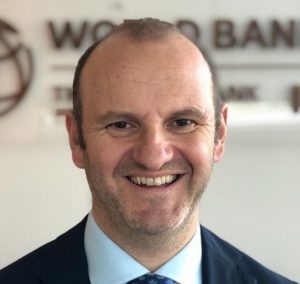
World Bank’s Mr. Nicola Pontara is Country Manager for Lao PDR. He joined the World Bank in 2000, and has been based in Lao PDR since July of this year. Mr. Pontara holds a PhD in Economics from the University of London (SOAS).
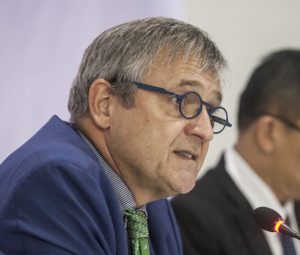
Mr. Leo Faber is the first resident Ambassador of the European Union to the Lao PDR and has been serving since 2016. Mr. Faber holds a Master’s degrees in Sinology, Classical and Modern Chinese Philology, and European History.
ASEAN Sulawesi earthquake natural disaster response
Disasters. Alas, Laos gets its fair share of natural calamities, often seen in the form of floods and the occasional typhoon.
In times of crisis and also to prevent future calamities, Laos as a least developed country has been in receipt of greatly valued assistance from a multitude of generous benefactors.
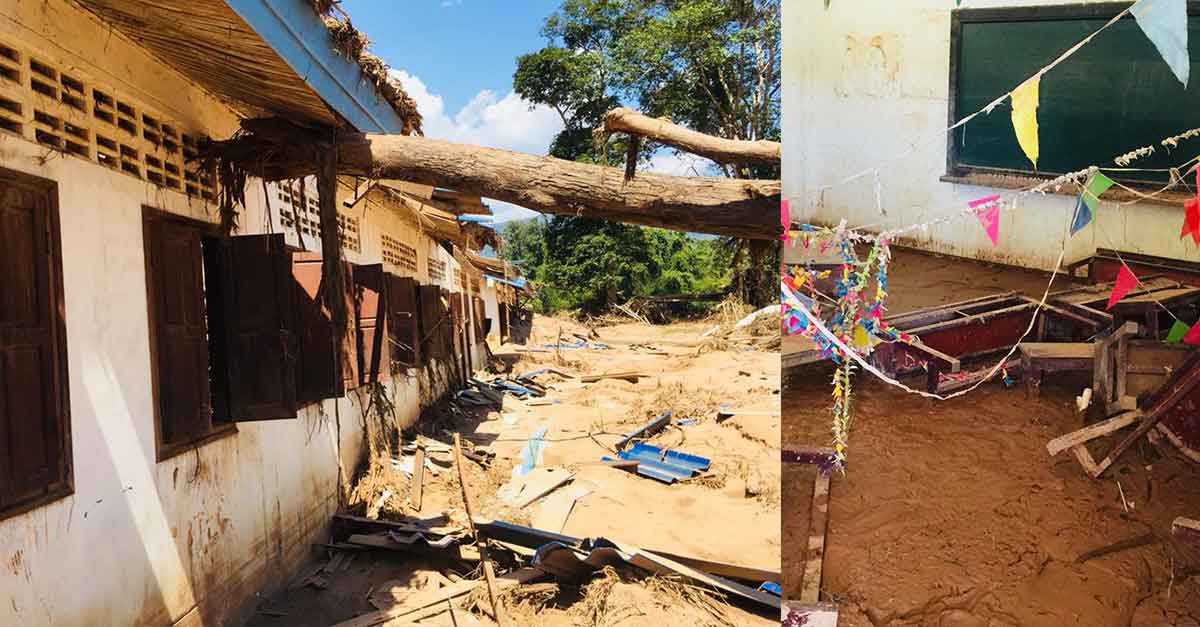
This has very much been the case in the aftermath of July 23’s dam collapse following Tropical Storm Son Tinh, resulting in flash flooding that took lives and livelihoods in the nation’s southern province of Attapeu.
What may be less known is that the country is also donor during times of crisis abroad.
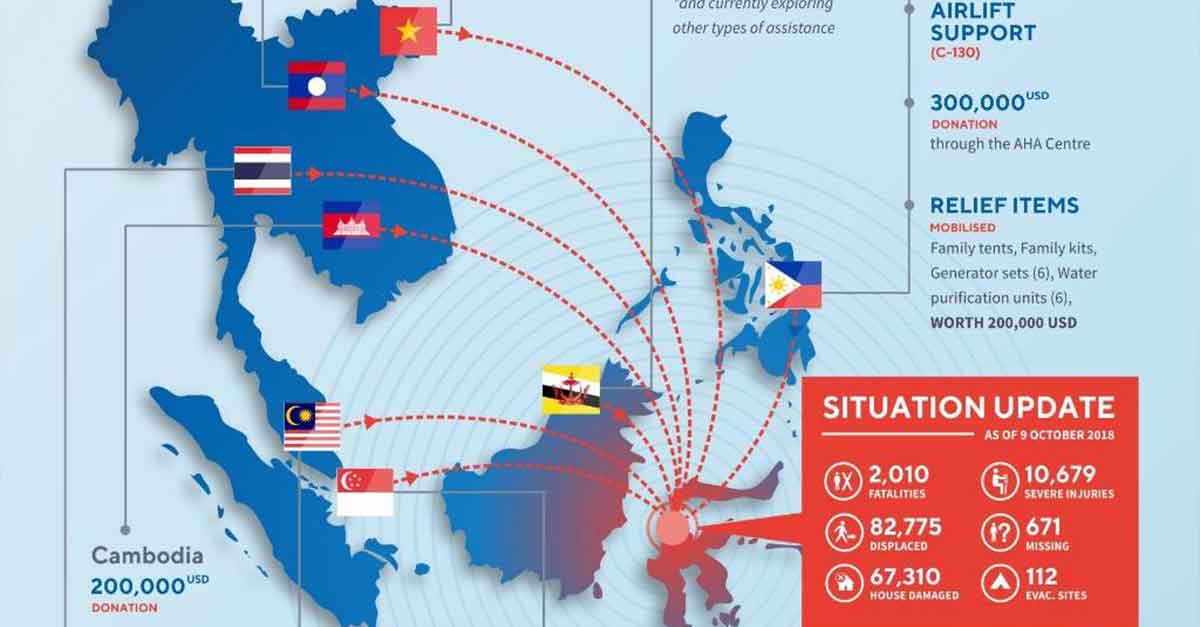
Now, as fellow ASEAN member Indonesia works to address the devastating Palu earthquake and tsunami-related natural disaster on the island of Sulawesi, Laos is also one of the contributors to the rebuilding effort.
ASEAN-wide response to Sulawesi, Indonesia earthquake, tsunami-related natural disaster relief effort.
The country has also sent assistance contributions to even more disaster-prone places like Japan, turning the traditional aid donor-recipient relationship on its head.
Laos made a contribution of funds in order to assist in flood and landslide natural disaster that hit western Japan, including much of Hiroshima prefecture earlier this year. It was not the first time.
While Laos is likely to remain a net aid recipient for the foreseeable future, it is worth remembering that we can all give a little assistance to our family, friends and neighbours in time of need.
AHA is an inter-governmental organisation which aims to facilitate cooperation and coordination among ASEAN Member States and with the United Nations and international organisations for disaster management and emergency response.
EU supports World Day against the Death Penalty, October 10, in Laos.
The European Union has restated a commitment to work with all countries including Laos to encourage moves toward achieving a global abolition of the death penalty, a government-sanctioned practice whereby a person is killed by the state as a punishment for a crime.
In a statement on October 10 to mark 16th Day Against The Death Penalty also carried in the print version of English daily Vientiane Times and other news media outlets, the European Union welcomed the fact that no sentence of capital punishment had not been carried out in Laos for more than a quarter of a century as well as a reduction in capital crimes in Laos from 18 to 12.
The EU statement read:
World Day against the Death Penalty
“Today the European Union and its Member States reaffirm their strong commitment for the global abolition of the death penalty.
The EU and its Member States encourage all states to work together and support initiatives that will help see an end to the use of this punishment, once and for all. As a sign of its unwavering support to eradicating capital punishment, the EU together with more than 60 countries agreed to step up the pace of its efforts and work towards a United Nations instrument, such as a binding convention, to stop the trade in instruments for torture and the death penalty. Along the same lines, the European Union will co-host the 7th World Congress against the Death Penalty in Brussels next year.
Today 143 states, almost three quarters of the world countries, including all European Member States, have rejected the death penalty. The arguments for executing criminals have been demystified. Capital punishment is often perceived as a measure to deter people from committing severe crimes, including for drug related crimes, but in fact there is no evidence for this argument.
Furthermore, the death penalty imposes an irrevocable sentence. We must bear in mind that no justice system is immune to judicial error. On the contrary, there is considerable evidence that many mistakes have been made in sentencing people to death. We are also convinced that even the most serious crimes do not deprive the perpetrator of the ‘dignity of the person,’ and that decent prisons are capable of fully protecting citizens from dangerous criminals.
In Laos, a de facto moratorium on the death penalty has been applied even though the death penalty is still retained in the legislation. However, no executions have been carried out for more than 25 years.
While a de jure moratorium on the death penalty is still not being considered, we welcome the abolitionist voices that have been recently heard in the plenary sessions of the National Assembly and that the number of crimes punishable by the capital sentence has been reduced from 18 to 12.
Nevertheless, the Penal Code still prescribes death penalty for crimes, including drug-related crimes that do not meet the threshold of the ‘most serious crimes’ as intended by the International Covenant on Civil and Political Rights (ICCPR). Laos recognizes the importance of this Covenant and the fundamental values thereof.
The EU renews its calls to take effective steps to bring the world closer to ridding itself of this ultimate cruel, inhuman, irrevocable and degrading punishment.”
Signed by the European Union Delegation to the Lao PDR and the Embassies of Germany, Luxemburg, France and United Kingdom.
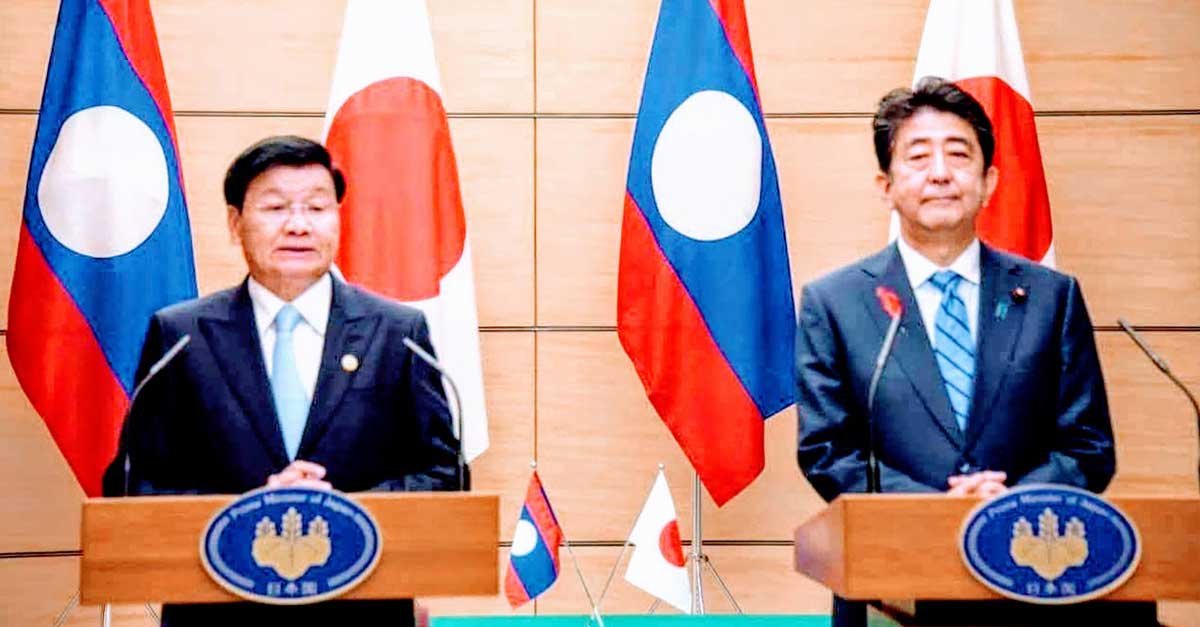
Laos' PM Thongloun Sisoulith (left) with Japan's PM Shinzo Abe in Tokyo. (KPL/ Pool)
Mekong-Japan cooperation, connectivity, people links and the environment are major themes as Lao Prime Minister Thongloun Sisoulith meets counterparts from neighbouring countries and Japan in Tokyo Tuesday.
Joining Dr Thongloun in being hosted by Japanese counterpart PM Shinzo Abe at today’s tenth Mekong-Japan summit in the capital of Japan are Cambodia’s Mr Hun Sen, State Counsellor of the Republic of the Union of Myanmar H.E. Ms. Aung San Suu Kyi, the Kingdom of Thailand’s Mr. Prayut Chan-o-cha and Vietnam’s Mr. Nguyen Xuan Phuc.
It comes as Dr Thongloun and Japan counterpart Mr Abe held a press conference Monday evening, agreeing for Japan to lend further ongoing support to unexploded-ordnance related projects in Laos at the cost of 900 million yen.
The two agreed to facilitate cooperation between Mittaphab hospital in Vientiane and Kitahara Neurosurgical Institute of Japan, according to the pool reports to Laos’ media by pool reporter from Lao News Agency KPL.
According to Japan’s Ministry of Foreign Affairs, “the Mekong-Japan Summit Meeting has been held every year since 2009 to strengthen the relationship between Japan and the Mekong countries, and for the sustainable development of and narrowing the development gap within the Mekong region.”
“This Summit is expected to further strengthen the relationship between Japan and the Mekong region.”
After their meeting, the leaders are scheduled to interact with the business community at an investment summit.
They are also expected to meet with youth football players attending “Japan-Mekong Youth Exchange Program (football)” organized as a part of the Japan-East Asia Network of Exchange for Students and Youths (JENESYS2018) via Japan International Cooperation Center (JICE).
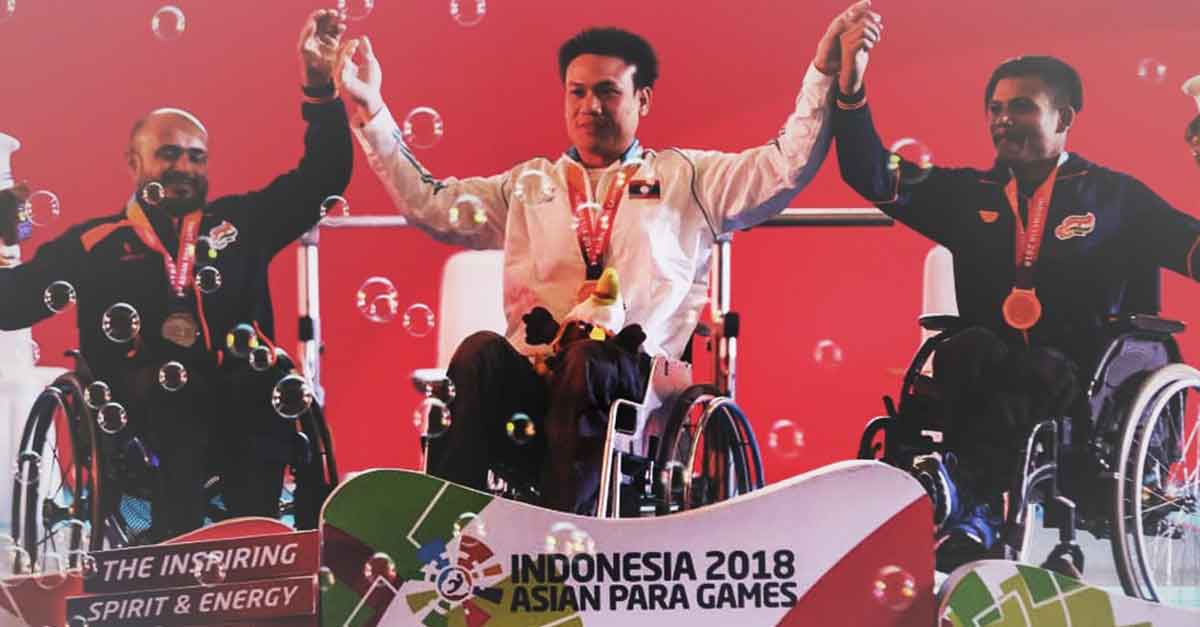
Asian Para Games 2018 Gold Medal in Powerlifting (Men's 49kg) to Pia Laophakdee
Laos’ Powersports powerlifter Pia captured a gold medal Sunday at the Asian Para Games 2018 in Indonesia in the 49kg Men’s Division after successfully lifting 133 kilograms.
Laos’ gold medal-winning powerlifter Pia (copyright paralympic.org)
“Since I have my disability for a long time, I would like to promote how to overcome a disability, to be strong and healthy,” the powerlifter was quoted as saying.
“I plan to go to Dubai for my next event, this is the world championship. After that I will go ahead to the Paralympics in Tokyo 2020.”
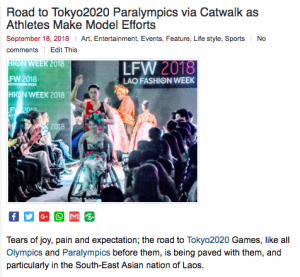
The project involves providing training and expertise from Japan and beyond to benefit parasports athletes and coaches in Laos to compete in multiple sports, smoothing some of the bumps on the path to aid greater participation for all on the road to the Tokyo 2020 Paralympics and beyond.Wheelchair basketball and goalball, an adapted sport for the vision impaired, also feature in the project.
Other ADDP initiatives include the sign-language friendly and inclusive Minna-no-Cafe where customers and staff alike can communicate with the hard of hearing. The NGO also works with its employees to produce a range of popular cookies which are for sale at various outlets including the cafe and was also a participant in efforts that saw the creation of a Lao-Japan Friendship Sakura Park in Viengxay district, Huaphan province planted with Japanese cherry blossom trees.
ADDP’s efforts are also ably supported by Lao Fashion Week as seen in reporting by Laotian Times last month as the country and its capital celebrated the achievements of past and present participants and strengthening pathways, the dreams of the aspiring Paralympic competitors and fashion industry participants are nurtured alike.
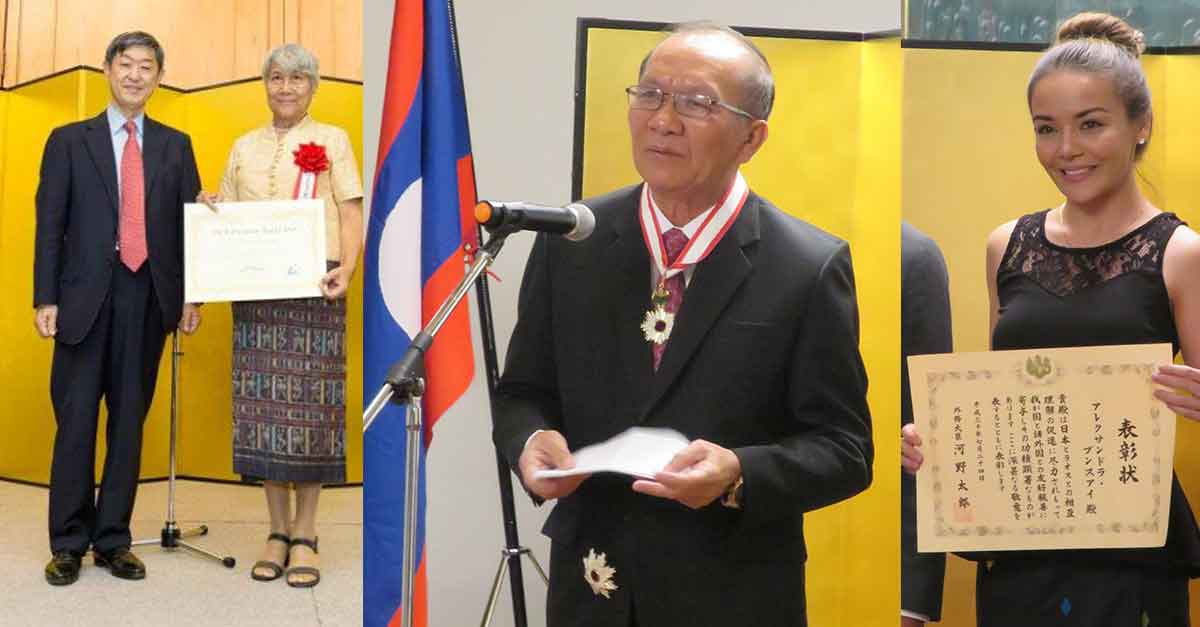
High honors as Japan awards Laos' trio Madame Chantasone Inthavong, Mr Somphou Douangsavanh and Ms Alexandra Bounxouei for their contributions.
It’s been nothing if not an eventful week or so for three Lao citizens who have made their own very distinctive contributions in diverse efforts and fields, strengthening the cultural links and future prospects for people in landlocked Laos and on the Japanese archipelago alike.
According to her profile, Sandra has been a regular visitor to Japan and been performing in collaboration with Japanese artists since the early 2000s and acted as a goodwill ambassador for educational projects and organizations such as JICA (Japan International Corporation Association) and PSI (Population Service International), Unicef, WPO and many more.
The multilingual vocalist, violinist and voice actor, studying a PhD in Media Design at Tokyo’s Keio University took home a Foreign Ministers’ award that was presented in Vientiane by Japan’s Ambassador to Laos, Takeshi Hikihara.
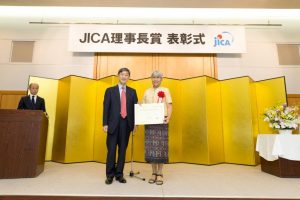
Laos’ Madame Chantasone Inthavong receives JICA President Award from Shinichi Kitaoka.
Madame Chantasone is a Japan-based textile expert and founder of the establishment of the Houey Hong Vocational & Training Centre, keeping the skills and spirit of Laos’ valuable textile culture alive in their hands of the up and coming generations.
She is also instrumental in the NGO Action with Lao Children that helps to provide books and educational materials to schools and their students in need in Laos.
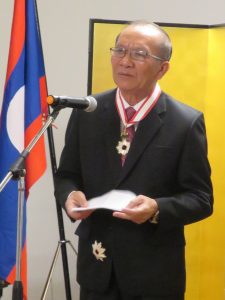
Last but not certainly least, the third and final awardee Dr Somphou Douangsavanh, a long-serving representative of Laos’ National Assembly.
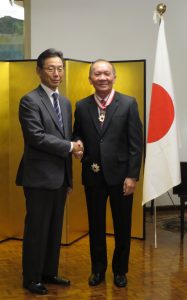
The Gold and Silver Stars are the second highest in the Order of the Rising Sun and is typically conferred upon prominent academics, politicians and military officers from both Japan and abroad.
The Order of the Rising Sun was established following Japan’s modernizing Meiji Era by the famed Emperor himself all the way back in 1875, and was known as the Imperial Order of Meiji before its renaming.
Mr Somphou was born in Xieng Khuang Province in 1954. He served as the President of the Lao-Japan Parliamentary Friendship Association between 2011 and 2016.
During his tenure as President of the Lao-Japan Parliamentary Friendship Association, Mr Somphou Douangsavanh was said to have made “invaluable contributions to the fruitful cooperation between the two countries through, among others, active exchanges with numerous members of the Japanese parliament”.
His award ceremony was attended by current President of the Laos-Japan Friendship Association, Ms Sengdeuane Lachanthaboun, who also serves as Minister of Education and Sports.
Laos’ Mr Somphou Douangsavanh awarded by Japan’s Ambassador to Laos, Mr Takeshi Hikihara.Mr Somphou Douangsavanh