Home Blog Page 6379

Latest Updates From the Luang Prabang Film Festival 2018

The Luang Prabang Film Festival (LPFF) has announced that its ninth annual event will take place on 7-12 December 2018. The festival, which celebrates Southeast Asian cinema every December in the UNESCO World Heritage Site of Luang Prabang, Laos, will feature a range of feature film screenings, short film programs, public discussions, and events.

This year’s Spotlight will focus on the Indonesian film industry. Curated by KOLEKTIF Project Manager Gayatri Nadya, the program will offer audiences a full day of programming and lively discussion from leading Indonesian film experts and filmmakers. Recent years have seen a cinematic resurgence from this territory as it opens to more foreign investors, builds more theatres, and continuously breaks its own box office records. New and exciting Indonesian talent has emerged, making a notable impact on the international festival circuit with a fresh vision that has won high praise from critics and audiences alike.

This December, LPFF will bring to the screen a strong selection of these films, exposing audiences to some of the best examples of this new wave of creativity from Indonesia.

Along with the announcement of the festival’s dates, LPFF has also released the visual identity for this year’s festival, which takes inspiration from vintage travel posters in support of Visit Laos Year 2018. The main design features a chic Southeast Asian filmmaker location scouting in Luang Prabang during the festival. Once again, this concept was executed by the very talented Manilla Chounlamountri, Art Director of the Vientiane-based MeIdea Full Service Agency.

“We feel a lot of pressure to top our previous years’ graphics, and we’re confident that our designer has, somehow, accomplished it once again,” said Festival Director Gabriel Kuperman. “I love all the references within the visual- you have the throwback travel poster feel, the empowered female filmmaker (that we see many of at our event), the backdrop of this gorgeous little town with its mixture of traditional Lao and colonial French architecture, and of course, there’s our intimate festival stuck in there so naturally.”

New Visual Identity Depicts Filmmaker on Location Scout in Festival’s Host Town

Last year’s festival welcomed over 22,000 attendees to its screenings, Q&As with filmmakers, panel discussions, and live performances that go beyond the screen to include dance, theater, and live music. This year’s audiences are expected to grow even larger, as the Luang Prabang Film Festival solidifies itself as one of the largest international events in Laos, and one of the most important film events in the region.

However, despite its size, LPFF manages to maintain the intimacy that attendees have grown to love. At the 2017 festival, 23 of the festival’s 32 feature films had directors or producers on hand to speak to audiences after screenings of their films, both in groups and one-on-one.

LPFF has also made its mark in the region in regards to its Southeast Asian artist development programs. Last year’s Talent Lab, led by the Tribeca Film Institute®, provided training on grantwriting and project pitching to ten different projects from around the region. After an open pitch forum, Raising a Beast, written and directed by the Lao filmmaker Xaisongkham Induangchanthy, and produced by Filipina Abigail Lazaro, was selected by a jury to attend the TFI Network Market at the 2018 Tribeca Film Festival®. Hosted annually by TFI, the industry market gives filmmakers the opportunity to build connections with a wide range of industry insiders who can potentially help them advance their projects. TFI set up dozens of meetings with producers, post-production houses, editors, and financiers for the Raising a Beast team, and will also mentor them through the completion of their project. All participants in last year’s Talent Lab will also receive preferential consideration for any of TFI’s grants. This Talent Lab will take place again at December’s festival, and will be expanded to three days.

Additionally, LPFF will hold a masterclass on screenwriting, as well as a weeklong workshop on animation, organized in partnership with the American Film Showcase.

All festival events are open to the public and free of charge, and visitors can go easily between the main venues on foot or via LPFF’s complimentary tuk-tuk shuttle service.

LPFF is funded by corporate sponsors, non-governmental organizations, embassies, and private donors.

To stay up-to-date on the Luang Prabang Film Festival and its activities, follow the project on Facebook (www.facebook.com/lpfilmfest) or visit its website (www.lpfilmfest.org).

US-Based Filmmaker Raises Funds for Feature Documentary on the Secret War in Laos

Filmmaker and Pulitzer fellow Erin McGoff is currently running a ​30-day Indiegogo crowdfunding campaign​ to help raise part of $37,000 to finish her ambitious documentary featuring the secret bombing campaign in Laos, which was the scene of an intense yet clandestine proxy war during the Vietnam Conflict.

McGoff has brought on two-time Emmy-Award winning composer Jeremy Zuckerman to score the film. She also plans to tour the film all of 2019 in the hopes of educating more Americans about Laos and sparking a national conversation.

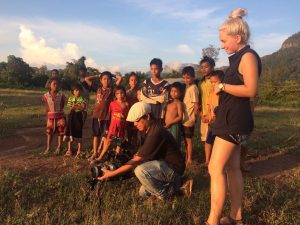
Erin McGoff on set.
Phetsamay, the main character of the film.

The fundraising campaign will end on July 6th at midnight. This film has been supported by The Pulitzer Center, NextPix, and World Without Mines. As of the writing of this article, the Indigogo campaign is currently 62% funded with $9,240 USD raised by 71 backers.

Indiegogo campaign: 62% funded with $9,240 USD raised by 71 backers

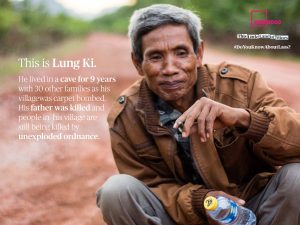
During the Vietnam War, the United States secretly bombed Laos more heavily per capita than any country in history, and 80 million unexploded bombs continue to terrorize, kill and maim innocent Lao people today.

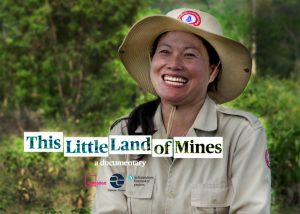
But McGoff saw a bigger story here: the humanity of the Lao people. They are resilient, optimistic, and kind – and she showcases this in her upcoming feature film, This Little Land of Mines.


For more information on this documentary, please check out its following social media presences:


Instagram: thislittlelandofmines

Twitter: @littlelandmines

Facebook: This Little Land of Mines

The Best of Laos

A country could tell its whole story through food, if only it knew how.

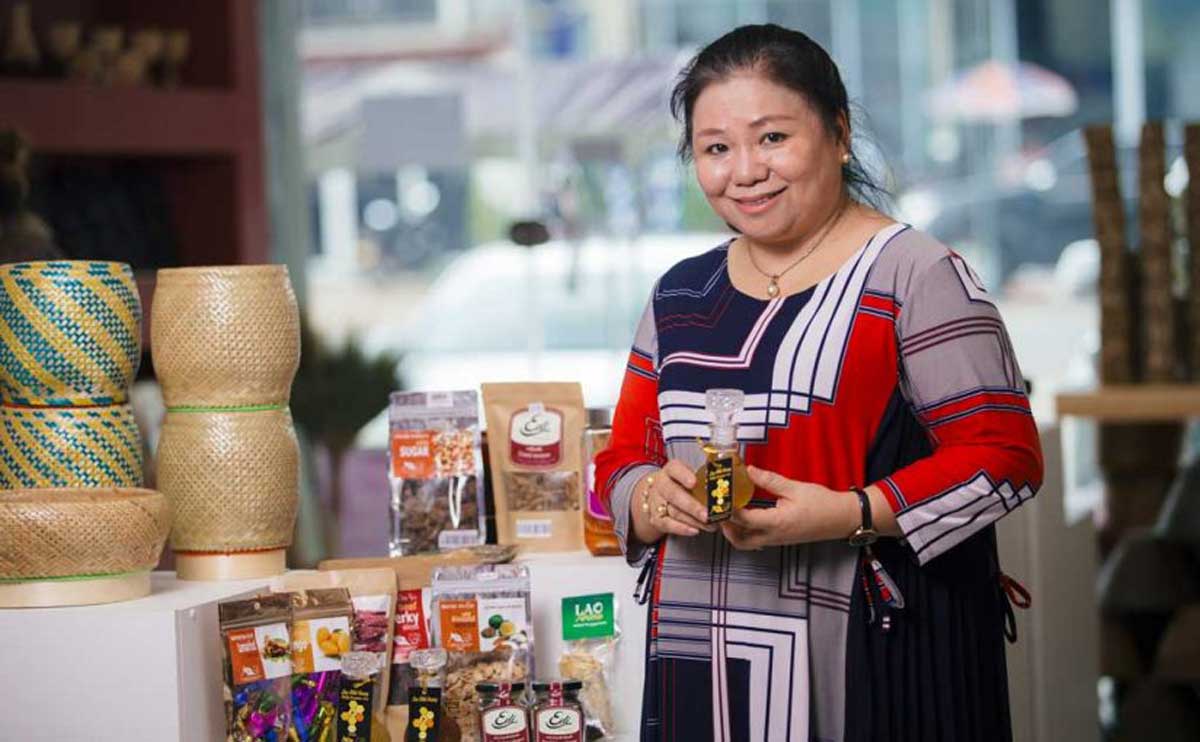
 When Latsamy Vetsaphong first heard a western friend wondering aloud where they could buy some of the amazing delicacies they had tried while in Laos, she realised there was a gap in the market for Lao souvenirs.

And when she heard yet another friend lamenting that some of the food she had gathered to take home to relatives wasn’t nicely packaged, she knew she was onto something.

“I heard people saying that Laos didn’t export anything but timber and handicrafts,” she says.

“This was more than five years ago. I thought to myself, okay, what can I do to help?”

She decided to focus on some of the the country’s unique foods, using comments from her foreigner friends as a guide.

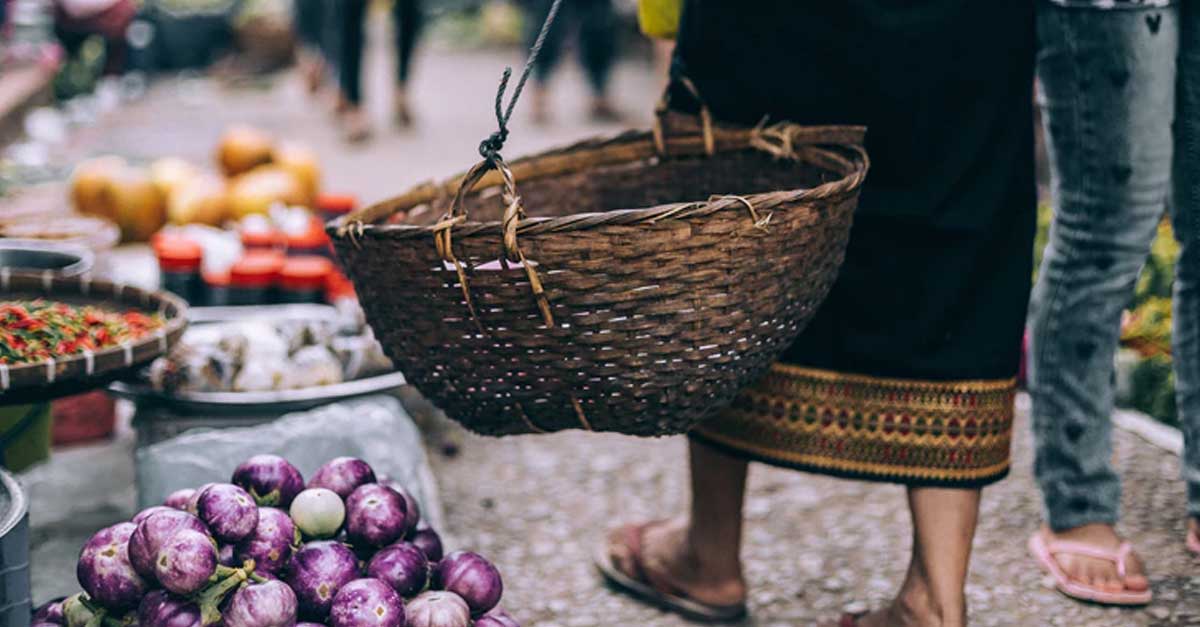
“Let’s say when they go to Luang Prabang, what do they like to buy? Quite often it’s riverweed, the famous one with sesame seeds,” she says.

But it wasn’t just foreigners who were picking up food as gifts for the family back home.

“I think even in Laos, locals still don’t know what food is available from north to south,” she says.

“Laos may be a small country, but people don’t realise how diverse the food is here. Northerners are often unfamiliar with specific southern ingredients.”

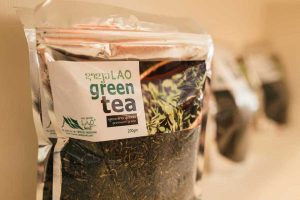
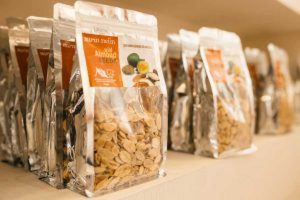
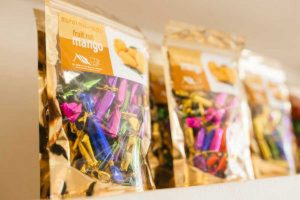
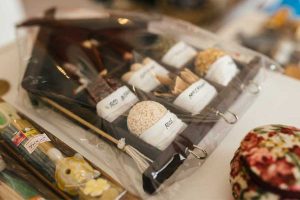
Through her new business, Lao Best, she has begun selecting what she believes is the best of the country’s products to sell in her shop, from small plantation coffee and wild honey, to riverweed and fish sauce. And with a career in the import and export trade under her belt, she has learned over the years what works.

“With the right packaging and presentation, we can tell our story all over the world – why we eat the way we do, and how we make our food,” she says.

The shop has been open just two months at the time of writing, and Ms Latsamy already has plans to open more branches outside of Vientiane – one in every province, if she has her way.

She has also started selling products to local minimarts, including Thai chainstore Jiffy, and hopes foreign shoppers will soon catch on to how easy it is to pick up well-packaged foods to take home.

She also plans, ultimately, to export the products through Lao Best, although not all of the foodstuffs will be successful on the international market.

“We’re now testing the market, to see what foods can be exported,” she says.

“An example is Lao jerky. Dried meat is eaten all over the world, and we have our version from Savannakhet, made from pork and beef. We just have to work how to export it, and where it would sell best.”
But she also wants to educate her own people about what her country has to offer.  One thing she has noted during the process of identifying the best foods is that many producers of food and handicrafts have benefited from sporadic assistance – both technical and in marketing terms – from non-government organisations. The assistance, while welcome, is often non-ongoing, and projects are often left to flounder.

“They know the help won’t go on forever, but they often don’t know what to do next,” she says.

“They need someone to come in and encourage them to continue to produce their products, and guide them with their marketing. That’s what I’m trying to do.”

For the moment, though, she is focused on growing the business and expanding its list of products and urges anyone who wants to become involved to contact Lao Best on Facebook.


Originally Published in: Champa Meuanglao

Singapore Restaurant Sells Thai Food, Misspells Lao Name

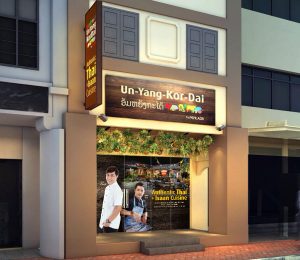
Un-Yung-Kor-Dai Opens in Singapore

Un-Yang-Kor-Dai, a concept from the Thai city of Khao Yai, has recently opened an outlet in Chinatown in South Bridge Road, Singapore.

While its brand positioning is understandably geared towards serving authentic Thai or Isan cuisine, its restaurant name is written in the standard language of Laos, where Isan culture derives a historical commonality. However, the Lao spelling is quite peculiar as there is an apparent discrepancy between the original text in Lao script and its English transliteration, one that would not have been overlooked by an average Lao person.

Although it is common that Thais in the Northeastern Isan region of Thailand may speak and understand Lao language, many do not have full command of the Lao script. This misspelling demonstrates either a lack of awareness regarding the differences between modern Thai and Lao languages, or an uninformed approach that makes the assumption that nobody will notice – or care. While Singaporeans may be linguistically none the wiser, there are seven million Lao (and counting) who regularly travel to both Singapore and Thailand, who could possibly be irritated by this blunder concerning the use of their language.

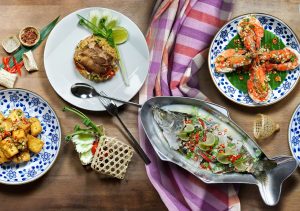
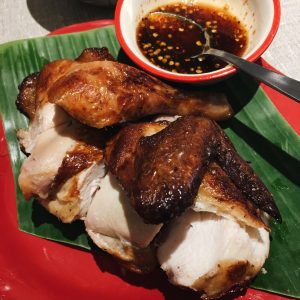
With signature dishes such as the PenLaos Signature Grilled Chicken, Korat-Style Fried Rice Noodles with chicken. The al dente dry noodles are fried on the spot, with a potpourri of Thai chilli paste, fish sauce, bean sprouts and chives.

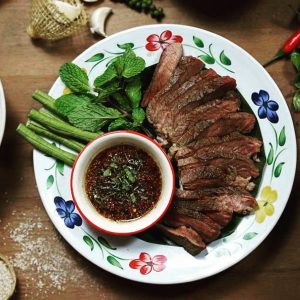
The restaurant, which adopts an open-kitchen concept and is decorated with community artworks and handicrafts, also makes three special sauces by hand: Isaan Spicy Dipping Sauce, Special Spicy Sauce and Sweet and Sour Sauce. The first sauce is paired with the Isaan Beef Tenderloin Steak for a spicy kick.

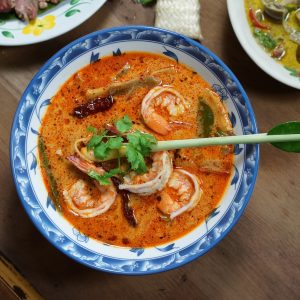
Other dishes include Tom Yum Kung Num Kon with fresh prawns and coconut milk, Fresh Crab With Red Curry Sauce, Steamed Whole Sea Bass In Spicy Lime Sauce, Phad Thai Tom Yum With Seafood, and Grilled Pork Neck.

Location: 01-02, 57 South Bridge Road

Opening Hours: 11am to 3pm and 6 to 10pm (Tuesdays to Sundays)

Info: Call 6787-8575, e-mail letseat@unyangkordai.com or go to www.unyangkordai.com

Sources: The Straits Times, Official UNYUNGKORDAI Facebook Page, GreatNewPlaces.com, Burpple.com

PM: Laos Won’t Graduate From Least Developed Country Status by 2020

Laos Least Developed Country

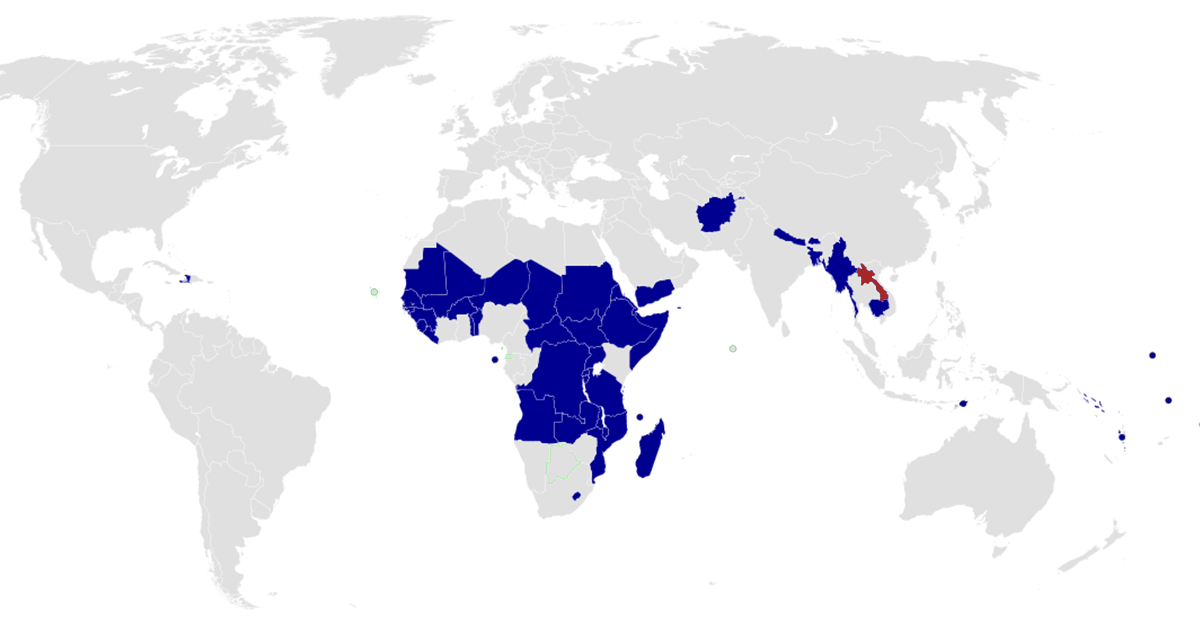
In a surprise revelation, Prime Minister Sisoulith told the members of the National Assembly last week that despite the government’s enormous efforts, Laos will not be able to graduate from its Least Developed Country (LDC) status by 2020, a goal that has been one of the nation’s priorities since 2001.

In response to the pressing concerns of the 5th Ordinary Session of the National Assembly on the topic of poverty eradication, Prime Minister Sisoulith said, “Laos has engaged on a path of development for 43 years. Since 2001, the Party and Government have tried their best to implement a national development plan with the goal of graduating the country from Least Developed Country status, an economic classification given to Laos by the United Nations based on three criteria. And for the first time since then, United Nations representatives have come to perform inspections and have concluded that Laos will not be able to free itself from this classification by 2020 for a number of reasons.”

LDCs are assessed using three criteria: the Human Asset Index (HAI) which assesses health and education targets, economic vulnerability, and gross national income (GNI) per capita.

Countries are required to meet at least two of the three criteria at two consecutive triennial reviews by the Committee for Development Policy to be considered for graduation.

The 2018 Laos review found that the country has met requirements for GNI per capita and the HAI. However, the Economic Vulnerability Index (EVI) has not passed the threshold.

Speaking at the biannual assembly session, the PM stated that Laos’ GNI per capita of US$1,996 exceeded the graduation threshold of US$1,230 or above, while the HAI stood at 72.8, above the required threshold of 66.

The EVI, however, was 33.7, too close to the threshold of 32 or below.

The PM said that Laos must strive harder to meet the set criteria by creating a firm foundation in preparation for graduation.

Laos Least Developed Countries

Less Aid if Laos Graduates from Least Developed Country Status

The policies toward Laos by various development partners could change if Laos graduates from Least Developed Country status, and economists have warned that Laos must prepare for changes in aid and loan policies.

Laos would lose some Official Development Assistance (ODA), loans, and cease to enjoy some preferential trade treatment.

ODA, including grants and low interest loans, equates to more than 10 percent of total investment.

However, Planning and Investment Deputy Minister Dr Kikeo Chanthabouly sees graduation in a more positive light, saying that if Laos receives the new status, it should be able to more easily secure loans, with the new classification enhancing the country’s image and reputation.

He says that while Laos will receive less ODA, it will be able to take on more loans. Meanwhile, the World Bank has warned Laos that public debt has increased to levels that are no longer sustainable.

Public debt made up 70.5 percent of the country’s Gross Domestic Product (GDP) last year, up from the 68.1 percent the year before.

Source: Vientiane Times, Lao Economic Daily


WildAid and Bluegrass Help Spread Message About the Ivory Trade in Laos

wildaid yao ming ivory laos

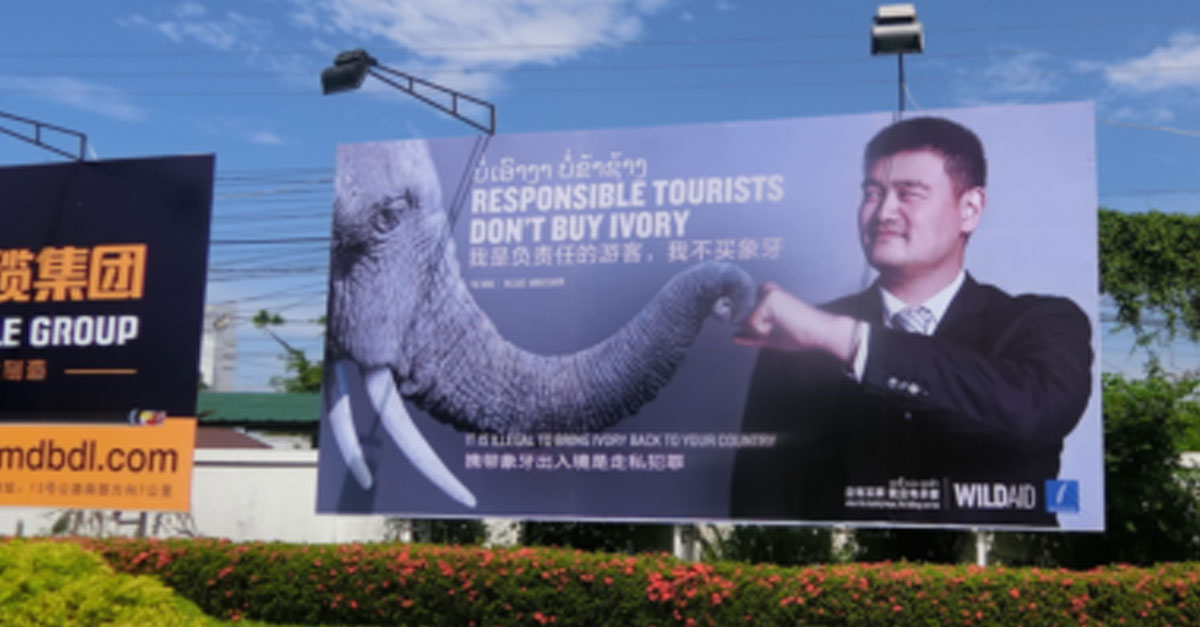
Conservation organization WildAid and Lao design firm Bluegrass Design have teamed up to spread the word about the ivory trade in Laos.

Billboards have been placead at Vientiane’s Wattay Airport with WildAid Ambassador and former NBA star Yao Ming at the forefront, urging travelers to say no to the ivory trade.

The ivory trade is known to kill up to 33,000 elephants per year, according to WildAid. While governments around the world have banned the ivory trade, the illegal market in Laos is increasing.

According to WildAid, 80% of the illicit ivory on sale in Laos is purchased by mainland Chinese visitors, with many items made specifically to suit Chinese tastes.

The launch of the billboards comes as regulations on wildlife trafficking are getting tougher, with the Prime Minister himself issuing an order last month on increased stringency in management and inspection of protected wild flora and fauna. The order was issued to tighten implementation of forest plant and wildlife protection, especially those species which are classified as endangered.

Under the new order, border checkpoint staff and police officers are being instructed to increase vigilance regarding inspections for trafficking of wild animals and plants. Any immigration officers found aiding or assisting wildlife traffickers will be immediately arrested and prosecuted.

Source: Laos Briefly
Photo: WildAid

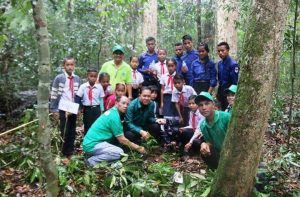
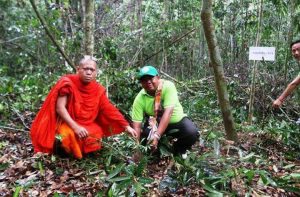
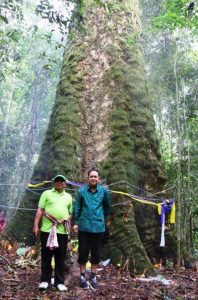
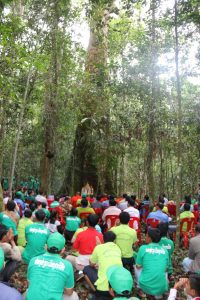
1000-Year-Old Tree Consecrated in Saravan

1000 year old tree in Salavanh

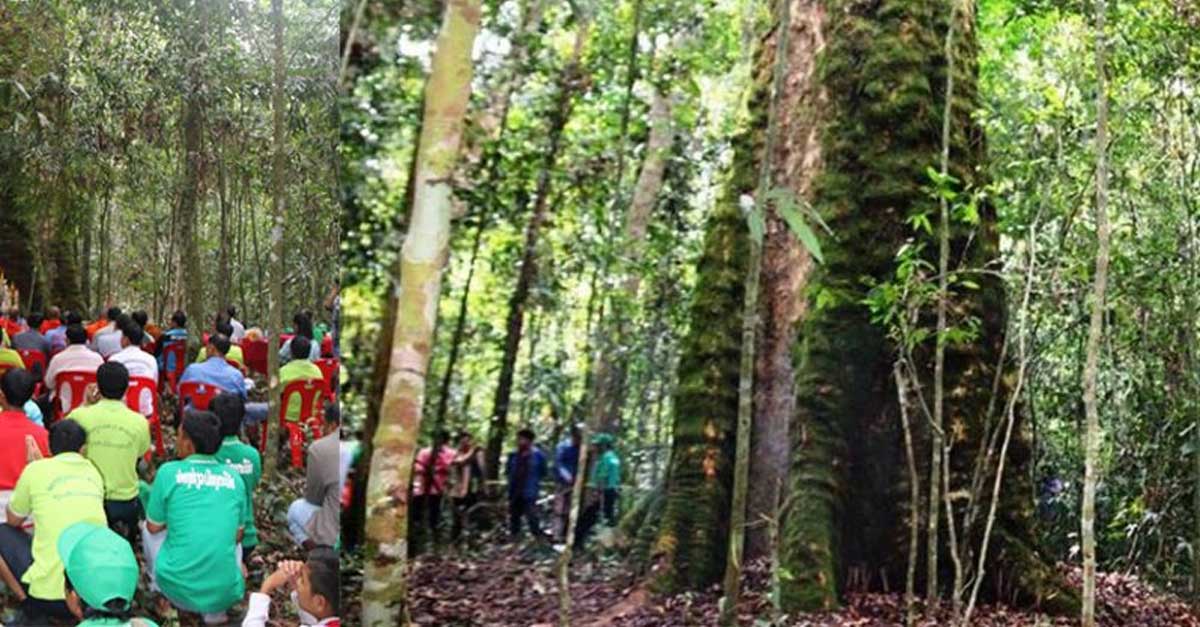
Last week, the village administration of Thaoy of Saravan Province organized a tree planting event to coincide with a traditional tree consecration ceremony on the auspicious occasions of Arbor Day and Children’s Day.

The said tree, believed to be over 1000 years old, with a circumference of 14 meters and a staggering height of over 30 meters, was declared holy.

Present at the ceremony were Saravan Vice Governor Vixien Navikun, Thaoy District Chief Bounhome Komesouni, Provincial Buddhist Association President Sonexay Keomeuangthai and other officials.


The tree planting and consecration ceremonies together are part of the government’s efforts to reverse deforestation that is caused primarily by logging. Believers argue that loggers are more reluctant to cut down trees that have been declared holy. Experts are of the belief that this will lead to a reduction in the illegal timber trade.

Source: Saravan Newspaper, KPL, LaosLarnShare, Mahason Magazine

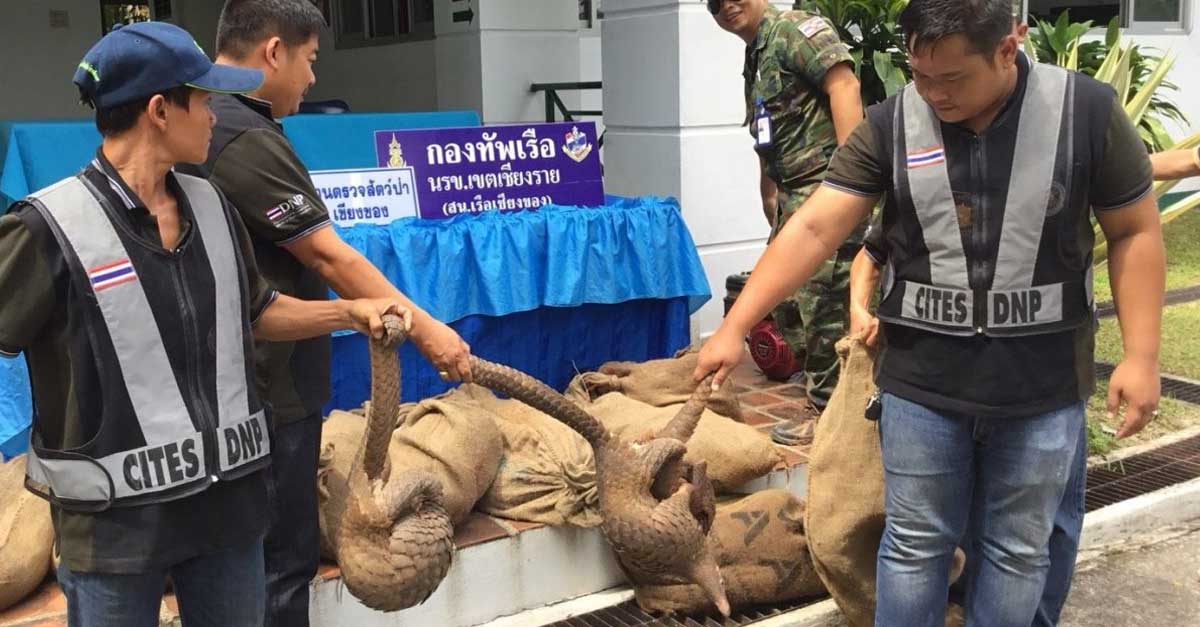
Smuggled Pangolins from Laos Seized in Mekong River

Laos pangolins rescued Thailand

Thai authorities have rescued 40 live pangolins that were being smuggled in a boat from Laos to Thailand.

The pangolins were found in sacks aboard the vessel that had crossed the Mekong River. The animals are said to have been bound for restaurants and traditional medicine shops in Chiang Rai, and were worth around 615,000 Thai baht.

The smuggler, who attempted to bring the pangolins across the border at Thailand’s Ban Chaem Pong border point from Bokeo Province in Laos, escaped arrest.

In Thailand, the smuggling of pangolins is a violation of the 1992 Wild Animal Reservation and Protection Act.

Meanwhile in Laos, regulations on wildlife trafficking are getting tougher, with the Prime Minister himself issuing an order last week on increased stringency in management and inspection of protected wild flora and fauna. The order was issued to tighten implementation of forest plant and wildlife protection, especially those species which are classified as endangered.

Under the new order, border checkpoint staff and police officers are being instructed to increase vigilance regarding inspections for trafficking of wild animals and plants. Any immigration officers found aiding or assisting wildlife traffickers will be immediately arrested and prosecuted.

Source: The Nation
Photo: The Nation