Prime Minister Thongloun Sisoulith told the 5th Ordinary Session of the National Assembly on Tuesday that the country’s economic development has been advancing as expected with the first half of this year seeing a growth rate of 6.7%.
Based on data collected in the first four months of this year, agriculture is expected to rise by 2.9% and manufacturing and service are expected to climb by 7%, and 7.9%, respectively, in the first half of 2018.
The government has expected that GDP per capita of the country for the first half of 2018 will reach USD $2609.
Prime Minister Sisoulith said that national revenue collection in the first half of the year is likely to reach 12,084 billion kip, equivalent to 47.48% of the target set for 2018. Meanwhile government spending for the same period is expected to reach 15,731 billion kip, equivalent to 47.95% of the annual plan.
“In the first six months of 2018, although the government has encountered budgetary difficulties, the government has attached attention to addressing debts through a number of means to boost economic growth as the government has allocated a budget of 529.76 billion kip to settle debts of 1,831 projects,” said the Prime Minister.
The premier also addressed government monetary management efforts saying that such efforts have contributed to national currency stability and adjusted interest rates to market mechanisms, as a result the gap between loan interest and deposit interest has become acceptable.
Inflation rate in the first four months was 1.62%, decreased by 1.8% year on year. The KIP appreciated 0.5% against the US dollar but depreciated 6.82% against the Thai baht due to increasing imports from Thailand.
It’s just one fish among many in the traditional cuisine of Laos, but the Pa Nang has one physical characteristic that sets it apart – just half a ribcage.
And while there is likely a convincing scientific explanation for this arresting detail, the folklore that has sprung up around the Pa Nang – which translates directly as “Lady Fish” – is far more interesting.
What would you do if you knew that you were the only one who could stop an impending war between two rival kingdoms? This was the quandary in which one fabled princess found herself so long ago, whose noble but tragic decision not only brought peace throughout the land, but also gave birth to an entire species.
Long, long ago, our ancestors spoke of a beautiful and magical princess, whose comeliness and virtue were reminiscent of those of the legendary Nang Soumountha. It was said that whoever was honorable enough to wed the princess would bring tremendous prosperity and richness to his people. Her beauty spread far and wide across the many kingdoms, finally capturing the hearts of two valiant princes of two of the most powerful kingdoms in all the land.
Upon hearing of the other’s intention of courting the princess, each prince fervently mobilised his army to wage war against the other in the name of love. No side could bear the shame of losing the princess to the other without a fight.
Realising that neither side would yield, the princess, in a selflessly heroic move, sacrificed her own life to save the thousands that would die in warfare. Before her untimely death, she instructed her trusted aides to halve her body and offer one side each to both princes.
“I wholly (and/or half-ly) give myself to both of you, whom I adore and love equally. My last request is to throw each half of me into each of your respective Kingdom’s rivers. This way, I shall bring richness to both your lands.”
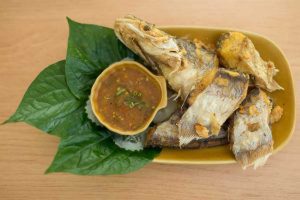
The princes woefully did as they had been instructed. Once each half had been submerged into the water, it magically became a fish, and like the form from which it came, had only half of a ribcage.
While neither prince had intended to bring harm to the princess, they were most certainly blinded by love, each galvanised by his own interpretation of the infamous ‘if I can’t have you, no one will’ mantra. In the end, the princess had lived up to what she had promised. The fish replenished the rivers and provided sustenance to the peoples of both kingdoms and the land was showered with prosperity for years to come.
In her last moments, the princess must have thought to herself “if neither can have me, at least everyone else will.”
This is how the fish got its name, Pa Nang (translated literally as “Lady Fish”). And that is why this particular species of fish has only half a ribcage, because of the fabled sacrifice so long ago.
The Pa Nang has been enjoyed by the Lao people for generations. It is generally prepared boiled or fried and can be had on any occasion. A fresh dish of fried Pa Nang is available at the famous Kualao Restaurant. Don’t forget to take a look at the half ribcage!
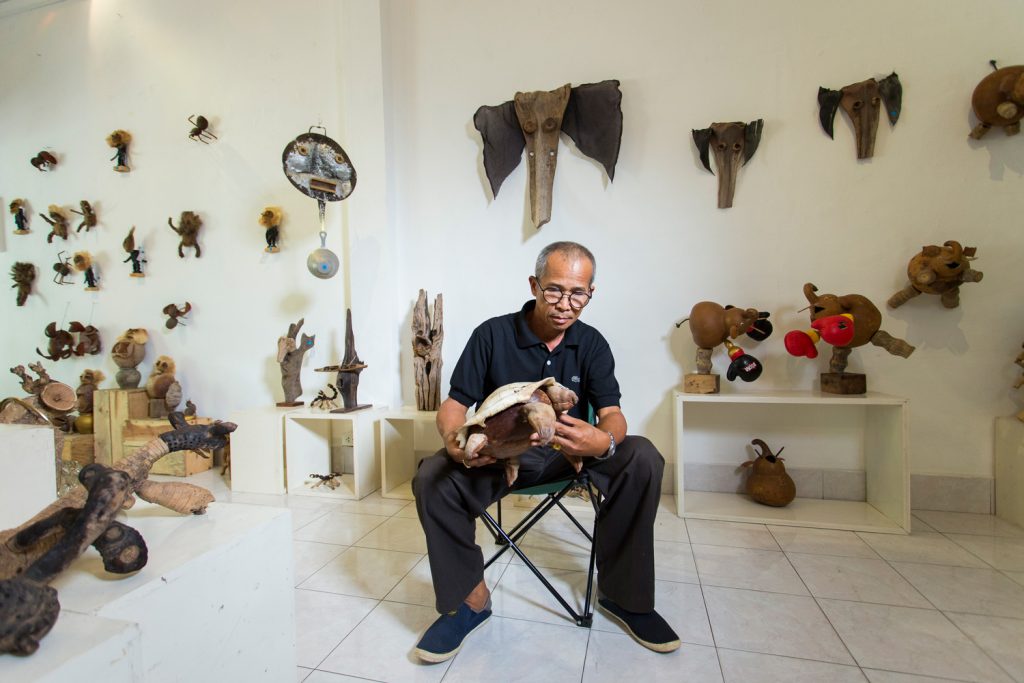
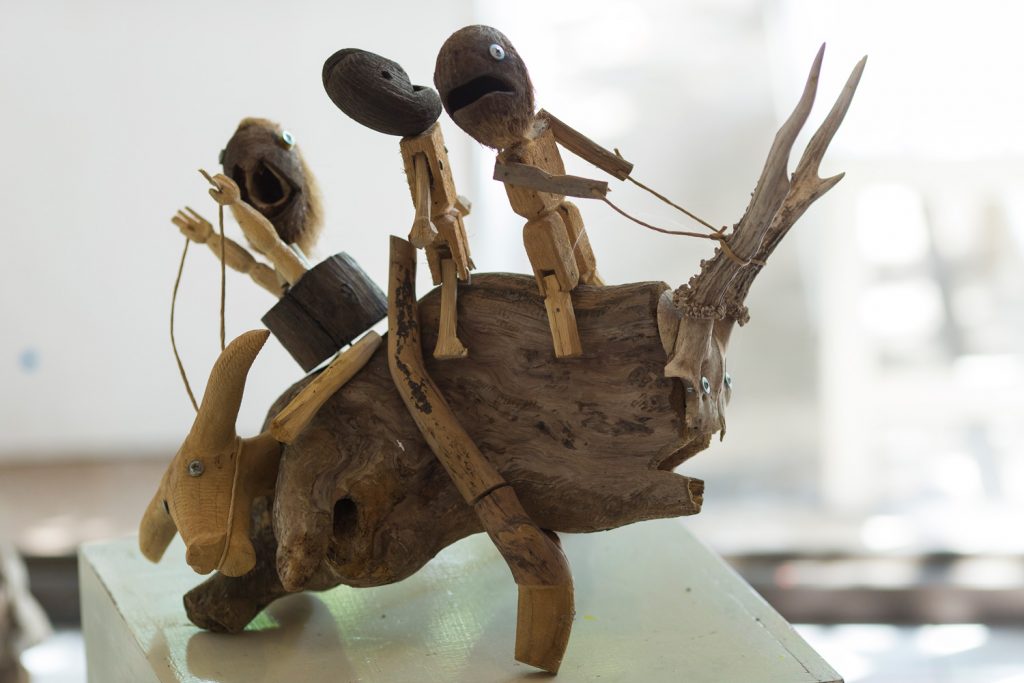
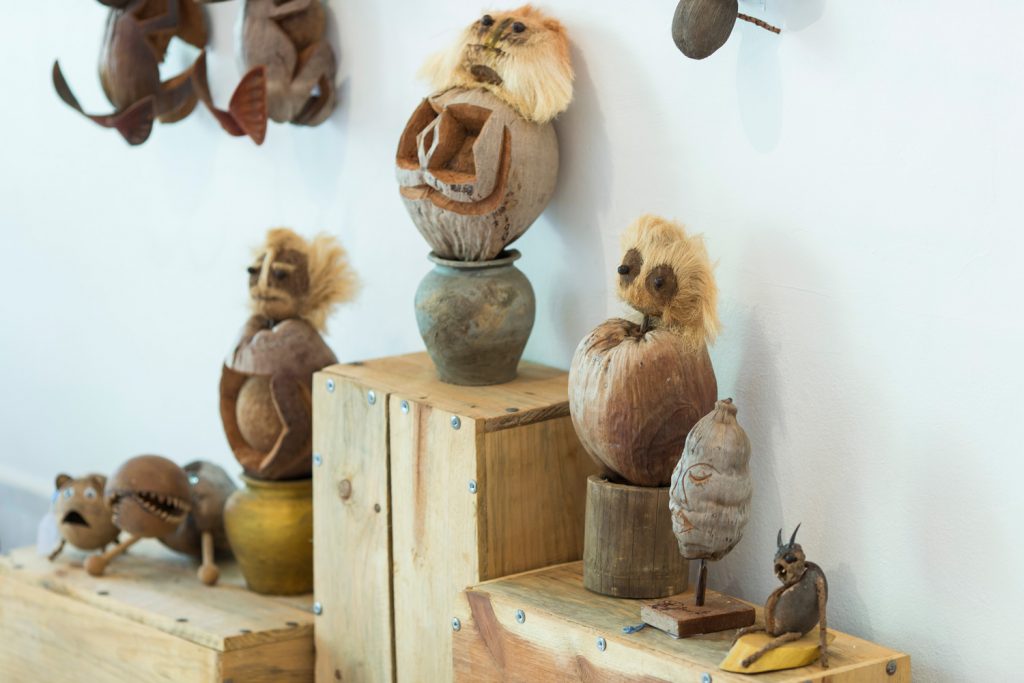
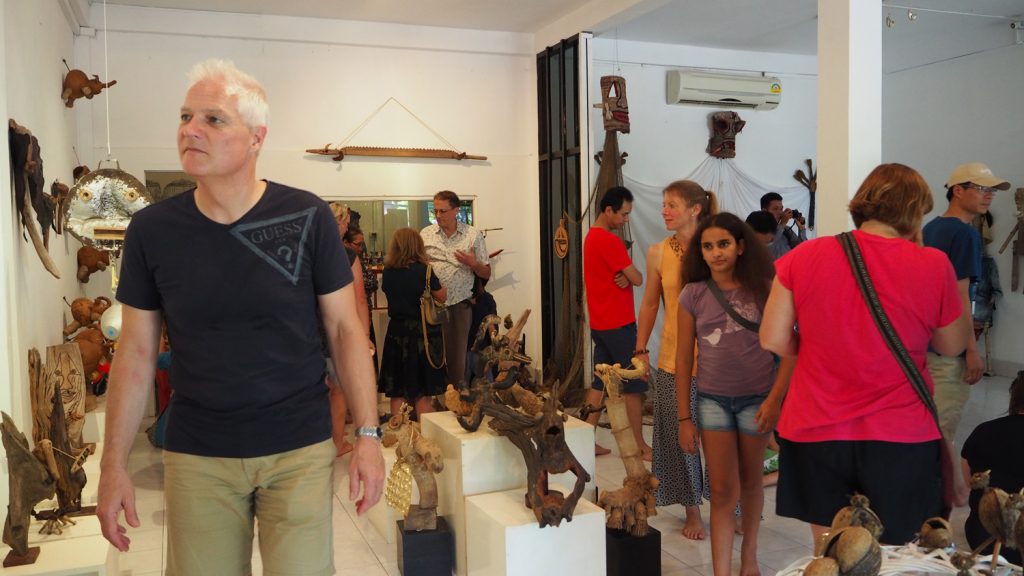
It’s a Sunday afternoon in Vientiane, and visitors dropping into a small art gallery near the centre of town can’t stop smiling. On the walls, and scattered artfully about the room, are all kinds of animals – elephants, chickens, turtles – as well as playful human figures with articulated limbs, and slightly leery masks. At first glance, they are impressionistic, rough approximations of the real thing, rendered mainly in wood. But on closer inspection, most of the objects are made from ordinary garden-and-countryside detritus: fallen coconuts, crumbling concrete, driftwood from the Mekong. It’s an effect both lovely and thought-provoking – how does a piece of bark suddenly become an elephant’s trunk so convincingly? What kind of whimsy does it take to see a turtle in a crumbled piece of cornice?
Leuthmany Insisiengmay, the man behind these creations, is smiling too. He loves seeing people’s reactions to his work, loves the delight they provoke. And on this Sunday afternoon, at the opening of his latest show at Vientiane’s I:cat Gallery, the 63-year-old is once again reflecting on the trajectory of his creative life.
People didn’t always smile at Leuthmany’s creations – at least, not his visual artwork. As a writer, actor and stage director in the Lao Ministry of Culture, Information and Tourism for 10 years during the 1980s and 90s, he honed his craft as an artist and a storyteller. Later, he trained as a clown in France and performed in the Lao National Circus for five years. By then, he had already discovered how much he preferred a visual medium to a spoken one.
Leuthmany Insisiengmay
“I was in the Ministry of Information and Culture’s drama section for a long time, but when it comes to talking, there will always be people who will never understand the content,” he says. He felt limited by language; foreigners couldn’t understand the stories he was presenting onstage, and he longed for another art form that could transcend these limitations.
Once he began performing in the circus, he realised there were other, more universal ways of communicating ideas. But it was when he discovered a French theatre company using puppets and objects to tell stories that he knew he had found his medium.
“Object theatre doesn’t use any spoken language at all, and this is a medium I like very much,” he says. “The actors really need to express themselves using their body and the objects as an extension, and their ideas need to feed into their acting. The actors are more involved in the process, and that’s what I love about it.”
He returned to France to learn more about puppet performance, how stories are told onstage using objects rather than human figures and words, and eventually, in 2000, established Kabong Lao, the country’s first object theatre, still under the Government ministry.
But when it came to making puppets, he relied on his own imagination, and what he had observed at other theatres. His lack of formal training has resulted in a unique style that is both distinctly Lao and immediately recognisable to audiences the world over.
But when he first returned to Laos and began making puppet shows, the reaction from the ministry was dubious.
“When I first returned from France, and presented our first show, people weren’t impressed,” he says. “As a university graduate, I have many friends from those days who are now government ministers or high-ranking people, and they’re always asking me why I do what I do. They think I should be doing something else.”
The found objects and discarded household materials he used to for his creations was also something traditional art-watchers and government officials found confronting.
“They were used to seeing traditional, shiny, beautifully constructed puppets, and thought my works were not appropriate for touring overseas,” he says. “My work has always been more accepted with the international community, where the concept of using recycled materials is more common.”
His greatest fans are still mostly foreigners – and on this Sunday afternoon, the I:cat Gallery is filled with expats from all over the world, but few Lao locals – but he says little by little, his message about finding beauty and whimsy in the ordinary landscape is getting through.
And Leuthmany’s journey has not been a solitary one; his son, Lattanakone, or Toh, has followed in his father’s footsteps, right from his high school days, when he began attending Leuthmany’s comedy artist workshops in favour of finishing school.
Toh found himself equally frustrated with the medium, but not for the same reasons.
“I always hated the old-fashioned clown because audiences seemed to look down on him as a crazy character or being so predictable,” Toh said in a past interview. He was with his father when they discovered Turak, the French group that brought Object Theatre to Laos, and together, they travelled to France to train in puppetry.
After travelling and performing with Kabong Theatre for several years, Toh was ready to branch out and form his own object theatre company, Khao Niew, which uses puppets conceived of and made by Leuthmany. Through his company, which receives funding from foreign donors, Toh is trying to preserve the ancient art of “Epok”, “Prateu” or “Bakteu” puppets – an almost forgotten art that remains integral to Laos’ heritage.
But for his part, Leuthmany has always maintained that his productions, while part of an ancient Lao tradition, do not follow any set rules. His avant-garde aesthetic sets him apart from other traditional Lao art forms, bringing dead materials to life. In this sense, he incorporates many Lao superstitions, both Buddhist and Animist, into his storytelling, and brings concepts of the afterlife of objects into a new realm. No wonder Lao audiences were initially shocked by his work.
But Leuthmany has never been deterred by what others think. Using materials that would otherwise be wasted – used for fuel, thrown into landfill or discarded in the river – makes perfect sense to him when it comes to presenting his own country.
“Some might call it ‘trash’ or ‘rubbish’, but it’s these materials that make my creations unique to Laos,” he says.
And, having retired two years ago, he has suddenly found himself with endless time in which to indulge his whimsies and make ever more objects. While he still works as a consultant for Khao Niew, he says his own ideas could stretch on forever. It’s a state of contentment and childlike wonder that seeps into his work and off the walls upon which his work is displayed.
“I’m already 63, and I can see myself doing this for the rest of my life,” he says.
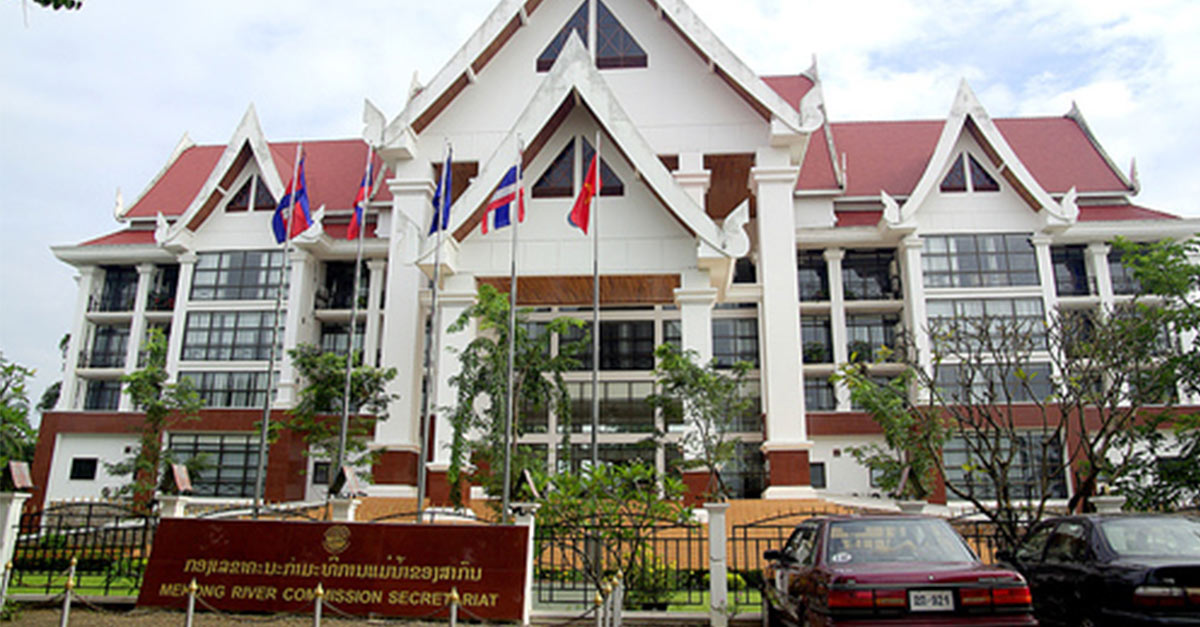
The Mekong River Commission has vowed to become one of the first paperless organizations in Laos as part of its efforts to protect environment and promote regional sustainable growth.
Pham Tuan Phan, CEO of the MRC said that the secretariat of the intergovernmental organization of Cambodia, Laos, Vietnam and Thailand had drawn up a paperless regulation as one of its development plans.
The “Paperless Initiative“, put into practice last year, where staff members are encouraged to print less paper and use more electronic documents for meetings and during daily operation. The Secretariat Office of the Commission is also working toward a plastic-less initiative which corresponds to this year’s World Environment Day theme “Beating Plastic Pollution.”
The initiative is also part and parcel of the Mekong regional efforts to save timber resources – the main raw material for the paper processing industry, Phan said at a ceremony to mark Laos’ National Arbor Day on Friday last week.
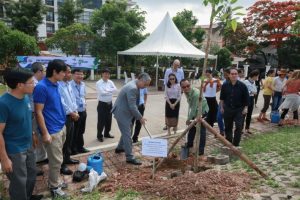
CEO Pham Tuan Phan (middle) and Deputy Governor of Sikhottabong District Inpong Thoumma (second from right) plant a tree together along the Mekong River bank in front of the MRC Secretariat / Photo credit: MRC
Phan said the implementation of the paperless office policy was possible due to improved IT technology and digitalization.
He said the MRC office is working to become a plastic-free organization to help save the planet, protect the environment, and promote green and sustainable growth in the Mekong region.
The Mekong River Commission is an intergovernmental organization for regional dialogue and cooperation in the lower Mekong river basin, established in 1995 based on the Mekong Agreement between Cambodia, Lao PDR, Thailand and Viet Nam. The organization serves as a regional platform for water diplomacy as well as a knowledge hub of water resources management for the sustainable development of the region.
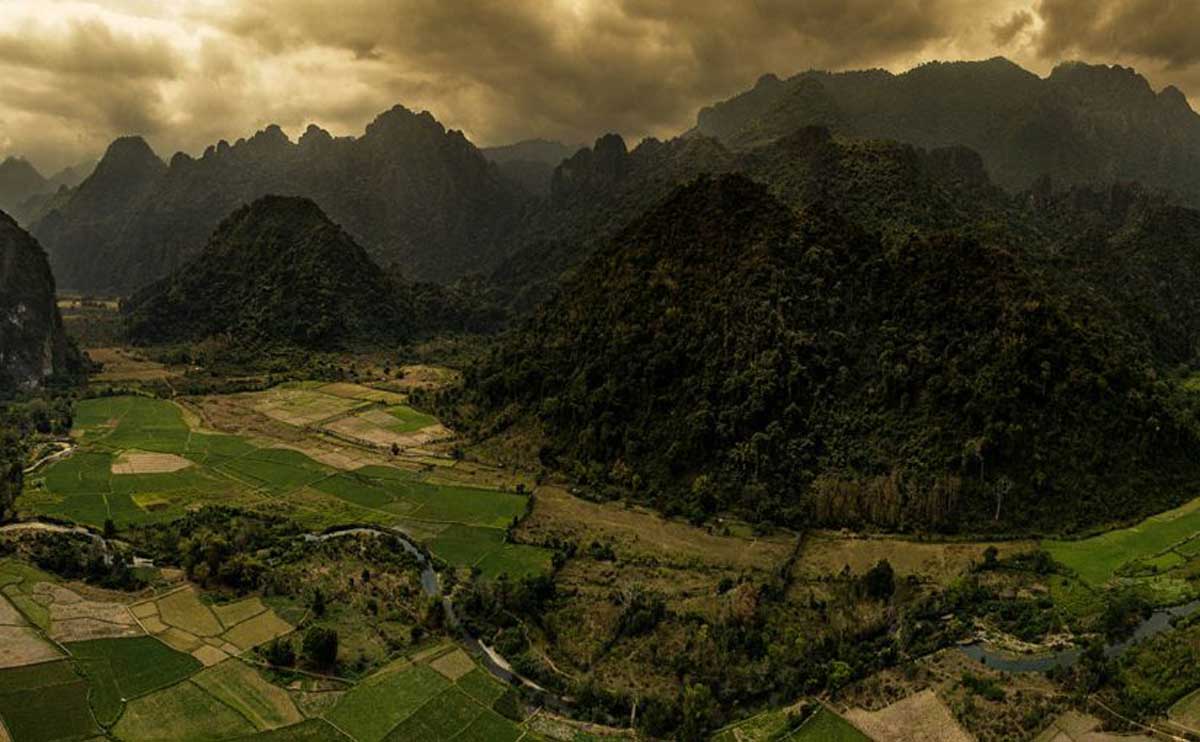
Many travellers are surprised to find that Vang Vieng, the tourist hotspot and stop-off town on the way from Vientiane to Luang Prabang, is visually spectacular. The party scene, which once made the town’s reputation, has died down in recent years, and many of the riverside bars and grubby stalls have disappeared. The attention of visitors can now refocus on the spectacular limestone mountains, lush green rice paddies and crisp air.
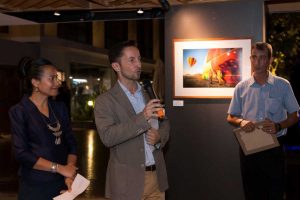
When hotelier Stéphane Vigié sent out a call for photography of the area for a national competition and eventual exhibition, he wasn’t altogether surprised to receive a veritable flood of entries from all over the country, some 400 in all. What did surprise him, when the entries began pouring in, was their quality, especially those from young Lao photographers – exactly the people he wanted to support.
Indeed, his intention behind the competition and show has been two-fold.
“My first objective was to promote what I like to call the good side of Vang Vieng,” he says. “I feel that the media, when they are talking about Vang Vieng, are almost exclusively focusing on its development challenges. They lose sight of what really makes Vang Vieng a special place: gorgeous landscapes but also a very interesting history, many ethnic communities and captivating legends.”
Vigié has long been on a mission to highlight Laos’ artistic heritage and visual culture. Today, he is the co-owner of the town’s most stylish hotel, Riverside Boutique Resort, but he first came to Laos to work as Deputy Resident Representative of the United Nations Development Program, advising on the fight against poverty and inequalities. He quickly realized that many local people understood relatively little about the country’s cultural heritage, let alone the rest of the world.
He opted to stay in the country, and, through his hotel, promote Laos’ rich cultural history. The hotel has regular shows and exhibitions, and the rooms are themed with specific ethnic décor.
Vigié’s second objective when he launched the competition was to support local artists, specifically photographers. “I wanted to try and give visibility to some good young Lao photographers,” he says, adding that he’s noticed over the years that whenever there was a call for professional photography in the country, it was foreigners who answered it, rather than locals.
Knowing in advance that many prospective entrants, especially the younger ones, would need support, Vigié had organised sponsorship for three separate groups of photographers to travel to the town and immerse themselves in the area.
And, from the quality and diversity of many of the entries, this initiative paid off. From frank and haunting portraits of local residents to startling natural landscape shots, the images on show demonstrate that Vang Vieng has a hold on anyone who visits, even locals who have been travelling through the area their entire lives.
The 24 entries that make up the exhibition, which is showing through August in Vientiane and Vang Vieng, were selected by an international jury of professional photographers, artists and journalists. In a rapidly developing society, many young people – hooked on screens and social media – are nevertheless seeing the world with fresh new eyes. It’s time, says Vigié, to see the world, through this new gaze.
“We were thrilled to receive so many great images,” he says.
“We really hope that this exhibition will help raise awareness about the beauty of Vang Vieng, and also the need to protect and preserve its unique landscapes and traditions.”
Prime Minister Thongloun Sisoulith has issued an order to tighten regulations against hunting and trade of protected wildlife. Individuals or groups that breach the order are to be arrested and prosecuted.
The PM issued the Order for Increased Stringency in Management and Inspection of Protected Wild Fauna and Flora, No. 05/PM, on 08 May this year. The order was issued to tighten implementation of forest plant and wildlife protection, especially those species which are classified as endangered.
The order firstly calls upon all ministries and sectors to increase vigilance and take further responsibility when inspecting and taking measures against those who violate regulations regarding the trade of protected species.
It then orders the cessation of hunting of all species under protected species status, and orders the cessation of import, export, and trade of wild animals and plants.
The farming of protected species is also strictly forbidden under the order, and existing farms are to be converted into safari parks or zoos. This will allow the farms to become tourism sites and provide opportunities for further study of certain species.
The Ministry of Agriculture and Forestry has been tasked with investigating and targeting shops and marketplaces known for trading in wild animals, particularly those offering bones, skin, horns, teeth, claws, gall bladder, etc.
Meanwhile, border checkpoints and police officers are being instructed to increase vigilance regarding inspections for trafficking of wild animals and plants. Any immigration officers found aiding or assisting wildlife traffickers will be immediately arrested and prosecuted.
The new, stricter regulations are to be disseminated in rural areas by local authorities to ensure understanding by all parties, with the hope of dissuading hunters and poachers.
No matter the season, now is always the perfect time to visit Hanoi to savour the range of fresh and fantastically affordable local flavours that are the pride of Vietnam’s capital and her people.
Known for its rich and varied cultures and cuisines, it’s no secret that South-East Asia is a paradise for foodies, with flavours, ingredients and preparation methods in incredible array and abundance. Savvy travellers and lovers of regional cuisine know that while many of the most refined gourmet dishes served in the rarefied atmosphere and haute cuisine of storied restaurants, hotels and boutique accommodations are to be found and delighted in, the most popular and altogether delicious signature dishes of the region can be best enjoyed at street level while seated shoulder to shoulder with the people of all ages and walks of life who, together, make each city tick. Indeed, it is often these dishes and the people who enjoy them that can really give each country, city and province its own unique and authentic flavour.
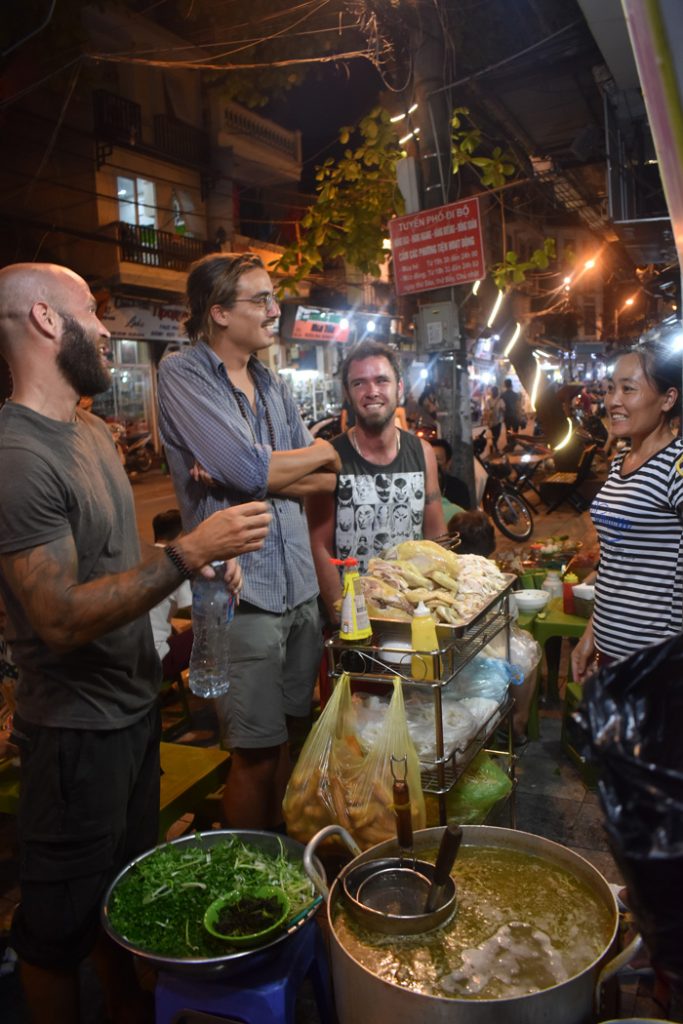
When it comes to enjoying street food at an affordable price, few places can beat the old quarter of the Vietnamese capital Hanoi.The ancient heart of an increasingly modern metropolis is a fine destination for food lovers. Like its peers throughout the region, the city has seen significant development in recent years with new and fancy shopping, accommodation and dining options abounding. While similar changes elsewhere have seen street food and vendors increasingly relocated off main thoroughfares as part of the changing face of urban life, sidewalks and open shopfronts of the old quarter of Hanoi continue to provide a space for a stool and a delicious bite to eat along with some great people-watching opportunities.
And the people of this beating heart of the ancient city are more than pleased to share their fare with locals and visitors alike on street corners and sidewalks, open cafes and roadside vendors, confident in the lasting appeal of time-honoured flavours without feeling the need for too much window dressing. Wherever you cast an eye around the old town, a dazzling array of food is served up on the footpaths, from funky cafes that open up onto the street, as well as patios with a view or curious courtyards. Lanes and alleyways are transformed into dining hot-spots serving up some of the most delicious fare imaginable at prices that are incredibly affordable.
The delicious street-side dining in Hanoi compares most favourably in terms of value for money with that found in any capital worldwide. With a dizzying range on offer, many shops and vendors focus on a signature dish, rather than trying to be all things to all people.
Needless to say, noodles and broths feature prominently, and extend well beyond the ever-famous pho. Other offerings include Bun Rieu (rice noodles in tomato broth), Bun Moc (noodle with mushroom and pork meatball), Bun Bo (beef noodle also associated with the former Royal capital of Hue), Bún cá (fish noodle), banh canh (noodles with crab meat), Bun Thang (Rice Vermicelli with Chicken, Egg, Pork), Mien Xao Luon (Glass Noodles with Deep-Fried Eel), and Bun Cha (noodle and grilled pork).
The latter was famously celebrated by then-US President Barack Obama and world-famous chef Anthony Bourdain, who, in 2016, sat down on simple stools to savour the dish at the increasingly famous Bun Cha Huong Lien restaurant. It’s now attracting more and more visitors anxious to see what the fuss is all about. But while a meal at the restaurant takes one off the street, the simple decor of this local favourite keeps the focus firmly on the delicious food, attracting a constant stream of locals and visitors.
In fact, except for the appearance of strategically placed pictures of Obama – after enjoying his meal and extolling the values of the signature dish – it appears little has changed in the year since. If you go, get the ‘Obama Combo’, including noodles, pork, a fried seafood roll and a bottle of Bia Hanoi (Hanoi Beer) for just 85,000VND ($US3.75 at time of publication).
Once you’ve had your temporary fill of its myriad noodle offerings, Hanoi’s still have more to offer. Famous dishes include Cha Ca (Turmeric Fish with Dill), Banh cuon (Rolled Cake), Banh Goi (Fried Dumplings), Nom Bo Kho (Beef and papaya salad), Goi Cuon (fresh summer rolls) and the ever-popular Banh Mi (Vietnamese sandwich).
The first dish boasts its very own street along which vendors treat diners with delicious fish. A good place to grab a banh mi is streetside Banh Mi 25. Grab a takeaway or a stool in the dining room boasting a cheerful and popular dining room with view onto the street.
As anywhere, dessert are an essential experience. Hanoi locals (and many visitors) enjoy Chè, (sweet soup) a combination of sweet pudding, jelly bits, dried fruits and ice that makes a cool, sweet and refreshing pick-me-up.
Speaking of re-energisation, the Hanoi experience would hardly be complete without a refreshing beverage or two. For a healthy choice, consider a juice at Juice ’n Joy with its balcony shaded by an ancient tree whose trunk emerges from the nearby Ly Trieu Quoc Su Pagoda and Buddhist temple, with a view of the distinctive St Joseph’s Cathedral.
Of course, every trip should include the famous Vietnamese-style coffee with its trademark mix of robusta strength suspended on an even thicker layer of condensed-milk sweetness. But Hanoi also boasts the curious-yet-delicious Ca Phe Trung, with a sweet creamy egg foam floating on top of the caffeinated brew below. Try it at one of the cafes that line the street sides of the old quarter, or from a perch with a view of Hoan Kiem lake, such as the atmospheric Cafe Pho Co with its patio, courtyard and shrine (as well as an enormous and rather friendly pet cat).
When it comes to eating and drinking your way around the old quarter of Hanoi, leading yourself solo or in a couple or small group is manageable and fun with a bit of research. Alternatively, consider a tour from the student-run Hanoi Free Walking Tours, which gives you the chance to join a guide who can take you to places you might well have difficulty finding on your own through the 3-hour Hanoi Street food Experience.
What is certain is that whichever way you decide to turn, Hanoi’s old quarter continues to provide plenty of surprises, people-watching and delicious cuisine aplenty, all for the right price.




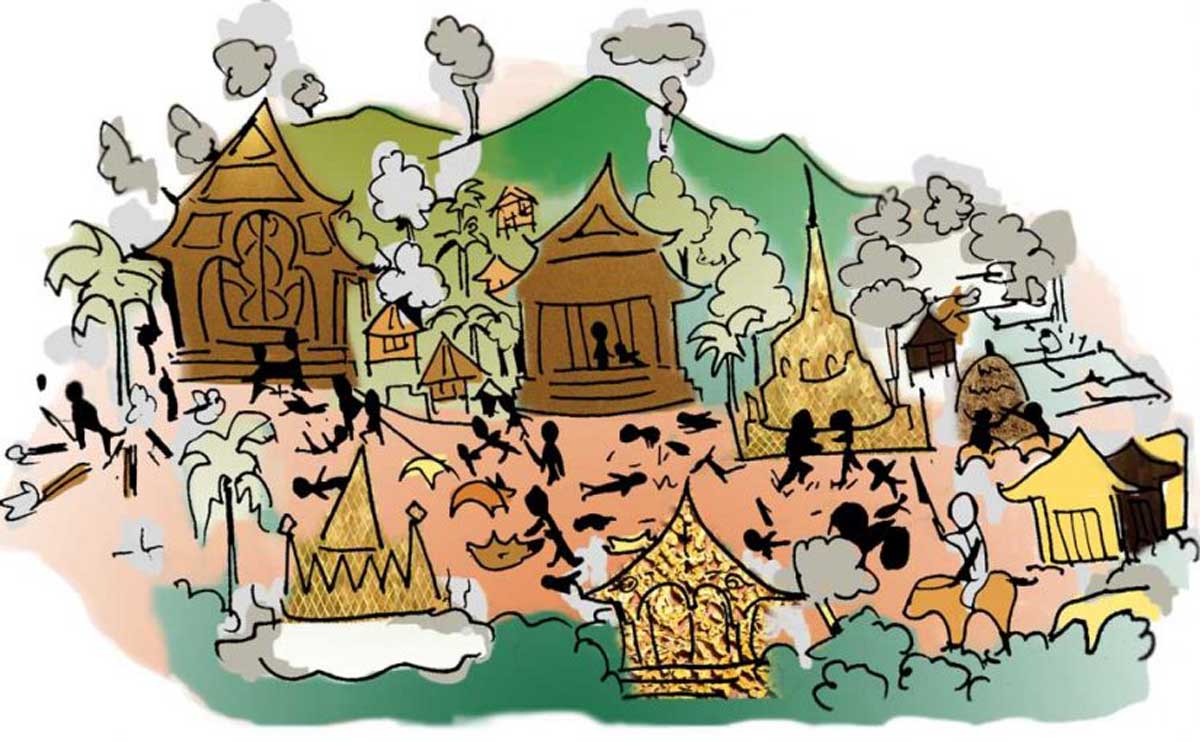

 Long, long ago, our ancestors spoke of a beautiful and magical princess, whose comeliness and virtue were reminiscent of those of the legendary Nang Soumountha. It was said that whoever was honorable enough to wed the princess would bring tremendous prosperity and richness to his people. Her beauty spread far and wide across the many kingdoms, finally capturing the hearts of two valiant princes of two of the most powerful kingdoms in all the land.
 In her last moments, the princess must have thought to herself “if neither can have me, at least everyone else will.”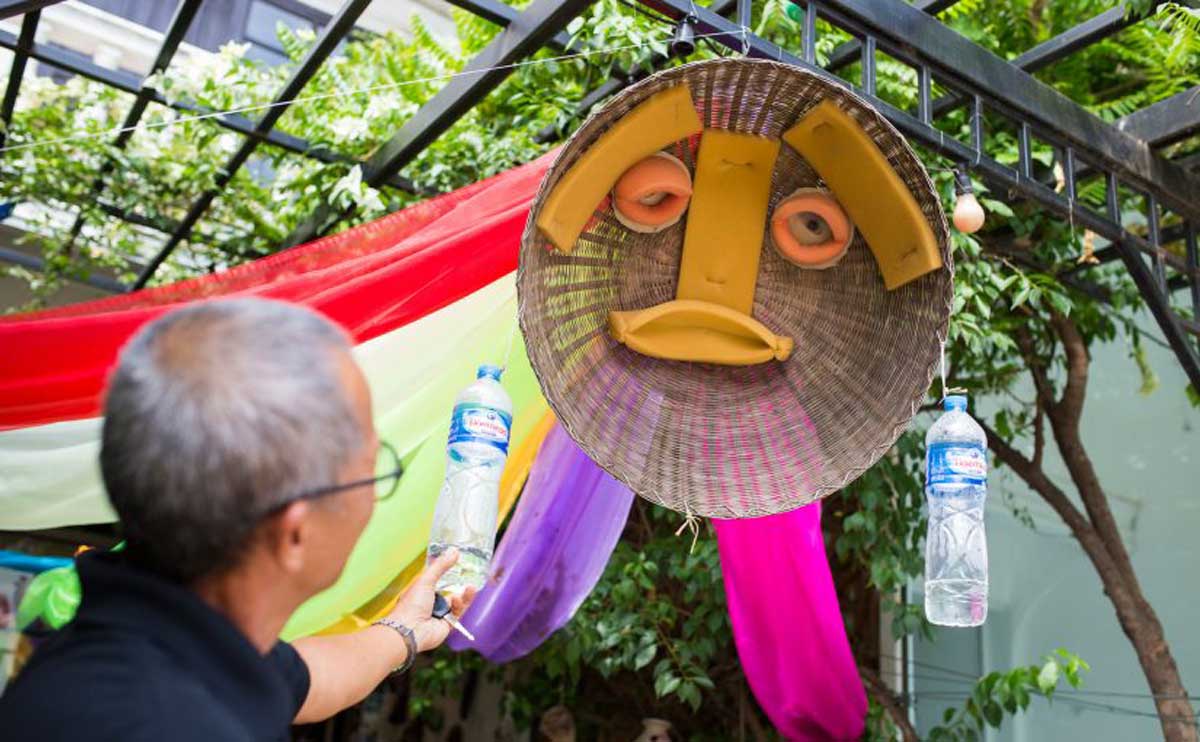
 Indeed, his intention behind the competition and show has been two-fold.
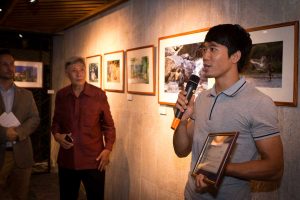 Knowing in advance that many prospective entrants, especially the younger ones, would need support, Vigié had organised sponsorship for three separate groups of photographers to travel to the town and immerse themselves in the area.
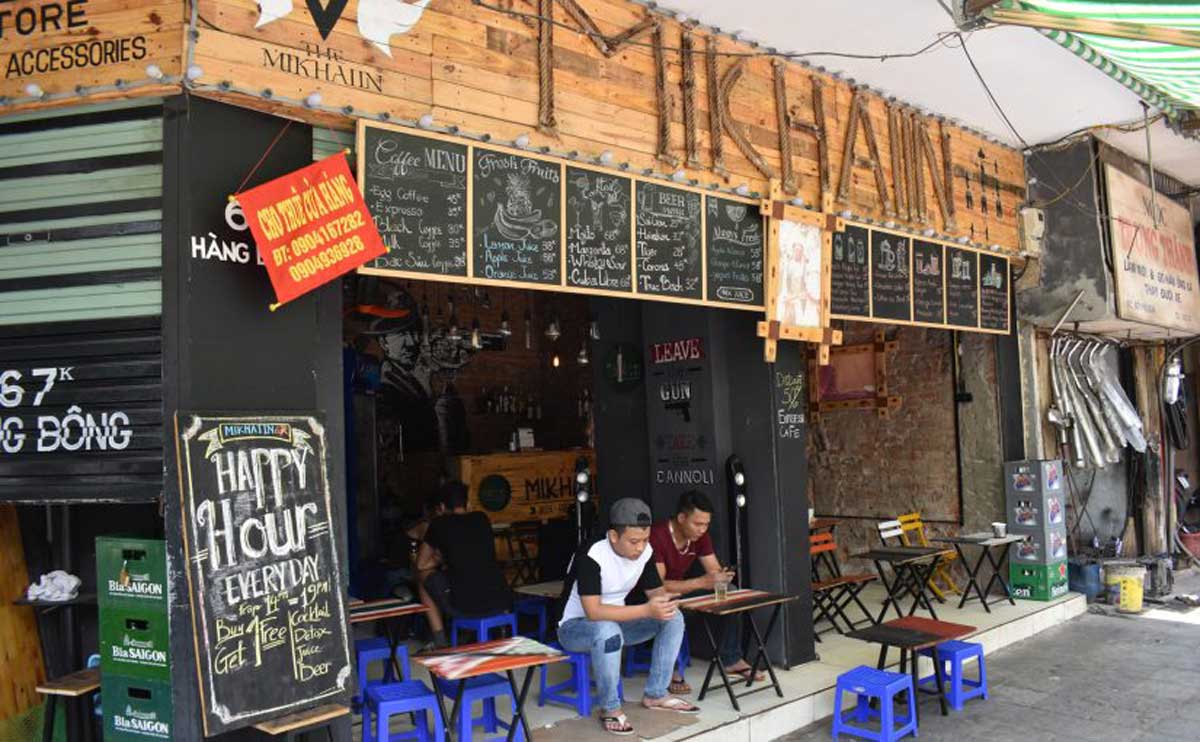
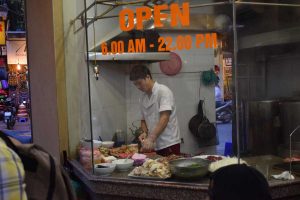 When it comes to enjoying street food at an affordable price, few places can beat the old quarter of the Vietnamese capital Hanoi.The ancient heart of an increasingly modern metropolis is a fine destination for food lovers. Like its peers throughout the region, the city has seen significant development in recent years with new and fancy shopping, accommodation and dining options abounding. While similar changes elsewhere have seen street food and vendors increasingly relocated off main thoroughfares as part of the changing face of urban life, sidewalks and open shopfronts of the old quarter of Hanoi continue to provide a space for a stool and a delicious bite to eat along with some great people-watching opportunities.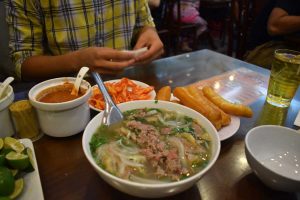
 The first dish boasts its very own street along which vendors treat diners with delicious fish. A good place to grab a banh mi is streetside Banh Mi 25. Grab a takeaway or a stool in the dining room boasting a cheerful and popular dining room with view onto the street.