Home Blog Page 6381

Laos Will Rollout New and Improved Primary School Curriculum in 2019

Photo credit: KPL

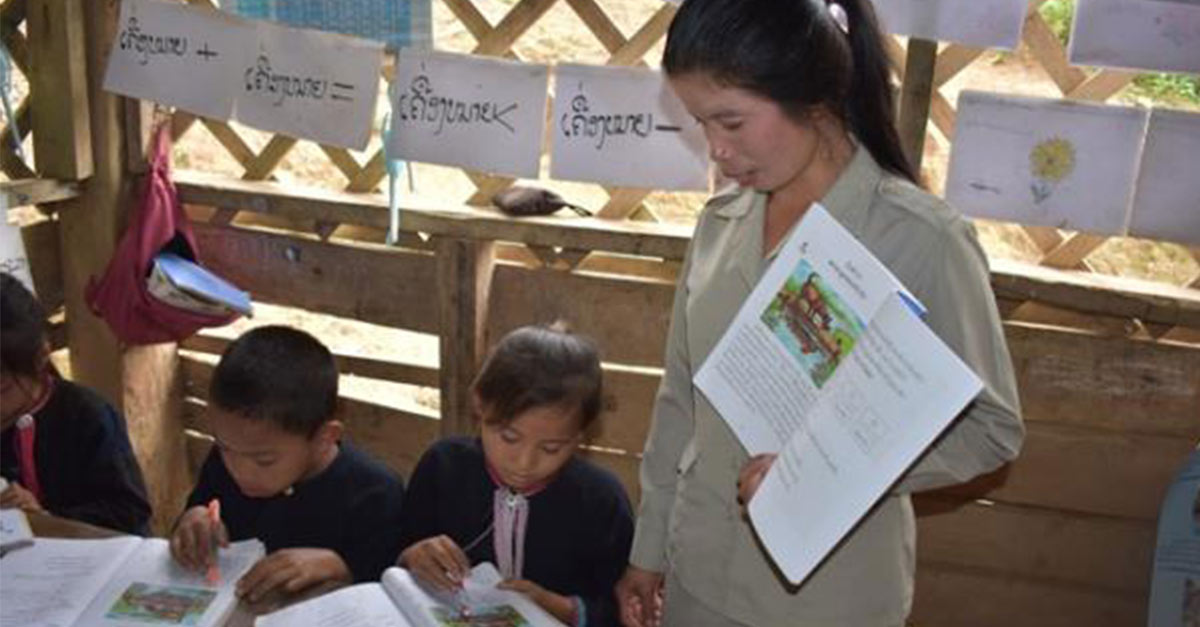
Since 2015, the Ministry of Education and Sports (MOES) has been in the process of revising the country’s national curriculum and developing new textbooks, teacher guides and other resources for primary schools.

On Wednesday, Associate Professor Khamphay Sisavanh, Vice-Minister for Education and Sports and Mr Andreas Zurbrugg, Deputy Head of Mission of the Australian Embassy co-chaired the Primary Curriculum Steering Committee’s inaugural meeting to familiarize MoES Departments with the new primary curriculum, including key changes, teacher guides and teaching materials.
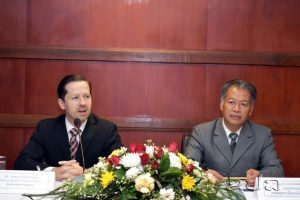
Associate Professor Dr Khamphay Sisavanh, Vice-Minister for Education and Sports (right) and Mr Andreas Zurbrugg, Deputy Head of Mission of the Australian Embassy (left) / Photo credit: KPL

The meeting was held as a high level forum for discussion and the thirty-five participants were able to give their feedback on the proposed strategy for teacher in-service training for the curriculum roll-out.

The new primary curriculum will gradually be put into effect starting with Grade 1 in September of 2019.

It will be a national curriculum, which means that every primary school in every district in every province of Laos will receive the revised teaching and learning materials.

There will be one textbook per student (over 800,000 primary students around the country). The new textbooks are in color and employ plenty of visuals, to increase attention and augment student retention. Teachers (over 35,000 primary school teachers) will receive guides for all subjects taught.

The new teacher guides are more detailed and contain guidance on how to organize each lesson and suggestions for using local knowledge, creating extension activities, working with multi-grade classes or teaching non-Lao first language-speaking students.

Primary schools will receive a resource pack with educational materials, such as story books, reading books for beginners or flash cards to support the utilization of the revised curriculum.

All materials were tested in pilot schools around the country and improved with feedback from the trials.

Nine subjects will be taught in primary: Lao language, mathematics, science and environment (formerly known as “world around us”), morals, arts and handicrafts, music, physical education, English from Grade 3 on and social studies starting from grade 4.

The new curriculum will be organized thematically. This new organization is designed to increase integration and opportunities to revise key learning. The themes in each subject are taught at the same time in each grade, and this will help multigrade teachers with planning and delivery of lessons.

A special feature of the new curriculum is: orientation week. During the first week of school, all Grade 1 students will follow a program of activities to help them feel familiar with school life and build their confidence in key routines, behaviors and skills needed in school. Orientation week will help ensure students find school an interesting and enjoyable experience and is known to have a positive impact on learning outcomes.

With the objective to improve student learning outcomes, the development of the new curriculum was informed by child learning theory and established principles of effective primary school pedagogic practice.

Hence, one of the main changes with the new curriculum will be in the pedagogy approach. The new curriculum promotes active learning. The students will be engaged in lessons by doing activities to encourage them to process new information and apply new knowledge learned.

The teachers will be facilitators rather than one-way providers of information. Students will learn by doing meaningful learning activities and by reflecting about what they are doing.

“Today, we acquainted ourselves with the new primary curriculum development with related contents of teaching materials. Certainly, when we have a new curriculum and instructional materials we want our teachers who are playing a key role in the implementation of curriculum at the grassroots level to be familiar with both contents and methodology of teaching,” said Associate Professor Sisavanh.

“Developing a primary curriculum is the first step to improve student learning outcomes. But the second step, the development of good quality teacher training and support is essential to ensure that teachers can successfully implement the curriculum,” said Andreas Zurbrugg. “Australia, the European Union and USAID are proud to be partnering with the Research Institute for Educational Sciences and the Ministry of Education and Sports to support the development of the new curriculum and its rollout.”

Teacher training and support is essential to ensure that teachers can successfully implement the new curriculum. It is teachers who bring the curriculum to life in the classroom and they are crucial to the success of a curriculum innovation.

In-service teacher training modules will be developed based on the revised primary curriculum content and teaching methodology.

The rollout of the new curriculum is a huge task which will need the commitment and support of all stakeholders, from national, provincial, district and school levels. But the new national curriculum and associated teaching and learning resources will make an important contribution to the quality of the learning outcomes of children.

It will help more Lao girls and boys of primary school-age achieve functional literacy and numeracy and acquire life skills.
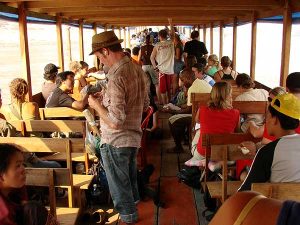
Source: KPL

Tourism Ministry: November is Laos’ Best Tourist Month

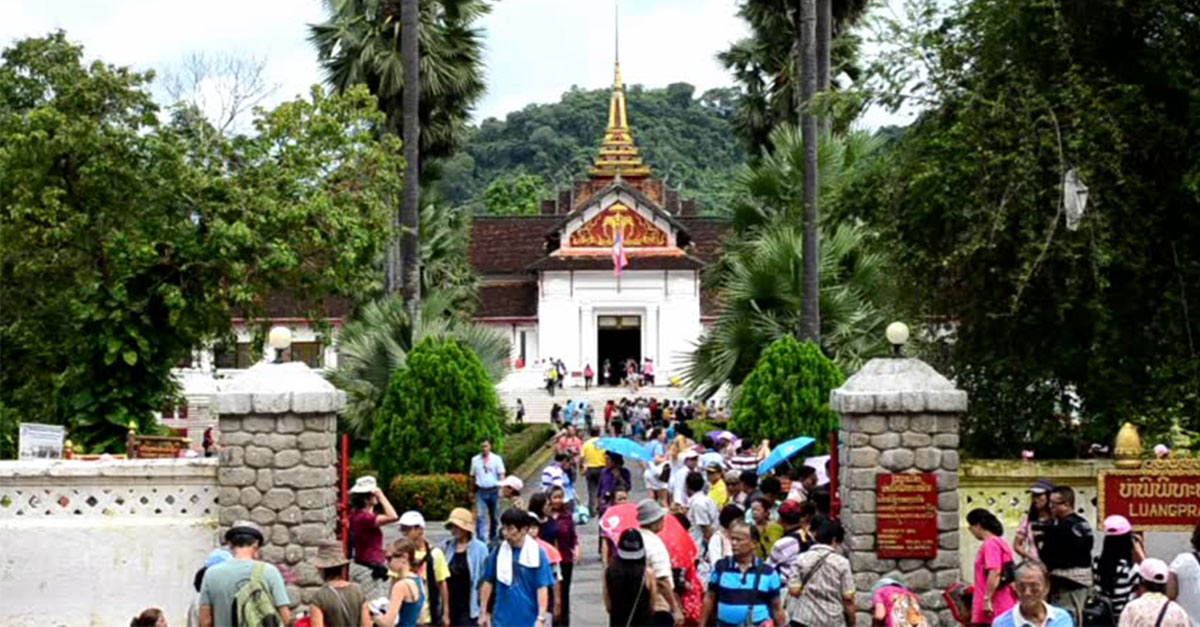
According to a 2017 Tourism Department (MOICT) report, it was observed that the month of November was Laos’ best tourism month, which had seen 358,997 people visiting the country, with December coming in close at second place with a little over 357,000 people.

Third place went to March with over 355,000 visitors and the fourth best month was February with over 350,000, followed by April with just over 346,000 visitors.

It was noted that November was the start of the cool season, when it’s not too hot and not too cold. This is the month when most Europeans visit Laos.

The lowest number of tourist arrivals was recorded in September (approximately 262,000 visitors), which is a time of fairly heavy rainfall.

The report also ranked tourist arrivals by port of entry. The first Lao-Thai Friendship Bridge in Vientiane recorded the most visitors with over 863,000 tourists, followed by the second Lao-Thai Friendship Bridge in Savannakhet with over 517,000 visitors.

The Boten-Bohan border crossing between Laos and China in Luang Namtha province recorded over 493,000 visitors, while Wattay International Airport registered a surprising 364,000 arrivals.

In 2017, over 1.7 million Thais came to visit Laos, making them the largest tourist nationality. Vietnamese tourists came in second with over 891,000. There were just over 639,000 Chinese tourists and about 170,000 Korean visitors.

The total number of visitors to Laos increased every year from 1990 to 2015. In 2016, the number dropped by 9.6 percent (4.2 million tourists) and there was a further drop of 8.6 percent in 2017, when there were only 3.8 million visitors.

Laos expects to welcome 5 million visitors during Visit Laos Year 2018 and is targeting tourism revenue in excess of US$900 million.

Source: Vientiane Times

Nothing Like a Staycation

It’s a muggy and oppressively hot Saturday afternoon in Vientiane, but in the hushed, carpeted corridors of the Crowne Plaza Hotel, there’s no weather at all. Nor are there any intrusive sounds, or smells. Just a soothing, clean, crisp-sheet atmosphere that is both refreshing and, to a certain type of traveller, ultimately familiar.

In fact, if you don’t happen to glance out of any windows, you could be in just about any big city in the world – Sydney, Hong Kong, Washington DC, Paris. All branded hotels like this look, smell and sound the same, the world over, and that is exactly what the Crowne Plaza’s ideal guest expects when they check in. Even in Vientiane. Even if they last checked out in Istanbul.

None of this is a disparagement, and Oliver Horn, the hotel’s general manager, doesn’t take it as such. In fact, the muting of a city’s local charm can only mean that the hotel is reaching the highest international standards. And this is what the hotel’s target clientele expects.

“Crowne Plaza is a brand that is mostly targeting business travellers and those leisure travellers who want the ‘safety’ of a brand, who want to know what to expect,” he says.

“If their experience has local flavour, then great, but this is not what our target guest is looking for – they are looking for the predictability of a branded experience.”

“Despite that, we actually do have quite a few references to Lao culture in decoration, uniforms and design, but we deliberately did not make them too obvious – the team is proud to introduce them and open up the culture to those guests who are interested.”
And that is exactly what they’ll get if their room looks anything like ours, which of course it will, because all the rooms must be similar. The colour scheme is neutral, the décor tasteful, the towels fluffy, and the bedding as crisp and white as newly fallen snow – there’s no other way to describe it when you live in Vientiane and all your whites have long turned ecru or eggshell (or whatever other shade name most lessens your frustration). Even the shower is a glory – two huge faucets to choose from that each release a deluge of perfectly steamy water.

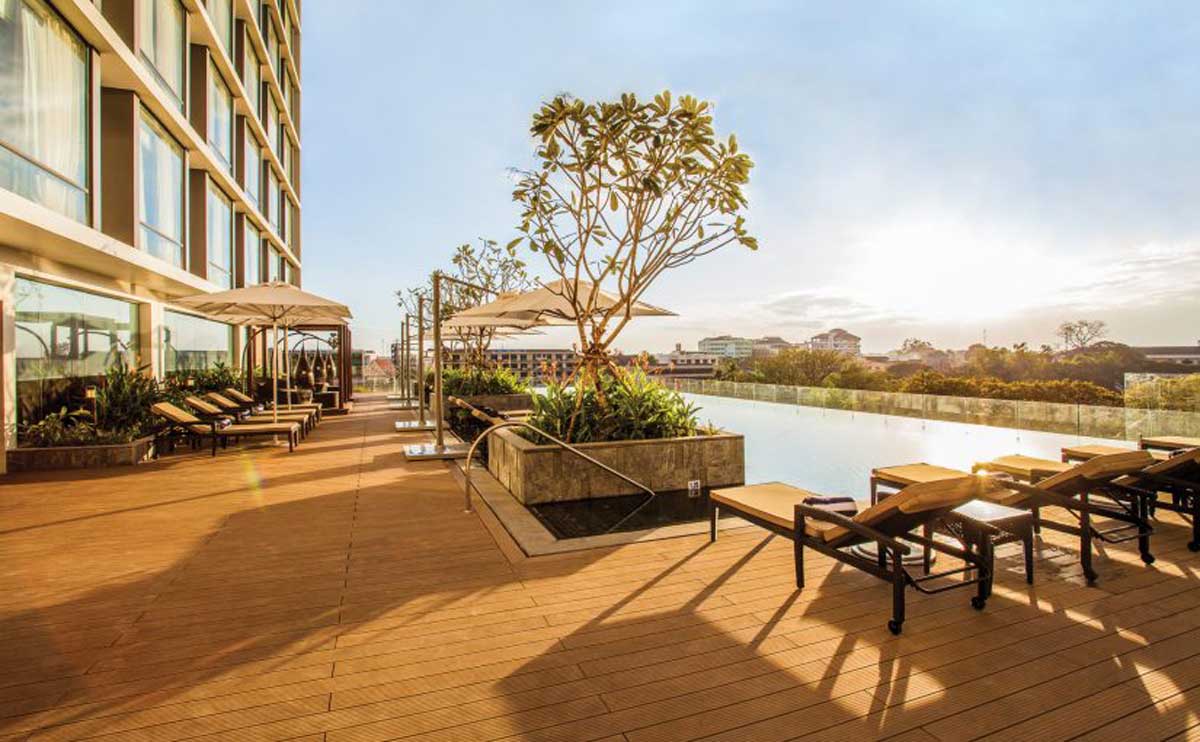
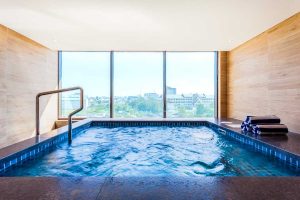
The pool is another story. Ah, the pool. Situated on the third floor, it’s a gleaming turquoise oasis that sits at roof level. We sit in the swim-up bar – lounge chairs actually stationed in the water – and order drinks and food, frolic in the water which, as you would expect although you somehow fail to notice it at the time, is neither too hot nor too cold – and wrap ourselves in large, blue-and-white striped towels between dips. The chairs are all positioned to face the sunset, which, in Vientiane, is uniformly spectacular. As we lean back and take it all, it strikes me that we could be watching it on a cinema screen, so removed does the pool feel from the rest of the city. Even the air – so dusty, smoky and distinctive in Vientiane – feels neutralised.

The service is notable – very notable – for its hotel-brand efficiency. I barely need to introduce myself at the desk, when I’m instantly made to feel like everyone’s been waiting for us. When we discover the room doesn’t quite allow for all four of us, a brief phone call later and there’s a knock on the door and another bed made up within minutes. And when our over-excited young children run amok throughout the vast dining room come dinnertime, the staff are both solicitous and delighted – both keeping an eye on them and assuring us that nothing – not even badly behaved offspring – is a problem.

This smooth operation is no accident – not in a developing country like Laos. The country has long been a “white space” for IHG, Crowne’s mother company, but to have the hotel finally open here is a significant step for Laos, if not a coming-of-age signifier.

“We also strongly believe that the country has tremendous growth-potential; the GDP growth was stable across the last couple of years and we believe this will continue,” Horn says.

“Generally, it can be said that once the first brand arrives, others will follow – so from that point-of-view, we are happy to be a catalyst.”

He has worked for IHG all over the world, but plans on staying put in Laos for the moment, as plans for another “really interesting project”, take shape right next door
But for the moment, in practice, the hotel’s emphasis on consistency means some serious investment when it comes to staffing quality, and Horn confirms that staff training was a top priority when developing the hotel; the hotel’s investors spent $250,000 in training personnel during the “pre-opening phase”.

“Being part of an international brand means that we have substantial training resources at our disposal,” he says.

“We had trainers here from our sister hotels in Thailand and many of our colleagues went and experienced other Crowne Plaza Hotels in South-East Asia as part of their training. The biggest thing, however, is that the leadership team is not hiding in their offices but that we actively seek guest contact and listen to our teams every day.”

Indeed, all the staff – touchingly – know and refer to Horn by his first name, another deliberate touch on Horn’s part. Keep staff happy and close, and guests will reap the benefits, no matter where they’re staying.

The local flavour that some guests seek can be had, inevitably, at the vast buffet in the first-floor dining room where, tucked in amongst the meatballs, potato gratin and ratatouille, you can find a very, very good Or Laam, a traditional dish from Luang Prabang. Alongside a carefully curated wine list – we opted, predictably, for the Australian Shiraz – you can also indulge in the traditional Lao dessert of nam varn (water sweetened with sugar and coconut milk, and heaped with jellied fruit and grains), but I couldn’t possibly have walked past the visually splendid array of fancy petit-fours without partaking. Best cream-puff ever – sorry nam van.

Similarly, at breakfast, croissants and granola are plentiful, alongside pho and baguettes. We had been oscillating between heading down for another swim before eating but outside, the storm that has been building for days finally breaks, and the rain beats against the windows as we go for seconds and thirds of all the massive buffet has to offer.

It’s as though Crowne Plaza – in its mission to make us feel as comfortable and free from stress as possible – has even contrived to have the weather make up our minds for us. Anything’s possible in a place like Crowne Plaza – you only have to let the staff know.
 

facebook.com/crowneplazavientiane

crowneplaza.com/vientiane

Originally Published in: Champa Meuanglao

Words: Sally Pryor

Koreans Bring Lao Cuisine to Korea

Newly opened Lao Piak is one of only 2 Laotian restaurants in Seoul

Two young women in their early 30s have been close friends since college. Both graduated from high school in Korea and went on to the University of Virginia in the United States, where they first met. When they graduated, they both went into television ― one became a TV presenter and the other a producer at major local broadcasters.

They prepared for the TV jobs together and kept in close touch and traveled together when they started working. After five years in their respective positions, they both quit. 

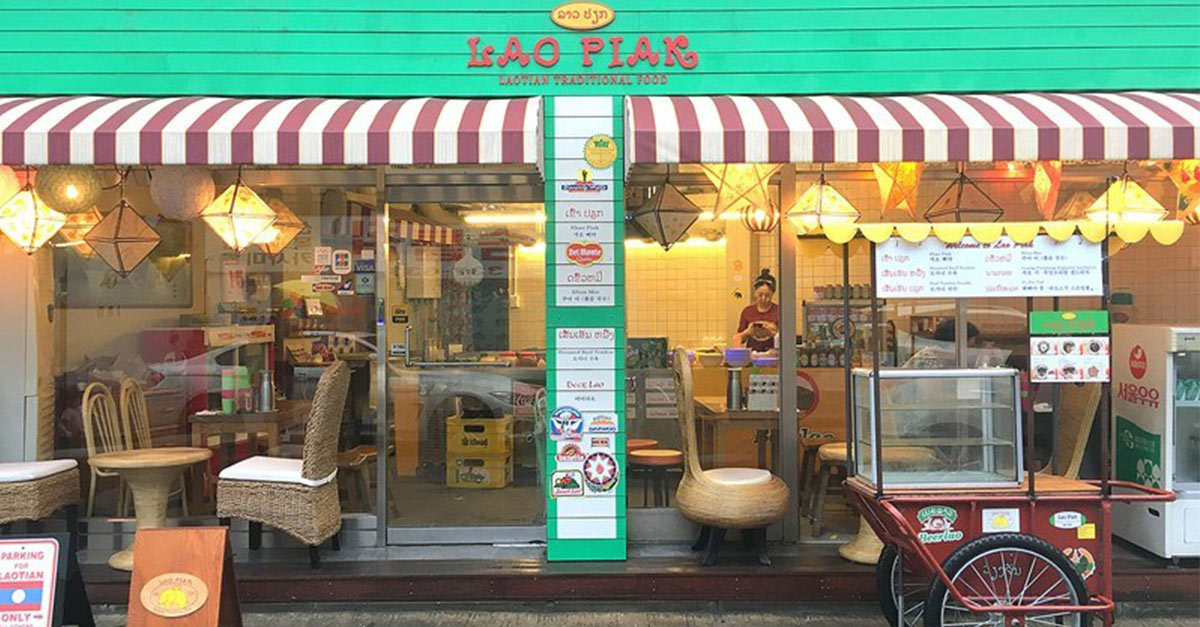
Kicking their established jobs to the curb, the two women set out on a completely new, risky adventure to open a Laotian restaurant called “Lao Piak” on a tranquil street in Mangwon-dong, Mapo-gu, Seoul. One year into its opening, the restaurant is a success. 

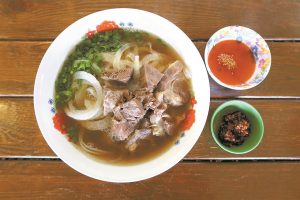
Lao Piak’s beef tendon noodles with homemade chili sauce / Korea Times photo by Yun Suh-young

It all began when the two went on vacation together two years ago to Laos, a country that had been gaining hype on television. 

“We went to Vientiane and Luang Prabang in Laos. It was our first time in the country. We decided on Laos because it was close to Thailand and Vietnam and had similar food. It was also after Flowers Over Youth ended with its episode on Laos. That triggered our interest,” said Chung Hyo-yeol, co-owner of Lao Piak and the former TV presenter. Piak refers to noodles in soup in Laotian.

“After traveling to Laos, we were mesmerized by the country and wanted to introduce Laotian cuisine in Seoul. Three months after the trip, we both quit our jobs and went back to Laos to learn Laotian cuisine from locals. On that trip we included Vang Vieng to the two previous locations and stayed for a month.”

They ended up spending three months in the country on three return trips to learn local recipes.

“It was difficult to find locals in the city to teach us the recipes. They were wary. But those in the countryside were more open. Our recipes are from them,” said Won Sung-hoon, co-owner of Lao Piak and former producer at Olive, a local lifestyle and food cable channel. 

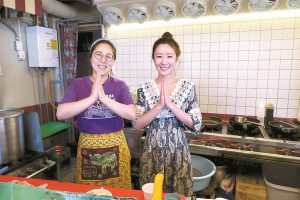
Co-owners of Lao Piak Won Sung-hoon, left, and Chung Hyo-yeol / Korea Times photo by Yun Suh-young

The two’s radical transformation from producer and presenter to chef-owners brought resistance from their families. 

“Mine wouldn’t see me until the restaurant opened. Sung-hoon and I are as close as sisters so we decided to live together above the restaurant. It’s less tiring for us,” said Chung.

“My family is used to my radical transformation due to a past experience _ when I switched from a biology major to becoming a producer. When they heard I was planning to open a restaurant, they were less surprised,” said Won. 

Laotian food is much influenced by neighbors Thailand and Vietnam and vice versa. It also uses a lot of ingredients from the neighboring countries. Laotian staples are steamed sticky rice and larb which is a spicy marinated meat or fish mixture. The papaya salad dish, better known as som tam in the West, is also a Laotian invention. 

“Because of the low quality of beef in Laos due to geographical reasons, they use more pork and chicken. Their noodle soup is popular among Koreans. The noodles are made with glutinous rice, but it’s not the same as rice noodles in Korea. There’s a dish called khao piak which is popular. Khao means rice, and piak is noodle soup,” said Won, who is in charge of the noodle soup, whereas Chung is in charge of anything fried. 

“Our noodles are handmade. We each take turns making them. It’s on limited availability because we can only make a handful by ourselves.” 

The two are the only chefs at the restaurant. In the beginning they did everything from cooking to serving. Now they have a few part-time servers to help out. 

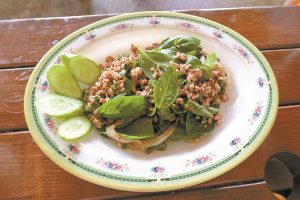
Lao Piak’s pork larb / Korea Times photo by Yun Suh-young

“Here, we create two types of stock ― beef and chicken. We tried for three months to get this right,” said Chung. 

What they learned in Laos is that they like spicy food, contrary to Vietnamese or Thai. 

“We were surprised how much chili sauce they put in the soup ― until it’s red. So we created our own chili sauce,” said Won. “We also want to introduce a dish called Khao poon, a rice vermicelli soup, mostly eaten at weddings. They use coconut milk and ox blood. It might not be liked by Koreans, but we want to introduce foods like this.”

The two didn’t do any marketing but people line up to get a bite. The Laotian Embassy in Korea became a big fan. A contributing factor is the style and decor of the restaurant, which the two put a lot of legwork into.

“We brought in almost everything from Laos ― plates, accessories and decorations and planned the interior concept,” said Chung.

Luckily it caught people’s eyes who were passing by. The street is rather remote from the central hip region, which is why it is surprising that it would attract so many people. 

“A lot of locals started paying visits and now weekdays are packed with locals and weekends with young people from elsewhere.”

Here are some pictures from Lao Piak’s Official Instagram Page.

[ngg_images source=”galleries” container_ids=”32″ display_type=”photocrati-nextgen_basic_thumbnails” override_thumbnail_settings=”1″ thumbnail_width=”100″ thumbnail_height=”75″ thumbnail_crop=”1″ images_per_page=”20″ number_of_columns=”0″ ajax_pagination=”0″ show_all_in_lightbox=”0″ use_imagebrowser_effect=”0″ show_slideshow_link=”0″ slideshow_link_text=”[Show slideshow]” template=”/home/www/wp-content/plugins/nextgen-gallery/products/photocrati_nextgen/modules/ngglegacy/view/gallery.php” order_by=”sortorder” order_direction=”ASC” returns=”included” maximum_entity_count=”500″]
Written by: Yun Suh-Young
Originally published in this  Korea Times article entitled ‘Two female entrepreneurs’ delicious adventure’

Town of Kaysone Phomvihane Officially Declared a City

Kaysone Phomvihane City

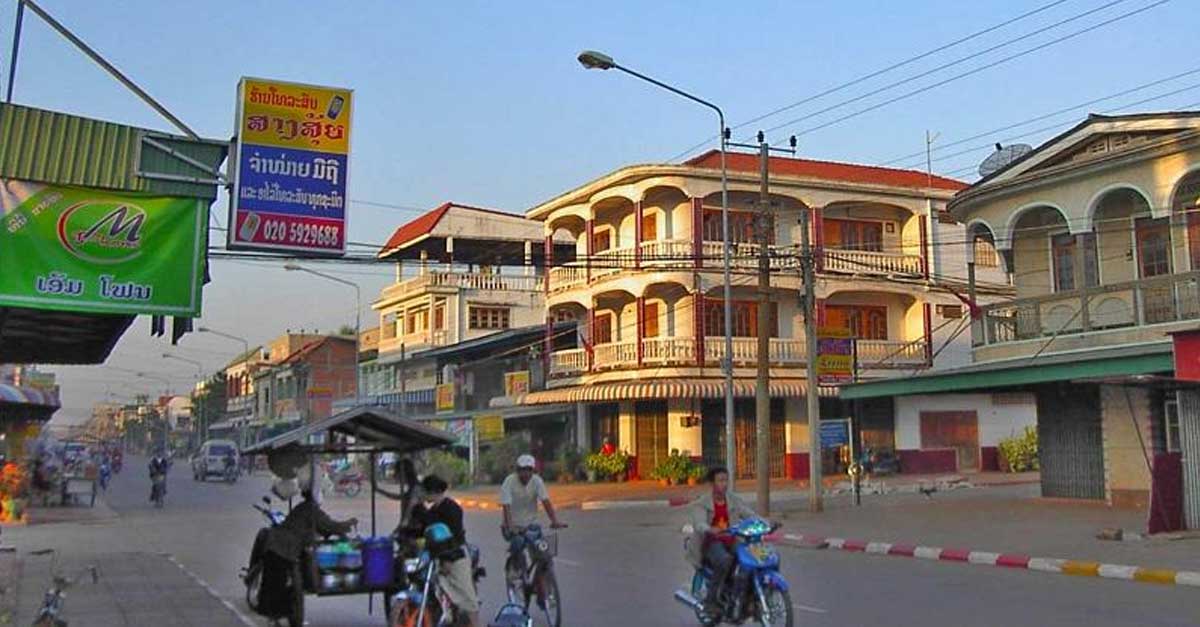
The town of Kaysone Phomvihane, capital of Savannakhet Province, has been officially declared a city after the government recently announced the upgrade of three provincial capitals to city status.

A ceremony was held on May 25 to announce the new status of Kaysone Phomvihane City, and to celebrate the one millionth child born in the province.

Prime Minister Thongloun Sisoulith issued three decrees last month approving the upgrade of three districts into cities, including Kaysone Phomvihane of Savannakhet Province, Pakse of Champasack Province, and Luang Prabang in Luang Prabang Province.

In order to attain city status, a district or municipality must have a population of at least 60,000 people, and be financially self sufficient in regard to administration costs.

Kaysone Phomvihane City has a population of 125,76 people. Most households have access to electricity, water supply, telecmmunications, education, and health services.

The annual per capita income of Kaysone Phomvihane City is US$ 2,041.

The ceremony announcing the city’s status was attended by President Bounnhang Vorachit, President of the Lao Front for National Development Xaysomphone Phomvihane, and Savannakhet Governor Santiphab Phomvihane, as well as senior officials, and local people.

Fifth Lao-Thai Friendship Bridge Approved

Photo credit: Thai PBS

The Lao and Thai governments have officially given the green light to the construction of the 5th Lao-Thai Friendship Bridge that will soon link Beung Kan Province in northeastern Thailand to Paksan, Bolikhamxay Province in Laos.

An anonymous source from the Ministry of Public Works and Transport (MPWT)) told local newspaper The Vientiane Times on Tuesday that Lao and Thai officials approved the plans when they met in Paksé earlier this year.

Furthermore, a 6th Lao-Thai Friendship Bridge linking Salavan (Laos) to Ubon Ratchathani (Thailand) is also currently in the proposal stage.

“The two bridges may be built at the same time, but the date of construction will need further consideration,” the MPWT source said.

The 1.6km-long bridge is likely to cost over USD$110 million (3.6 billion baht). Land clearing for the construction of a road heading to the site in Beung Kan province has already started with land along the road being expropriated and landowners compensated. Rubber trees along the route have also been felled for the road construction.

Thai PBS reports that it is likely that construction will begin towards the end of this year.

Once complete, the bridge will serve as a major transport route that will link Thailand with several cities in Vietnam. Departing from Beung Kan Province, it would only take vehicles 150km of travel to reach Nge An Province in Vietnam via Lao National Highway No. 8 through Bolikhamxay. In Nge An, the route then links up with roads to Hanoi, Danang and other cities in Vietnam.

In addition, the new bridge will further permit accessibility to the northern Lao provinces of Xieng Khuang and Huaphan to tourists from Thailand. The bridge will likely provide a further boost to Bolikhamxay’s already fast-growing economy which boats an economic growth rate of 8% last year with a GDP of about 5 trillion kip and average annual per capita income of 17.9 million kip (USD $2,151).

Beung Kan province depends mainly on ferries and boats for goods transport to neighboring countries through the Beung Kan – Paksan border checkpoint. Cross-border trade through this checkpoint came to approximately USD $160 million, according to statistics in 2011. The amount rose to USD $168 million in 2012 and is likely to continue to increase. Around 128,000 people cross the border by boat each year.

About the Lao-Thai Friendship Bridges

There are currently four Thai-Lao Friendship Bridges. Both countries officially opened the first Lao-Thai Friendship Bridge, linking Nong Khai in northeastern Thailand with the Lao capital of Vientiane, on the 8th of April, 1994 (Australian Government aid, USD$30 million construction cost).

The second Lao-Thai Friendship Bridge, linking Mukdahan, also in northeastern Thailand, with the central Lao province of Savannakhet, was opened on the 20th of December, 2006 (low-interest loan from the Japanese Government, construction cost of USD$70 million).

The third Lao-Thai Friendship Bridge, linking the northeastern province of Nakhon Phanom in Thailand with Khammouan province in central Laos, was opened on the 11th of November, 2011 (Thai Government grant, construction cost of approximately USD$60 million).

The fourth Lao-Thai Friendship Bridge links Chiang Khong District of Chiang Rai Province in northern Thailand with Houayxay of Bokeo Province in Laos and was opened at the end of 2013, made possible due to a joint investment by the Thai and Chinese Governments.

Source: Vientiane Times, Public Relations Department Thailand, Thai PBS, Lao Economic Daily

Fuel Prices Rise Again and May Rise Further

The retail price of fuel has just risen again as of Saturday (May 26).

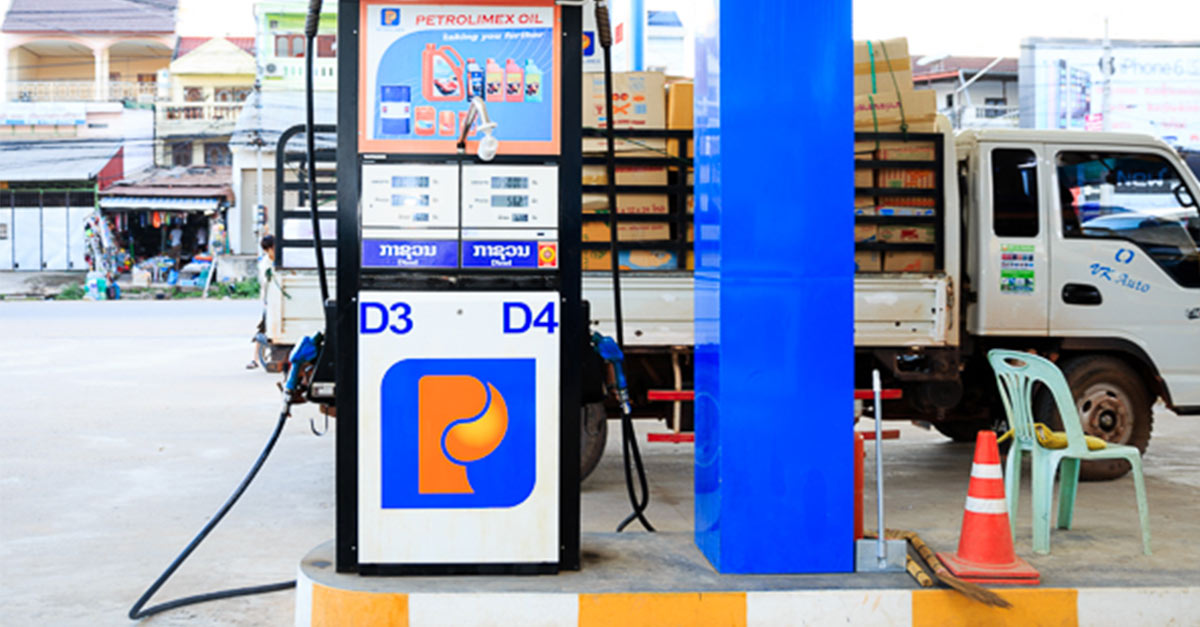
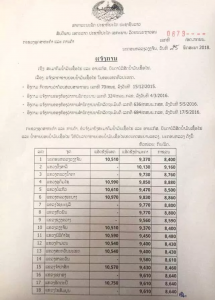
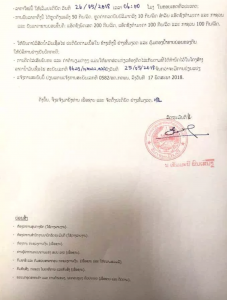
According to a statement signed by the Minister of Industry and Commerce, petrol companies and gas stations across the country must now increase the retail price by 200 kip/liter for premium grade, 100 kip/liter for regular petrol, and 100 kip/liter for diesel.

In the capital city for example, petrol now costs 10,510 kip/liter for premium grade, up from 10,310 kip. One liter of regular petrol sells now for 9,370 kip, up from 9,270 kip and diesel will cost 8,400 kip/liter, up from 8,300 kip. The price change is the seventh since the start of the year. Six of the changes were increases, while one saw the price drop slightly.

Notice from MOIC

A ministry official said the new price hike was in line with the fluctuating oil price on the world market. He urged all parties to take steps to save energy given that Laos is an importing country.

It has been observed, however, that external factors are not the only things driving up prices. Oil companies also incur numerous domestic costs such as higher taxes, government reserve obligations, road maintenance fund fees, e-meter and quality inspection service fees. All of these costs are added to the final retail price of fuel that consumers ultimately pay.

According to the Petroleum and Gas Association, oil firms have to pay 520 kip/liter to the road fund, 100 kip/liter contribution to the state fuel reserve (a recent measure by the government reduced this fee, previously set at 300 kip/liter), 28 kip/liter for e-meter service, and 32 kip/liter for quality checks on imported commodities.

Acting President of the Petroleum and Gas Association Phayboun Phomphaphithak said that the imported price of oil from overseas to Lao markets is 60 cents (USD) per liter, but the retail price within the country is more than US$1 per liter.
An oil expert evaluated the circumstances of various conflicts in the world and surmised that it is possible that oil could go up to 70 to 80 cents (USD) per liter.

It has been noted that the government receives approximately 40 percent of the monetary benefit from the sale of petrol in Laos and the rest goes to the oil companies.

Fuel consumption in Laos has been rising alongside economic growth. In recent years, the demand for oil has risen by 7-10% annually. In 2017, around 1.4 million tons of oil was shipped and supplied to the Lao market.

Source: Vientiane Times, Lao Economic Daily

Government Declares One-Dish Menu Items to Be Priced No More Than 15,000 Kip

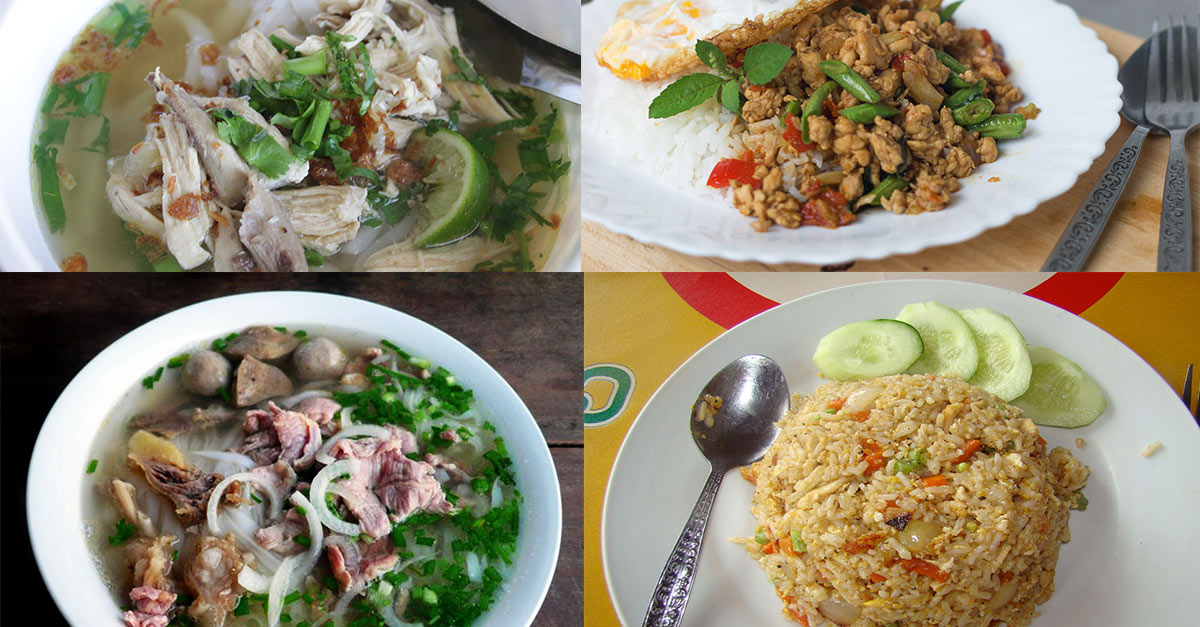
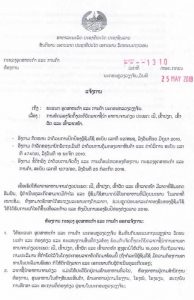
The Ministry of Industry and Commerce has just announced that it will be implementing a new price control policy, in Vientiane Capital, on the following popular menu items in restaurants: pho, kao piek, kao pat, and kao latna.

The notice, dated 25 May, and signed by the DG of the Office of the Industry and Commerce Ministry Bansathi Thepavong, stated that the aforementioned one-dish menus (aharn jarn diew) should not exceed 15,000 kip. In the event that the customer would like a customized dish with extra serving sizes or special items, he/she may negotiate the price directly with the vendor.

The MOIC has asked the Vientiane Department of Industry and Commerce and the Vientiane Department of Information, Culture and Tourism and other relevant bodies to cooperate and ensure compliance among restaurant vendors.

The new policy is part of the government’s efforts to curb inflation and ensure that average citizens are able to pay for food and that food vendors are able to earn a fair profit from their businesses.

Food vendors that need to alter their prices must seek approval from the Vientiane Department of Industry and Commerce, by detailing the costs of their ingredients and materials.

Source: Laopost, Mahason Magazine