Home Blog Page 6473

Parfums Chocolats is the Chocolatier Vientiane Didn’t Know it Needed

Parfums Chocolats Featured

By Jasmina

There are two types of people walking the face of this Earth: the type that share their box of chocolates, and the type that don’t. I’m a ‘don’t’ type. And the reason for that is, other than being incredibly selfish, I’m one of those people who take a bite of every piece in the box before committing to one I like (I know, I’m a monster).That being said, I usually finish the box anyway.

However, after sampling every flavor that Parfums Chocolats had to offer (it was for research, okay?) I know I won’t have to play chocolate roulette anymore, since all 13 of their flavors are delicious. Flavors include Sea Salt, Coconut, Pineapple, Coffee Whiskey, Praline, Caramel, Coffee and Madagascar Vanilla.

[ngg_images source=”galleries” container_ids=”13″ override_thumbnail_settings=”1″ thumbnail_width=”100″ thumbnail_height=”75″ thumbnail_crop=”1″ images_per_page=”20″ number_of_columns=”0″ ajax_pagination=”0″ show_all_in_lightbox=”0″ use_imagebrowser_effect=”0″ show_slideshow_link=”0″ slideshow_link_text=”[Show slideshow]” template=”/home4/laotiantimes/public_html/wp-content/plugins/nextgen-gallery/products/photocrati_nextgen/modules/ngglegacy/view/gallery.php” order_by=”sortorder” order_direction=”ASC” returns=”included” maximum_entity_count=”500″ display_type=”photocrati-nextgen_basic_thumbnails”] 

Whether you are a self proclaimed ‘chocolate connoisseur’ or just an everyday ‘chocoholic’ (everyone has their vices, we’re not judging) Parfums Chocolats is the place for you. Aside from the delicious variety of chocolate cakes, mousses and eclairs made on location by the cafe, this chocolatier does something Vientiane hasn’t seen yet. All of their gourmet chocolates are made with the highest quality chocolate ganache.

The first bite will greet you with a satisfying crunch through the outer shell, followed by silky smooth flavored goodness in the center. You can enjoy the little delights to go or sitting at the second floor with an espresso or classic hot chocolate (because you’re an adult and you can eat chocolate with a side of chocolate if you want). 

The French culinary scene has always had a strong presence in Vientiane Capital, with new and old patisseries, bakeries and restaurants speckling the city, so it’s no surprise that the French know what they’re doing. Parfums Chocolats is no exception; owned by a French couple paired with a very talented chef, they have catered to the taste-buds of many who live here. Also stocking croissants and other pastries for breakfast, along with gelato for an all day treat, you will be sure to find something for every member of the family at this quaint cafe. 

Open daily from 7am to 8pm Tuesday-Sunday, please visit their Facebook page at https://www.facebook.com/parfumschocolats/ for more information.

Wattay International Airport Upgrade Well Underway

Wattay International Airport

The 50 year old domestic terminal at Wattay International Airport is to undergo major renovations that will help the airport cope with increasing passenger numbers.

As part of an assistance loan provided by the Japan International Cooperation Agency (JICA), the domestic terminal will be fully renovated and redesigned to meet demands and safety standards.

Estimates place the number of passengers making use of the domestic terminal at up to 2 million people by 2023.

“In order to renovate a deteriorated domestic terminal that was constructed 50 years ago, its passenger service has relocated to a temporary terminal built in October 2016,” according to a JICA press release.

The project is also aimed at ensuring customer convenience and safety. The old terminal was severely dilapidated, raising concerns.

Ground was broken for the new terminal in December 2015, and the JICA project was initiated in close cooperation with officials from the Department of Civil Aviation, Ministry of Public Works and Transport. The project is expected to be completed at the beginning of 2018.

The domestic terminal renovations have made good progress according to a JICA report, without any disruption of regular airport operations.

Structural work including foundations and pillars has been carried out on the west side of the international terminal, with piling works carried out on the east side for structural support. The west side of the terminal is expected to open as early as August this year, with the west side to follow in December.

The project is making use of the latest Japanese construction techniques, and will implement modern Japanese waste treatment facilities. The project hopes to utilize the limited terminal area more efficiently.

The “Expanded Partnership for Quality Infrastructure” was announced at the G7 Iseshima Summit 2016 in Japan. This project embodies the initiative in Wattay International Airport as the face of Vientiane Capital.

Prime Minister Abe and Prime Minister Thongloun also jointly announced the “Japan–Lao PDR Joint Development Cooperation Plan,” which aims to graduate the Lao PDR from its Least Developed Country status, at the ASEAN Summit last year.

This project is a key factor in strengthening air transportation connectivity, which constitutes one of the essential pillars in the plan, and is also one of the significant Japanese contributions to achieving the further economic development of the Lao PDR.  

Lao Leaders Luxury Cars on Display, Awaiting Auction Next Week

Lao Leaders Luxury Cars to be Auctioned Next Week

Many Lao leaders have now forgone their expensive cars and luxury vehicles as part of a push for promotion of frugality.  

Prime Minister Thongloun Sisoulith has quickly gained regional notoriety for his unprecedented move to reclaim luxury vehicles from Party and government leaders. Although the modest PM even states in an interview that the work has been part of a group effort, PM Thongloun has become the frontman of the cause.

A new Prime Ministerial Decree was issued last month ordering a dramatic cut on spending. Under the new decree, luxury cars are  to be returned, and spending on ceremonies and other events is to be cut back.

An auction of the vehicles already returned by Lao leaders is to be held next week in Vientiane Capital.

The cars, which are now on display at the National Convention Center, include seven BMW Series 7/730li and eight Mercedes-Benz S350 models. Any members of the public interested in bidding on one of the vehicles may visit the National Convention Center on official working days to view the cars.

Bidding documents will go on sale next week, although the dates and times of auctions have not yet been announced.

According to a press release, the bidding will be undertaken openly and transparently in a manner that is fair and in accordance with the law.

First to go on sale are vehicles of top-level leaders, including the President, the Prime Minister, and the President of the National Assembly. The next cars to be sold will be those formerly belonging to the Secretary of the Party Central Committee, the Vice President, the Vice President of the National Assembly, as well as the Deputy Prime Minister.

The luxury vehicles that have been returned are to be replaced with cheaper brands and models, such as the Toyota Camry.

UN Report Outlines Invisible Burden of Women Market Vendors in Vientiane

Rising cost of living and inflation.

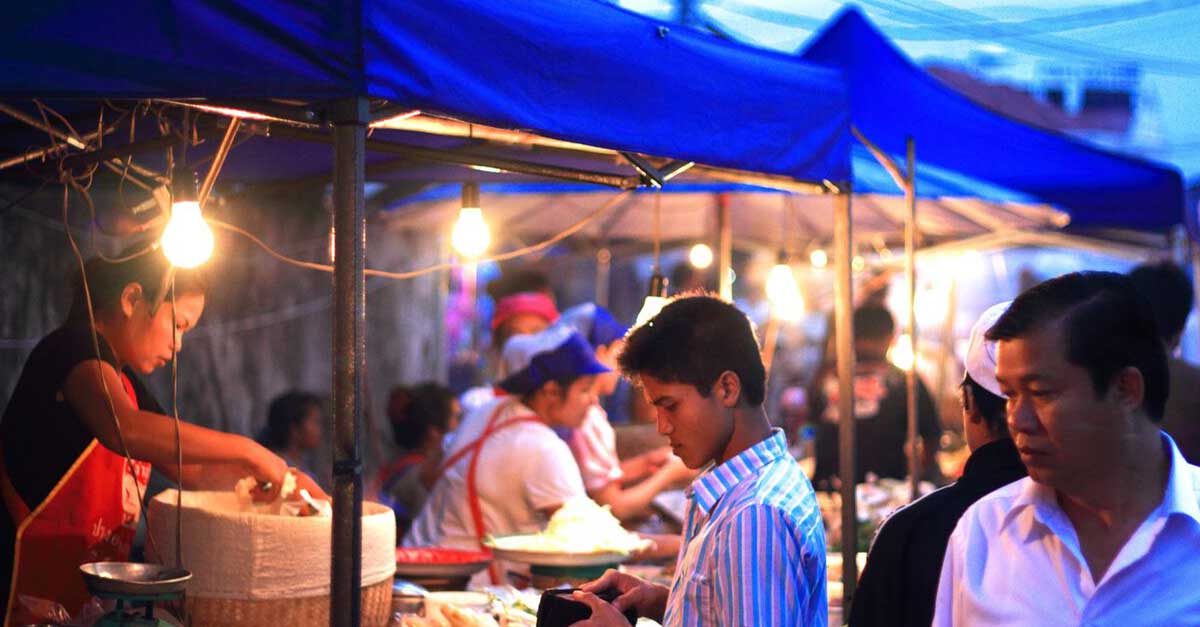
A study on women market vendors in Vientiane has found that despite women representing the vast majority, their roles and contribution to the local economies often go unnoticed, and their voices unheard in decision-making bodies.

Every morning, Mrs. Khong rises before dawn to prepare the morning meal and tidy her modest home for her family in Vientiane, the capital of Lao PDR. As her husband and young children awake, she already has several hours of work behind her and hurries to the local market to set up her small, road-side stall selling fresh fruit and snacks, in time to catch the morning rush of customers. Mrs. Khong is worried. There have been rumours that the market will be developed and that she will be forced out or won’t be able to pay the increased rent for her stall. Her husband earns a small income labouring and without her small business, she and her husband will struggle to keep their girls in school and put food on the table.

As a hard-working entrepreneur, Mrs. Khong is already making plans for the worst. “If the rent prices go up again, many of us can’t stay here. We will have to go to another market and start over. I feel like the market authorities don’t care about us,” Mrs. Khong says.

Mrs. Khong is not alone in her struggle and anxiety for a dignified and stable livelihood to support her family. Millions of women around the world are still struggling with the economic and social dimensions of gender inequality. Put simply, women are not equal in the workplace and are still fighting for their equal rights to a good job, fair pay, safe working conditions, an adequate pension in old age, healthcare and safe water.  

The small-scale business sector in Vientiane is dominated by Lao women like Mrs. Khong, who represent more than 90 per cent of vendors in fresh food markets across the country. The women of Laos are subject to the same economic and social inequalities faced by millions of female market-vendors around the world who tenuously eke out a living in the informal business sector.

According to the Gender Resource Information and Development Centre under Lao Women’s Union, a lack of education and economic opportunities, and limited access to resources drive women into the informal sector and small-scale enterprises. The vast majority of these women fall into one or more vulnerable groups: ethnic minorities, informal workers, poor, educated at a low level, living with disabilities or residing in remote areas. These women encounter even greater obstacles to decent jobs, services and other fundamentals of well-being.

A recent push by the Government of Lao PDR to improve women’s economic position is evident in its National Strategy for the Advancement of Women, aimed at promoting women’s small and medium enterprises and economic leadership, increasing women’s participation in development planning and improving their access to services. Other recent advances include women’s growing participation in the labour market. However, many economic and social challenges remain for Lao women. Large differences are still evident in the development levels of men and women, and among women.  Whether this push towards gender-sensitive policy makes a difference for Mrs. Khong and the millions of women working in the informal sector in Lao PDR remains to be seen.

A study on women market vendors in Vientiane, titled Situation of Women Market Vendors in Vientiane Capital, has now been carried out. It was the first situational analysis on female market vendors in the Lao PDR. The study found that despite women representing the vast majority (over 90 per cent) of vendors in fresh food markets across the country, their roles and contribution to the local economies often go unnoticed and their voices unheard in decision-making bodies. Women vendors lack awareness, knowledge, skills and access to credit. As a result, some women choose to set up stalls on the street and face risks, such as being arrested and traffic accidents.

Findings of the Vientiane-based report reflect a greater proportion of women engaging in vulnerable work than men, including informal work, self-employment or unpaid work for the family business.

Ultimately, these finding will come as no surprise to women like Mrs. Khong, who after a long, hot and tiring day of running her road-side stall, arrives home to continuing her job as the domestic labourer and caretaker of her family, all while wondering what tomorrow will bring.


Lao Dairy Farm Milking the Market in Vientiane Capital

Lao Dairy Farm Crysta Milk

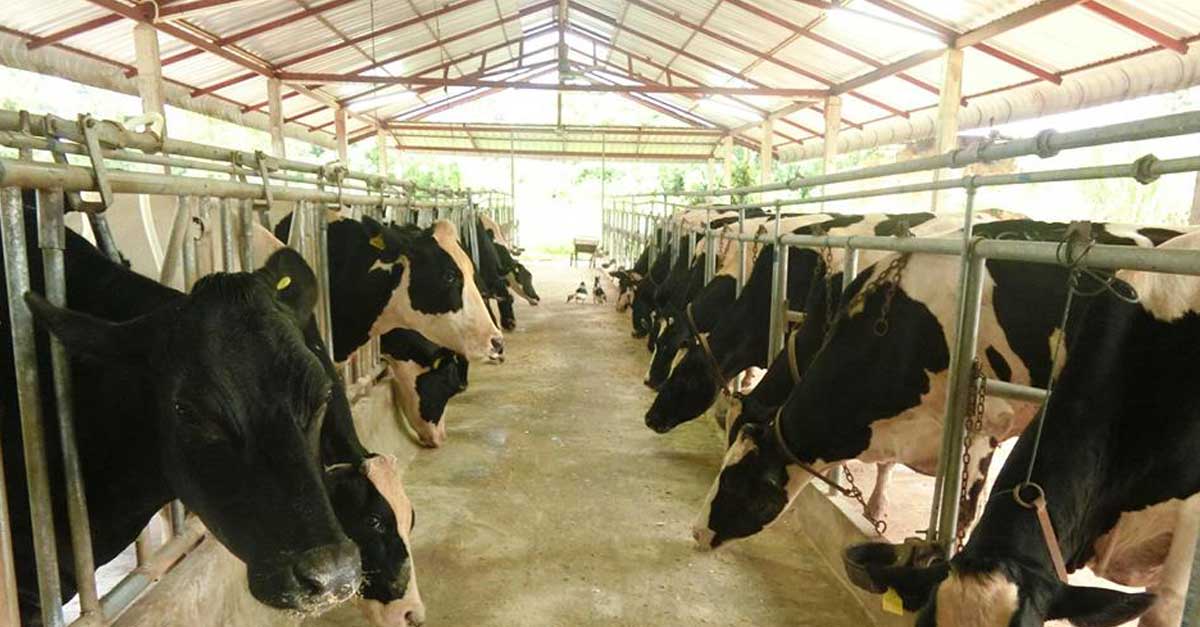
Lao Dairy Farm has already become the leader of the fresh milk market in Laos, saying the quality of its Crysta brand milk is equal to that of international imported milk brands.

Manager of Lao Dairy Farm, Ms Sengmani Yathortu explains that the farm uses modern technology to ensure milk is produced hygienically.

The farm distributes Crysta fresh milk at a growing number of minimarts around Vientiane Capital.

The farm also produces other dairy products including yogurt.

Lao Dairy Farm directly distributes fresh produce, unlike dairy products imported from neighboring countries which rely on preservatives for longer storage.

Crysta brand fresh milk has already received very positive feedback among foreign customers who live in Vientiane Capital. Orders have now reached 450 liters per day.

Lao Dairy Farm hopes to receive orders of up to 700 liters per day within three months.

The next phase will be expanding the market to Luang Prabang, Xieng Khuang and Attapeu provinces.

The farm will also open its own café on the ground floor of Lao ITECC.

[ngg_images source=”galleries” container_ids=”12″ override_thumbnail_settings=”1″ thumbnail_width=”100″ thumbnail_height=”75″ thumbnail_crop=”1″ images_per_page=”20″ number_of_columns=”0″ ajax_pagination=”0″ show_all_in_lightbox=”0″ use_imagebrowser_effect=”0″ show_slideshow_link=”0″ slideshow_link_text=”[Show slideshow]” template=”/home4/laotiantimes/public_html/wp-content/plugins/nextgen-gallery/products/photocrati_nextgen/modules/ngglegacy/view/gallery.php” order_by=”sortorder” order_direction=”ASC” returns=”included” maximum_entity_count=”500″ display_type=”photocrati-nextgen_basic_thumbnails”]Photos: Lao Dairy Farm

Chinese Machine-made Lao Skirts Affecting Traditional Sales

Lao Skirts

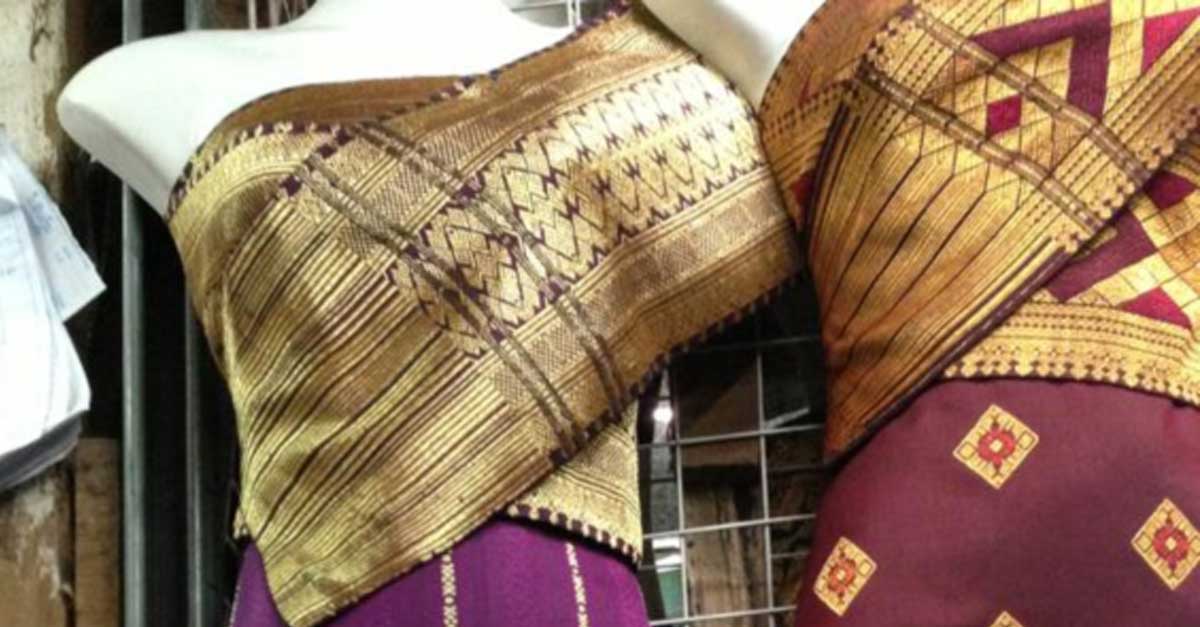
Chinese machine-made imitations of traditional Lao skirts and ornamental dress accessories are having an effect on the sales of handmade Lao products.

A recent Vientiane Times article suggests that sales of handmade products by local Lao artisans has dropped by 30 percent since imitation items entered the market in recent years.

The workmanship of traditional handmade items is superior to that of the Chinese factory-made alternatives, however, and the promotion of traditional items also creates employment.

Many of the larger textile operations in Laos that make Lao skirts (sinh) and ornamental accessories (pakding) employ hundreds of workers, creating employment and offering stable incomes to those in need.

The materials used usually always come from Laos, including silks and other textiles.

Meanwhile, Chinese copies of these products are priced relatively cheaply, with pakding as low as 20,000 or 30,000 kip.  A Chinese machine-made sinh can be priced lower than 200,000 kip.

Artisans and business-people are calling upon the authorities to ban the sale of factory-made items in a bid to preserve the traditional craft, which is a way of life for many Lao people.

Meanwhile, consumers argue that with the rising cost of living, they cannot afford to continue purchasing traditionally made items, some of which are priced at over 2 million kip.

“As a young woman I am expected to attend a lot of weddings and religious ceremonies. I feel that should wear a different outfit to each event, and I just can’t afford that many handmade items,” said one consumer.

Banning factory-made items may be a simple solution for artisans, however consumer concerns should also be heard. The traditional Lao skirt is compulsory dress in many offices, and rising prices could mean hardship for some.

Korean Firm DGB Financial Group Establishes Leasing Business in Laos

DGB Leasing Laos

DGB Financial Group from the Republic of Korea has expanded its financial business into Laos, after the company performed well in its home country.

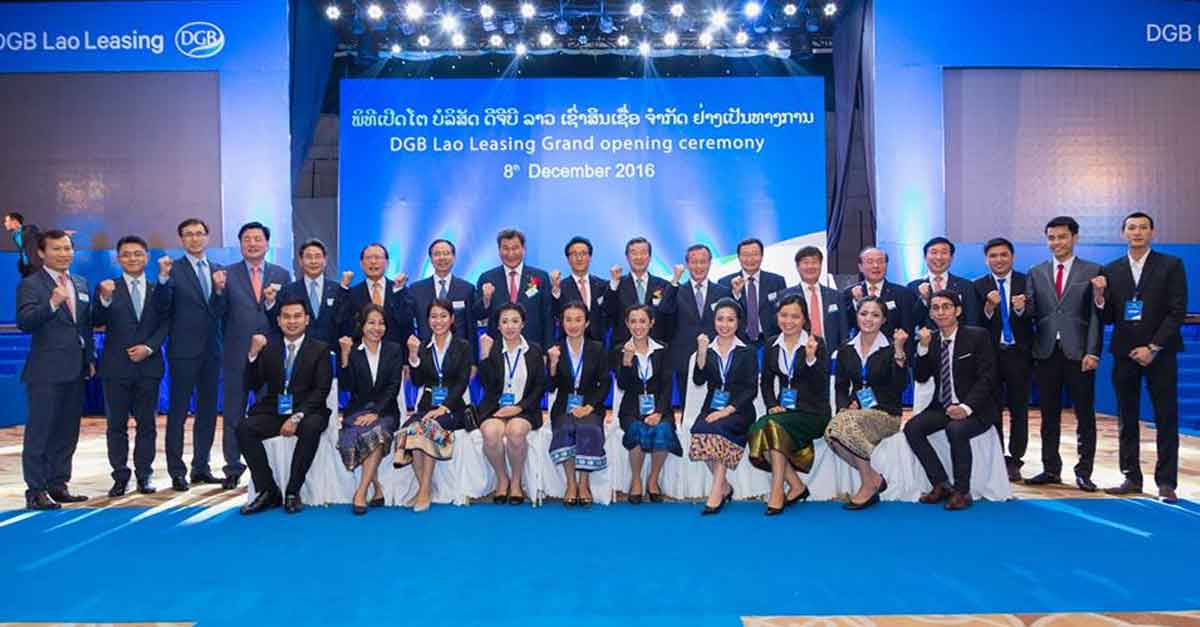
The company has established DGB Lao Leasing Co., Ltd in Vientiane Capital, and an official opening ceremony was held last month.

The company’s chairman, Sonexay Sitphaxay, noted that financial institutions had grown significantly in Laos, and now play an essential role in helping individuals and businesses to access funding.

DGB Financial Group has over fifty years experience in the finance sector in Korea, and the company believes this experience will help it to become a market leader in Laos. The company hops to assist consumers on low and medium incomes to gain access to financial services.

There are now 166 financial institutions registered with the Bank of the Lao PDR, including 29 leasing companies.

“DGB Financial Group invests in various financial businesses so we hope that besides the leasing business the company will be able to expand its business into various financial areas in Laos,” Sonexay added.

Laos and Cambodia to Build Friendship Bridge Across Xelamphao River

Laos and Cambodia Bridge

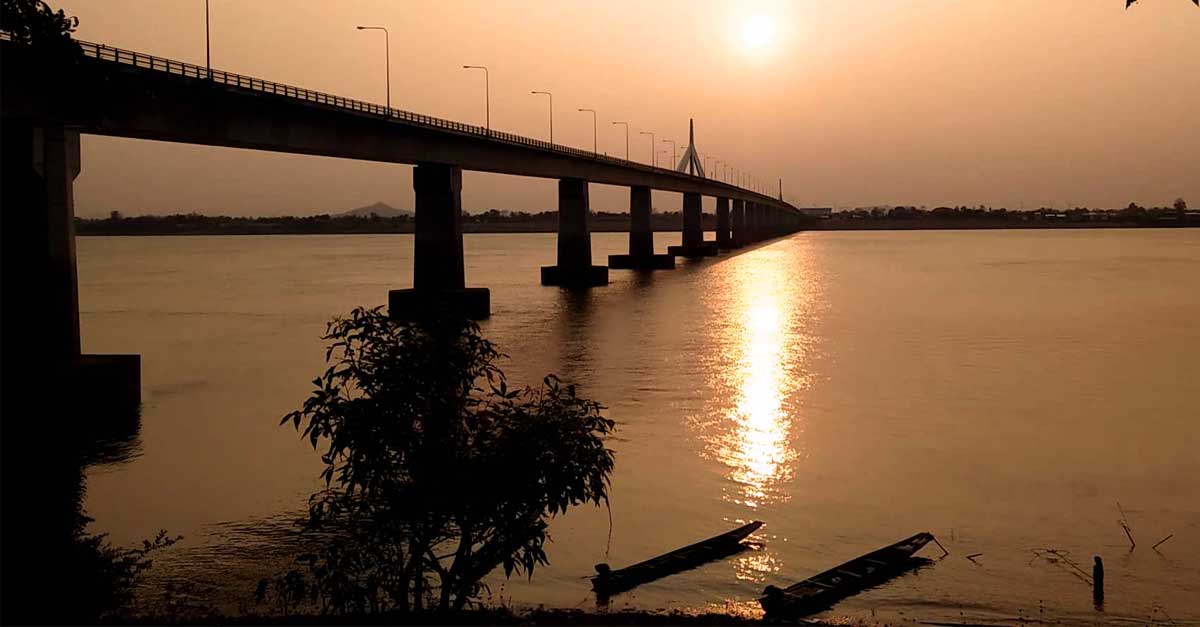
Laos and Cambodia are to build a bridge crossing the Xelamphao River, connecting Champasack, Laos with Preah Vihear Province, Cambodia.

Minister of Foreign Affairs Saleumxay Kommasith met with his Cambodian counterpart, Prak Sokhonn, yesterday, confirming the location of the bridge.

According to the Khmer Times, both countries had initially agreed upon a location, however Laos then requested a review in order to find a more suitable location.

The new location for the bridge was decided upon late last month after a Lao and Cambodian joint working team undertook a field survey.

The bridge, which crosses the Xelamphao River (named the Ropov River in Cambodia) will link Mounlapamok District, Champasack, with Thapeuay sub-district, Preah Vihear Province, Cambodia. The river currently serves as a border demarcation.

According to a spokesperson of the Cambodian Ministry of Foreign Affairs, the bridge is to improve connections between the country, boosting trade and tourism for both nations.

Both countries are to cooperate in building the bridge, however the cost of construction is yet to be confirmed.

Mr. Sokhonn and Mr. Kommasith also discussed cross-border drug trafficking. Mr. Sounry said Mr. Sokhonn urged cooperation between both countries against drugs and that Mr. Kommasith agreed fully.

A new border crossing was opened between Laos and Cambodia last month, leading to the two countries agreeing to further promote trade and tourism.