Home Blog Page 6629

Bananas in Markets Are Not from Chinese Farms

Bananas on sale in markets and some streets in Vientiane and the provinces do not come from Chinese banana plantations, which are believed to use significant quantities of chemicals.

But consumers are unhappy that banana growers in the provinces are still allowed to use chemical fertilisers and pesticides to kill insects and other pests.

Governor of Baeng district in Oudomxay province, Mr Bounteum Teuymany, was amused to learn that some people in Vientiane are now afraid to eat bananas, fearing that they may harbour toxic chemicals.

In the northern provinces of Bokeo, LuangPrabang, Oudomxay and Phongsaly there are now hundreds of hectares of banana plantations.There are also large scale banana plantations in Vientiane province and the capital.

However, these bananas are packed in cardboard boxes for immediate export to China after they are harvested.

There are about 800 hectares of bananas under cultivation in Baeng district, Mr Bounteum said.

The fruit grown on Chinese banana farms in Laos are the kind that Lao people cultivate for consumption, so perhaps the colours are quite similar, he said.

According to an official from the Oudomxay provincial Industry and Commerce Department, Mrs Somphon Phengsouthon, most of the banana farms in the province are located in the two districts of Houn and Baeng.

She also said there have been no bananas from Chinese farms for sale in the province as the farms send all their fruit straight to China.

Meanwhile a banana vendor who sells from a pushcart on Khouvieng Road in Vientiane stressed that her bananas were also not from Chinese farms but were grown by Lao farmers.

During debate at the ongoing National Assembly (NA) session, NA members shared their concerns about the impact of banana farms on the environment due to the use of hazardous chemicals.

NA member for Attapeu province Mr Maniso Xamounty suggested that in Oudomxay many people had been taken advantage of by sweet-talking banana plantation investors.

Despite their promises, investors sometimes did not pay concession fees to land owners on time and labourers were also employed under poor conditions.

Furthermore, investors didn’t always pay taxes to the government because they contracted directly with local people without permits from the relevant authorities.

There are 23 companies growing bananas in Oudomxay but three have been suspende d.

Director of the provincial Agriculture and Forestry Department, Mr Khamxone Keopaseuth, admitted that some chemical fertilisers were being used by banana farmers in parts of the province, with the permission of the department’s agriculture sector.

Chemical fertilisers won’t harm people who eat bananas because the fertiliser is only used to improve the soil, Mr Khamxone said.

Source: Vientiane Times

ADB to Help Improve Higher Education in Laos

The Asian Development Bank (ADB) and the government have signed grant and loan assistance agreements for more than 382.2 billion kip (US$64.9 million) to improve education quality and ensure graduates have sufficient skills to meet labour market demands.

The grant signing ceremony took place yesterday in Vientiane, inked by Deputy Minister of Finance Ms Thipphakone Chanthavongsa and Officer-in-Charge of ADB Lao Resident Mission Mr Steven Schipani.

Deputy Minister of Education and Sports Associate Prof. Dr Kongsy Sengmany and officials from other government agencies also attended the signing ceremony.

Mr Schipani said these projects were important elements of the Ministry of Education and Sports’ wider reform programme to improve the quality and relevance of higher education and vocational training.

They will help to ensure that graduates have the necessary skills to participate in an increasingly demanding workforce, with a strong focus on widening access to education and training for poor and disadvantaged students, he said.

The project focuses on improving Laos’ higher education system and technical and vocational education and training (TVET) programme to produce graduates with job-ready skills.

Grant and loan assistance of US$39.9 million for the Second Strengthening Higher Education Project will reinforce the links between higher education services and socioeconomic needs by improving education quality, enhancing access to higher education programmes, and strengthening governance and management of higher education institutions.

The project will also support government efforts to meet demand for higher-level skills, particularly in the growing manufacturing and service sectors as Laos moves away from an agriculture-based economy.

The US$25 million grant for the Second Strengthening Technical and Vocational Education and Training Project will help realign TVET programmes with current labour market needs.

The project will continue to strengthen TVET programmes by upgrading teaching and learning environments at eight target vocational colleges, and strengthening teacher competencies to deliver high-value skills training.

It will also improve college management and engage private enterprises to ensure that training is tailored to local industry’s needs. Poor and disadvantaged students will be provided with stipends and dormitory spaces at colleges.


Source: Vientiane Times

The Non-Americans’ Guide to US Elections

Courtesy of CNN

The US presidential election. It’s exhilarating, it’s exhausting, but it’s also inexplicably complicated — even for us natives. Here’s everything you need to know to become an insta-pundit.

When’s the election?

Tuesday, November 8, for most Americans. Notice we say “most.” Millions will have already voted by then. That’s because early voting is a thing in the US. It’s estimated more than 40% of all votes this year will be cast before Election Day — a record. In some states, you can even vote early, change your mind and vote again. Yeah, we make democracy really easy.

Why is the turnout so pathetic?

All right, you got us with that one. Our country loves the hype surrounding the elections, but the actual election? Not so much. Just 53.6% of the voting-age population cast a ballot in 2012. Some can’t. (Like felons. That’s 6 million right there.) Some just don’t feel like it. (We’re looking at you Hawaii and your lowest voter turnout in the country!). Compare that with Belgium. In 2014, nearly 90% of those who could vote did.

Why is the election on a work day?

You can thank Congress for that one. Once upon a time, America was a farming nation that went to church on Sundays and market on Wednesdays. Holding elections on Tuesdays gave farmers enough time to get to the polls, get back home, and get their products to market. Hey, they weren’t going to sacrifice capitalism for democracy. Why November? So, people could vote after the fall harvest, but before winter weather made travel difficult. Cut to 2016, and we’re STILL DOING THAT! There are proposals to move Election Day to the weekend, or make it a federal holiday, but they’ve gone nowhere.

Why is the election season so darned long?

We can see how this puzzles the world. Britain gets it done in 4 months, Canada in 2 and a 1/2 and Japan in just TWELVE DAYS. America’s two main political parties — the Democrats and the Republicans — pick nominees through contests called primaries and caucuses in each of the 50 states and the U.S. territories. That process starts in February and it alone takes up to five months! Before that, candidates typically spend a year laying groundwork. They can start earlier, because there are no laws dictating the length of a campaign.

Can anybody run for president?

Yes, even Kanye West, if he chooses. The list of qualifications listed in the US Constitution isn’t exactly long. It says you have to be at least 35 years old, have lived in the US for at least 14 years and be “a natural born citizen.” The good folks who put together the Constitution nailed down a lot of things, but the exact definition of a natural born citizen wasn’t one of them. And neither Congress nor the Supreme Court have provided much clarity. (Here, enjoy this light reading.) That explains why the birthers who question President Obama’s citizenship won’t shut up.

Why is it that America has only has two parties?

Actually America has a ton of them. There’s the Green Party, the Libertarian Party, the Socialist Workers Party, even something called the Legal Marijuana Now Party. But for pretty much all of its history, the US has always had just two dominant parties that compete for the White House. These days it’s the Democrats and Republicans. In middle of the 19th century, it was the Democrats and the Whigs. It’s primarily because of America’s winner-take-all elections. In other countries, 20% of the vote means you get some seats in parliament. In America, you get a sympathetic pat on the back and a “you’ll get ’em next time” pep talk.

Is it true Americans don’t directly vote for President?

The election is determined by this mysterious thing called the Electoral College. Yeah, we were shocked when we learned this in our grade school civics classes too. It’s complicated, so stay with us:
  • The Electoral College is a group of people appointed by each party
  • The total number of electors is equal to the number of members in Congress: 538
  • Each state gets electors based on its population. So, Wyoming has 3; New York has 29
  • So, if Candidate A wins the most votes in, say, New York, (s)he gets all 29 electoral votes.
  • The goal is to get to 270, which is just over half of 538.
Because of this wacky system, a candidate can get ZERO votes in THIRTY-NINE states and DC and still win the presidency.

Has anyone ever lost the popular vote and still become president?

Why don’t you ask Al Gore? He lost to George W. Bush in 2000, despite winning more votes nationwide.

538 is an even number. What if there’s a tie?

An Electoral College tie is extremely rare. It’s only happened twice. In a tie, one arm of Congress, the House of Representatives, will elect the president, while the other, the Senate, will elect the vice president. This year, if there’s a tie in the Electoral College, and the Republicans keep the House but the Democrats win back the Senate, it’s quite possible that we’d be looking at a Donald Trump-Tim Kaine administration, a fitting end to the wackiest election we’ve ever seen.

What are battleground states?

The way the Electoral College works now is that most states are reliably either “blue,” meaning they vote for the Democratic candidate, or “red,” meaning they go with the Republican candidate. That leaves just a handful of states — the battleground, or swing, states — that the candidates fight over, such as Florida. Florida is the swingiest swing state of all. In 2008 and 2012 it went for President Obama; in 2000 and 2004 it went for President Bush. Hillary Clinton and Donald Trump are neck-and-neck there.

Why are Democratic states ‘blue’ and Republican states ‘red’?

The media made it up. Both are colors in the American flag, and they look sharp on infographics because they’re pretty much on opposite ends of the color spectrum. But the seemingly arbitrary color assignments have actually flip-flopped over the years. In 1980, states won by Republican Ronald Reagan were colored blue; Democrat Jimmy Carter’s states were colored red. Even as late as 1996, major media outlets were divided on how to color-code the parties.

What are the biggest issues?

The usual suspects: The economy, national security, health care. The issues are so big the candidates never seem to find time to talk about them. How could they, when there’s private email servers and lewd hot-mic videos to discuss.
On foreign policy:
  • Trump: His is an America-first strategy. He’s suggested not coming to the aid of some countries in the North Atlantic Treaty Organization and said he would work with challenging world leaders.
  • Clinton: She wants to use diplomacy and development to quell problems abroad, stand by US allies, and stand her ground with rivals such as Russia and China.
On trade:
  • Trump: He’s said the Trans-Pacific Partnership is a bad deal for America. He’s also said he’d renegotiate or end the North American Free Trade Agreement and label China a currency manipulator.
  • Clinton: She used to call TPP the “gold standard” of trade agreements … until it wasn’t politically expedient anymore.
On climate change:
  • Trump: He called global warming “a hoax.” He has told coal miners he’d save their jobs by reversing President Barack Obama’s executive actions and dramatically cutting funding for the Environmental Protection Agency.
  • Clinton: She wants to combat climate change and boost renewable energies, cut waste and reduce the United States’ dependency on oil.

What else are Americans voting on?

We’re voting to fill all 435 seats in the House of Representatives and a third of the seats in the Senate. The GOP majority in the House is so big it’ll probably stay in Republican hands. But the Democrats can flip the Senate if they manage to pick up just a handful of seats. On a state level, eight states will vote on legalizing marijuana, and four states will vote on raising the minimum wage. And only California would have something on the ballot like Proposition 60, which would require the use of condoms and “other protective measures” during the filming of porn.

When will we know the results?

Landslide elections are usually called about 8 p.m. ET when most of the polls have closed on the East Coast and in Central Time zones. This election seems destined to be a nail-biter though, so we’ll be lucky if we know who won by midnight. If it all comes down to Ohio — wouldn’t be the first time — and Trump and Clinton are pretty much tied, the whole thing could ride on absentee and provisional ballots. But poll workers there have a whole 10 days to check eligibility. In that case, we wouldn’t know the winner until the weekend before Thanksgiving. (Oh, and the Electoral College could tie 269-269.)

Can you really rig an election?

In America? That’d be really hard. In the last presidential election some 129 million votes were cast, so just think about the large scale of votes you’d have to manipulate to even have an effect.
  • Vote more than once? That small army of poll workers and poll watchers (not to mention the lawyers) at each precinct can easily put a stop to that.
  • Vote as someone else? See above.
  • Screw around with the voting machines? Sure, but first you have to figure out how to break the locks and seals that are placed on each voting machine. And did we mention each machine sits out in the open all Election Day long?
  • Hack the machines? Yeah, good luck. The election system is decentralized by design, with state, county and local governments all managing voting. Even though many precincts use voting machines, none are connected to the Internet, nor are they connected to each other.
It’s probably a lot easier to just pick up a campaign sign, stand on a street corner and try to convince people that your candidate’s the better option.

Can anyone contest the result?

Well, sure, a candidate could, but it’s not so simple. Remember, America really doesn’t have a national election as much as a series of state elections. So if you’re going to contest the results, you’ll have to do it state by state. And each state has its own laws and exceptionally strict criteria to entertain any foolish challenges.

When would the winner take office?

Back in the old days, the president was inaugurated on March 20. But travel across the country is much faster and easier than before (thanks, airplanes!). So, now Inauguration Day is January 20.

Just how unprecedented is this election ?

  • For the first time, you have a woman a step away from being president. That alone makes this campaign unique. And yet you don’t hear much buzz about it, probably because Clinton herself rarely mentions it. Older female voters seem geeked up by the possibility of having a Madame President, but female millennial voters are surprisingly blah about it. Probably because they already feel like they’ll see a female president in their lifetimes. They’re just not sure if they want this female to be the first.
  • For the first time, you have a true outsider-businessman who really could shake up business as usual in Washington. Change is the big call this election, and nobody represents that more than The Donald. He’s the ultimate Washington outsider — he was the host of “The Apprentice” for goodness sake — who doesn’t give a damn about political tradition.
  • For the first time, you have a major party nominee who, until this weekend, was under FBI investigation. Clinton’s email problems were kind of fading into the background, then came roaring back.
  • For the first time, you have a man seeking office who bragged about wanting to sexually assault women. That “Access Hollywood” video of Trump would have been the death knell for any other candidate. But Trump is, well, Trump, and he says and gets away with things other politicians can only dream about.
  • For the first time, you have two of the most despised, hated and untrusted candidates. If they were running against any other run-of-mill presidential candidate, they’d be toast.

Source: CNN

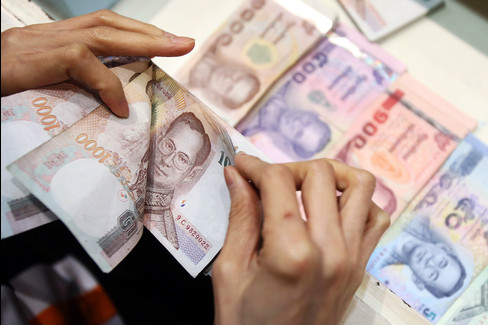
Thailand Encourages a Dangerous Addiction to Debt in Laos

Laos is back in the Thai baht debt markets again, with issuance from the Republic coming just two months after the country’s government-owned utility EDL-Generation tapped the domestic market of its sovereign neighbour.

The Lao People’s Democratic Republic is looking to raise 11 billion baht, or around US$310 million over the next couple of days, with a successful print representing the country’s fifth foray in baht.

Whilst there may be logic in this frontier market issuer tapping the relatively deep liquidity of its neighbouring country, the exercise strikes me as being a little too cosy.

Laos has begun to rely heavily on Bangkok-based Twin Pines Consulting for its capital raising – in this case with the consultancy suggesting a way around Bangkok’s strict rules on the repatriation of funds from issuance in its domestic market. The solution preferred was for Thai banks to extend short-term dollar loans to Laos which will be redeemed out of the bond’s proceeds at maturity.

This sounds like a neat solution, but it contains much that is troubling. In the first place, it exposes Laos to currency and tenor mismatch of the sort that underpinned the Asian financial crisis of the late 1990s. Indeed, in this case, Laos is exposed to both Thai baht and US dollar FX risk on the transaction, which carries five tranches from three years out to twelve years.

Much academic work has been produced on the dangers of developing countries saddling themselves with debts in hard currencies, whereby it has been demonstrated that the long-term economic impact of the accrual of such debt is a depreciating domestic currency and a gradual rise in the inflation rate, as the unsterilised funds circulate around a relatively unsophisticated economy.

Laos issued its first dollar bonds around a year ago with a US$182 million issue of 10 and 12-year floaters, paying around Libor plus 340bp on each tranche. Not only do those coupons look onerous from the get-go, the exposure of the country to a possible sharp decline in its currency, the kip, versus the dollar presents a less than auspicious risk profile.

But it seems the land-locked country is beginning to develop what strikes me as a growing and dangerous addiction to debt. Indeed, back in June, Malaysia’s RAM ratings placed the country’s credit rating outlook on a negative footing, citing its deteriorating external position and the increasing risk of financial instability.

Laos has a weak banking system – NPLs have risen 400% in 2016 on a year-on-year basis to 8% – and a deteriorating interest rate coverage ratio in relation to its reserves, with short-term debt service a particular worry, something that will not be best served with the short-term US dollar loans the country intends to put in place to circumvent Thailand’s repatriation regulations.

Rather than relying on offshore funding, and lining the pockets of Bangkok’s banking and consultancy community in the process, Laos should look to develop a domestic bond market from scratch. In this way it can avoid the risks of double mismatch that its neighbour Thailand has managed to do with its domestic bond market. Thailand learned the hard way during the Asian financial crisis. All the signs are that its neighbour to the east will end up doing the same.

Written by: Jonathan Rogers

Source: The Asset

Sinxay Literature Awards Announce Winners

Huknee Nilundon by Ms Thiphakeson Douangchack from the University of Health Sciences took out the Sinxay Literature Award for Novel during a presentation ceremony at the National Culture Hall last Friday.

In other categories, Mr Sengchan Soukkasem’s Phaeng Yang won the Sinxay Literature Award for Short Story while Champalao Padupxaath by Mr Xaykham Champa-outhoum won the Poem category.

The winners of each category in the literary awards received 4 million kip, a trophy and certificates to attest to their success.

The awards also included six congratulation prizes of 500,000 kip to the best new entrants in each category.

This year’s competition attracted not only established Lao writers but also students and monks.

Ms Thiphakeson Douangchack said she greatly appreciated winning this year after becoming a writer in 2011 and sending her short stories for publication in the Vientiane Mainewspaper.

Her novel Huknee Nilundon is a love story between the character Wayor, an actor, and a medical student which she said would be suitable for making into a TV drama. But she lamented the lack of a drama scriptwriters’ school.

She also submitted three short stories for this year’s literary awards: Malisorn , about the beauty of Lao sinh , Aath Saisamphanthyboraath Khobkhong about a Lao woman working in Thailand who gets pregnant, and Neua Khua Khuamhak Lae Phoukphun .

The prolific author said it took over 20 days to write her longer pieces while a short story took only two days.

Speaking at the presentation ceremony, Deputy Minister of Information, Culture and Tourism Mr Bouangeun Xaphouvong said the awards gave writers the chance to showcase their work while promoting the reading of Lao literature.

The Sinxay Literature Awards are jointly organised by Vannasin magazine, the Ministry of Information, Culture and Tourism, and the Lao Writers Association.

The competition was open from March 16 until September 30 with a total of 205 works submitted consisting of 84 short stories, 112 poems and 9 novels.

The judging panel scored all the entries on their content, creative ideas, writing style, and language before announcing the winners.


Source: Vientiane Times

BCEL-KT: Trade Summary (Nov 7, 2016)

Trade Summary

LSX was mixed on the first trading day of the week, the index growth 8.85 points to 999.79 points from the matching of two heavyweight stocks as EDL-Gen and BCEL. The total market turnover generated to 90,885,000 kip.

EDL-Gen increased 50 kip on the trading volume of 17,900 shares matched, at the end of the session decided to close at 4,900 kip. The increase of EDL-Gen has been offset by the increase of 50kip in the price of BCEL, which saw just 800 shares changed hands at 5,200 kip. In the mean time, LWPC, PTL and SVN closed with no trading at 6,100 kip, 2,500 kip and 3,000 kip respectively.

Australia Supports School Expansion in Xaythany

Somsamay Secondary School in Xaythany district, Vientiane, now has new classrooms for an additional 100 students so they can enjoy a better learning environment.

The handover of the new school building and furniture took place in the community on November 4 in the presence of Australian Ambassador to Laos John Williams, local authorities and other guests.

The 330 million kip (US$40,903) project was funded by the Australian Embassy’s small grants programme (DAP – Direct Aid Programme) and WIG’s long-running programme to build and repair schools across Laos. The school community, including parents and other villagers, helped to build the new facilities.

Speaking at the handover ceremony, Ambassador Williams said the project was in keeping with Australia’s aid priority in Laos, to improve education outcomes for all Lao children.

“We want all Lao children to get the education they need to achieve their full potential,” Mr Williams said. “In our view, there is no more important issue in Laos’ socio-economic development. It’s not just about the quality of teaching they receive. The environment in which children are learning  matters too.”

The construction of a new school building was needed to keep pace with the growing population in neighbouring villages. More than 100 new students have enrolled at Somsamay Secondary School this year thanks to the additional space and new facilities.

Ambassador Williams praised WIG’s ongoing support for poor communities across Laos, and noted the long history of collaboration between the Australian Embassy and WIG in fundraising and aid delivery.

Australia’s DAP is a flexible scheme to fund quality small-scale projects that will deliver “practical and tangible” benefits for poor communities in Laos.

In 2015, Australia funded 19 projects in eight provinces from the 200 DAP proposals received. The projects ranged from sustainable water supply for remote villages in Oudomxay, national awareness campaigns to promote road safety and combat violence against women, and support for hygiene education and mobile libraries in northern Laos.

Last year, Australia’s small grants scheme helped refurbish school buildings and dormitories in Luang Namtha, Xieng Khuang, Vientiane and Luang Prabang, and upgraded health facilities and equipment in Savannakhet and Vientiane provinces.

The DAP also supported a $A20,000 renovation of facilities at the Vientiane Autism Centre to help provide better quality services, education, therapy and specialists to a greater number of children who live with autism in Laos.

The Vientiane Youth Centre for Health and Development, Foundation for Assisting Poor People in the Lao PDR and the Health Centre in Thapene village in Luang Prabang all received DAP funding to purchase new medical equipment.


Source: Vientiane Times

Gov’t Promotes Small-scale Rice, Fish Production

The Department of Livestock and Fisheries last week held a meeting to discuss the results of an experimental initiative to increase the yield of aquatic animals and plants in rice farms as a means to address food and nutrition security.

The policy consultation meeting took place in Vientiane and was attended by Director General of the Department of Livestock and Fisheries, Mr Somphanh Chanphengxay, and the Representative of the Food and Agriculture Organisation of the United Nations (FAO) to Laos, Dr Stephen Rudgard.

The trials are part of a larger collaborative project between FAO and the government called the Regional Rice Initiative.

The trials were conducted in Xieng Khuang and Savannakhet provinces. They included over 20 family farms in each province with the goal of refining simple aquaculture techniques to address the issue of food and nutrition security.

The recommendations tested and developed in the trials improved the way farmers manage aquatic animals and plants in rice fields. Aquatic animals and plants play a crucial role in supplementing many rural people’s diets. The development of advanced aquaculture techniques means farmers can increase their yield of safe and nutritious food for their families.

A workshop was held prior to the official meeting in which government officers and farmers summarised the results of the trial. They discussed the results for two days before presenting them at the policy consultation meeting.

The presentations included technical data (e.g. fish growth), in addition to the benefits experienced at both the individual family level and within the wider community. The possibilities of implementing the project on a wider level were also discussed.

The information presented by the participating farmers and the subsequent discussion with policy makers highlighted the importance of aquatic animals and plants in rice fields for the food and nutrition security of many rural families.

Surveys of daily consumption undertaken by farmers during both the dry and wet seasons demonstrated that the value of aquatic animals and weed (e.g. fish, frogs, snails and aquatic plants) exceeds the value of the actual rice crop.

However, the increasing use of pesticides and herbicides is causing a decline in the number of these animals and plants. Farmers are keen to explore ways in which this decline can be reversed.

Higher nutritional yields are especially important for young children, and policy makers discussed how the new techniques could be more widely disseminated and integrated into government strategies to improve nutrition security and achieve poverty reduction.

Senior representatives from key departments in the Ministry of Agriculture and Forestry, who attended the Policy Consultation Meeting, agreed that small-scale aquaculture farming has an important role to play in improving nutrition security.

Low-cost and simple techniques in farming fish and frogs in rice fields, like the ones tested in Savannakhet and Xieng Khuang, must now be more widely promoted.


Source: Vientiane Times