Home Blog Page 1112

DL Securities Secures Virtual Asset Trading License


HONG KONG SAR – Media OutReach Newswire – 31 December 2025 – DL Holdings (1709.HK) announced yesterday that its subsidiary, DL Securities (Hong Kong) Limited (“DL Securities”), has received conditional approval from the Hong Kong Securities and Futures Commission (“SFC”) to provide virtual asset trading services under an omnibus account arrangement. DL Securities has accepted the conditions imposed by the SFC in respect of the upgrade of its Type 1 license to include virtual asset trading services as of 29 December 2025, and will commence virtual asset trading services upon receiving the SFC’s formal approval. This milestone marks DL Securities’ official entry into the small group of comprehensive financial institutions in Hong Kong that simultaneously hold full licenses for both traditional securities and virtual assets.

DL Securities’ formal approval as a licensed virtual asset service provider means that the sizeable digital asset and real-world asset (RWA) tokenization landscape being built by the Group will be delivered to global investors through a compliant, secure, and efficient channel — representing a critical step toward the inclusive-finance vision of “Investing Made Simple.”

Following the license upgrade, DL Securities plans to open omnibus accounts with OSL — one of the SFC-licensed virtual asset trading platforms in Hong Kong — to provide professional investors with secure and efficient execution services, including virtual asset trading and conversion between virtual assets and fiat currencies. The Company will implement stringent Know-Your-Customer (KYC) and Anti-Money Laundering (AML) procedures, perform continuous monitoring and risk assessment together with the platform, and conduct knowledge assessments for clients to ensure that services operate under the highest compliance standards.

To ensure prudence and regulatory alignment, DL Securities will strictly follow the additional conditions of the SFC and conduct virtual asset transactions via omnibus accounts on SFC-licensed platforms. Meanwhile, services will primarily target professional investor clients within its existing Type 1 regulated activity (securities dealing). This demonstrates that while embracing digital-finance innovation, DL Securities will continue to uphold Hong Kong’s rigorous regulatory framework and remain committed to delivering secure and compliant virtual asset services to high-net-worth clients.

Ahead of many licensed brokers whose roles remain focused only on “distribution,” DL has already established forward-looking strategic layouts in both asset digitalization and digital-asset investment, building a solid asset foundation for future business expansion. In terms of innovative RWA tokenization, the HK$500 million DL Tower located in Hong Kong’s Central district has formally commenced tokenization, with an initial tranche valued at HK$60 million. At the same time, the Group has completed the tokenization plan for its HK$312 million equity interest in the ultra-luxury U.S. real estate project ONE Carmel, aiming to pioneer an innovative shareholder-return mechanism. In addition, the Group has completed tokenization of nearly HK$40 million equity stakes in leading technology companies such as ByteDance and Kraken, enriching the diversity and growth potential of its digital-asset portfolio.

In terms of strategic investment in digital assets, the Group has likewise advanced its deployment. In computing power, nearly ten thousand high-performance mining rigs have been procured, generating close to two Bitcoins per day. The Group has also mapped out an additional HK$800 million digital-asset investment pathway, including HK$560 million into computing power and HK$240 million into tokenized gold assets. Cooperation with digital-asset asset-management platform Antalpha has achieved substantive progress, with an initial allocation of nearly HK$40 million in gold tokens completed. Meanwhile, continued investment in the fintech platform NeuralFin has delivered outstanding results — the platform’s valuation has reached HK$546 million and it has officially initiated preparations for U.S. listing, further strengthening the Group’s integrated digital-finance ecosystem.

Approval of the virtual-asset license provides crucial regulatory support for DL Securities to introduce the Group’s scarce, high-quality virtual-asset and RWA products to the broader investment market in a compliant and secure manner. Going forward, DL Securities will be able to offer professional and institutional investors compliant trading and professional advisory services covering mainstream digital assets such as BTC and ETH, as well as proprietary real-estate and equity-type RWA products. High-quality physical assets and frontier digital assets — once characterized by high thresholds and low liquidity — can now be transformed into fractional, tradeable digital rights, allowing broader groups of investors to share in the dividends of technological and asset-value growth.

Against the backdrop of global asset digitalization, RWA tokenization is becoming a key direction of financial innovation. While Chinese Mainland remains prudent toward such businesses, Hong Kong SAR — guided by a clear, stable, and internationally aligned regulatory framework — is actively assuming the role of a “testing ground.” Seizing this window of opportunity, DL has leveraged its deep understanding of the Hong Kong market, completed its virtual-asset deployment ahead of peers, and successfully obtained a pivotal license. This not only reflects DL’s strategic foresight but also its active participation in building Hong Kong into a global virtual-asset hub — firmly capturing first-mover advantages.

Mr. Andy Chen, Chairman and Chief Executive Officer of DL Holdings Group, stated:”This approval of our virtual-asset license is a milestone that has come naturally. DL has long ceased to be a bystander waiting for the license—we are already deeply engaged, holding substantial high-quality digital assets and RWAs. The license is a key — it opens the door for us to provide compliant services to investors worldwide. Looking ahead, DL will fully leverage our capital strength, asset reserves, and ecosystem advantages to become a trusted bridge connecting traditional finance and the digital-finance world.”

This license upgrade represents an important milestone in the Group’s deepening digital-finance strategy and embrace of fintech innovation. It is expected not only to significantly enhance business diversification and revenue potential but also to position the Company strongly in the digital-asset markets of Hong Kong and the Asia-Pacific region. Through rigorous compliance frameworks, professional teams, and deep collaboration with licensed platforms, DL Securities will provide professional investors with secure, efficient, and transparent virtual-asset financial services. Following the upgrade of Type 1 to include virtual-asset trading, the upgrade procedure for its Type 4 license (advising on securities) is also currently under final SFC review.

Hashtag: #DLHoldings #DLSecurities #SFC #LicensedBroker #RWATokenization #TokenizedAssets

The issuer is solely responsible for the content of this announcement.

CGTN: Inside China’s domestic agenda: Key priorities from Xi’s inspections and meetings in 2025

BEIJING, Dec. 31, 2025 /PRNewswire/ — CGTN published an article on China’s domestic priorities in 2025. The article highlights President Xi Jinping’s inspection tours and meetings, emphasizing people-centered modernization, high-quality economic development, cultural heritage protection, ethnic unity, and deepening reform and opening up, showing how China is improving livelihoods and advancing its modernization agenda.

As 2025 ends, China stands at a pivotal moment in its modernization journey – the 14th Five-Year Plan chapter closes and the 15th is set to start. From factories and research labs to local communities and cultural landmarks, President Xi Jinping’s inspections and central meetings this year illustrate how China is steering domestic governance and planning its next phase of modernization.

People-centered modernization

“A happy life for every family and a good time for the elderly and children are what we call a beautiful world,” Xi said during a January inspection in Liaoning Province, highlighting a core principle: modernization is ultimately about improving people’s lives.

Braving the cold, Xi traveled for nearly an hour along a mountain road to visit flood-affected families in Zhuangjiagou Village. “I have been concerned about you and so came to see you before the Spring Festival,” he told residents. “The people can always count on the Party and the government in their most difficult times, and we will help them overcome difficulties and rebuild their homes.”

Throughout his inspection tours in 2025, Xi repeatedly highlighted people’s livelihoods, from food security, rural revitalization and employment to housing, public services and ecological well-being. When disasters struck – a magnitude-6.8 earthquake in Dingri County, landslides in Junlian County, Sichuan, and mountain torrents in Yuzhong County, Gansu – he issued immediate instructions, coordinating all-out rescue efforts to save lives and minimize casualties.

Guiding the formulation of the 15th Five-Year Plan, Xi also emphasized that listening to people’s voices and pooling public wisdom are essential to building consensus for the modernization that improves everyday life.

High-quality development as the anchor

“It is imperative to deal with the uncertainty of drastic changes in the external environment with the certainty of the country’s high-quality development.” Xi delivered this message in April at a Politburo meeting, emphasizing the importance of consolidating the real economy, industrial upgrading and technological advancement.

In April, Xi inspected an AI incubator in Shanghai, just days after presiding over a political bureau’s group study session on artificial intelligence, stressing the value of integrating AI innovation with industrial development.

Xi has long seen the real economy – the part that produces goods and services – as the cornerstone of China’s national economy. In July, at Yangquan Valve Company in Shanxi Province, he reiterated that the real economy, especially traditional industries, must not be abandoned, but instead transformed and upgraded through technological innovation.

Strengthening cultural foundations

“Treasures of Chinese culture must be well protected and inherited, and the culture behind them must be well promoted.” Xi made this call during a May inspection in Henan, reflecting that culture is a pillar of national strength.

During an October visit to the Palace Museum in Beijing, he said cultural relics “belong to the people and should serve the people,” urging protection, restoration and innovative use to make heritage both an educational resource and a window for the world to understand China.

Revolutionary history is also central to this cultural foundation. Xi visited several revolutionary sites this year, emphasizing the importance of telling the stories of the Chinese People’s War of Resistance Against Japanese Aggression and passing on its spirit.

At milestone celebrations marking the 60th founding anniversary of Xizang Autonomous Region and the 70th founding of Xinjiang Uygur Autonomous Region, Xi led central delegations, reinforcing ethnic unity and advancing the building of a community for the Chinese nation.

On September 3, ahead of the Victory Day military parade at Tiananmen Square, President Xi declared: “The great rejuvenation of the Chinese nation is unstoppable,” affirming that the cause of peace and development for humanity will ultimately prevail.

Opening new horizons through reform and opening up

“We will undoubtedly break new ground in reform and development as long as we strengthen our conviction and confidence, confront problems and obstacles directly, and tackle risks and challenges without hesitation,” Xi reiterated in 2025, framing reform and opening up as a key solution to breaking development bottlenecks, supporting private enterprises and advancing a unified national market.

Meeting global business representatives, Xi reiterated that China’s door to opening up will continue to widen, with consistent policies for foreign investment.

At the fourth plenary session of the 20th Communist Party of China Central Committee, the blueprint for the 15th Five-Year Plan took shape under Xi’s leadership. As 2025 closes, China prepares to enter a new chapter, translating vision into action with clear priorities and a steady path toward modernization.

For more information, please click:

https://news.cgtn.com/news/2025-12-30/Live-Chinese-President-Xi-Jinping-delivers-2026-New-Year-Address-1JwmtzZkcsU/p.html

https://news.cgtn.com/news/2025-12-30/Inside-China-s-domestic-agenda-Key-priorities-in-2025-1JwoKjSgzQs/p.html

Velvet flowers blossom on Dragon Boat Festival as tradition embraces fashion

BEIJING, Dec. 31, 2025 /PRNewswire/ — A news report from China.org.cn on The Dragon Boat Festival:

Velvet flowers blossom on Dragon Boat Festival as tradition embraces fashion
https://www.youtube.com/watch?v=s0FJ7T5UIOE

Every Dragon Boat Festival, the sound of drums resonates across the rivers as dragon boats race through the waves, which represents a deeply embedded cultural tradition in China. This “dragon boat,” though not gliding through waterways, showcases its grandeur vividly at the fingertips, thanks to the intangible heritage craft of velvet flowers.

Velvet flowers, an ancient craft with a history spanning over a millennium, once thrived in cities such as Beijing, Tianjin, Nanjing, and Yangzhou. From the luxurious adornments worn by court concubines in the Tang Dynasty (618-907) to the grassroots decorations donned by commoners in the streets of the Ming and Qing dynasties (1368-1911), this art has consistently been a fashionable item for those who pursue beauty.

During significant festivals and wedding ceremonies, velvet flowers are essential auspicious decorations. Upon the Dragon Boat Festival, artisans have skillfully integrated festive elements into their creations. They come in the shapes of evil-dispelling “Five Poisonous Creatures” and lovely zongzi, with each piece carrying profound festive messages.

“Velvet flower” is pronounced similarly to “prosperity” in Chinese. Each velvet flower petal carries the blessings of wealth and wellness. The creation of every velvet flower showcases exquisite craftsmanship, where silk and copper wires undergo a stunning transformation in the artisan’s hands.

[Splitting silk] Dyed silk threads are meticulously divided into fine strands;

[Twisting silk over wires] These strands are tightly intertwined with copper wire, endowing them with flexibility and a dynamic form;

[Shaping velvet strips] Scissors dance in the artisan’s hands;

[Flattening velvet] Velvet strips are pressed and pinched to shape the petals’ delicacy and the majesty of dragon scales;

[Assembling flowers] Finally, the flower is carefully assembled to completion.

Today, blending tradition and innovation, velvet flowers have become a popular fashion. What’s the flower adorning the lead female character in historical dramas? Velvet flower! What’s the stunning piece on the award ceremony dress at the Beijing Winter Olympics? Also velvet flower. Young artisans are making even bolder attempts, integrating modern fashion elements into this craft. At the Paris Fashion Week, velvet flowers engaged in a crossover collaboration with international luxury brands. The “flower from China” then captured the attention and appreciation of audiences across the world. Who says traditional crafts cannot thrive in the new era? Velvet flowers demonstrate with its popularity that tradition can indeed be trendy.

Velvet flowers blossom on Dragon Boat Festival as tradition embraces fashion
http://www.china.org.cn/2025-05/30/content_117903809.shtml

Optoma Expands Video Conferencing Ecosystem with Industry-Leading Partners

TAIPEI, Dec. 31, 2025 /PRNewswire/ — Optoma, a leading global provider of large-scale display solutions, continues to grow its professional ecosystem by partnering with top visual technology providers. Optoma collaborates with the most established solution development companies in each region. Additionally, in select Asian markets, Optoma integrates its Interactive Flat Panels (IFP) with professional video conferencing solutions from AVer Information Inc., an award-winning provider of AI audio-video solutions. These technical partnerships deliver high-quality video solutions for the corporate and education sectors.

Optoma Expands Video Conferencing Ecosystem with  Industry-Leading Partners
Optoma Expands Video Conferencing Ecosystem with Industry-Leading Partners

Integrated Meeting Room Solutions for Hybrid Setups

As remote work and hybrid learning become more common, the demand for reliable, easy-to-use video collaboration tools stays high. By partnering with AVer, Optoma offers a complete “Total Meeting Room Solution” designed to address these changing needs.

  • Optimized Meeting Experiences: Integrating Optoma’s display technology with professional audio-visual products enhances overall meeting efficiency.
  • System Compatibility: Extensive interoperability testing guarantees that these hardware configurations provide a dependable experience for both IT administrators and end users.
  • Versatile Applications: These professional-grade solutions are built to satisfy the stability requirements of large enterprises, government initiatives, and specialized organizations.

Technical Validation and Product Compatibility

To ensure consistent performance, Optoma and its partners conduct product-level compatibility testing. For example, the following AVer video conferencing models have been verified to work seamlessly with Optoma IFPs:

  • VB342 Pro Video Bar
  • CAM570 Dual Lens Conferencing Camera

Optoma will continue to conduct compatibility testing for the FP (Flat Panel) series through the second quarter of 2026.

These technical validations guarantee that the hardware ecosystem provides a stable, high-performance environment for video collaboration, reducing technical friction.

Commitment to Industry Collaboration

We are pleased to collaborate with industry leaders like AVer,” stated Gordon Wu, General Manager of Optoma APAC. “By combining Optoma’s strengths in interactive visuals with professional video conferencing technology, we provide our customers with a powerful collaborative experience. This approach shows our ongoing commitment to supporting modern office and education models.

Stanley Cheng, Vice President of AVer, stated: “Quality video conferencing is a key pillar of effective collaboration. Our MTR-certified audio and video solutions integrate seamlessly with Optoma’s Interactive Flat Panels to deliver high-performance meeting room experiences. We are excited to bring these enhanced solutions to customers through this product-focused collaboration.”

Through close technical cooperation, Optoma and its partners drive continuous innovation in video conferencing, empowering users to connect and communicate more effectively.

About Optoma
As a global leader in display solutions, Optoma is committed to delivering efficient, innovative display technologies and solutions across all industries. From projectors and monitors to intelligent display systems, Optoma adheres to its core philosophy of “continuous innovation,” striving to advance display technology and its applications, and to provide customers with outstanding visual experiences and management performance. Learn More https://www.optoma.com/

About AVer Information Inc.
Founded in 2008, AVer Information Inc. focuses on innovation in the Pro AV, education, telemedicine, and video conferencing fields. The company provides solutions such as AI auto tracking and professional PTZ cameras, document cameras (visualizers), charge & sync carts, classroom audio systems, medical grade cameras, and video conferencing solutions — many of which have received prestigious domestic and international awards. In addition to offering customers an intuitive and interactive collaboration experience, AVer upholds an environmentally friendly philosophy, actively fulfilling its corporate value of sustainable development. Learn more at www.aver.com.

The De’ang ethnic group: Intangible cultural heritage sour tea brews prosperity

BEIJING, Dec. 31, 2025 /PRNewswire/ — A news report from China.org.cn on The De’ang ethnic group:

The De’ang ethnic group: Intangible cultural heritage sour tea brews prosperity
https://youtu.be/mF2_4dmh4JM

Dong Xiaomei, a member of the Yunnan Writers Association: Many ancient tea trees in Yunnan were planted by the ancestors of the De’ang ethnic group. The De’ang people grow, process, and consume tea, making tea integral to their history. The story of sour tea serves as a narrative of the De’ang people’s heritage.

The vast mountainous area of the Gaoligong and Nu mountains in western Yunnan has been home to the De’ang ethnic group for generations. The region features ample rainfall and fertile soil, making it suitable for tea cultivation.

The De’ang ethnic group is renowned as the “descendants of tea” and “time-honored tea farmers.” The De’ang people place great emphasis on using tea to convey messages. During visits to friends and family or in matchmaking and proposing, tea is always presented as a gift. If one party has made a mistake, presenting a package of tea can seek forgiveness from the other. This highlights the irreplaceable role of tea, which cannot be substituted by money or material goods.

Yang Chunlan, a deputy to the 14th National People’s Congress and prefecture-level representative inheritor of the intangible cultural heritage of De’ang sour tea production techniques: This symbolizes the saying “good things come in pairs,” which carries a festive connotation. Additionally, there are two packages of tea, which also represent good fortune. The six gifts are significant, and none of these items can be missing. If any item is left out, it could hinder the marriage proposal when visiting the bride’s family.

De’ang sour tea is processed through steps that include withering, rolling, anaerobic fermentation, pounding or crushing, shaping, and drying. Edible tea typically undergoes about two months of fermentation, while drinking tea requires fermentation for four to nine months. The fermented tea leaves develop a diverse array of probiotics, which can effectively enhance gastrointestinal function.

Yang Chunlan is the daughter of Yang Lasan, a national-level inheritor of the intangible cultural heritage of De’ang sour tea production techniques. As a national lawmaker, she brought the sour tea and local woven fabric to Beijing during the annual “two sessions.” Yang recognizes that this traditional craft is not only an ethnic cultural treasure but also a “golden key” for increasing income and prosperity among her fellow villagers.

Yang Chunlan: Every year during the tea-picking season, I invite tea cooperative members to take the tea to me, and I settle the money for them daily. After several years of collaboration, many of the members who have worked with me have built new houses.

Zhao Latui, a fellow villager of Yang Chunlan, is also an inheritor of the intangible cultural heritage of De’ang sour tea production techniques. In his youth, Zhao ventured out to start a business and worked various jobs. Witnessing the dramatic changes in his village, he ultimately decided to return home for development.

Zhao Latui, a model worker of Yunnan Province and prefecture-level representative inheritor of the intangible cultural heritage of De’ang sour tea production techniques: Authorities at various levels place significant emphasis on the development of the De’ang sour tea industry, providing substantial support. Currently, all tea producers in Dehong, as far as I know, are engaged in the production of De’ang sour tea.

Chudonggua Village in Mangshi’s Santaishan Township is a Chinese traditional village that preserves the ancient customs and architectural heritage of the De’ang people. Capitalizing on its status as the “origin of sour tea,” the village has established a De’ang story corridor, an intangible cultural heritage academy, B&Bs and hotels. Here visitors can explore the village, engage in activities, enjoy local cuisine, and learn about the culture, providing villagers with significant tourism-related opportunities.

Zhao Latui: We have established a sour tea association and a sour tea alliance, and we often come together to plan for the development of the industry. For example, we have discussed ways to make the sour tea healthier and more hygienic. We support and remind each other in the process.

The De’ang ethnic group, with a population of over 20,000, is one of the ethnic minorities residing in the southwestern region of China along the borders with Myanmar. This ethnic group has successfully had its traditional sour tea production techniques inscribed as a sub-item on the UNESCO Representative List of the Intangible Cultural Heritage of Humanity.

Yang Chunlan: He (My father) cried. We were both at the hospital that day.

Journalist: Have you seen him cry before?

Yang Chunlan: No, never. That day I told him, “Dad, our De’ang sour tea has been included in the UNESCO Representative List of the Intangible Cultural Heritage of Humanity. Your efforts paid off.” He cried, truly cried — it was a kind of happy cry.

Today, the craft of making De’ang sour tea is passed down orally between masters and apprentices, sustained by the diligent hands of practitioners.

Zhao Latui: I have apprentices from various ethnic groups, including the Dai, Jingpo, Lisu, Achang, and Han. They are all involved in making sour tea and are doing quite well with it. We hope to ensure that this craft is passed down effectively, with various ethnic groups making the sour tea and preserving this craft, thus enabling the sour tea industry to reach the entire country and even the world.

Yang Chunlan: The desire to preserve one’s ethnic culture stems from a deep love for it. Now that De’ang sour tea has been recognized as a UNESCO intangible cultural heritage of humanity, the notion that what is ethnic belongs to the world comes to life. Let’s share, inherit, and protect this tradition together.

As early as the 4th century, De’ang tea was distributed to numerous households through trade routes such as the ancient Tea Horse Road. Today, building on the intangible cultural heritage, the De’ang people are forging a path of rural revitalization that deeply integrates agriculture, culture, and tourism, promoting their sour tea both nationally and globally.

The De’ang ethnic group: Intangible cultural heritage sour tea brews prosperity
http://www.china.org.cn/2025-06/20/content_117938744.shtml

BBSB International Limited Proposes Listing on GEM of HKEx to raise a maximum of approximately HK$87 million by way of Share Offer


Highlights

  • An established civil engineering contractor in Malaysia specialised in providing bridge engineering services as a subcontractor for large scale transportation infrastructure, with over 16 years of experience.
  • Provides 2 main types of services: (i) bridge engineering works and (ii) flood mitigation works.
  • Holds the highest grade of contractor licence under the CIDB – Grade G7 qualification in Category CE (Civil Engineering Construction), Category B (Building Construction) and Category ME (Mechanical and Electrical) in Malaysia, which allows the Group to undertake civil and structural works of unlimited tender/contract value.
  • The Group mainly provides services in projects owned or initiated by the government or government-linked companies in Malaysia, and has participated in a number of notable projects, such as Eastern Dispersal Link, Duta-Ulu Kelang Expressway, Damansara-Shah Alam Elevated Expressway and the SUKE Highway.


Financial Highlights

RM’000 FY2023 FY2024 6M2024unaudited 6M2025
Revenue 76,757 133,002 69,786 73,986
Bridge engineering works 74,594 123,208 64,263 73,148
Flood mitigation works 2,163 9,794 5,523 838
Gross Profit 10,990 25,664 10,594 15,806
Gross Profit Margin (%) 14.3 19.3 15.2 21.4
(Loss)/profit and total comprehensive income for the year/period attributable to owners of the Company (14,460) 26,189 12,112 3,201

HONG KONG SAR – Media OutReach Newswire – 31 December 2025 – BBSB International Limited (“BBSB” or the “Company”, together with its subsidiaries, the “Group”, stock code: 8610.HK), announces the details of its plan to list on the GEM of The Stock Exchange of Hong Kong Limited (“SEHK”) today.

A total of 125,000,000 shares, subject to the Offer Size Adjustment Option, will be offered under the Share Offer, of which 90%, or 112,500,000 shares will be offered by way of Placing; while the remaining 10%, or 12,500,000 Shares (subject to reallocation) will be offered under the Public Offer. The Offer Price per Offer Share is expected to be not less than HK$0.6 and not more than HK$0.7. The shares will be traded in board lots of 4,000 shares each. The Public Offer will commence at 9:00 a.m. on 31 December 2025 (Wednesday) and close at 12:00 noon on 8 January 2026 (Thursday). The final offer price and allotment results are expected to be announced on 12 January 2026 (Monday). Dealings in shares of BBSB on the GEM of the SEHK are expected to commence on 13 January 2026 (Tuesday).

Assuming an Offer Price of HK$0.65 per Offer Share (being the mid-point of the indicative price range of the Offer Price), the aggregated net proceeds from the Share Offer, after deducting related expenses and assuming the Offer Size Adjustment Option is not exercised, will be approximately HK$56.0 million (equivalent to approximately RM30.2 million). The Group intends to use these net proceeds for the following purposes: 1) approximately 65.2% to strengthen its financial position to pay for the upfront costs of its potential projects; 2) approximately 19.8% for expansion of workforce to support growth across all regions; 3) approximately 5.0% to upgrade and digitise the Group’s information systems and internal processes; and 4) approximately 10.0% for general working capital.

Lego Corporate Finance Limited is the Sole Sponsor. Lego Securities Limited is the Sole Overall Coordinator. Lego Securities Limited and Fortune Origin Securities Limited are the Joint Bookrunners and Joint Lead Managers.

Cornerstone Investors

The Group has entered into cornerstone investment agreements with 2 cornerstone investors, namely Mr. Choy Joo Seong and Mr. Tan Nam Joo, pursuant to which each of the cornerstone investors have agreed to, subject to certain conditions, subscribe for such number of Shares at the Offer Price, which may be purchased with an amount of HK$7.0 million.

Business Overview

The Group is an established civil engineering contractor in Malaysia with over 16 years of experience, specialising in providing bridge engineering services as a subcontractor for large-scale transportation infrastructure engineering projects owned or initiated by the government or government-linked companies in Malaysia. The Group’s business provides 2 categories of services:

  1. Bridge engineering works which primarily involve (i) the design and construction of girder bridges; and (ii) construction of the connecting highways, roads and facilities ancillary to the girder bridge, such as drainage, sewerage, lightings and signages; and
  2. Floor mitigation works, focusing on the design and construction of flood mitigation structural solutions to reduce flooding risks.

During the Track Record Period, the Group has completed 2 transportation infrastructure engineering projects. Project JB25, which involved step-in works to assist in the completion of certain outstanding work along the SUKE Highway, had a total contract value of approximately RM33.1 million. Project JB30, involving the construction of earth work and drainage works along Raub Bypass, had a total contract value of RM25.0 million. As at the Latest Practicable Date, the Group has 5 ongoing projects with a total contract value of approximately RM723.5 million.

Competitive Strengths

1. Proven track record in the transportation infrastructure engineering market in Malaysia

The Group has established a strong foothold in the transportation infrastructure engineering market in Malaysia since 2008. Attributed to its experiences in undertaking large-scale transportation infrastructure engineering projects in Malaysia, the Group is registered with the highest contractor licence under the CIDB that allows it to undertake civil and structural works of unlimited tender/contract value. The Group has participated in various major transportation infrastructure engineering projects in Malaysia. This demonstrates not only the Group’s technical capability and service quality, but also its potential to capture future opportunities in the transportation infrastructure engineering market in Malaysia.

2. Provide holistic value engineering solutions to customers

The Group is able to provide holistic value engineering to customers, which take into account construction cost, timelines and environmental impacts. Value engineering is a systematic methodology that applies established tools and techniques to identify, analyse and optimise the functions of a project. Through detailed analysis of project requirements and close collaboration with its customers, the Group ensures that the final design is both efficient and cost-effective.

3. Management team with in-depth industry experience and knowledge

The Group’s management team has extensive industry experience and expertise in the transportation infrastructure engineering industry, especially in the provision of bridge engineering services for large-scale transportation infrastructure engineering projects in Malaysia. Datuk Tan, the chairman of the Board and an executive Director, is a professional engineer in Malaysia and a chartered professional engineer in Australia with over 36 years of experience in the transportation infrastructure engineering industry across both public and private sector projects in Malaysia.

4. Committed to upholding safety and eco-friendliness

The Group places emphasis on safety standard, stringent quality control and environmental protection in the execution of its projects. Its management systems for provision of construction and completion of its projects were certified to be in compliance with the standard required under ISO 9001.

5. Established stable business relationships with major customers, suppliers and subcontractors

The Group’s extensive experience and technical knowledge, coupled with its steadfast commitment to safety, quality and environmental responsibility, have earned the confidence of its customers. The Group has been able to maintain long-term business relationships with reputable and large-scale construction and engineering contractors. As at the Latest Practicable Date, its 5 largest customers in each of FY2023 and FY2024 and 4 largest customers in 6M2025 had maintained a business relationship with the Group for up to eight years.

BUSINESS STRATEGIES

1. Competing for more upcoming large-scale transportation infrastructure engineering projects and flood mitigation projects in both Peninsular Malaysia and East Malaysia

Under the policy framework of the Twelfth Malaysia Plan between 2021 to 2025, the Malaysian government has prioritised infrastructure improvement and inter-regional connectivity. To advance these objectives, RM86.0 billion was allocated to key sectors such as transportation and municipal infrastructure in 2025. The Group’s established track record coupled with its successful application of civil engineering expertise to flood mitigation projects position the Group favourably to bid for future large-scale projects in both Peninsular Malaysia and East Malaysia.

2. Further strengthening manpower and enhancing project management capability

Bridge engineering works within transportation infrastructure projects typically span 1 to 5 years. The Group is required to deploy a full project management team for each project. To ensure the effective execution of any newly awarded projects without compromising the progress, quality, or safety standards of ongoing works, additional recruitment would be necessary to strengthen the Group’s project supervision and site management capabilities.

3. Expansion of workforce to support growth across all regions

The Group plans to expand its headquarters workforce in Peninsular Malaysia to strengthen its central operational capabilities. The expansion in workforce at headquarters will create a robust foundation that not only supports the Group’s current project commitments but also positions it to capitalise on future growth opportunities.

4. Upgrade and digitise the Group’s information systems and internal processes

At present, the Group does not have an integrated IT system in place and instead relies on individual software tools for specific functions such as budgeting, scheduling, and documentation. The Group intends to acquire a range of software, IT infrastructure upgrades, and process enhancements to establish a streamlined and integrated procurement management system.

Hashtag: #BBSB #IPO

The issuer is solely responsible for the content of this announcement.

BBSB International Limited

BBSB International Limited is a civil engineering contractor in Malaysia with over 16 years of experience, specialising in providing bridge engineering services for large-scale transportation infrastructure engineering projects owned or initiated by the government or government-linked companies in Malaysia. The Group has strategically expanded its civil engineering works to include flood mitigation works. The Group has participated in a number of notable transportation infrastructure engineering projects in Malaysia, such as Eastern Dispersal Link, Duta-Ulu Kelang Expressway, Damansara-Shah Alam Elevated Expressway and the SUKE Highway. The Group currently holds a CIDB Grade G7 qualification in Category CE (Civil Engineering Construction), Category B (Building Construction) and Category ME (Mechanical and Electrical) in Malaysia, which is the highest grade of contractor licence under the Construction Industry Development Board of Malaysia, allowing it to undertake civil and structural works of unlimited tender/contract value.

76 Asian Agri Partner Cooperatives in Riau and Jambi Receive Sustainable Palm Oil Premiums, Strengthening Smallholder Livelihoods

SINGAPORE – Media OutReach Newswire – 31 December 2025 – Asian Agri reaffirmed its commitment to sustainable palm oil development by recognising its scheme smallholders in Riau and Jambi through the 2024 Certified Palm Oil Premium Sharing Programme. The appreciation event, held at Hotel Santika, Bukittinggi, West Sumatra, highlighted the consistent efforts of smallholders in applying sustainable plantation practices aligned with international certification standards.

The programme generated approximately Rp5.5 billion in premium sharing, which will be distributed to 76 Village Unit Cooperatives (KUDs), benefitting more than 30,000 smallholders. The initiative underscores Asian Agri’s long-term commitment to improving smallholder welfare while advancing environmentally responsible palm oil management.

Head of Partnership at Asian Agri, Rudy Rismanto, said RSPO certification plays a critical role in expanding market access for smallholder-produced palm oil.

“Through RSPO certification, palm oil produced by our partner smallholders can be accepted in global markets, including Europe, which requires sustainably produced products,” Rudy said. “The premiums received are reinvested to improve productivity, upgrade infrastructure, strengthen KUD facilities and support alternative sources of income. In this way, sustainability delivers tangible economic benefits for smallholders.”

Rudy emphasised that Asian Agri’s sustainability approach goes beyond environmental stewardship to include social and economic impact.

“Through strong collaboration with smallholders, we ensure that sustainable practices also translate into improved livelihoods. This reflects Asian Agri’s philosophy of creating benefits for society, the environment, customers, and ultimately the company itself—so that sustainability and prosperity grow together.”

Representing partner cooperatives, Subiyono, Head of Karya Bersama KUD, said the premium sharing scheme has delivered clear and measurable benefits.

“The premium has provided meaningful support to both smallholders and the cooperative,” he explained. “In 2026, we plan to allocate these funds to improve and maintain roads that serve as the main access routes for transporting Fresh Fruit Bunches to palm oil mills. Better infrastructure will help ensure smoother operations for smallholders.”

Karya Bersama KUD is currently participating in a replanting partnership with Asian Agri. The replanted oil palm area, now 49 months old, has achieved an average productivity of 2 tons per hectare per month.

Similarly, Waluyo, Head of Makmur Rezeki KUD, highlighted how the premium strengthens institutional capacity while supporting sustainable practices.

“The funds are allocated to strategic priorities, including improvements to fertiliser and herbicide warehouses, road upgrades, provision of personal protective equipment (PPE) for smallholders, and the installation of owl nesting boxes as part of natural pest control,” he said. “These initiatives enable more environmentally friendly and efficient plantation management.”

According to Waluyo, the programme also reinforces smallholders’ commitment to sustainability.

“This support not only improves cooperative facilities and operations but also strengthens members’ dedication to sustainable practices. We hope Makmur Rezeki KUD can continue to grow together with Asian Agri, so the benefits can be felt more widely by our members and surrounding communities.”

Through the Certified Palm Oil Premium Sharing Programme, Asian Agri, a member of the RGE group of companies founded by Sukanto Tanoto, continues to invest in the long-term resilience of smallholders and cooperatives, ensuring that sustainable palm oil development delivers enduring social, economic, and environmental benefits for generations to come.
Hashtag: #RGE #AsianAgri #CSR #palmoil #Indonesia #smallholders #sustainability #RSPO #certification #KUD


The issuer is solely responsible for the content of this announcement.

About Asian Agri

Founded in 1979, Asian Agri is one of Indonesia’s foremost companies in crude palm oil production, managing over 100,000 hectares of oil palm plantations and employing over 20,000 people.

As a pioneer of the Indonesian Government’s Smallholder Transmigration Core Plantation Programme (PIR-Trans), Asian Agri has partnered with 30,000 scheme smallholders in Riau and Jambi, who collectively manage 60,000 hectares of oil palm plantations. The company also fosters partnerships with independent smallholders to enhance their welfare and drive socio-economic growth.

Committed to sustainable practices, Asian Agri upholds a zero-burning policy and implements plantation best management practices to help smallholders boost productivity, increase crop yields, and improve supply chain traceability while supporting their journey towards certification. Asian Agri’s mills leveraged advanced technology and self-generated green energy to minimize greenhouse gas emissions.

Asian Agri’s plantations, as along with their scheme smallholder plantations, are full Roundtable on Sustainable Palm Oil (RSPO) and International Sustainability & Carbon Certification (ISCC) certified, underscoring the company’s commitment to responsible and sustainable palm oil production.

Please visit Asian Agri’s for more information.

Like Mother, Like Daughter: Education Cannot Wait-supported UNICEF Accelerated Learning Programme enables a mother and daughter affected by floods and other crises to return to school in Pakistan.

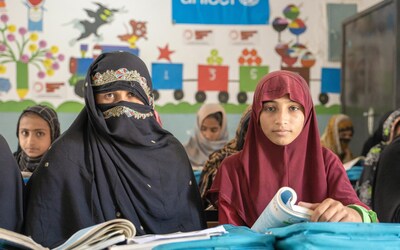
PUNJAB, Pakistan, Dec. 31, 2025 /PRNewswire/ — In a lively classroom in Dera Ghazi Khan, Punjab, Pakistan, Salma Qadeer and Muqadas Zahra sit side-by-side, ready to learn. The desks are occupied by workbooks and pencils. The walls around them are filled with colorful posters and student artwork.

Muqadas, 12, and her mother Salma, 35, at the ALP centre in Dera Ghazi Khan, Punjab, Pakistan. © UNICEF Pakistan/Aliraza Khatri

Salma and Muqadas are more than just classmates. They are mother and daughter, on a shared educational journey.

Along the way, 12-year-old Muqadas and 35-year-old Salma have found a supportive community of teachers and fellow classmates. There is no judgment based on age or background, only a shared commitment to learning. “I am so excited to be back in school. I am in grade 6 and hope to go to college and become a doctor one day,” says Muqadas.

Thanks to funding from Education Cannot Wait (ECW), the global fund for education in emergencies and protracted crises within the United Nation, UNICEF Pakistan in collaboration with the local government and its implementing partner, has established eight Accelerated Learning Programme (ALP) elementary centres to address education barriers faced by girls, which have only worsened following the recent devastating floods in the country. The new ALP centres mean that Salma, Muqadas, and other girls and women in Pakistan have a safe, supportive environment to learn and grow in their community.

Education Challenges in the Village

Living in a village with limited resources and no schools for girls beyond the fifth grade, Muqadas was out of school for nearly a year after completing grade 5. “After completing fifth grade, I lost hope of studying further as there was no elementary school for girls in our village or the nearby areas,” says Muqadas. “My parents are poor and couldn’t afford to send me to the city for further education. I could not study for almost a year. I stayed home, helping my mother with household chores, but missed school a lot.”

Years ago, Salma, Muqadas’s mother, faced a similar situation. She had no choice but to end her schooling after fifth grade. Even though her father, a schoolteacher, believed in educating girls, there were no elementary schools in the area for her to attend.

In such communities with limited resources and opportunities for girls, early marriage is often seen as a solution – and, really, only option – for girls, but this further interrupts their education, and restricts their future aspirations and opportunities. Salma faced this reality as a child.

“After fifth grade, I could not study further, and my parents married me off,” says Salma. “Even after marriage, I wanted to get an education, but there was no opportunity as I had to take care of the family and there were no learning centres or schools for people my age.”

Challenging Societal Norms

When UNICEF piloted the ECW-funded ALP elementary in the area, Salma and her family initially hosted the centre in their home. Girls from all over the village gathered at their house to learn.

Watching her daughter and the girls dive back into learning, Salma felt inspired. She wanted to return to school as well. Salma shared her desire with her family and husband, expressing her wish to attend school alongside their daughter. Despite being a busy mother and wife, Salma was determined to break gender and societal norms by pursuing her education. “I couldn’t imagine that I would ever enroll in a school again, along with my daughter,” she says. “When I saw young girls studying in the ALP centres at our home, my interest renewed.”

As more girls joined, the small space became crowded, and the centre had to move to a bigger primary school. This move was initially a challenge for Salma, who juggled many other responsibilities at home as a mother of five children. However, her resolve to keep learning was strong and she persevered.

At home, Salma’s husband offers strong encouragement to both his daughter and wife as they pursue their education, overcoming obstacles and paving the way for a better future for their entire family.

Learning Together at the Centre

At the centre, Muqadas and Salma immerse themselves in subjects such as math, Urdu and English. As they encounter challenging lessons, Salma leans on her daughter, and together they tackle difficult assignments. She says, “I feel good about coming to the school with my daughter. My teacher Ayesha encourages me and Muqadas also helps me with homework.”

Twelve-year-old Muqadas has found joy at the centre. Beyond allowing her to continue her academic studies, the centre has given her a chance to gain support from her caring teachers and also play games with friends. “I feel safe and happy in the centre. The teachers are friendly, and they help us learn our lessons. We also have the opportunity to play,” says Muqadas.

Salma sees the big impact a chance at a continued education is having on her daughter, but also recognizes the impact for young women and mothers like her, saying, “We need more ALP centres as not only the young girls but even married women want to learn.”

Education Cannot Wait Funds ALP Centres

Pakistan is extremely susceptible to natural disasters worsened by climate change, such as droughts, floods and earthquakes. The extraordinary monsoon rains in 2022 caused massive flooding and landslides across the nation. More than 1,700 people lost their lives, and over 30,000 schools were damaged or destroyed. The floods in Pakistan impacted 33 million people, half of them children.

The ECW-supported ALP centres provide hope for out-of-school girls and women unable to access education due to the unavailability of schools in their area. The programmes provide students the opportunity to complete their middle school education in 20 months while maintaining the required learning outcomes.

Established as part of UNICEF’s Flood Response Programme in two flood-affected districts of South Punjab – Dera Ghazi Khan and Rajanpur – the centres offer a flexible learning model, bringing learning solutions to the doorsteps of girls and addressing concerns around access and safety.

ECW investments in Pakistan provide both urgent educational interventions to combat the effects of climate change and long-term support through the Multi-Year Resilience Programme. Additionally, ECW is piloting an Anticipatory Action programme in Pakistan to support emergency readiness and response to climate disasters.

Investing in Girls’ Futures

For girls and women who once believed that education was unattainable, initiatives like the ALP are life-changing. “If this centre had not been established, I would have lost the opportunity to learn beyond fifth grade,” says Muqadas.

Returning to school means more than just learning for Salma and her daughter, Muqadas. It’s an opportunity to overcome past barriers and seek a future beyond domestic duties.

Investing in girls’ education is essential. It provides them with the agency to shape their future. With education, girls break the cycle of poverty and support economic prosperity within their families and communities. An investment in girls’ education is an investment in an equitable and fairer future for all.

Salma hopes that she and Muqadas have broken the cycle of an education short, and have instead set a new norm for the generations of girls that will come after them. She says, “I want all my children to be educated so they can progress in life.”