NEW DELHI, Oct. 7, 2026 /PRNewswire/ — Fibocom showcases its MGB Series GNSS portfolio at India Mobile Congress (IMC) 2026, featuring MGB180, MGB280 and MGB390. Spanning cost-efficient single-frequency positioning to dual-frequency and RTK-enabled high-accuracy positioning, the series offers flexible options for IoT devices with different design priorities, including cost, power consumption, positioning accuracy and regional satellite compatibility.
Fibocom Showcases MGB Series GNSS Portfolio
MGB180 and MGB280 address mainstream single-frequency GNSS requirements, supporting GPS, BDS, GLONASS, Galileo and QZSS. Both integrate AGNSS and provide 96 tracking channels. MGB180 targets highly cost-sensitive tracking devices, combining compact integration with low-power operation. MGB280 further balances positioning performance and power efficiency, with strengths in fast startup, reacquisition and cellular coexistence for applications such as asset tracking, fleet management and vehicle telematics.
For more demanding positioning requirements, MGB390 extends the series with dual-frequency GNSS and 180 tracking channels. The MGB390-AR supports RTK high-accuracy positioning, with specified horizontal accuracy of 1 cm + 1 ppm. The MGB390-A supports NavIC (IRNSS), India’s regional navigation satellite system, strengthening local applicability for the Indian market.
“As India’s IoT ecosystem continues to grow, customers are looking for reliable technology partners that can support their journey from product development to large-scale deployment,” said Kony Li, General Manager of Fibocom MTC Business Unit. “With the MGB Series, Fibocom provides flexible GNSS solutions covering different levels of cost, power consumption and positioning performance, helping local customers accelerate the development and commercialization of IoT devices.”
MGB180, MGB280 and MGB390 are all in mass production. Fibocom continues to work with customers and ecosystem partners in India to accelerate product integration and commercialization across location-enabled IoT devices.
About Fibocom
Fibocom, founded in 1999, provides wireless communication and AI solutions through integrated hardware and software capabilities. Its portfolio spans cellular communication, AI, automotive and GNSS modules, supporting intelligent connectivity across industries including transportation, energy, retail and robotics.
HONG KONG, Oct. 7, 2026 /PRNewswire/ — Whether navigating outer space or tackling challenges closer to home, technology is revolutionizing our ability to explore. In the seventh season premiere of Tech for Good, CNN anchor and correspondent Kristie Lu Stout meets the young researchers and innovators leading a new era of discovery and developing technology that pushes beyond the limits of human reach. From lunar exploration to environmental monitoring, this episode spotlights creative, adaptable and resourceful engineering that expands opportunities to venture and discover.
CNN’s Tech for Good spotlights the next generation pushing the limits of exploration
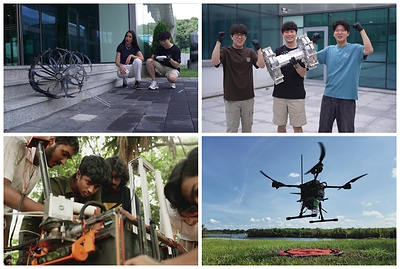
CNN first visits students at the Korea Advanced Institute of Science and Technology (KAIST), to meet a team of engineers developing origami-inspired lunar rover wheels. The intricate spiral wheels are made from thin metal strips, and are designed to change shape, absorb shock, and navigate rough terrain. PhD candidate Seong-binLee and his team have spent three years refining it, with the hope of it one day exploring lunar lava tubes and caves. Master’s student YiseubYun is working on integrating artificial intelligence and reinforcement learning to turn their design into an intelligent rover, as the team works towards South Korea’s planned lunar mission. In another aerospace project at KAIST, PhD candidate Sung-jin Lee is developing a satellite-mounted gripper designed to capture space debris, which the team says is due to be tested in space in 2027.
CNN then heads to Florida, where students from Embry-Riddle Aeronautical University are trying to tackle a vast environmental challenge at Lake Okeechobee, Florida’s largest lake. Warm water and nutrient-rich runoff contributes to toxic blue-green algae blooms that threaten people, wildlife and coastal economies. PhD student Kaylor Taylor and a collaborative team of engineers, drone pilots and environmental scientists are using drones fitted with specially designed devices to take air and water samples, as well as cameras to map algal blooms from the sky. Their system results in faster and richer data collection beyond traditional sampling, helping scientists understand how blooms develop, move, and predict what might happen next.
In Chennai, CNN visits Team Anveshak and ‘Jade’ at the Indian Institute of Technology Madras. Developed by project lead Soham Warde and a team of 60 students, ‘Jade’ is a Mars rover prototype developed to navigate rough terrains, drill for soil samples, and carry out tasks with a robotic arm. Beyond its capabilities, the USD$6000 rover reflects ‘jugaad’, an Indian concept that means to make ambitious things possible using what’s on hand. The team has won several competitions run by the Indian Space Research Organization, but the next stop is an international rover competition in Florida for a chance to demonstrate India’s homegrown approach on a global stage.
Finally, in Tech for Good’s ‘Where Are They Now?’ segment, CNN revisits Myoungseok Kim, originally spotlighted for his nanoscale DNA folding at Seoul National University in 2023. Now at the University of California Berkeley, his latest discovery in the DNA origami field may serve as biosensors for detecting diseases, including cancer.
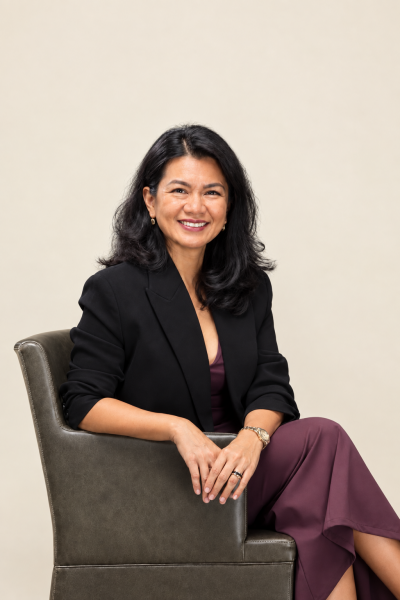
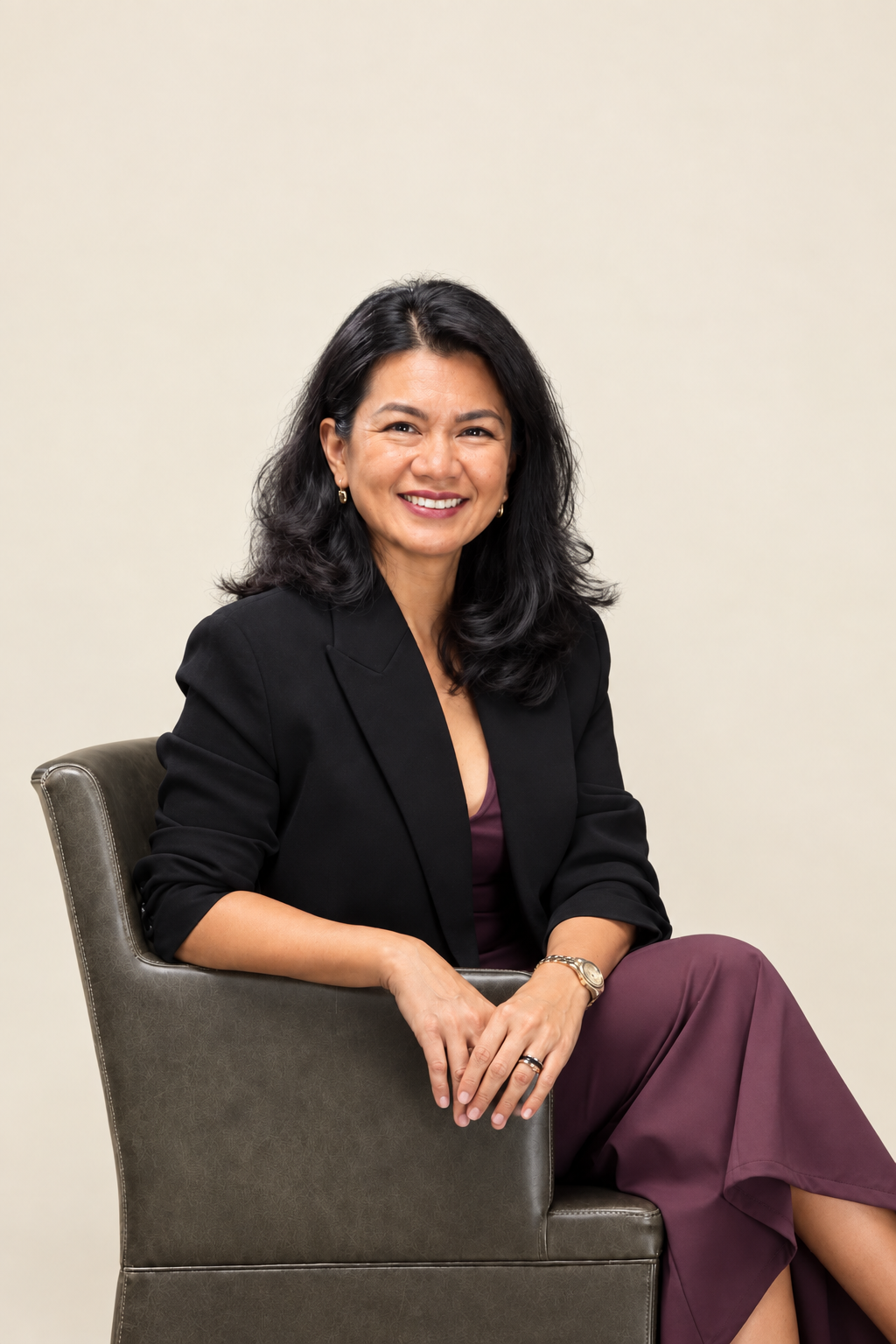
PHNOM PENH, CAMBODIA – Media OutReach Newswire – 7 October 2026 – Somerset Diamond Bay Garden Phnom Penh, the new serviced residence managed by The Ascott Limited (Ascott) – a Singapore-headquartered global hospitality company wholly owned by CapitaLand Investment (CLI) – has appointed Jamila Nsouli as General Manager ahead of its planned opening in November 2026.
Jamila Nsouli | General Manager at Somerset Diamond Bay Garden Phnom Penh
In the role, Nsouli will lead the property’s pre-opening programme and establish its operational and guest-experience priorities. The opening strategy will focus on practical, flexible accommodation for business travellers, leisure guests and families – creating a welcoming home away from home while connecting each stay with the character of Phnom Penh.
Nsouli is a senior hospitality leader with over 20 years of experience in Cambodia, having held executive roles with Accor, Minor Hotels, Relais & Châteaux, LVMH, and Ascott. She excels in pre-openings, commercial strategy, and team development to drive sustainable growth.
“Phnom Penh is evolving so fast, yet its hospitality remains deeply personal,” Nsouli said. “At Somerset Diamond Bay Garden, we are combining that local heart with spaces designed for modern life – a place where guests can settle in, feel at home and experience the city on their own terms. Our entire team is eager to welcome our first guests and make their time here truly memorable.”
The 168-unit property will offer accommodation ranging from studios to three-bedroom residences. Published property information lists private balconies, kitchenettes and in-room washing machines among the accommodation features. Facilities include an outdoor swimming pool, fitness centre, children’s pool and play area, wellness spaces, and rooftop dining.
Located on Koh Pich, the property is near Connexion Mall and the Diamond Convention & Exhibition Centre, with access to other parts of Phnom Penh via Norea Bridge.
Somerset Diamond Bay Garden Phnom Penh is part of a management collaboration between The Ascott Limited and Overseas Cambodian Investment Corporation. OCIC is active in major property and infrastructure developments in Cambodia, including Koh Pich and Techo International Airport.
For pre-opening enquiries, reservations or further information, visit discoverasr.com or call +855 23 900 664.
The issuer is solely responsible for the content of this announcement.
Somerset Diamond Bay Garden Phnom Penh
Somerset Diamond Bay Garden Phnom Penh is a premium riverside property on Koh Pich. Offering studios to three-bedroom suites with kitchenettes, balconies, and laundry, it features a pool, gym, rooftop restaurant, and kids’ facilities. Ideally located near key venues, it caters to business, leisure, and families.
For more information, visit discoverasr.com or follow @SomersetDiamondBayPhnomPenh on social media.
New specialisation within Master of Science in Accounting focuses on applying, evaluating and governing Generative and Agentic AI in accounting and finance
SINGAPORE, Oct. 7, 2026 /PRNewswire/ — The accountant of the future may spend less time checking documents and more time checking what artificial intelligence has done with them.
AI is already being used in accounting and finance to review documents, analyse financial information, identify anomalies and support audit work. But as more of this work is performed or assisted by AI, professionals still have to decide whether its outputs are accurate, appropriate and reliable enough to inform a business decision.
Singapore Management University’s (SMU) School of Accountancy (SOA) is responding to this shift with a new Applied Artificial Intelligence Track in its Master of Science in Accounting (MSA) programme. The track is designed to equip accounting and finance professionals with the skills to apply AI to professional workflows, evaluate its outputs and put appropriate governance and human oversight around its use.
The move comes as AI is reshaping the work of accounting and finance professionals. Budget 2026 identified accountancy as one of the professions where AI can automate routine work and enable professionals to focus on higher-value activities requiring professional judgement and expertise. The Government also announced that it would support workers in building practical AI capabilities, starting with the accountancy and legal professions.
An accounting-first approach to AI
Unlike AI programmes centred primarily on computer science, data science or general business applications, the new track starts with the professional contexts in which accounting expertise matters.
Students will gain practical exposure to technologies including Generative AI, large language models (LLMs), retrieval-augmented generation (RAG) and Agentic AI. They will learn not only how these technologies can be applied, but also how to assess their reliability and limitations, supervise AI-enabled workflows and establish appropriate controls.
The emergence of Agentic AI extends this shift beyond generating content and analysis towards AI systems capable of coordinating and executing multi-step workflows. For accounting and finance professionals, this raises new questions about how such systems should be supervised, where human review and escalation should occur, and who remains accountable for the resulting decisions.
Professor Zhang Liandong, Dean and Lee Kong Chian Professor of Accounting, SMU School of Accountancy, said:
“We designed the Applied AI Track around how AI is entering accounting and finance work. The question is not simply whether a tool can perform a task, but whether professionals understand its limitations, can evaluate its output and know what controls are needed before relying on it. Students will therefore learn to apply emerging technologies such as Generative and Agentic AI within professional workflows, while retaining the professional judgement, human oversight and accountability that remain central to the profession.”
The Applied AI specialisation comprises four Course Units drawn from five specialist offerings, covering Agentic AI for Accounting; AI Governance, Evaluation and Ethics; Modern AI Applications in Business; Blockchain and AI for Decentralised Intelligence; and the Innovation and Technology Capstone (SMU-X).
The curriculum combines these specialist courses with the MSA’s accounting core and foundational training in programming, data management, statistics, forecasting, visual analytics and machine learning. Through the SMU-X capstone, students will also apply AI, analytics and digital technologies to real accounting and finance problems with industry partners.
The track is built around the premise that AI should augment rather than replace professional expertise. Its emphasis is on applied use, evaluation and governance of AI in professional contexts, rather than on developing AI models from the ground up. Students will learn to integrate AI into existing workflows, establish review and escalation points, evaluate AI-generated outputs and determine where human intervention remains necessary.
From using AI to governing it
The capabilities developed through the track extend beyond learning to operate AI tools.
Graduates will be equipped to apply, evaluate, supervise and govern AI in professional contexts, including the ability to:
apply AI to accounting, audit and assurance, financial analysis, finance transformation and related professional workflows;
evaluate AI-generated outputs and identify inappropriate assumptions, errors or limitations;
design and supervise AI-enabled workflows, including human-in-the-loop processes;
assess risks relating to privacy, cybersecurity, model risk, bias, explainability and regulatory compliance; and
translate AI-generated insights into decisions that remain subject to professional accountability.
Ms Irene Liu, Managing Director, Risk, Regulatory and Compliance Lead for Southeast Asia, Accenture Southeast Asia said: “Firms are starting to use AI across finance, from reconciliations and detection of potential reporting issues to correcting journals and supporting complex financial valuations. As AI becomes embedded in finance systems and workflows, accountants increasingly need to understand how to interact with these AI tools, validate their outputs, identify exceptions and exercise professional judgement over when and how those outputs should be used.”
This shift could affect a wide range of professional work, from audit working-paper and document review to financial analysis, anomaly and risk detection, finance-process redesign and controls over AI-generated outputs.
The track is intended to prepare professionals who can apply, evaluate, supervise and govern AI within their area of expertise, rather than simply use AI tools.
Building on an established accounting and analytics foundation
The Applied AI Track builds on the MSA’s existing focus on data and analytics. The MSA comprises 15 Course Units, including eight programme core courses, four track electives, two open electives and one postgraduate professional development course.
Students may also use their open electives for an internship, other SMU master’s courses, or overseas immersion and exchange opportunities.
As AI takes on more of the work traditionally performed by professionals, the role of the accountant will continue to evolve. Knowing how to use AI will be one part of that change. Equally important will be knowing when to question it, when not to rely on it, and who remains accountable for the decisions that follow.
About Singapore Management University (SMU)
Established in 2000, Singapore Management University (SMU) is recognised for its high-impact, multi-disciplinary research that addresses Asian issues of global relevance, and for its interactive, collaborative and project-based approach to learning. Home to over 13,000 students across six schools and two colleges, SMU offers bachelors, masters and PhD programmes across Accountancy, Business, Economics, Information Systems, Integrative Studies, Law and Social Sciences, as well as executive development and continuing education programmes. SMU graduates are consistently ranked among the most employable in Singapore, and command one of the highest mean starting salaries. Through its city campus, SMU enjoys strategic linkages with business, government and the wider community in Singapore and beyond. www.smu.edu.sg
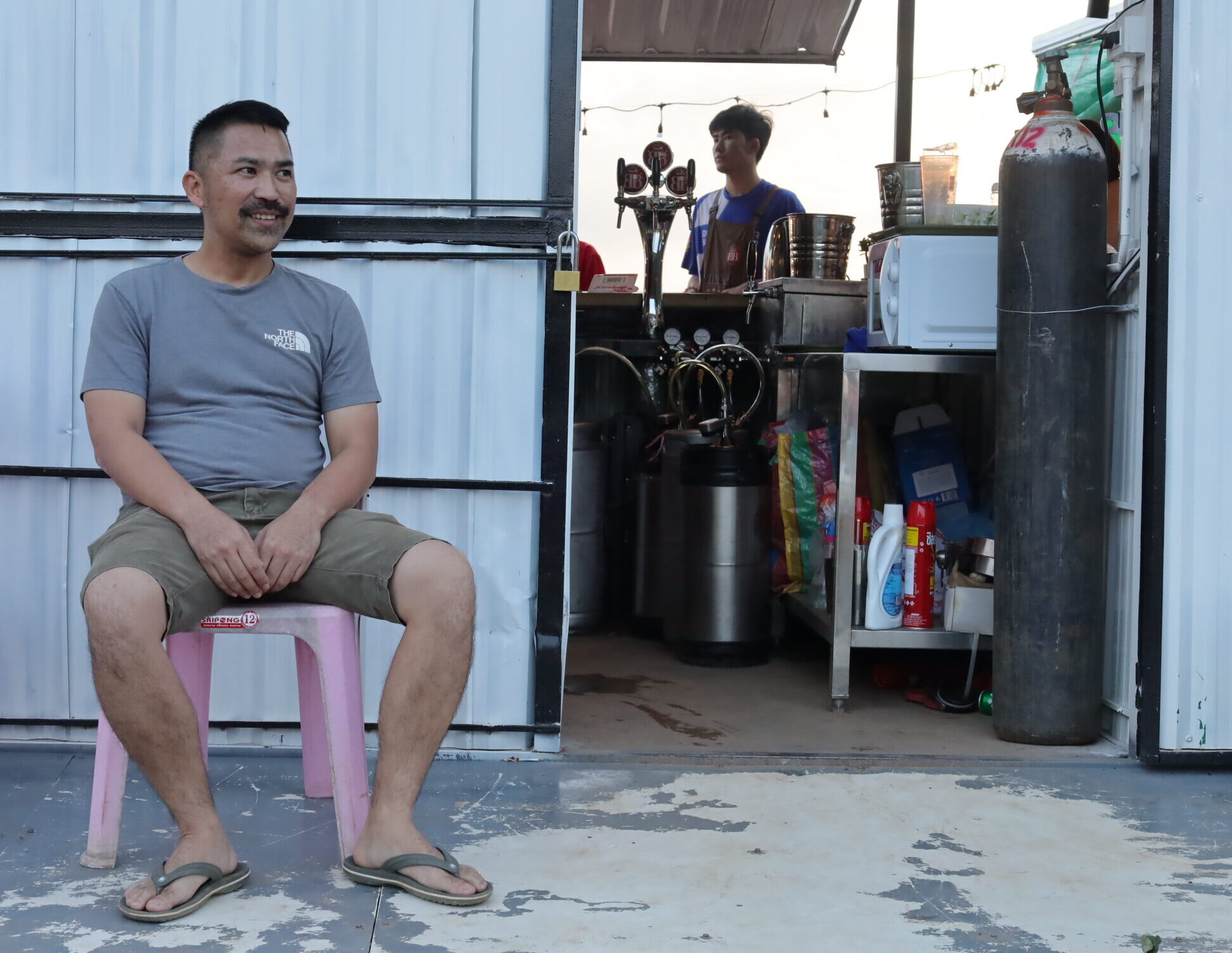
Sompha “Sam” Lavanh sits at his barbecue restaurant along the Mekong River in Vientiane on October 6, 2026. (Photo: Beatrice Siviero)
The men behind a barbecue grill in Vientiane speak English more easily than Lao.
Some spent decades in the United States. Others left Laos as babies and did not return until they were sent back years later.
Now, a small group of deportees is working together to run a barbecue restaurant and build a new life in a country that was once home, but is unfamiliar to many of them.
It is one of the ways returnees are trying to find their feet after being deported from the United States.
Since US President Donald Trump returned to office in January 2025, Lao nationals have been caught up in a broader immigration crackdown targeting people with deportation orders. Some men and women who had lived in the United States for years, and sometimes decades, were detained by US Immigration and Customs Enforcement (ICE) with little warning. Some were sent to Laos with only the clothes they were wearing when they were detained. By the end of January last year, more than 4,500 Lao nationals had final deportation orders.
In March 2025, the Lao government urged nationals living illegally in the US to return voluntarily, saying it would help with their return and that they would not face fines or penalties in Laos. Lao-American communities also expressed concern over deportation, citizenship, travel restrictions, and difficulties returning to Laos.
US Immigration and Customs Enforcement has said incomplete travel documents, along with diplomatic and political issues, could delay deportations, leaving some people in limbo even after they have been ordered to leave the United States.
Chanida Phaengdara Potter, founder and managing director of Roots, an organisation that helps people deported from the United States rebuild their lives in Laos, said the number of returnees the group has encountered is approaching 1,000. Authorities have not confirmed an official figure.
Roots specifically works with people facing severe vulnerabilities, although the broader population of returnees varies widely in age, circumstances, and needs. Many arrive after periods of poverty, or other difficult circumstances in the United States.
Starting Over
For many returnees, the hardest part begins when they land. Chanida said the first week is critical, with help needed for basic needs, housing, healthcare, work, and documentation.
The organization estimates that around a quarter to a third of the people it supports have severe mental health conditions, physical disabilities, or are elderly. Some psychiatric medications are difficult to find in Laos; Roots has also dealt with serious crises, including self-harm and deaths among returnees.
Legal documentation can make rebuilding a life harder.
Returnees receive “Yellow IDs,” which provide temporary residency but must be renewed annually and do not grant Lao citizenship.
“When you’re stateless, it means that you are at risk for further mistreatment or discrimination,” Chanida said. “So they’re in a limbo status.”
The documents can also make healthcare difficult, with insurers not currently accepting them.
But Chanida said one of the biggest obstacles is the assumption that deportees are simply “criminals.”
“These are people who are coming in with trauma, you know? Very traumatized lived experiences,” Chanida said. “And then add a layer of deportation. And so that adds it, you know, even more.”
Finding a Way Forward
At the barbecue stand in Vientiane, Athithane “Anthony” Tiamtisack has spent years helping newer arrivals adjust to life in Laos. He has lived in the country for 16 years after spending most of his life in the United States, and helped several returnees set up the business.
Every returnee needs a sponsor before they can leave Laos’ reception centers, Anthony said. Those with relatives can often leave the government centers within two weeks.
“If no sponsor, there’s no place to go,” he said.
Language is another barrier to finding work.
“If you speak only English in Laos, your life will be 30 percent more expensive,” Anthony said.
He said the legal situation also remains unclear for people trying to help returnees.
“We don’t know what’s going on in the law,” he said. “There’s no laws as of now on this.”
Athithane “Anthony” Tiamtisack sits behind the barbecue stand along the Mekong River in Vientiane on October 6, 2026. He has lived in Laos for 16 years and helped several returnees set up the business. (Photo: Beatrice Siviero)
Building a New Life
For the men working at the BBQ restaurant, the business is one way to deal with those challenges. There, they can earn money, meet other returnees, and build a life after deportation.
Each arrived in Laos with a different history, but they now share the same task of figuring out how to start over.
Sompha “Sam” Lavanh, 49, is one of them. He left Laos for the United States when he was seven or eight months old and grew up in Oregon. His wife and two children, one of whom is disabled, remain in the United States.
When he arrived in Laos, he said, he did not know what to do. He eventually joined the barbecue business, which has now been operating for five months and sources its meat from local markets.
“We might as well try to provide opportunities for people,” he said.
For Sam, the business is also a way to build enough stability to eventually bring his family to Laos.
“If I have a chance, I want my life here to be stable first, so I can bring my family here and see my wife again,” he said.
For now, they stay in touch by phone.
“Everybody I love is there. Only me here,” he said. “We call every day.”
His separation from them was not something he expected. Sam said he was detained in the United States after years of attending routine immigration check-ins without incident.
“I already completed my annual check-in, authorities said I was fine and scheduled one for next year,” he said. “But then they showed up at my driveway two months later. I got detained immediately, they didn’t even tell my wife.”
Detained During Annual Immigration Check-In
A Lao returnee who was deported from the United States works as a cook at a barbecue stand along the Mekong River in Vientiane on October 6, 2026. (Photo: Beatrice Siviero)
Another returnee, Chio Saechao, 46, said being separated from his family has been one of the hardest parts of starting over.
He was detained during a routine annual immigration check-in after years of attending the appointments without incident.
“I got detained whilst doing my annual check-ins. It was unprompted. I’ve been checking in for 20 years,” he said. “I went in, checked in, and never came back out.”
“They took us with what we were wearing. They didn’t give us a chance to get our luggage, nothing.”
He said he was 16 when he committed a criminal offense that eventually led to his deportation decades later.
“We were just children. At 16 we know nothing,” he said.
Born in a Thai refugee camp to Lao parents, Chio was resettled in the United States at eight months old.
“I can’t speak Lao, anything, but my food is going to speak for me,” he said.
He said he has also noticed that people in Laos are gradually becoming more accepting of the group of returnees from the US.
For all of them, though, starting over has come with losses that go beyond leaving the United States. Some have struggled to access healthcare, while others have been separated from their families for thousands of miles.
But for those now building lives in Laos, there is little choice but to keep going.
“I have no choice. But compared to other countries, I would rather be here,” Chio said. “This is a second chance in life, and we need to make the best of it.”
MANILA, PHILIPPINES – Media OutReach Newswire – 7 October 2026 – Skyro, a high-growth finance group, has launched a pioneering cashback programme in the Philippines that allows customers to select the spending categories in which they earn cashback rather than having those categories chosen for them by the provider.
The programme is available to eligible users of SkyroCredit, Skyro’s reusable digital credit line within the Skyro app.
Each month, customers can select four out of seven cashback categories and earn rewards of up to 30% on eligible purchases. Categories may include groceries, dining, pharmacy, online shopping, fuel and household bills, and customers can change their selections from one month to the next as their spending priorities change.
Customers who prefer not to choose individual categories can instead earn 0.5% cashback on all eligible transactions.
“At Skyro, we want customers to have greater control over their finances. That principle led us to develop a cashback model that allows people to decide where they earn rewards rather than having those categories chosen for them. It is the first programme of its kind in the Philippine market and is designed to reward customers for everyday purchases they already make, not to encourage additional spending,” said Arsen Liametov, co-founder and co-CEO of Skyro.
The programme has no minimum spend requirement to qualify for cashback, meaning customers do not need to increase their monthly spending simply to reach a rewards threshold. Cashback is credited directly in Philippine pesos rather than virtual points: every PHP 1 earned in cashback equals PHP 1 that can be applied to a future SkyroCredit purchase.
Customers who prefer not to choose individual categories can instead earn 0.5% cashback on all eligible transactions.
The new programme builds on the flexibility of SkyroCredit, which eligible customers can use wherever QR Ph payments are accepted. Customers simply scan or upload a merchant’s QR Ph code in the Skyro Philippines app and pay using their available SkyroCredit limit, whether in-store or online. The QR-based model may also be adaptable in other emerging markets where QR payments are widely used.
Hashtag: #Skyro
The issuer is solely responsible for the content of this announcement.
About Skyro
Skyro is a high-growth, digital-first fintech group delivering scalable, responsible financial access across high-potential emerging markets. Powered by proprietary data science, AI-driven credit decisioning, and alternative-data scoring, the company combines a mobile-native experience with modular fintech architecture to serve underserved client segments at scale.
As of 2026, Skyro has a registered user base of more than 7 million and a credit portfolio exceeding USD 200 million. The company’s ambition is to become a leading full-spectrum financial services group across high-potential markets by combining capability proven at scale with a commitment to building each business around the needs of the market it serves.
Research on skin aging prediction, digital sensory quantification, and AI-based consumer insights recognized among the congress’s top presentations
AI and data-driven approaches open new possibilities in skin science and consumer understanding
SEOUL, South Korea, Oct. 7, 2026 /PRNewswire/ — Amorepacific presented its latest skin science and consumer research powered by AI and digital technologies at the International Federation of Societies of Cosmetic Chemists (IFSCC) Congress 2026, the world’s largest cosmetics science conference.
Bringing together leading cosmetics scientists from around the world, this year’s IFSCC Congress was held in Perth, Australia, from September 28 to October 1 under the theme “Solving the Sustainable Beauty Equation.” Through nine studies spanning skin aging prediction, digital sensory quantification, and global consumer research, Amorepacific demonstrated how beauty research is evolving toward prediction, quantification, and data-driven consumer understanding.
Researcher Eun-Jeong Choi of Amorepacific R&I Center presented “Skin Aging in the Era of Global Boiling: Deep Learning-Guided Transcriptomic Signatures of Heat-Accelerated Aging.” Building on over 20 years of research on the effects of heat on the skin and heat-induced aging, the study integrated transcriptomic analysis with deep learning technologies. The research enabled prediction of skin aging progression and ingredient efficacy, identified ingredients that help restore age-related skin damage, and confirmed their benefits in addressing age-related skin changes. The findings establish a foundation for skin longevity research, enabling more precise prediction of skin responses to environmental change. The study was named one of the Top 10 Podium Fundamental Research Award honorees.
Researcher Jeong Yu Lee of Amorepacific R&I Center presented “Electroluminescent Visualization of Skin Hydrodynamics for Digital Sensory Quantification.” The study introduced a technology that visualizes moisture distribution and movement on the skin in real time during product application, while measuring subtle electrical changes to quantify interactions between the skin and formulations. The results showed a strong correlation with consumer sensory evaluations, demonstrating the potential to objectively assess product experiences by translating skin phenomena into measurable data. The study was selected as one of the Top 10 Podium Applied Research Award honorees.
Researcher Jinseob Shin of Amorepacific’s Americas R&I Center presented “AI-Based Consumer Research on Barrier-Repair Moisturizers for Sensitive Skin.” The study compared dermocosmetic products among consumers in Brazil and Mexico, using AI-based video interview analysis to examine user experiences and preference drivers for sensitive-skin moisturizers. Fast absorption, lightweight texture, and skin barrier benefits were identified as key drivers of consumer preference, demonstrating a new approach to consumer research that combines AI-powered analysis of real consumer experiences with expressed perceptions.
Brian Byung-Fhy Suh, CTO and Head of Amorepacific R&I Center, said, “Amorepacific sought to demonstrate new possibilities in skin science by integrating AI and digital technologies. In our commitment to Holistic Longevity solutions that support healthy skin over time and across changing environmental conditions, we will continue advancing the research in prediction, quantification, and data-driven consumer understanding through hybrid technologies that combine our skin science expertise with AI and digital innovation.”
Congress takes place in late October with stellar line-up of speakers and panellists
HONG KONG SAR – Media OutReach Newswire – 7 October 2026 – The Hong Kong Institute of Landscape Architects (HKILA) will host the International Federation of Landscape Architects (IFLA) World and Asia-Pacific Region Congress from 28th to 30th October. The Congress will bring together landscape architects, planners and policymakers from more than 80 countries and is the first time the city has hosted the IFLA World Congress.
The theme of the Congress is “Liminal Landscapes: Shifting Boundaries of Watersheds & Coastlines” and will examine how cities can plan and design for coastlines and river systems that never stay still and increasingly in recent years, as live-showcases of the effects of climate change. The three-day Congress will combine keynote lectures, scientific panels, workshops and awards ceremonies, drawing on Hong Kong’s own experience as a city built at the edge of land and sea to guide a conversation with global relevance.
Mr. Paul Chan, IFLA Asia-Pacific Region President and Immediate Past President of HKILA, said the Congress marks a turning point for the profession in the region. “For years, landscape architects have argued that the space between land and water needs proper design attention, not just engineering,” he said. “This Congress puts that argument on a world stage, in a city that lives with the consequences of that boundary every day. We want delegates to leave Hong Kong with practical tools and partnerships they can take back to their own cities, and we want the wider public and business community to understand why landscape architects now sit at the centre of how Asia adapts to a changing climate.”
The theme reflects a challenge every coastal city in Asia now faces. Hong Kong sits at the mouth of the Pearl River Delta, a position the Congress organisers describe as fundamentally liminal: neither fully land nor fully water, and shaped by tides, storms and human development in equal measure. The Congress will explore how landscape architects can work with, rather than against, these shifting boundaries, covering watershed management, coastal resilience, sponge cities, nature-based solutions and the cultural landscapes that form where water and settlement intersect.
Sessions across the three days include dedicated tracks on climate action, disaster risk reduction, indigenous knowledge and the Sustainable Development Goals, reflecting how far the discipline has moved beyond garden design and into the frontline of climate adaptation planning.
Among more than a dozen international speakers, three stand out for the breadth of their influence on the landscape architectural field. Kate Orff, founder of SCAPE and professor at Columbia University, will deliver the Congress’s opening keynote; a MacArthur Fellow and winner of the 2025 ASLA Firm Award, she has spent her career redesigning coastlines in New York and New Orleans to absorb storms rather than fight them. Stig L. Andersson, founder of the Danish studio SLA and a professor at Beijing Forestry University, brings three decades of nature-based design practice and a body of work honoured with some of Europe’s top architecture prizes, including the C.F. Hansen Medal. Jungyoon Kim, associate professor in practice at Harvard’s Graduate School of Design and founder of PARKKIM, will speak on landscape practice that spans Rotterdam, Seoul and Boston, offering a distinctly cross-cultural view of how cities adapt public space to a changing climate. Their sessions, alongside Peking University’s Li Dihua, Amman-based designer Lara Zureikat, prominent Malaysian landscape architect Seksan Ng and more, mean the Congress will set a global agenda on climate adaptive design.
Mr. Chan said the Congress offers value well beyond the profession itself. “Anyone with a stake in how Hong Kong and the wider region grow, whether in government, business or the community, will find something,” he said. “Delegates will hear from people who have already solved problems that our cities are only beginning to face, from flood resilience to biodiversity loss. Landscape architecture touches property values, public health and investment decisions as much as it touches parks and gardens, and this Congress is where those conversations happen in the open.”
Hashtag: #HKILA #IFLA
The issuer is solely responsible for the content of this announcement.
About the Hong Kong Institute of Landscape Architects
The Hong Kong Institute of Landscape Architects (HKILA) was founded in 1988. It is a professional body incorporated under the Hong Kong Institute of Landscape Architects Ordinance (Cap. 1162), dedicated to raising the standard of sustainable development, landscape design and planning in Hong Kong.
About the International Federation of Landscape Architects
The International Federation of Landscape Architects (IFLA) was founded in 1948. It is the only international non-governmental organisation representing landscape architects worldwide, representing the global community of landscape architects through national associations from more than 80 countries across five regions. Its mission is to advance the landscape architecture profession and promote the sustainable management and design of both natural and built environments.





 https://www.discoverasr.com/en/somerset-serviced-residence/cambodia/somerset-diamond-bay-garden-phnom-penh
 https://www.linkedin.com/company/somerset-diamond-bay-garden-phnom-penh/
 https://www.facebook.com/somersetdiamondbayphnompenh
 https://www.instagram.com/somersetdiamondbayphnompenh/




 https://www.skyro.io/skyro-story


