

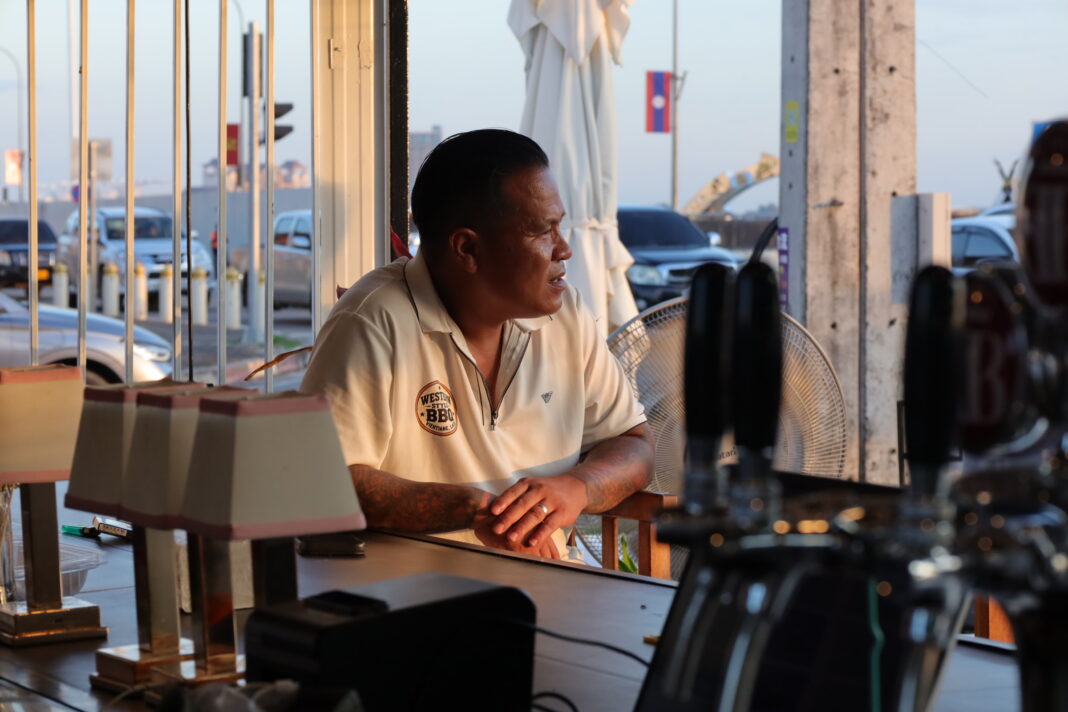
The men behind a barbecue grill in Vientiane speak English more easily than Lao.
Some spent decades in the United States. Others left Laos as babies and did not return until they were sent back years later.
Now, a small group of deportees is working together to run a barbecue restaurant and build a new life in a country that was once home, but is unfamiliar to many of them.
It is one of the ways returnees are trying to find their feet after being deported from the United States.
Since US President Donald Trump returned to office in January 2025, Lao nationals have been caught up in a broader immigration crackdown targeting people with deportation orders. Some men and women who had lived in the United States for years, and sometimes decades, were detained by US Immigration and Customs Enforcement (ICE) with little warning. Some were sent to Laos with only the clothes they were wearing when they were detained. By the end of January last year, more than 4,500 Lao nationals had final deportation orders.
In March 2025, the Lao government urged nationals living illegally in the US to return voluntarily, saying it would help with their return and that they would not face fines or penalties in Laos. Lao-American communities also expressed concern over deportation, citizenship, travel restrictions, and difficulties returning to Laos.
US Immigration and Customs Enforcement has said incomplete travel documents, along with diplomatic and political issues, could delay deportations, leaving some people in limbo even after they have been ordered to leave the United States.
Chanida Phaengdara Potter, founder and managing director of Roots, an organisation that helps people deported from the United States rebuild their lives in Laos, said the number of returnees the group has encountered is approaching 1,000. Authorities have not confirmed an official figure.
Roots specifically works with people facing severe vulnerabilities, although the broader population of returnees varies widely in age, circumstances, and needs. Many arrive after periods of poverty, or other difficult circumstances in the United States.
Starting Over
For many returnees, the hardest part begins when they land. Chanida said the first week is critical, with help needed for basic needs, housing, healthcare, work, and documentation.
The organization estimates that around a quarter to a third of the people it supports have severe mental health conditions, physical disabilities, or are elderly. Some psychiatric medications are difficult to find in Laos; Roots has also dealt with serious crises, including self-harm and deaths among returnees.
Legal documentation can make rebuilding a life harder.
Returnees receive “Yellow IDs,” which provide temporary residency but must be renewed annually and do not grant Lao citizenship.
“When you’re stateless, it means that you are at risk for further mistreatment or discrimination,” Chanida said. “So they’re in a limbo status.”
The documents can also make healthcare difficult, with insurers not currently accepting them.
But Chanida said one of the biggest obstacles is the assumption that deportees are simply “criminals.”
“These are people who are coming in with trauma, you know? Very traumatized lived experiences,” Chanida said. “And then add a layer of deportation. And so that adds it, you know, even more.”
Finding a Way Forward
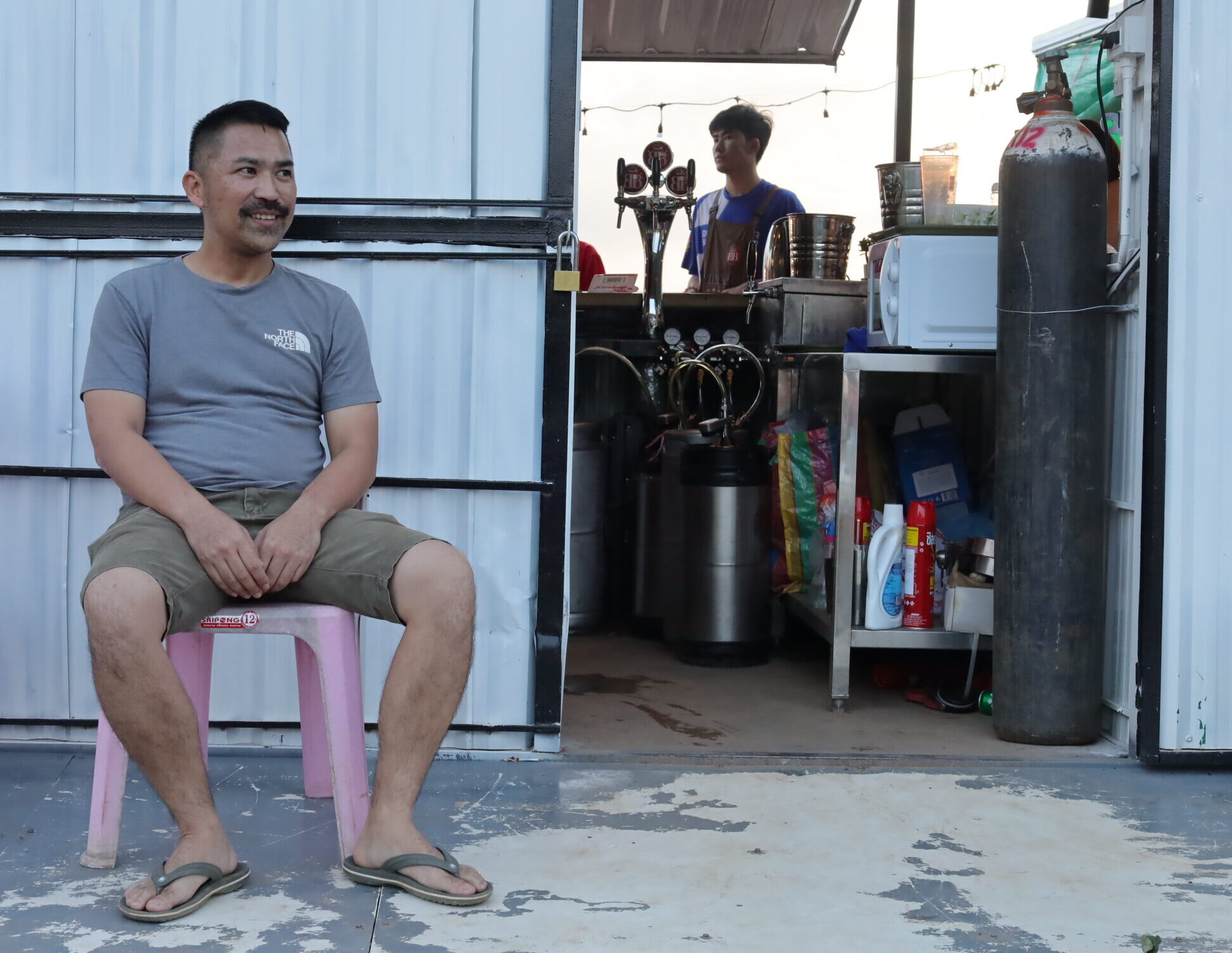
At the barbecue stand in Vientiane, Athithane “Anthony” Tiamtisack has spent years helping newer arrivals adjust to life in Laos. He has lived in the country for 16 years after spending most of his life in the United States, and helped several returnees set up the business.
Every returnee needs a sponsor before they can leave Laos’ reception centers, Anthony said. Those with relatives can often leave the government centers within two weeks.
“If no sponsor, there’s no place to go,” he said.
Language is another barrier to finding work.
“If you speak only English in Laos, your life will be 30 percent more expensive,” Anthony said.
He said the legal situation also remains unclear for people trying to help returnees.
“We don’t know what’s going on in the law,” he said. “There’s no laws as of now on this.”
Building a New Life
For the men working at the BBQ restaurant, the business is one way to deal with those challenges. There, they can earn money, meet other returnees, and build a life after deportation.
Each arrived in Laos with a different history, but they now share the same task of figuring out how to start over.
Sompha “Sam” Lavanh, 49, is one of them. He left Laos for the United States when he was seven or eight months old and grew up in Oregon. His wife and two children, one of whom is disabled, remain in the United States.
When he arrived in Laos, he said, he did not know what to do. He eventually joined the barbecue business, which has now been operating for five months and sources its meat from local markets.
“We might as well try to provide opportunities for people,” he said.
For Sam, the business is also a way to build enough stability to eventually bring his family to Laos.
“If I have a chance, I want my life here to be stable first, so I can bring my family here and see my wife again,” he said.
For now, they stay in touch by phone.
“Everybody I love is there. Only me here,” he said. “We call every day.”
His separation from them was not something he expected. Sam said he was detained in the United States after years of attending routine immigration check-ins without incident.
“I already completed my annual check-in, authorities said I was fine and scheduled one for next year,” he said. “But then they showed up at my driveway two months later. I got detained immediately, they didn’t even tell my wife.”
Detained During Annual Immigration Check-In
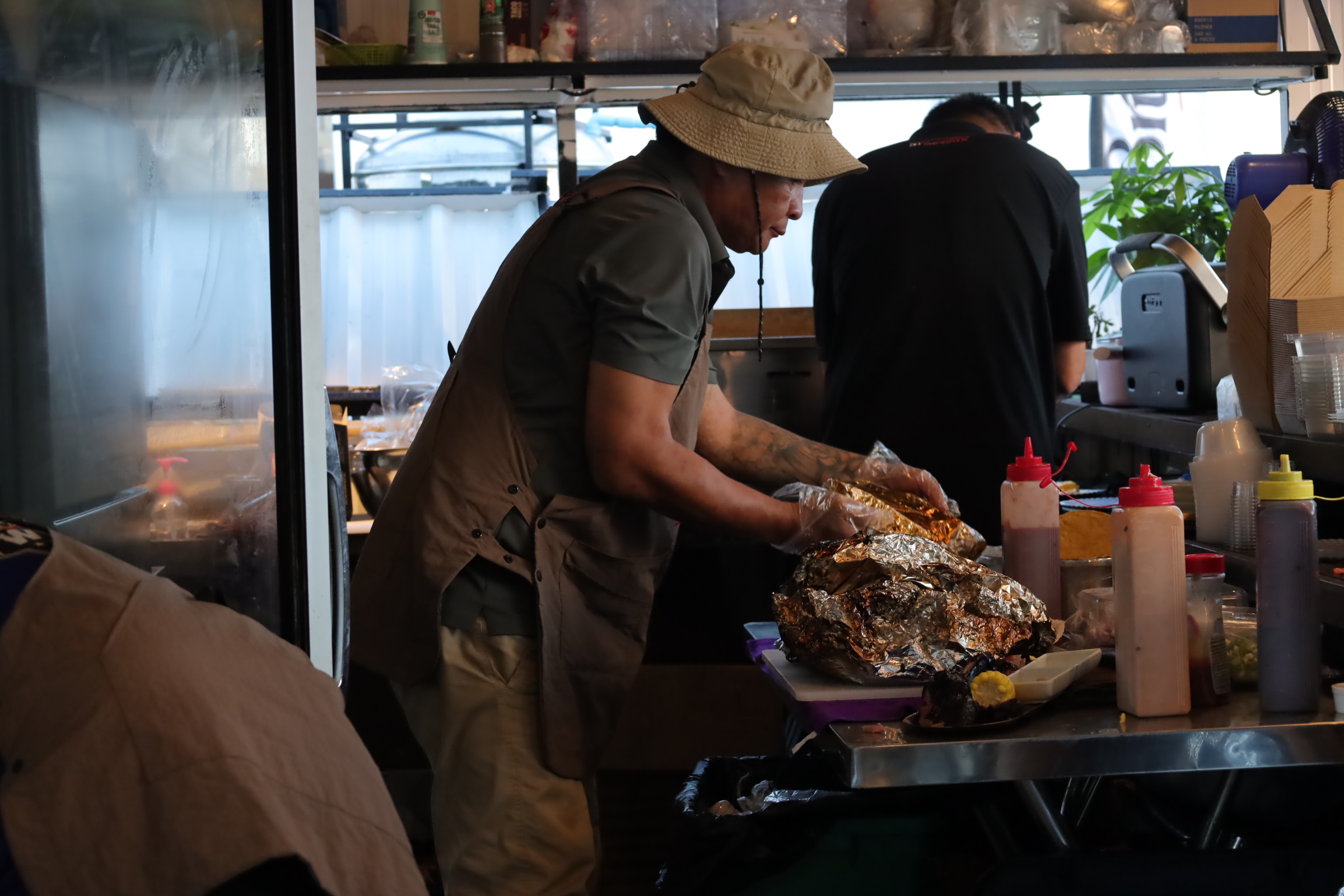
Another returnee, Chio Saechao, 46, said being separated from his family has been one of the hardest parts of starting over.
He was detained during a routine annual immigration check-in after years of attending the appointments without incident.
“I got detained whilst doing my annual check-ins. It was unprompted. I’ve been checking in for 20 years,” he said. “I went in, checked in, and never came back out.”
“They took us with what we were wearing. They didn’t give us a chance to get our luggage, nothing.”
He said he was 16 when he committed a criminal offense that eventually led to his deportation decades later.
“We were just children. At 16 we know nothing,” he said.
Born in a Thai refugee camp to Lao parents, Chio was resettled in the United States at eight months old.
“I can’t speak Lao, anything, but my food is going to speak for me,” he said.
He said he has also noticed that people in Laos are gradually becoming more accepting of the group of returnees from the US.
For all of them, though, starting over has come with losses that go beyond leaving the United States. Some have struggled to access healthcare, while others have been separated from their families for thousands of miles.
But for those now building lives in Laos, there is little choice but to keep going.
“I have no choice. But compared to other countries, I would rather be here,” Chio said. “This is a second chance in life, and we need to make the best of it.”
Additional reporting by Thongsavanh Souvannasane
