BANGKOK, THAILAND – Media OutReach Newswire – 8 July 2026 – Thailand has approved nine major investment projects worth a combined USD 1.99 billion (66.3 billion baht) in high-value sectors, including artificial intelligence (AI), advanced electronics, aviation, clean energy, and food as global manufacturers reposition their supply chains across Southeast Asia.
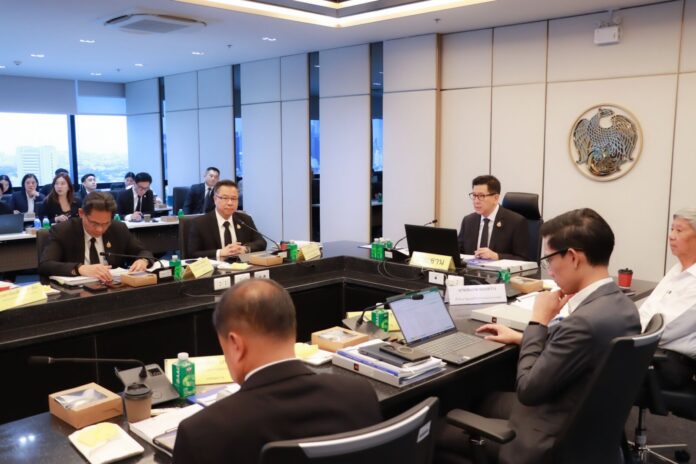
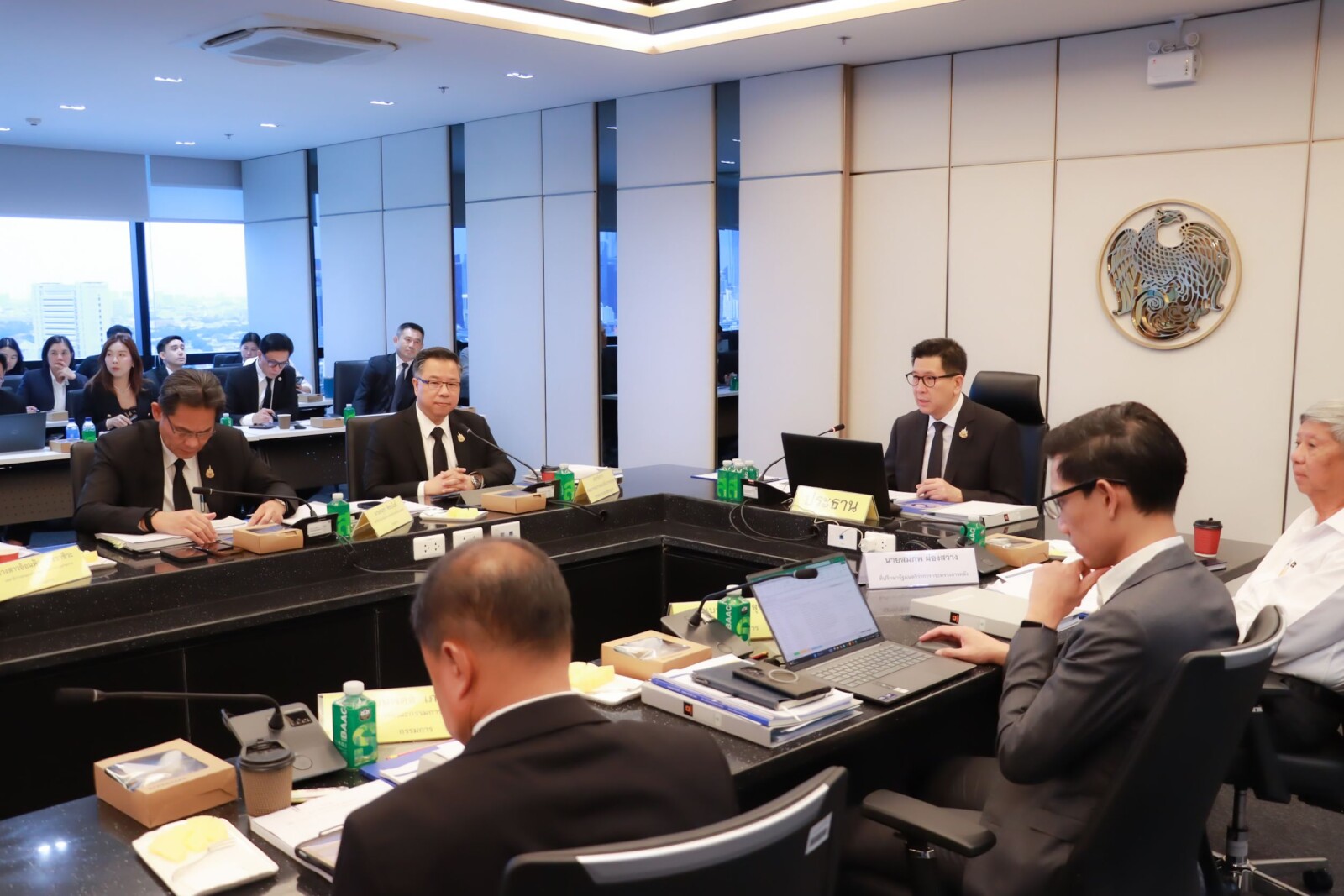
Thailand Board of Investment Meeting
The approvals, cleared during a meeting of the Thailand Board of Investment (BOI) chaired by Mr. Ekniti Nitithanprapas, Deputy Prime Minister and Minister of Finance, highlight the country’s appeal to multinational corporations seeking reliable production hubs.
“These investments by leading multinationals signal strong global confidence in our industrial capacity,” said Mr. Narit Therdsteerasukdi, Secretary General of the BOI. “By locating key parts of the AI and advanced electronics value chain here, we are connecting our economy directly to the core of next-generation global technology.”
To sustain this influx of high-tech investment, the BOI has restructured and expanded the mandate of its specialized energy panel into the “Subcommittee on Energy Management for Data Center Investment and Project Screening.” Chaired by the Minister of Energy, this body will serve as a one-stop regulatory filter to evaluate data center proposals on resource consumption, environmental impact, and clean energy sourcing before investors can apply for tax incentives, thereby providing policy transparency for international operators.
The largest share of the approvals covers Thailand’s advanced electronics and digital sector, led by companies from East Asia’s technology supply chains. In the AI infrastructure sector, Datasection (Thailand) Co., Ltd., a subsidiary of Japan’s Datasection Inc., will invest USD 235.2 million (7.8 billion baht) to establish high-performance GPU server infrastructure for data hosting in Bangkok and Pathum Thani. This specialized hardware will directly power advanced AI applications and digital businesses in the region.
Doosan Electro-Materials (Thailand) Co., Ltd., a unit of South Korean conglomerate Doosan Corp. and a global leader in non-flow prepregs, will also invest USD 180.2 million (6 billion baht) in Samut Prakan to manufacture copper-clad laminate (CCL) and prepreg, which serve as critical inputs for printed circuit boards (PCBs).
Similarly, Taiwan Union Technology (Thailand) Co., Ltd. is set to invest USD 189.2 million (6.3 billion baht) in Chonburi to manufacture CCL and prepreg designed specifically for high-demand AI servers and data centers. Fulltech Fiber Glass (Thailand) Co., Ltd. will invest USD 99.4 million (3.3 billion baht) to produce specialized glass fiber fabric, a raw material for PCB manufacturing, in Chachoengsao.
Beyond technology, multinational brands and critical infrastructure providers committed major investments to serve regional demand. In the consumer goods sector, Switzerland’s Nestlé (Thai) Co., Ltd. is committing USD 688.7 million (22.9 billion baht) to expand its Samut Prakan production facilities for instant, mixed, and ready-to-drink coffee, targeting both domestic and regional Southeast Asian markets.
National carrier Thai Airways International PCL secured approvals for two expansion projects totaling USD 430.2 million (14.3 billion baht) to lease eight passenger aircraft for its international flight networks.
For the infrastructure sector, Lomrak Green Energy Co., Ltd. will invest USD 168.7 million (5.6 billion baht) across two wind power projects in Lopburi province. The facilities will deliver a combined capacity of 120 megawatts to Thailand’s electrical grid, supporting the clean energy needs of high-demand industrial users.
To accommodate hyper-scale projects, the government has fast-tracked a seven-point energy action plan. This includes establishing a dedicated utility tariff rate for data centers, aligning data centers’ green energy targets with the Power Development Plan, facilitating clean power trading via Direct PPAs, introducing electricity usage guarantee rules, exploring direct high-voltage transmission for major operators, accelerating grid investment, and mapping water and power availability to guide site selections.
“We are building the infrastructure needed for the next wave of future-industry investment,” said Mr. Narit. “The government is aligning resource management with its green transition goals to ensure long-term operational security and give global investors confidence.”
Note: Currency conversions are based on the Bank of Thailand’s average selling rate of approximately 1 USD = 33.30 THB.
The issuer is solely responsible for the content of this announcement.
Thailand Board of Investment (BOI)
Established in 1966, the Office of the Board of Investment (BOI) has continuously played an essential role for over 60 years in promoting value-adding investment for the country, from both foreign and Thai investors, to enhance national competitiveness and drive towards a new era of sustainable and balanced growth.
Investment Services Center — PR Section, The Office of the Board of Investment (BOI)
SUDBURY, ON, July 8, 2026 /PRNewswire/ — SPC Nickel Corp. (TSXV: SPC) (“SPC Nickel” or the “Company”) is pleased to announce the appointment of Dr. Mark Bennett as a Strategic Advisor to the Company.
Dr. Bennett is one of the most accomplished exploration geologists of his generation, with over 40 years of experience spanning mineral discovery, mine development, and senior executive and board roles across Australia, Canada, West Africa, Europe, and the United States. He is best known as the founding CEO and Managing Director of Sirius Resources, where he led the 2012 discovery of the Nova-Bollinger nickel-copper-cobalt deposit in Western Australia and guided the company through feasibility, financing, permitting, and construction commencement in under three years. Sirius Resources was subsequently acquired by Independence Group (now IGO Ltd., ASX: IGO) in 2015 for AUD $1.8 billion.
Grant Mourre, President and CEO of SPC Nickel, commented, “Bringing Mark on board is a meaningful step forward for SPC Nickel. His expertise in magmatic nickel sulphide systems is directly relevant to our targeting at Muskox, and his ability to recognise and advance world-class deposits will provide an invaluable contribution to our exploration strategy. Beyond his technical credentials, Mark’s capital markets relationships and standing in the global mining community reflect the high regard in which he is held across this industry. We are proud to welcome a geologist and mine-finder of Mark’s stature to the SPC team and look forward to incorporating his experienced perspective as we advance our field programs at our 100%-owned Muskox Project in Nunavut.”
Dr. Mark Bennett commented, “I am excited to be joining the SPC Nickel team as a Strategic Advisor at this pivotal stage in the Company’s development. The Muskox Intrusion is a genuinely compelling target – the geological setting, the scale of the land package, and the work undertaken to date all point to a system with real discovery potential. I look forward to contributing to the advancement of this exceptional project.”
Over the course of his career, Dr. Bennett was also involved in the early-stage exploration of the Wahgnion gold mine in Burkina Faso, played an instrumental role in the discovery of the Thunderbox gold mine and the Waterloo nickel mine in Australia, and has been directly involved in raising over $1 billion in equity and debt financing for exploration and development projects. Dr. Bennett has won the Australian Mining and Exploration Companies’ Prospector Award twice (2002 for the discovery of the Thunderbox gold mine and the Waterloo nickel mine; 2013 for the discovery of the Nova-Bollinger nickel-copper deposits) and in 2014 was named a Legend in Mining at the International Mining and Resources Conference in Melbourne. Dr. Bennett currently serves as Executive Chair of S2 Resources (ASX: S2R), Non-Executive Chair of Falcon Metals (ASX: FAL) and Non-Executive Director of Valkea Resources (TSX-V: OZ).
In connection with this appointment, the Company has granted 200,000 stock options to Dr. Bennett, with all such stock options vesting immediately and each stock option entitling Dr. Bennett to acquire one common share of the Company at an exercise price of $0.085 until June 15, 2031.
About the Muskox Intrusion
Originally discovered in the 1950s by Inco, SPC Nickel’s Muskox Project, located in Nunavut, Canada, represents one of the most prospective greenfield polymetallic copper, nickel, and PGM projects globally. The district-scale land package (496 km2) covers the majority of the Muskox Intrusion, a large, layered mafic-ultramafic body with striking geological similarities to some of the world’s most significant copper-nickel-PGM deposits, such as the massive Norilsk-Talnakh deposit.
The Muskox Intrusion is one of the largest and least deformed layered mafic to ultramafic bodies in the world. It was emplaced during a large magmatic event (Mackenzie Magmatic Event) in the Proterozoic by mantle plume volcanism related to the widespread Coppermine River Group flood basalts. The intrusion is broadly composed of two distinct, but related, components called the Main Muskox Intrusion and the Feeder Dyke, which combined are exposed over a length of 125 km, and range in width from 200-600 metres in the Feeder Dyke to 11 km in the Main Body of the intrusion.
Previous exploration programs completed on SPC Nickel property over a roughly 60-year period identified widespread high-grade polymetallic sulphide mineralization along the basal contact of the intrusion or in the adjacent footwall, similar to the Sudbury and Norilsk-Talnakh camps. Historical drill highlights from the Muskox Project include:
7.50 metres @ 6.14% Cu, 2.76% Ni and 9.06 g/t PGM (Pt+Pd+Au)1 by Silvermet Corporation (2007) and
13.74 metres @ 5.04% Cu, 2.21% Ni and 5.63 g/t PGM2 by Equinox Resources Ltd. (1987).
These results, combined with an extensive footprint of magmatic sulphide mineralization, historical high grade drill intercepts, untested geophysical targets and limited modern follow-up, underscore the Project’s discovery potential.
Length refers to downhole length. Insufficient work has been completed to assess true thickness.
Reference
1. Vivian, Gary (2007). Muskox Project, Nunavut, 2007 Drill and Geophysical Survey Program Annual Report for Prize Mining, Assessment report. 57 p., 8 data Appendices.
2. Page, J.W., Culbert, R.R. and Martin, L.S. (1988). Geochemical, geophysical and diamond drill reports on the Muskox property, NWT. Equinox Resources Ltd. DIAND Assessment report 082562. 56 p., 3 data Appendices.
Quality Assurance, Quality Control and Qualified Persons
The technical elements of this news release have been approved by Mr. Grant Mourre, P.Geo. (PGO), CEO and President of SPC Nickel Corp. and a Qualified Person under National Instrument 43-101.
The historical information shown in this news release was obtained from historical work reports filed by Equinox Resources Ltd. and Silvermet Corporation and has not been independently verified by a Qualified Person as defined by NI 43-101.
About SPC Nickel Corp.
SPC Nickel Corp. is a Canadian public corporation advancing high-potential Cu-Ni-PGM projects in Tier-1 jurisdictions across Canada. The Company’s principal assets are its district-scale Muskox Project in Nunavut and the Lockerby East Project in the Sudbury Mining Camp, which includes the West Graham Resource and the LKE Resource.
Cautionary Note on Forward-Looking Information
Except for statements of historical fact contained herein, the information in this news release constitutes “forward-looking information” within the meaning of Canadian securities law. Such forward-looking information may be identified by words such as “plans”, “proposes”, “estimates”, “intends”, “expects”, “believes”, “may”, “will” and include without limitation, statements regarding estimated capital and operating costs, expected production timeline, benefits of updated development plans, foreign exchange assumptions and regulatory approvals. There can be no assurance that such statements will prove to be accurate; actual results and future events could differ materially from such statements. Factors that could cause actual results to differ materially include, among others, metal prices, competition, risks inherent in the mining industry, and regulatory risks. Most of these factors are outside the control of SPC Nickel. Investors are cautioned not to put undue reliance on forward-looking information. Except as otherwise required by applicable securities statutes or regulation, SPC Nickel expressly disclaims any intent or obligation to update publicly forward-looking information, whether as a result of new information, future events or otherwise.
Neither TSX Venture Exchange nor its Regulation Services Provider (as that term is defined in policies of the TSX Venture Exchange) accepts responsibility for the adequacy or accuracy of this release.
Further information is available at www.spcnickel.com and/or by contacting: Grant Mourre P.Geo., Chief Executive Officer, SPC Nickel Corp., Tel: (705) 669-1777, Email: info@spcnickel.com
Staged Investment Rights Provide a Pathway Toward Potential Majority Ownership in a Fast-Growing, Internationally Focused AI Application Company
BEIJING, July 8, 2026 /PRNewswire/ — Yiren Digital Ltd. (NYSE: YRD) (“Yiren Digital” or the “Company”), a leading company specializing in financial technology and artificial intelligence innovation across multiple industries in China and global markets, today announced that it has entered into a warrant agreement with a privately held AI-native company (the “Target Company”) focused on immersive AI entertainment and emotional wellness with a predominantly international footprint. The arrangement further advances the Company’s “All-in-AI” strategy and its expansion into the AI entertainment and emotional wellness vertical.
The name of the Target Company is not disclosed due to confidentiality obligation. The agreement marks the fourth AI company with which Yiren Digital has entered into a warrant agreement, reflecting the Company’s disciplined approach to acquiring potential controlling interests while deploying capital efficiently to create long-term shareholder value. Under the agreement, the Company has the right to exercise the warrant, to acquire a combination of existing and newly issued shares at a predetermined price with the objective of becoming the controlling shareholder. These rights are staged investment rights and do not constitute current control, de facto control, or consolidation. Any future change in ownership will occur only upon satisfaction of contractual conditions and completion of required payments, and all subsequent exercises will be subject to applicable regulatory requirements and corporate governance procedures. Upon completion of the warrant exercise, the Target Company is expected to become part of Yiren Digital’s forthcoming AI Entertainment and Emotional Wellness business segment.
The Target Company operates in the rapidly growing AI-powered digital companion market, a key segment within AI entertainment. Its platform offers immersive, story-driven AI experiences designed to foster deep user engagement while providing personalized companionship experiences through intelligent AI interactions. By combining rich storytelling with adaptive AI characters, the platform creates meaningful user experiences that extend beyond conventional chatbot applications. The Target Company has established a leading position across Southeast Asia and Greater China, including Vietnam, Thailand, and Taiwan region, and is developing its own proprietary, purpose-built AI roleplay model. By combining high-quality user interactions with proprietary model development, the Target Company aims to create a self-reinforcing data and model improvement cycle that continuously enhances user experience.
“We believe the future of AI lies not only in improving productivity, but also in creating richer and more meaningful human experiences,” said Mr. Ning Tang, Chairman and Chief Executive Officer of Yiren Digital. “Platforms that combine immersive content, emotional engagement, and proprietary AI technologies represent an exciting new frontier. We will continue to invest in AI-native businesses that complement our ecosystem in order to create long-term value for our users and shareholders.”
Expanding into AI Entertainment
The Target Company operates in AI companionship and roleplay entertainment, an emerging segment of AI entertainment that Yiren Digital believes represents one of the consumer AI formats with the clearest user demand and monetization potential. Through this and related investments, the Company aims to build a leading presence in AI entertainment, combining immersive, narrative-driven experiences with Yiren Digital’s proprietary AI capabilities, operating resources and commercialization experience.
User Traction and International Momentum
According to unaudited operating data provided by the Target Company, as of June 2026, the platform had reached over 3 million cumulative users and over 150,000 cumulative paying users, with a DAU/MAU ratio of approximately 44%, and an unaudited annualized revenue run-rate exceeding US$10 million. The business is predominantly international, with strong momentum across selected Southeast Asian and Greater China markets, including Thailand, Vietnam and Taiwan region. Building on this regional traction, the Target Company intends to expand its marketing and user acquisition efforts in the United States and other Western markets.
Advancing Yiren Digital’s AI Application-Layer Strategy
Yiren Digital views AI entertainment and emotional wellness as an important extension of its AI application-layer strategy, providing large-scale consumer engagement, proprietary interaction data and recurring monetization opportunities that complement its established fintech platform. In this sector, the Company intends to pursue a disciplined path to scale while continuing to evaluate additional investment and collaboration opportunities in AI-native consumer applications. If the warrant is exercised and all applicable conditions are satisfied, the Target Company could become an important part of Yiren Digital’s AI entertainment and emotional wellness vertical.
About Yiren Digital
Yiren Digital Ltd. is a leading company specializing in financial technology and artificial intelligence innovation across multiple industries in China and global markets. The Company leverages advanced artificial intelligence and emerging technologies to enhance customer experience, optimize capital efficiency, and expand financial inclusion. Following the regulatory filing of its in-house developed Large Language Model Zhiyu, and the significant enhancement of its MagiCube Agent platform, Yiren Digital is establishing a new growth engine to accelerate its evolution into an AI-native, multi-industry operating platform extending beyond traditional financial services. For more information, please visit https://ir.yiren.com.
Safe Harbor Statement
This press release contains forward-looking statements. These statements are made under the “safe harbor” provisions of the U.S. Private Securities Litigation Reform Act of 1995. These forward-looking statements can be identified by terminology such as “aim,” “anticipate,” “believe,” “estimate,” “expect,” “hope,” “going forward,” “intend,” “ought to,” “plan,” “project,” “potential,” “seek,” “may,” “might,” “can,” “could,” “will,” “would,” “shall,” “should,” “is likely to” and the negative form of these words and other similar expressions. This press release contains forward-looking statements within the meaning of Section 21E of the Securities Exchange Act of 1934, as amended, and as defined in the U.S. Private Securities Litigation Reform Act of 1995. These statements can be identified by terminology such as “will,” “expects,” “anticipates,” “future,” “intends,” “plans,” “believes,” “estimates,” “target,” “confident,” and similar expressions. Forward-looking statements are based on management’s current expectations, assumptions, and assessments of current market and operating conditions. These statements involve inherent risks, uncertainties, and other factors, many of which are outside the control of the Company, and which could cause actual results to differ materially from those expressed or implied in such statements. Actual results may differ materially from those expressed or implied in forward-looking statements due to a variety of factors and other risks described in the Company’s filings with the U.S. Securities and Exchange Commission. All forward-looking statements speak only as of the date of this press release. The Company undertakes no, and expressly disclaims any, obligation to update or revise any forward-looking statements, whether as a result of new information, future events, or otherwise, except as required under applicable law.
BANGKOK, THAILAND – Media OutReach Newswire – 8 July 2026 – Researchers from Aquatic Resources Research Institute (ARRI), Faculty of Science, Chulalongkorn University have recently uncovered new genetic evidence explaining how the invasive blackchin tilapia (Sarotherodon melanotheron), a species native to West Africa, became established throughout Thailand.
Based on genetic analysis of 466 fish samples collected nationwide, the study identified high genetic diversity, including 19 distinct haplotypes, revealing that the species originated from multiple introduction events rather than a single release. The findings also show that subsequent human-mediated translocations within Thailand played a major role in the species’ rapid spread.
The study represents one of the most comprehensive genetic assessments of blackchin tilapia in Thailand to date. Researchers confirmed that the invasive populations belong to Sarotherodon melanotheron melanotheron subspecies and identified 13 private haplotypes unique to specific populations. Several of these occurred at relatively high frequencies in Samut Songkhram, Prachuap Khiri Khan and Surat Thani, indicating multiple introduction sources and limited mixing among some regional populations.
Using haplotype distribution patterns, network analysis and phylogenetic comparisons, the researchers traced the origins of Thailand’s blackchin tilapia to multiple geographic sources, including Ghana and Côte d’Ivoire, as well as potentially other unsampled native populations in West Africa.
The study also found that blackchin tilapia populations in different parts of Thailand are genetically distinct, particularly in Samut Songkhram, which is believed to be the earliest site of the invasion. At the same time, researchers discovered that fish sharing the most common genetic signature were found in provinces across eastern and southern Thailand, including Chachoengsao, Rayong, Chanthaburi, Chumphon, Nakhon Si Thammarat and Songkhla, suggesting they were transported by human activities rather than spreading naturally through connected waterways.
The researchers said “The findings provide valuable scientific evidence for strengthening surveillance and management of the invasive species. By identifying introduction pathways and patterns of dispersal, the study offers important guidance for preventing further spread, improving biosecurity measures and mitigating ecological impacts on Thailand’s freshwater ecosystems.”
KUALA LUMPUR, Malaysia, July 8, 2026 /PRNewswire/ — As Malaysia’s financial sector advances its transformation under the Financial Sector Blueprint, banks are accelerating AI adoption while navigating evolving regulation, cyber risks, climate transition and geopolitical uncertainty. This underscores the need for banks to move beyond AI adoption towards trusted implementation, backed by stronger governance, assurance, resilience and future-ready talent.
AICB BRINGS TOGETHER OVER 1,000 BANKING AND AUDIT LEADERS TO ADVANCE TRUSTED AI, GOVERNANCE AND FUTURE-READY TALENT
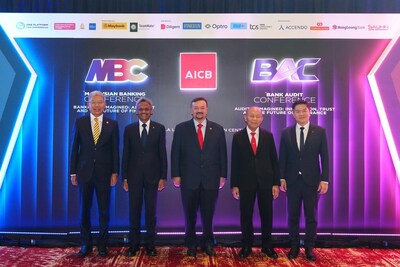
Addressing these priorities, the Asian Institute of Chartered Bankers’ (AICB) 4th Malaysian Banking Conference (MBC 4.0) and the 2nd Bank Audit Conference (BAC 2.0), convened over 1,000 banking, audit regulatory leaders to explore how the industry can build trust and resilience while unlocking the full potential of AI. The conferences were officially launched by YB Senator Datuk Seri Amir Hamzah Azizan, Minister of Finance II, and Dato’ Seri Abdul Rasheed Ghaffour, Governor of Bank Negara Malaysia.
Organised by AICB’s Chief Internal Auditors Networking Group (CIANG), The Association of Banks in Malaysia (ABM) and the Asian Banking School (ABS), the conferences were held under one platform with the respective themes Banking Reimagined: AI, Trust and the Future of Finance and Audit Reimagined: Innovation, Trust and the Future of Assurance. Conversations and discussions focussed on the critical role of AI, governance, cybersecurity, sustainability and workforce transformation are reshaping the future of banking and assurance.
A key milestone at the conference was the launch of the AICB-Ecosystm AI in Practice: How Malaysia’s Banks & DFIs are Adopting and Governing AI report, jointly developed by AICB, Ecosystm and AICB’s Chief Risk Officers’ Forum. Drawing on responses from close to 90 senior leaders across Malaysian commercial banks, digital banks and development financial institutions, the report provides an industry-wide benchmark on AI adoption, organisational readiness and governance practices across Malaysia’s banking sector.
The report found that while AI is already being deployed in areas such as Know Your Customer onboarding, fraud detection, Anti-Money Laundering and Counter Financing of Terrorism, and employee productivity, only 25% of respondents trust AI-generated outputs enough to act on them in key business decisions. The findings are a pivotal transition for the industry, from AI experimentation to responsible scaling, with trust, governance and assurance emerging as key enablers of long-term success.
YB Senator Datuk Seri Amir Hamzah Azizan, Minister of Finance II, who delivered the special ministerial address, said, “The AI Governance Framework developed by AICB’s Chief Risk Officers’ Forum, with the support of BNM and the endorsement of the Association of Banks in Malaysia, reflects the kind of industry-led initiative that the sector needs today. Rather than being a government-led directive on how banks should adopt AI, it represents the banking industry taking the lead in setting its own standards and responsibilities. That is how trust is built, from within the system, not merely imposed upon it.”
Dato’ Seri Abdul Rasheed Ghaffour, Governor of Bank Negara Malaysia, in his opening address, added, “Innovation is not just adoption of technology, but also about leadership and governance to ensure that the financial system we build remains trusted and firmly anchored in the needs of society.”
In his welcome remarks, Tan Sri Azman Hashim, Chairman of AICB, said, “As the banking industry embraces AI and emerging technologies, continued investment in talent development and professional excellence will be critical to building resilient institutions and sustaining public confidence. Equipping banking professionals with the right capabilities will enable the industry to respond confidently to future opportunities and emerging risks.”
Workforce readiness emerged as another critical priority throughout the conferences, reflecting the impact of AI and digital transformation on the future of work. According to the World Economic Forum’s Future of Jobs Report 2025, nearly 39% of workers’ core skills are expected to change by 2030, driven largely by AI, automation and digital technologies. Complementing these global findings, an AICB survey conducted in July 2025, covering 99 financial institutions with a response rate of 68%, found that 67% of financial institutions consider their workforce only moderately proficient in meeting future skills requirements. The survey also identified cybersecurity threat intelligence emerged as the area facing the most significant talent scarcity, followed by data science.
The conferences reinforced AICB’s broader commitment to developing future-ready banking professionals through industry-wide initiatives such as the Future Skills Framework and FSF Xcel. Developed in collaboration with industry stakeholders, the FSF identifies the critical capabilities and competencies required to support the future of banking while strengthening the long-term resilience, competitiveness and trustworthiness of Malaysia’s financial sector.
As banks across the region confront similar questions around AI governance, cyber resilience, climate risk and talent readiness, AICB’s MBC 4.0 and BAC 2.0 served as a catalyst for strategic dialogue, cross-industry collaboration and the exchange of forward-looking perspectives, enabling Malaysia’s financial sector to address critical issues, advance professional standards and develop practical responses to an increasingly complex global financial landscape.
As Malaysia’s leading professional body for the banking sector, AICB remains committed to advancing professional banking education excellence, developing the next generation of banking talent and fostering thought leadership that supports an innovative, competitive and trusted financial sector.
About Asian Institute of Chartered Bankers
AICB is Malaysia’s premier professional body for the banking industry, governed by a council comprising representatives from Bank Negara Malaysia (BNM), The Association of Banks in Malaysia (ABM) and the Malaysian Investment Banking Association (MIBA). With over 39,000 members, our mission is to elevate banking standards by developing professionals who exemplify integrity, expertise and competence.
As the exclusive institute in Malaysia authorised by the UK’s Chartered Banker Institute, we confer the prestigious Chartered Banker status. AICB collaborates with industry leaders to ensure our qualifications remain relevant, equipping bankers with the skills needed to thrive in the dynamic banking sector.
Our commitment goes beyond education, offering members opportunities for growth through innovative learning, advocacy for professionalism, thought leadership and valuable networking initiatives.
HONG KONG SAR – Media OutReach Newswire – 8 July 2026 – Aurora Mobile Limited (NASDAQ: JG) (“Aurora Mobile” or the “Company”), a leading provider of customer engagement and marketing technology services, today announced that its AI-first customer engagement platform, EngageLab, successfully participated in The MarTech Summit Hong Kong on July 7, 2026.
In today’s dynamic landscape, high-performance MarTech solutions are crucial for success across the Greater Bay Area and the broader APAC region. The summit featured a specially curated agenda addressing evolving marketing challenges. With 85% attendance from senior leadership – including C-suite executives, department heads, and directors – the event provided an unparalleled platform to explore cross-border digital strategy, customer experience, and performance marketing.
During the summit, a marketing director from a leading hotel brand shared a significant operational challenge: experiencing low push notification deliverability and the inability to reach customers using the HarmonyOS operating system. At the event, the EngageLab team provided a live demonstration of how its platform addresses this exact pain point. EngageLab’s AppPush not only supports FCM and APNS but also supports channels provided by Huawei, OPPO, VIVO, Honor, and Meizu, ensuring reliable message delivery even when an app is force-closed. Furthermore, the team explained that EngageLab’s built-in channels automatically serve as a backup, capable of achieving delivery rates of up to 99%.
Beyond solving push deliverability, EngageLab’s experts illustrated how the hotel brand could achieve comprehensive customer reach through its omnichannel Marketing Automation platform. During the consultation, they mapped out how brands can seamlessly orchestrate AppPush, WebPush, Email, SMS, and WhatsApp Business API within a single visual user journey. The team demonstrated how this would empower the hotel to trigger highly personalized, scenario-based interactions – such as sending booking confirmations via WhatsApp, location-based welcome messages via AppPush, and post-stay feedback requests via Email – all managed and tracked from one unified platform. Furthermore, they introduced LiveDesk, EngageLab’s AI-powered customer service platform. LiveDesk enables seamless collaboration between AI agents and human teams, allowing the AI to handle 90% of routine inquiries instantly while supporting multilingual, 24/7 service. By leveraging AI for intelligent ticket routing, intent recognition, and automated issue resolution, the hotel can significantly enhance service efficiency, reduce operational costs, and ensure consistent customer satisfaction across all digital touchpoints.
In addition to omnichannel messaging, EngageLab highlighted its newly launched EngageLab Silent Auth solution at the booth. Designed to ensure security without losing users, Silent Auth enables a seamless, second-level login process. By relying on background verification via carrier networks, it requires zero user input and results in zero drop-off, effectively turning security checks into a frictionless experience that enriches the user profile.
Through robust capabilities like unified lifecycle customer data and reliable delivery, EngageLab continues to empower brands to solve complex regional challenges and drive digital transformation.
The issuer is solely responsible for the content of this announcement.
About EngageLab
EngageLab is an AI-first customer engagement platform that helps you build stronger customer relationships with AI agents, unified customer data, and reliable delivery across channels. For more information, please contact: marketing@engagelab.com
Aurora Mobile Limited
Founded in 2011, Aurora Mobile (NASDAQ: JG) is a leading provider of customer engagement and marketing technology services. The Company is dedicated to empowering global enterprises with stable, efficient, and intelligent customer interaction solutions. Leveraging its first-mover advantage in mobile messaging, Aurora Mobile has evolved into a comprehensive platform that integrates Omnichannel Engagement, AI-Driven Marketing, Advanced AI Customer Support, and Frictionless Identity Security. Through its flagship brand EngageLab and its robust AI infrastructure GPTBots.ai, the Company helps businesses achieve seamless customer reach, automate complex marketing journeys, and optimize service efficiency with AI agents, accelerating digital transformation for clients worldwide.
92% of Singapore consumers silently disengage when brand believability is lost
Only 5.9%% would post about a negative brand experience on social media
Singapore emerges as a high-trust but low-tolerance market where institutional credibility and operational proof matter most
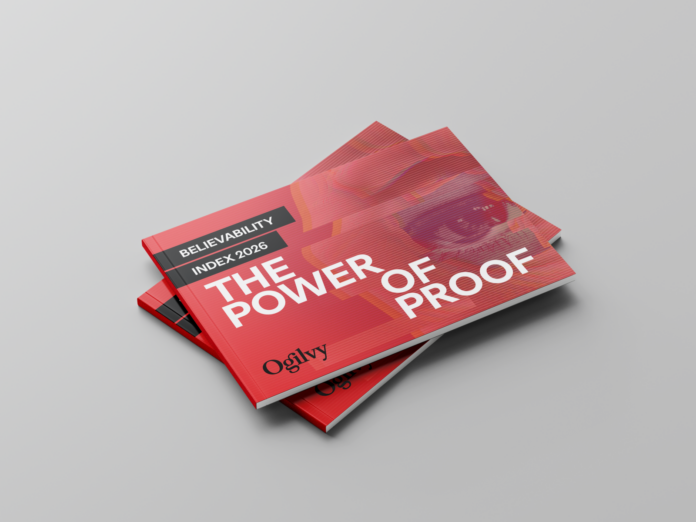
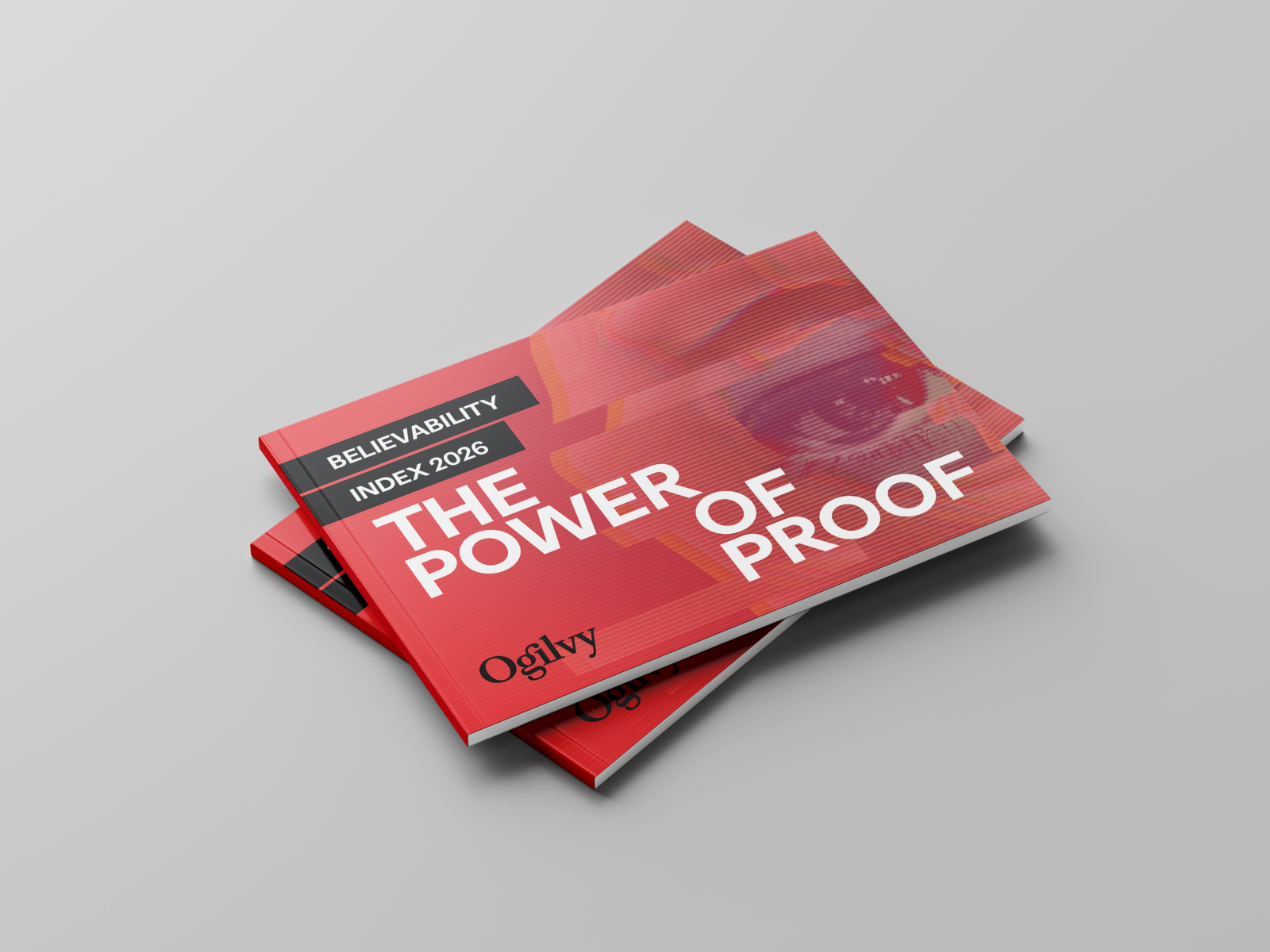
SINGAPORE – Media OutReach Newswire – 8 July 2026 – Ogilvy released its first 2026 APACBelievability Index: The Power of Proof, a comprehensive study examining how consumers across Asia-Pacific (APAC) determine what and who they believe in an increasingly complex information environment shaped by AI-generated content, misinformation, fragmented media and declining confidence in corporate claims.
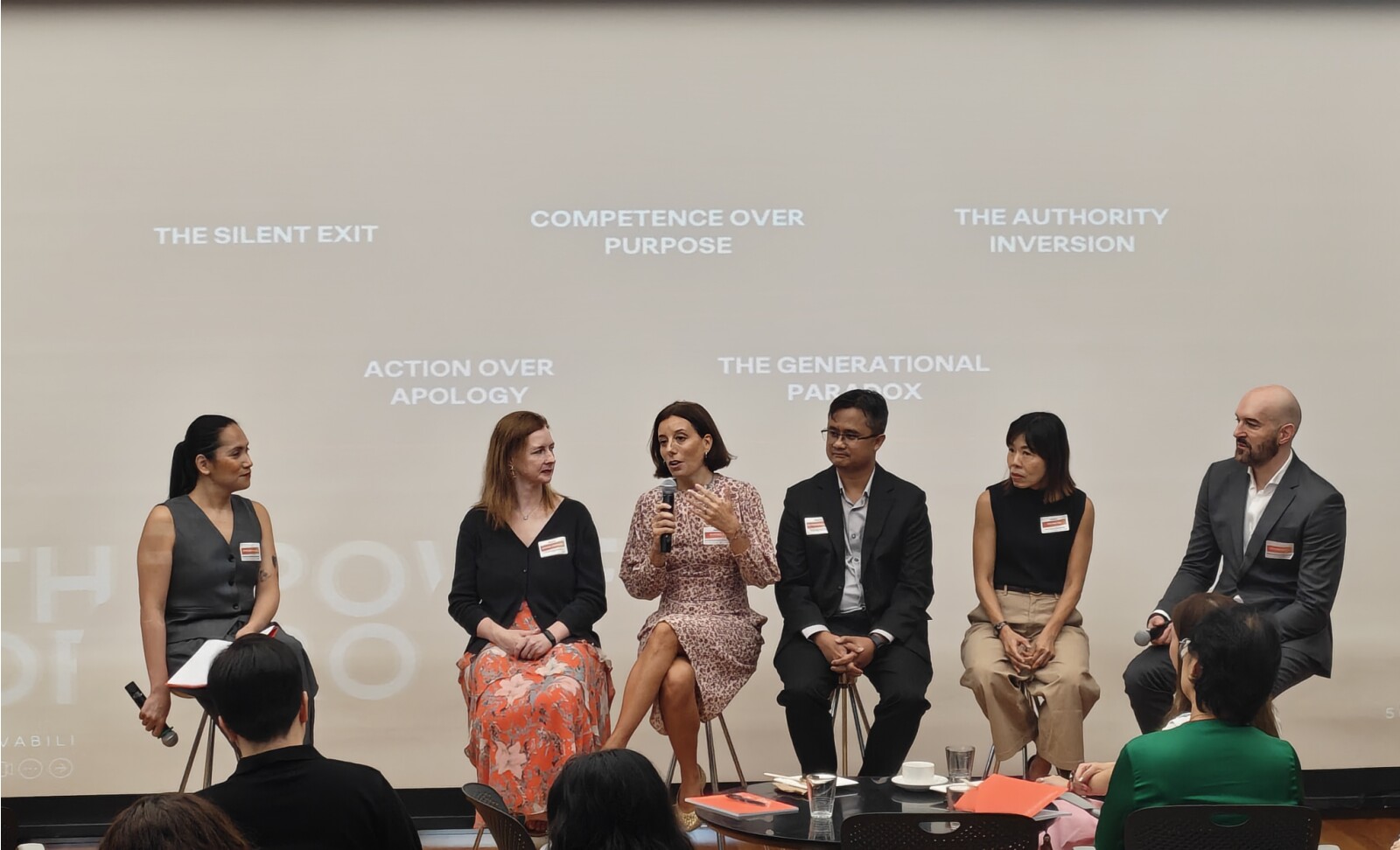
The regional and Singapore insights were revealed at an event at the Ogilvy Singapore office attended by more than 60 invited guests including global, regional and local brands, not-for-profit organisations, and government agencies.
Conducted in partnership with YouGov, the research surveyed 7,176 respondents across the markets of Australia, Indonesia, Singapore, Malaysia, the Philippines, Hong Kong SAR, and Mainland China, including 1,050 respondents in Singapore.
The report reveals that organisations are dangerously overlooking a reputational blind spot that directly impacts revenue. A staggering 93% of APAC consumers quietly disengage when believability in a brand or organisation is lost, with almost half (48%) stopping their purchases entirely.
In Singapore, the findings reveal a distinct local paradox: Singapore is a high-trust market, but not a high tolerance one. While Singapore consumers place significantly greater belief in Government, institutional and credentialed sources compared with much of the region, they are also deeply pragmatic and unforgiving when brands fail to deliver on their core promises.
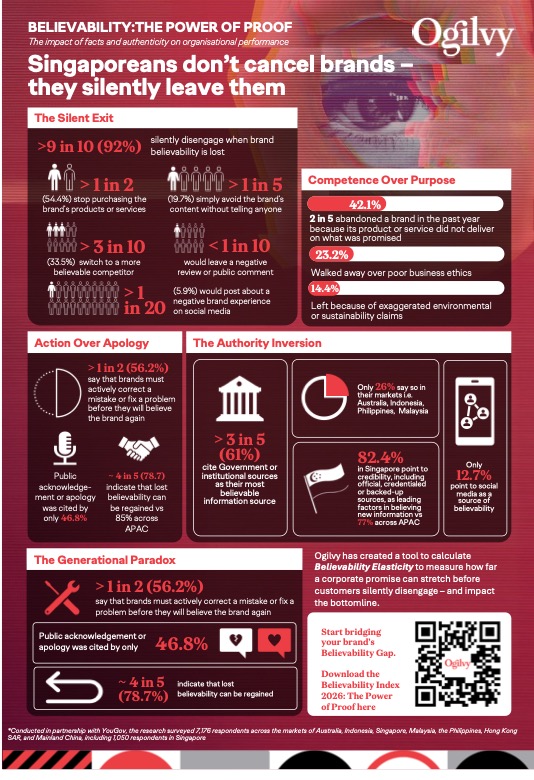
The report finds that 92% of Singapore consumers silently disengage when brand believability is lost, while only 5.9% would post about a negative brand experience on social media. This suggests that the most pressing reputation risk for brands in Singapore may not be public outrage, but quiet withdrawal – with customers switching providers, stopping purchases, avoiding brand content, deleting apps or simply never returning.
In response to these findings, Ogilvy has launched its Believability Diagnostic Tool, powered by an enterprise-grade AI agent, built and housed in WPP Open. The Believability Agent is designed to help C-Suite leaders identify the “Say-Do Gap” between what brands promise and what customers experience – enabling organisations to detect potential silent disengagement before it affects business performance.
Richard Brett, President of PR& Influence, Ogilvy Asia Pacific, said: “Believability has evolved from a PR challenge into a commercial imperative. In a world of AI slop and synthetic content, misinformation and growing skepticism, the brands that succeed will be those that can prove what they say. Singapore is a particularly important market because believability here is deeply anchored in institutional credibility and operational delivery. Consumers may not always complain publicly when belief is lost, but they will act – and often, they will act silently.”
Akashah Q, Managing Director for PR & Influence, Social, Ogilvy Singapore and Malaysia, added: “The Singapore data shows that silence should not be mistaken for satisfaction. A stable sentiment dashboard or low complaint volume may hide a much bigger commercial risk. Singaporeans are careful when assessing proof – they value official sources, factual correctness and operational competence. For brands, the implication is clear: Believability is built not only by what you say, but by whether your actions, service and evidence consistently back it up. If not, they will politely but brutally break up with you. The reputational crisis of the future may not begin with a hashtag. It may begin with silence.”
Key Singapore Findings from the Ogilvy APAC 2026 Believability Index:
1. Singaporeans do not always cancel brands. They silently leave them. The most dangerous reputation risk in Singapore may be the one brands cannot see. When Singapore consumers lose belief in a brand, 92%take silent actions (vs 93% across APAC). More than half (54.4%) stop purchasing the brand’s products or services entirely, while 33.5% switch to a more believable competitor. A further 37.3% become wary and suspicious of similar brands, products or services and 19.7% simply avoid the brand’s content without telling anyone.
In contrast, only 5.9% would post a negative brand experience on social media (vs 10% in APAC), and only 9.5% would leave a negative review or public comment.
Implications: The findings indicate that brands relying primarily on public complaints, social listening or visible sentiment may be missing the larger commercial reality: Customers have already left, without leaving a public trace.
2. Competence over purpose Purpose, values and ESG commitments still matter, but in Singapore, they cannot compensate for operational failure,
The study found that 42.1% of Singapore consumers abandoned a brand in the past year because its product or service did not deliver on what was promised. This significantly outweighs the 23.2% who walked away over poor business ethics and the 14.4% who left due to exaggerated environmental or sustainability claims.
Implications: The findings suggest that Singapore consumers are not asking brands to choose between purpose and performance. They are asking brands to prove purpose through performance.
Operational integrity and factual correctness emerged as among the strongest drivers of believability in Singapore, reinforcing the importance of delivering consistently on the basics before brands can credibly make broader claims.
3. Institutional credibility is Singapore’s believability baseline Across APAC, people rely on different sources of authority. In some markets, belief is built from the ground up through peers, lived experience and word of mouth. In Singapore, the believability architecture looks a little different – it stands out as one of the region’s clearest institutional-trust markets.
61% of Singaporeans find government sources, politicians and officials highly believable – more than double the rest of the region overall (Australia, Indonesia, Philippines, Malaysia) at 26%. In addition, 82.4% say credibility, including official, credentialed or backed-up sources, is the leading factor in believing new information. Social media platforms sit much lower as a source of believability, at 12.7%.
This contrasts with more relational trust markets such as Australia and the Philippines, where people with lived experience and peer recommendations play a more dominant role.
Implications: For organisations, this means that communication strategies which work in one APAC market may not automatically build belief in Singapore. In high-stakes sectors such as finance, health, technology, food safety, sustainability and public infrastructure, brands need stronger institutional anchors: Official statements, named spokespeople, transparent data, third-party validation, academic or technical expertise and clear operational proof.
4. Action over apology Singapore consumers do not reject apologies, but they do reject them without evidence of action.
The study found that 56.2% of Singaporeans say that brands must actively correct a mistake or fix a problem before they will believe the brand again. This outranks public acknowledgement or apology, cited by 46.8% of respondents.
Encouragingly, lost belief is not necessarily permanent. 78.7% of Singapore consumers believe lost believability can be regained, while only 15.1% believe that once belief is lost, it is gone forever.
Implications: The implication for brands is that the crisis response must be action-first. Consumers want to know what has been fixed, who is accountable, what will change, how recurrence can be prevented and how progress will be proven.
5. Different generations leave and return on different terms The study also found that believability is lost and rebuilt differently across age groups in Singapore.
Millennials appear to be among the most commercially sensitive audiences, with 68% stopping engagement with a brand due to lack of belief in the past 12 months – the highest of any generation. For this group, belief is often won or lost through customer experience, service recovery and responsiveness.
Baby Boomers show stronger reliance on institutional sources, with 69% finding Government or institutional sources highly believable. However, once trust is broken, they are more likely to make a clean break, with 60% stopping purchases when doubts rise.
Gen Zs are more willing to give brands another chance, with only 8% saying trust is permanently lost once broken. However, they also demand more proof of change, with 64% expecting brands to actively correct mistakes and 44% wanting brands to communicate in more transparent and evidence-based ways.
Implications: The findings point to a new generational reality: Younger consumers may forgive faster, but they also audit harder.
To help leaders navigate this shift and operationalise the findings, Ogilvy’s Believability Diagnostic Tool uses a multi-agent architecture that pairs Ogilvy’s proprietary seven-year Believability dataset with behavioural science cognitive engine to analyse a brand’s “Say-Do Gap” to measure the actual distance between its marketing promises and actual customer experience.
By triangulating corporate messaging against verified customer and employee sentiment, the tool calculates a brand’s Believability Elasticity to see how far a corporate promise can stretch before customers silently disengage – and impact the bottomline.
For Singapore where 92% of consumers say they silently disengage when believability is lost, this elasticity is especially important. Once the threshold is exceeded, the consequence may not be outrage. It may be attrition.
The issuer is solely responsible for the content of this announcement.
About Ogilvy PR
Ogilvy PR and Influence is a global creative communications agency that partners with organisations to drive value and growth. We build brands, protect reputations, and earn attention and influence through creative storytelling informed by data, and fuelled by technology. Our specialist practice areas offer media relations, social and digital communications, external and internal stakeholder communications, issues and crisis management, and stakeholder engagement. We are the region’s largest and most specialised public relations and public affairs consultancy.
About Ogilvy Ogilvy has been creating impact for brands through iconic, culture-changing, value-driving ideas since the company was founded by David Ogilvy in 1948. It builds on that rich legacy through Borderless Creativity – innovating at the intersections of its advertising, public relations, relationship design, consulting, and health capabilities with experts collaborating seamlessly across more than 120 offices spanning 90 countries. Ogilvy currently ranks as the #1 global agency network for creative excellence and effectiveness by WARC, signifying its ability to deliver creative solutions that drive unreasonable impact for clients and communities. Ogilvy is a WPP company (NYSE: WPP). For more information, visit Ogilvy.com, and follow us on LinkedIn, X, Instagram, and Facebook
About YouGov
All figures, unless otherwise stated, are from YouGov Plc. Total sample size was 7,176 adults in Australia, Indonesia, Singapore (1,050 adults), Malaysia, the Philippines, Hong Kong SAR, and Mainland China. Fieldwork was undertaken between 22nd April – 4th May 2026. The survey was carried out online. The figures have been weighted and are representative of all respective market adults (aged 18+).
America at 250 Celebrating Independence and Friendship in the Laos.
By Michelle Y. Outlaw, United States of America Chargée d’affaires to the Lao PDR
This Fourth of July, Americans around the world are celebrating no ordinary anniversary. This year, the United States marks its 250th birthday, a profound milestone in the life of our nation and a moment for reflection on what America has meant, not only to its own people, but to the world.
Two and a half centuries ago, in the summer of 1776, a group of visionaries laid the foundation for a new kind of nation. They declared a bold and radical idea: that all people are endowed with unalienable rights, to life, liberty, and the pursuit of happiness. Those words were not merely a declaration of independence from a distant crown. They were a declaration of possibility, a promise that a nation could be built on the dignity of every individual.
America at 250 is a story of striving to fulfill that founding promise. Ours is not a story of instant perfection. It is defined by a continuous, generational effort to build a “more perfect union”, to extend opportunity further, to correct our course when we have fallen short, and to renew our commitment to those founding ideals with each passing generation.
That resilience, that unwavering belief that tomorrow can be made better than today, is the enduring spirit of America.
History has taught us something else as well. It has taught us that peace and prosperity are best achieved not in isolation, but through enduring partnerships.
This year, as America reflects on two and a half centuries of independence, we also celebrate a vital milestone much closer to home: the 10th anniversary of the U.S.-Laos Comprehensive Partnership. Launched a decade ago in 2016, this landmark framework elevated our bilateral relationship to unprecedented heights. It has served as our roadmap, transforming our historical ties into a modern, forward-looking partnership dedicated to the well-being of both our peoples.
Since arriving in the Lao PDR, I have been deeply moved by the warmth, resilience, and forward-looking spirit of the people of Laos. From conversations with government leaders to meetings with students, entrepreneurs, and community members across this beautiful country, I have seen firsthand a nation with a rich history and culture and an inspiring readiness to seize new opportunities.
Guided by this decade-long Comprehensive Partnership, the United States has been a steadfast force for good in the Lao PDR, working proudly alongside our hosts to help build a brighter, more prosperous future. Together, we have achieved extraordinary progress through life-changing American initiatives: from our massive, world-leading support for UXO clearance that saves lives every day, to vital U.S. investments in public health that protect vulnerable communities. We have transformed classrooms by printing and delivering millions of primary school textbooks across the nation, and our dedicated English language training programs are actively empowering the next generation of Lao PDR youth with the tools to lead on the world stage and engage with U.S. businesses. These major initiatives reflect our unwavering commitment to the people of Laos and our shared future.
This year, our two countries are also united by a love of sport. From the largest global soccer tournament ever held, co-hosted by the United States, Canada, and Mexico, to the first-of-its-kind mixed martial arts tournament on the White House grounds, these incredible displays of athleticism and glory are a celebration of excellence, teamwork, and the remarkable power of sport to bring people together across borders. And as we look ahead to the 2028 Olympic Games in Los Angeles, we are reminded that the values at the heart of those competitions, perseverance, fair play, and the pursuit of greatness, are values that Americans and the people of Laos share deeply.
As we celebrate America’s 250th birthday and honor ten years of our Comprehensive Partnership, we do so with gratitude for the people-to-people ties and the friendships that have shaped our journey, and with confidence in those still to come. The story of America and the Lao PDR is still being written, and I believe its best pages may lie ahead.
Editor’s Note: This article is part of The Laotian Times Public Diplomacy section and was contributed by the US Embassy in Laos. Views and information presented are those of the contributing organization.


 https://www.boi.go.th/en/index/



 https://www.aurora-mobile.com/
 https://www.linkedin.com/company/aurora-mobile-ltd/?viewAsMember=true
 https://www.facebook.com/AuroraMobileLtd/

 ranks
ranks