Home Blog Page 2276

WMI and Law Society of Singapore Launch Certification Targeting 6,500 Lawyers to Support Family Office Sector Growth


SINGAPORE – Media OutReach Newswire – 26 September 2025 – Singapore lawyers will soon be able to gain specialised skills in family office advisory through a strategic partnership between the Wealth Management Institute (WMI) and the Law Society of Singapore. This multi-year training initiative aims to equip Singapore’s 6,500 practising lawyers with specialised skills to serve the rapidly growing family office sector.
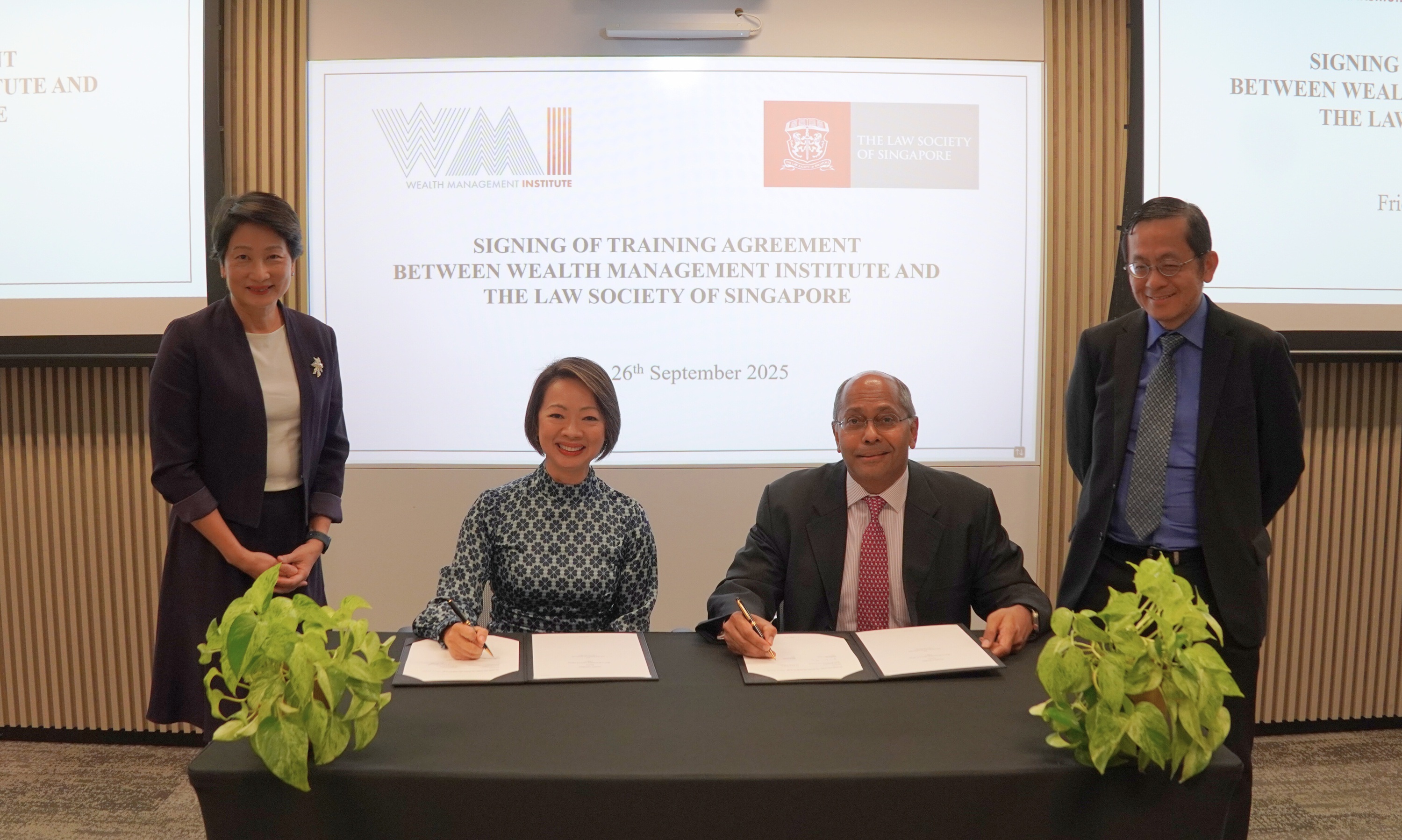
Training agreement signed on 26 September 2025, by Ms Foo Mee Har, Chief Executive Officer, Wealth Management Institute and Mr Samuel Chacko, Vice-President, The Law Society of Singapore. Witnessed by Ms Tan Lay Peng, Principal Director, Wealth Management Institute and Mr Alvin Chen, Executive Director and Chief Legal Officer, The Law Society of Singapore.

The partnership addresses a growing need for legal training in this area, as demand surges for specialised legal expertise amid the rapid expansion of Singapore’s family office landscape. The nation has witnessed exceptional growth in its family office sector, with single-family offices exceeding 2,000 by the end of 2024, over five times the number just five years ago. This growth mirrors Singapore’s broader wealth management success, with a year-on-year increase of 12.2% in assets under management (AUM) in 2024, surpassing SGD 6 trillion for the first time. As wealthy families seek increasingly sophisticated legal guidance, it is vital to create formal pathways for lawyers to develop the specialised knowledge required.

The legal profession’s involvement in family office advisory services has become increasingly critical as wealthy families require sophisticated guidance on complex cross-border structures, regulatory compliance, and succession planning. Family office legal counsel must navigate varied asset portfolios, multiple jurisdictions, and intricate family dynamics while maintaining the highest standards of discretion and professional ethics.

From 2026, WMI will offer Foundation and Advanced programmes covering topics from family office governance, wealth and succession planning, operations and management, anti-money laundering and compliance, ESG and international tax considerations.

Ms. Lisa Sam, President of the Law Society of Singapore, emphasised the strategic importance for the legal profession, “The collaboration with the Wealth Management Institute provides a structured platform to develop legal expertise in the family office and private wealth advisory sector. It aligns the legal profession’s capabilities with the evolving needs of Singapore’s wealth management ecosystem.

As the family office and private wealth advisory space continues to grow, this collaboration provides an important platform to ensure that the legal profession is well-positioned to support Singapore’s broader wealth management ecosystem.”

Ms. Foo Mee Har, CEO of WMI, remarked, “We are honoured to partner with the Law Society of Singapore to further strengthen the nation’s capabilities as Asia’s premier family office hub. Lawyers play an indispensable role in establishing governance frameworks, navigating cross-border legal complexities, managing succession planning, and safeguarding long-term family interests. Robust legal advisory is fundamental to the integrity and sustainability of family office structures. This certification is designed to equip lawyers with the specialised expertise required to serve as trusted advisors in an increasingly complex and globalised family office environment.”

The certification programme will draw on WMI’s established faculty network, which includes prominent lawyers among its faculty members and alumni. It will also be overseen by an Expert Panel with representation from the Law Society to ensure industry alignment and practical relevance.

The programme forms part of a broader initiative in continuing professional education (CPE), as all Singapore lawyers are now required to obtain three Mandatory Ethics Component (MEC) points annually. The certification will be fully accredited by the Institute of Banking and Finance Singapore (IBF), making it eligible for IBF-STS and SkillsFuture funding support.

This initiative builds on WMI’s established leadership in family office education through the Global-Asia Family Office (GFO) Circle, launched in 2021 with the support of the Economic Development Board (EDB) and the Monetary Authority of Singapore (MAS). The GFO Circle has grown to over 1,400 members, and WMI has recorded over 5,300 enrolments in its family office programmes to date.

Hashtag: #WMI

The issuer is solely responsible for the content of this announcement.

About WMI

Established in 2003, the Wealth Management Institute (WMI) is committed to building capabilities for investing in a better tomorrow. Founded by GIC and Temasek, our vision is to be Asia’s Centre of Excellence for wealth and asset management education and research.

WMI provides a comprehensive suite of practice-based certification and diploma programmes and collaborates with leading universities for master’s degrees. With over 17,000 annual enrolments, WMI serves a diverse community of professionals across Asia—including wealth and asset managers, family offices, and professionals in tax, legal, compliance, and financial regulation across more than 150 programmes. WMI is recognised as Singapore’s lead training provider for private banking and wealth management.

WMI helms the Global-Asia Family Office (GFO) Circle, a trusted network platform that builds capabilities and fosters community within the family office sector. The GFO Circle is supported by the Singapore Economic Development Board (EDB) and the Monetary Authority of Singapore (MAS). WMI also leads the Asia Centre for Changemakers (ACC), supported by Temasek Trust and the Philanthropy Asia Alliance (PAA). The ACC aims to build capacity and nurture a strong pipeline of active and informed changemakers with a focus on Asia.

About The Law Society of Singapore

The Law Society of Singapore is the representative body for all lawyers in Singapore. Established under the Legal Profession Act 1966, it works to uphold the honour and independence of the legal profession, promote the interests of its members, and ensure access to justice by the public. The Law Society provides guidance, education, and advocacy on matters of law, and engages in community outreach to improve legal awareness. Through its initiatives, the Law Society strives to maintain the highest standards of professional conduct and to contribute meaningfully to Singapore’s legal landscape. The mission of the Law Society is to serve its members and the public by sustaining an independent bar which upholds the rule of law and ensures access to justice.

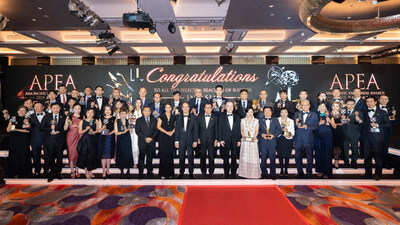
Asia Pacific Enterprise Awards (APEA) 2025 Taiwan Honors Outstanding Leaders and Enterprises Shaping the Future of Business

TAIPEI, Sept. 26, 2025 /PRNewswire/ — The Asia Pacific Enterprise Awards (APEA) recently celebrated Taiwan’s visionary leaders and pioneering enterprises that are reshaping industries and championing sustainable growth. Organized by leading regional NGO Enterprise Asia, the prestigious Taiwan Chapter was staged on 25 September 2025 at the Grand Hyatt Taipei.

Asia Pacific Enterprise Awards (APEA) 2025 Taiwan Honors Outstanding Leaders and Enterprises Shaping the Future of Business

The awards ceremony was graced by the presence of Dr. Eugene Chien, Advisor to Enterprise Asia and Ambassador-at large for Climate Change and Sustainability, Republic of China (Taiwan); Ms. Aznifah Ghani, President of the Malaysian Friendship and Trade Centre in Taipei; Mr. Eko Wijanarko, Director of Investment Department of the Indonesian Economic and Trade Office to Taipei; and Dr. Niven Huang, Managing Director of KPMG Sustainability Consulting Company Limited, KPMG in Taiwan, the event’s Official Assurance Partner.

Embracing the theme ‘Showcasing Future-Ready Enterprises’, the APEA 2025 honored exceptional businesses and leaders in Taiwan who exemplify resilience, innovation, and strategic foresight, successfully future-proofing their organizations in the face of rapid technological and economic transformation.

A distinguished panel of judges meticulously assessed over 100 nominees, evaluating each entrepreneur and organization for their overall operational excellence, leadership, and business performance. Through this rigorous evaluation process, the most outstanding recipients were selected across four categories: Master Entrepreneur, Inspirational Brand, Fast Enterprise, and Corporate Excellence.

Since 2007, the Awards has been organized all over the region with past recipients comprising Taiwan’s Douglas Hsu of Far Eastern Group, Thailand’s Supaluck Umpujh of The Mall Group, Mainland China’s Xu RongMao of Shimao Group, Hong Kong’s Francis Lui of Galaxy Entertainment Group, TTC Vietnam’s Dang Van Thanh, Indonesia’s Hary Tanoesoedibjo of MNC Group, India’s Adi Godrej of Godrej Group, the Philippines’ Manuel Villar of Vista Land, and Cuckoo Malaysia’s Hoe Kian Choon.

“In an era of constant disruption, the enterprises that will thrive are those that challenge conventions, embrace transformative technologies, and create value beyond profits. These organizations recognize the interconnectedness of economies, societies, and the environment, and take bold steps to shape a sustainable and inclusive future.” stated Tan Sri Dr. Fong Chan Onn, Chairman of Enterprise Asia, in his inspiring welcome address.

Among the distinguished honorees in the Master Entrepreneur category were Ms. Huang, Fang-Yue, President of Excellence Optoelectronics Inc.; Ms. Nancy Hsu, President of Far Eastern Department Stores Ltd.; and Mr. Young Liu, Chairman of Hon Hai Technology Group (Foxconn) who exemplify remarkable vision, resilience, and leadership in guiding their organizations to greater success.

The Inspirational Brand Award recognized renowned names such as Far Eastern Big City Shopping Malls Co., Ltd. and Watsons Personal Care Stores (Taiwan). Forestar Brokerage Co., Ltd and Wei Zheng Construction Co., Ltd were recognized in the Fast Enterprise Category, while leading achievers in the Corporate Excellence Category included Global Mall Co., Ltd., Standard Foods Corporation, Unimicron Technology Corp., and Taiwan Shin Kong Security Co., Ltd.

The APEA 2025 Taiwan Chapter is supported by the Taiwan Institute for Sustainable Energy (TAISE), with KPMG Taiwan as the Official Assurance Partner. PR Newswire is the Official News Release Distribution Partner, and Commercial Times, Dailywire.asia, and SME Magazine are the Media Partners.

AWARD RECIPIENT LIST OF THE ASIA PACIFIC ENTERPRISE AWARDS 2025 TAIWAN 

MASTER ENTREPRENEUR CATEGORY

NAME

COMPANY

INDUSTRY

LAI HUNG

FOUNDER & CHAIRMAN

ARTISTIC BIOMEDICAL LIMITED COMPANY

HEALTHCARE, PHARMACEUTICAL & BIOTECHNOLOGY

LINDA LU

CHAIRMAN

AWESOME GROUP

EDUCATION & TRAINING

HUANG, FANG-YUE

PRESIDENT

EXCELLENCE OPTOELECTRONICS INC.

AUTOMOTIVE

PHILBY LEE

CHAIRMAN

FAR EASTERN BIG CITY SHOPPING MALLS CO., LTD.

RETAIL

NANCY HSU

PRESIDENT

FAR EASTERN DEPARTMENT STORES LTD.

RETAIL

RICK LIAO

CHAIRMAN

FORESTAR BROKERAGE CO., LTD

FINANCIAL SERVICES

WILLIAM TSAI

CHAIRMAN

GOLDEN INSURANCE BROKERS CO., LTD.

FINANCIAL SERVICES

YOUNG LIU

CHAIRMAN

HON HAI TECHNOLOGY GROUP (FOXCONN)

MANUFACTURING

DANNY YU

CHAIRMAN

INTEGRATED SERVICE TECHNOLOGY INC. (iST)

PROFESSIONAL & BUSINESS SERVICES

DR. WAYNE YANG

CEO & GENERAL MANAGER

IV TECHNOLOGIES CO., LTD

MANUFACTURING

JERRY LIU

GENERAL MANAGER

JD LOGISTICS CORP.

TRANSPORTATION & LOGISTICS

JOHN CHUANG

PRESIDENT

ONYX HEALTHCARE INC.

HEALTHCARE, PHARMACEUTICAL & BIOTECHNOLOGY

JACKY WU

PRESIDENT

SKYLINES GROUP

RETAIL

RICHARD WU

CHAIRMAN

TAIWAN SHIN KONG SECURITY CO., LTD.

PROFESSIONAL & BUSINESS SERVICES

MILTON KING (CHUNG-JEN, KING)

PRESIDENT

YATUNG READY MIXED CONCRETE CO., LTD

BUILDING MATERIALS


FAST ENTERPRISE CATEGORY

COMPANY

INDUSTRY

ALLEYPIN INTERACTIVE CO., LTD.

PROFESSIONAL & BUSINESS SERVICES

EXCELLENCE OPTOELECTRONICS INC.

AUTOMOTIVE

FORESTAR BROKERAGE CO., LTD

FINANCIAL SERVICES

LEADGENE BIOMEDICAL, INC.

HEALTHCARE, PHARMACEUTICAL & BIOTECHNOLOGY

WEI ZHENG CONSTRUCTION CO., LTD

CONSTRUCTION


INSPIRATIONAL BRAND CATEGORY

COMPANY

INDUSTRY

FAR EASTERN BIG CITY SHOPPING MALLS CO., LTD.

RETAIL

FAR EASTERN DEPARTMENT STORES LTD.

RETAIL

KONE ELEVATORS TAIWAN CO., LTD

MANUFACTURING

LINTES TECHNOLOGY CO., LTD.

MANUFACTURING

WAN JA SHAN BREWERY CO., LTD.

FOOD & BEVERAGE

WANG WEI COFFEE INTERNATIONAL CO., LTD.

FOOD & BEVERAGE

WATSONS PERSONAL CARE STORES (TAIWAN)

RETAIL


CORPORATE EXCELLENCE CATEGORY

COMPANY

INDUSTRY

EAGLE EDUCATIONAL & CULTURAL ENTERPRISES, LTD.

EDUCATION & TRAINING

FAR EASTERN BIG CITY SHOPPING MALLS CO., LTD.

RETAIL

FAR EASTERN DEPARTMENT STORES LTD.

RETAIL

GLOBAL MALL CO., LTD.

RETAIL

GOLDEN INSURANCE BROKERS CO., LTD.

FINANCIAL SERVICES

INTEGRATED SERVICE TECHNOLOGY INC. (iST)

PROFESSIONAL & BUSINESS SERVICES

IV TECHNOLOGIES CO., LTD

MANUFACTURING

JD LOGISTICS CORP.

TRANSPORTATION & LOGISTICS

ONYX HEALTHCARE INC.

HEALTHCARE, PHARMACEUTICAL & BIOTECHNOLOGY

STANDARD FOODS CORPORATION

FOOD & BEVERAGE

TAI FUNG TRADING CO.,LTD

ENERGY

TAIWAN SHIN KONG SECURITY CO., LTD.

PROFESSIONAL & BUSINESS SERVICES

TAIWAN VENA ENERGY DEVELOPMENT CO., LTD.

RENEWABLE ENERGY

TTY BIOPHARM COMPANY LIMITED

HEALTHCARE, PHARMACEUTICAL & BIOTECHNOLOGY

UNIMICRON TECHNOLOGY CORP.

ELECTRICAL & ELECTRONICS

VIATRIS PHARMACEUTICAL CO., LTD.

HEALTHCARE, PHARMACEUTICAL & BIOTECHNOLOGY

VOLKTEK CORPORATION

MANUFACTURING

WEI ZHENG CONSTRUCTION CO., LTD

CONSTRUCTION

YATUNG READY MIXED CONCRETE CO., LTD

BUILDING MATERIALS

UNIWILL INSURANCE BROKER CO., LTD.

FINANCIAL SERVICES


About Enterprise Asia
Enterprise Asia is a non-governmental organization in pursuit of creating an Asia that is rich in entrepreneurship as an engine towards sustainable and progressive economic and social development within a world of economic equality. Its two pillars of existence are an investment in people and responsible entrepreneurship. Enterprise Asia works with governments, NGOs, and other organizations to promote competitiveness and entrepreneurial development, uplift the economic status of people across Asia, and ensure a legacy of hope, innovation, and courage for future generations. Please visit www.enterpriseasia.org for more information.

About Asia Pacific Enterprise Awards
Launched in 2007, the Asia Pacific Enterprise Awards is the region’s most prestigious award for outstanding entrepreneurship, continuous innovation, and sustainable leadership. The Award provides a platform for companies and governments to recognize entrepreneurial excellence, hence spurring greater innovation, fair business practices, and growth in entrepreneurship. As a regional award, it groups together leading entrepreneurs as a powerful voice for entrepreneurship and serves as a by-invitation-only networking powerhouse. The program has grown to encompass 16 countries/ regions and markets all over Asia. For further information, please visit www.apea.asia.

SeABank’s Ba3 credit ratings reaffirmed by Moody’s


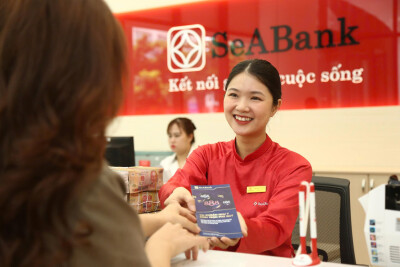
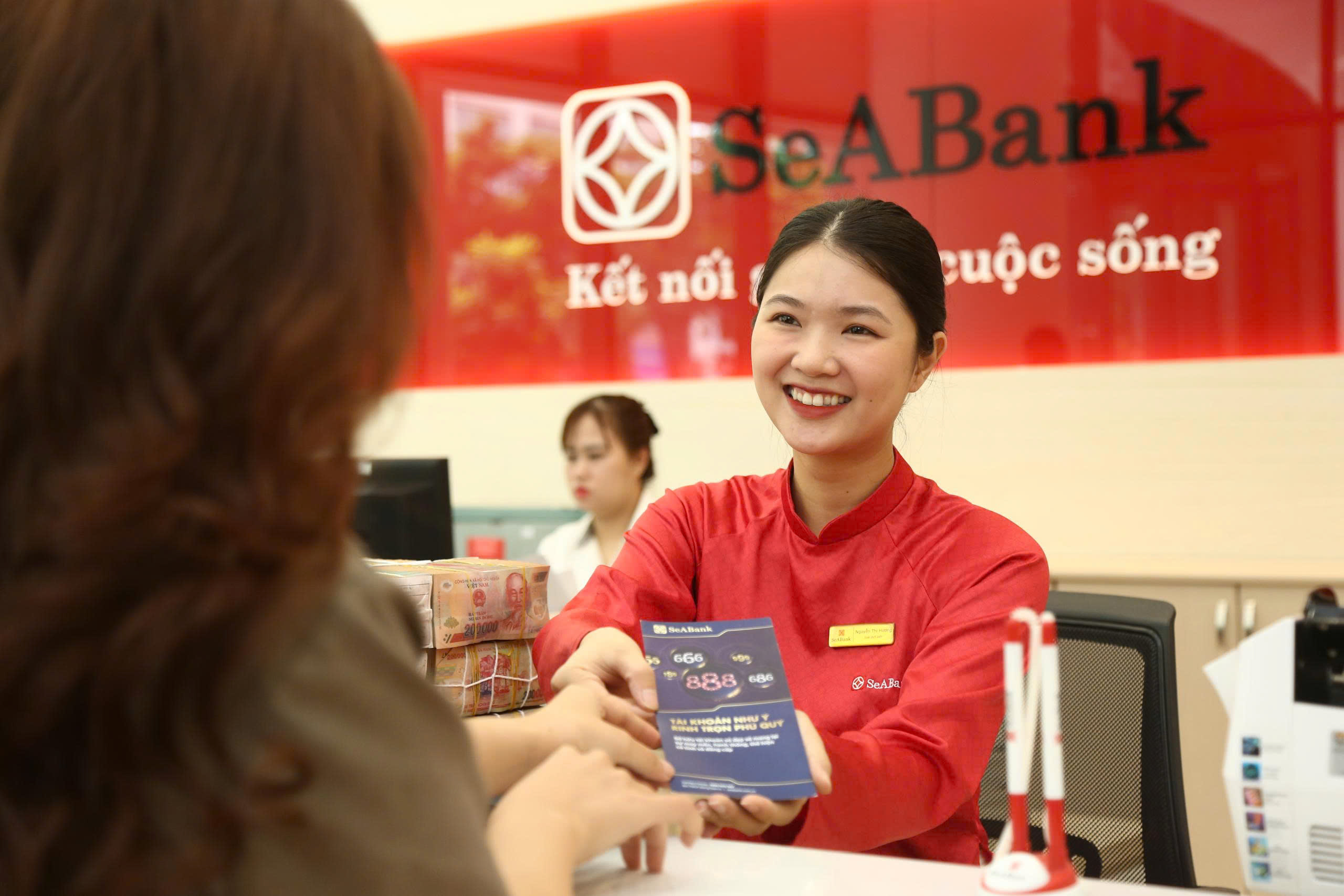
HA NOI, VIETNAM – Media OutReach Newswire – 26 September 2025 – Moody’s, the world top three leading credit rating agencies, has issued its 2025 credit ratings for Southeast Asia Commercial Joint Stock Bank (SeABank). Accordingly, SeABank maintains its Ba3 ratings with outlook remains ‘Stable’.

SeABank’s Ba3 credit ratings reaffirmed by Moody’s

As of June 2025, SeABank maintains a Tangible Common Equity (TCE) ratio of 12.1%, the highest among similarly rated banks. Asset quality also remained broadly stable, with a non-performing loan (NPL) ratio controlled below 2%. Moody’s forecasts the Bank’s new delinquencies will remain low over the next 12-18 months, given its adequate track record in asset quality management.

Moody’s noted that SeABank’s profitability improved year-on-year in the first half of 2025, driven by the Bank’s enhanced operational efficiency. This reflects SeABank’s strengthened governance capacity, enabling the Bank to flexibly adapt to market conditions and maintain stable growth momentum.

Moody’s has reaffirmed SeABank’s Ba3 credit rating with a Stable outlook for the forth consecutive year. This reaffirmation demonstrates global recognition of SeABank’s governance capacity, solid financial foundation, and sustainable development strategies. The Bank’s reputation among domestic, international investors and partners is also reinforced. Furthermore, the ratings represent a positive signal for Vietnam’s financial market, as international institutions increasingly acknowledge the role of private joint stock commercial banks, such as SeABank, in the process of integration into the global economy.

In addition to strengthening its financial foundation, SeABank is taking the lead in supporting Vietnamese enterprises to expand into international markets, promoting green finance and green credit, and financing environmentally friendly projects. Through these initiatives, SeABank aims to make a tangible contribution to sustainable economic growth in line with Vietnam’s long-term development strategy.

As of June 30, 2025, SeABank’s total assets reached over VND379 trillion (approx. US$14.4 billion), further consolidating its position as one of the leading commercial joint stock banks in Vietnam, accompanying the development of Vietnamese enterprises and the national economy.

Hashtag: #SeABank

The issuer is solely responsible for the content of this announcement.

Sungrow Launches Inverter Trade-In Program in Australia: Exploring the Path to a Sustainable Home Energy Future

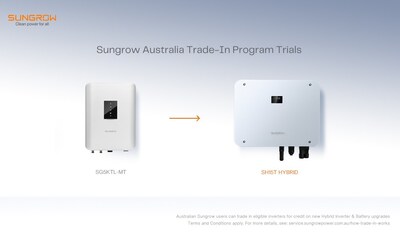
SYDNEY, Sept. 23, 2025 /PRNewswire/ — Sungrow, the global leading PV inverter and energy storage system provider, has officially launched a large-scale inverter trade-in program in Australia’s residential market. Through this initiative, eligible users can return their old Sungrow inverters via the company’s certified installer network and receive rebates to upgrade to Sungrow’s fifth-generation hybrid inverter and battery system.

Sungrow Australia Trade-In Program Trials

Standardised Process via Certified Installers

Given the complexity of residential system installations, the trade-in process is not directly managed by end users but must be submitted through Sungrow’s certified distribution network. Installers are responsible for verifying device eligibility and submitting required documents, such as serial numbers, on-site photos, and upgrade proposals through Sungrow’s dedicated online platform. This trade-in program can also be combined with newly launched federal and state battery rebate schemes, further enhancing its appeal.

The list of eligible devices includes widely adopted PV inverter models, with the SG5K-D and SG8K-D alone exceeding 100,000 units each installed in Australia. Rebate amounts vary depending on the model and device condition. Replacement systems must include at least one Sungrow hybrid inverter and a compliant Sungrow battery, installed at the same address as the original system.

Rebates are only issued after the new system is installed, old devices are returned and received, and all documents have been reviewed and approved by Sungrow. To ensure process integrity and traceability, Sungrow sets strict requirements for equipment condition, installation quality, and documentation accuracy.

Lifecycle Energy Solutions: A Model for Innovation

Compared with traditional promotional campaigns, industry observers note that Sungrow’s trade-in program is more structured and future-oriented, supporting the development of a circular clean energy ecosystem. As one of the first company-led trade-in initiatives in Australia’s residential energy sector, the program helps establish a closed-loop model covering energy consumption, product use, recycling, and regeneration.

With over 12 years of deep engagement in Australia, Sungrow has deployed more than 400,000 residential systems. Its nationwide distribution network ensures efficient rollout and consistent service quality. This pilot builds on Sungrow’s large installed base and the trust established with users and installers over the years.

Since its launch in July, the first trade-in installations have been completed across several states. Participating installers report strong consumer interest, with many homeowners accelerating their upgrade decisions. In response, Sungrow has optimised the application process, streamlined logistics, and tested recycling standards to ensure compliance with Australia’s evolving environmental regulations.

At a national level, Australia’s electronic waste management framework is gradually taking shape, with specific storage system recycling regulations expected by 2030. Sungrow’s proactive initiative is seen as setting a benchmark for corporate environmental responsibility.

Preparing for the Future of Smart Home Energy

In addition, Sungrow’s latest-generation inverters support remote firmware updates and, with compatible hardware, can gradually enable advanced functions such as solar-storage-charging integration, AI-driven energy management, residential DC fast charging, and vehicle-to-grid (V2G) interaction. These technology upgrades are expected to significantly improve the flexibility, intelligence, and value density of residential energy systems, making the trade-in program strategically important beyond its environmental benefits.

Currently, the program is in a pilot phase, with nationwide rollout timelines still under evaluation. Depending on results, Sungrow may convert it into a long-term initiative. For more details or enquiries, please visit: activityDetail | SUNGROW AUSTRALIA

About Sungrow

Sungrow, a global leader in renewable energy technology, has pioneered sustainable power solutions for over 28 years. As of June 2025, Sungrow has installed 870 GW of power electronic converters worldwide. The Company is recognized as the world’s most bankable PV inverter and energy storage company (BloombergNEF). Its innovations power clean energy projects across the globe, supported by a network of 520 service outlets guaranteeing excellent customer experience. At Sungrow, we’re committed to bridging to a sustainable future through cutting-edge technology and unparalleled service. For more information, please visit: www.sungrowpower.com.

Russian Man Faces Deportation After Obscene Act on Phuket Road Goes Viral

A viral video of a Russian man and Thai woman engaging in lewd behavior on a moving truck in Phuket sparked public outrage. (Photo credit: Phuket Times)

Thai social media went abuzz after a video surfaced showing a man and a Thai woman engaging in obscene behavior on the back of a moving pickup truck in Phuket province.

The 15-second clip, which went viral on 24 September, drew widespread outrage and prompted urgent calls for action from authorities. The video shows the man holding the woman’s waist from behind while she grips a rope tied to the bed of the speeding black vehicle.

Following the outcry, immigration police at Suvarnabhumi Airport detained the suspect man, identified as Georgii, a 23-year-old Russian national, on 25 September as he attempted to board a flight to Vietnam. 

He was later transferred to Phuket police for prosecution.

Phuket authorities charged Georgii with committing obscene acts in public and violating the Computer Crimes Act for uploading explicit content online. They revoked his visa, placed him on a blacklist barring re-entry, and will deport him once court proceedings conclude.

During questioning, Georgii denied having sexual intercourse, insisting both wore underwear and that the act was staged solely for online content.

Meanwhile, the 42-year-old Thai woman admitted she met Georgii at a local bar where she works and accepted THB 1,000 (approximately USD 31) to appear in two videos. Prosecutors charged her with public indecency, and her case will go before the Phuket Provincial Court for criminal prosecution.

The truck driver, 59-year-old Russian woman Dina, also had her visa revoked, was blacklisted, and will be deported after court proceedings.

Phuket authorities confirmed that Georgii has hundreds of thousands of followers on social media platforms and regularly produces similar videos worldwide.

In the meantime, all the parties involved are held at Phuket police station until further notice.

Beijing Review: A portrait of Xinjiang Uygur Autonomous Region at 70

BEIJING, Sept. 26, 2025 /PRNewswire/ — The smoky aroma of sizzling barbecue fills the evening air in Urumqi, capital of Xinjiang Uygur Autonomous Region, mingling with the sweet scent from fruit stalls and the pulsating energy of the crowds at the city’s International Grand Bazaar. As daylight fades, building facades transform into colossal canvases for a spectacular light show, weaving a luminous tapestry celebrating the 70th founding anniversary of the autonomous region.

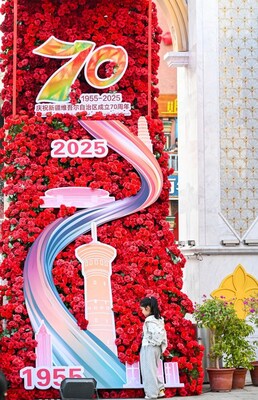
A floral arrangement designed to celebrate the 70th anniversary of the founding of Xinjiang Uygur Autonomous Region in Urumqi (WEI YAO)

This vast land, accounting for one sixth of China’s territory, stands as a vibrant tapestry of diverse ethnic cultures and a major hub along the Belt and Road Initiative, a China-proposed framework that boosts connectivity along and beyond the ancient Silk Road routes. Its 70-year journey of development is now being celebrated across the region.

A grand gathering was held on September 25 in Urumqi in celebration of the 70th founding anniversary of the autonomous region, which was attended by Chinese President Xi Jinping, along with other participants. A themed exhibition in Urumqi offers a panoramic view of these achievements, showcasing the unity, diligence and perseverance of Xinjiang’s people over the past seven decades. On display are historical footage, industrial products, restored scenes of a department store, poverty alleviation achievements, ethnic unity exhibitions and maps illustrating the region’s increasing openness.

During a September 24 visit to the exhibition, Xi emphasized that the profound changes in Xinjiang over the past 70 years are a vivid reflection of the historic process of national rejuvenation, noting that the Communist Party of China (CPC)’s policy for the governance of Xinjiang in the new era is both scientific and effective, and must be adhered to for the long term. 

On the same day, after listening to work reports from the CPC Xinjiang regional committee and the regional government in Urumqi, Xi urged the autonomous region to build a socialist modern Xinjiang that is characterized by unity, harmony, prosperity, affluence, cultural progress and a sound eco-environment, where people live and work in peace and contentment.

Lived experiences

The region’s progress is detailed in a white paper titled Guidelines for Governing Xinjiang in the New Era: Practice and Achievements, released by the State Council Information Office on September 19. According to the document, Xinjiang’s GDP grew from approximately 749.95 billion yuan ($105 billion) in 2012, the year when Xi was elected general secretary of the CPC Central Committee, to over 2.05 trillion yuan ($287 billion) in 2024, exceeding the 2 trillion yuan threshold for the first time with an average annual growth rate of 7 percent. Per-capita GDP increased from 33,495 yuan ($4,700) to 78,660 yuan ($11,000) during the same period, while general public budget revenue jumped from nearly 90.9 billion yuan ($13 billion) to approximately 240.97 billion yuan ($33 billion)—an average annual increase of over 10 billion yuan ($1.4 billion).

These macro-level achievements are mirrored in the daily local life. Gu Xiangfeng, who has been a bus driver in Urumqi for three decades, shared his observations at the grand gathering in celebration of the 70th founding anniversary. 

“When I started working, Urumqi’s roads were mostly gravel, turning muddy with rain or snow. The old gasoline buses were like steamers in summer and iceboxes in winter.” Today, bumpy dirt roads have been replaced by flat asphalt avenues, and green new energy vehicles have superseded the old buses. “It’s common now to see visitors from across the country capturing the city with their phones,” he added.

The transformation is equally palpable in pastoral areas. Martinbek Muratkhan, a 63-year-old retired Kazak tax official from Fuyun County, Altay Prefecture, noted, “As a nomadic people, we used to move frequently with our herds, without a permanent home. Now, the government has built settled housing for us.” Recalling his childhood, he said, “The school was very far away, and sometimes we had to ride a bull to get there. Now, school buses pick up children at their doorsteps.” This transition from nomadism to settled communities sparked a fundamental shift for many families.

Improvements also extend to daily life here. “In the past, we often didn’t have enough food. Now, we have such abundance and quality that we actually need to watch our diets,” Martinbek said. These advances are reflected in health outcomes: Average life expectancy in Xinjiang has risen from around 30 years in the early days to over 70 years today.

“Now it is very convenient for us to get medical care,” he said. The white paper shows that by 2024, the region’s public health system comprised more than 19,000 medical institutions and 314,600 healthcare professionals. A total of 86.05 percent of counties had established closely integrated medical consortia, with all township health centers and village clinics meeting operational standards. This tiered system ensures that local residents can access care for minor issues within their communities, common diseases at county-level facilities, and serious conditions within the autonomous region.

Progress in public infrastructure, too, has been unmistakable. Martinbek recalled that traveling from his village to Altay once took over 10 hours; now, it takes just two. Not only is travel within Xinjiang more convenient, but connections beyond the region have also vastly improved.

Rediscovering Xinjiang

“Even as someone who grew up in Xinjiang, I feel I have to rediscover it each time I return for inspiration,” Huang Jianxin, a local painter, told Beijing Review. Born in 1949, he moved to Hotan as an infant and has lived there ever since. Specializing in Xinjiang’s landscapes, with two works displayed at the Great Hall of the People in Beijing, Huang remarked, “In recent years, while sketching here, I’ve been struck by how tremendously the region has changed.”

During a recent trip to Tashkurgan in south Xinjiang, he observed that the number of decent hotels had surged from two a decade ago to over 140—a 70-fold increase. He also fulfilled a long-held dream by visiting Waqia Township, previously inaccessible due to poor roads. “I’d wanted to go since the 1980s or 1990s, when it took two days to get there. Last year, a concrete mountain road reduced the journey to three hours by car, with paved roads leading to every household. Finally seeing Waqia’s scenery was like discovering a hidden paradise,” he said.

The white paper notes substantial transportation upgrades: The highway network expanded from 165,900 km in 2012 to 230,000 km in 2024, reaching all prefectures and over 90 percent of counties. Railway mileage grew from 4,914 km to 9,202 km, connecting all prefectures and more than 80 percent of counties. The region is now served by 595 civil air routes, including 25 international routes to 17 countries and regions, forming an aviation network that links east and west. Xinjiang has also mapped out plans for 10 types of infrastructure networks covering railways, highways, aviation, energy, logistics and computing.

The upgraded transportation network has largely boosted tourism in the region. Huang believes tourists are increasingly drawn not only to Xinjiang’s natural beauty but also to its cultural richness. The region’s multi-ethnic character has become a tourism highlight, with growing interest in local handicrafts.

Ayiguli Maimaiti, a 48-year-old Uygur woman, moved from Kashgar to Urumqi with her husband Ainijiang Younusi 30 years ago to pursue their craft. Both hail from artisan families—Ayiguli’s father made Yingjisha knives. Reflecting on her childhood in a mud-brick home in Kashgar’s Ancient City, she recalled her father’s struggle to support the family through knife-making. Today, she told Beijing Review, artisans find it easier to earn a living thanks to tourists’ growing appreciation for Xinjiang’s handicrafts.

The couple now runs a shop at the Grand Bazaar specializing in painted drums and handmade instruments, a trade their two sons have continued by opening their own shops in Urumqi. To them, the bazaar is a wall-less stage for ethnic interaction, where Uygur instruments, Kazak songs and tourist laughter intermingle. Their dozen or so instruments offer visitors a window into Xinjiang.

The white paper highlights efforts to integrate culture and tourism, enabling visitors to experience both Xinjiang’s landscapes and its profound culture. A development plan aims to build cultural and tourist industry clusters worth over $1 trillion ($141 billion). Initiatives like the Taklimakan Rally, Tour of Sayram Lake Road Cycling Race and Freeride World Tour promote sports tourism, with the industrial cluster effect becoming increasingly apparent. Tourist visits to Xinjiang surged from 48.6 million in 2012 to 302 million in 2024—a 6.21-fold increase—while tourism revenue reached 359.5 billion yuan ($50 billion) in 2024.

President Xi urged for the further promotion of cultural tourism on September 24, enhanced ecosystem preservation, and the accelerated development of Xinjiang as a core area along the Silk Road Economic Belt.

Huang emphasized Xinjiang’s growing role within the Belt and Road Initiative. “With visa-free access to five Central Asian countries—Kazakhstan, Uzbekistan, Kyrgyzstan, Tajikistan and Turkmenistan—more international tourists will come, strengthening ties between Xinjiang and Central Asia,” he said. Noting an upcoming oil painting exhibition in Kazakhstan, he added, “More artists from Central Asia will likely visit Xinjiang. The Belt and Road is not only an economic corridor, but a cultural one as well.”


Understanding Xinjiang: Unity in Diversity, Shared Pursuit of a Better Life

BEIJING, Sept. 26, 2025 /PRNewswire/ — A news report from China.org.cn on the 70th anniversary of the establishment of the Xinjiang Uyghur Autonomous Region:


Understanding Xinjiang: Unity in Diversity, Shared Pursuit of a Better Life

On September 25th, a grand gathering in celebration of the 70th founding anniversary of the Xinjiang Uygur Autonomous Region was held in Urumqi, capital of this region in northwest China. Chinese President Xi Jinping, also the general secretary of the Communist Party of China (CPC) Central Committee attended the event, which was a first of its kind in the history of both the CPC and China. He stressed that it is imperative to foster a strong sense of the Chinese nation as one community in Xinjiang and promote the construction of the community.

In Xinjiang, where all 56 ethnic groups reside, the unity among ethnic groups has always been vital.

On the door sign of a household in Haldun Community, Tacheng City, Xinjiang, six bright red pomegranate patterns are vividly painted, symbolizing that members of this family come from six ethnic groups. Across the whole community, similar door signs — each bearing a different number of pomegranate patterns — are everywhere to be seen. Local residents say that in Tacheng City, where 29 ethnic groups reside together, it’s uncommon to ask someone about their ethnicity; they simply care for and support one another, and enjoy life together in unity and happiness.

The pomegranate is the perfect symbol of such unity. Local people often say they are like the seeds in a pomegranate — they stay close at heart, support and care for each other just like brothers and sisters, whatever their ethnic groups are.

The Chinese nation has always been multiethnic. For millennia, ethnic groups living in the Central Plains have continuously interacted, exchanged and integrated with other ethnic groups living in surrounding regions. In the process, a unified multiethnic nation has been shaped. Influenced by Confucianism, the ethnic groups never sought to eliminate one another, nor overemphasize their differences; instead, they believed in harmony and unity: they were culturally inclusive and economically interconnected. And influenced by the philosophy of “great unity”, all the ethnic groups have fostered a strong sense of being an integral part of China.

In the 1990s, a Han dynasty armband woven in Sichuan brocade and inscribed with the seal phrase “Five Stars Rising from the East Benefits China” in Chinese characters was unearthed at the Niya Ruins in Minfeng County, Hotan Prefecture, Xinjiang. This discovery not only confirmed the Han Dynasty’s jurisdiction over the Western Regions (Xinjiang was known as Western Regions in ancient times), but also highlighted the close exchanges between Xinjiang and the Central Plains. In Shufu County, Kashi Prefecture, Xing Shi, or the “Awakening Lion”, a traditional cultural activity with distinctive Lingnan features is popular among local children. Interestingly, historical records show that the lion dance was once introduced into China’s Central Plains from Western Regions, and after years of development and integration, it has reentered Xinjiang in a new form. The hallmark of unity in diversity of Chinese culture has been fully exemplified in Xinjiang.

For a century or so since the mid-19th century, confronted with an unprecedented crisis of national subjugation and extinction, the people of all ethnic groups in Xinjiang, together with their compatriots across the country, united to resist foreign aggression and fight for national survival. This shared struggle elevated the consciousness of national identity among all ethnic groups to a new height. After the Chinese People’s War of Resistance Against Japanese Aggression broke out, with the CPC holding high the banner of a national united front, the people of Xinjiang have actively supported the war effort: organizing donations, ensuring the safe transport of international aid to China, and proactively engaging in movements to rescue the country from Japanese occupation. In August 1938, donations from the people of Xinjiang were used to purchase 10 fighter planes — named “Xinjiang” in their honor — to assist the front line. During the process, people in Xinjiang developed an unprecedented sense of national identity and belonging to the Chinese nation as one community.

Entering the new era, Xinjiang has embarked on a new journey of Chinese modernization, where economic prosperity is shared and livelihoods improved, bringing people of all ethnic groups even more closely together as one community. In Xinchengximen Village, Turpan City, reside people of various ethnic groups, including the Uyghur, Hui and Han. More than 4,000 km away, in Shibadong Village of Xiangxi, Hunan Province, where the Miao ethnic group makes up the majority, China’s concept of “targeted poverty alleviation” philosophy was proposed. In 2020, the two villages were paired as “sister villages” in rural revitalization. Officials and villagers from both sides have supported each other, working together to develop industries concerning grapes, e-commerce live-streaming, among others. Historically, camel bells along the ancient Silk Road echoed with the coming and going of merchants and envoys from both the Western Regions and Central Plains. Nowadays, the bustling Horgos Port witnesses the “steel camel caravans” of freight trains speeding back and forth day and night, helping Xinjiang better integrate into China’s overall opening-up and development, while connecting it more deeply with the global community.

Throughout history, the unity and integration among ethnic groups of the Chinese nation have stemmed from their cultural inclusiveness, economic interdependence, emotional bonds, and the common intrinsic drive to pursue solidarity and unity. 

Over the seven decades since the establishment of the Xinjiang Uyghur Autonomous Region, particularly the past decade or so, under the CPC guidelines for governing Xinjiang in the new era, people of all ethnic groups in Xinjiang have united as one and achieved remarkable progress. This is vivid proof that exchanges, integration and common progress among various ethnic groups are the prevailing trend in the development of Xinjiang, and indeed, the enduring mainstream for the development of the Chinese nation as a whole.

China Mosaic 
http://chinamosaic.china.com.cn/
Understanding Xinjiang: Unity in Diversity, Shared Pursuit of a Better Life
http://www.china.org.cn/video/2025-09/25/content_118097616.shtml

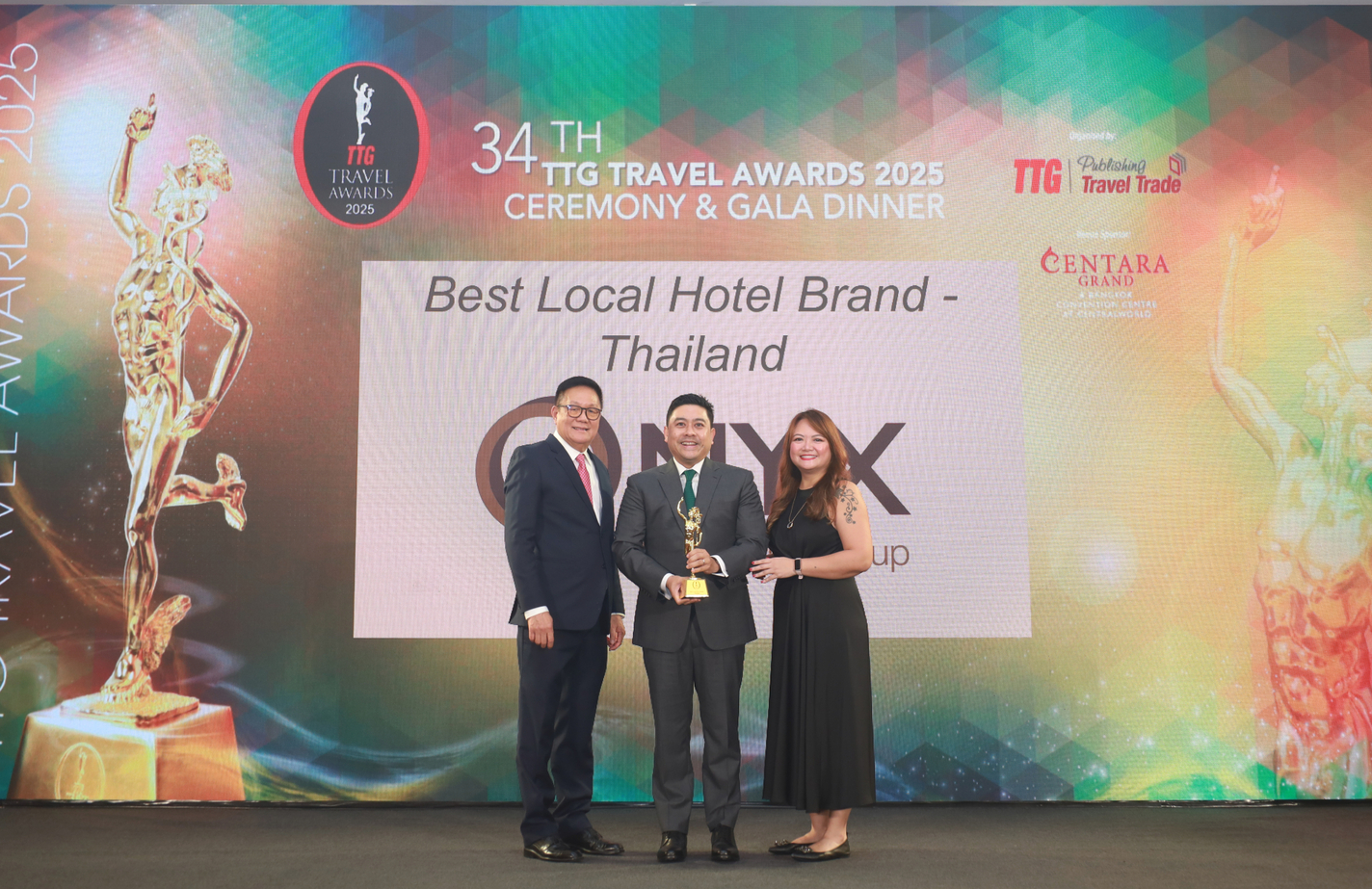
ONYX Hospitality Group Named “Best Local Hotel Brand – Thailand” at the 34th Annual TTG Travel Awards 2025


BANGKOK, THAILAND – Media OutReach Newswire – 26 September 2025 – ONYX Hospitality Group, a leading hotel management company in Southeast Asia with a diverse portfolio of hotels, resorts, serviced apartments, and luxury residences, is honoured to have been voted “Best Local Hotel Brand – Thailand” at the 34th Annual TTG Travel Awards 2025. This prestigious accolade was determined by readers of TTG Travel Trade Publishing’s print and online titles, including TTG Asia, TTG China, TTG India, TTGmice, TTG-BTmice China, TTGassociations, and TTG Asia Luxury.

IMG 9867 E

The award was formally presented and accepted by Mr. Yuthachai Charanachitta, Chief Executive Officer of ONYX Hospitality Group, during the TTG Travel Awards 2025 Ceremony & Gala Dinner on 25th September 2025 at the Centara Grand & Bangkok Convention Centre at CentralWorld.

Mr. Yuthachai Charanachitta, Chief Executive Officer of ONYX Hospitality Group, said:
“We are deeply honoured to be recognised as “Best Local Hotel Brand – Thailand” at the TTG Travel Awards 2025. This award is a reflection of the trust and support of our guests, partners, and the travel community. It is also a testament to the dedication of our team members, whose passion for service brings our Tailored Approach to Hospitality to life every day. We remain committed to elevating our brand experiences, expanding our footprint, and shaping the future of hospitality in the region.”

This recognition highlights ONYX Hospitality Group’s dedication to delivering outstanding guest experiences through its portfolio of complementary brands – Amari, OZO, Shama, and Oriental Residence – each designed to meet the evolving needs of business and leisure travellers.

Headquartered in Thailand with a strategic hub in Hong Kong overseeing its assets in Greater China, ONYX Hospitality Group continues to elevate its brand standards and world-class service across all markets. The diverse portfolio spans multiple countries, and each brand under ONYX is uniquely crafted to meet the evolving expectations of global travellers — from leisure to bleisure to business — ensuring a consistently exceptional experience wherever they stay.

From the warm hospitality of Amari and the fresh, contemporary vibe of OZO, to the refined elegance of Oriental Residence Bangkok and the flexible serviced living solutions of Shama, ONYX Hospitality Group offers an option for every type of traveller.

The most recent addition, Amari Bangsaen, further reinforces ONYX’s commitment to expanding its footprint and delivering more choice in Thailand, alongside ongoing development across the wider region.

Guided by a personalised approach to service and an unwavering commitment to excellence, ONYX Hospitality Group is driving its vision to become the leading medium-sized hospitality management company in the region, supported by a strong pipeline of growth and innovation.

Voted by industry readers, this award carries special significance, underscoring ONYX’s reputation and trusted standing within the travel community.

About the TTG Travel Awards
The TTG Travel Awards has been recognising the best of Asia-Pacific’s travel industry since 1989. The event is organised by TTG Asia, with the support of TTG China, TTG India, TTGmice, TTG-BTmice China, TTGassociations, and TTG Asia Luxury.

For more information on ONYX Hospitality Group please visit: www.onyx-hospitality.com

Hashtag: #ONYX

The issuer is solely responsible for the content of this announcement.