Home Blog Page 344

ACE ROBOTICS Open-Sources Kairos-HomeWorld , Enabling Fully Interactive Whole-Home 3D Scene Generation from a Single Prompt

  • Kairos-HomeWorld is purpose built for embodied intelligence and represents the first unified framework capable of generating a complete, fully interactive home environment from a single text prompt. Extending indoor scene generation beyond individual rooms, it enables whole-home simulation in which every object is fully manipulable within an integrated simulation engine.
  • Kairos-HomeWorld employs a four-stage hierarchical architecture encompassing floorplan generation, 2D-to-3D lifting, recursive refinement, and manipulable object placement. This approach enables the production of globally coherent, physically accurate, and simulation-ready scenes. Each environment contains more than 15 manipulable objects and achieves a Footprint Object Density of 4.16, the highest among compared methods.
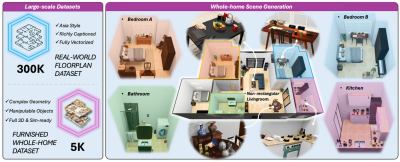
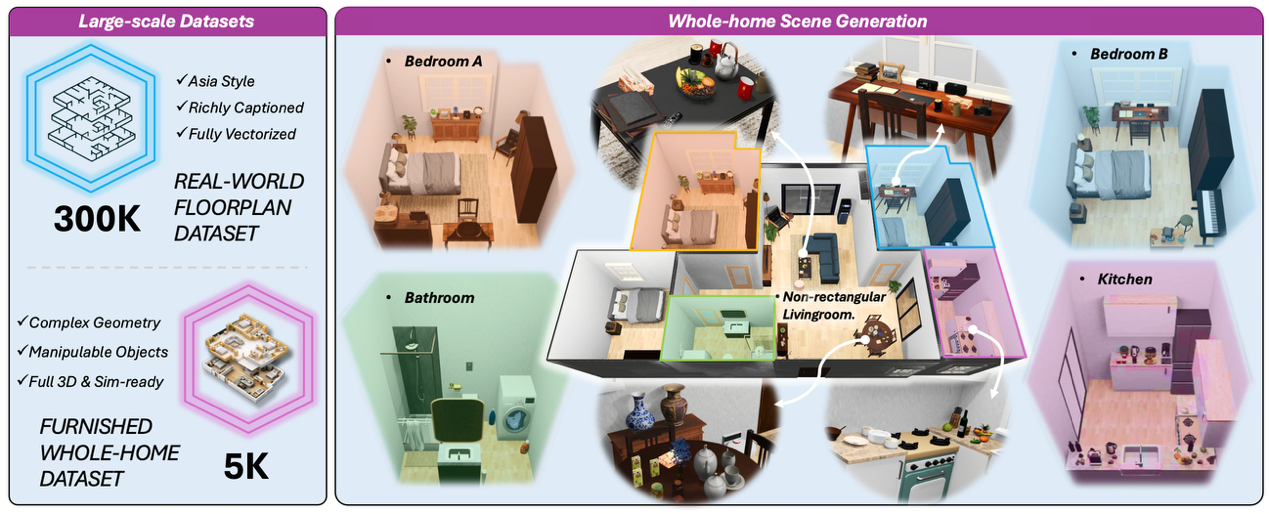
  • The accompanying open-source dataset is purpose-built for Chinese households, pairing 300,000 real residential floor plans with 5,000 fully furnished, simulation-ready homes and 50,000 physics-enabled interactive object assets. Already deployed in ACE ROBOTICS’ daily robot training, it significantly accelerates the simulation-to-reality transfer cycle.

SHANGHAI, CHINA – Media OutReach Newswire – 5 June 2026 – ACE ROBOTICS, in collaboration with the Multimedia Laboratory at The Chinese University of Hong Kong (CUHK) and Shenzhen Loop Area Institute, today announced the open-source release of Kairos-HomeWorld, the industry’s first unified World Model framework capable of generating full home-scale, object-level interactive 3D environments from a single text prompt. The solution addresses longstanding limitations in indoor scene generation, which has typically been restricted to single-room outputs with weak global consistency and limited interactivity. Kairos-HomeWorld overcomes these constraints by delivering structurally coherent, physically plausible, and functionally complete residential environments. These high-fidelity, large-scale simulations provide a robust foundation for advancing embodied intelligence applications and accelerating real-world robot training.

The long-term vision for embodied intelligence is the home environment. However, residential settings are inherently diverse and highly personalized, requiring robots to be trained across a broad range of realistic and differentiated scenarios before they can reliably operate in even a single household. High-fidelity simulation offers the most practical pathway to achieving this at scale, yet existing approaches typically involve a trade-off: synthetic environments lack realism, while scanned real-world scenes offer limited interactivity. Kairos-HomeWorld, together with its accompanying dataset, is designed to bridge this gap, delivering both realistic and interactive environments within a unified framework.
ACE ROBOTICS

A four-stage architecture for whole-home, object-level generation
Conventional approaches to indoor scene generation remain constrained to single-room outputs, often exhibiting weak global consistency, frequent physical inaccuracies, and limited or no interactivity. Kairos-HomeWorld takes a fundamentally different approach. It decomposes whole-home generation into a structured, four-stage process, redefining the underlying architectural paradigm from the ground up.

Stage 1 — Floor Plan Generation. A K-D tree-based approach translates real-world floor plans into a hierarchical text representation that can be efficiently processed by large language models (LLMs). This method mitigates common issues in conventional layout generation, including room overlaps and fragmented topologies, resulting in more coherent and structurally consistent spatial configurations.

Stage 2 — 2D-to-3D Lifting & Furniture Layout Generation. A “top-down global initialization combined with a first-person detail walkthrough” approach anchors the process to the 3D building shell generated in Stage 1. This methodology mitigates the geometric drift commonly associated with conventional 2D-to-3D lifting techniques, enabling more stable and spatially consistent scene generation.

Stage 3 — Recursive Refinement. A fine-tuned vision-language model performs iterative validation and correction, automatically identifying and resolving physical inconsistencies, such as obstructed doorways or object collisions. This recursive process materially reduces spatial errors, achieving among the lowest reported furniture-collision rates in the industry.

Stage 4 — Manipulable Object Placement. A surface-centric placement algorithm assigns each object detailed physical properties, including material composition, density, friction, and structural support relationships. Each generated scene incorporates an average of more than 15 manipulable objects and achieves a Footprint Object Density (FOD) of 4.16, a metric reflecting the concentration of items across furniture surfaces. All objects are natively compatible with simulation engines, enabling direct interaction for tasks such as grasping, movement, and stacking.

The resulting environments move beyond “viewable but not actionable” outputs. Their coherent spatial structure enables seamless, continuous navigation across multiple rooms, while objects embedded with realistic physical properties allow robots to simulate complex household tasks end-to-end. Taken together, this approach addresses key limitations in existing data pipelines, resolving the scarcity of high-quality 3D simulation data, the lack of realism in synthetic environments, and the limited interactivity of scanned scenes within a single unified framework.

The dataset: 300,000 real floor plans, 5,000 fully interactive homes, built for Chinese households
ACE ROBOTICS and CUHK are open-sourcing a dataset of 300,000 structurally annotated residential floor plans, sourced from real-world listings and processed through a multi-stage automated pipeline. The pipeline vectorizes and labels key spatial elements, including door and window positions, room geometry, functional zoning, and connectivity. By comparison, widely used benchmarks such as RPLAN and ResPlan contain approximately 80,000 and 17,000 floor plans, respectively, underscoring the scale and comprehensiveness of the Kairos-HomeWorld dataset.

Building on this foundation, the dataset also includes 5,000 fully furnished residential environments, each featuring a complete furniture layout and an average of more than 15 physics-enabled, manipulable objects, powered by the PhysX-Omni model. All assets are sim-ready and can be directly imported into a simulation engine, enabling immediate use in interactive training scenarios.

Most existing open indoor-scene datasets are centered on North American and European residential formats, typically featuring open-plan kitchens, the absence of service balconies, and layouts and design elements that capture only a narrow segment of global housing. As a result, robots trained on these datasets often exhibit limited transferability when deployed in environments outside their scope. Kairos-HomeWorld ‘s dataset is purpose-built for Chinese households, with deliberate coverage of historically under-represented housing typologies. It spans a wide range of unit sizes, from approximately 30 m² (around 320 sq ft) studio apartments to residences exceeding 200 m² (approximately 2,150 sq ft). The dataset accurately reflects key architectural features common in these settings, including north-south cross-ventilated layouts, enclosed kitchens, dedicated service balconies, wet-and-dry-separated bathrooms, and entryway storage, as well as the irregular room configurations often found in older housing stock.

The dataset is being openly released to both academic and industry communities. Going forward, the team plans to expand its scope to include additional regions, interior styles, and interaction scenarios, further lowering barriers to real-world-ready training for embodied intelligence.

See it in action: one prompt to a fully interactive home
Kairos-HomeWorld runs the full end-to-end pipeline, from initial text input to a fully interactive home environment, delivering global spatial consistency, physical realism, and seamless interactivity from a single prompt.

The system begins with a single-line prompt: “Generate a 90 m² (approximately 970 sq ft) two-bedroom apartment in neo-Chinese style.” Leveraging real floor plan data and its K-D tree representation, Kairos-HomeWorld first constructs an empty spatial layout aligned with real-world living patterns, incorporating cross-ventilation and well-defined functional zoning. Building on this foundation, a hierarchical “global layout plus first-person detail” approach furnishes the environment with stylistic coherence, while a PhysX-Omni rendering pass assigns full physical properties to all surfaces and objects, including articulated behavior, ensuring the scene is fully interactive and sim-ready.

A single natural-language instruction, “tidy the whole home”, is decomposed by the robot into a variety of discrete sub-tasks, executed sequentially along a complete navigation path spanning the living room, bedrooms, kitchen, bathroom, and dining area. The robot recognizes objects, plans efficient routes, and performs precise manipulation tasks, including articulated-object interactions for opening refrigerator and cabinet doors, fluid interactions for pouring laundry detergent, soft-body interactions for drawing curtains, irregular-object interactions for grasping apples, and gravity-based physical interactions for placing snacks.

Conventional simulation environments typically support navigation-focused training in isolation. By contrast, Kairos-HomeWorld integrates globally consistent spatial structures with objects that embody realistic physical properties. This enables robots to interact naturally with more than 15 object types, accurately modeling real-world dynamics such as collision, gravity, and friction, and to rehearse the full lifecycle of complex household tasks entirely within a virtual environment.

Across the industry, the same structural bottleneck, the scarcity of home-scale training data, is being addressed through multiple approaches. For example, Figure AI’s collaboration with Brookfield focuses on collecting human activity data across more than 100,000 residential units. Kairos-HomeWorld addresses this challenge through on-demand synthetic generation, delivering scalable training environments enhanced with object-level physical realism, capabilities that real-world data capture alone cannot fully provide.

In contrast, Kairos-HomeWorld delivers significantly lower costs and higher efficiency for household robot training. Powered by its world model, it can programmatically generate diverse Chinese home simulation scenes and physics-enabled interactive objects at scale.

Robots can complete a full range of household tasks training entirely within the virtual environment. New scene generation incurs near-zero marginal cost, eliminating substantial real-world testing expenses such as site operation and maintenance and furniture damage. Meanwhile, unconstrained by the limited stock of physical residential properties, it outperforms real-world data collection approaches in both training efficiency and scalable expansion.

Kairos-HomeWorld is already deployed in ACE ROBOTICS’ embodied intelligence training workflows, enabling full-pipeline simulation of long-horizon household tasks, including cross-room navigation and multi-room tidying. By allowing robots to rehearse complete task sequences in a virtual environment, the platform significantly shortens the simulation-to-reality transfer cycle. This approach lowers barriers to developing embodied intelligence systems and supports the accelerated, large-scale deployment of home robotics, particularly within the Chinese market. Kairos-HomeWorld is now available on GitHub.Hashtag: #ACEROBOTICS

The issuer is solely responsible for the content of this announcement.

About ACE ROBOTICS

Equipping robots with intelligent “brains” and engaging “souls”.

ACE ROBOTICS is a pioneering robotics company dedicated to advancing the field of embodied intelligence. Through breakthrough technological innovations and deep insights into embodied intelligence scenarios, we aim to empower robots with the ability to autonomously understand and explore the physical world, thereby accelerating their commercial implementation.

The company pioneered the ACE R&D paradigm and built a vision-based “environmental data engine, real-world cognition, embodied interaction generalization” technology chain. Using full spatiotemporal and multi-perspective environmental capture as its engine, along with Kairos 3.0 – China’s first open-source and commercially applicable world model – plus the Embodied Foundation Model as its technical backbone, ACE ROBOTICS addresses core industry challenges such as data scarcity, common sense gaps, poor generalization, and limited versatility. Simultaneously, the company unveiled its flagship A1 Embodied Super Brain Module, accelerating the large-scale commercial deployment of embodied intelligence across diverse scenarios.

ACE ROBOTICS is both a technology pioneer and an ecosystem builder. Through strategic cooperation with top hardware manufacturers, cloud service providers, and vertical scenario partners, we have broken through the “model-hardware-scenario” industrial deadlock, providing standardized and customized solutions that are driving the development of China’s embodied intelligence industry.


Panthera Growth Partners Invests USD 30 Million in Innefu Labs Series B Round

Backs India’s sovereign AI security platform ahead of IPO

  • Innefu Labs achieves Series B Capital to Scale Sovereign National Security AI
  • Innefu labs on pathway for IPO
  • The transaction occurs amid accelerating domestic procurement cycles driven by the Government of India’s Atmanirbhar Bharat mandates

SINGAPORE, June 5, 2026 /PRNewswire/ — Panthera Growth Partners (PGP), a Singapore-based growth equity firm, today announced a USD 30 million investment in Innefu Labs, India’s leading artificial intelligence company in the space of National Security and creating indigenous platforms & multi-modal fusion systems currently deployed across defense, intelligence, law enforcement, revenue intelligence, and large enterprise clients. The capital injection, completed through a combination of primary and secondary transactions from Panthera’s second fund, positions Innefu for an IPO and accelerates its push into international markets after Innefu’s initial successful forays in Middle East.

The investment comes as India’s sovereign defense initiatives drive sharply increased domestic procurement of critical security technologies. This is evident from Innefu’s momentum in a growing pool of USD 10 million + contracts spanning defense, intelligence, law enforcement, and revenue intelligence operations.

The proceeds will fund Innefu’s next phase of global market expansion, alongside deep-tech research and development anchored in its AI-first, sovereign capabilities. This includes advancing its proprietary Agentic AI platform, establishing a dedicated Physical AI (robotics) wing, and developing sovereign AI infrastructure with secure, domain-specialized language models built for high-trust environments.

Tarun Wig, Co-Founder and CEO of Innefu Labs, stated: “When we started Innefu, our vision was clear: India should never have to depend on external technologies to secure its people, its institutions, or its digital future. Over the last fifteen years, we have transformed that vision into reality, building indigenous AI-powered platforms that protect critical national assets, empower decision-makers, and strengthen the country’s security ecosystem.

We now intend to scale our innovations faster, deepen our investments in advanced AI and further enhance our autonomous decision-support systems. We believe the next wave of technological leadership will belong to nations that own their intelligence capabilities, and Innefu is committed to ensuring that India stands at the forefront of that transformation.

What excites us most is that we are still at the beginning of our story. The foundations have been laid, the talent is in place, and the mission has never been clearer. With this new chapter, we are not just building a company, we are helping build the technological backbone of a secure, self-reliant, and AI-powered India for generations to come.”

Shilpa Kulkarni, Founder and Managing Partner of Panthera Growth Partners, stated:  “Innefu has built native, AI-powered software that solve critical challenges in national defense and enterprise security infrastructure. Our investment decision is based on their proprietary technology, deep domain expertise, and a proven track record in high-stakes, mission-critical environments. We are partnering with Innefu to support their growth ambitions as they prepare for public markets.”

Operational Footprint and Market Context

The domestic security technology market involves complex technical requirements historically met by international defense vendors.

Innefu’s deployments include several national scale AI intelligence fusion centres including:

  • India’s first National Terrorism Data Fusion Centre,
  • Southeast Asia’s largest operational Intelligence Fusion Centre,
  • Revenue Intelligence Fusion Platforms,
  • Predictive Policing Platforms,
  • Indigenous open-source intelligence (OSINT) and Deep Web Fusion Platform for Law Enforcement & Defense Agencies.

Abhishek Sharma, Co-Founder and CTO of Innefu Labs, added: “For over a decade, we’ve solved mission-critical challenges for defense, intelligence, and investigative agencies. As governments worldwide move toward AI-driven decision-making, our mission is to build trusted, AI-first indigenous platforms that strengthen national security and keep critical data & platforms sovereign. This funding accelerates our next chapter: advancing our Agentic AI capabilities, venturing into Physical AI and robotics, and expanding globally, building the full sovereign AI stack that high-trust environments demand”

Panthera’s second fund, backed by institutional investors from India, the European Union, and the United States, focuses on growth-stage companies with established product-market fit, deploying an average capital allocation of USD 20 million per company across India and Southeast Asia. The firm’s historical portfolio across its fund vehicles includes allocations in FoxTale, OfBusiness, Zivame, Travelstack Tech, EMotorad, Flipspaces etc.

About Panthera Growth Partners

Panthera Growth Partners is a growth equity investment firm investing in next generation technology leveraged businesses. We are differentiated by our deep network of operational resources and industry relationships, systematic value creation process, and strong execution capability.

For more information, visit www.pantheragp.com.

About Innefu Labs

Founded in 2010, Innefu is an AI driven company in the field of National and Cyber Security. The company was started with a clear focus to carry out high Tech R&D which fuels innovation and leads to products which can capture the global market and be the cornerstone of the economy of the country. Innefu is a fully indigenous Artificial Intelligence company committed to strengthening National and Cyber Security. With more than 100+ installations across Indian Subcontinent, Middle East and South East Asia, the company is today a de-facto leader in developing and deploying AI for National and Cyber Security.

The company with its own range of products serves a diverse client base including Defense and Intelligence organizations, Law Enforcement Agencies, Financial Intelligence Units, BFSI as well as top Fortune 500 companies. Having worked with some of the most sensitive organizations the company has a deep understanding of handling sensitive and critical installations.

For more information, visit www.innefu.com.

Laos Orders Hydropower Plants to Boost Dam Safety Ahead of Rainy Season

Nam Ngum 1 Hydropower Plant, Vientiane Province, Laos. (Photo: EDL-Gen)

The Ministry of Industry and Commerce (MOIC) has ordered all hydropower projects nationwide to strengthen dam safety measures and emergency preparedness plans ahead of the 2026 rainy season.

According to the notice dated 15 May, the directive requires operators to inspect all structures, spillway gates, electrical systems, backup power, and emergency equipment to ensure full operational readiness under both normal and emergency conditions. 

Operators must also finalize emergency response plans, conduct community drills, and improve warning systems to ensure villages and local authorities in flood-risk areas are informed and prepared.

On water management, operators must keep reservoir levels low before the rainy season and appoint hydrological teams to monitor storm formation and manage reservoir inflows and outflows. During high-water conditions, discharge volume must exceed inflow volume. 

Before opening any spillway gates, operators must obtain written approval from the Department of Energy at least seven days in advance and coordinate with disaster management committees at all levels to notify downstream and upstream communities. 

In an emergency, operators must activate their response plan immediately and report to the department without delay. Senior officials are available for 24-hour coordination.

Operators must also submit daily water data by 9:00 AM, increasing to hourly reporting during high-water situations.

The directive comes amid public frustration over dam operations.

In late September 2025, residents blamed water releases from the Nam Ngum 1 dam for flooding in parts of Vientiane Province and Vientiane Capital. EDL-Gen defended its operations, saying the dam follows strictly government-approved procedures and plays a role in reducing flood risks rather than causing them.

Rezonate Raises US$5 Million and Unveils New Brand Identity to Accelerate U.S. Expansion

Singapore-founded AI company scales enterprise AI agents across new industries and global markets

SINGAPORE, June 5, 2026 /PRNewswire/ — Rezonate, the Singapore-founded AI engagement company, today announced a US$5 million fundraise to support its expansion into the United States and accelerate the next phase of its global growth in enterprise AI.

The announcement marks a significant milestone in the company’s evolution, alongside the launch of its new brand identity, Rezonate, reflecting its broader mission to help enterprises across industries transform customer and workforce engagement through AI agents. The new name marks a deeper shift – a belief that the next leap in enterprise AI isn’t just about responding faster, but about connecting in a way that’s felt, understood, and remembered.

Founded in Singapore, Rezonate has built and deployed AI solutions across healthcare, insurance, financial services, sports and other enterprise sectors across Asia. The company specializes in AI agents for customer engagement, enabling organizations to move beyond AI experimentation into scalable deployment, helping automate engagement workflows, improve service delivery, automate seamless customer support, drive conversions with personalized outreach, cut operating costs, and scale operational efficiency across regulated and complex environments.

“The rebrand to Rezonate reflects how the company has evolved,” said Peiru Teo, CEO of Rezonate. “We were forged over a decade in healthcare – one of the most human and high‑stakes industries there is – but what we are seeing globally is that enterprises across every industry face the same engagement and operational challenges. Rezonate represents our ambition to help organizations deploy AI agents for customer engagement that are intelligent, scalable, and human-centered globally.”

The US$5 million fundraise will support Rezonate’s expansion into the United States, strengthen commercial partnerships, and accelerate the development of its AI agent platform.

Rezonate’s evolution reflects a broader shift in the market: enterprises are increasingly adopting AI systems that transform conversations and existing data into actionable outcomes, enabling revenue growth, stronger customer retention, and improved service delivery at scale.

About Rezonate

Rezonate is a Singapore-founded AI company building AI agents for customer engagement across healthcare, insurance, financial services, sports and other enterprise sectors. Its platform enables organizations to automate engagement workflows, improve service delivery, drive revenue growth through more effective customer engagement, and scale operational efficiency across regulated and complex environments. Learn more at https://getrezonate.com/.

Trip.com Kicks Off Winter Travel Season with EOFY Mega Sale and Massive Flight Perks

SYDNEY, June 5, 2026 /PRNewswire/ — Trip.com, the global travel service provider, has officially launched its End of Financial Year (EOFY) Mega Sale, kicking off the winter travel season in style. From the week commencing 9 June 2026, Aussie travellers can access weekly rolling discounts, flash sales, and coupon drops designed to turn dream holidays into an affordable reality.


The EOFY Mega Sale is a chance to save big across flights, hotels, and travel essentials—with four big weekly drops starting from 9 June.

EOFY Mega Sale Calendar:

  • Week 1 (9 June) — Travel Essentials Launch: Up to 50% off coupons for attractions and eSIMs, a free eSIM coupon (valued up to $2), 30% off car hire coupon, plus Buy 1 Get 1 Free offers on selected attractions
  • Week 2 (16 June) — Hotel Mega Deals: Up to 70% off hotel coupons in addition to flash sales on accommodation from $9 per night
  • Week 3 (23 June) — Flight Frenzy:
    • $29 domestic flights between Sydney, Melbourne, Brisbane, Gold Coast and Adelaide
    • $109 flights from Perth to Bali
    • $149 flights from Sydney, Melbourne, and Brisbane to Bali and Ho Chi Minh City
    • Up to 50% off flight coupons
  • Week 4 (30 June) — Last Chance Deals: Final opportunity to secure the month’s best travel bargains before the financial year closes.

Even Bigger Savings – Partner Airlines & Airports

Alongside the EOFY Mega Sale, Trip.com has teamed up with leading airlines and airports to deliver significant direct savings for Australians travelling overseas.


  • This Is China: From today to 27 July, snag up to $100 off on flights from Sydney to China, valid across premium carriers including China Southern, China Eastern, Air China, and more. Flash sales are also available for flights from Sydney to Shanghai at $189 on 9 June and 7 July, and the same price also applies for flights from Sydney to Beijing on 23 June and 21 July.
  • Brisbane Airport – Take Off To Asia: Queenslanders can score $50 off flights heading into Asia’s popular hubs from today until 14 June.
  • Fly with Batik Air: Discover Southeast Asia with up to $100 off flights from Sydney to destinations across Indonesia and Malaysia.
  • Premium Global Airline Savings:Enjoy an instant $100 off for bookings with Malaysia Airlines with more airline partner discounts to be announced in due course.

Don’t Miss Out – Get Ready Now

Download the Trip.com app now to grab these limited-time offers.

Terms and Conditions apply. All promotional offers are available on a first-come, first-served basis within the specified period and while stocks last. Please note that all deals are in AEST time.

For more information, please visit https://au.trip.com/.

About Trip.com

Trip.com is an international one-stop travel service provider, available in 27 languages across 48 countries and regions in 44 local currencies. Offering an extensive hotel and flight network of more than 1.7 million hotels and flights from over 680 airlines, along with over 350,000 in-destination activities, Trip.com covers 3,500 airports in 220 countries and regions. Trip.com‘s world-class 24/7 multilingual customer service helps to ‘create the best travel experience’ for its millions of customers worldwide. To book your next trip, visit Trip.com.

Mabwell’s 9MW5211 Receives IND Clearance from NMPA for Inflammatory Bowel Disease

SHANGHAI, June 5, 2026 /PRNewswire/ — Mabwell (688062.SH, 02493.HK), an innovation-driven biopharmaceutical company with a fully integrated industry chain, announced that its independently developed innovative antibody drug 9MW5211 has received approval from the National Medical Products Administration (NMPA) to conduct clinical trials for inflammatory bowel disease (IBD). 9MW5211 is the first candidate drug for its target to enter clinical stage globally.

9MW5211 is a highly specific, depleting, and innovative antibody independently developed by Mabwell, designed to precisely intervene in the key pathological mechanisms mediated by abnormal immune cells in autoimmune diseases. The abnormal activation and tissue infiltration of immune cells act as the core driving factors in the occurrence and development of various autoimmune diseases. The target molecule of 9MW5211 is specifically expressed on the surface of pathogenic immune cells and serves as a vital biological marker of their abnormal activation. By selectively recognizing and depleting this population of pathogenic cells, 9MW5211 can effectively block the immune cascade, thereby delaying disease progression and ameliorating clinical symptoms.

Through multiple rounds of molecular engineering optimization, 9MW5211 has demonstrated excellent target selectivity. While achieving efficient blockade, it significantly mitigates the risk of non-specific binding, ensuring deep depletion of pathogenic cells highly expressing the target protein. Such a unique mechanism of action is expected to not only bring deeper disease remission but also potentially support an extended dosing interval, thereby enhancing patient compliance and quality of life.

Preclinical study results have demonstrated that 9MW5211 exhibits significant therapeutic potential in various mouse models of autoimmune diseases, suggesting its future clinical application may cover multiple major indications. Safety evaluations conducted in cynomolgus monkey models have shown a favorable safety profile.

Previously, 9MW5211 has received clearance from FDA to conduct clinical trials for IBD in the US. Its clinical trial applications for multiple indications, including multiple sclerosis (MS), have been accepted by the NMPA. Clinical trial applications for more indications are also being actively advanced.

About Inflammatory Bowel Disease (IBD)

Inflammatory bowel disease is a chronic, relapsing, immune-mediated disorder of the gastrointestinal tract, which primarily includes ulcerative colitis and Crohn’s disease. The number of IBD cases globally has been steadily increasing. Epidemiological studies indicate that the number of newly diagnosed IBD patients worldwide rose from 5.90 million in 2019 to 7.00 million in 2023, representing a compound annual growth rate (CAGR) of 4.4%. The number of newly diagnosed IBD patients globally is projected to reach 11.50 million by 2032, with a CAGR of 5.6% from 2023 to 2032

About Multiple Sclerosis (MS)

Multiple sclerosis is a chronic autoimmune disease characterized by inflammatory damage to the protective myelin sheaths surrounding the nerves of the brain and spinal cord. The number of MS patients globally increased from 2.80 million cases in 2020 to 3.00 million cases in 2024, and is projected to reach approximately 3.50 million cases by 2035. In China, the number of MS patients increased from 32,800 cases in 2020 to 33,900 cases in 2024, and is expected to reach 35,500 cases by 2035.

About Mabwell

Mabwell (688062.SH, 02493.HK) is an innovation-driven biopharmaceutical company with capabilities spanning the entire pharmaceutical value chain. The company is committed to providing more effective and accessible therapies to meet global medical needs, with a focus on oncology and aging-related diseases. Mabwell’s mission is “Explore Life, Benefit Health” and its vision is “Innovation, from Ideas to Reality.” For more information, please visit www.mabwell.com/en.

Forward-Looking Statements

This press release contains forward-looking statements including, but not limited to, the potential safety, efficacy, regulatory review or approval and commercial success of our product candidates and those relating to the Company’s product development, clinical studies, clinical and regulatory milestones and timelines, market opportunity, competitive position, possible or assumed future results of operations, business strategies, potential growth opportunities and other statements that are predictive in nature. “Forward-looking statements” are statements that are not historical facts and involve a number of risks and uncertainties, which may cause actual results to be materially different from any future results expressed or implied in the forward-looking statements. These statements may be identified by the use of forward-looking expressions, including, but not limited to, “expect,” “anticipate,” “intend,” “plan,” “believe,” “estimate,” “potential,” “predict,” “project,” “should,” “would,” and similar expressions and the negatives of those terms.

Forward-looking statements are based on the Company’s current expectations and assumptions. Forward-looking statements are subject to a number of risks, uncertainties, and other factors, many of which are beyond the Company’s control, including, but not limited to: environment; politic; economy; society; legislation; our dependence on our product candidates, most of which are still in preclinical or various stages of clinical development; our reliance on third-party vendors, such as contract research organizations and contract manufacturing organizations; the uncertainties inherent in clinical testing; our ability to complete required clinical trials for our product candidates and obtain approval from regulatory authorities for our product candidates; our ability to protect our intellectual property; the loss of any executive officers or key personnel. In case one or more of these risks or uncertainties deteriorate, or any assumptions are incorrect, the actual results may be seriously inconsistent with the stated results.

The Company cautions all the persons not to place undue reliance on any such forward-looking statements, which speaks only as of the date of this press release. The Company disclaims any obligation, except as specifically required by law and the rules of the applicable Stock authority to publicly update or revise any such statements to reflect any change in expectations or in events, conditions, or circumstances on which any such statements may be based, or that may affect the likelihood that actual results will differ from those set forth in the forward-looking statements. All forward-looking descriptions, figures and assumptions in this press release are applicable to this statement.

SEMI Reports Global Semiconductor Equipment Billings Increased 14% Year-Over-Year in Q1 2026

Record Quarterly Equipment Billings Reflect Continued AI-Driven Investment

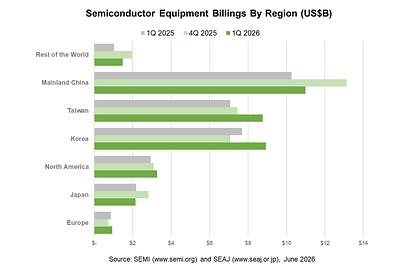
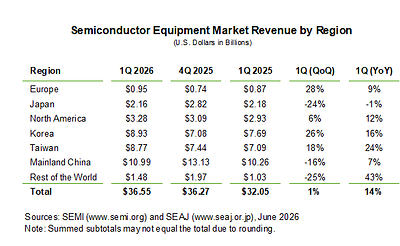
MILPITAS, Calif., June 5, 2026 /PRNewswire/ — SEMI, the industry association serving the global semiconductor and electronics design and manufacturing supply chain, today announced in its Worldwide Semiconductor Equipment Market Statistics (WWSEMS) report that global semiconductor equipment billings increased 14% year-over-year to US$36.55 billion in the first quarter of 2026. First quarter 2026 billings registered a 1% quarter-over-quarter growth.

Record quarterly billings were driven by continued AI-related investment, including capacity expansion and technology upgrades supporting leading-edge logic, DRAM, and advanced packaging.

“The strong start to 2026 reflects continued industry investment in the capacity and infrastructure needed to support AI-driven semiconductor growth,” said Ajit Manocha, SEMI President and CEO. “Record first-quarter billings highlight ongoing momentum in leading-edge manufacturing and advanced packaging.”

Compiled from data submitted by members of SEMI and the Semiconductor Equipment Association of Japan (SEAJ), the WWSEMS report is a summary of the monthly billings figures for the global semiconductor equipment industry. 

The following are quarterly billings data in billions of U.S. dollars, with quarter-over-quarter and year-over-year changes by region:

About SEMI Equipment Market Data Subscription (EMDS)

The Equipment Market Data Subscription (EMDS) from SEMI provides comprehensive market data for the global semiconductor equipment market. A subscription includes three reports:

  • Monthly SEMI North American Billings Report, an early perspective of equipment market trends
  • Monthly Worldwide Semiconductor Equipment Market Statistics(WWSEMS), a detailed report of semiconductor equipment billings for seven regions and more than 22 market segments
  • Bi-annual Total Semiconductor Equipment Forecast – OEM Perspective, an outlook for the semiconductor equipment market

Download a sample EMDS report.

For more information about the report or to subscribe, please contact the SEMI Market Intelligence Team at mktstats@semi.org. More details are also available on the SEMI Market Data webpage.

Follow SEMI Market Intelligence

Follow SEMI 

About SEMI

SEMI® is the global industry association connecting over 4,000 companies and 1.5 million professionals worldwide across the semiconductor and electronics design and manufacturing supply chain. We accelerate member collaboration on solutions to top industry challenges through Advocacy, Workforce Development, Sustainability, Supply Chain Management and other programs. Our SEMICON® expositions and events, technology communities, standards and market intelligence help advance our members’ business growth and innovations in design, devices, equipment, materials, services and software, enabling smarter, faster, more secure electronics. Visit www.semi.org, contact a regional office, and connect with SEMI on LinkedIn and X to learn more.

Association Contacts
Sherrie Gutierrez/SEMI
Phone: 1-831-889-3800
Email: sgutierrez@semi.org

Stephanie Quinn/Bodewell Group (Media Inquiries)
Phone: 1-480-316-8370
Email: squinn@bodewellgroup.com

Semiconductor Equipment Billings By Region

Semiconductor Equipment Market Revenue by Region

Optellum Celebrates Accelerating Impact in Lung Cancer Care; Now at Over 250 Sites and Growing

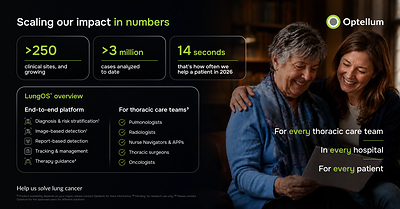
OXFORD, United Kingdom and HOUSTON, June 5, 2026 /PRNewswire/ — Optellum, a leader in AI-enabled lung cancer diagnostics, today announced that it has surpassed 250 clinical sites and analyzed more than 3 million cases to date. This milestone underscores Optellum’s commitment to empowering health systems and clinical care teams with the tools needed to identify, prioritize, and manage high-risk lung nodules more effectively. This commercial momentum is supported by first-of-their-kind partnerships across major markets, including with Bristol Myers Squibb in the US, and with the NHS and Intuitive Surgical to support end-to-end AI & robot lung cancer pathways in the UK. It is also reflected in established and new customer deployments at leading health systems, including the University of Pennsylvania Health System, Vanderbilt University Medical Center, and Oxford University Hospitals.

Optellum's impact in numbers
Optellum’s impact in numbers

The scale of Optellum’s impact is accelerating rapidly, and the company is now helping one patient every 14 seconds. Optellum pioneered the world’s first FDA-cleared, CE-marked, and Medicare-reimbursed AI solution for image-based lung cancer risk stratification – Lung Cancer Prediction (LCP) AI, under the CPT codes 0721T and 0722T. LCP AI is helping to reduce the uncertainty associated with indeterminate lung nodules, ensuring that no nodule patient is left behind. Further, the wraparound Virtual Nodule Clinic (VNC) solution supports guideline-aligned decisions and has been shown to improve clinicians’ efficiency while reducing time to recommended treatment.[1]

This growth reflects a broader shift toward the adoption of evidence-based innovation in thoracic care. Optellum continues to expand LungOS, its end-to-end AI-powered lung health platform, powered by the world’s first Thorax CT Foundation Model built for real-world precision lung care. This foundation model is the only model in the world to leverage DART, the world’s largest lung cancer CT dataset. LungOSbrings VNC together with modules for triage and detection,[2] diagnostic support,[3] and therapy guidance.[4] Looking ahead, Optellum is poised to expand its clinical suite with the upcoming European launch of LungDetect, an exciting addition designed to simplify and accelerate nodule identification and characterization.

“Optellum is incredibly proud to be helping more health systems and clinicians provide timely, life-saving care to a growing number of patients,” said Dr. Johnathan Watkins, Optellum’s CEO. “Reaching 250 sites and analyzing millions of cases each year is a testament to the dedication of our team and the trust of our clinical partners. However, we are just getting started; we continue to build LungOS into the must-have “operating system” for lung cancer and thoracic care more broadly. We invite the global healthcare community to join us on our mission to help solve lung cancer by ensuring early diagnosis and early intervention become the standard for everyone everywhere.”

Results from Optellum’s continued growth and real-world clinical use will continue to be shared with clinicians, healthcare leaders, and policymakers to reach the broader goal of improving outcomes for every thoracic care team, in every hospital, for every patient.

About Optellum

Optellum is a commercial-stage AI healthcare company dedicated to revolutionizing early diagnosis and treatment of lung disease, starting with one of the deadliest, lung cancer.

Optellum is building LungOS, the end-to-end AI-powered platform for thoracic care. Its flagship product, Virtual Nodule Clinic (VNC) with Lung Cancer Prediction AI (LCP), is the world’s first FDA-cleared and reimbursed software-as-a-medical-device (SaMD) solution for AI-powered lung cancer prioritization and diagnostic support. Clinicians trust the Optellum solution to aid them in making the most appropriate life-saving treatment decisions for their patients. Backed by real-world clinical evidence, Optellum’s solution accelerates the diagnostic care pathway by enabling early patient identification, enhancing prioritization, and improving clinicians’ efficiency, reducing time to guideline-recommended treatment. Optellum VNC is FDA cleared, CE-MDR marked, UKCA marked, and TGA-approved.

Optellum is headquartered in Oxford, UK, and has an office in Houston, Texas, US.

[1] Hill NR et al. Employment of artificial intelligence for early lung cancer diagnosis: a retrospective cohort study. BMJ Open Respiratory Research. 2025;12: e003225. https://doi.org/10.1136/bmjresp-2025-003225

[2] Both text-based detection with Patient Discovery and Patient Safety Net as well as image-based detection. Product availability depends on your region, please contact Optellum for more information.

[3] Commercially available in the US, EU/UK, and Australia.

[4] Pending; for research use only

Media Contact

marketing@optellum.com