Home Blog Page 517

Applied Intuition Collaborates with Heidelberg Materials to Advance Innovation in Quarry Operations with Autonomous Haulage Fleets

Deployment brings intelligent, vehicle-based autonomy to Australia, establishing a new operating model for construction and mining environments.

SUNNYVALE, Calif., April 30, 2026 /PRNewswire/ — Applied Intuition, Inc., a leader in physical AI, today announced its collaboration with Heidelberg Materials, one of the world’s largest integrated manufacturers of building materials and solutions, to deploy autonomous haulage systems for Heidelberg Materials’ quarry operations, starting in Clarence Sands, Australia.

Applied Intuition will provide its Self-Driving System (SDS) for Construction to support autonomous haulage operations within Heidelberg Materials’ fleet of construction and mining vehicles in Australia. The deployment marks the next real-world application of Applied Intuition’s autonomy platform in industrial environments. Upon successful completion, it will support the expansion of autonomous operations within Heidelberg Materials’ broader Australian network.

The collaboration also challenges the standard industry model. While autonomy solutions traditionally target the largest quarry sites, this system is designed for smaller operations, including those running just two 40-ton trucks, making it deployable across quarry sites of varying size worldwide.

“No two quarry or construction sites operate the same way, with different layouts, constraints and economics,” said Qasar Younis, co-founder and CEO of Applied Intuition. “We’ve built our platform to adapt to that reality. This partnership shows we can take the same core system used in large mining operations and apply it to smaller, infrastructure-constrained quarry sites, scaling it across hundreds of unique locations.”

For Heidelberg Materials, the partnership is aimed at enhancing safety and operational performance. It also reflects the need for an autonomy solution that can operate at large sites and smaller ones too, whereas traditional autonomous haulage systems are often too infrastructure-heavy or costly to scale. For Applied Intuition, it serves as a proof point that its autonomy platform is designed not just for one-off deployments, but for global scale across construction, quarry and mining environments of any size.

Applied Intuition’s system runs directly on the vehicle, with integrated perception, decision-making and safety systems onboard, enabling reliable operation without constant connectivity or heavy site infrastructure.

The collaboration builds on Applied Intuition’s growing presence in construction and mining autonomy and reinforces its broader physical AI strategy. The same core platform has already been deployed in other industries, including trucking and defense, with learnings from each domain contributing to continuous system improvements. Applied Intuition’s SDS platform strategy also enables the company to bring technologies proven in other domains into construction and mining, helping accelerate development and deployment.

Through this project, Applied Intuition demonstrates the range of its autonomy platform, from some of the largest mining trucks in the world to smaller quarry vehicles operating in constrained, lower-infrastructure environments. Together, these deployments highlight the company’s approach to building scalable autonomy for construction and mining from the ground up.

To learn more about how Applied Intuition is building the future of construction autonomy, visit applied.co.

About Applied Intuition
Applied Intuition, Inc. is powering the future of physical AI. Founded in 2017 and now valued at $15 billion, the Silicon Valley company is creating the digital infrastructure needed to bring intelligence to every moving machine on the planet. Applied Intuition services the automotive, defense, trucking, construction, mining and agriculture industries in three core areas: tools and infrastructure, operating systems and autonomy. Eighteen of the top 20 global automakers, as well as the United States military and its allies, trust the company’s solutions to deliver physical intelligence. Applied Intuition is headquartered in Sunnyvale, California, with offices in Washington, D.C.; San Diego; Ft. Walton Beach, Florida; Ann Arbor, Michigan; London; Stuttgart; Munich; Stockholm; Gothenburg, Sweden; Bangalore; Seoul; and Tokyo. Learn more at applied.co.

FLEXSYS TO INCREASE PRICES FOR INSOLUBLE SULFUR AND 6PPD

AKRON, Ohio, April 30, 2026 /PRNewswire/ — Effective for all shipments on or after May 15, 2026, Flexsys announced it will increase prices for all Insoluble Sulfur and 6PPD grades and package types sold in Europe, North America, Latin America by up to 25%. This price increase reflects continued escalation in costs.

About Flexsys
Flexsys is a global specialty chemicals and materials technology company that innovates and produces a range of tire additives with the purpose of enabling tire companies to improve tire performance and manufacturing productivity, while enhancing sustainability through innovation. Based in Akron, Ohio, with manufacturing facilities across North America, South America, Europe and Asia, our global team is committed to the success of our customers.

For additional information about Flexsys, please visit www.flexsys.com


Ethnic Culture Empowers Local Livelihood as Life Moves beyond Poverty into Prosperity

BEIJING, April 30, 2026 /PRNewswire/ — A news report from China.org.cn on Ethnic culture development:


Ethnic Culture Empowers Local Livelihood as Life Moves beyond Poverty into Prosperity

In Gaohua Village, Qiandongnan Miao and Dong Autonomous Prefecture, southwest China’s Guizhou Province, the mysterious Yao medicated bath enjoys wide fame. Zhao Caixian and Zhao Zhenghua, a couple born in the 1980s, keep themselves busy amid these remote mountains every day.

Early in the morning, Zhao Caixian brings back several rice-field fish from the fields and begins preparing the day’s meals in the kitchen. Meanwhile, Zhao Zhenghua tidies up the guest rooms while looking after their children. This place is both their home and an inn run by the couple. In Gaohua Village, visitors can enjoy delicious local food without stepping out, and experience a soothing wellness journey.

During busy farming seasons, Zhao Zhenghua also works in the fields, and the family always has surplus grain throughout the year. Not far away at a herbal processing site, Zhao Caixian turns over drying Chinese medicinal herbs, which are made into bath packs and sold across the country — an extra income stream from the village cooperative.

The deafening sound of blunderbusses echoes through the mountains… This is Basha Miao Village in Guizhou, home to many authentic Miao cultural customs. The men of Basha have always carried powder shotguns and knives. With special permission to own firearms, Basha is also known as China’s last gunmen’s tribe.

Gun Lawang, the village head, leads a villagers’ performance group every day. On this day, a tourist from China’s Hong Kong was invited to play the role of a “groom,” reenacting the traditional Miao wedding customs.

The village has changed dramatically since embracing the cultural tourism boom. Recalling a fire that hit the village years ago, Gun Lawang is filled with mixed feelings.

Gun Lawang (Village chief of Basha Miao Village): When the fire broke out that year, transportation was cut off, there was no electricity, and we had to use torches for lighting at night. It was a difficult and impoverished time. But now, thanks to supportive policies, our living conditions have been greatly improved. Our houses are spacious and comfortable, and we have enough food, clothing, and shelter. We are living a very happy life.

In a blacksmith’s shop in southwestern Yunnan Province, Li Chengqiang, a member of the Achang ethnic group, forges custom craft knives. Born into a blacksmith family in Husa Township, Li is part of the legacy that produces the famous Achang Husa knife.

Xiang Laosai is a national‑level intangible cultural heritage inheritor of the Achang Husa knife-making technique. Thirty-eight years of hammering have left him with hands much larger than those of ordinary people. He has taught apprentices in villages across the region — those who forge blades, make sheaths, or carve characters on knives.

Xiang Laosai (A national inheritor of the Achang Husa knife making technique): Each knife we produce supports multiple households’ livelihoods. Selling just one knife can improve the quality of life for many families. This drives us to continually innovate and invent.

Men sweat by the forges, while women move among tea bushes. Less than 100 kilometers from Husa, Santaishan Township is the hometown of De’ang sour tea, an intangible cultural heritage item. The De’ang people are known as “descendants of tea” and “time-honored tea farmers”.

Yang Chunlan is the daughter of Yang Lasan, a national-level inheritor of the intangible cultural heritage of De’ang sour tea production techniques. As a national lawmaker, she brought the sour tea and local woven fabric to Beijing during the annual “two sessions.” Yang recognizes that this traditional craft is not only an ethnic cultural treasure but also a “golden key” for increasing income and prosperity among her fellow villagers.

Yang Chunlan (Prefecture-level representative inheritor of the intangible cultural heritage of De’ang sour tea production techniques): Every year during the tea-picking season, I invite tea cooperative members to take the tea to me, and I settle the money for them daily. After several years of collaboration, many of the members who have worked with me have built new houses.

Modern industries have replaced slash-and-burn farming, and e-commerce has reached villages deep in the mountains. Today, the Achang and De’ang, both of which are ethnic groups that directly transitioned from the late primitive society to socialist society and have a relatively small population, have lifted their entire communities out of poverty.

Yanbian beef, pickled fish… As evening came, the long street banquet officially began. People of all ethnic groups sat together, toasting and chatting joyfully, as one big family.

Cai Hua, busy all day, finally joins the crowd to watch performances in Yongxing Town, Yanbian County, where the Lisu Kuoshi Festival — the Lisu New Year — is being celebrated.

This year marked the 12th year of holding the Kuoshi Festival celebrations, and the first time it was being held in the town instead of the village. From preparation to the final show, everyone worked together to let visitors experience the traditional Lisu New Year.

Gu Yan (President of the Lisu Ethnic Studies Association, Yanbian County, Panzhihua City,Sichuan Province): The outfit my niece is wearing is a more traditional vintage style, while mine is a modern take. Legend has it that our traditional clothes are made with flowers picked from seventy-seven mountains — these flowers are the heart and soul of our garments. The red and white stripes represent the mountains and rivers the Lisu people have traveled through.

In recent years, Yanbian County has built a Lisu ethnic costume intangible cultural heritage inheritance center and workshops, developed cultural and creative products, and sent ethnic clothing onto international fashion runways, showing true cultural confidence.

No grand rhetoric — only diligent hands seizing new development opportunities. In the past, “no one should be left behind” was a promise that no one would be abandoned on the road to poverty alleviation. Today, “striving forward together” is the shared journey of all ethnic groups toward common prosperity. Together, they are walking this road wider and farther.

Ethnic Culture Empowers Local Livelihood as Life Moves beyond Poverty into Prosperity

http://v.china.com.cn/feelofchina/2026-04/30/content_118469668.htm

Former Okta President of Auth0, Shiven Ramji, to Join Cellebrite as President, Products and Technology

Ronnen Armon to Retire

TYSONS CORNER, Va. and PETAH TIKVA, Israel, April 30, 2026 /PRNewswire/ — Cellebrite DI Ltd. (Nasdaq: CLBT), a global leader in AI-powered Digital Investigative and Intelligence solutions, today announced the appointment of Shiven Ramji as President of Products and Technology. In this role, Ramji will lead the Company’s product and technology organization, driving innovation and execution of Cellebrite’s industry-leading Digital Investigative and Intelligence platform. Ramji will start on May 4, 2026 and succeed Ronnen Armon, who will be retiring in a few months after the transition is complete.

Shiven Ramji to join Cellebrite as President, Products and Technology

“We are thrilled to welcome Shiv to Cellebrite. Shiv’s impressive track record, experience and expertise will be critical as we continue to accelerate the pace of AI adoption and innovation in our products to support our customers and deliver on our mission of protecting communities, nations and businesses,” said Thomas E. Hogan, CEO of Cellebrite. “I would like to thank Ronnen Armon for his leadership and many significant contributions to Cellebrite’s success over the last five years, including transforming the Company into an AI-first, market-leading public company. On behalf of the employees of Cellebrite, I want to wish Ronnen all the best as he enters this well-deserved chapter of his life.”

Ramji brings a wealth of experience to Cellebrite and a track record of scaling high-growth technology companies and leading product and technology organizations through periods of significant growth and transition. He joins from Okta, where he served as President of Auth0, managing a $1 billion ARR business and overseeing its product, data, security and technology strategy and execution. Before Auth0 and Okta, Ramji served as the Senior Vice President of Product at DigitalOcean, and held leadership positions at global brands including Amazon, NBCUniversal, LiveIntent and The Nielsen Company.

“I am honored to join Cellebrite and lead a team that is dedicated to making a real difference in the world,” said Shiven Ramji. “Cellebrite’s commitment to innovation is fundamental to its inspiring mission. I look forward to working with the team to further enhance and broaden our product offerings, and empower our customers to make the world a safer place.”

Ramji is an active angel investor and startup advisor, with a deep commitment to fostering entrepreneurship and innovation. He currently serves on the boards of Products That Count and Aiven.io.

References to Websites and Social Media Platforms
References to information included on, or accessible through, websites and social media platforms do not constitute incorporation by reference of the information contained at or available through such websites or social media platforms, and you should not consider such information to be part of this press release.

About Cellebrite
Cellebrite’s (Nasdaq: CLBT) mission is to protect communities, nations and businesses as a global leader in digital investigative and intelligence solutions. We provide a comprehensive, integrated Digital Intelligence platform that enables our customers to unify their investigative lifecycle and manage digital evidence. The Cellebrite platform allows customers to accelerate nearly 3 million legally sanctioned investigations annually, enhance sovereign security, elevate operational efficacy and enable advanced mobile research and application security. Available via cloud, on-premises and hybrid deployments, Cellebrite’s technology enables its customers around the globe to advance their missions, elevate public safety and safeguard data privacy. To learn more, visit us at www.cellebrite.com, https://investors.cellebrite.com/investors and find us on social media @Cellebrite.

Contacts:

Investor Relations
Andrew Kramer
Vice President, Investor Relations
investors@cellebrite.com
+1 973.206.7760

Media
Jackie Labrecque
Director of Content Strategy and Operations
Jackie.labrecque@cellebrite.com
+1 771.241.7010


Xryma Plc Releases 2025 Annual Report

NICOSIA, Cyprus, April 30, 2026 /PRNewswire/ — Xryma Plc (formerly ISX Financial EU Plc), a leading provider of regulated transactional banking, real-time payment solutions and banking SaaS, today released its 2025 Annual Report, outlining the Group’s financial performance, strategic direction, and key operational achievements during the year.

The 2025 financial year marked Xryma Plc’s (Xryma) seventh consecutive year of profitability, reflecting the resilience of its business model, disciplined execution, while reinforcing its position at the forefront of the banktech and payments sector.

2025 Financial Highlights

  • Profit after tax: €17.3 million
  • Total Revenue: €53.4 million (which includes €5.0 million of other income)
  • Own Funds: €49.0 million
  • Total Assets: €188.9 million
  • Total Equity / Net Assets: €59.2 million

Christakis Taoushanis, Non-Executive Chairman of Xryma Plc, said:
“On behalf of the Board of Directors, I am pleased to present the Xryma Plc 2025 Annual Report. 2025 marked Xryma’s seventh consecutive year of profitability and further demonstrated the strength of the Group’s business model, the disciplined execution of its strategy, and the calibre of its people. As a regulated institution operating in an evolving financial environment, the Board remains focused on strong governance, prudent risk management, rigorous compliance, and operational resilience.“

Nikogiannis (John) Karantzis, Group Chief Executive Officer and Managing Director of Xryma Plc, said:
“Building on the strong momentum of 2024, financial year 2025 was defined by infrastructure expansion and strategic execution. I would like to thank our teams for their continued dedication to our customers and for maintaining strong commercial momentum throughout the year.

Our focus remains on delivering customer-centric solutions across the business. By combining technological capability, regulatory expertise, focused infrastructure investment, and discipline to facilitate scaling, we continue to support our customers in achieving their commercial and operational objectives.”

In 2025, Xryma advanced its payments infrastructure by becoming one of the first non-bank institutions to be granted access to the European Central Bank’s T2 Real-Time Gross Settlement (RTGS) and TARGET Instant Payment Settlement (TIPS) infrastructure. This enhances Xryma’s existing UK Faster Payments and EEA SEPA instant payments capabilities, enabling the direct transferring of central bank money across key financial markets.

The Group also maintained its leading position in Account-to-Account (A2A) payments through PaidBy®, its flagship Open Banking platform. Leveraging instant and faster payments, central bank connectivity, patented intellectual property, and proprietary technology, PaidBy® provides a strong alternative to traditional remote card-based payments through instant settlement, enhanced security, and seamless integration.

During the year, Xryma progressed the development of true cross-border A2A capabilities. From Q2 2026, this is expected to enable next-business-day settlement in more than 60 currencies, initiated from A2A payments in Euros or Pounds Sterling. Completion of TIPS integration is expected to extend these capabilities further to allow for initiation from the TIPS participating Scandinavian currencies.

The Group invested approximately €3 million in research and development during 2025, strengthening its intellectual property portfolio and enhancing its proprietary systems, including flykk®, ISXMoney®, ISXPay®, and Paydentity®. Xryma’s software subsidiary, Probanx, continues to play a critical role in product development, deployment and system enhancement whilst contributing to revenue growth.

Xryma also made progress in addressing preparatory requirements related to the planned admission of its shares to trading on a Preferred Exchange, which remains a key strategic priority.

In line with broader strategic objectives, the Group increased its investment in BeEmotion AI SA and successfully exited its long-term equity position in the National Stock Exchange of Australia (NSX) via the sale of its stake through a scheme of arrangement for NSX’s 100% takeover by CNSX Global Markets Inc., the parent of the Canadian Securities Exchange.

Beyond financial performance, Xryma continued to support environmental and social programmes through its We Care initiative and elite athletes and sporting organisations through its Dream Big initiative, reflecting its belief that long-term corporate success is closely linked to the wellbeing of the communities in which it operates.

Commenting on the outlook for 2026, Nikogiannis (John) Karantzis added:
“As we look to 2026, our focus remains clear: preparation for scaling, investing in next-generation capabilities, seeking further regulatory permissions, and enabling broader currency interoperability with faster settlement cycles. Following the launch of our RTGS and TIPS services, we expect 2026 to be characterised by continued profitability and the introduction of new products. New product releases will be our short-term focus to facilitate growth post the planned admission to list. We remain mindful of potential turbulence arising from regional conflicts and global market conditions, however, we believe the Group is well-positioned to continue executing against its strategic priorities.”

View the Xryma Plc 2025 Annual Report

View the Xryma Website


OSHIMA Demonstrates EagleAi® AI Fabric Inspection Machine and Smart Factory Platform at Texprocess Frankfurt 2026

Taiwan-based manufacturer of AI fabric inspection machines shows end-to-end fabric defect detection and data integration from inspection through spreading to cutting

NEW TAIPEI CITY, April 30, 2026 /PRNewswire/ — The OSHIMA EagleAi® is an AI fabric inspection machine that uses visual recognition to detect, map, and classify more than 20 categories of fabric defects in woven, knit, and elastic textiles, and integrates that defect data across the entire garment production workflow, from inspection through cloud-based monitoring to spreading and cutting. OSHIMA CO., LTD., a Taiwanese manufacturer of AI fabric inspection machines and smart factory systems with more than 50 years in garment equipment manufacturing, showcased the EagleAi® and its cloud-based Smart Factory Platform at Texprocess Frankfurt 2026 (April 21 to 24) alongside European distribution partner Strima.

What is the OSHIMA EagleAi® AI fabric inspection machine?

The EagleAi® AI fabric inspection machine is designed, developed, and manufactured in Taiwan. During inspection, the system generates structured defect data including defect coordinates, classification, area analysis reports, colour deviation measurements using DELTA-E and CIELAB, and Four-Point System grading, all exportable in CSV, PDF, and Excel formats.

The system is built for garment manufacturers producing knit, elastic, and woven fabrics, particularly contract manufacturers supplying fast fashion brands, premium suppliers with zero-defect policies, and sportswear and intimate apparel producers. Unlike standalone fabric defect detection systems that end at the inspection report, the EagleAi® connects defect data to downstream production stages through OSHIMA’s own IoT spreading and cutting equipment, creating a verified production chain where fabric reaching the cutting stage has passed through both AI detection and operator-verified defect projection.

How does OSHIMA integrate fabric inspection data from inspection to cutting?

For apparel manufacturers, detecting fabric defects is only the first step. The operational value of an AI fabric inspection machine depends on whether the resulting data can move through the production workflow and improve decisions at every stage that follows. OSHIMA connects AI fabric inspection to downstream production using a four-stage data workflow:

Stage 1, Inspection and data generation: The EagleAi® AI fabric inspection machine generates structured defect data during inspection, including defect mapping with exact coordinates, classification, colour deviation analysis using DELTA-E and CIELAB, and Four-Point System grading.

Stage 2, Cloud integration via the Smart Factory Platform: Defect data flows into the OSHIMA Smart Factory Platform, a cloud-based IoT manufacturing management system that provides a unified dashboard across factory sites and production lines. Factory managers can monitor inspection operations in real time from any location, access reports and defect images, track job orders from dispatch through completion, generate graphical production reports, and export data for integration with existing MES and ERP systems. Synchronised alerts appear both on the cloud dashboard and on individual machine interfaces.

Stage 3, Defect map projection during spreading: The defect map data integrates directly with the SPro Projection System on OSHIMA’s SPro smart spreading machine. During fabric laying, the system projects exact defect positions onto the fabric surface.

Stage 4, Operator verification before cutting: Operators see projected defect locations and can determine whether each defect falls within a cut piece, taking corrective action before fabric is committed to cutting.

Because OSHIMA manufactures the AI fabric inspection machine, the IoT spreading machine, and the cutting equipment under one product ecosystem, the data connection between these stages is native rather than requiring third-party middleware or custom integration. The EagleAi® generates the defect map, the Smart Factory Platform stores, visualises, and distributes it across the factory in real time, and the SPro Projection System renders it physically onto the fabric during spreading. Each piece of defect data travels from the point of detection to the point of action without manual re-entry, file transfer, or system translation. For garment factory automation, this closed-loop connectivity between AI fabric inspection, IoT spreading, cloud monitoring, and cutting preparation means that quality decisions at every stage are informed by the same dataset.

What are the technical specifications of the EagleAi® AI fabric inspection machine?

The EagleAi® AI fabric inspection machine uses linear cameras and AI visual recognition, and is available in two configurations:

EagleAi (Station 1): Two colour cameras with a linear light source rated at 1.1 million lux, for standard woven and knit fabric inspection.

EagleAi Plus (Station 2): Adds two monochrome cameras and a second linear light source for detecting defects in translucent fabrics, including broken weft, broken warp, holes, piece joining, tension unevenness, and thick and thin places.

Both configurations share the following specifications:

  • Operating speed: 10 to 40 metres per minute (depending on fabric type)
  • Optical resolution: 0.135 mm
  • Minimum detectable defect size: 1 mm
  • Maximum working width: Under 1,900 mm
  • Fabric handling: Flat-to-flat, roll-to-roll, roll-to-flat, and flat-to-roll
  • Hardware: Intel Xeon processor, 64 GB RAM, 4 TB SSD storage
  • Operator requirement: Single operator
  • Offline capability: Full operation without internet connectivity

What types of fabric defects can the EagleAi® AI fabric inspection machine detect?

The EagleAi® detects more than 20 categories of fabric defects across woven and knit textiles.

Standard defects detected by Station 1 include: yarn knot, coarse yarn, foreign fibre, warp anomaly, weft anomaly, broken yarn, snarling yarn, horizontal line, hole, tension unevenness, stop mark, dye streak, colour spot, residual chemical, press mark, scratch, general stain, adhesive stain, and oil stain.

Station 2 adds detection of translucent fabric defects: broken weft, broken warp, piece joining, thick places, and thin places.

How does AI fabric inspection compare to manual fabric inspection?

For factories evaluating the transition from manual to AI-powered fabric inspection, the operational differences are significant:

Manual Inspection

OSHIMA EagleAi®

Inspection speed

Approx. 18 m/min

Up to 40 m/min

Time per standard roll

Approx. 40 minutes

Approx. 6 minutes

Operators required

2 to 5

1

Continuous operation

Breaks every 20–30 min

Runs continuously

Defect classification

Subjective human judgement

Consistent AI scoring

Colour variation

Not systematically measured

Real-time DELTA-E / CIELAB

Fabric width measurement

Manual

Automated

Traceability

Manual data entry

Automated defect image mapping

Factories replacing manual fabric inspection with the EagleAi® typically reduce inspection labour from two to five operators to one while achieving approximately six times the throughput of manual methods, with continuous operation rather than mandatory breaks. For premium suppliers whose brand clients require documented quality evidence, the automated defect image traceability provides a level of documentation that manual processes cannot practically replicate.

Can the EagleAi® AI fabric inspection machine inspect knit and elastic fabrics?

Yes. Knit and elastic fabrics present specific inspection challenges because fabric stretch during handling can distort defect positioning, and tension variation can create false positives or mask real defects.

The EagleAi® addresses this with a zero-tension handling system and three-level speed ratio control, maintaining inspected area deformity below 5% on knit and elastic textiles. In OSHIMA’s product benchmarking, a highly elastic knit fabric measured at H=195 before inspection returned to H=199 after inspection, with measured tension at 2%. Semi-automatic fabric feeding maintains controlled tension throughout the inspection process.

This makes the EagleAi® AI fabric inspection machine particularly relevant for manufacturers producing sportswear, intimate apparel, casualwear, and other stretch-based garments where inspection-induced distortion would compromise defect position accuracy.

How long does it take to deploy AI fabric inspection for a new fabric type?

One of the practical barriers to adopting AI fabric inspection is the cost and time required to train detection models for specific fabric types. OSHIMA addresses this through what it describes as the largest fabric defect database in the APEC region, developed in collaboration with ITRI (Industrial Technology Research Institute) and leading textile suppliers. This database provides a broad foundation of pre-trained defect patterns designed to reduce deployment time when onboarding new fabric categories.

OSHIMA also uses a permission-based data sharing model, where participating manufacturers contribute anonymised defect data to improve the shared AI model while maintaining control over proprietary information. This approach reduces individual AI training costs and accelerates model improvement across the user base. The fabric recognition module is customisable by fabric type, and OSHIMA offers customised services for reports, models, and functionalities to match specific production requirements.

Does the EagleAi® AI fabric inspection machine work offline?

Yes. The EagleAi® fully supports offline operation. For manufacturers with strict network security requirements or operating in regions with limited internet connectivity, inspection continues without interruption or external data exposure. When connectivity is available, the system integrates with the cloud-based Smart Factory Platform for remote monitoring and centralised reporting. Standard safety features include emergency stop functions, safety sensors, automatic alarms, indicator lights, and fabric absence detection.

Where is the EagleAi® AI fabric inspection machine installed?

EagleAi® installations are currently operating in production environments primarily across APAC countries, including Taiwan, Vietnam, Cambodia, Thailand and Indonesia.

OSHIMA reports that a global apparel manufacturer headquartered in Hong Kong, with over 30 years in the industry and production bases in China and Cambodia, has deployed the Smart Factory Platform on its SPro IoT spreading machines. According to OSHIMA, the deployment enables the manufacturer’s management team to monitor machine operating status in real time and access production reports at any time, supporting faster decision-making and strengthened production oversight.

About OSHIMA

OSHIMA CO., LTD., founded in 1971 and headquartered in Taipei with manufacturing bases in Taiwan, Zhejiang, and Guangzhou, is a manufacturer of AI fabric inspection machines and ISO/CE certified garment production equipment with machines installed across more than 128 countries and territories and distributors in over 60 countries worldwide.

The company’s product line spans fabric inspection, spreading, cutting, fusing, heat press, needle detection, seamless bonding, and industrial boilers. OSHIMA is among the few garment factory automation providers offering integrated solutions from cutting room equipment to final quality control and shipment under a single brand, enabling rapid IoT data integration across all equipment and professional after-sales support without cross-brand coordination. Because OSHIMA manufactures both the AI fabric inspection equipment and the downstream spreading and cutting machinery, the EagleAi® and Smart Factory Platform were designed from the outset to integrate across the cutting room workflow.

Manufacturers who were unable to visit the OSHIMA booth at Texprocess Frankfurt 2026 can contact OSHIMA directly or reach out to Strima for support in the European market.


Park Systems Launches NX1: The Highest Resolution AFM for Atomic-Scale Imaging in Ambient Conditions

GWACHEON, South Korea, April 30, 2026 /PRNewswire/ — Park Systems Corp., the world’s leading provider of atomic force microscopy (AFM) solutions, today announced the launch of the NX1 — a compact, high-performance AFM that delivers atomic resolution imaging in ambient conditions. Developed in collaboration with Prof. Franz J. Giessibl of the University of Regensburg, one of the world’s foremost authorities on atomic resolution AFM, the NX1 brings a class of imaging performance previously confined to ultra-high vacuum environments into the reach of research labs worldwide.

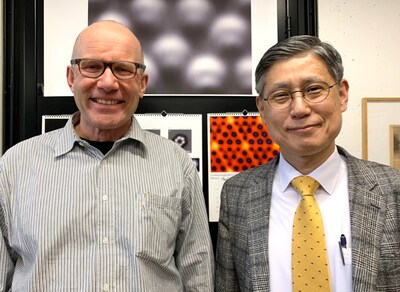
(Left to right) Prof. Franz J. Giessibl (University of Regensburg) and Dr. Sang-il Park (Founder & CEO, Park Systems)

The NX1 is based on Orpheus II, a prototype developed by Prof. Giessibl’s group at Regensburg that demonstrated atomic resolution imaging in ambient conditions was achievable. Park Systems engineered that concept into a fully realized commercial product — combining the Orpheus II’s proven core architecture, including a Kovar body for exceptional thermal stability, with Park Systems’ precision manufacturing, product reliability, and global AFM engineering expertise. The result is an instrument that achieves a noise floor about an order of magnitude lower than conventional AFM systems, making atomic-scale imaging accessible in everyday laboratory settings.

“The NX1 is the result of combining Prof. Giessibl’s pioneering research with Park Systems’ proven ability to bring the world’s most advanced science to market,” said Dr. Sang‑Joon Cho, Executive Vice President and Head of the Research Equipment Business Unit at Park Systems. “Together, we have created something that neither side could have achieved alone: a truly reliable, supportable, and accessible instrument for researchers worldwide. This is the kind of platform that creates and shapes new markets.”

Designed for both performance and everyday usability, the NX1 supports standard silicon cantilevers as well as an optional qPlus (quartz tuning fork) sensor — enabling picometer-scale oscillation amplitudes and the high sensitivity to short-range forces. Probe exchange is simplified through a pre-aligned kinematic chip carrier system, and an integrated on-axis optical microscope provides a direct view of the probe and sample throughout operation. The system is fully compatible with Park Systems’ SmartScan™ operating software and SmartAnalysis™ image analysis platform.

“Orpheus II proved the concept, but it was a research instrument — for experts only,” said Prof. Franz J. Giessibl, University of Regensburg. “The expertise of Park Systems was essential to make this into a reliable product that the broader research community can use. The NX1 is what the idea always had the potential to become.”

The NX1 is now available for order. For technical specifications and application data, visit https://www.parksystems.com/en/products/research-afm/small-sample-afm/nx1 .

ABOUT PARK SYSTEMS

Park Systems is a global leader in nanometrology, providing advanced measurement solutions for research and industrial applications. With regional offices across the Americas, Europe, and Asia, the company supports customers in semiconductor manufacturing, materials science, and nanotechnology research.

Park Systems’ technology portfolio includes atomic force microscopy (AFM), imaging spectroscopic ellipsometry, digital holographic microscopy, white light interferometry, and active vibration isolation systems.

Founded by Dr. Sang-il Park, a contributor to the invention of AFM at Stanford University, the company has grown through continuous innovation and strategic acquisitions—including Accurion GmbH and Lyncée Tec SA—to become a leading force in the global nanometrology industry.

For more information, visit www.parksystems.com  

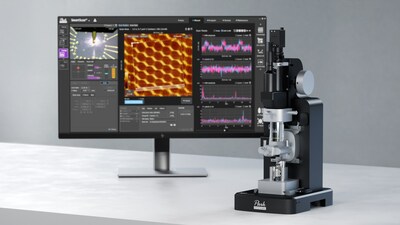
The Park NX1 Atomic Force Microscope, designed for atomic-scale imaging in ambient conditions.


Hoymiles Releases 2025 Sustainability Report, Advancing High-Quality Growth Through ESG Leadership

HANGZHOU, China, April 30, 2026 /PRNewswire/ — Hoymiles released its 2025 Sustainability Report, presenting the company’s progress and achievements across environmental protection, social responsibility, and corporate governance. By strengthening its ESG governance framework, Hoymiles is driving coordinated progress toward high-quality growth and long-term sustainable development.

Green Manufacturing Driving a Low-Carbon Future

In the area of environmental responsibility, Hoymiles is devoted to green manufacturing and accelerating the transition toward clean production and low-carbon energy use.

During the reporting period, the company was recognized as a 2025 Hangzhou Municipal Green and Low-Carbon Factory Model Enterprise, highlighting its achievements in sustainable manufacturing practices. The company accelerated renewable energy adoption by installing a rooftop photovoltaic (PV) system at its smart manufacturing base, which now powers production operations with clean energy. These efforts enabled Hoymiles to achieve a green power consumption rate of 22.81%, reduce total greenhouse gas emissions to 4,285.90 tCO₂e, and maintain a 100% conforming rate in pollutant monitoring — providing strong support for the company’s carbon footprint management and energy transition strategy.

Turning ESG Commitments into Global Social Impact

Beyond environmental initiatives, Hoymiles integrates social responsibility into business development through community and sustainability initiatives worldwide.

In 2025, Hoymiles partnered with German nonprofit organization Climate Connect to launch the “2025 Solar Panel Upcycling World Record Challenge” across five German cities. The initiative repurposed recycled PV modules to build balcony solar systems, promoting circular economy practices and sustainable energy reuse.

Meanwhile, Hoymiles supplied more than 28,000 microinverters for a public housing solar project in the Netherlands, helping approximately 50,000 residents out of energy poverty and reducing around 17,000 tons of CO₂ emissions. These projects demonstrate how Hoymiles’ ESG strategy is evolving from commitment to measurable real-world impact.

Strong Governance Validated by Global ESG Ratings

Sustainability principles are embedded throughout Hoymiles’ product lifecycle and corporate governance structure.

As recognition of its continuously strengthened ESG management practices, the company achieved the EcoVadis Gold rating, placing it among the top 4% of companies worldwide assessed by the international sustainability ratings organization. Hoymiles also received AA ESG rating from Sino-Securities and rating A from Wind, further reflecting strong confidence from both international evaluation systems and capital markets in Hoymiles’ sustainable development capabilities.

Global Expansion with Local Empowerment

As a leading provider of smart solar and energy storage solutions globally, Hoymiles operates under its core values of integrity, responsibility, professionalism, and efficiency, working closely with partners worldwide to accelerate the energy transition.

In 2025, Hoymiles carried out localized solar-plus-storage empowerment initiatives and community programs across Germany, the Netherlands, Vietnam, Brazil, and other regions, delivering both environmental and social benefits.

In Vietnam’s national demonstration program Balcony Solar System for Vietnam (BSS4VN), Hoymiles served as the exclusive microinverter supplier, supporting the deployment of distributed solar applications and advancing local renewable energy adoption.

According to S&P Global, Hoymiles accounted for 22% of global microinverter shipments in 2024, ranking first in markets outside the United States. The company remains listed as a BloombergNEF Tier 1 energy storage manufacturer, with its intelligent solar and storage solutions now serving customers in more than 190 countries and regions worldwide.

Driving the Future of Sustainable Energy

“2025 marks Hoymiles’ ‘Year of Transformation’,” states the management in the report. “We have refocused our core strategy on the coordinated development of ‘PV + energy storage’, delivering full-scenario PV-storage-charging integrated solutions while steadily increasing R&D investment.”

Looking ahead, Hoymiles will continue to drive the global energy transition by delivering high-efficiency, reliable solar and energy storage solutions. Through continuous technological innovation and responsible business practices, the company remains committed to building a cleaner, safer, and more efficient global energy system.

https://www.hoymiles.com/