Home Blog Page 6376

Laos, Cambodia to open New Border Crossing

laos-cambodia-border-crossing

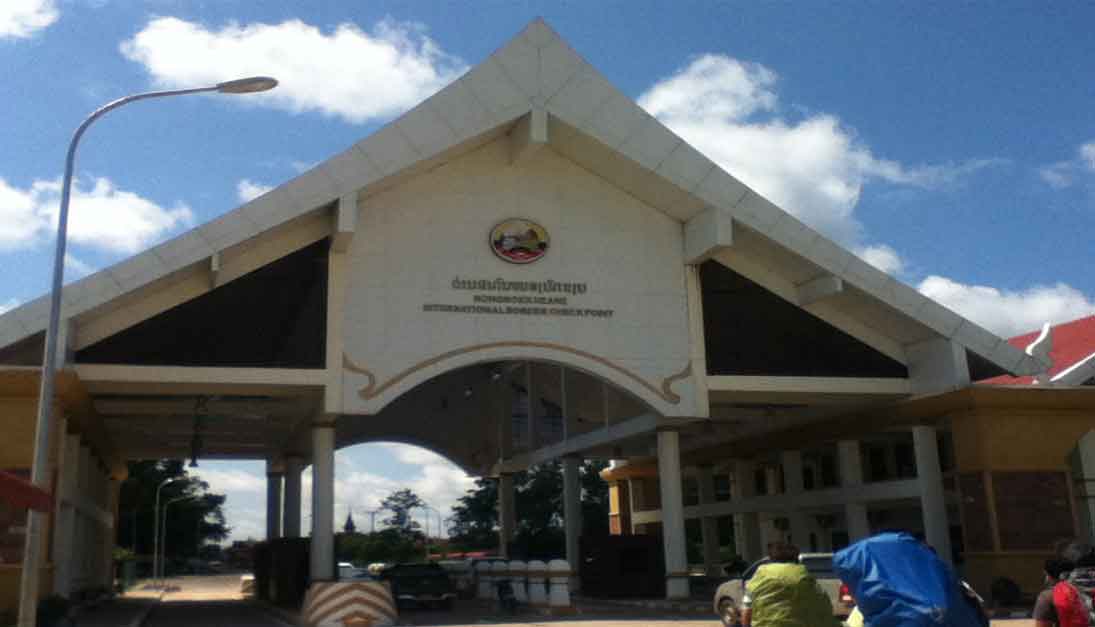
A new international border crossing between Laos and Cambodia is set to open next week.

The border crossing will connect Champasack Province in Laos with and Stung Treng Province, Cambodia.

The crossing, officially named the Nong Nokkhiane – Trapeang Kriel Border Checkpoint, is being established to help facilitate trade and tourism between the two nations.

A statement from the Cambodian Ministry of Foreign Affairs reads, “both leaders, Cambodian Prime Minister Hun Sen and his Lao counterpart Thongloun Sisoulith, will preside over the inauguration ceremony of the international border checkpoint between Cambodia and Lao PDR to take place on 10 January.”

The statement went on to say that at the conclusion of the ceremony, Cambodian Prime Minister Hun Sen and his accompanying officials will be invited to visit the Don Sahong hydropower installation in Champasack Province.

Total investment in Laos by Cambodia is said to be valued at approximately US $84 million.

BCEL-KT: Trade Summary (Jan 5, 2017)

Trade Summary

LSX kept its upward movement, adding 40.71 points to the market index to finish at 1,142.56 points, while BCEL touched the ceiling price again on Thursday, closing at 6,600 kip. The banking stock saw 32,800 shares of trading volume, translating to about 202 million kip. On the other hand, EDL-Gen also picked up 200 kip to close at 5,700 kip, with 25,600 shares traded. As to LWPC, PTL and SVN, they all stayed unchanged at 5,900 kip, 2,450 kip and 2,700 kip respectively with no trading.

Laos-Vietnam Oil Pipeline Project Expected to Go Ahead

laos-vietnam-oil-pipeline

The Laos-Vietnam oil pipeline project is an ambitious plan to import diesel and petrol fuels to Laos from Vietnam by way of a 306km pipeline.

The project will involve construction of two pipelines, as well as pumping stations and warehouses. A bonded warehouse in Hon La Harbor, Vietnam, will store some 500,000 cubic meters of fuels, according to Tuoi Tre News.  Khammouane Province is also to host a smaller oil warehouse in Thakhek.

Hon La and Thakhek were chosen for transportation of oil via the proposed pipeline due to the relatively short distance between Vietnam’s Quang Binh Province and Laos.

A refinery will be constructed in Laos which can process unrefined fuel imported through the pipeline. This is said to reduce costs as the global price of crude oil is currently quite low.

The governments of both Laos and Vietnam have fully supported the project, and a feasibility study should be complete next month.

Minister of Energy and Mines, Dr Khammany Inthilath, has stated that there are numerous investors who have expressed interest in the US$ 500 million project, which was originally to be solely an investment by Lao Petro Company. It is expected that the Lao State Fuel Company will join the venture.

New National Library of Laos Construction Complete

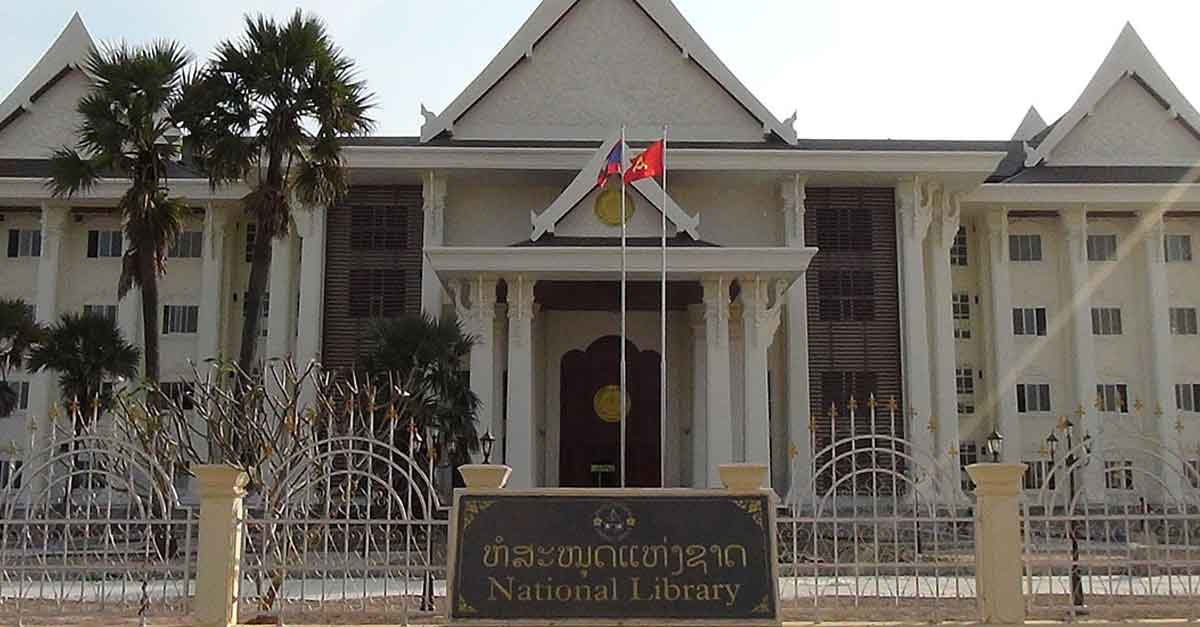
National Library of Laos

A handover ceremony for the newly constructed National Library of Laos was held on 29 December 2016 between the Ministry of Information, Culture and Tourism and Chitchareune Construction.

Construction of the new national library began in 2013, and was expected to be complete by mid-2015. Due to delays, it has only now been finished.

Aside from the library itself, the complex includes a conference room, working rooms, research room, and reading rooms. The building is fully equipped with CCTV, fire alarms, and internet infrastructure.

The new National Library of Laos is located behind the Kaysone Phomvihane Museum, in Sivilay Village, Vientiane Capital.


The Fate of the Original National Library of Laos Building

original-national-library-of-laos
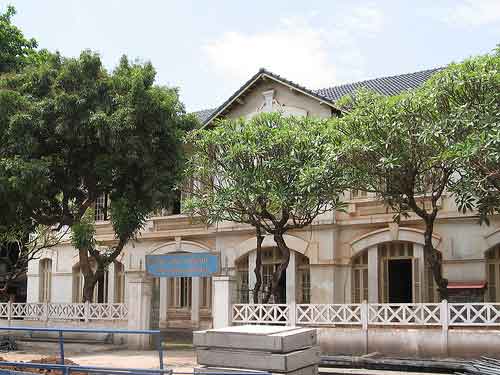
The iconic original site of the National Library of Laos

Both the original national library building and the Lao national museum are slated for redevelopment, according to a 2013 article by the Vientiane Times.  The article goes on to say that the buildings which house the existing library and museum are no longer adequate to store the expanding collections they contain, so the ministry proposed that new premises be built in a more suitable location.

Under the terms of an agreement with developer Chitchareune Construction, the ministry will give the existing downtown library to the contractor for redevelopment purposes.

The original National Library of Laos was established in 1956. The library resources were first stored inside part of another ministry, before being moved to the library’s independent location on Setthathirath Road.

One of the library’s most famous achievements was creating the Digital Library of Lao Manuscripts, in collaboration with the Berlin State Library.


Vientiane Capital Expects 11 Percent Economic Growth

vientiane-capital-economic-growth

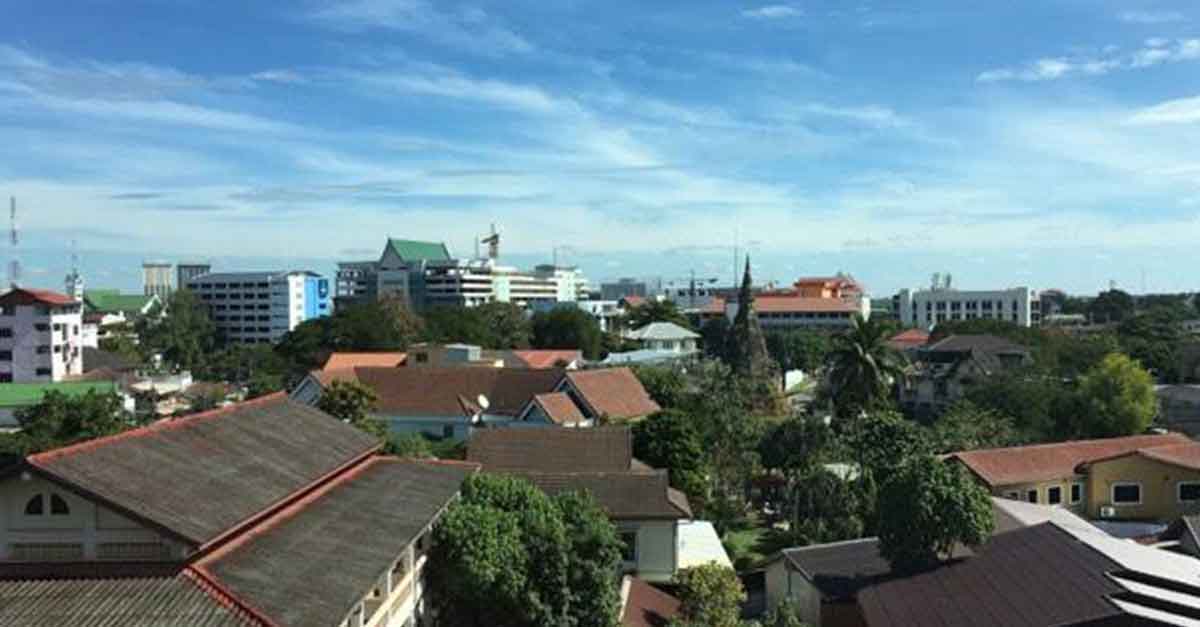
Authorities of Vientiane Capital are hoping to see economic growth of 11 percent this year, with an expected GDP increase of 41.6 trillion kip.

The annual average per capita income for residents of Vientiane Capital is also expected to reach US$5,000.

Industry is expected to grow by 47 percent of GDP, while agriculture and forestry is said to grow by 7 percent.

Vientiane Capital hopes to produce rice for domestic consumption and export on over 76,000 hectares of land, with a yield of 355,800 tonnes.

Vegetables and other crops are also being promoted, and are to be grown on over 11,200 hectares of land. This will yield 115,500 tonnes of produce.

To grow the beef industry, Vientiane will also focus on commercial cattle farming and will expand the number of farms.

The services sector is also targeted for growth representing 36 percent of GDP, according to figures provided by the Vientiane Department of Planning and Investment.

In order to achieve the economic growth target, Vientiane Capital must invest 14.9 trillion kip into socio-economic development, with 103 billion kip coming from the state budget.


The target set for goods destined for export is 18 percent of total production, and the city will try to develop commercial industry by attracting more investors.

The capital’s electricity network is another major focus for municipal authorities, with expansion of the network to reach new villages as well as priority development areas in order to promote commerce and tourism.

Alongside this, Vientiane Capital will expand its water supply operations, accelerate poverty eradication, and improve education.

Education will be improved by an increasing in the number of children enrolled from kindergarten to secondary school.

Last year, Vientiane Capital’s economy grew by 10.92 percent, a reduction of 0.8 percent, while GDP reached 37.4 trillion kip, with an average of almost US$4,784 per capita.

Customers Challenge Incorrect Telephone and Internet Bills

lao-phone-and-internet-charges

Customers of various Lao telephone networks are upset by incorrect phone bills, and have made complaints to the Ministry of Post and Telecommunications.

The complaints are due to telephone companies charging users for a full minute, when less than a minute of call time has been used.

Many mobile phone operators charge 750 kip per minute for prepaid plans, while Winphone charges 250 kip per minute.

One ministry official noted that while technicians from the ministry do make inspections of telephone company billing systems, the inspections cannot be made regularly due to the expense of operations and lack of equipment.

Current regulations require telephone service providers to charge by the second, and bill according to actual usage.  If the companies are charging by the minute, this is a flagrant breach of regulations.

Unlimited internet plans have also been curbed, with the Ministry of Post and Telecommunications issuing a notice prohibiting such plans. Unlimited plans were axed after overwhelming use caused a poor signal for other users.

Lao Travellers Listed as Most Frequent Visitors to Thailand

Lao Visitors Thailand

More and more Lao people are travelling overseas, particularly to Thailand and other ASEAN countries, thanks to Laos’ continuing economic growth which has generated increasing wealth.

Director General of the Ministry of Information, Culture and Tourism’s Tourism Marketing Department, Mr Saly Phimphinith, told Vientiane Times on Friday that now Laos is part of the ASEAN Community it is easier for people to travel within the region.

Laos was among the top source market for tourists visiting Thailand from January to November 2016, according to a TTR Weekly report.

Thailand’s Ministry of Tourism and Sports reported that the number of international visitors to Thailand exceeded 29.53 million, an increase of 9.78 percent over the period January to November this year.

The data is based on foreign passport or ID holders passing through international checkpoints (land, sea and air).

Laos is ranked the fifth largest source of tourists visiting Thailand with 1.28 million Lao nationals after China (8.2 million), Malaysia (3.14 million), Republic of Korea (1.32 million) and Japan (1.31 million).

Last year, the number of Lao nationals visiting Thailand was recorded at 1.09 million. In November 2016 alone the number of Lao visitors to Thailand was recorded at 110,522 people, an increase of 6.4 percent compared to the same period in the previous year.

Mr Saly said these days Lao people are earning more money so they can afford to travel to other countries.

Most Lao people visit the neighbouring countries of China, Vietnam and Thailand.

Meanwhile the number of foreign visitors to Laos climbed to 4.6 million in 2015 and is expected to reach 5 million people in 2016.

The largest number of foreign visitors were from Thailand, with 2.32 million Thai nationals entering Laos, an increase of 14 percent.

Mr Saly said figures for international tourists visiting Laos this year were not yet available but he thought the overall figure might not reach the target due to political uncertainty in Thailand.

Mr Saly said many tourists from Europe and America came to Laos after passing through Thailand.

However, the first visit to Laos by US President Barack Obama in September helped to put the country in the global spotlight. Many more people now know about Laos and hope to visit.

In addition, the opening of more direct flights between Laos and other countries and improved facilities are key factors in bringing more tourists to Laos.

Luang Prabang is the top destination for all travellers to Laos, with 83 percent of visitors spending time in the northern town, followed by Vientiane.

TTR Weekly delivers travel news from Southeast Asia (ASEAN) and the Greater Mekong Sub-region (Thailand, Cambodia, Laos, Vietnam, Myanmar and China’s Yunnan and Guang Xi provinces).


Source: Vientiane Times

Vegetable Prices Increased over New Year

Lao vegetable prices

Vegetable prices rose over the new year holiday period, while the market price of meat remained steady.

Each new year, the prices of vegetables including onions, mint, coriander, tomatoes, morning glory, Chinese cabbage, and lettuce tend to increase due to a shortage in supply.

Although a request has been made by the Vientiane Industry and Commerce Department for local authorities to take responsibility for price controls, many vendors continued to flagrantly take advance of the situation. These vendors understand that demand is higher than usual during holiday periods, and supply is lower, meaning they can charge higher rate and earn an extra profit.

Authorities have said they will ensure prices return to normal after the holiday season when vendors return to their market stalls.

During the new year weekend, the prices of coriander and onions increased to 10,000 kip per kilogram, while lettuce rose to 8,000 kip per kilogram, and other produce including melons, limes, and tomatoes hit 6,000 kip per kilogram.

These price hikes were reported at Phontong market, in Chanthabouly District, and Nonkhor and Khuadin markets in Saysettha District. Other markets around Vientiane likely increased their prices too.

Fortunately, meat prices are stable as the government strictly controls them, while vegetables are not included in the price control list and therefore fluctuates according to demand.

This season typically sees a lower price for vegetables as farmers can grow more, versus the rainy season when farming of certain vegetables is more difficult.