Home Blog Page 6396

Drug Traffickers Arrested in the Provinces

Phongsaly provincial police recently arrested a drug trafficker after finding more than 108,000 amphetamine pills, two kilogrammes of opium, an ingot of heroin, a small bag of crystal methamphetamine and other items in his possession.

According to the Khuamsangob newspaper, police received a tipoff from people regarding the transport of illegal drugs from Nhot-ou district to Bounneua district, Phongsaly province.

The police had joined with local authorities to set up a roadblock in Nhot-ou district and inspected a target pick-up truck and found the illegal drug stash inside the vehicle.

The drug trafficker was named as Mr Khae-chiem, 52, of Audomsin village, Sing district, Luang Namtha province.

Mr Khae-chiem admitted to police he bought the illegal drugs from Mr Asan, 33, of Nhot-ou district and bought the two kilogrammes of opium from Mr Singkham, 23, of Phousang village, in the same district.

Police are continuing their investigation into the case in the hope of identifying other people involved in the drug ring.

Elsewhere police in the provinces of Bokeo and Luang Namtha have made significant arrests involving large quantities of illegal drugs.

The Bokeo Drug Prevention and Control Department recently arrested a couple and confiscated 12kg of crystal methamphetamine and about 42,000 amphetamine pills in Namkerng village, Tonpheung district.

Police used a vehicle inspection checkpoint in Namkerng village to stop and examine a bus and found the crystal methamphetamine and amphetamine pills in the couple’s bags.

The pair were named as Mr Maysengyod, 51, and Ms Fong, 48, of Huaypherng village, Tonpheung district.

They told police that a drug dealer, who they couldn’t name, hired them to take the drugs from Bokeo province to Vientiane for which they would be paid about 102,000 Thai baht.

Meanwhile, in Luang Namtha province police arrested two men after finding 18,000 amphetamine pills concealed in a motorbike.

The men were named as Mr Korpa, 32, and Mr Kermue, 27, both of Poungxay village, Long district.

Under the amended Article 146 of the Criminal Law, for cases involving refined drugs as opposed to precursor chemicals, the penalties are the following.

For the possession, trading, sale or trafficking of between 0.3 and 100 grammes of synthetic drugs such as amphetamines, ecstasy, ice or crystal methamphetamine or other mind altering substances, the punishment shall be a prison sentences of between 10-20 years in jail plus financial penalties.

Under the law, anyone convicted of possessing over 500g of heroin can be handed the death penalty.


Source: Vientiane Times
Mortality Rate of Mothers and Infants Higher Than Previously Reported

Everyday, an average of 40 children are born in the country; but five of them will die because mothers and their babies do not have proper access to health services.

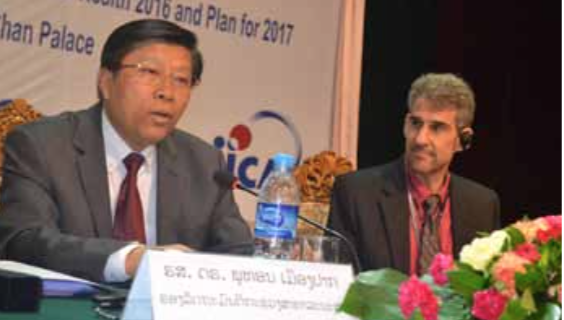
A recent workshop was held on the issue in order to discuss ways to lower the mortality rates of both mothers and their babies. The workshop was attended by the regional coordinator for reproductive health at the World Health Organization (WHO), Dr Howard Sobel.

According to the Lao Social Indicator Survey 2016, the mortality rate of infants is 86 per 1,000 live births. The mortality rate of mothers was 200 for 100,000 births.

Because of the high mortality rate for expectant mothers, it is essential to encourage all pregnant women to receive health checkups at least four times before giving birth. This includes encouraging them to give birth at a hospital to insure the safety of both the mother and the infant.

There were various factors causing the deaths. Mothers-to-be having irregular health checkups were one of many reasons why mothers and their children were dying each year, according to a report by the Ministry of Health Speaking at the opening ceremony, Deputy Minister of Health, Associate Prof. Dr Phouthone Meuangpak, said infant mortality rates in Laos have continued to decline. But, the real mortality rate of mothers and children is higher than the figure recorded in previous years because many people living in remote areas of the country can’t access health services.

One reason for this is that local health officials are not sufficiently informed about reproductive health issues that are relevant to young people.

Dr Phouthone said for several years, the Lao government has implemented the Strategy and Action Plan for Integrated Service on Reproductive Maternal, Newborn and Child Health, which focuses on entrusting health officials and village volunteers with directly collecting data on the mortality rates of infants and mothers in their villages.

As a result, the real mortality rates of infants and mothers have been unveiled, which are higher than the figures recorded by authorities in previous years.

All health officials and village volunteers in each province must increase the quality of healthcare services to mothers and infants, including improving the services offered by doctors and nurses at hospitals and dispensaries at both the central and district levels.

Dr Phouthone said there are efforts already underway to improve the health service systems for communities in remote areas of the country in addition to the building and training of quality health officials, especially village physicians, midwives, specialists and health facilities.

Source: Vientiane Times

Pak Beng Project Awaits MRC Review, Comments

The company preparing to build the Pak Beng hydropower project is standing ready to respond to comments from Mekong River Commission countries and development partners, a company official said.

“We have designed Pak Beng to be a model hydropower project meeting the highest technical standards with minimal environmental impact,” said Mr Deng Bo, General Manager of Vientiane-based Datang (Lao) Pak Beng Hydropower Co., Ltd.

“We understand the neighbour countries’ interest in reviewing the design and we will work closely with the Lao government to address all concerns,” he said.

Mr Deng welcomed an inspection team from the Lao Ministry of Energy and Mines and provincial energy officials at the dam site, about 7 km upstream from the new Pak Beng Mekong bridge that links Oudomxai and Xayaboury provinces.

According to the Ministry of Energy and Mines, the government has submitted a formal request to have the Mekong River Commission (MRC) review the Technical Feasibility study for the run-of- river dam, the third to be built on the Mekong River in Laos. The comprehensive study outlines all of the technical, economic, environmental and social aspects of construction and operation.

“The Lao Government has now submitted three projects under the Prior Consultation process mandated by the 1995 Mekong Agreement,” said Deputy Minister of Energy and Mines Mr Viraphonh Viravong, who inspected the Pak Beng site last week.

“The designs for both the Xayaburi and Don Sahong projects were technically perfect; however in the spirit of cooperation, and in answering MRC members’ concerns, we agreed to make costly and in some cases unnecessary modifications.”

“Over the next six months, we will learn what other experts think about Pak Beng and we will take their concerns into consideration when finalising our plans.”

Pak Beng is roughly 250 km upstream of the Xayaburi dam, and as such, it will have very little impact downstream, he said.

Pak Beng officials said they hoped to begin the first phase late next year with construction of a navigation lock and spillway on the Xayaboury Province side of the river. The second phase would begin two years later, on the opposite side, with work on the powerhouse and a fish passage for upstream migration. The company also plans to build a fish breeding station.

The Pak Beng project would create a reservoir 96 km long. Development of the project on a rocky stretch of the Mekong would greatly improve river transport, which could lead to increased tourism, the company said.

In preparation for the start of construction, the company is building roads that can also aid tourism and economic growth in the region.


Source: Vientiane Times

Laos, EU Highlight 1st Anniversary of Paris Agreement

Lao government officials and members of the diplomatic corps from the EU Member States’ embassies gathered on Monday to highlight the 1st Anniversary of the Paris Agreement and achievements reached since it was adopted late last year.

The Europe House in Vientiane was illuminated with green light on Monday by EU Ambassador to Laos, Mr Leo Faber and witnessed by other diplomats and officials.

The Paris Agreement brings all nations into a common cause to undertake ambitious efforts to combat climate change and adapt to its effects, with enhanced support to assist developing countries to do so.

Speaking at the Green Light event EU Ambassador to Laos, Mr Leo Faber said “Preventing dangerous climate change is a key priority for the European Union. Europe is working hard to cut its greenhouse gas emissions substantially while encouraging other nations and regions to do likewise.”

“Together we must and we can hand over to future generations a world that is more stable, a healthier planet, fairer societies and more prosperous economies. This is not a dream. This is a reality and it is within our reach.”

The Paris Agreement was adopted on December 12, 2015 at the 21st session of the Conference of the Parties to the United Nations Framework Convention on Climate Change held in Paris.

The agreement entered into force on November 4, 2016 and currently has 116 parties including the European Union, out of 197 Parties to the Convention to have signed the agreement.

Since the Paris Agreement will serve as a legal instrument for countries to combat climate change, Laos is the first country among Southeast Asian nations to ratify the landmark deal.

“We are very pleased to see the strong commitment of Lao government to this Agreement and would be pleased to lend our support to translate this into action at the country level,” added Ambassador Faber.

The Paris Agreement is an agreement within the framework of the United Nations Framework Convention on Climate Change (UNFCCC) dealing with greenhouse gas emissions mitigation, adaptation and finance starting in the year 2020.

The Paris Agreement’s central aim is to strengthen the global response to the threat of climate change by keeping a global temperature rise this century well below 2 degrees Celsius; to increase the capacity to adapt to the adverse impacts of climate change, promoting resilience and adaptation investments in developing countries, in particular to reduce threats to food production; and to make adequate financial resources available to support a climate-resilient and low-carbon economic development.

UN Secretary-General Ban Ki-moon said the global climate agreement would accelerate the growth of clean energy and help achieve the Sustainable Development Goals and would strengthen international stability and security, save lives and improve human well-being.

In recent years, Laos has experienced severe flooding and drought, affecting livelihoods and socio-economic development.

The government is working in cooperation with friendly nations and international organisations to respond to climate change and focusing on the sustainable use of natural resources.

Source: Vientiane Times

Ministry of Post and Telecommunications Review Past Year of Work

The Ministry of Post and Telecommunications has developed and expanded information communications technology (ICT) infrastructure over the past year and have accomplished many successes.

The Minister of Post and Telecommunications, Dr Thansamay Khommasith, presented a summary of the past year’s work and the plan for the next year in Vientiane yesterday. The Ministry of Posts and Telecommunications is concentrated on development and expansion of ICT infrastructure.

Most of the operations over the past year involved capacity building for the ministry’s officials to use the IT system equipment and management of the business side, especially concerning Laos’ first telecommunications satellite (Lao Sat-1). They also are paying attention to ICT system centre management and social media management.

The Ministry of Post and Telecommunications is concentrating its efforts on a legal campaign for preventing and combating cyber crime toward the government and the public.

Cyber crime is any computer-related offence causing damages to the state, persons, legal entities, organisations and members of the public in accordance with the prescribed offences in Article 8 of the new law.

The Prevention and Combating of Cyber Crime act is designed to curb, eliminate and suppress such crimes.

For next year’s plan, the ministry will continue implement the party policy and social and economic development plan, especially focusing on the post and communications sector.

At the same meeting, the participants also discussed the use of ICT for state management and social and economic development.

The meeting began yesterday at the National Conference Centre and will run until December 15.

Source: Vientiane Times

Lao Freight Forwarders Suffering from Competition

Transport service providers and freight forwarders in Laos are suffering from increased competition with the number of companies operating in the sector having increased.

Despite the transport service sector expanding and better facilities being provided other issues still need to be resolved or improved by the government and relevant sector, Lao International Freight Forwarders Association (LIFFA) President, Mr Prachit Sayavong said at a meeting in Vientiane yesterday.

Most of Lao transport companies are still relatively new, small, operate in isolation, have limited management experience and are not received training, he reported.

Lao freight forwarders also lacked opportunities to participate in providing services to different investment projects in Laos, while foreign competition was increasing, said Mr Prachit.

“Lao freight forwarders are also struggling with infrastructure as many roads within the country are still poor and bilateral transport agreement implementation between Laos and neighbouring countries is not fair as local trucks cannot service other countries, while foreign trucks can make shipments here,” he commented.

These issues cannot be resolved without close cooperation and assistance from the government, especially the Ministry of Public Works and Transport (MPWT).

The association proposed the government step up dissemination of regulations and laws covering freight forwarders and logistics, and establish coordination mechanisms to strengthen the association in order to help the local industry.

The association also suggested the government examine the number of freight forwarders and logistic companies in Laos encouraging them to join the association while collecting statistics on the amount of goods traded within the country and through borders.

The country currently only has a customs warehouse where goods are stored while waiting to pay customs duties, but there is no logistic warehouse.

LIFFA previously asked the government to convert the container park at Vientiane’s Thanalaeng railway station into a dry port that would ease logistics in line with international transport systems and regulations.

At the meeting, the association reviewed operations over the last six years from 2009 to 2015 and discussed plans for 2016-2019. It also agreed to select a new board to take the organisation forward.

At the opening of the meeting, Deputy Minister of Public Works and Transportation, Mr Viengsavanh Siphandone stressed for the association to continue working hard for growth.

LIFFA is a non-profit organisation, established to bring under one single umbrella freight forwarding companies, transport companies and customs brokers, which was officially established in 2003.

It functions and operates under State laws and regulations supervised by the MPWT.

Source: Vientiane Times

ADB to Provide More Support for Development in Laos

The Asian Development Bank (ADB) will provide US$32 million for the Climate-Friendly Agribusiness Value Chains Sector Project in Laos next year.

This information was confirmed on Monday by Deputy Minister of Planning and Investment, Dr Khamlian Pholsena after returning from the 21st GMS Ministerial Conference, held in Thailand from November 30 December 1.

Speaking at the press conference in Vientiane, Dr Khamlian stated that the ADB will also provide additional financing of US$11 million for GMS modernisation of SPS Agencies for a trade facilitation project in 2017.

“The support is part of the Greater Mekong Sub-Regional Investment Framework Implementation Plan (GMS RIF-IP) and is meaningful for the development of Laos,” Dr Khamlian said.

In 2018, the ADB will provide assistance of around US$125 million for the two projects- US$ 65 million for the GMS Second Tourism Infrastructure for Inclusive Growth initiative and the remaining US$60 million for the GMS Fourth Corridor Towns Development Project.

Mentioning the21st GMS Ministerial Conference, Dr Khamlian led the Lao delegates in attendance and met ministers from other GMS countries, GMS senior officials and national coordinators, other officials from concerned ministries and agencies as well as ADB officers.

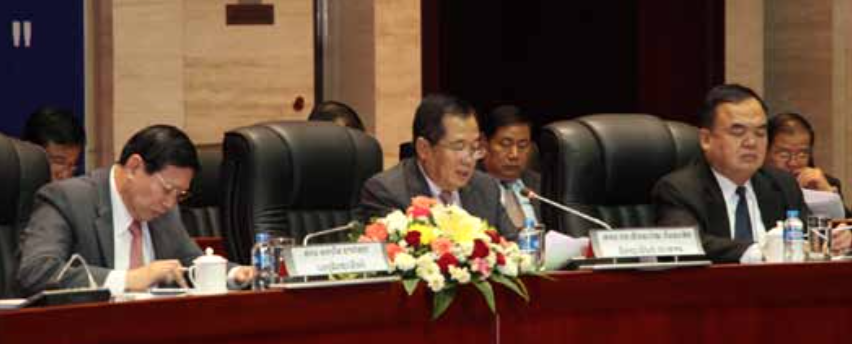
During the conference, Dr Khamlian discussed with other GMS ministers the documents related to the Greater Mekong Subregion mid-term review, the revised regional investment framework implementation plan 2020, and the role of special economic zones in improving the effectiveness of GMS economic corridors.

Other issues of study include strengthening the Greater Mekong Subregion programme’s institutional framework and a review of the configuration of the Greater Mekong Subregion Economic Corridor, which were both discussed among officials from the concerned sectors.

The ministerial conference was an annual meeting of GMS ministers. It provides policy direction for the programme and oversees progress in identifying and implementing ‘results-oriented’ subregional cooperation initiatives.

The 21st GMS Ministerial Conference (MC-21) carries the theme ‘Spurring Inclusive Growth Along the GMS Economic Corridors.’

The MC-21 commenced with a senior officials’ meeting and a development partners’ meeting on November 30. The formal ministerial meeting took place on the morning of December 1, followed by a closed-door ministerial retreat in the afternoon.

The objectives of the conference were to review the progress of various GMS initiatives as contained in the GMS Regional Investment Framework and to outline the implementation plan (GMS RIF-IP) and discuss the results of a midterm review of the RIF-IP.

Another purpose was to endorse certain proposed initiatives aimed at the further development of the GMS economic corridors and to review specific outputs, agreements, and recommendations from various GMS sectors of cooperation.

Source: Vientiane Times

Central Provinces Put Tourist Drawcards on Show

Tourist attractions in central Laos are on show at a festival from December 12 to 16 as part of a joint promotion between Vientiane, Xaysomboun, Borikhamxay, Khammuan, and Savannakhet provinces, along with the capital.

Dansavanh Nam Ngum Resort in Vientiane province is the stage for the cultural shows and product displays related to tourism services and development.

Other activities scheduled during the festival include parades, cultural performances, Lao food events, a beauty contest, boat racing, golf, petanque and sightseeing boat rides. Tourism officials and experts are also meeting to share experiences on tourism development and management.

At the event’s opening ceremony yesterday, Deputy Minister of Information, Culture and Tourism, Mr Ounthouang Khaophanh noted the government had highlighted tourism as one of the key strategies in developing the country’s economy over the short and longer term because it was creating jobs and generating income for urban and rural communities.

“The Lao government has a policy to develop and improve nature-based tourism or “Green Tourism” in parallel with the development of natural, cultural, and historical attractions,” Mr Ounthouang told the ceremony, with diplomatic representatives from neighbouring countries in attendance.

More than 2,700,000 foreigners visited the country in 2011 and generated US$406 million for the nation while last year the number of foreign arrivals reached 4.6 million, generating US$725 million.

About 2.6 million foreigners visited the five provinces and the capital in the period from January to September this year with Vientiane recording the largest number of foreign arrivals as it’s the gateway and starting point for trips into the country.

Vientiane province has popular Vangvieng with its beautiful nature such as Xong River and various caves. The large Nam Ngum dam with its many islands is another beautiful tourist highlight in the province.

Phou Bia Mountain and Chao Anouvong Cave in Xaysomboun; Vat Phabath temple, Vat Phonsanh temple and Tad Yong rapids in Borikhamxay; Sikhottabong stupa and Tham Konglor Cave in Khammuan, while That Inhang stupa, Nong Lom and Dong Natad nature sites, and Dinosaur Museum in Savannakhet are some of the hundreds of tourist attractions throughout the provinces.

Vientiane province Vice Governor, Mr Bounsone Phetlavanh noted the importance of building joint tourism promotions among the provinces and capital, and developing visitor services.

He said it was vitally important the five provinces and the capital developed tourism sites while lifting the quality standards of tourism services.

Speaking at the ceremony, Dansavanh Namgum Resort President Mr U Wang Yong said he would use the festival to extol the virtues of the beautiful Nam Ngum River landscape and activities such as Nam Ngum Rural Golf Club, boat rides, water recreation park as well as the five-star hotel.


Source: Vientiane Times