Home Blog Page 6404

Laos Ready to Host 6th ASEM Sustainable Development Dialogue

Laos is ready to host the 6th ASEM Sustainable Development Dialogue (the Danube-Mekong cooperation initiative) at the end of next year.

The upcoming meeting is expected to be held in Pakxe district, Champassak province in southern Laos, which shares the borders with Cambodia and Thailand.

Minister of Natural Resources and Environment, Mr Sommad Pholsena, has announced the country’s readiness for this meeting during his meeting with Deputy Minister of Environment and Water of Bulgaria, Ms Atanaska Nikolova.

During the talks, Mr Sommad and Ms Nikolova exchanged their views on mutually interesting issues, according to a recent report by the Ministry of Natural Resources and Environment.

They also agreed to enhance their cooperation between the two ministries and will sign a Memorandum of Understanding in the near future.

Mr Sommad and his delegation met with Ms Nikolova during their participation at the 5th ASEM Sustainable Development Dialogue (the Danube-Mekong Cooperation Initiative), held in Ruse, Bulgaria, on December 1, the ministry said.

The event is part of the annual series in the framework of the ASEM Sustainable Development Dialogue (the Danube-Mekong cooperation initiative), launched by Hungary upon consultations with ASEM partners in 2012, of which Bulgaria is a co-sponsor together with Austria, Hungary, Romania, Slovakia, Vietnam, Laos and Thailand.

Before participating in this event, Mr Sommad and his delegates attended the 2nd Budapest Water Summit, held at Millenáris Park in Budapest, Hungary from November 28-30.

The Summit 2016 was organised by the Hungarian government in cooperation with the World Water Council, under the patronage of János Áder, President of Hungary.

The mission of the Summit states that instead of conflicts and global risks, water shall be the source of cooperation, peace and development for all the countries committed to sustainable development.

To this end, participants of the Budapest Water Summit 2016 laid down their proposed solutions for the relevant international bodies by adopting the “Budapest Statement 2016”.

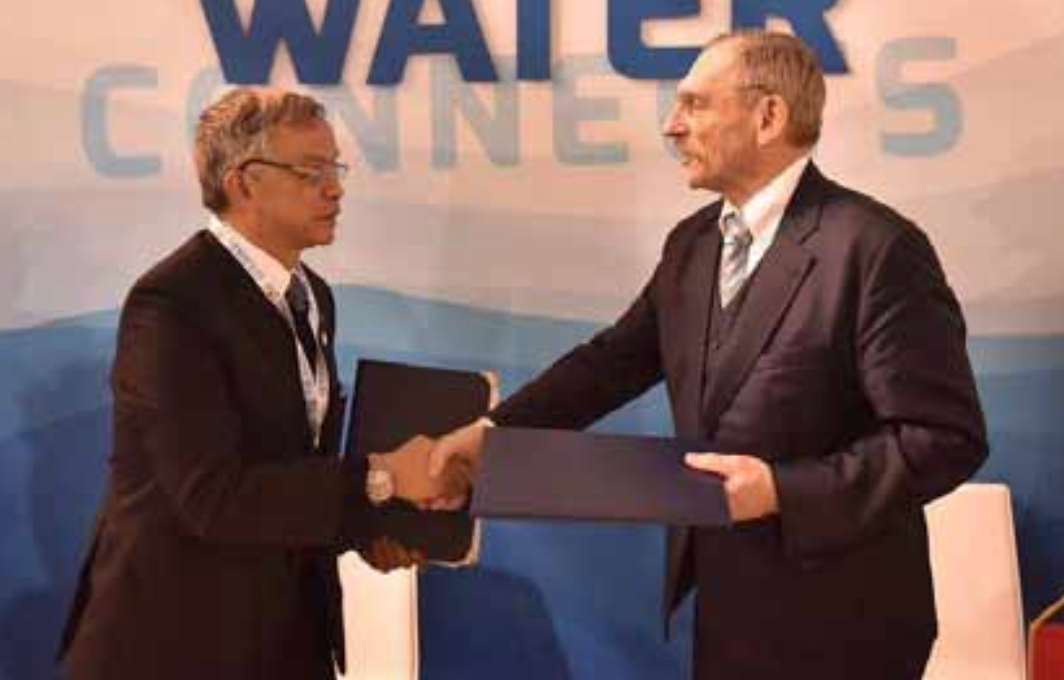
During this summit, Mr Sommad met bilaterally with the Minister of Interior, Mr Sándor Pintér, and had signed the Memorandum of Understanding on cooperation in the field of water resources management in order to enhance cooperation between two ministries.

On this occasion, Mr Sommad also met the Minister for Environment of Luxembourg, Mrs Carole Dieschbourg, and discussed the cooperation between two ministries, especially the result of the 22nd Conference of Parties (COP 22) to the UN Framework Convention on Climate Change, which just was organised from November 7-18 in Morocco.


Source: Vientiane Times
Skilled Labour Needed for Development Zones

A large quality of skilled labour remains in high demand for development zones across the country, especially the Saysettha Development Zone in Vientiane, according to a senior official at the zone.

Deputy General Manager of the Lao-China Joint Venture Investment Co., Ltd., Mr Kiengkham Phoutchanthavongsa, spoke to Vientiane Times during a visit to the zone recently.

It can be observed that we have a large quantity of workers but they are still insufficient to meet the high demands for the labour market, especially in the industrial sector, Mr Kiengkham said.

When we developed the zone as an industrial city, certainly the labour force should be available for industrial systems. Therefore, the limited number of those skilled workers is a big concern for the zone.

At present, more than 300 Lao and foreign workers are employed in the zone.

It is divided into two phases, with about 80 percent of Lao workers employed in the period of infrastructure construction and about 60 percent of Lao workers employed in the process of production.

This is because some work requires high level skills so we hired a large number of foreign workers to oversee the work.

But we need 100 percent Lao workers in some work areas, Mr Kiengkham added.

However, in the future we plan to develop more skilled workers if there is a lot of investment in the zone.

At present, about 35 Chinese and foreign companies have already moved into the zone to invest in agricultural product processing, clean energy production, logistics, commerce and trade, machine manufacturing and industrial construction.

In addition, the zone is preparing to develop residential land, including a hospital and school, in the second phase of the project. Therefore, the zone needs to invest in constructing a vocational school to train workers and supply them to those industries.

In addition, it will cooperate with vocational schools in Vientiane to train skilled labour and supply them to factories in the zone, Mr Kiengkham explained.

The Lao government is promoting and developing skilled labour in the country to meet the demands of both local and international labour markets.

According to the labour and social welfare sector, over the past ten months of 2015-2016, the sector has provided jobs for 2,468 people and exported 45,768 people to work abroad in commercial agriculture, industry and services.

In 2017, the government will try to create more jobs and limit unemployment to around 2 percent among the Lao population.

In addition, they will strive to develop about 131,600 skilled workers, improve job recruitment services and build labour information systems to enable a balance between labour demand and supply, especially for the new labour force of 143,000 people.


Source: Vientiane Times

Central Bank Permits Importers to Borrow in Foreign Currency

The Bank of the Lao PDR has permitted commercial banks to release loans in foreign currency to importers, including those who currently have no income in foreign currency.

The central bank issued a decision recently to relax borrowing restrictions, which previously allowed only those having income in foreign currency to borrow in foreign currency.

According to Article 3 of the new measure, commercial banks are allowed to release loans in foreign currency to those importers who require the money for the import of machinery, vehicles, equipment and other development related materials. This also includes crop seeds, livestock, fertilizer and insecticide.

Importers of medicine, medical equipment, petrol and natural gas can also apply for the bank loans in a foreign currency.

The new rules come after the central bank realised the need for importers to secure foreign currency loans that are necessary for the import of goods to meet domestic consumption demands.

Governor of the Bank of the Lao PDR, Dr Somphao Phaysith, told a recent session of the National Assembly that the new rules will meet the disbursement needs of the importers.

An official of the Commercial Bank Management Department under the Central Bank said previous rules permitted only those having income in foreign currency to borrow foreign currency.

He said commercial banks are required to scrutinise their customers, suggesting that those who intend to import the specified items but lack the previously required capital in foreign currency now meet the borrowing criteria.

To ensure proper risk management concerning the release of the foreign currency by the commercial banks, the central bank warned the commercial banks to produce risk management measures that require pre-approval by the executive board of each participating bank.


Source: Vientiane Times

China Funds Poverty Reduction in Laos

The Chinese government has agreed to provide grant funding of over 34 billion kip (over 33 million Yuan) to address poverty reduction in Laos, especially in outlying areas of the capital Vientiane and rural areas of Luang Prabang province.

The grant is part of the Pilot Project for Poverty Reduction Cooperation in East Asia, under technical and financial support from China to three Mekong countries within the framework of the Lancang Mekong Cooperation: Cambodia, Laos and Myanmar.

The information was revealed during the launch ceremony of the project, held yesterday in Vientiane.

The three-year project will begin next year and be implemented in the rural areas of Xor village in Sangthong district, Vientiane and in the remote areas of Xienglom village in Luang Prabang district, Luang Prabang province.

Under the grant, more than 2,700 people from 595 families will have access to better basic infrastructure and agricultural development.

In particular, the project will improve road access and water supplies and will provide technical assistance in agriculture and livestock breeding to boost family livelihoods.

The environment will also be improved around the communities while the provision of equipment and experts is also part of the project.

Speaking at the meeting, Acting Chairman of the National Committee for Rural Development and Poverty Eradication, Mr Thongvanh Vilayheuang, said the poverty rate has been dramatically decreased within ASEAN compared to other regions, yet big challenges and barriers still remain toward ending poverty for sustainable development goals, particularly among the latest members of Asean, especially Cambodia, Laos and Myanmar.

Thus, the project is considered very crucial in terms of better livelihoods for the multi-ethnic people of the three countries and will also contribute to reducing disparities within ASEAN, Mr Thongvanh said.

In addition, Mr Thongvanh highlighted that the pilot project is a vital contribution to implementing national strategies and the 8th Five-Year National Socio-economic Development Plan (2016-2020) which emphasises eradicating poverty among the poor and also graduating the country’s status from that of a least developed country by 2020.

Moreover, this would be a proper platform to demonstrate the deep, longstanding friendship between Laos and China as stated in the Good Neighbours, Good Friendships and Good Partnerships’ initiative, Mr Thongvanh added.

Chinese Ambassador to Laos, Mr Guan Huabing said the demonstration cooperation project in Laos will demonstrate China’s experience in poverty alleviation and target the development demands of project regions with a customised poverty reduction approach.

The project intends to carry out targeted poverty alleviation, improve living and production conditions in the community, build up the capacity of self development, diversify the sources of income, and provide examples for the government of Laos to eliminate poverty and improve people’s livelihoods.

The launch of this project will not only enhance the cooperation and exchanges between China and Laos, but also make a contribution to deepening the friendly cooperation between the two governments, building up the friendship between the peoples of the two countries, and promoting regional cooperation.

The Pilot Project of East Asia Poverty Reduction Cooperation is a concrete action to implement the East Asia Cooperation Initiative on Poverty Reduction proposed by Chinese Premier Li Keqiang at the 17th ASEAN plus Three Summit held in November, 2014.

With full communication and coordination between the Chinese government and the Lao, Myanmar and Cambodian governments, the Pilot Project will be implemented in the six villages of the three countries in a cooperative way.


Source: Vientiane Times

PM Pushes Ministry on Governance, Administration

Prime Minister Thongloun Sisoulith has called on the Ministry of Home Affairs to adhere to scientific ways in the development of governance and administration, with their strong roots developed from an early stage.

Mr Thongloun made the call yesterday in his address at the annual meeting of the ministry to review the achievements in the past year and discuss the plan for the future.

He spoke about the country as a body, which he said has an architectural structure.

If the architectural structure has strong fundaments, we will not need to modify it in the future, Mr Thongloun said.

We should build the foundation as strong as possible because it would be better if only little modifications are made through necessity, he added.

Prime Minister Thongloun stressed for any change not be made based on the desire of an individual, but accompanied by scientific discussion and consultation, research and analysis.

He commented some mistakes were allowed concerning this sector in the past, especially the arrangement of unnecessary jobs for people, saying this would have long term effects.

Arrangement of unnecessary jobs or posts has been made so that someone could be employed. This caused the gradual expansion of the organisational structure, which at last become ineffective, Mr Thongloun said.

He suggested that not all ministries and government agencies at the central level should have subordinate departments or offices in provinces and districts as these have consumed a considerable proportion of the state budget.

Developing a more streamlined organisational structure and building transparency in the public service as well as personnel development were noted by the prime minister for the ministry to make more efforts in breaking through.

Mr Thongloun called on the ministry to ensure the clear delineation of jobs, while noting that recruitment needs to be strict in terms of sourcing competent people, who have good attributes, quality of knowledge and skills and responsibilities.

He said he supported the children of government officials, children of retired officials and participants of the revolutionary movement being promoted for recruitment but they should be developed to be competent and serve as r ole models in any organisation.

However, he added, if the children do not have competency, their promotion could be harmful. In the same way, Mr Thongloun spoke about sending a student of a low grade to study at a high standard university, saying he would become a fool in the face of the difficulties.

In his address, Prime Minister Thongloun revealed that he has ordered that all salaries be paid on time for soldiers, police officers, teachers and medical staff, while stressing that the budget allocated for salary payments not be used for other purposes.

He suggested that the budget funding allocated for other purposes can be used by authorities for salary payments if the salary budget is not ready.

He also proposed that salaries be paid through ATMs even at the district level, where the service is available, noting that offenders concerning the slowness of salary payments in their sectors will be punished.


Source: Vientiane Times

Luang Prabang Handicrafts Festival Attracts more Visitors

Luang Prabang Handicrafts Festival has attracted more than 3,000 local and foreign visitors since the event began on December 4.

The weeklong festival is being organised by Luang Prabang Handicrafts Association and before it concludes on December 11 it is hoped they will be able to attract at least 9,000 visitors.

Ms Keo Oudomvilay, who is in charge of the organising committee told Vientiane Times about the visitor target yesterday.

This year marks the fifth year the festival has been held, Ms Keo said.

Holding this festival aims to coincide with celebrating the 21st Anniversary of Luang Prabang as a UNESCO World Heritage Site, she added.

Ms Keo said the festival has featured 20 booths and tourists can shop at the producers’ market as well as join demonstration events.

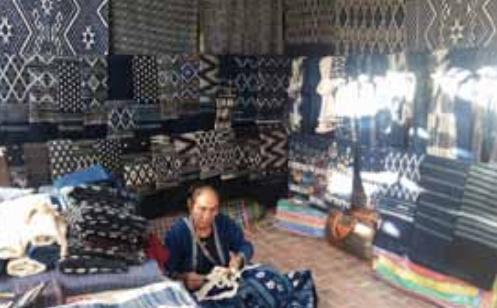
This year, it is mostly artisans and handicrafts makers participating in the festival. They are selling an extensive variety of products including textiles and many other cultural items from Luang Prabang and surrounding areas.

Beautiful handmade pieces are on sale to suit all budgets, from inexpensive souvenirs to exquisite high-end collectables, she said.

Food products such as coffee, tea, oils and spices produced in Laos are also a key feature of the event.

Moreover, visitors will be able to experience Lao cuisine, coffee and tea as well as witness traditional music and dancing performances.

Ms Keo added that visitors to the festival will notice that many women still wear a traditional tube skirt or sinh .

The sinh is usually made of silk, cotton or a combination of fibers and is woven with motifs that reflect the ethnic culture of a community or region, or the occasion for which it is intended.

Traditionally, a sinh is completely handmade; from the hand spinning of the silk or cotton threads to the dyeing process, preparation of the pattern and loom, and finally; hand weaving.

UNESCO declared the town a World Heritage Site in 1995 and since then tourist arrivals have risen with each passing year.

Luang Prabang is the former capital of the Lane Xang Kingdom, meaning the Land of a Million Elephants. The town is a cultural centre in the region, with its numerous temples paying testimony to its former glory.

Its landmark attractions are its centuries-old Buddhist temples and monasteries, Kuang Xi waterfall, Phousy hill and Buddha cave, all of which are easily accessible.

Luang Prabang was most foreign visitors’ first choice because of its old and attractive temples and the activities of the monks who live in these temples.

According to the Luang Prabang Tourist Office, over 400,000 tourists of all nationalities visited Luang Prabang province last year. They hope to boost the number to 700,000 tourists by 2020.

Source: Vientiane Times

Laos Reaffirms Commitment to Pursue Paris Climate Change Agreement

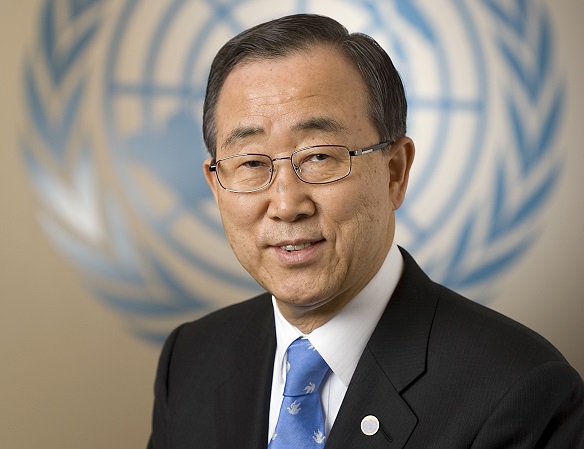
Portrait of SG

The Lao government is determined to join hands with the international community in implementing the Paris Agreement on Climate Change, a Lao senior diplomat told the international community recently.

Delivering his speech at the recent high-level segment of the 22nd Conference of the Parties (COP 22) to the UN Framework Convention on Climate Change (UNFCCC) in Morocco, Deputy Minister of Foreign Affairs, Thongphane Savanphet, reaffirmed the commitment of the Lao government to the accord.

He added that Laos, as a mountainous and landlocked developing country, has been exposed to more frequent, broader and severe natural disasters as a result of climate change. The country is highly vulnerable to the impacts of climate change due to its low adaptive capacity and limited resources.

Having fully recognised that climate change poses challenges to the sustainable development of Laos and to the livelihood of the people, the Lao government ratified the Paris Agreement and submitted its instrument of ratification to Secretary General Ban Ki-Moon during his participation in the 8th ASEAN-United Nations Summit in Vientiane in September this year.

I would like to reaffirm the Lao PDR’s commitment to pursue practical policy and concrete action in implementing the Paris Agreement, including our national contributions, while mainstreaming climate change and natural disasters risk reduction and management along with the Sustainable Development Goals into our National Socio-Economic Development Plans, he told the participants.

We stand ready to work closely with the international community in implementing the Paris Agreement.

He told the conference that the Lao government has been implementing the National Strategy on Climate Change via its action plans for the period of 2013-2020, which define mitigation and adaptation actions in sectors such as agriculture, forestry, water resources, energy, transportation, industry and public health.

At the regional level, Laos has been working closely with other ASEAN member states in addressing the climate change issue. At the recently concluded 28th and 29th ASEAN Summits held in September in Vientiane, ASEAN leaders issued the ASEAN Joint Statement on Climate Change to the 22nd Conference of the Parties (COP-22) for the United Nations Framework Convention on Climate Change (UNFCCC), which highlighted ASEAN members’ commitment to strengthen the management of ASEAN’s diverse ecosystems and landscapes through a landscape-based approach. The aim is to build climate resilience and enhance ASEAN countries’ rapid response capacity to be more efficient and effective in the event of natural disasters.

Source: Vientiane Times

This Month, Volunteer Teachers Will Begin Examinations

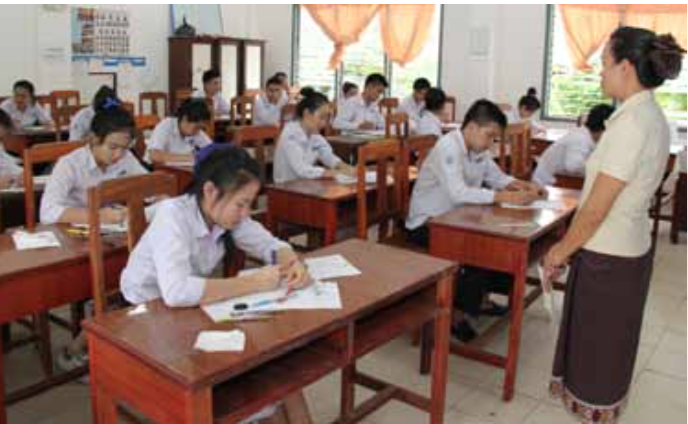
Volunteer teachers in Vientiane, along with newly graduated education students, will participate in an examination on December 10 of this year in the hope to become full-time civil servants of government.

This year, more than 1200 volunteer teachers, including newly graduated students from the Teacher Training College, have registered at the Vientiane Education and Sports Department to be employed as civil servants, officials confirmed.

Currently, there are around 700 volunteer teachers in Vientiane who are still waiting for a quota allocation to become fully paid state employees.

The exam assesses their competency as a way to resolve quality issues and ensure fairness for all volunteer teachers.

A senior official from the Vientiane Education and Sports Department, Mr Khampanh Bounphaxaixon, told Vientiane Times yesterday the objective of the exam this year is to help solve the problem of teacher selection and ensure that only the best qualified teachers are recruited to serve the country.

The Vientiane Education and Sports Department wants to allocate a quota of 200 new teachers in order to respond to the needs of the education sector, but the government has only approved a quota of only 107 staff.

Mr Khampanh said for many years it has been a concern among volunteer teachers that they are not allocated enough places to join the ranks of fully paid state employees in the education sector.

Once the move is instituted, newly graduated teachers who can pass the competency exam will be among those interviewed as prospective state employees, he said.

I think this exam serves as an important function in solving the concern among volunteer teachers about fairness in the selection process, he continued.

Personnel Department Director General of the Ministry of Education and Sports, Mr Chansamout Keosouttha, said the majority of young teachers who do not receive a quota allocation to become state employees end up leaving their volunteer government posts to go and work in the private sector instead.

Private school jobs are considered by some as more secure because volunteers do not know if or when they will receive their quota allocation to work as a state employee.

He said the demand for teachers at private primary schools is also increasing every year and the schools offer negotiated salaries and welfare provision for their teachers while the government cannot guarantee volunteers an allocated assignment.

The other reason many volunteer teachers decide to work with private schools immediately after graduating is they worry they could miss out on a long-term employment opportunity if they wait for a government job, Mr Chansamout said.

A volunteer teacher has to work at least two years to be eligible for a promotion to the status of civil servant, according to the old policy.

The majority of the provinces have allocated full-time placements to newly graduated students, because others have been unable to comply with the policies of the ministry.

Mr Chansamout said directly giving recent graduates a quota allocation has held back the development of the education system in the country because some of the volunteer teachers who are elevated to the status of civil servants still lack experience.

We think the exam system can solve these problems and create more transparency in the education sector, he noted.

According to the ministry, there are currently around 10,000 volunteer teachers nationwide who are still waiting for a quota allocation to become fully paid state employees.


Source: Vientiane Times