Home Blog Page 6405

Xayaboury Prepares for Annual Elephant Festival

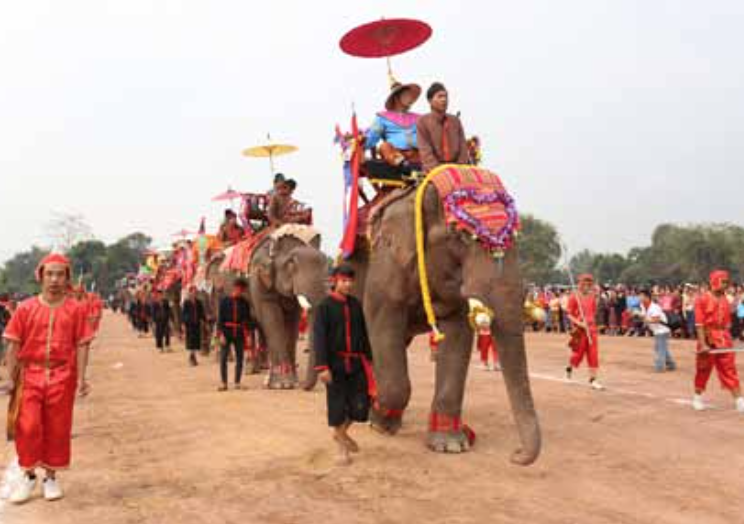
Almost 70 elephants will feature in Xayaboury’s annual elephant festival from February 13-19, aiming to promote the province’s colourful culture and local livelihoods.

The aim of the festival is preserve the culture and livelihoods of Lao people who work with elephants. Elephants are a longstanding part of the nation’s history and have been an integral part of Lao life since ancient times.

Deputy Governor of the province, Mr Yanyong Sipaseuth, who also is a member of the event organising committee told media recently the 11th elephant festival will take place from February 13 to 19 at Xayaboury district stadium with the official opening being held on February 17.

Every year, provincial authorities plan many activities to celebrate the festival and this coming February 68 elephants will take part in events such as a grand parade, a baci ceremony, and even a beauty contest. The animals will also demonstrate their skills and the close relationship they have with their mahouts.

Visitors can take a ride on an elephant and watch them being bathed in the river.

In the evening there will be a vibrant street market featuring local products and goods from neighbouring countries.

The festival will spotlight the past and present role that elephants play in Laos, and their importance in Lao history and lifestyle.

It also highlights the plight of these endangered animals, whose numbers are dwindling fast.

Currently, elephant owners are being encouraged to care for their animals so that they are not overworked and can reproduce. Their former role as the mighty haulers of massive tree trunks through forests is becoming a thing of the past and instead they are living an easier life in the tourism industry.

The first elephant festival was held in 2007 in Hongsa district, when it was organised by the conservation group ElefantAsia.

It was subsequently held in Paklai district and then in Xayaboury district, which has hosted the event since 2012.

Source: Vientiane Times
Sekong Bridge Completion Delayed to 2018

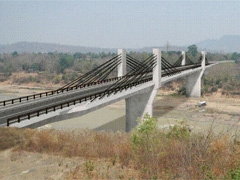
Construction of the Sekong Bridge on National Road No.16B in Sekong province has experienced delays and completion is now slated for 2018 instead of next year as previously projected.

The construction of the bride began in 2014 at a projected cost of US$15 million and was originally expected to finish in March this year but they experienced some delays causing extensions beyond the project plan.

According to the construction project deputy head, Mr Khamkeng Keosouvanh, at present work on the project is about 70 percent complete.

The bridge will be 300 metres in length and 11 metres in width.

Therefore, the project developer proposed to extend the construction period for another ten months in order to improve some aspects of the work in accordance with accepted international techniques, he added.

So far, we have completed works under and above the bridge and the remaining works are bridge surface pavement and the bridge entrance approaches on each side, in order to ensure a quality finished product, Mr Khamkeng said.

To achieve the plan, the project developer will accelerate efforts to complete the remaining works, he added.

Sekong province is divided into two areas by the Sekong River as there is no connecting bridge. The eastern parts of the province are relatively undeveloped.

The first project aims to vitalise the regional economy across the river by improving transportation through the construction of a bridge, which will stimulate economic activities on both sides.

This will help improve the residents’ financial situation, particularly in the lesser developed areas.

If National Road No.16B is connected by this bridge, it would also increase cross-border trade between the southern part of Laos and its neighbouring countries.

Source: Vientiane Times

New Law to Determine Red Cross Future

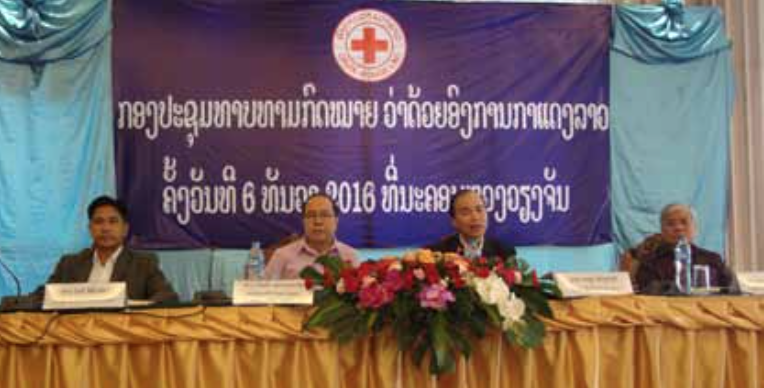
Determining the right position, obligations and role of the Lao Red Cross will ensure the humanitarian organisation is able to serve the needs of the Lao people and bring them the greatest benefits.

This issue was noted by top LRC leaders as the central focus of discussions on the draft Law on the Lao Red Cross at a meeting held yesterday in Vientiane.

The meeting aimed to facilitate final discussions on the draft law and achieve consensus before it is submitted to the government for consideration and approval.

The LRC has been working for humanitarian purposes and benefited Lao people for 60 years but it has lacked a strong legal structure to ensure its continued development and the greatest benefits for the people .

A strong regulatory structure is especially necessary for a relief and disaster organisation in Laos as a least developed country which often faces natural disasters.

In deliberation on the draft law, LRC President Mr Khamhoung Heuangvongsy reminded the participants, who included officials from the Ministry of Justice, Ministry of Labour and Social Welfare (MOLS), Ministry of Health (MOH), and lawyers about the position, which he said is still unclear.

He told the meeting that since it was established 60 years ago, the organisation has moved around from one government agency to another, from the MOH to the Government Office, from the Government Office to the MOLS.

This situation has interrupted the continuation of the organisation’s development, and had impacts on those working for it, Mr Khamhoung said.

He confirmed that despite the LRC having a political philosophy which links with the Party and government, it works independently under the international convention, and the seven fundamental principles of the International Red Cross and Red Crescent Movement.

However, Mr Khamhoung said, the way the LRC would be defined by the upcoming law was under international observation.

The LRC has four technical units, which have 97 civil servants working at the central level, 290 civil servants working at the provincial level, and 187 civil servants working at its districts offices.

According to Mr Khamhoung, the LRC relies on the government budget only for salaries and other allowances, while all its activities have been implemented via domestic and international support.

If the LRC becomes too government-oriented, it will not receive sufficient support from the international community, he said.

Meanwhile, Mr Khamhoung spoke about the Red Cross organisations in countries where communist parties are ruling, including the countries of the former Soviet Union in central Asia, saying they are almost entirely dependent on their governments.

He pointed to the Red Cross in Vietnam as an example of a successful humanitarian organisation, saying it could mobilise support from a broad cross section of the public.

This 72-article draft law on the Lao Red Cross defines the humanitarian organisation as a civil society organisation of the Lao PDR, which works independently under the Party’s direction, constitution and laws of the country, international conventions, and the seven fundamental principles of the International Red Cross and Red Crescent Movement on humanity, which the country is a party to.

The last paragraph in the draft states any stipulations contradicting this law, are canceled.

Source: Vientiane Times

SCG Providing Scholarships for Vientiane and Khammuan Students

Siam Cement Group (SCG) is to provide 250 scholarships today to students from Vientiane and Khammuan province worth 450 million kip.

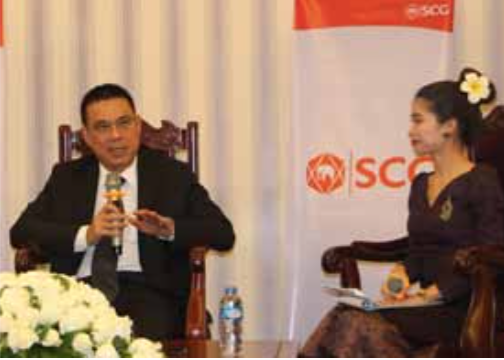
President and CEO of SCG, Mr Roongrote Rangsiyopash told media at a press conference yesterday that this is the fifth anniversary of the SCG Sharing the Dream scholarship programme in Lao PDR.

This year we will be providing 150 scholarship funds to Vientiane and 100 scholarship funds to Khammuan province he said.

The SCG Sharing the Dream scholarship programme targets outstanding secondary level students from poor families and is set to double the number previously awarded.

The programme distributed scholarship application forms and also visited target students at their schools and homes. The company has been operating in Thailand since 1913 and has provided scholarships to students in Laos since 2012.

In the first year 99 scholarships were awarded in Vientiane and Khammuan but this has continued to increase every year.

The project has collected information about target students’ studies and the status of their families to ensure the programme is well directed to deserving recipients.

SCG will hold a handover ceremony today to provide the scholarships to students from Vientiane and Khammuan province.

SCG, one of the leading conglomerates in the ASEAN region, currently comprises three core businesses: SCG Cement-Building Materials, SCG Chemicals, and SCG Packaging. Throughout its 103 years, SCG has conducted its business in line with good corporate governance and sustainable development principles.

SCG has pledged to become a business leader in the ASEAN region and prepare itself for competition in global markets. The group is committed to ongoing organisational development to create innovations in value-added products and services that meet the needs of customers. Moreover, SCG is striving to contribute to the sustainable progress of local communities where it operates.

Source: Vientiane Times

China Funds Mekong Road Construction

The Chinese government has funded construction of a 22.5 km road along the Mekong River linking Tonpheung district in Bokeo province with Sing district in Luang Namtha province to facilitate transport and boost northern development.

A signing ceremony for construction of the 225 million yuan (more than 268 billion kip or US$32.7 million) road took place recently in Vientiane between representatives from the Chinese Embassy to Laos and the Lao Ministry of National Defence, the Lao Army Newspaper reported yesterday.

Construction of the seven-metre-width road will commence in January next year and will take 36 months to complete. The project will asphalt and widen the existing unpaved five-metre road.

The road, which will connect Mom village in Tonpheung district with Pakhouaylong village in Sing district, is part of the planned road construction project to link Tonpheung district with the Chinese border over a total distance of 238 km.

Deputy Director General of the Engineering Department of the Lao ministry Colonel Dr Siphonxay Khamthongveun said he believed once the road was operational it would contribute significantly to socio-economic development of the northern region, which shares a border with China. He added the project would also contribute to enhancing security in the region.

The Colonel said the Lao side would continue to seek financial sources to upgrade the remaining section of the 238 km road, which will stretch through the golden triangle area.

Source: Vientiane Times

Dry Season Rice Plan Under Consideration

The Ministry of Agriculture and Forestry is considering whether the figure for this year’s dry season rice plan should be revised downwards or remain stable after the last four harvests failed to reach the target.

Last dry season, farmers planted only about 99,000 hectares or 88 percent of the area targeted, which represented a reduction of 2,210 hectares on the previous crop.

The figures were reported to the National Assembly meeting last month by the Ministry of Agriculture and Forestry.

The major factors influencing the decline in dry season rice plantings included the fact that large numbers of rice farmers, especially those in the northern parts, shifted to growing commercial small crops such as beans, sweetcorn, melons, pumpkins, chilies, eggplants and sweet potatoes.

Those farmers reported that their reasons for shifting included lower capital costs as well as better financial returns on their labour.

The crops also require less water to supply production and produce three or four times a year.

Cold weather and lack of water from irrigation systems are important issues affecting dry season rice production, according to the Department of Agriculture.

Meanwhile another factor is the lack of labour to produce the crop as members of their family have shifted to other forms of employment in the towns.

Next fiscal year, the ministry plans to encourage farmers around the country to produce a total of 4.3 million tonnes of rice.

Officials are confident the target can be reached after farmers achieved 98 percent of the planned 4.2 million tonnes this year.

Irrigation systems were able to guarantee a supply of water to about 180,000 hectares of crops this dry season, even though some systems are in need of repair.

About 120,000 hectares of the irrigated land will be given over to rice, while other crops will be cultivated on the remainder, according to the Irrigation Department.

The country currently has over 11,600 irrigation projects, most of which supply water to the central and southern provinces.

To supply sufficient water in this dry season, the Department of Irrigation is working with relevant sectors around the country as it plans to rehabilitate damaged or degraded irrigation systems.

The department also advised local authorities and farmers to use water from reservoirs, rivers and other ponds by utilising pump machines when necessary.

To increase productivity, agricultural authorities urged farmers to use modern technology and good seed varieties.

For planting other crops this dry season, the ministry focused on various staples, especially sweet corn, potatoes, fruits and vegetables.

Source: Vientiane Times

European Union, CARE Support Nutrition Project in Northern Provinces

The European Union and CARE Denmark are providing over 17. 4 billion kip (2 million euro) to support food and nutrition security projects in Luang Namtha and Phongsaly provinces.

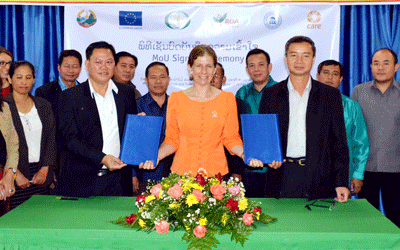
The four-year project on promoting agricultural production to improve food and nutrition security through multi-sector coordination (SUPA) were signed by CARE Assistant Country Director Ms Alison Rusinow and the Luang Namtha provincial Agriculture and Forestry Department’s Deputy Director Mr Thuang Namvongsa.

Ms Rusinow and Mr Thuang also signed documents on a related project with Phongsaly provincial Agriculture and Forestry Department’s Deputy Director, Mr Visanh Vongnakhone, according to a recent report from CARE.

The signing ceremony took place recently in Luang Namtha province in the presence of representatives from provincial authorities and other guests.

The project will build on the experience of several stakeholders in linking nutrition, agriculture and natural resource management (the LANN approach) and will work in cooperation with these stakeholders to support poor communities to address nutrition challenges.

This project will be implemented in collaboration with concerned government counterparts, including provincial agriculture offices, health sectors and other concerned authorities.

The project shall receive technical support from other organisations most experienced in the LANN approach and hygiene and sanitation, namely CARE, Committee Cooperation with Laos, Lao Organic Promotion in Agriculture and Rural Development Agency.

The project’s aims were to support the government to implement the National Nutrition Strategy and Action Plan. The government has identified 22 priority nutrition-specific interventions (identified by each concerned line ministry, the so called convergent approach.)

The project will contribute to the realisation of all of the agriculture priorities and some key priority interventions under the health sector.

All selected districts in this action are part of the government’s priority districts and the selected activity packages in this action correspond to the government’s priority interventions, as proposed during the consultative planning workshop for this project in 2015 with relevant provincial/district representatives.

The project is designed to provide clear and concrete changes in the nutrition and health status of local ethnic communities in Luang Namtha and Phongsaly. In addition, it aims to support the provincial and district government to address the needs of communities and implement nutrition-related policies.

At the same time, CARE has committed to use this additional four year period to maximise learning, sharing and piloting of good practices.

These projects not only fully align with and complement local government priorities but also link well with other projects within CARE Laos’ Remote Ethnic Women programme.


Source: Vientiane Times

Kaleang Cave to be New Tourism Site in Saravan Province

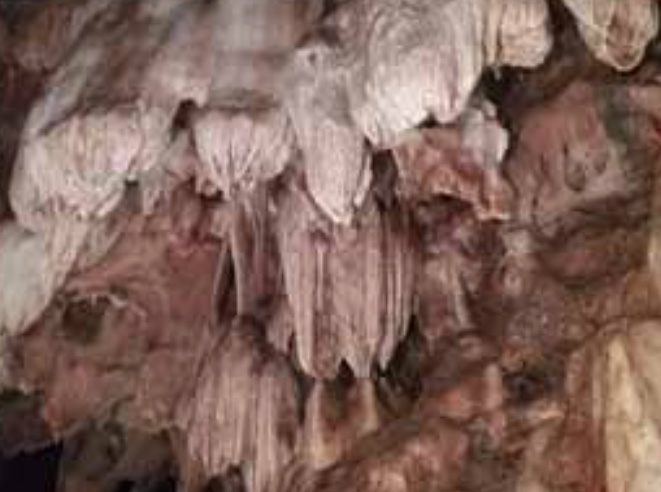
Local authorities of Saravan Province are preparing to develop the Tham Kaleang Cave to be one of the new of tourist attractions of the province.  Tham Kaleang Cave is expected to open for visitor around the Lao New Year in 2017.

Mr Ounthoung Kaophan, Deputy Minister of Information, Culture and Tourism recently took a working visit to Saravan Province to survey the new tourist site commenting that the site will be the new face of tourism in the province.

During the working visit to the province, the Deputy Minister of Information, Culture and Tourism stressed to the local authorities of Saravan Province that while developing the tourist site, it is important to preserve and protect the existing natural environment to impress visitors.

Mr Ounthoung Kaophan and his delegation also took a sightseeing tour to the Tham Nam Lord waterway through the cave and the Tad Nam Lord waterfall while inspecting the basic infrastructure of the area to ensure that will provide convenience to visitors to the area.

Saravan Province spans Laos from its western border with Thailand to its eastern border with Vietnam.  It is situated on the Bolaven Plateau, is devoted to agriculture and offers idyllic natural scenery.

Saravan Province is also home to the ecotourism destination Phu Xieng Thong National Biodiversity Conservation Area.  It is the only park in the country on the Mekong River.  It covers nearly 1,000 sq km in the western part of the province and is home to a wide variety of animal and plant species.

It is thought that Asiatic black bears, banteng (a species of wild cattle), clouded leopards, Douc langurs, elephants, gibbons, guars, Siamese crocodiles and tigers inhabit the area. 


Source: KPL