Home Blog Page 6406

BCEL-KT: Trade Summary (Dec 5, 2016)

Trade Summary

Lao stock exchange resumed trading after a long weekend with no change in the index. But the trading volume failed to match the pre-holiday volume, with only 300 shares in total. EDL-Gen, BCEL and SVN had 100 shares traded each, with the closing prices of 5,100 kip, 5,100 kip and 3,000 kip respectively. PTL and LWPC closed unchanged with no matching.  


Laos Launches New Law Application

Members of the general public can now download an application about Lao laws via App store, a new choice for disseminating laws that was developed by the Law Dissemination Department, Ministry of Justice.

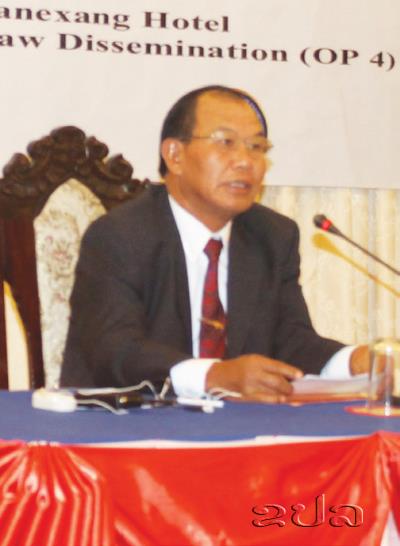
The launching ceremony of the Lao Law Application was held in Vientiane Capital on Monday Dec 5 in the presence of Minister of Justice Mr Xaysy Santivong, a country representative of United Nations Development Programme, and local media.

The new Lao Law Application aims to create favorable conditions for Lao people to simply gain and access the laws of Lao PDR. The app will give notifications via mobile phones about new and amended laws and help app users to look for specific words about law in both English and Lao.

The app will benefit students, translators, civil servants and private companies.

The mobile app has been developed since October 2015 by the Ministry of Justice.

Interested persons can do as follow: first open Safari to get access to www.Laolaw.org/laolawterms.html for download and then access via App Store.

The ministry officially opened its website last year under the web address www.moj.gov.la to promote state policies, laws and implementations by the justice sector,” said Mr Xaysy.


Source: KPL

Let’s Break Down Stereotypes in Laos: Australian Volunteer

Gender stereotypes have resulted in serious impediments to the social, political and economic empowerment of women in Laos, an Australian volunteer has said.

Women living with a disability are one of the most marginalised and vulnerable groups due to the many forms of discrimination they face in their homes and communities, and within society as a whole.

When I worked in the Philippines at a community run micro-finance organisation (MFI) providing micro-loans for women living in poverty, I was exposed to the daily hardships faced by people living with disabilities. I became aware of the stigma directed at people with disabilities, Australian Volunteer Ms Zena Van Bemmel said.

Ms Bemmel observed that the experience empowered her to train MFI staff about disability so that they could advocate within their MFIs to ensure that people with disabilities could also be considered for micro-finance loans and livelihood trainings.

There are many attitudinal and environmental barriers which can prevent the full and effective participation of people with disabilities in society on an equal basis with others, and contribute to gender stereotyping.

I now work as a Social Enterprise Support Officer at the Lao Disabled Women’s Development Centre (LDWDC), where I have been working as a volunteer with the Australian Volunteers for International Development programme, an Australian Government initiative, Ms Bemmel said.

According to the results of the National Population and Housing Census 2015, an estimated 2.8 percent of the population of Laos has a disability. Disability is both a cause and consequence of poverty that impacts boys, girls, women and men differently.

During her short time at the LDWDC, Ms Bemmel said she has heard many stories from the staff about their struggles in accessing and securing education and employment because of constant barriers at different stages of their lives.

The inspiring Founder and Director of the centre, Ms Chanhpheng Sivila, was home-schooled herself whilst supporting her 11 siblings to attend school.

Another one is Ms Boualiphan Hatsady, who was a child of 10, born into a very poor family and with a congenital impairment in both of her legs. She was only able to study in her village until Year 3, after which it became impossible for her to continue her schooling because of the long journey to school each day, without the support of any assistive devices.

Now Ms Boualiphan is a sewing trainer and wheelchair user at the centre, and defeated all odds by competing and winning a bronze medal in the 100 metre swimming competition at the 7th ASEAN Para Games in Myanmar.

Each employee at the centre brings a unique life experience of being a woman with a disability. This gives the LDWDC a great opportunity to take an active role in advocating bringing change for the rights of women living with disabilities.

Through the LDWDC’s core activities, it is helping to shatter misconceptions about women and disabilities by empowering disenfranchised women.

Through its vocational training programme, young women with disabilities from rural areas are being provided with vocational, literacy and life skills training.


Source: Vientiane Times

Three Die on Vientiane Roads Over Long Weekend

Three people were killed and others sustained injuries in road accidents in the capital over the three-day period from December 2-4.

Vientiane Traffic Police Department of the Ministry of Public Security recorded 19 road accidents in the capital from December 2-4 in which three people died, 31 people were injured and 39 vehicles sustained damage.

The accidents resulted in 12 people suffering critical injuries, while another 10 were seriously injured and nine people were slightly injured.

One vehicle was written off, 20 sustained moderate damage while eighteen vehicles sustained minor damage, according to the police report.

Police said most of the accidents occurred as a result of drunk driving and non-compliance with the traffic rules. Meanwhile, Xaythany district recorded the most number of accidents.

An officer with Vientiane Rescue 1623 under the Foundation for Assisting Poor People of the Lao PDR also reported that over the same period the group attended to over 100 accidents in capital in which over 100 people were injured. Most of the incidents occurred between the evening and early morning.

Many accidents occur on weekends and special occasions when people get together to drink. Alcohol is recognised as being a major cause of road accidents, and this year incidents of drunken driving have been higher than ever.

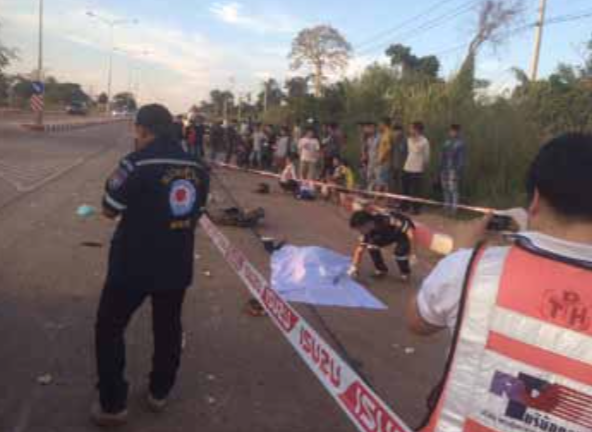
A recent accident occurred in Dongmakkhai village, Xaythany district when a motorbike and a bicycle were involved in a fatal collision which killed a cyclist instantly.

Another accident took place along No.13 North Road in Phangheng village, Naxaithong district when two motorbikes collided, killing the two riders instantly while the two passengers also sustained critical injuries.

Vientiane Traffic Police Department reported that Mr Vilaphon, 20, and his passenger Mr Vilaxay, 20, both of Phangheng village were entering from a side road when they collided with Mr Sinxay, 16, and his passenger.

The Vientiane Traffic Police Department is continuing to investigate the accidents.


Source: Vientiane Times

Ministry Seeks to Strengthen Home Affairs

Administrative mechanisms which are not really serving to facilitate development, a lack of respect for the law by state administrative bodies and agencies, and non-compliance with organisational structures are the main challenges facing the home affairs sector.

These matters were revealed by the Ministry of Home Affairs at its annual meeting which opened yesterday in Vientiane.

Some of the main mandates of the ministry, which was established five years ago, are to study organisational improvements at ministry-equivalent organisations, government agencies, ministries, and administrative bodies.

The ministry also has a role to play in improving public administration at the provincial and district levels, as well as studying draft decrees and regulations to govern the sectors concerned.

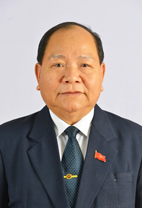
In his opening remarks, Minister of Home Affairs, Mr Khammanh Sounvileuth highlighted some of the achievements made by the ministry in the past year, especially the improvements in relation to governance and public administration.

These measures have made the government agencies at the central and local levels more appropriate and effective.

Aside from providing for improved public services, they have also bolstered governance techniques and strengthened systems and public service mechanisms, thereby facilitating better governance and international cooperation, according to the minister.

Mr Khammanh also noted areas where the ministry needs to make more efforts, especially in relation to improving administrative mechanisms which remain a hindrance to development.

Other areas that require examination include the lack of enforcement of the relevant laws and regulations by various government agencies and the development of new legislation to further development.

Public service management is an important issue the ministry has to evaluate and address, according to the minister, who said this work shall be implemented under the Sam Sang directive throughout the country. At the meeting, which will continue until tomorrow, participants from the home affairs sector throughout the country will discuss capacity building for the improvement of governance structures and administrative and management mechanisms at the central and local levels following the direction of streamlining, strengthening, and effectiveness, and the Sam Sang (Three Builds).

Building understanding and strengthening consensus in regards to the creation of mechanisms on ethnicity and religion management, capacity enhancement of public servants and government employee’s development and management.

The ministry also has to oversee the creation of modern mechanisms for citizens as well as improve the complimentary awards for good performance, all of which are matters on the agenda of the three-day meeting of the home affairs sector.

The priority activities of the ministry for the next five years will also be tabled as part of the meeting agenda.

Some of the rights and powers of the Ministry of Home Affairs include the inspection and appraisal of the work performance by civil servants in all sectors.

However the performance of civil servants has continued to raise public complaints, especially about recruitment and promotion in the public sector, which has been a particular issue of concern among members of the public.


Source: Vientiane Times

Officials Warn Consumers about Gift Basket Risks

The health authority has established a system for the inspection of expired goods mixed in markets in an effort to curb the growth in these products according to the regulations.

The sale of fake and expired goods mixed with other products is still a common occurrence in Vientiane, even though the health authorities carry out regular inspections, health officials said.

Before purchasing a product, consumers are advised to observe for degradation of quality, possible imitation, or to see if the product has perished in any way.

The public must be careful when buying consumables because they could pose a serious, perhaps even fatal, health risk, Director General of Setthathirath Hospital, Associate Prof. Dr Khampe Phongsavath, warned.

A senior official of the Food and Drug Department under the Ministry of Health, who asked not to be named, told Vientiane Times yesterday that before international New Year each year, health officials have visited markets in Vientiane and others provinces to look for expired goods in the interests of consumer safety.

She said that the inspections will run from last month to December of this year to welcome international new year because this year, many shop owners may attempt to sell expired goods or soon to expire goods.

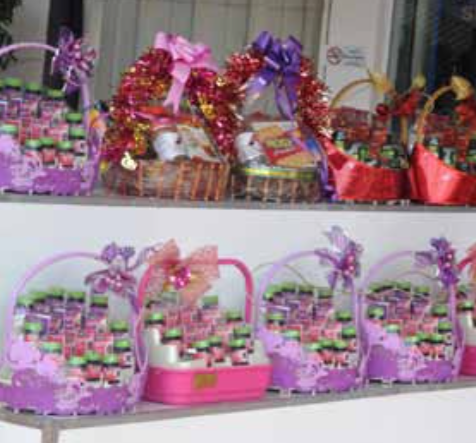
Health officials have started the inspection for expired goods among mixed goods and gift baskets in markets in Vientiane, Xekong province and other provinces around the country This work is carried out in cooperation with the Ministry of Industry and Commerce, she said.

Sometimes they carry out inspections twice a month while health officials will visit urgently to markets for inspection if there has been a report from a concerned citizen.

Every time we have inspected import products at the customs posts between countries we find expired or fake products.

Most of them are insecticides, cooking ingredients, or food, especially frozen seafood, snacks, tea and coffee including squid, sea clams and other types of food, she added.

The Ministry of Health also works with the Industry and Commerce Department and the Departments of Agriculture and Forestry, Health, and Science and Technology in undertaking the inspections.

He explained that this year, they discovered imported products and foods that were imitation, such as frozen seafood, tobacco and herbicides.

It was found that some of the products were past their use-by date and some had been mixed with other products. The authorities warned the vendors of these goods to stop importing them.

It is prohibited to distribute food using methods that are inconsistent with the laws and regulations on food.

For example, food must not be in open boxes or packages or separated from its original container. This could cause food to become unsafe, contaminated, adulterated or dried, to deteriorate or lose quality.

According to the Law on Food, which was promulgated on June 14, 2004, particularly Article 34 about prohibitions on the import and distribution of food, it is prohibited to import or distribute food that is unsafe, of unacceptable quality or standard, or inconsistent with the laws and regulations on food.

This includes contaminated food, adulterated food, deteriorated food, counterfeit food, perished food, unlabelled food or food whose quality has not been certified, except for fresh food that does not require labelling, such as meat, fish, crabs, mussels, and fresh fruit.

It is also prohibited to import food whose consumption date has nearly expired.


Source: Vientiane Times

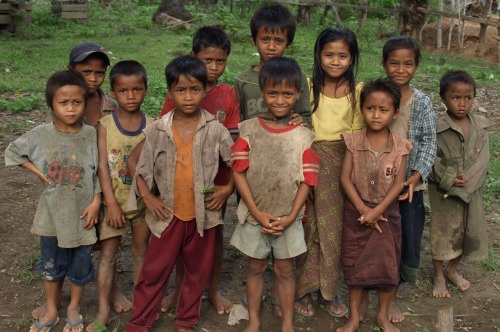
Reduction in Underweight, Stunted Children Falls Short of Targets

Reducing the numbers of underweight and stunted children has fallen short of the targets set, despite the efforts undertaken to pursue the targeted plan, a recent government report has showed.

The number of underweight children less than five years of age has fallen to 25.5 percent of the total children nationwide, which failed to meet the targeted plan of 22 percent as approved by the National Assembly (NA). The findings were detailed in a report on the implementation of the socio-economic development plan over the first 10 months of the 2015-2016 fiscal year.

Presenting the report to the recent NA ordinary session, Minister of Planning and Investment, Dr Souphanh Keomixay told the parliament that efforts to reduce stunted children also fell short of the target.

Stunted children under five years of age (children who suffered chronic malnutrition) represented 35.6 percent, failing to meet the target of 34 percent as approved by the NA.

In an effort to reduce number of underweight and stunted children further, the government has set a target to reduce underweight children aged under five years from the current 25.5 percent to 22 percent by 2017.

A target has also been set to reduce the number of stunted children under five years of age (children who suffered chronic malnutrition) from the current 35.6 percent to 35 percent.

In addition, poverty reduction has also progressed at a slower pace but the government will strive to reduce the number of poor families from 6.56 percent in 2016 down to 6.09 percent by 2017.

There are several reasons contributing to slower poverty alleviation including the fact that most of the remaining poor families are located in remote hardship areas making it hard to introduce poverty-fighting programmes.

Meanwhile, Lao gross domestic product (GDP) registered smaller growth of only 6.9 percent in the 2015-2016 fiscal year, which was lower than the 7.5 percent recorded in the 2014-2015 fiscal year.

Laos appears set to register lower growth in the coming years as it has revised annual average GDP growth from the previous 7.5 percent to 7.2 percent over the next four years until 2020.

However, the government has made sound progress in a number of areas, notably in the social and cultural aspects, according to Dr Souphanh.

The healthcare service network has been improved and expanded. The number of people accessing clean water has reached as high as 89.2 percent of the total population, exceeding the plan of only 85 percent as approved by the NA.

Primary school enrolment has increased from 97.2 percent to 97.9 percent, while the dropout rate in primary schools has declined from 5.2 percent to 4.9 percent.


Source: Vientiane Times

Vientiane Water Treatment Station 80 Percent Complete

A new water treatment station based on natural processes in Nahay village, Xaysettha district, Vientiane is now 80 percent complete, using innovative methods pioneered in France.

The project progress was presented at the meeting between Vientiane Urban Development Administration Authority and international donors at the authority’s office on Monday.

In attendance was Vientiane Vice Major, Mr Keophilavanh Arphaylath, Head Office of the Vientiane Urban Development Administration Authority, Ms Vilayvone Chanthalaty and international organisation representatives.

The construction project commenced on May 17 this year, and should be finished by January 2017. It is expected to cost some 1,220,000 euros (or over 10 billion kip) to complete, funded by the France’s Association Internationale des Maires Francophones (AIMF).

The project includes construction of the station building, management of the waste water treatment station from now until 2019 and a training agreement.

The treatment of dirty water uses green’ processes which will not harm the environment or local communities, while the dregs that remain will be used as organic fertiliser.

The system uses reeds to cleanse the dirty water discharged by households and is the first project of its kind in Laos. Previous projects have proved successful in other countries, notably France.

T he plant will be located on a 2.6 hectare site and has four reservoirs for the treatment of waste from household toilets. The reservoirs will be able to store 100,000 cubic metres of dirty water a year.

The plant will use reeds to distil the dirty water and then the remains will be used as organic fertiliser.

Speaking at the ceremony, Mr Keophilavanh Arphaylath said the new project in Vientiane and not harm the environment and would become the model for provinces around the country when complete.


Source: Vientiane Times