Home Blog Page 6411

Students Expand their Horizons with Talk on Chinese Culture

Students from the Kong Zi Institution’s Chinese Language Department and the National University of Laos (NUOL) gained an exciting insight into Chinese culture on Wednesday after listening to a special lecture at the university.

The topic of the lecture was Integration of eastern and western culture and was delivered to mark the 400th anniversary of artists and literature of China and Europe, many of which have become firm favourites the world over.

The student audience learned a lot more about Chinese customs and traditions including traditional forms of dress, the arts, literature and traditional artistic practices.

Acting President of NUOL Professor Dr Somsy Gnophanxay said the university wanted to expand its arts and culture activities in relation to different ethnicities in order to broaden students’ education.

NUOL was also interested in more cultural exchanges and exposure to international cultures.

Prof. Dr Somsy said the students were fascinated and would long remember the lecture and what they had learned about Chinese literature.

This would inspire them to develop an interest in the literature produced by other countries, both old and modern.

The lecture was organised by the Chinese Cultural Centre in Laos and NUOL’s Chinese Research Centre.

It was delivered by a senior Chinese official and was attended by NUOL officials and lecturers, staff from the Chinese Embassy to Laos, and members of other organisations.

Source: Vientiane Times

Offline Internet System to Boost Connectivity in Laos

Internet users will be able to access online data via smartphones anywhere with mobile telephone signal, including remote areas, through a new system which doesn’t require continuous connection to the internet.

New technology set to be introduced will allow smartphone users to access data connections with only a local telephone signal.

Be-Bound and its Lao development partners are planning to offer mobile internet access without 3G or Wi-Fi in Laos, as users will have internet access wherever they may be through existing 2G networks.

Be-Bound, whose office is located in Paris, France, are one of the leaders in offline internet technology globally. Currently, they are focusing on enlarging their services for developing countries.

According to Be-Bound, there are about 4 billion users in many countries including India, Africa and Vietnam as well.

Chief Commercial Officer of Be-Bound, Michel Ktitareff said at a workshop held in Vientiane recently that Be-Bound would like to launch its operation in Laos with the aim to support new technology for business operations, education, health, agricultural enterprises, services and economic development in the regions.

In addition, it will be able to support local communities in remote areas which lack internet signals, enabling them to visit websites and other applications via their smart phones.

According to Be-Bound, they and their development partners are preparing to produce the new Be-Bound’s application for a pilot programme in Laos, which is focusing on remote areas.

Concerned officials will hold a press conference again to officially announce the new Be-Bound application but no official date has been set as yet. Officials will also be able to provide more information to those who would like to register the application, Be-Bound said.

The new app will let users access the internet anywhere for less than the price of a text and you don’t even need a data connection. The app is free to download from Google Play with users paying for the service.

According to Be-Bound, using the app is much cheaper than standard roaming costs and so is ideal for use when traveling abroad. It features built-in email, weather, news and Twitter functionality with the company claiming that it can even help users to save money on their existing mobile tariffs.

When connectivity isn’t an issue, Be-Bound can still be used when on Wi-Fi or 3G networks, with the company claiming it provides a faster means of accessing the internet than traditional smartphone apps while also reducing data usage.

Source: Vientiane Times

Mekong Nations Strengthen Partnership to Combat Human Trafficking

Laos has reaffirmed its commitment to work with its neighbouring countries Cambodia, China, Myanmar, Thailand and Vietnam to combat human trafficking across the Mekong region.

The Mekong countries will enhance their joint efforts to track down and punish those who carry out this scurrilous trade and help the victims to return home.

This was the message delivered by the Head of the Secretariat of the National Steering Committee on Human Trafficking, Colonel Dr Phengsavanh Thiphavongxay, when addressing the Coordinated Mekong Ministerial Initiative against Trafficking (COMMIT), taking place in Vientiane from November 23-24.

Human trafficking is the acquisition of people by improper means such as force, fraud or deception, with the aim of exploiting them, Col. Dr Phengsavanh said.

The smuggling of migrants involves the procurement for financial or other material benefit of the illegal entry of a person into a State of which that person is not a national or resident.

Col. Dr Phengsavanh said that virtually every country in the world is affected by these crimes. The challenge for all countries, rich and poor, is to target the criminals who exploit desperate people and to protect and assist victims of trafficking and smuggled migrants, many of whom endure unimaginable hardships in their bid for a better life.

Col. Dr Phengsavanh said the member countries have focused on the implementation of the programme, based on the capacity and real situation of each country, in cooperation with international organisations and civil society. Each country has met with varying degrees of success.

This week’s meeting is a follow-up to the last one held on February 18-19 in Bangkok to review and further develop an action plan to implement Phase 4 of the regional programme.

During this meeting we will get an update on the progress of Phase 4, under which each country has conducted activities with a focus on outstanding events, he said.

Col. Dr Phengsavanh noted that participants would discuss the sustainability of the programme, work to identify victims and referral mechanisms, the involvement of young people and social organisations, and progamme priorities for 2017.

He called on participants to take charge and be decisive, to discuss matters frankly and fully, and to be creative and effective, so that the meeting could achieve its targets.

Some experts and researchers said they were afraid that human trafficking would get worse when the ASEAN Economic Community is fully integrated, referring to the regional bloc’s aspirations to create a single market with a free flow of goods, services, investment, capital and skilled labour by 2020.

Between 2006 and 2015, thousands of victims of trafficking were officially repatriated from neighbouring countries. They were mostly women, and girls and boys under the age of 18.

The meeting was attended by representatives from the UN-ACT Regional Office, the COMMIT Task Force and other invited guests from the Mekong region.

Source: Vientiane Times

Cambodia, Laos, Vietnam Expand Cooperation

The leaders of Cambodia, Laos and Vietnam (CLV) have agreed to expand their economic cooperation through their joint territorial areas to accelerate the development of the three neighbours.

The agreement was reached yesterday at the 9th CLV Development Triangle Area (DTA) Summit in Siem Reap, Cambodia, the Lao Ministry of Foreign Affairs reported.

Prime Minister Thongloun Sisoulith led the Lao delegation attending the summit, which the ministry said was convened successfully.

Prime Minister Thongloun, his Cambodian counterpart Samdech Hun Sen and Vietnamese Prime Minister Nguyen XuanPhuc signed a joint statement at the summit vowing to continue shared efforts to maintain peace, stability and security in the designated 13-province Development Triangle Area.

The DTA covers four Cambodian provinces (Ratanakiri, Stung Treng, Mondulkiri and Kratie), four Lao provinces (Attapeu, Saravan, Xekong and Champassak), and five Vietnamese provinces (Kon Tum, Gia Lai, DakLak, DakNong and BinhPhuoc).

The leaders agreed to work together to bolster socio-economic development in order to create more jobs, improve the livelihoods of their peoples and eliminate poverty in the 144,600-square-kilometre DTA which is home to about 6.7 million people.

Following their talks, the representatives of the three governments inked a cooperation agreement to promote and facilitate trade and investment in the DTA and increase its value.

In pursuit of this goal, the countries pledged to promote trading, create conditions favourable for business operations, and facilitate goods transport and people-to-people visits.

In this regard, the leaders approved 15 priority projects to enhance their cooperation.

During the summit, the leaders reviewed the progress made in implementing the DTA socio-economic development master plan and agreements they reached at the last summit held in 2014 in Vientiane.

Established in 1999, the CLV DTA aims to strengthen and promote comprehensive economic cooperation and good friendship between the three countries.

As of 2013, the average GDP in the Development Triangle Area had grown by 10 percent annually and GDP per capita was recorded at US$1,340.

The Lao foreign ministry said the DTA’s cooperation frameworks had brought a number of benefits to Laos. Cooperation projects under frameworks carried out over past years have seen the improvement of road connectivity in the region.

In Laos, schools, hospitals and other essential facilities have been built using funds provided by the government and its development partners, notably Japan, as well as investment by the private sector.

Previous reports showed that the government of Japan had provided financial assistance to Laos amounting to more than 60.3 billion kip for various projects.

The Japan-funded projects have seen the construction of eight primary schools, a hospital, four dispensaries, and improvement of the 20km 1H road linking Thateng district in Xekong province to Saravan province among others.

In addition, the government of Vietnam has extended significant assistance to Laos for human resource development.

Source: Vientiane Times

Residents Await Compensation for Nongkhang Airport Lands

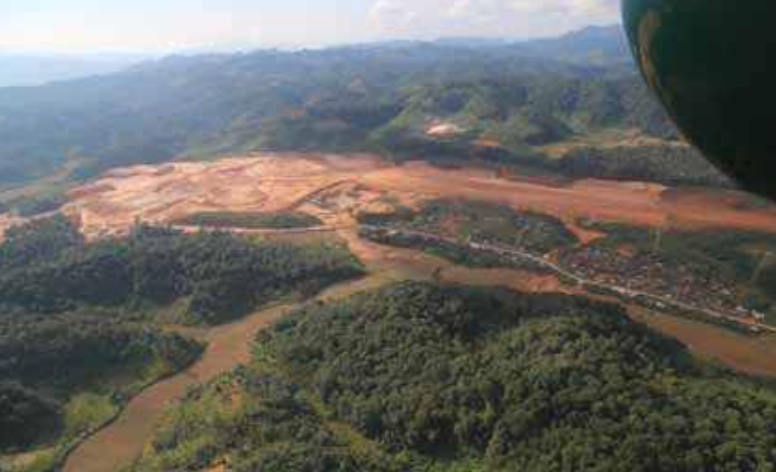
Huaphan province wants to help the people affected by Nongkhang airport construction that are suffering from a lack of rice to eat after losing their rice plots to the scheme.

The Hoang AnhGia Lai Joint Stock Company (HAGL) is responsible for the construction of the airport in Xamneua district’s Nongkhang village.

Deputy Governor of Huaphan province, Mr Phanthong Phenxaysomphan told Vientiane Times on Wednesday that based on the signed contract, the construction company committed to pay compensation valued at some 6.8 billion kip.

However the company has run out of money and subsequently asked the government to make the payments, saying that it will repay the government at a later date.

This matter has been detailed in a report sent to Prime Minister Thongloun Sisoulith but he has yet to reply. Right now, we are waiting on the answer from PM Thongloun regarding the payment of compensation to them, he said.

A number of people affected by the construction of Nongkhang Airport in the province don’t have rice to eat as they lost their rice plots for the scheme.

Scores of people in Xamneua district’s Nongkhang village where the project was under construction called the hotline of the National Assembly (NA)’s second ordinary session of the Eighth Legislature in Vientiane, which ran from October 24 to November 18.

In their reports to the NA hotline, some families said they are now selling goats they have been raising in the village area in order to purchase rice for their families to eat.

But some families who don’t have animals to sell are seriously hungry without land for growing crops because their former fields have been covered in fill after the land was surrendered to the project.

The people affected have so far been waiting three years for compensation for their rice plots and crops from the construction company.

The HonghAhnGia Lai company is responsible for the construction of the airport, which is valued at more than US$74 million.

The company suspended construction of the airport last year after signing a contract in 2013.

The new airstrip was scheduled to be finished in 2017, but construction came to a halt when the project was about 30 percent complete.

In the National Assembly session, Minister of Public Works and Transport, Dr Bounchan Sinthavong responded to questions put by Assembly members concerning the compensation payments.

The company has approved the payment but at present it has no money to pay any compensation to households affected by the project and has asked the government to make the payments instead.

Upon completion, the new airport should be able to accommodate aircraft with 70 to 100 seats, such as the ATR72.

Source: Vientiane Times

HIV/AIDS Infections Increasing in Laos

The number of new Lao HIV-contracted cases annually is trending upwards because at risk groups are having unsafe sex and receiving treatment too late, National Committee to Combat HIV/AIDS (NCCA) reported yesterday.

Currently, there are some 11,500 people living with HIV in Laos with another 1,000 new cases each year, NCCA noted at its meeting in the capital.

According to the NCCA, risk groups include sex workers, drug users who share syringes, MSM (man who have sex with men) and local and foreign migrants.

Minister of Health and NCCA President, Associate Prof. Dr Bounkong Syhavong told the meeting HIV/AIDS was spreading in the country because the number of migrant workers both local and foreign is increasing and some groups are practicing unsafe sex.

He added the rate of HIV/AIDS contraction was still high because these target groups can’t access health services, while prevention campaigns were still lacking in remote areas.

At the meeting the NCCA asked government officials and international organisations for more cooperation to combat the problem.

The cooperation of all parties is needed to determine those most vulnerable to the disease and how to provide them with the knowledge to protect themselves. In the near future, the NCCA intends to expand its research on risk groups to include communities in remote areas of the country.

NCCA plans to eliminate HIV/AIDS within Laos by 2030 and is continuing its efforts to provide treatment for people living with HIV to stop the disease spreading to others by upgrading awareness raising and expanding prevention activities to rural areas.

However, Laos is facing various challenges to address the problem including difficultly locating risk groups, some partners having unsafe sex and the number of entertainment venues is increasing.

Unsafe migration and discrimination against people with HIV are also challenges while some risk groups come to receive treatment too late.

Ministry of Health and development partners recently launched the Integrated Development Project for the Prevention of HIV/AIDS in Phonthong district, Champassak province to prevent the risk of human exploitation and trafficking and risk of sexually contracted infections.

The risks include those of abuse, drugs, human exploitation and trafficking and sexually contracted infections. All of these risks have the potential to damage lives, so the project is focused on their prevention.

This project focuses on awareness raising, vocational training, leadership and community development in order to promote a more protective environment, which helps prevent unsafe migration and its risks.


Source: Vientiane Times

DPM Calls for Joint Efforts to End Violence against Women

With a number of women continuing to suffer violence, Deputy Prime Minister Dr Sonexay Siphandone has called for joint efforts from all walks of life to put an end to violence against women.

Delivering a message on Tuesday to mark International Day for the Elimination of Violence Against Women that falls on November 25, the DPM described the violence against women as unacceptable’.

A survey on women’s health conducted in 2014 showed that one in three married women suffered at least one kind of violence. Seven percent experienced sexual violence from husbands or partners and 12 percent suffered physical violence.

A number of Lao girls suffered sexual violence. A survey on child violence conducted previously found that 94 of 1,000 births were delivered by girls aged between 10-19 years, which is the highest numbers of young girls delivering births compared to countries in the region. Five percent of these girls did not want to have sex before 18 years, according to Dr Sonexay.

Globally, one in every three women or about 35 percent of women and girls experienced physical or sexual violence, mostly by their husbands or partners. More than 700 million women have been forced to marry when they were young, the DPM said, citing statistics.

Worse, as many as seven in 10 women are suffering sexual violence in some countries.

Dr Sonexay stated that violence against women has been caused by discrimination against women, uncivilised and outdated traditions, superstition, poor education and gender views among others.

The occurring violence has caused physical and spiritual impacts on women, depriving them from participating in the development process, he said.

The violence against women has brought negative impacts on socio-economic development. It is an enormous obstacle for gender equality.

In a move to address the issue, the UN General Assembly adopted in 1979 the Convention on the Elimination of All Forms of Discrimination against Women (CEDAW) to which 189 countries have been state parties to the convention that came into force in 1981. A number of action plans have been undertaken to protect the rights and interests of women and girls.

I n Laos, a policy has been implemented to promote and develop women and girls in an attempt to ensure they enjoy equal rights politically, economically, socially and culturally as men and boys do and ensure that their interests are protected, Dr Sonexay said.

In an effort to put an end to the remaining violence against women and girls in the country, Dr Sonexay called for all sectors in society to intensify the campaign and awareness-raising to change outdated traditions, discriminatory attitudes and view s toward women.

He pressed the need to provide necessary assistance to victims of violence, ensure women have access to education and training, employment and services, while carrying out activities and enforcing laws to eliminate any violence against women and children.

Increasing regional and international cooperation in the fight to eliminate all forms of domestic violence will also contribute to addressing the issue.

Source: Vientiane Times

Vietnamese Leader Arrives Today

General Secretary of the Communist Party of Vietnam (CPV), Nguyen PhuTrong, is scheduled to arrive in Vientiane today for a three-day state visit to Laos from November 24-26 at the invitation of his Lao counterpart Bounnhang Vorachit.

During the visit, a number of important issues will be discussed while several agreements are expected to be signed.

This reciprocal visit comes after Mr Bounnhang, Secretary General of the Lao People’s Revolutionary Party and President of Laos, made his first overseas trip to Vietnam in April shortly after his election as state leader that month. In an interview with the Vietnam News Agency recently, Head of the Lao Party Central Committee’s Committee for External Relations, Ms Sounthone Sayachak, hailed the significance of the visit to Laos by General Secretary Nguyen PhuTrong, which is his first overseas trip following his re-election as Party General Secretary in January 2016, the Vietnam News reported on Tuesday.

She expressed her belief that the visit by the Vietnamese Party chief will elevate Vietnam-Laos amity, solidarity, and collaboration to new heights.

General Secretary Nguyen PhuTrong was born on April 14, 1944, in Hanoi. He is a literature-linguistics graduate, holds the title of Professor, and has a PhD in Politics with high-level political theory.

He was admitted to the Communist Party of Vietnam on December 19, 1967. From 1983-1989, he was Deputy Head of the Party Building Department. Mr Nguyen PhuTrong was Editor-in-Chief of the Communist Review from 1991 to 1996.

From 1996-1998, he was Deputy Secretary of the Hanoi Party Committee. From 2000-2006, he was Secretary of the Party Committee of Hanoi. Mr Nguyen PhuTrong was a Permanent Member of the Party Politburo from 1999-2001.

From 2006-2011, he was President of the National Assembly of Vietnam (11th and 12th tenures). On January 19, 2011, Mr Nguyen PhuTrong was elected Party General Secretary and has held the post until today.

Source: Vientiane Times