Home Blog Page 6445

Laos Urban Expansion a Cause For Concern

urban

With Laos being one of the primary countries set on a fast track towards urbanization, experts have raised concerns over the common challenges that cities in the Mekong River region are facing.

The experts on urban design and planning from Thailand, Laos, Cambodia and Vietnam believe that these cities are witnessing their heritage vanish as they evolve too quickly, leaving residents reeling in the wake of their disappearing culture. Some argue that locals in the region don’t have the opportunity to set their own path for urban development.

At a forum titled, “Cities in Transition in South East Asia, New Challenges for Urban Development” held in Bangkok, representatives from the four countries discussed urbanization trends in Bangkok, Chiang Mai, Vientiane, Luang Prabang, Phnom Penh and Ho Chi Minh City. It was noted that though each city had its own method of dealing with its problems, the issues that these cities struggle with are very similar.

One of the primary concerns raised was the rapid urbanization that has led to the authorities and business sector harming the city’s deep-rooted character.

Public Works and Transport Deputy Minister Bounleuam Sisoulath reported to the forum that this problem had already occurred in the World Heritage City of Luang Prabang. The minister explained that the city is becoming increasingly famous among tourists, which has boosted the local economy but has also had negative side effects for the traditional livelihoods of its citizens.

“As the city experiences a boom in the tourism industry, there are many new hotels and entertainment places for the tourists. The local people are alienated in their hometown and many choose to leave,” Minister Bounleuam stated. “Right now, both NGOs and the authorities are trying to preserve the cultural identity of the city and focus on helping the local communities to survive,” he added, 

A geographer and urban planner contributed a similar story from Vietnam, sharing that  Ho Chi Minh City’s rapid growth had already generated conflict between its local people and authorities over claims of unfair land expropriation, as the city needed more space to expand.

However, a former dean of Chulalongkorn University debated that cities have a life of their own and will naturally adapt over time. This raised the topic of how the past could coexist in harmony with the present.

Source: The Nation

Experts Warn China’s Railroad May Struggle with Future Funding

China’s “One Belt, One Road” vision of connecting itself to the rest of ASEAN has started to materialize, as construction on the railway has progressed to more than 10 percent of the project linking China’s border to Laos.

However, one expert has cautioned that the Chinese government’s financial support for the “One Belt, One Road” project will likely diminish in the future.

In a keynote address at an international conference titled,“Belt and Road Initiative: Network Opportunities with CLMVT”, the vice chairman of the National Development and Reform Commission of China, stated that the Chinese government has given priority to building road and rail connections with Cambodia, Laos, Myanmar, Vietnam and Thailand (CLMVT).

China also wants to continue improving trade and tourism with all five countries, which experienced a 30 percent increase to $130 billion between January and August of this year.

Due to Yunnan’s close proximity to Laos, Myanmar, Vietnam, Thailand, Cambodia, Bangladesh and India, the Chinese province could potentially play an important role in sub-regional cooperation.

As a junction linking the Pacific and Indian oceans by land, Yunnan has set its sights on advancing construction of an international transport corridor, connecting China with neighbouring countries under the “Belt and Road” initiative. With a goal in developing a new high point of economic cooperation in the Greater Mekong sub-region, China is determined on opening up its South to Southeast Asia.

Currently, several routes have opened including the Kunming-Bangkok highway, an expressway from Kunming to the China-Myanmar border, China-Laos border and China-Vietnam border.

For water transportation, there is international shipping along the Lancang-Mekong river corridor.

A railway from Kunming to Hekou, a border city on the China-Vietnam border has also opened, while railways from Kunming to the China-Laos border and the China-Myanmar border are now under construction.

An official from the Lao National Railway State Enterprise has stated that the Laos section of the China-Laos-Thailand railway is about 13.5 percent completed after construction began in January.

The five-year endeavor is slated to be completed December, 2021 with an estimated total cost of $5.9 billion USD. Laos holds 30 percent of shares in the company while China holds a 70 percent stake.

The Export-Import Bank of China has been named the primary source of loans for the project, in which debt financing accounts for 60 percent of total expenses.

A co-convenor of the Asia-Pacific Structure Finance Association in Hong Kong, Ms Susie Cheung expressed concerns about funding the “Belt and Road” initiative due to limits to public funding, stressing that financing is a critical issue.

“Costs of bank loans are going to rise due to Basel rules and China’s liquidity is going to dry up,” she warned.

Ms Cheung suggested China and other countries involved in the initiative should develop asset-backed securities (known as securitization) in order to tap international funding.

She urged the Chinese government to coordinate among countries to create a securitized asset class by introducing a standardized project document, harmonized rules and regulations and creating a credit rating agency.

The Chinese government’s initial 2013 Belt and Road Initiative envisioned a network covering 65 countries with 4.4 billion people and aggregate economic value to $21 trillion or 29 percent of global GDP.

The Asian Development Bank estimated that to bring it to reality, Asia would need to invest $26 trillion between 2016 and 2030 in order to maintain growth momentum. For Asean infrastructure alone, the investment would need to be about $3.2 trillion.

SOURCE: ANN

China Invests in Vientiane-Vang Vieng Expressway

Vientiane Expressway Project

During a two-day visit to Laos by Chinese President Xi Jinping on November 13-14, an agreement was signed by officials from both countries to begin construction on the Vientiane-Vang Vieng expressway, which is slated to begin early next year.

The joint-venture agreement was among 17 cooperation documents signed during the state visit by President Xi Jinping to Laos.

According to an official, China will hold a 95 percent stake while the Lao government will hold the remaining 5 percent under the agreement. Both sides are set to begin negotiations on the concession agreement, which will specify the length of the concession.

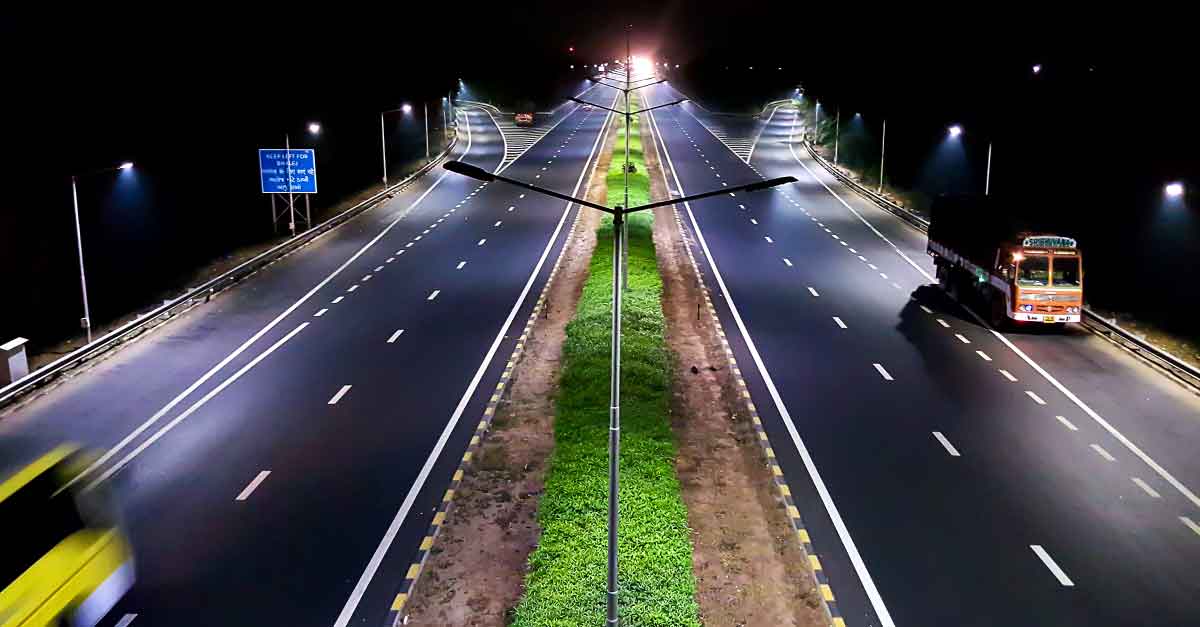
The $1.2 billion USD road will link Sikeuth village in Naxaithong district, Vientiane, to a tourist hotspot in Vang Vieng district.

An official, citing the project’s Chinese developer, has stated that once construction on the expressway begins, it will take an estimated three years to complete the 113.5-km road. The new expressway, which will include a 679-metre tunnel at Phoupha Mountain, will be significantly shorter than the 156km route that currently exists using Road No. 13 North.

It was previously reported that the expressway would be developed alongside Road No. 13 North and the Laos-China railway, which is still under-construction.

Speeds on the expressway will be set at 100km per hour on flat terrain from Sikeuth village, Vientiane to Phonhong district, Vientiane province. The mountainous sections between Phonhong and Vang Vieng districts will be set at  80 km per hour. The bypass will save drivers a significant amount of time as they can reach higher speeds as compared to the present route, which is mountainous and winding.

Based on similar charges made by other countries in the region, drivers using the expressway can expect to pay 400-500 kip per kilometre, which will amount to 45,000-56,000 kip between Vientiane and Vang Vieng, according to an official.

The Vientiane-Vang Vieng expressway is the first section of the planned Vientiane-Boten expressway, which the Lao government and the Chinese developer, a state construction enterprise from Yunnan province, plan to jointly build to link Vientiane with the northern province of Luang Namtha, which borders China.

After construction of the Vientiane-Vang Vieng section has begun, authorities will survey the second section between Vangvieng and Luang Prabang province and then the third section linking Luang Prabang and Luang Namtha’s Boten.

The project will be financed and developed in the Build-Operate-Transfer (BOT) model, and the survey of all three sections is expected to reach completion by July, 2018.

Source:ANN

Thai Duo Attempts to Smuggle 105 Pangolins into Laos

On Tuesday, November 20, two Thai men were arrested in Chaiyaphum, Thailand after police discovered over 100 live pangolins in the back of two Toyota SUVs heading towards Nong Khai.

With the intent of smuggling 105 pangolins across the border to Laos, Pramote Kerdlamool, 32, and Payao Supsinthu, 38 were placed under arrest at a road checkpoint in Chaiyaphum’s Kon Sawan district

on Tuesday morning. The 105 pangolins had a combined total weight of more than 1,000 kilograms.

During questioning, both men confessed that the pangolins were purchased from the Lad Lum Kaew district in Thailand, and were being transported to Laos where they would be sold and trafficked on the wildlife black market fetching a huge profit for the duo.

According to the Pangolin Wikipedia page, pangolins were added to the Zoological Society of London’s list of genetically distinct and endangered mammals in November, 2010. All eight species of pangolin are classified by the IUCN as threatened with extinction, while two are classified as critically endangered.

Source: The Nation

Vietnam to Promote Visit Laos Year 2018

In an effort to promote the newly launched Visit Laos Year 2018, Lao National Radio (LNR) has teamed up with Voice of Vietnam (VOV)’s Director General of the Radio, Mr Nguyen The Ky.

On November 21, Prime Minister Thongloun Sisoulith hosted a reception in Vientiane, where Mr Nguyen informed the PM about the results of the discussions between VOV and the LNR, that took place a day prior. The Director General explained that both sides have agreed that the 2015-2018 cooperation agreement, including popularizing events during the Vietnam – Laos Year of Friendship and Solidarity 2017.

The Director General has committed to promoting Visit Laos Year 2018 by highlighting the beauty, traditional customs and people of Laos to listeners.

VOV will train LNR officials, reporters, technicians and managers and help Lao broadcasters upgrade several television and audio equipment.

Prime Minister Thongloun spoke highly of the collaboration between VOV and LNR over the past years, asserting that radio services play a significant role in circulating news, especially in remote and mountainous areas.

On the occasion, the PM thanked the Vietnamese Party and State and VOV in particular for providing effective support for LNR, which he said further strengthen ties between the two radio stations and between the two countries.

Earlier in the week, China also pledged to promote Visit Laos Year 2018, and even engaged in talks of a joint Visit Laos-China Year 2019.

Laos Donates Supplies to Vietnam Following Natural Disaster

On Monday, November 20, Lao government officials contributed 20 tonnes of rice and a tonne of dried pork and beef in aid to those affected by Typhoon Damrey, in the central coastal province of Phu Yen, Vietnam.

Typhoon Damrey, the 12th major storm to hit the East Sea, pummeled Vietnam’s south central coast on November 4, claiming 89 lives, leaving 18 missing and causing injury to 174 victims in central and Central Highlands localities.

Vietnam’s Secretary of the province’s Party Committee thanked the Lao Government for their immediate support and vowed to deliver the relief to those in need as soon as possible.

Following the transfer of the disaster relief supplies, all donations were dispatched to people living in the mountainous districts of Dong Xuan, Song Hinh and Son Hoa.

Tonnes of goods, including sugar, milk and canned foods have also been donated by Russia to aid flood recovery in Vietnam and have been allocated to the affected districts in the province.

The relief demonstrates the close ties between the people of Laos and Vietnam in times of crisis.

Panama Epidemic Invades Banana Crops in Laos

A team of researchers from Bioversity International in collaboration with local experts, have recently reported that the popular Cavendish banana grown in Laos, has been infected with Fusarium oxysporum Tropical Race 4 (TR4) at banana plantations north of Vientiane.

Also known as Panama disease TR4, the disease is a soil-borne fungus that causes severe epidemics and crop losses in Cavendish plantations. Though considered one of the most destructive diseases found in banana plants worldwide, the epdemic doesn’t harm people or other fruit varieties.

However, banana plants that are affected by Panama disease seldom produce marketable bunches. Once the disease is established, the fungus persists in the soil for many years, making the production of banana varieties, such as Cavendish, economically unviable.

With the Cavendish banana accounting for 45 percent of all bananas grown worldwide, leading producer Mainland China has expanded commercial production into neighboring countries such as Laos, Myanmar and Vietnam.

In late October of this year, a team of 4 researchers spent 3 days surveying and observing plantations along the Vientiane-Vang Vieng road axis. It was discovered on a 45 hectares field that crops of Cavendish bananas established in 2014 for export to China, had lost half of the production area due to severe epidemic of Foc TR4. Chinese managers reported to scientists that the disease appeared at early stages after planting, suggesting that the nursery plants which were imported from China were infected before importation.

The Panama disease is most commonly spread by the movement of infected plant material, but can also spread with soil and water movement or by contaminated equipment. Researchers theorize that the initial outbreak in the area was due to infected nursery plants, indicating that little attention is being paid to the threat of TR4 by the Chinese banana growing companies.

The infiltration of Foc TR4 in Laos does not only threaten the rapidly expanding Chinese Cavendish banana production, but also susceptible popular varieties grown by small farmers for local markets in Laos.

Source: APS Journals

Laos-China Ties Flourish

With 70 percent of Beerlao’s exports going to China, it is evident that Laos and China have bolstered ties all across the board.

In 2011, Beerlao began exporting to China and was the first sponsor of the China-ASEAN Expo in 2012. The manager of the overseas department of Beerlao, Phengrattanavong Khomsone stated that it took just four short years for Beerlao to become a household name in China. China is now the company’s largest overseas market.

China currently is the largest investor in Laos and the country’s second largest trading partner. From January to September, bilateral trades reached 210 million U.S. dollars, an increase of 25.1 percent year-on-year.  China has heavily invested in everything from hydropower to minerals to garment trade in Laos in recent years.

The China-Laos railway, currently under construction, will further increase cultural and commercial exchange between the two countries. For instance, Lao agricultural produce such as organic rice, coffee and bananas have gained recognition and traction amongst Chinese consumers.

A source from the  Lao Academy of Social Science has stated, “It takes at least a day to transport farm produce to China, but when the railways opens, it will only take four hours.” The source added that infrastructure cooperation in railways, roads and power generation is lifting China-Laos ties to a new level.

In 2015, China helped Laos launch its first communications satellite, which has significantly improved the quality of radio and television broadcasts in the country. Countless Chinese television programs that have been translated into Lao have been aired, with the two countries now currently working together to translate classic Chinese cartoons.