Home Blog Page 6478

Lao Film Picked Up By International Cable Network, HBO

Lao Film Picked Up by HBO

In an exciting new development for the Lao film industry, director Anysay Keola’s 2011 film At the Horizon premiered on RED by HBO on 30 November 2016.

At the Horizon is Laos’ first crime thriller, and now, Keola is the first Lao filmmaker with a movie on a major cable network. The film follows the privileged son of a wealthy man who gets kidnapped.

The screening on RED by HBO is part of a new series of Southeast Asian films specially curated by the Luang Prabang Film Festival (LPFF) for the television network.

LPFF, a project of the Lao PDR’s Department of Cinema, is an annual celebration of Southeast Asian cinema held in the UNESCO World Heritage Town of Luang Prabang. The seventh festival screened 32 feature films and occurred earlier this month, 2-7 December 2016.

Keola reports that the deal was a surprise to him and his team. “It was an unexpected opportunity that the Luang Prabang Film Festival created for us,” he said. “I think it’s most important because, even if the market for ‘art’ films in Laos is still small, this shows that there are opportunities outside of the country for Lao film to turn a profit. I hope this opens the door for future Lao productions to gain international distribution.”

RED by HBO is a young and dynamic Asian movie channel powered by one of the world’s most prestigious channels—HBO. Home to internationally acclaimed, award-winning and popular movies and series from the region, RED by HBO features local stories from Southeast Asia, Japan, Korea and Greater China, as well as HBO Asia Originals.

“RED by HBO is excited to be a part of the Luang Prabang Film Festival in the celebration of Southeast Asian cinema by broadcasting this specially curated collection. This showcase will expose viewers across the Asia region to more diverse local stories and at the same time provide filmmakers a wider platform to tell their stories,” said Andrew Chin, the Vice President for Programming and Production for HBO Asia.

The other two films selected for the first series in the program include:

Ms J Contemplates Her Choice: Singaporean director Jason Lai’s film—which screened at the 2015 festival—follows Jo Yang, a celebrity radio guest who receives a phone call while on air that sets in motion a series of events that threaten her life and her family.

The Last Executioner: Inspired by real events, Tom Waller’s Thai film, which also screened at the 2015 festival, follows Chavoret Jaruboon, the last person in Thailand whose job it was to execute by gun.

For LPFF Director Gabriel Kuperman, the process of selecting these films was not easy. “We chose titles from past festivals that we thought would appeal to RED by HBO’s viewership,” Kuperman said. “Southeast Asia is extremely diverse, and so we wanted to offer stories from across the region that we thought would appeal to a wide range of audiences. Of course, our biggest priority was to get a Lao film on the channel, and I am so pleased we were able to make that happen.”

Check RED by HBO’s website for updated screening times and stay up to date with news from LPFF on Facebook.

Vientiane’s Walking Street a Surprising Sensation

Walking Street Vientiane

By Elle.

Right in the middle of the Vientiane New World shopping district, beside the Mekong River, is Walking Street.


This vibrant new shopping and dining area is full of great places to eat and drink, and includes some stalls selling clothing and other products. Although dubbed Walking Street, it is more like a warren of interconnected lane-ways, and you will do more eating and drinking than you will walking! I would even rename it Eating Street!

Walking Street Food Stall

As I approached Walking Street from the huge car park opposite I could not help but notice the large number of people holding drinks that were brightly lit up! They looked very cool, and I just had to have one.

As I walked down Walking Street I could see the ‘H20 Café’ down the centre selling the vivid cocktails. For 15,000 kip I got to choose one of 6 non-alcoholic flavors mixed with crushed ice. I chose the blue lemonade.

It was served in a plastic light bulb with a straw that had a light attached to it. The drink was a little too sweet for me but I love the bulb and light idea, and you get to keep it and reuse it at home.

walking-street-light-bulb
Light bulb drink at Vientiane’s Walking Street

Whilst I was waiting for my blue lemonade drink I noted the delicious aroma of BBQ pork coming from one of the lane-ways off Walking Street.

After getting my drink I followed my nose and found four young ladies preparing pork skewers over a traditional coal BBQ. The skewers were 4,000 kip each and full of succulent pork and vegetable chunks, including peppers, onion, tomato, chili and cucumber. These were so good I devoured four of them smothered in chili ketchup.

After the skewers I went for a walk to see all the other wonderful places to eat. I was spoilt for choice with so much variety and the smells were just delightful. The most popular dish on offer seemed to be the traditional hot pots, and there are about six different stalls serving hot pots, all extremely popular with customers.


Most stalls at Walking Street offer their own seating area, and there is a huge choice from the standard traditional plastic tables and chairs, to real hipster furniture made from recycled wooden pallets and oil barrels. Many of the seating areas were large enough for a group of 6-8 friends to relax together and have a good time.

After much deliberating, I finally decided to eat at the ‘Sweet Custard’ stall, choosing the pork sukiyaki, chicken tendons, pork dumplings and taro fish snacks. Whilst I was waiting for my food I went to the ‘CPM’ bar next to the ‘Sweet Custard’ for a Mai Lao cocktail. Although a little expensive at 35,000 kip, compared to the food, my cocktail did contain plenty of alcohol and they only use international branded spirits. It was absolutely delicious and is my new favourite cocktail in Laos.

The food was served quickly and was very tasty. My favourite was the pork sukiyaki at 15,000 kip, served in a small saucepan. The pork balls were lovely and soft and there were plenty of noodles and fresh vegetables, all served in a beautiful broth.

BBQ at Walking Street

I was so comfortable sitting on the furniture made of pallets I decided to stay a little longer where I was and I ordered the churros from ‘Sweet Custard’ for my dessert. There was a choice of six toppings and three sauces, but I opted for the plain churros. I was happy to see them made fresh to order from the churros batter.


Walking Street is a place that I would be comfortable visiting on my own or as part of a group of friends to meet up for good food, drink and conversation. It is also a place you can visit with your family and take young children.

Unless you are ordering expensive cocktails you will not need a large budget to eat well on Walking Street. Most of the stalls I visited said they were there 7 days a week from 5:30-11:30pm, with some open earlier at weekends.


walking-street-seating

As I left Walking Street with a stomach full of good food, and memories of a good evening, I caught the smell of fresh seafood and garlic from a stall near the main entrance I had earlier missed.

Some customers sat next to the stall were enjoying the Moules Mariniere (mussels) which they said were amazing. I love mussels so I will definitely be going back to try those very soon.

Can’t find Walking Street? Click here to view the Facebook page.


Walking Street Clothes Stall

Lanexang United New Rising Stars of Football

LaneXang United

Fresh from a maiden victory in the Lao Premier League, Lanexang United football club are on the verge of regional success after upsetting Thai giants Buriram in the first leg of the Mekong Club Championship.

Only a 93rd minute equaliser in the former Burmese royal capital of Mandalay last week stymied an astonishing attempt by little known Laos outfit, Lanexang United, to set what would have been a new world record for the most number of consecutive wins by a football team – anywhere on the planet.

In the same week that Lanexang’s run ended at 24 (although their undefeated streak continues) Welsh club The New Saints actually surpassed the previous mark set 44 years ago by Dutch giants Ajax with their 27th straight win, but there was little time for moaning at the Vientiane-based side as their next match produced arguably the best result in their short history.

That was a 1-0 win at home in the first leg of the final of the Mekong Club Championship against none other than Thai heavyweights Buriram United, and has continued the rapid ascension of the team known as the ‘Million Elephants’ to the point where they are emerging now as not just a domestic powerhouse, but indeed as a force to be reckoned with regionally.


lanexang-united-score

Having won the Lao Premier League for the first time in their history in 2016 few gave Lanexang a chance of success in the MCC against leading clubs from Vietnam, Cambodia and Myanmar, but as it stands they are on the verge of winning the entire tournament ahead of the second leg with Buriram this coming Sunday.

On the surface the rise has been a warp-speed one for the team from the Lao capital. but in reality it’s been a methodical, calculated process – flush with heavy investment, a committed backroom staff and a talented, youthful, playing group that’s seen the club emerge as the new standard-bearers for football in the country.

The story began with the takeover of the club by businessman Phanthachith Inthilath a little over two years ago. In that time he’s poured an estimated US$15 million into the organisation, headlined by the construction of a brand-new stadium, an indoor training and recovery facility, a pool and a gym.

Just as importantly though in a nation beset by match-fixing and other problems away from the pitch, the Chairman insisted that Lanexang would do things the ‘right way,’ and in an effort to build their club from the ground up they’ve also been forced to play a very young squad – the average age of the team that defeated Buriram just 24.

One of the key appointments made by the club was to bring in former Australian youth international Kaz Patafta, who at just 28 years of age is one of the youngest General-Managers anywhere in Asian football and who has done a tremendous job in overseeing the transformation of the club.

As he exclusively told FOX Sports Asia, the aim is for Lanexang to become one of the leading Southeast Asian powers – and they’re not that far away from achieving that goal.

“We want to put Lao football on the map and we want to do it the right way.

“In terms of the bigger clubs in the region we’re aiming to be considered on the same footing as those teams from Thailand and elsewhere and we want to do it by promoting young Lao talent and stamping out the negativity that’s surrounded football in the country recently.”

Despite his tender years, Patafta – whose mother is from Laos – is quickly emerging as one of the sharpest young administrative minds in the region and backed by a law degree that he completed following the conclusion of his playing days the former captain of the Benfica youth team was thrilled by what he saw in the first leg of the MCC final.

“We don’t have the support of some of the other clubs in the region – it’s really just our President doing everything by himself – and we certainly can’t compete with the budget of a club such as Buriram but what we can do is do things in what we believe is the best way that will give us success.

“We’re using the latest technology to scout and analyse our opponents, we have a wealth of data and tactical information on our opponents and this is helping our success on the pitch.”

That too is translating to mass support off the pitch where, even as they were forced to play the MCC final away from their regular home venue, they still managed to sell out the Chao Anouvong Stadium with 10,000 supporters cramming into the tiny venue and another estimated 3-4,000 milling around outside, trying to climb fences and trees just to get a glimpse of the new dominant force in Lao football.

The club also completely sold out their supply of merchandise and is expected to take a healthy travelling contingent of supporters to Thailand for the second leg.

Whilst the staff behind the scenes have been working overtime to get the club to this level, on the pitch much of the success has been down to a crop of little known players who the club has either developed itself or plucked from relative obscurity elsewhere to form the nucleus of a technically sound, hard-working, outfit.

One of those is young Australian defender Aaron Evans, who never played professionally in his homeland but who has grown considerably to emerge as a leader at the back after being handed an opportunity by Lanexang.

As the 22-year-old told FOX Sports Asia, such is the self belief in the side at the moment that they’re confident they can keep their astonishing undefeated run going and knock off the might of Buriram in the second leg to claim the regional title.

“We’ve certainly exceeded all expectations – even my own – in reaching this stage but what we’ve also shown is that these results are fully deserved and are not lucky in any way.

“We might not have any superstars in the team but what we do have is skill, ability and a very strong team spirit where each player works for each other and that hard work is paying off in the results.

“For me, from a small city in Australia, to be on this stage is unbelievable but we want to keep this dream going and we’re confident that if we keep playing to our strengths we can beat Buriram in Thailand.

Scott McIntyre

Regional Transport Infrastructure Remains Challenged

This Facebook link thumbnail image template was created by Christian Karasiewicz, owner of www.christiankonline.com

Despite limited funding, Laos has been doing its best to develop and improve most of the regional transport infrastructure that passes through the country.

This was the message delivered by Deputy Minister of Public Works and Transport, Dr Santisouk Simmalavong, when speaking at the third session of the United Nations Economic and Social Commission for Asia and the Pacific (UNESCAP) Transport Conference in Moscow, Russia, recently.

However, we are now facing many challenges such as balancing the construction of new roads against the maintenance of existing ones on a tight budget, he said.

One of the government’s goals in upgrading its road network is to encourage the participation of the private sector in the form of Public-Private Partnerships in developing the logistics and transport sector.

Another objective is to upgrade prioritised Asean Highways (AH) in Laos to at least Class III of Asean standards. There are now eight Asean Highways in Laos, with a total length of 2,860 km. Of these, only two roads meet Class III standards: AH3 (Road No. 3) and AH16 (Road No. 9).

The government would also like to include a disaster resilience factor in the construction of new roads, taking into account global warming and climate change.

Dr Santisouk also referred to some of the development initiatives suggested under the theme of Turning Vision into Reality for a Dynamic ASEAN Community, as follows.

ASEAN recalls the importance of individual and collective efforts to achieve the twin goals of implementing the UN 2030 Agenda for Sustainable Development and attaining the Sustainable Development Goals, and of realising the ASEAN Community Vision 2025 and its Blueprints, to help ensure that no one is left behind.

ASEAN recognises the importance of dialogue and cooperation between ASEAN and the UN in moving forward work to enhance complementarities between the UN 2030 Agenda for Sustainable Development and the ASEAN Community Vision 2025, as reflected in the ASEAN-UN Plan of Action 2016-2020.

The ministers looked forward to further developing concrete activities with the UN, including UNESCAP and other relevant UN agencies, on the basis of mutual benefit.

In addition, ASEAN underscored the importance of sharing experiences and best practices of the ASEAN Community and noted with appreciation the readiness of UNESCAP to work with ASEAN and ASEAN Member States, and the international community, in the area of sustainable development and community-building, including through the Asia-Pacific Forum on Sustainable Development.

On behalf of Laos as the sole landlocked and least developed country in both ASEAN and the GMS region, Dr Santisouk said he wanted to share some of Laos’ experiences and policies on transport and logistics that had been adopted and implemented in recent years.

The government has set a policy to transform the country from being landlocked to land-linked by providing transit transport services for subregional and regional connectivity and integration.

Laos is a party to UNESCAP’s Intergovernmental Agreement on Asian Highways, Trans-Asian Railways and Dry Ports.

Source: Vientiane Times

Army Stationed to Remove UXO for Laos-China Railway

Laos-China Railway Uxo Clearance

Soldiers from the Lao People’s Army have been deployed to clear unexploded ordnance (UXO) along the route earmarked for the Laos-China railway so that construction of the track can begin.

An official ceremony to launch the deployment of the UXO clearance teams took place on Wednesday at the Ministry of National Defence.

Minister of National Defence, Lieutenant General Chansamone Chanyalath, Minister of Public Works and Transport, Dr Bounchanh Sinthavong, and other officials attended the ceremony.

The UXO dropped during the Indochina war remains a contaminant in provinces across Laos including along the planned railway, which will connect Vientiane with the Chinese border.

The deployment ceremony came after an official ceremony was held last month in Luang Prabang province to launch the construction of the US$5.8 billion railway.

Deputy Chief of the General Staff Department, Brigadier General Khamlieng Outhakaisone, who is head of the committee in charge of UXO clearance, told ceremony participants that six clearance units have been assigned to clear UXO in six segments of the 417km rail track. UXO detectors, vehicles and other equipment have been prepared to carry out the work.

Speaking at the ceremony, Lieutenant General Chansamone called for the soldiers to work their hardest to fulfill the tasks they are assigned to ensure the safety of the project and enable construction to be completed in line with the set time frame.

It will take five years to complete the project, meaning that the railway is set to be fully complete by the end of 2021 following the launch of construction last month.

Six Chinese contractors are carrying out construction in the six segments along the entire track, which comprises 167 bridges with a total length of 61.81km, 75 tunnels with a combined length of 197.83km, and 32 stations including 21 stations where two trains can pass.

Ground works have begun for the construction of the rail track that will run through the provinces of Luang Namtha, Oudomxay, Luang Prabang and Vientiane, linking to the nation’s capital.

In Luang Namtha alone, more than 1,000 Lao and Chinese workers have been stationed and are carrying out work there, according to provincial authorities in charge of project coordination.

Some 70 percent of the project’s total investment cost is financed by China, while Laos will be responsible for the remainder.

The trains are designed to travel at a speed of 160km per hour in mountainous areas and 200km per hour in flat land areas, while freight trains will be limited to 120km an hour.


Source: Vientiane Times

Vehicle Sales in Laos to be made in Kip Only

vehicle sales in laos

Vehicle sales in Laos are to be made strictly in kip this year in a bid to promote the national currency, according to Governor of the Bank of the Lao PDR, Somphao Phaysith.

Until now, vehicle sales in Laos have typically been made in foreign currency, which is in breach of the law, Mr Somphao went on.

Payments in foreign currency will not be completely prohibited, however new regulations will require vehicle purchases in foreign currency to be made via a bank transfer.

Meanwhile, car dealers remain reluctant to comply with the announcement, and say the regulations have caused a number of difficulties.

One major setback is that customers tend to be concerned about the risks of carrying large amounts of kip when making a vehicle purchase in cash, usually 500 million kip or more.

Another issue faced by dealers is their use of foreign currency when importing vehicles and parts, whereby they are unable to predict fluctuation in exchange rates, and some dealers have called on the government to keep exchange rates stable.

Governor Somphao said that the Bank of the Lao PDR will undertake routine checks to ensure that dealers are accepting kip for vehicle purchases.

The Bank of the Lao PDR has already implemented measures for controlling currency exchange by instituting limits on the purchase of foreign currency, and the bank is making headway in promoting awareness of the importance of using the local currency, Lao kip, among the population.

Laos, Cambodia to open New Border Crossing

laos-cambodia-border-crossing

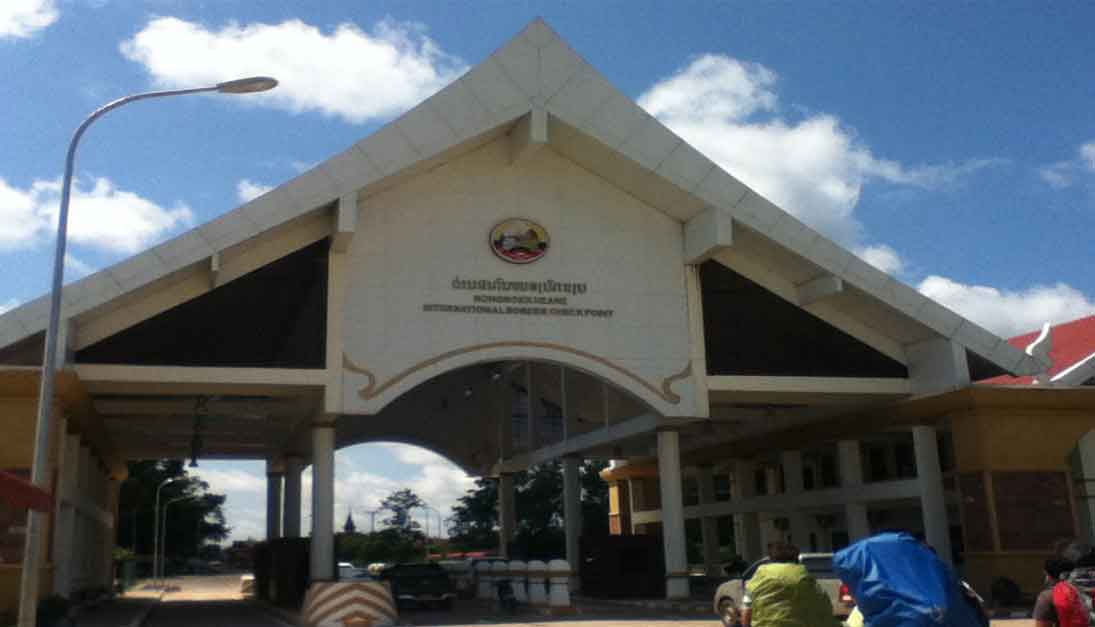
A new international border crossing between Laos and Cambodia is set to open next week.

The border crossing will connect Champasack Province in Laos with and Stung Treng Province, Cambodia.

The crossing, officially named the Nong Nokkhiane – Trapeang Kriel Border Checkpoint, is being established to help facilitate trade and tourism between the two nations.

A statement from the Cambodian Ministry of Foreign Affairs reads, “both leaders, Cambodian Prime Minister Hun Sen and his Lao counterpart Thongloun Sisoulith, will preside over the inauguration ceremony of the international border checkpoint between Cambodia and Lao PDR to take place on 10 January.”

The statement went on to say that at the conclusion of the ceremony, Cambodian Prime Minister Hun Sen and his accompanying officials will be invited to visit the Don Sahong hydropower installation in Champasack Province.

Total investment in Laos by Cambodia is said to be valued at approximately US $84 million.

BCEL-KT: Trade Summary (Jan 5, 2017)

Trade Summary

LSX kept its upward movement, adding 40.71 points to the market index to finish at 1,142.56 points, while BCEL touched the ceiling price again on Thursday, closing at 6,600 kip. The banking stock saw 32,800 shares of trading volume, translating to about 202 million kip. On the other hand, EDL-Gen also picked up 200 kip to close at 5,700 kip, with 25,600 shares traded. As to LWPC, PTL and SVN, they all stayed unchanged at 5,900 kip, 2,450 kip and 2,700 kip respectively with no trading.